History

‘Britain’s Schindler’ Is Remembered By Those He Saved From The Nazis

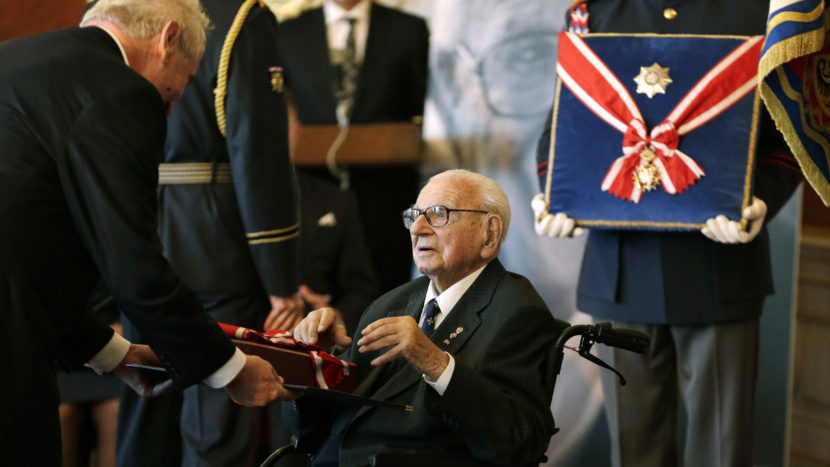
Czech Republic's President Milos Zeman (left) decorates Nicholas Winton with the Czech Republic's highest decoration, The Order of the White Lion, in Prague, on Oct. 28, 2014. Winton, a British citizen who died last year at age 106, saved 669 mostly Jewish children from the Nazis by transporting them out of Prague to Great Britain in 1939. Petr David Josek/AP
Czech Republic’s President Milos Zeman (left) decorates Nicholas Winton with the Czech Republic’s highest decoration, The Order of the White Lion, in Prague, on Oct. 28, 2014. Winton, a British citizen who died last year at age 106, saved 669 mostly Jewish children from the Nazis by transporting them out of Prague to Great Britain in 1939.
Petr David Josek/AP

Nicholas Winton is often referred to as “Britain’s Schindler.”

He was a young British stockbroker when, in December 1938, he canceled a trip to go skiing in Switzerland, and instead went to visit a friend in Prague who was helping refugees fleeing from the Nazis.

That visit changed his life — and the lives of many others. Winton went on to save 669 children, most of them Jewish, by arranging their safe passage to England from Czechoslovakia in the lead-up to World War II. Many of the parents they left behind perished in Nazi concentration camps.

Winton was knighted in 2003 and died last July, at age 106. In London on Thursday, some of those he saved — often called “Winton’s Children” or “Nicky’s Family” — are celebrating his life at a memorial.
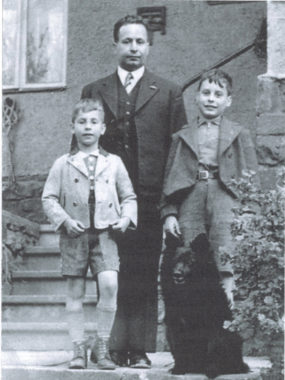
John Fieldsend (left), age 7, with his father, Curt Feige, and older brother, Arthur, age 10, in the final photograph taken of them together in 1939, on the day the boys boarded a Kindertransport train bound for England. Curt Feige and his wife, Trude, were murdered by the Nazis at Auschwitz in 1943. Courtesy of John Fieldsend
John Fieldsend (left), age 7, with his father, Curt Feige, and older brother, Arthur, age 10, in the final photograph taken of them together in 1939, on the day the boys boarded a Kindertransport train bound for England. Curt Feige and his wife, Trude, were murdered by the Nazis at Auschwitz in 1943.
Courtesy of John Fieldsend

Among them is John Fieldsend, born Hans Heini Feige in Czechoslovakia in 1931. When he was a baby, his family moved to his father’s hometown of Dresden, Germany.

Then, in 1933, Adolf Hitler won power in Germany.

“When things got too dangerous in Dresden for us, as a Jewish family, we escaped to my mother’s parents’ home in Czechoslovakia,” Fieldsend told NPR in an interview this week at his home in Oxfordshire, about 40 miles west of London.

Then, in 1938, Germany invaded Czechoslovakia’s northern and western border regions, known as the Sudetenland — where the Feiges were staying.

“I remember the German army marching through our [Czech] village,” he says.

Fieldsend’s parents decided to send their two sons, Hans (later renamed John), 7, and Gert (later renamed Arthur), 10, on the Kindertransport — trains carrying children to safety in England.

“My father said, ‘Sit down, boys. You’re going on a long journey. We can’t come with you,’ ” Fieldsend recalls. “As the train was leaving, my mother took her wristwatch off and gave it to me through the window of the train, and simply said, ‘This is for you to remember us.’ So they probably knew more than we did.”
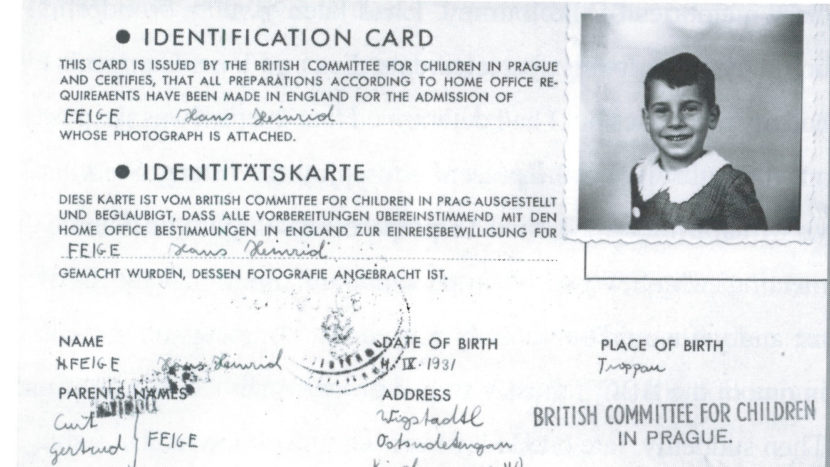
A copy of John Fieldsend's 1939 travel documents, arranged by Nicholas Winton. On these documents, Fieldsend is listed under his birth name, Hans Heini Feige. Courtesy of John Fieldsend
A copy of John Fieldsend’s 1939 travel documents, arranged by Nicholas Winton. On these documents, Fieldsend is listed under his birth name, Hans Heini Feige.
Courtesy of John Fieldsend

Fieldsend and his brother were sent to live with foster families in England — with whom they remained through World War II and until adulthood. After the war, they received a package from the International Red Cross with family photos, and, later, a separate letter.

The following is the full text of that letter, a farewell from Fieldsend’s parents to their sons. Fieldsend read it aloud to NPR, translating from the original German:

Dear Boys,

From Mother

When you receive this letter, the war will be over, because our friendly messenger won’t be able to send it earlier. We want to say farewell to you, who are our dearest possession in the world, and only for a short time were we able to keep you.

Fate has not left us for months now. In January 1942, the Weilers were taken; we still don’t know where to and whether they are still alive. In June, Grandmother Betty. In September, Aunt Marion, Uncle Willy and Pauli. In October, your Steiner grandparents. In November, your 90-year-old great-grandmother and the Bermans. In December, it will be our turn.

The time has therefore come for us to turn to you again, and to ask you to become good men, and think of the years we were happy together. We are going into the unknown; not a word is to be heard from those already taken.

Thank those who have kept you from a similar fate. You took a piece of your poor parents’ hearts with you, when we decided to give you away. Give our thanks and gratitude to all who are good to you.

From Father

Your dear mother has told you about the hard fate of all our loved ones. We too will not be spared and will go bravely into the unknown, with the hope that we shall yet see you again when God wills. Don’t forget us, and be good.

I too thank all the good people who have accepted you so nobly.

Signed,

Curt & Trude Feige, 1943
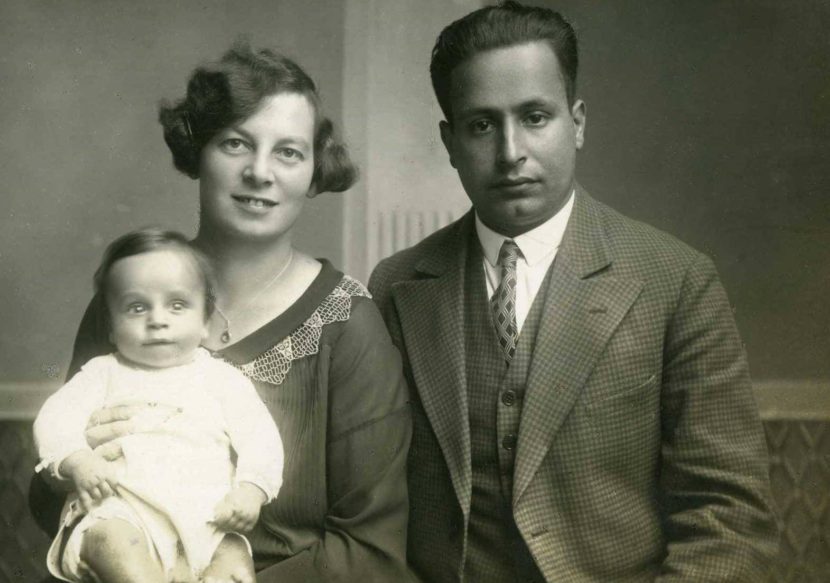
John Fieldsend's mother, Trude, and father, Curt, with his older brother in Dresden, Germany, around 1928. Courtesy of John Fieldsend
John Fieldsend’s mother, Trude, and father, Curt, with his older brother in Dresden, Germany, around 1928.
Courtesy of John Fieldsend

Records show the Feiges were interned in the Auschwitz concentration camp on Feb. 26, 1943. The exact date of their deaths is unknown.

“A couple weeks after writing this, they went to the gas chambers,” Fieldsend says. “What a letter. Wonderful parents.”

Fieldsend and his brother grew up in separate foster families in England, but stayed close. They anglicized their names. John embraced Christianity and became a vicar in the Church of England, a career from which he is now retired, at age 84.

It would take 50 years for him to learn exactly who had arranged his passage to safety.

In 1988, the BBC got hold of a scrapbook, found in the attic of a retired stockbroker named Nicholas Winton.

In it were photos, names and records of hundreds of European children for whom Winton had paid train fares, forged travel documents and arranged foster families in England.

Winton had never spoken about it publicly. But his wife apparently found the scrapbook in their attic, and it eventually made its way to the BBC through other relatives, despite Winton’s modesty.

A popular BBC TV program at the time, That’s Life, aired a segment about the scrapbook, and a photo of Fieldsend as a boy briefly appeared on TV.

“A friend rang me and said, ‘John, were you watching That’s Life?’ We often watch it, but that night, we weren’t watching,” Fieldsend recalls. “She said, ‘Well, John, you were on it.’ ”

Fieldsend phoned the BBC and was invited to the studio for the next episode. Winton was there, too. But what Winton didn’t know was that the entire studio audience was made up of people whose lives he had saved.

Onstage, BBC presenter Esther Rantzen asked: “Is there anyone in our audience tonight who owes their life to Nicholas Winton? If so, could you stand up please?”

The whole studio audience, several dozen people, stood up.

“It was absolutely amazing,” says Fieldsend about that moment when Winton turned around and looked at the room filled with people he’d saved. “He was such a human, ordinary, quiet man. It was amazing.”
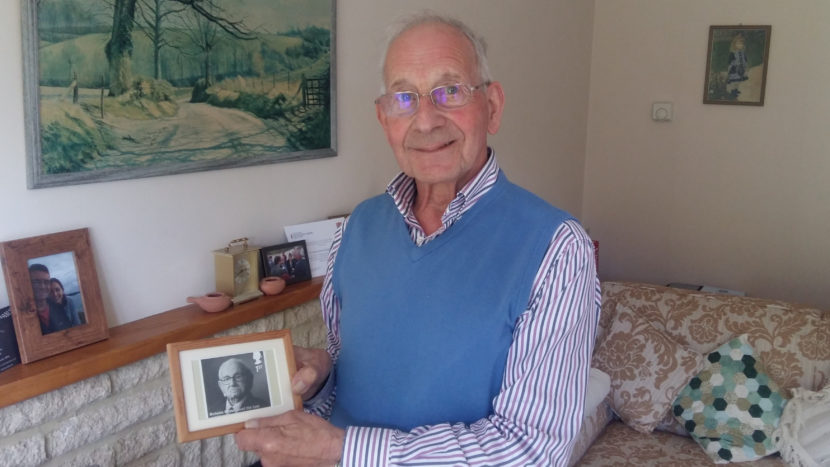
John Fieldsend, 84, with a photo he keeps on his fireplace mantel of Nicholas Winton, the man who saved his life. Fieldsend, born Hans Heini Feige, was one of 669 mostly Jewish children whom Winton rescued from Czechoslovakia just prior to World War II. For his efforts, Winton is called "Britain's Schindler." He died last year at 106. Lauren Frayer for NPR
John Fieldsend, 84, with a photo he keeps on his fireplace mantel of Nicholas Winton, the man who saved his life. Fieldsend, born Hans Heini Feige, was one of 669 mostly Jewish children whom Winton rescued from Czechoslovakia just prior to World War II. For his efforts, Winton is called “Britain’s Schindler.” He died last year at 106.
Lauren Frayer for NPR

After meeting on TV, 50 years after Winton had saved Fieldsend, the two men began a belated friendship. Turns out they lived close to one another, and enjoyed pub lunches together in Oxfordshire. Winton attended a 50th wedding anniversary party for Fieldsend and his wife, Elizabeth.

That friendship endured until Winton’s death last summer. Fieldsend says he never figured out how to adequately thank him.

“He could have been imprisoned, he could have been shot — anything could have happened to him,” Fieldsend says. “He had no reason to be involved. He was just a good British stockbroker.”

On Thursday, John Fieldsend and other survivors will attend the memorial for that good British stockbroker.

Copyright 2016 NPR. To see more, visit http://www.npr.org/.

Investigation finds widespread contamination at former Haines Fuel Terminal

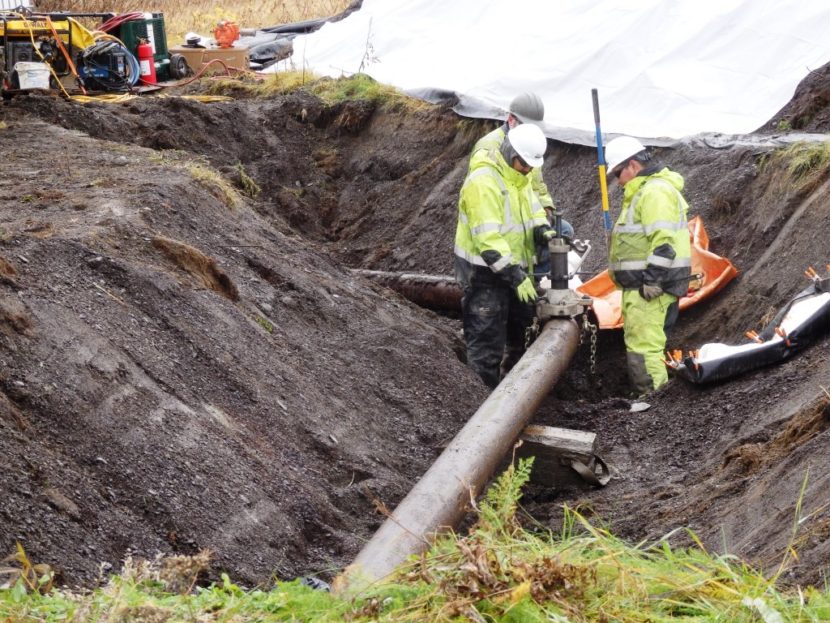
Workers test for residual fluid in a section of pipeline at the former fuel terminal. The Army is removing all 15,000 linear feet of pipeline at the fuel terminal as part of the effort to address the long-standing contamination there. (Photo by Emily Files/KHNS)

Extensive testing at the former Haines Tank Farm and Fuel Terminal found widespread fuel-related contamination. Approximately 75,000 cubic yards of soil have contaminants that exceed environmental standards.

The problem is decades old, from the time that the Haines-Fairbanks pipeline operated with little environmental oversight in the 1950s and ‘60s. This contamination investigation will hopefully lead to a final cleanup. But at a meeting last week, some residents said the process was not moving fast enough.

Thursday’s restoration advisory board meeting took a different tone than the last. Almost immediately, members confronted a presenter about what they saw as too-slow progress.

“This is poppycock,” said Jim Studley. “You are not taking advantage of the situation. The inability of the government to act is ridiculous.”

The suggestion that opened the floodgates of criticism came from Army Corps of Engineers representative Beth Astley. Astley was reviewing the contamination found at two sites along the pipeline (outside of the fuel terminal) at about 15 and 23 Mile of the Haines Highway. She suggested one solution to dealing with the contamination at 23 Mile may be to cap it as part of the planned state highway improvement project.

But Studley said the contamination needs to be removed, not capped.

“We have to follow the rules,” Astley said. “It’s not always the most efficient process, I’ll admit that. But we are doing this the right way.”

“No you’re not, you’re doing it the stupid way,” Studley responded. “It might be outlined in law, but it’s not the right way.”

Bill Kurz made a motion that the board recommend the Corps clean up the area instead of capping it. At first, some members said it was premature to advise that kind of action, but eventually, they voted unanimously for it.

The site that drew the greatest negative response from the advisory board was the least contaminated area under investigation. The most contaminated are the former tank farm and fuel terminal. The Army owns the site, and its contractors drilled hundreds of testing holes throughout the 80-acre area last year.

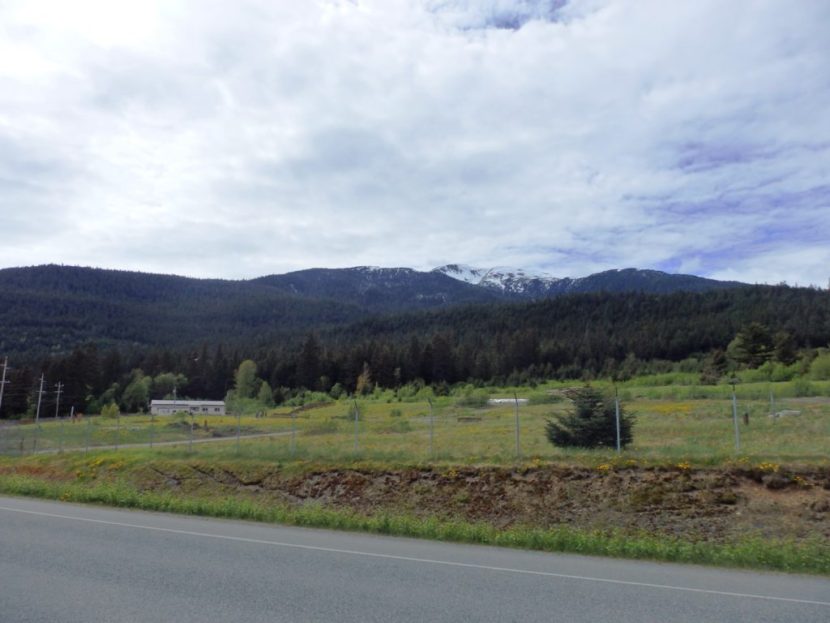
The former Haines Fuel Terminal. (Photo by Emily Files/KHNS)

“We are looking for the nature and extent of any contamination. What is it, how far does it go out?” said Arden Bailey, who works for NorthWind Inc., the company that’s conducting much of the research.

The results of the testing show contamination in the soil and groundwater at numerous locations around the property. They include all but one of the 13 fuel tanks, the administration area, the beach across the road from the admin area, the Lutak burn pit and the Manifold building.

Most of the contamination is gas and diesel-range organics and benzene. In other words, contamination related to fuel leaks or spills.

But one section, the drum storage area, had a different kind of contamination: chlorinated solvents.

“That’s the only contamination we had that wasn’t associated with fuel-type contamination,” Bailey said. “So it’s a basically a cleaning solvent. So it’s a solvent that was used for de-greasing, cleaning things for maintenance.”

Bailey says NorthWind will conduct more testing in that area. They’ll also drill a few more holes and take additional groundwater samples.

After the investigation is done, the next step is to draw up a risk assessment. That will put on paper what hazards the contamination poses to the environment, humans, wildlife and more. After that, there will be a feasibility study examining what the options are to finally deal with the contamination.

The sentiment at the board meeting was that step can’t come soon enough. But the Army says it’s probably about two years off.

Fishermen’s Memorial seeks new home

More than a hundred people gathered at Alaska Commercial Fisherman's Memorial May 7, 2016 for the Blessing of the Fleet in Juneau. (Photo by Jennifer Canfield/KTOO)
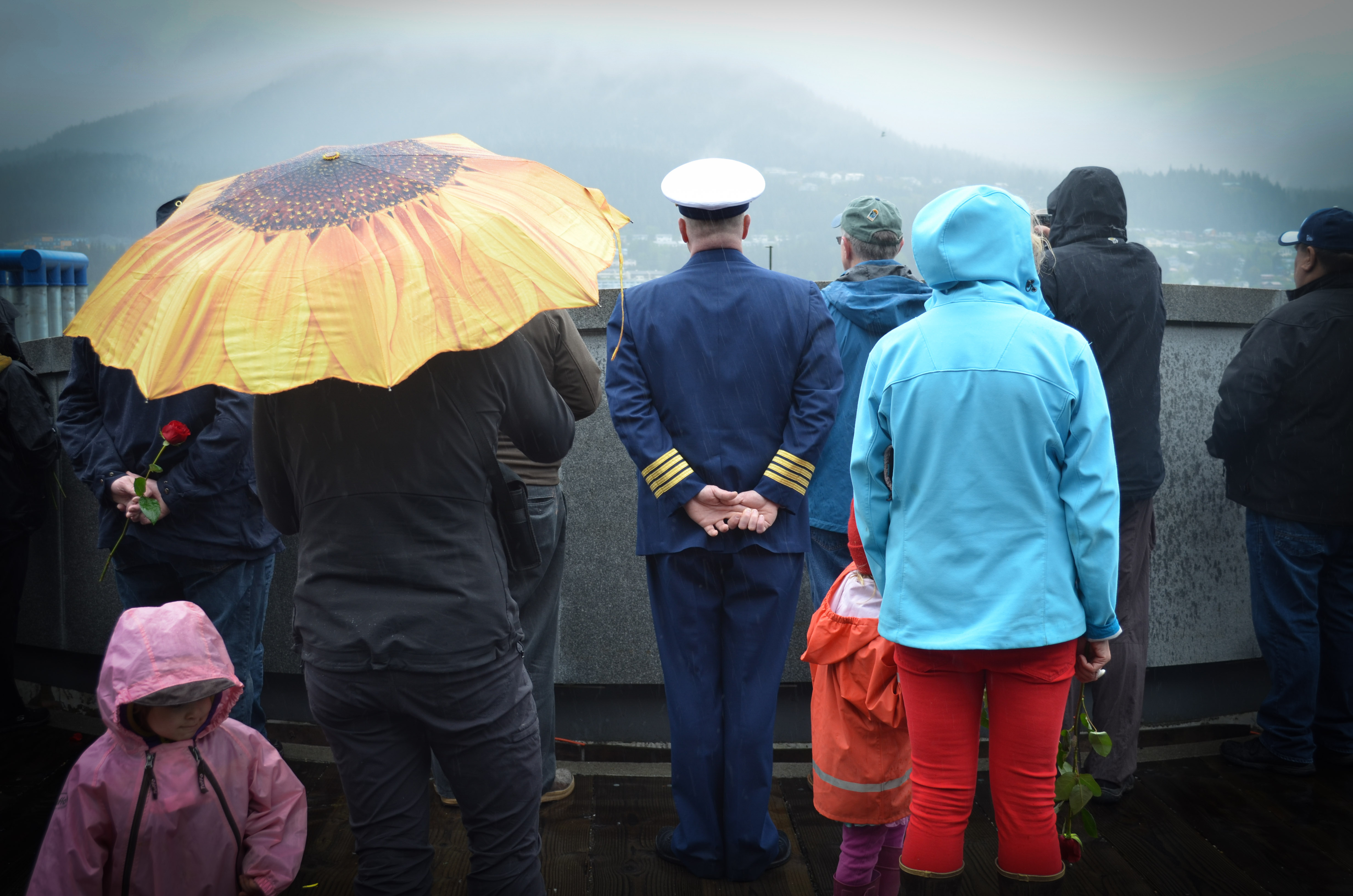
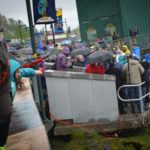
More than a hundred people gathered at Alaska Commercial Fishermen’s Memorial May 7, 2016 for the Blessing of the Fleet in Juneau. (Photo by Jennifer Canfield/KTOO)

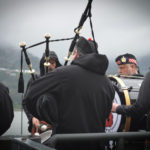
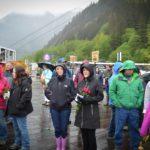
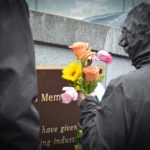
More than a hundred people gathered Saturday at the Alaska Commercial Fishermen’s Memorial Saturday for the Blessing of the Fleet and to pay tribute to the people whose names are engraved on the memorial.

Eight names were added to the memorial — Charlie Polk, Ronald John Jr., William Newman, Gordon Hallum, Walter Baldwin, Joe Bennett Jr., Patrick Venner and Greg Fisk, the former mayor of Juneau who died last fall shortly after taking office. There are now 211 names on the memorial.

More than a hundred people gathered at Alaska Commercial Fisherman's Memorial May 7, 2016 for the Blessing of the Fleet in Juneau. (Photo by Jennifer Canfield/KTOO)
More than a hundred people gathered at Alaska Commercial Fishermen’s Memorial May 7, 2016 for the Blessing of the Fleet in Juneau. (Photo by Jennifer Canfield/KTOO)

The memorial recently was at the center of a battle between the board of the memorial and the City and Borough of Juneau. Board President Carl Brodersen announced at the ceremony that they were looking for a new home for the memorial.

In an interview, Brodersen said the board is working to mend its relationship with the city and move forward. He said the board’s decision was not an easy one, especially considering that the memorial serves as a kind of gravesite for 47 people whose bodies were lost at sea over the years.

“There is essentially an enormous concrete wall in front of us and so it feels like we’re on the side of a little river as opposed to the ocean,” Brodersen said. “It’s simply not ideal. I recognize that it’s not ideal as opposed to untenable. We’ve made it work today and that’s important, but in terms of the longterm health of the memorial itself I think the best thing is to try to move it.”

Brodersen said the board currently doesn’t have funding or set plans, but they are talking with people working on the Juneau Ocean Center to see if the memorial could be worked into the center’s proposed design.

(Click any picture for a slideshow view)


“It will take years and honestly I don’t know if it will ever even happen but I would like to see it happen in my lifetime or maybe even much sooner than that. But it is a grave and it’s an extremely emotional and contentious issue, so we just have to proceed carefully and gently,” Brodersen said.

Brodersen said anyone interested in helping the board fundraise or come up with plans for a new site should get in touch with him.

You can listen to an audio postcard of the ceremony here:


A Long, Complicated Battle Over 9,000-Year-Old Bones Is Finally Over

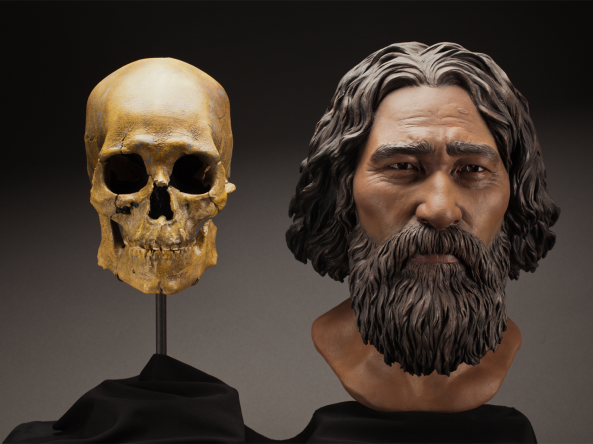
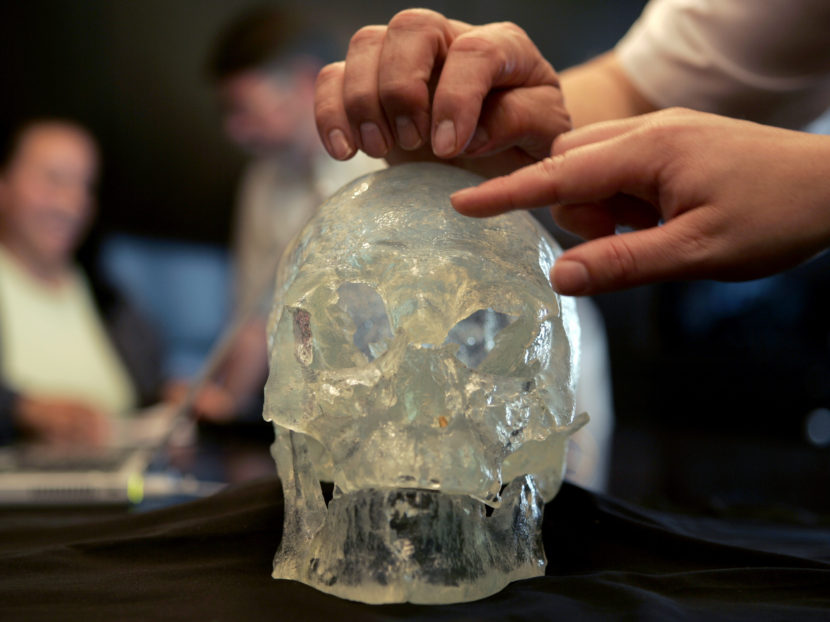
A reconstruction of Kennewick Man sculpted to resemble the Ainu people of Japan, considered by some at the time to be his closest living relatives. Now, a link to Native Americans has been confirmed. Brittney Tatchell/Smithsonian Institute
A reconstruction of Kennewick Man sculpted to resemble the Ainu people of Japan, considered by some at the time to be his closest living relatives. Now, a link to Native Americans has been confirmed.
Brittney Tatchell/Smithsonian Institute

Last week, there was a big development in the long-running, bitter, complicated battle over a 9,000-year-old set of bones known variously as “Kennewick Man” or “The Ancient One,” depending on whom you ask.

The U.S. Army Corps of Engineers confirmed that the ancient bearer of the bones is genetically linked to modern-day Native Americans. Now, under federal law, a group of tribes that has been fighting to rebury him will almost certainly get to do so.

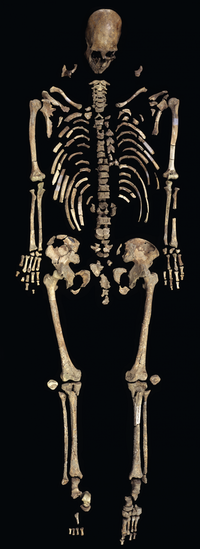
The skeleton of Kennewick Man is represented by nearly 300 bones and bone fragments. Chip Clark/Smithsonian Institute
The skeleton of Kennewick Man is represented by nearly 300 bones and bone fragments.
Chip Clark/Smithsonian Institute

It also means that scientists will probably never get another chance to study him, though ancient human remains from North America are incredibly rare, and forensic technology gets better all the time.

“It’s the chafe between science and spirituality,” writes Kevin Taylor at Indian Country Today, “between people who say the remains have so much to tell us about the ancient human past that they should remain available for research, versus people who feel a kinship with the ancient bones and say they should be reburied to show proper reverence for the dead.”

There’s a history to bitter tensions of this sort. Take the recent fight between native Hawaiian protesters and scientists who wanted to erect a telescope on Mauna Kea, a dormant volcano considered sacred by some and “the best location in the world to observe the stars and study the origins of our universe” by others.

None of these clashes exists in a vacuum; they often come on the heels of decades, if not centuries, of genocide and erasure aimed at indigenous peoples and their ways of life. And so an object of scientific interest, be it a bone or a mountain, can come to stand for an entire civilization.

Some say scientists need to rethink their whole approach to culturally sensitive research. Others say the unfettered pursuit of knowledge ought to trump belief; if the faithful always got their way, we’d still think the Earth was flat. Who gets to decide? The twists and turns in the story of Kennewick Man — which has been told before, and well — suggest there’s no easy answer, of course, but certainly provide an incredible case study for the future of this debate.

A forensic mystery, or a moot point?

Archaeologists hoped that Kennewick Man could help settle one of the greatest mysteries in the story of human migration: How did Homo sapiens make it to the Americas? Kevin P. Casey/AP
Archaeologists hoped that Kennewick Man could help settle one of the greatest mysteries in the story of human migration: How did Homo sapiens make it to the Americas?
Kevin P. Casey/AP

The fight has been raging for 20 years, ever since a couple of college kids stumbled — literally — across a human skull while wading in a river in Washington state. They thought they’d found a murder victim, and flagged down a nearby cop, who called in a local expert. Instead, they had discovered some of the oldest, most complete human remains ever dug up in North America.

Archaeologists dubbed the skeleton Kennewick Man, after the place he was found, and hoped his bones could help settle one of the greatest mysteries in the story of human migration: how did Homo sapiens, originating in Africa, end up in the Americas?

The dominant theory was that humans trekked here on foot around 13,000 years ago, during the Ice Age, when seas were lower and a land bridge temporarily connected Siberia and Alaska. But other evidence suggests humans were already living on this continent well before that particular pathway was possible.

So which was it? Did humans walk here, or somehow — incredible to imagine — paddle? Was there one wave of migration, or more? A study of Kennewick Man’s bones could reveal what he ate, what he drank, how he hunted, and, of course, his DNA — all clues that could ultimately tell the story of where he, and his forebears, came from and how they got here.

But a group of Native American tribes considered The Ancient One, as they call him, a direct tribal ancestor — and they didn’t need science to explain how people ended up here. “From our oral histories, we know that our people have been part of this land since the beginning of time,” a leader of the Umatilla tribe wrote in a statement at the time. “We do not believe that our people migrated here from another continent, as the scientists do.”

Working together, five tribes demanded that The Ancient One’s remains not be poked or prodded in the name of science, and instead be promptly reburied in accordance with tribal custom — and under the Native American Graves Protection and Repatriation Act. That federal law, passed in 1990, requires certain Native American artifacts and remains to be handed over to culturally affiliated tribes or provable descendants.

“The tribes had good reason to be sensitive,” writes Smithsonian Magazine’s Douglas Preston. “The early history of museum collecting of Native American remains is replete with horror stories. In the 19th century, anthropologists and collectors looted fresh Native American graves and burial platforms, dug up corpses and even decapitated dead Indians lying on the field of battle and shipped the heads to Washington for study. Until NAGPRA, museums were filled with American Indian remains acquired without regard for the feelings and religious beliefs of native people.”

But for these bones to fall under the protection of NAGPRA, there had to be proof of a connection between the remains and the people fighting to reclaim them today. The scientists said no such connection existed. The tribal leaders insisted it did; they could feel it in their bones.

That question ended up spawning an unprecedented legal and ethical battle in which prominent archaeologists and anthropologists would sue the U.S. government for the chance to study the bones. Femur bones would go missing under unexplained circumstances. Bitter arguments would be pitched over the migration patterns and feeding habits of sea lions, the curvature and racial implications of cheekbones, the validity of oral tradition as courtroom evidence.

Eventually, the scientists did get a legally approved (though very brief and highly constricted) look at Kennewick Man, and what they learned is truly amazing. Based on the shape of his skull and other features, they theorized that he or his forebears may have been Asian coastal seafarers. They may have journeyed by boat along the south Alaskan shoreline and ultimately all the way down the Americas, hugging the coast and living off kelp, fish, sea lions and the like.

This is the “coastal migration” theory of the peopling of the Americas, which suggests that a wave, or waves, of people traveled and lived along the Pacific coast long before other travelers chased herds of tasty mastodons and mammoths across a land bridge into Alaska.

They also learned a tremendous amount about what Kennewick Man’s life may have been like. Here’s more from Preston:

“Kennewick Man spent a lot of time holding something in front of him while forcibly raising and lowering it; the researchers theorize he was hurling a spear downward into the water, as seal hunters do. His leg bones suggest he often waded in shallow rapids, and he had bone growths consistent with ‘surfer’s ear,’ caused by frequent immersion in cold water. His knee joints suggest he often squatted on his heels. … Many years before Kennewick Man’s death, a heavy blow to his chest broke six ribs. Because he used his right hand to throw spears, five broken ribs on his right side never knitted together. This man was one tough dude.”

Conflict, or collaboration?

As of last week, it’s likely that this tough dude is headed back to the earth. University of Chicago scientists confirmed another study, from last year, showing that Kennewick Man’s DNA has genetic similarities to those of modern-day Colville tribal members. Now, members of the Colville tribe and four others say they’ll work together to complete the repatriation — or reburial — process, and the government has shown zero interest in standing in their way.

But while scientists may never get another chance to study these remains, even as biomolecular science is “advancing so rapidly that within five to ten years it may be possible to know what diseases Kennewick Man suffered from and what caused his death,” writes Preston, the story of Kennewick Man raises all sorts of questions as to how researchers might avoid antagonizing local cultures to begin with — or whether they should have to try.

One of the scientists involved in revealing a genetic connection between Kennewick Man and living Native Americans invited members of the five tribes into the lab, where they put on body suits and entered a “clean room” to pay their respects to The Ancient One. In the wake of Kennewick, scientists have been reflecting on ways to work with indigenous communities when these kinds of conflicts come up:

“Many other researchers are taking a similar approach. [Dennis O’Rourke, a biological anthropologist at the University of Utah in Salt Lake City] says that there is no one-size-fits-all strategy to working with native communities. He finds some of the North American Arctic groups he works with eager to contribute to his research, others are less so; and their opinions shift over time.

” ‘We really have to change the top-down approach, where we come to people and say “these are our research questions and you should participate, because — SCIENCE,” ‘ says Jennifer Raff, an anthropological geneticist at the University of Texas at Austin.”

Other scientists say there’s a real danger in altering scientific methods to accommodate religious belief. Elizabeth Weiss, an anthropologist at San Jose State, outlined impediments to her own work in a 2001 paper on the Kennewick controversy, and argued that regulations like NAGPRA require far too little evidence proving a cultural connection to modern-day native communities. She also suggested that such regulations — which increased around the world in the wake of NAGPRA — can have a chilling effect on scientific research:

“Consider having dedicated a large part of one’s life to unearthing the materials that are now being examined. Even casts and other important works — such as videotapes, photos, and excavation records — are in increasing danger of confiscation. Some scientists have expressed fear that their federal grants would be in jeopardy if they objected too openly to current policies. Under such circumstances, most scientists do not even begin ‘high-risk’ projects. Finds that could threaten Native American origin beliefs are especially likely to be targeted. Defendants could become embroiled for years in expensive lawsuits that neither they nor their institutions can afford …

“The politics of bone gathering in Africa are notorious … and one shudders to imagine what might happen if activists could convince modern Africans to claim early human skeletons as their ancestors, so that they too could be reburied.”

As this saga draws to a close, perhaps only one thing is certain. Wherever science, ethics and history collide, easy answers don’t exist. The distinction between pioneering researcher and grave robber can depend entirely on whom you ask. But there’s one more story worth telling here, that of another very old pile of North American bones that got a whisper of the attention that Kennewick Man has gotten, because the raging fight over what to do with them simply never got started. From Nature:

“Just weeks before Kennewick Man’s remains were discovered, researchers working in Alaska discovered a 10,000-year-old human skeleton. They notified local tribes and quickly came to an agreement that allowed them to excavate and study the remains and keep the tribes involved in the research. ‘You don’t really hear so much about the good cases,’ says Raff.”

Copyright 2016 NPR. To see more, visit http://www.npr.org/.

Ringling Bros. Circus Holds Final Shows Featuring Elephants

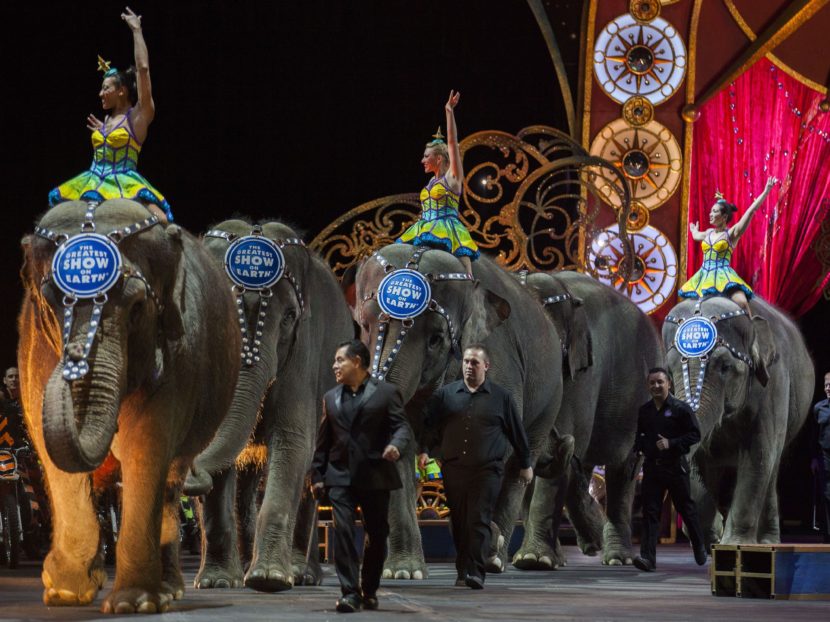
For the last time, elephants were used in a performance by Ringling Bros. and Barnum & Bailey Circus last night. The circus elephants are seen here during a show last month in Washington, D.C. Andrew Caballero-Reynolds/AFP/Getty Images
For the last time, elephants were used in a performance by Ringling Bros. and Barnum & Bailey Circus last night. The circus elephants are seen here during a show last month in Washington, D.C.
Andrew Caballero-Reynolds/AFP/Getty Images

For the Greatest Show on Earth, there is no longer an elephant in the room. The 145-year-old Ringling Bros. and Barnum & Bailey circus held its last show featuring elephants Sunday night, in a move that’s being applauded by animal rights activists.

Ringling announced its plan last spring, saying it is sending all its Asian elephants to live on the company’s Florida nature reserve. The original plan called for phasing out elephants’ role in the circus by 2018. But in January, Ringling’s parent company, Feld Entertainment, said it was moving up the timetable.

At the time, Feld Entertainment’s vice president of communications, Steve Payne, told NPR’s Jackie Northam that the family that controls the company “decided that removing the elephants from the circus units and bringing them to the Center for Elephant Conservation was in the best interest of the company and, most importantly, the elephants.”

The decision came after years of growing public concern for the elephants’ well-being, with activists criticizing Ringling for forcing intelligent animals that, in the wild, sustain complex social relationships, to live in captivity and isolation.

News that Ringling would stop bringing elephants from city to city on its circus tours landed like a bombshell last year, with Humane Society CEO Wayne Pacelle comparing the case to SeaWorld’s use of killer whales — and saying that for Feld, which had long resisted calls to stop using elephants in its shows, to agree with activists was “almost like the [fall of] the Berlin Wall within the animal welfare [community],” as the Two-Way reported.

A total of 11 elephants took part in their last shows on Sunday, in circuses at Wilkes Barre, Pa., and Providence, R.I. The elephants will now join about 30 others at the Ringling Bros. Center for Elephant Conservation, a 200-acre facility that says it now hosts “the largest Asian elephant herd in the Western Hemisphere.”

In addition to Ringling, Feld Entertainment operates a range of high-profile traveling shows, from Monster Jam and Supercross to Marvel Universe Live and Disney on Ice.

Copyright 2016 NPR. To see more, visit http://www.npr.org/.

Do The Words ‘Race Riot’ Belong On A Historic Marker In Memphis?

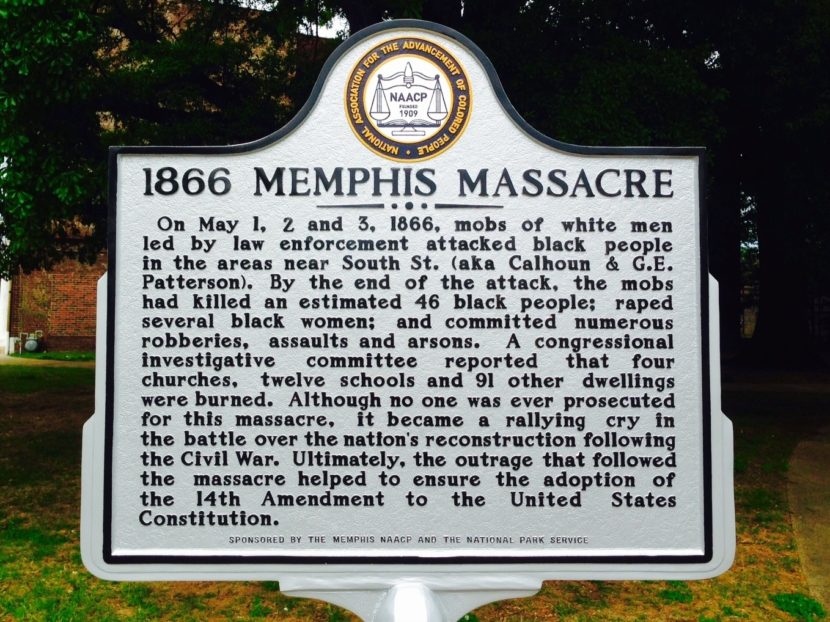
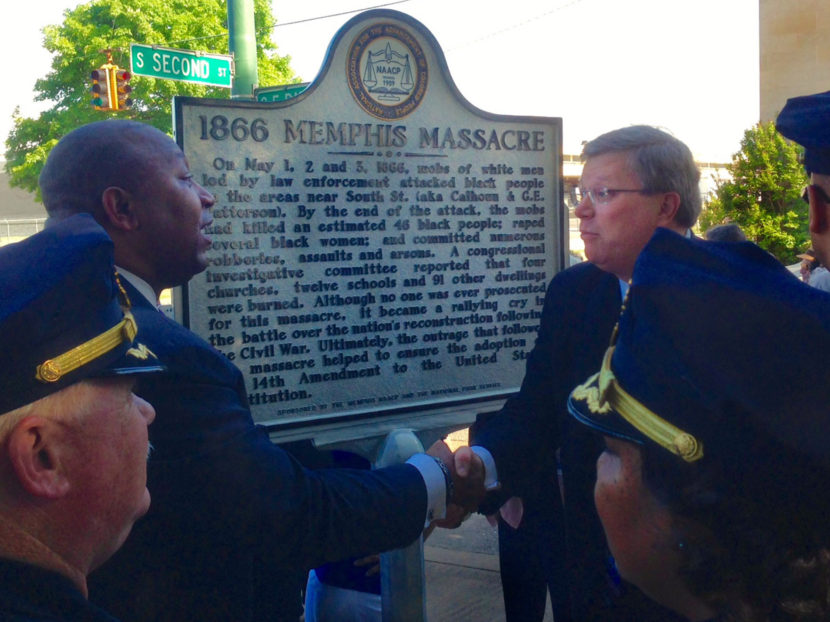
The sign, a private marker placed by the NAACP, and approved by the National Park Service, as it now stands in Army Park. Christopher Blank/WKNO-FM
The sign, a private marker placed by the NAACP, and approved by the National Park Service, as it now stands in Army Park.
Christopher Blank/WKNO-FM

A somber procession began on Sunday in the courtyard of the former Lorraine Motel in Memphis, Tenn., where Martin Luther King Jr. was killed in 1968. Everyone in Memphis knows about that piece of history, but until recently, folks were unaware of a massacre that happened in the same part of town 100 years earlier.

On May 1, 1866, Memphis was home to a massacre that left dozens of black folks dead and countless others injured. This week in Memphis, the city is remembering that grim chapter in its history — a 150-year-old atrocity that shocked the nation and was nearly forgotten.

Stephen V. Ash, a history professor at the University of Tennessee, Knoxville and the author of A Massacre in Memphis: The Race Riot That Shook The Nation One Year After The Civil War, says newspapers of the era labeled what happened in Memphis a “race riot,” mostly on the basis that it began as a fight between black Union soldiers and some Irish police officers.

Near this now vacant lot on the corner of B.B. King and G.E. Patterson, a group of black Union soldiers had an altercation with several Irish police officers in 1866. Christopher Blank/WKNO-FM
Near this now vacant lot on the corner of B.B. King and G.E. Patterson, a group of black Union soldiers had an altercation with several Irish police officers in 1866.
Christopher Blank/WKNO-FM

“The rumor among the whites was that this was a full-scale black uprising in South Memphis,” Ash says, “and so white mobs began forming, marched into South Memphis and began indiscriminately shooting black men, women and children.” This went on for 36 hours.

In the end, Ash says, 46 black people were dead, many others were beaten or raped, and black churches, schools and homes were burned to the ground. The mob attack wound up helping to shape the course of Reconstruction-era politics and speed the passage of the Constitution’s 14th Amendment — guaranteeing citizenship to recently freed slaves.

Phyllis Aluko, a Memphis-based attorney, read Ash’s book and couldn’t believe she’d never heard about the incident, so she started the process of creating a historical marker to commemorate what had happened. First, she got the local chapter of the NAACP involved. It agreed to sponsor and pay for the marker. Then, Aluko submitted an application to the Tennessee Historical Commission, an organization whose mission includes marking “important locations, persons, and events in Tennessee history.” What came next was a months-long debate over what to name the violence.

The commission wanted the words “Race Riot” at the top of the sign. But that phrase has troubling connotations for Beverly Bond, a historian at the University of Memphis.

Memphis law enforcement looks on as the Rev. Keith Norman (left), president of the Memphis branch of the NAACP, shakes hands with Memphis Mayor Jim Strickland in front of the new historical marker. Christopher Blank/WKNO-FM
Memphis law enforcement looks on as the Rev. Keith Norman (left), president of the Memphis branch of the NAACP, shakes hands with Memphis Mayor Jim Strickland in front of the new historical marker.
Christopher Blank/WKNO-FM

“Naming is very important. If your name is John and I insist on calling you Johnny, it’s really a power relationship,” Bond says. “Most people tend to think in a 20th century frame of reference that [race riot] must be African-Americans who are rioting and destroying their community.”

In an email to the NAACP, one commissioner said that the term “race riot” would “stand the test of time.”

Not necessarily, says Beverly Robertson. When she was director of the National Civil Rights Museum, she found that it wasn’t just the exhibits that needed routine maintenance, but the language and scholarship of history itself. Robertson is one of three African-Americans on the 24-member Tennessee Historical Commission. The words “race riot” didn’t sit well with her either, but she and others were outvoted. So when the commission finally insisted that those words appear on the sign, Robertson told the NAACP to pull the plug.

“If we don’t tell it right, then generations to come will not understand what literally did happen,” Robertson says. Instead, with the city’s blessing — and not the state’s — the NAACP put up a private marker that summarized what unfolded on the day of the massacre.

Bryan Stevenson, founder and director of the Equal Justice Initiative in Montgomery, Ala., says there’s a growing choir of voices demanding a reconsidered history of the former Confederacy, starting with public monuments. Stevenson believes the South should remember the story of slavery and its aftermath in the way Germany now marks the Holocaust.

“Until we change the landscape with these markers and these images with a new iconography, we’re going to be living in a space that is compromised by the absence of truth,” he says.

At the end of Sunday’s procession, civic leaders, pastors, police officers and historians took pictures with one of the country’s first memorials to a Reconstruction-era event. A simple historic marker, which states, in no uncertain terms, that the African-Americans killed there in 1866 died not in a riot, but in a massacre.

Copyright 2016 NPR. To see more, visit http://www.npr.org/.
Site notifications
Update notification options
Subscribe to notifications