Archives for:

"Alaska Performance Scholarship"

Amid UA budget woes, some students are noticing increased military recruitment

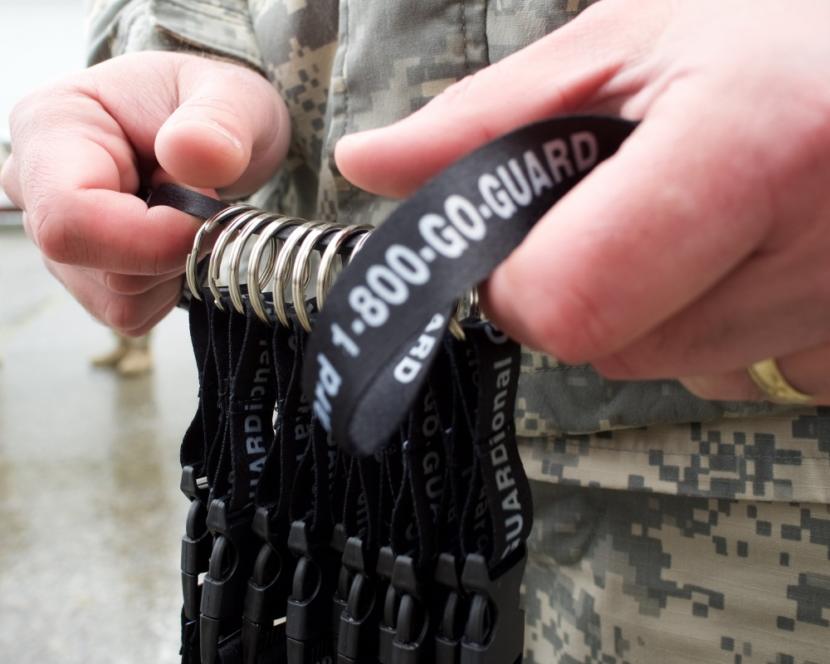
An Alaska Army National Guard recruiting and retention section chief stands ready to greet students Oct. 17, 2017, at Mt. Edgecumbe High School, Sitka, Alaska.
An Alaska Army National Guard recruiting and retention section chief stands ready to greet students Oct. 17, 2017, at Mt. Edgecumbe High School, Sitka, Alaska. (Public domain photo by Sgt. David Bedard/U.S. Army National Guard)

Amid the University of Alaska’s budget woes, targeted ads from out-of-state universities have appeared on social media, encouraging Alaska students to enroll.

Some UA students say they’re hearing more from military recruiters as well.

Leilani Oathout is about to begin her senior year at the University of Alaska Anchorage. She receives both the Alaska Performance Scholarship and an Alaska Education Grant, about $4,500 altogether each school year.

In early July, she and 12,000 other Alaska students were told the state didn’t have funds available to pay those scholarships. Oathout said in the days after she was notified, she started seeing ads on Facebook from other colleges.

“And then I randomly got an email in my inbox for recruiting for the Army,” she said. “And I didn’t think (anything) of it until I got a second email in my spam folder.”

The emails — one from the Army, another from the National Guard — touted benefits like tuition assistance and cash bonuses.

The Alaska Legislature passed a bill on Monday that would restore scholarship funding. It moves now to Gov. Mike Dunleavy’s desk. But with all the university budget uncertainty, Oathout said she understands the attention from recruiters.

“That’s pretty smart that they’re targeting students. But I also feel super bad. Like, I don’t think this is a good route the state is going down,” Oathout said.

Joey Sweet, 26, is pursuing a master’s degree in public administration at UAA. He said he’s received military recruitment emails in the past, but typically about one a year. He said he received three of them within eight days in July. He doesn’t think it’s a coincidence.

“I mean, I think the emails really speak for themselves,” Sweet said. “The one Army email straight up said in the subject line something like, ‘Hey, do you need a backup plan?'”

The subject line read: “A Back up Plan? Secondary Income? Benefits?”

Sweet said he has a lot of respect for the military and that it’s a good option for many students, but he thinks using UA’s budget crisis as a recruiting tactic is inappropriate.

The Army has seen an increase in interest in the last few weeks from Alaska high school graduates, including UA students, but James Puckett, station commander at the recruiting office in Anchorage, said the Army hasn’t changed its outreach.

“My team is not messaging any differently than it has been before,” Puckett said. “We’ve had email campaigns in the past, and we’ve targeted the same market. There’s not been an increase in our marketing or our specific targeting to these areas.”

Puckett said Army recruiters, as always, are letting students know they have options.

“Our message is pretty clear, you know. Check the Army out, and our incentives and educational opportunities,” he said.

This week, the Legislature passed a bill that would undo many of the governor’s line-item vetoes to the operating budget, returning most of what he cut from the UA system. But Dunleavy has indicated more vetoes are likely.

The UA Board of Regents met Tuesday to discuss the budget and options for restructuring.

Alaska university students notified that millions in scholarships and grants currently in limbo

Students gather outside at the University of Alaska Southeast on Tuesday, Sept. 4, 2012. (Photo by Heather Bryant/KTOO)

Notice went out to 12,000 Alaska students on Tuesday afternoon that money for their grants and scholarships isn’t currently available for the next school year.

But it’s not because the funds were vetoed from the budget. The Alaska Commission on Postsecondary Education wrote in the message that funds for the Alaska Performance Scholarship and Alaska Education Grant aren’t currently available and require legislative action to be restored.

The commission is a state corporation tasked with planning for higher education and administering financial aid programs.

Funding for a program that provides money for students from Alaska to attend the University of Washington School of Medicine is also unavailable.

At issue is nearly $350 million in Alaska’s Higher Education Investment Fund. Each year, funds from nearly every state program get swept into a constitutionally-mandated savings account. Typically lawmakers vote to put the money back into the programs it was designated for. But that process requires a supermajority of the Legislature — three-quarters of them — to vote to put the money back. This year, that didn’t happen.

It’s also unusual for the Higher Education Fund to be included in the funding sweep — historically, that hasn’t happened.

According to data from the University of Alaska, nearly 1 in 5 students gets a merit-based Alaska Performance Scholarship. Altogether, the performance scholarships and education funds support more than 5,000 students with more than $15 million in financial aid each year.

Capital budget, Power Cost Equalization, college scholarships are caught in PFD debate

Rep. Lance Pruitt, R-Anchorage, talks to reporters at a House Republican Minority press availability in his office at the Capitol in Juneau on March 14, 2019.
Rep. Lance Pruitt, R-Anchorage, talks to reporters at a House Republican minority press availability in his office at the Capitol in Juneau in March. Pruitt said Tuesday he anticipates there won’t be enough votes to draw from the Constitutional Budget Reserve unless the House amends the capital budget bill to fund full permanent fund dividends under a 1982 state law. (Photo by Skip Gray/360 North)

The state capital budget for the next year is caught in a dispute over the size of permanent fund dividends.

It also affects programs to pay for college grants and scholarships and to equalize power costs across the state.

The capital budget, Senate Bill 19, depends on at least six Republicans who aren’t in the House majority supporting the budget. That’s because it would draw $162.5 million from the Constitutional Budget Reserve, and drawing from that piggy bank requires support from three-quarters of the members of both chambers.

It doesn’t look like those votes will be there without dividends of roughly $3,000.

House Minority Leader Lance Pruitt, an Anchorage Republican, said his caucus supports amending the capital budget to pay full dividends under a 1982 state law. If that amendment isn’t successful, Pruitt anticipates there won’t be enough votes to draw from the Constitutional Budget Reserve.

“If the amendment for the dividend did not pass, then there would not be enough votes to have … the CBR language pass,” Pruitt said.

The capital budget debate could begin as soon as Wednesday. The budget would fund the reopening of Palmer Correctional Center and provide funding for new drug treatment facilities.

Rep. Tammie Wilson, R-North Pole, at a House minority press availability on Feb. 23, 2017. (Photo by Skip Gray/360 North)

North Pole Rep. Tammie Wilson said $10 million would go to grants to expand drug treatment throughout the state.

“We know that there’s pretty much not a part of the state that’s not affected by not having enough treatment beds,” said Wilson, a Republican in the House majority caucus.

The House Finance Committee advanced the budget Tuesday on an 8-3 vote.

If the entire House falls short of the 30 votes needed to draw from the Constitutional Budget Reserve, there would be no money in the budget for the Power Cost Equalization program for residents with high energy bills. And there would be no money for both Alaska Performance Scholarships and needs-based Alaska Education Grants. Both programs pay for Alaska students to attend postsecondary education.

The capital budget also would include more than $1 billion in federal funding. But the state must spend some of its own money to receive the federal dollars.


Watch the latest legislative coverage from Gavel Alaska.

State releases stats on scholarship eligibility

Early data indicate at least 2,170 students from the high school graduating class of 2012 qualified for a state-funded merit scholarship.

Gov. Sean Parnell’s office says that’s 30 percent of this year’s total graduating class. It’s not clear yet how many students will accept a scholarship, which must be used for post-secondary education in Alaska.

Parnell has been a champion of the Alaska Performance Scholarship, seeing it as a way to help transform the state’s education system.

A report to lawmakers on the program’s inaugural year showed that as of Jan. 1, the program had awarded about $3 million in aid to more than 900 graduates from the class of 2011. About 1,400 additional students qualified and remained eligible to receive scholarship aid later, provided they meet eligibility requirements.

Site notifications
Update notification options
Subscribe to notifications