

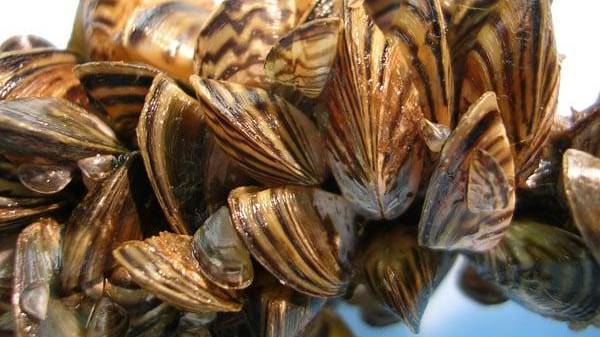
Invasive mollusks hitch ride to Alaska on aquarium algae
The mussels could infiltrate local ecosystems if people dump their aquariums into lakes and rivers. They can wreak havoc on personal property, too.

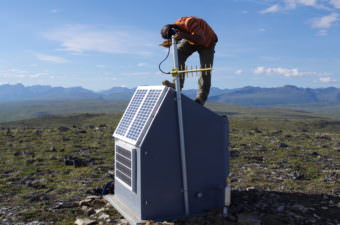
New legislation improves earthquake preparedness in Alaska
The legislation approved in Congress on Tuesday renews an earthquake preparedness bill that originally passed 40 years ago. The most recent version of the legislation expired nearly 10 years ago.
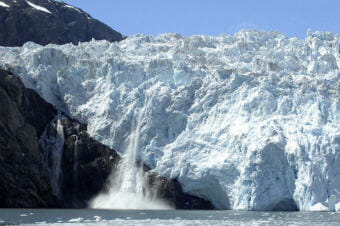
Climate change will cost Alaska hundreds of millions per year, report finds
One of the report’s authors said the dollar figures don’t capture the large disparity between climate change’s cost to urban and rural Alaska.
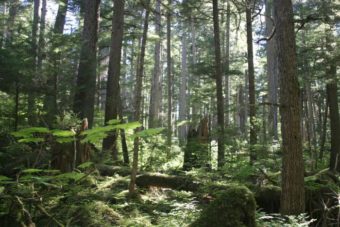
Is there something for everyone in a new vision for Tongass roads?
Eventually, it will be up to the U.S. Forest Service to choose one of four options, which represent a spectrum of ideas about how the Tongass should be managed.
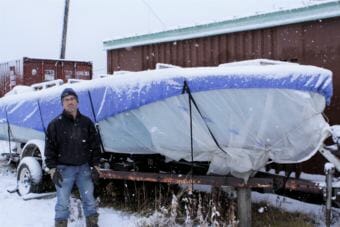
As ocean heats up off Northwest Alaska, the fishing does too
This year’s commercial harvest of chum salmon in Kotzebue Sound was nearly 700,000 fish, breaking a record nearly four decades old. To the south, the value of the commercial salmon catch in Norton Sound was also the highest ever.
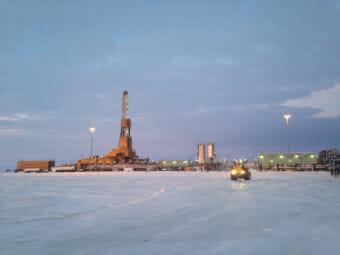
ConocoPhillips executive: more land around Teshekpuk Lake should be available for drilling
His statements come a week after the Trump administration announced it is overhauling the management plan for the 22-million-acre Reserve where Teshekpuk Lake is located, a decision spurred by a series of recent large oil discoveries in the region.
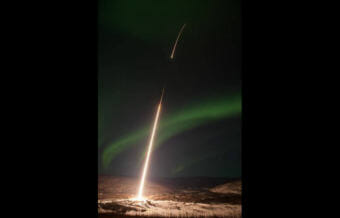
An unexpected agency weighs in on offshore Arctic oil drilling: NASA
In April, the NASA Goddard Space Flight Center sent a letter to BOEM estimating that 70 rocket parts have landed in the Beaufort Sea since the 1960s. The agency’s concern, it wrote, “is that future oil and gas development in the Beaufort Sea could result in the need to protect additional persons and property when conducting launch operations.”
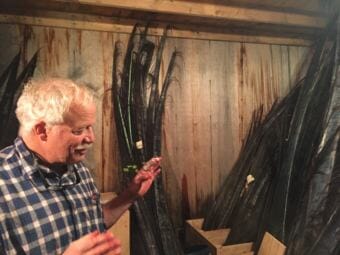
Science and traditional knowledge converge in North Slope Borough’s bowhead whale program
Scientists have spent the past few decades catching up to traditional knowledge, documenting scientifically what whale hunters already knew. Like the fact that the whales can smell, and that they can travel under sea ice.
Nuclear power in Alaska? Experts say it’s not as far-fetched as you think.
Nuclear power has been explored in Alaska before, in the Interior village of Galena, and went nowhere. At an Anchorage conference this month, the Resource Development Council, an industry group, took another look.
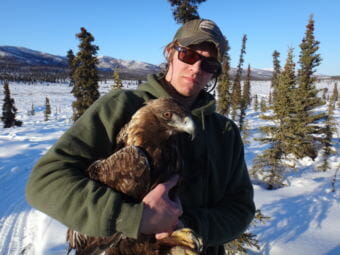
Scientists map shifting migration around Alaska mountains, using GPS-equipped eagles
When golden eagles migrate to and from Alaska each year, they have to fly around a huge obstacle: the 16,000-foot peaks of the Wrangell Mountains. Some of the eagles choose a route that skirts the northern edge of the mountains. Others go south. A new study examined how the weather affects which way the eagles fly.
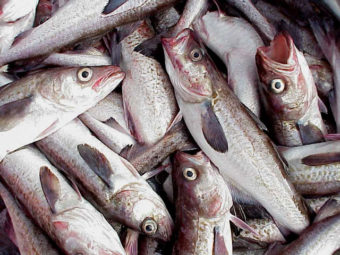
Things are heating up for Alaska pollock — and it’s putting them in the mood to spawn
Over the past three decades, pollock spawning times in the Gulf of Alaska have varied as much as three weeks. That’s potentially deadly for baby fish that are spawned into an environment that’s not ideal.
About Alaska’s Energy Desk
Alaska’s Energy Desk is a collaboration between KTOO in Juneau, Alaska Public Media in Anchorage, KUCB in Unalaska, Fairbanks Daily News-Miner in Fairbanks, KBRW in Utqiaġvik and KYUK in Bethel. Each week we produce in-depth coverage of energy issues in Alaska that air on local stations, the Alaska Public Radio Network and on national news programs.
More about Alaska’s Energy Desk >
Our sponsors
