Alaska Public Media

Alaska Public Media is one of our partner stations in Anchorage. KTOO collaborates with partners across the state to cover important news and to share stories with our audiences.

Blood Bank denies it put public at risk to boost finances

Alaska Blood Bank CEO Bob Scanlon, left, and Board Chair Ryan York talk to reporters on Friday.
Alaska Blood Bank CEO Bob Scanlon, left, and Board Chair Ryan York talk to reporters on Friday. (Photo by Zachariah Hughes/Alaska Public Media)

The Blood Bank of Alaska did not put residents at risk by mismanaging the state’s blood supply this summer, according to a 23-page report, detailed during a press conference held at the organization’s new building.

But according to the whistle-blower who filed a complaint with the U.S. Food and Drug Administration, that’s not true.

The accusations were first made public in reporting by the Alaska Journal of Commerce and included charges that the Blood Bank had over-exported critical blood supplies in order to meet debt requirements taken on when it moved into the new building.

BBA CEO Bob Scanlon said that a substantive investigation showed that effectively every negative claim in the complaint has been proven inaccurate.

“The accusations that have been leveled against us are meritless,” Scanlon said, reading from prepared remarks

The report released Friday includes detailed findings drawn from three recently conducted independent audits and employee interviews. The report was prepared by three investigators, all of whom are BBA board members.

Ryan York chairs the board and explained to reporters that the decision not to include any outside investigators was due to the exceptionally complex finances and regulations involved in blood banking, which required a level of familiarity the board didn’t expect to find locally.

“It was agreed from the beginning that if the committee found that any of the allegations warranted or needed further investigation, an outside party would be consulted and a budget of $25,000 was provided for them to do so,” York said. “The committee’s access was unfettered in terms of the data and documents they could request, and the individuals they could speak with. No issues were found, and no parties were retained.”

BBA officials spent more than an hour sharing the report’s findings and taking questions from reporters. They provided numbers refuting the claim the Blood Bank had lost donors because of overly aggressive recruitment tactics and attributed persistent robo-calls to a glitch in a new telephone system, which has since been fixed.

Scanlon also denied there were ever abnormal blood shortages this summer. The detail is tied to a part of the formal complaint alleging just a few bags of a critical blood type were on hand at the Blood Bank. That’s because most of the state’s blood isn’t stored at the bank, but at hospitals in Anchorage and around the state. Scanlon attributed many of the accusations made by the former employee to misunderstandings about how the “blood industry” works.

“I think it’s lack of knowledge,” he said. “We’re talking about a development department person who is a grant writer stating what the best process for managing inventory is.”

The FDA complaint was filed by Linda Soriano, who said in a phone interview late Friday evening she was one of six employees that contributed to it. Soriano disagrees with the report’s findings and BBA’s claims about blood supply.

“It’s misleading to the point of being a lie to say they only store a small amount of blood in that blood bank,” she said.

Soriano has spent years involved in the financing side of Alaska’s health care systems and disputes Scanlon’s characterization of her as unfamiliar with operations. She sees the audited materials as only capturing a small sliver of the Blood Bank’s overall function and management. On top of that, the report used audit materials drawing from before BBA’s move to its new location, which is when Soriano believes the financial pressure to meet a larger debt burden and rising costs actually began.

“All of the financial problems, all the inventory problems that I referred to in the FDA complaint began when we moved into the new building in February,” she said.

Soriano said employees were misled about financial details in the Blood Banks budgeting, and she alleges the board’s perspective on the complicated business of blood banking is out of step with what employees see day to day.

When asked why the Blood Bank has been so tight-lipped in the last few months answering questions from the press, York, the board chair, said it had to do with the organization’s lack of familiarity handling “crisis management” public relations. They have since retained representation from KD/PR Virtual, which describes itself as “Alaska’s most experienced full-service PR firm,” and whose president was on hand for Friday’s press conference.


Kotzebue brothers make first app for all 20 Alaska Native languages

When Barrow officially changes its name back to Utqiaġvik on Dec. 1, people all over are going to encounter the same typographical issue: writing out the “ġ” character.

Alaska Native languages have faced a growing technological challenge of meshing alphabets with all the new tools for communicating, like texting or Facebook.

As of Wednesday night, there’s now an app for that.

For the first time ever, you can find all the characters for the 20 recognized Alaska Native languages in one place: a keyboard, downloaded right onto your iPhone. An app called Chert pulls in all the characters you need to spell out words in Yupik, Iñupiaq, Tlingit and more.

Chert was designed by two brothers from Kotzebue, Reid and Grant Magdanz.

“Honestly, I think the main reason I wanted to do it is because I was trying to learn Iñupiaq,” Reid Magdanz said by phone in Kotzebue. “There’s all sorts of cool apps that you can put on your phone, but if you can’t type the characters right they’re not very useful.”

Magdanz also was frustrated he couldn’t text other language learners in proper Iñupiaq.

So last Christmas, he and his brother, Grant, who lives in California, spent a week making a similar keyboard just for Iñupiaq. It was a success, and over the last six months, the two expanded their efforts.

Magdanz, who works as a legislative staffer for Sitka Democratic house member Jonathan Kreiss-Tomkins, reached out to language experts around the state collecting the right characters for all the alphabets. Grant did the coding.

The brothers aren’t making money from the free app.

They see it as a contribution to the state’s ongoing language revitalization.

Magdanz explained that historically, colonial governments, educators and missionaries saw Alaska’s indigenous languages as “backwards,” simplistic and “anti-Modern” — a falsehood he thinks technology can correct.

“This app is kind of a small step, (but) it’s also something of a symbolically important one, because it is saying to the world not only can these languages be modern, but they are modern,” Magdanz said. “I mean, you can type them on your phone, you can text them, you can send a Snapchat. What’s more modern than that?”

The name Chert, came from a stone “traditionally used … to fashion spear points, arrowheads, and other tools,” Magdanz wrote in a message. He and his brother wanted a name that symbolized a connection between the “past and present,” a bit like the way a language connects speakers to the people who came before them.

Unlike a spear point, this Chert takes just a few minutes to locate and install.

“You just go to the app store and search Chert,” Magdanz said.

So far they’ve only developed the app for the iPhone’s operating system, but they are working on one for Android devices as well.

Tension lingers over handling of investigation into Anchorage’s linked homicides

A day after news broke that five Anchorage deaths are linked to the same gun used an attack on a police officer during the weekend, questions remain about how officials responded to public concerns in the months before.

Law enforcement had very little evidence connecting the homicides and walked a fine line between recruiting the public’s help and not losing their only thread in the case.

On Saturday, the Anchorage Police Department caught a break.

They’d known since July that the same gun was used in multiple homicides in different parts of the city.

Even as more killings happened, that’s almost all they knew.

When police Lt. John McKinnon arrived at a crime scene early Saturday morning, he was surprised to find the exact weapon the police department had been looking for.

“(I) immediately recognized that there was a Colt Python,” McKinnon said, referring to a powerful .357-caliber revolver. “It made me tickled pink a little bit.”

It is rare nowadays to see revolvers used in Anchorage homicide cases, according to McKinnon, who heads the department’s homicide and robbery/assault units.

The state’s Scientific Crime Discovery Laboratory had connected the weapon to five killings from this summer, months before James Dale Ritchie, 40, used it against an Anchorage officer downtown during an early-morning stop that had nothing to do with the open investigations.

As of right now, investigators only have evidence tying Ritchie to the death of Treyveonkindell Thompson, 21, on July 29, not the two double homicides that happened within the same two-month period.

“We know that the weapon was used on those other two cases, but we haven’t discovered complete information to show that Mr. Ritchie was there,” McKinnon said.

Currently, the department’s focus is finding proof that it was Ritchie who shot the other four victims, in order to close the case.

Going forward, the police department will work with partners like the Federal Bureau of Investigation to see whether Ritchie is potentially linked to other open cases elsewhere in the country.

Investigators are looking into other places Ritchie may have lived, including Virginia and Nevada, before he moved back to Alaska in February 2016.

According to McKinnon, there are no other investigations in Anchorage where Ritchie is a suspect right now.

The department is not calling Ritchie a “serial killer,” partly out of deference to process, since he hasn’t been factually linked to other homicides. But also out of concerns over messaging.

The department made that decision this summer, even after it began realizing that random killings had something in common.

“If we were to use the term ‘serial,’ it would not have protected your safety,” McKinnon said. “There was no investigative benefit to put that out there. And we didn’t want to embolden the person.”

For months, members of the media and public have asked law enforcement and elected officials whether some of this year’s record-breaking homicides were the work of one predatory individual.

For months, the police department has said they will not speculate on open cases, a response which many have found vague and unsatisfactory.

Communications Director Jennifer Castro said the department has been trying to find a balance between keeping the public informed enough to be safe without jeopardizing a fragile investigation.

“That gun is the only — the only — piece of evidence that we had to tie any of these cases together,” Castro said. “If that gun were to go away, to disappear, to get dumped, we would have no way to tie any of this together.”

Besides the gun, police had enough clues in the Thompson case to release a sketch of the suspect, and a description of a yellow bike they believed was stolen in the incident.

Interviews and material recovered on Ritchie’s phone show he got rid of the bike after that information was made public, according to McKinnon.

According to Staci Feger-Pellessier, a spokeswoman for the FBI in Anchorage, in cases like these police department’s try to balance public concerns against what effect additional information will have on investigations.

“I can understand the public’s concern, but we also need to understand the difference between wanting to know something and needing to know something, and in this case releasing additional information would have jeopardized the investigation and could have possibly led to more murders,” Feger-Pellessier said.

That logic doesn’t assuage concerns from the last few months felt by many Anchorage residents.

Anchorage Assembly member Eric Croft has seen a tension between the interests of police investigators and members of the public.

“I had a number of constituents and other Anchorage residents trying to figure out whether we had a serial killer, whether these crimes were connected,” Croft said. “People are naturally concerned about that.”

Those fears led to chatter on social media, alarmed public meetings, and even organizing in some areas to start community patrols.

It also changed a lot of people’s behaviors and feelings about where they live.

Eva Gardner’s home is near Valley of the Moon Park, where a double homicide in August has been linked to the gun in question.

She wrote a letter to the mayor after the killings saying the city’s response to residents’ concerns had been inadequate.

Like many people, Gardner heeded warnings from the police department to avoid the city’s trails out of concerns for safety.

“After the Valley of the Moon homicides I still walked to work as long as it was daylight, but as soon as the darkness came I stopped using them alone, and I think as of this week, I’m going to start using them again,” Gardner said.

It’s a sentiment she’s heard from others, as well.

She feels relief that investigators believe the man responsible for this summer’s five killings is no longer a threat, but sees room for improvement in how police communicate with citizens.

Anchorage Assembly budget makes several cuts mostly to increase police force

The Anchorage Assembly passed a $504 million operating budget during it’s Tuesday night meeting, up slightly from last year’s budget of $488 million.

Increases are going primarily to pay for a larger police force.

Modest cuts were made across the board to departmental budgets, grant programs and public transportation.

Assembly member Eric Croft summed up a process that’s gone relatively smoothly since the budget was first introduced by the mayor’s administration a few months ago.

“(There are) cuts all over this budget to make up for concentrating on police,” Croft said during member comments. “It does make cuts in every other area except public safety in order to put more cops on the street.”

The budget passed 7-4, with conservative assembly members opposed because they say it grows the size of local government amid a lean fiscal environment.

Obama’s Alaska regs could cling long into Trump’s term

White House and Barack Obama 20100425
President Barack Obama arrives at the White House on April 25, 2010. (Photo by Pete Souza/The White House)

As a candidate, President-elect Donald Trump said he’d liberate business by striking as much as 70 percent of federal regulations. Trump vowed to dump Obama-era policies and unleash the energy industry to produce more oil, gas and coal. It would seem like good times for natural resource extraction in Alaska. But Trump will find some policies easier to dismantle than others.

President Obama’s policies for Alaska are embedded in a variety of documents: executive orders, memoranda, agency action and formal rules. Some can be undone with the stroke of a pen.

Consider the Pebble mine, a massive project proposed for southwest Alaska that opponents say is a threat to the salmon runs of Bristol Bay. Pebble spokesman Mike Heatwole said it’s unlikely Trump would want to continue the EPA’s efforts to block the mine using the so-called “veto authority” in the Clean Water Act.

“Mr. Trump campaigned on halting and reversing EPA overreach across the country,” Heatwole said.

Heatwole said he doesn’t know if Trump has specifically taken a position on Pebble, but he said he sees no reason why Trump’s EPA wouldn’t just reverse course.

“Certainly, the EPA’s preemptive actions against Pebble — you could probably call it a poster child in that regard, in terms of EPA overreach,” he said.

Earthjustice attorney Tom Waldo also said there’s nothing stopping the EPA from making a U-turn on Pebble.

“Yes, I think it’s entirely possible that EPA in a Trump administration may choose not to continue the process,” Waldo said.

Waldo hopes Pebble won’t get the financing it needs to proceed, but if it does, Waldo points out Pebble will still need federal permits.

“There are laws that protect the resources in Alaska and the United States, and there are procedures the agencies are required to go through in making changes,” Waldo said. “And we will be vigilant in making sure the laws are obeyed and the procedures are followed.”

President Obama has issued hundreds of executive orders and memos that Trump can undo once he takes office, just as Obama did after his inauguration. But some of Obama’s Alaska policy is enshrined in formal rules, and they’re more firmly set. Among them are restrictions on predator hunting in Alaska’s national preserves and refuges, which opponents see as Obama intruding on Alaska’s right to manage fish and game, and Arctic drilling standards. The so-called WOTUS rule, defining which waters are subject to the Clean Water Act, would also have a big impact in Alaska.

“It takes a lot of work to overturn a policy that has already been set by a rule,” said Tom Lorenzen, a Washington D.C. lawyer at the firm Crowell & Moring who used to work for the government, defending EPA regulations.

Generally, when a president wants to alter or toss a regulation, agencies have to go through the same laborious rule-making procedure it took to get the reg on the books, with notices, public comment periods and a lot of documentation. It can take a year or more. And then, Lorenzen said, whatever group that liked the rule as it was will likely sue.

“Well, I’ll tell you, I’ve been through two transitions: from Clinton to Bush, and from Bush to Obama, both inside the Department of Justice, and (repealing regulations) is not as easy as people might lead one to believe,” he said.

Often, the administration prevails years later. Or never. Case in point: The Roadless Rule for national forests. President Bill Clinton’s regulation lives on, despite the Bush administration’s best efforts to gut it.  We’ll see if President Trump takes a stab.

APD: Gun used to shoot officer linked to 5 summer homicides

Anchorage Police Department Chief Chris Tolley addresses the media at the department’s West Anchorage training facility, Nov. 15, 2016. (Photo by Josh Edge/Alaska Public Media)
Anchorage Police Department Chief Chris Tolley addresses the media at the department’s West Anchorage training facility on Tuesday. (Photo by Josh Edge/Alaska Public Media)

The Anchorage Police Department on Tuesday identified the two officers and suspect involved in a fatal weekend shooting, and police said the gun used by the suspect in Saturday’s shooting has now been linked to five Anchorage homicides.

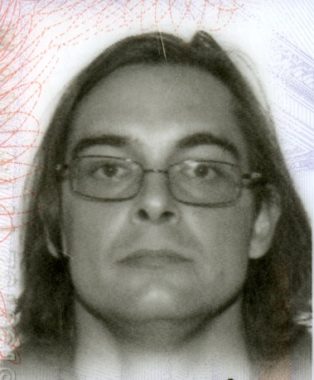
APD identified the suspect in Saturday morning’s shooting as 40-year-old James Dale Ritchie.

James Dale Ritchie, 40, was identified as the shooter in a police “ambush” on Nov. 12, 2016. He was shot and killed by APD officers. (Photo courtesy of Anchorage Police Department)
James Dale Ritchie, 40, was identified as the shooter in a police “ambush” on Nov. 12, 2016. He was shot and killed by APD officers. (Photo courtesy Anchorage Police Department)

Lt. John McKinnon, commander of the department’s homicide and robbery-assault section, said the Colt Python .357 Ritchie used has been linked to five other Anchorage homicides this summer, from early July through late August:

“The two victims at Post Road, the one victim at Bolin Street, and two from the Valley of the Moon Park,” McKinnon said.

Jason Netter and Brianna Foisy were killed July 3 on Post Road; Treyveonkindell Thompson was killed July 29 on Bolin Street; Bryant De Husson and Kevin Turner were killed Aug. 28 in Valley of the Moon Park.

McKinnon said detectives met with the victims’ families Tuesday morning to relay the new information.

APD Police Chief Chris Tolley identified the officers involved in Saturday’s shooting, beginning with injured officer Arn Salao, a five-year veteran of the department:

“He immediately returned gunfire and physically fought off his assailant,” Tolley said. “At the same time, as this is occurring, as second officer who’s in the area rolled up on the incident, and Sgt. Marc Patzke of our K9 Unit charged and returned fire. And together they were able to stop this individual.”

Ritchie was killed in the gun battle.

During the attack, Chief Tolley said Officer Salao was shot at least four times in the lower part of his body.

“Even though he was hit in the lower part of the body and entered into the body in the lower extremes, the gun… the bullets traveled and went up into the middle of his body, fracturing bones ripping apart muscle, ripping through his intestines and even lodging in the liver,” Tolley said.

Despite the seriousness of the injuries, Chief Tolley, said after two surgeries Officer Salao’s condition is now listed as stable.

“I’m happy to tell you despite some infections setting in over the weekend, we think we’re past that and the officer actually got up, he’s been moved out of ICU, and the officer been up and begun to try to take some steps,” Tolley said.

And after visiting the wounded officer Tuesday in the hospital, Chief Tolley said Officer Salao plans on taking even more steps.

Saturday’s incident began when Officer Salao made contact with James Ritchie while investigating a report a theft, stemming from a man who refused to pay his cab fare. But, Lieutenant McKinnon said Ritchie was not that man.

“I know that Mr. Ritchie was in the area during the event, and so we would contact people as if they were witnesses, if they saw anybody, ‘Hey, did you see someone matching this description?’ And so he is not the person that was involved in the cab theft,” McKinnon said.

And McKinnon said Ritchie’s motive for opening fire is not immediately clear.

“We are not sure what the suspect was thinking or what was going through his thoughts,” McKinnon said. “All we do know is that he immediately goes at the officer and produces a handgun and shoots at him multiple times.”

McKinnon said APD will not release video citing its graphic nature as well as an effort to preserve evidence in ongoing cases.

As part of its ongoing investigation, McKinnon said the case – along with the five homicides associated with the weapon – remains open.

McKinnon said investigators will continue to look into Ritchie’s past, including other places he may have lived, to find if there are any other cases to which he may be linked.

Site notifications
Update notification options
Subscribe to notifications