Angela Denning, CoastAlaska

Angela Denning is CoastAlaska's regional news director, based in Petersburg. CoastAlaska is our partner in Southeast Alaska. KTOO collaborates with partners across the state to cover important news and to share stories with our audiences.
Alaska salmon hatchery operator agrees to pay $1M for environmental violations

""
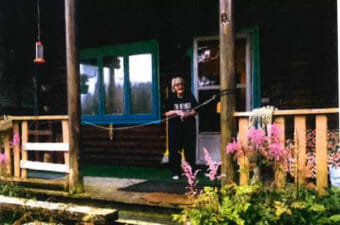
Cannery Creek Hatchery in 2015 (United States Forest Service photo)

A salmon hatchery operator in Prince William Sound has agreed to pay a $1 million fine for hazardous waste violations.

Prince William Sound Aquaculture Corp. pled guilty to illegally burning fuel and waste at its hatcheries, which led to a worker being seriously injured.

Alaska has 25 private nonprofit salmon hatcheries in the state, most of which are in Southeast Alaska. Prince William Sound Aquaculture Corp. operates five of them in remote locations, three of which are state-owned.

The hatcheries collect salmon eggs from indigenous DNA lines, fertilize and incubate them indoors, rear them outdoors in pens until they are big enough to be released into nearby waterways.

What led to the U.S. government charging the regional hatchery operator and the $1 million fine was years of illegally disposing of hazardous waste.

The 18-page plea agreement filed Nov. 9 focuses mainly on the Cannery Creek Hatchery, located in remote Unakwik Inlet, approximately 40 miles east of Whittier.

Cannery Creek hatchery violated federal environmental laws on several occasions spanning nearly a decade, according to the plea agreement.

Prince William Sound Aquaculture Corporation operates five salmon hatcheries in the region. Cannery Creek Hatchery among others was identified as violating federal environmental laws.

In 2013, there was a 400-gallon diesel spill, which resulted in the state suing the corporation and a few hatchery employees. That resulted in a $55,000 fine from state environmental monitors. The operator was also required to hire a consulting firm, Nortech Environmental Engineering & Industrial Hygiene Consultants, to create an environmental compliance plan for all five of its hatcheries.

The consulting firm noted that the Cannery Creek Hatchery had no formal waste management plan, that it was storing new and used oil products in various locations without appropriate containment and that it was burning solid waste in an open pit.

Five years later, in 2018, one of the hatchery’s workers was severely injured while tending to a burn barrel with leftover jet fuel in it. He was medevaced out for care.

Later, when the federal Environmental Protection Agency investigated the site, the agency found that the hatchery was still burning drums of fuel.

Other hatcheries were mentioned in the plea agreement, which states, “The disposal of drums containing used oil was a long-standing issue at PWSAC’s hatcheries.”

The Prince William Sound Aquaculture Corp. eventually hired a contractor to remove “several tons” of hazardous waste from its hatcheries, according to the plea agreement.

In addition to the $1 million fine, the corporation has agreed to five years of probation during which time they’ll follow an environmental compliance plan.

Jeffrey Robinson, an attorney who is representing the hatcheries, said he could not comment on the case until it concludes.

A spokesperson for the U.S. Attorney’s Office said the sentencing is expected in about three months but declined further comment.

The salmon produced in the Prince William Sound hatcheries make up about 45% of the harvest value in the region, or around $50 million a year.

Alaska’s salmon worth $720 million this year

""
Commercially caught coho salmon in Southeast Alaska. (Photo by Matt Lichtenstein)

It looks like Alaska’s commercial salmon industry is pulling itself out of a pandemic rut. The Alaska Department of Fish and Game released its preliminary statewide summary for the year on Thursday. The harvests for all five salmon species in all fisheries equaled $720.4 million. That’s $76.5 million more than last year and $425.2 million more than two years ago.

In 2020, the harvest total was a low of $295.2 million — one of the worst on record.

Sockeye salmon made up approximately 66% of the state’s total value this year. Most of that is due to the record-breaking Bristol Bay fishery at nearly 69.7 million fish.

Chum and pink salmon were worth nearly the same. They contributed 15 and 14 percent of the state’s total value respectively.

King salmon made up 3% of the statewide value. Even with far less fish harvested than the other species, Kings averaged over $60 per fish.

Coho salmon made up approximately two percent of the statewide value.

This year’s harvest of nearly 161 million salmon is close to the long-term average since 1985. It’s the largest even-year harvest since 2010. However, for pounds harvested, it’s a little below the average.

When the overall yearly value is adjusted for inflation, it ends up being about the 24th lowest fishery since 1975.

The state’s salmon summary is just an educated estimate. The final value of the year’s fisheries won’t be known until next year after all the fisheries are closed out — meaning that seafood processors, buyers, and direct marketers report what they paid to fishermen.

Sealaska to pay $15.4 million in shares

This chart shows Sealaska’s growth in operations and shareholder permanent fund in recent years. (Image from Sealaska)

Southeast Alaska’s regional Native corporation plans to distribute $15.4 million to its shareholders November 9.

Sealaska has approximately 23,000 shareholders who are Lingit, Haida and Tsimshian people living in Southeast Alaska and elsewhere. The for-profit corporation is based in Juneau.

The amount of the dividend per shareholder ranges from $374 to $695 per 100 shares and depends on the class of shareholder.

About half of Sealaska’s payout ($7.6 million) comes from operations income. The other half comes from natural resource revenue sharing funds ($5.1 million) with the Alaska Native Claims Settlement Act Section 7(i) and the Marjorie V. Young Shareholder Permanent Fund ($2.8 million).

While the ANCSA funds are more volatile, the shareholder permanent fund has seen steady earnings in recent years. The corporation’s operations have seen increased profits the last seven years.

In a press release, Sealaska CEO Anthony Mallot said the corporation’s dividends remain solid despite the economic volatility seen across the globe.

“I think we’ve all been feeling the impact of the tough financial market we’re currently in. But because of the way Sealaska dividends are structured, with the five-year averaging of operations income and the permanent fund, we can help limit large movements in the dividend during years like this one, where investment markets face significant decline,” he said in the statement.

The fall dividend brings the year’s total payout to shareholders to $36.7 million. $21.3 million was paid out in April.

Southeast Alaska’s summer Dungeness crab fishery worth $10M less than last year

""
Dungeness crab (Photo by Angela Denning/KFSK)

Southeast Alaska’s summer season for Dungeness crab was worth about $10 million less than last year. The shortfall was due to a combination of a much lower harvest and a smaller price per pound.

State managers closed Southeast’s Dungeness summer fishery — which opened June 15 — two weeks early by emergency order because of low harvest numbers.  It’s been five years since the last time that’s happened. This summer season harvest was just under 1.3 million pounds, nearly two million pounds less than last year.

Along with the lower harvest, was a corresponding drop in value. This year the fishery was worth $3.77 million. Last year it was $13.03 million.

Biologist Joe Stratman manages the fishery for the Alaska Department of Fish and Game. He says there are a number of factors that could lead to a fluctuating harvest. Fishermen this summer noted colder water temperatures at the start of the season, and tides of over 20 feet. These details matter because managers set the season length according to the first week’s harvest.

Stratman says it could be those factors or just fewer legal-sized crab available.

“It’s also very possible that it was just a smaller cohort of crab recruiting into the fishery this year than we’ve seen in in recent seasons,” he said.

This year’s price was $2.96 per pound. That’s about average for Dungeness crab over the last decade. But it’s much lower than last year’s $4.21 a pound, the highest price ever paid. On top of that, there was a much higher harvest last year at 3.09 million.

Most Southeast Dungeness fishermen also participate in the fall season, which opened Oct. 1.

Closing the summer season early usually means that the fall season will also be cut short. But there is an exception — and it happened this summer — and that’s a lot of soft-shell crab. As crab molt and replace their shells for larger ones, they contain less meat and bring less money.

If there are a lot of soft-shell crab in a shortened summer season, then the fall can go the full two-month length. This year, dock-side sampling indicated 28% soft-shell crab, which is enough to allow a full fall season.

Managers try to plan crab fisheries around molting but it’s a tricky business with weather, temperatures, and tides. What did seem to be consistent this summer was the overall slow fishing.

“I would say probably from most of the people I heard from, you know, they weren’t seeing much of anything in the pots,” Stratman said. “And a lot of people thought, ‘Well, you know, we’re starting on really big tides, we’re starting on cold water, things are gonna get better.’ But it sounded like in a lot of the region, things didn’t get better, they stayed relatively the same.”

189 permit holders fished Southeast’s summer Dungeness fishery. The area that saw the most harvest was near Petersburg and Wrangell — in District 8, which saw 295,000 pounds harvested. That was followed by Stephens Passage near Juneau with 215,000 pounds harvested. The Frederick Sound area — District 10 — harvested 175,000 pounds.

Stratman says some areas were notably low.

“Some fishermen, particularly in the northern part of the region, didn’t see much of anything this season,” he said.

The fall Dungeness crab fishery will run through November in most of Southeast. A few areas stay open through February.

DOT pursues hybrid design for Tustumena replacement

This image shows a rendering of the Tustumena replacement vessel. The Alaska Department of Transportation is pursuing an updated design that includes a room for housing batteries for hybrid diesel-electric power. (Image courtesy of Alaska DOT)

The vessel that eventually replaces the aging state ferry Tustemena is likely to be a battery-powered diesel-electric hybrid. That’s as the Alaska Marine Highway System leverages federal infrastructure funding to green up its fleet.

Greg Jennings, Special Projects Liaison with the state transportation department, told the Alaska Marine Highway Operations Board Friday that the state sees electric propulsion as a big part of the ferry system’s future.

“I would definitely say that there is no way batteries won’t be a part of any future marine transportation environment in the State of Alaska,” Jennings said. “Just because that’s where the industry and the regulations are going. It’s where the funding is going.”

The 300-foot ocean-class ferry Tustumena is nearly six decades old. The plan for its replacement now includes a room for housing batteries with the potential to expand.

Jennings says the decision to install batteries on the vessel opens a lot of doors.

“The beauty of this battery installation is it gives us the flexibility to do a lot of things we couldn’t do before,” he said.

The Tustumena’s two diesel engines currently use about 150 gallons of fuel per hour at cruising speed. Jennings says adding electric power will allow captains to use just one diesel engine at times. He says that’s expected to cut fuel consumption by 1%.

“So if you look year over year, over the lifetime use of the vessel, that’s a major savings to the state,” Jennings said. “One percent may not sound like a lot, but in ship design, you go to immense lengths to get 1% savings, because it’s like every day you operate that vessel that’s 1% you’re saving fuel.”

State transportation officials estimate adding batteries to the vessel would add millions to the new ferry’s estimated $200-$250 million price tag. But Jennings says the state expects to lean on federal money to help pay for it — the federal infrastructure law passed last year includes more than $1 billion in ferry funding.

“With the infrastructure funding that’s available to the state, much of that is very much centered around efficiency and modern technologies,” said Jennings. “And it behooves us to try to make use of that, you know, if we cannot, for some reason funding doesn’t come through, it is not a drastic step to remove the battery from the vessel and just say, you know, we don’t have funding, we’re just not going to do that part of it.”

The state is in conversations with the U.S. Coast Guard and American Bureau of Shipping for what kind of safety measures should be in place for the hybrid ferry.

Jennings says adding battery power to the Tustumena replacement vessel — known as the TRV —  will allow the state to learn about the technology and prepare for other projects in the future.

“We’re looking at operating the TRV for the next 50 years, you know, nominally,” Jennings said. “And if we don’t design in some capacity for batterie now, the state’s going to have to pay a much bigger cost in the future to try to fit it into a vessel that wasn’t designed for it. So again, there’s a really big future proofing benefit to this.”

He says adding batteries to the design will not affect the timeline. The new vessel is still scheduled to be ready for service in 2027.

The ferry system is also seeking $46 million in federal grant money for an all-electric ferry to conduct shorter day routes.
Southeast Alaska wolves eat over 60 prey species, study finds — including sea otter

A black wolf carrying what's left of a sea otter in its mouth
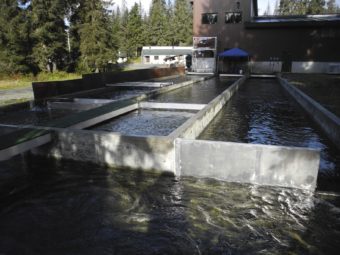
An image of a wolf dragging a sea otter carcass is captured on an Alaska Department of Fish and Game game camera.

Southeast Alaska’s wolves tend to favor deer and moose at mealtime, but in a pinch they won’t say no to black bear – or even sea otter. A study – now in its eighth year – has found a remarkably diverse diet among the region’s wolf population.  Although scientists use GPS collaring and other technology in their work, many of their conclusions are drawn from a large and growing collection of scat.

Petersburg has had a small pack of wolves hanging around the outskirts of town this year. Several residents have zoomed in with their cell phones to capture individual wolves here and there. The pack is part of a gray wolf subspecies known as the Alexander Archipelago wolf. They’re specific to Southeast Alaska and tend to be smaller and darker in color than their mainland counterparts.

Five wolves walking along a snowy shoreline.
An image of a wolf pack in Southeast Alaska is caught on an Alaska Department of Fish and Game game camera.

Biologists hope this close-to-town pack is an opportunity to learn more about local wolves. They’ve seen them on game cameras and think it’s a pair with three yearling pups. They’ve also successfully collared a black male in the pack and hope to get others.

Frank Robbins, the area management biologist for the Alaska Department of Fish and Game, says they use padded spring traps that capture the wolf by the foot.

“We’ll have signs up anywhere where we would put a trap,” Robbins said. “Of course, we wouldn’t put a trap anywhere where folks are out walking their dogs or where people are likely to encounter a set.”

Two people kneeling in the woods, studying something on the ground
Alaska Department of Fish and Game wolf research biologist, Gretchen Roffler (left) and employee Alex Lewis study a wolf kill site. (Photo by Sean Neilson)

The collaring project near Petersburg is part of a much larger study in Southeast, led by wolf biologist Gretchen Roffler. She’s been studying wolves in the region for eight years to find out their eating habits and range.

“Southeast Alaska is a very large and diverse landscape with different prey combinations available on these island groups and on the mainland,” Roffler said. “So for example, some islands have deer as the primary prey, whereas others have both deer and goats or deer and moose.”

To gather data, they’ve collared wolves from five different wolf packs.

A person stands over a moose skeleton in the woods
Alaska Department of Fish and Game wolf research biologist Gretchen Roffler investigates a wolf kill site. (Photo by Sean Neilson)

In the process, they collect information like age, weight, and if the wolf is one of the reproductive pair of the pack. They also take blood and hair samples for studying genetics and diseases. Then they wait. If the wolves hang out in a certain location for more than a few hours, it could be a kill site. And then the scientists move in.

“So we’re traveling to these sites by all possible means, by hiking on foot by skiff by kayak. Sometimes we use helicopters to get close to the site and then hike in,” Roffler said. “And once we’re there, we scour the ground to look for prey carcasses, or parts of the carcasses.”

They’ve studied over 200 sites so far and learned that heavy snowfall is good for wolves — it slows down prey and the wolves scavenge moose that have starved. Wolves also eat seasonally, sometimes focusing on salmon in streams during the summer. But hooved animals are their favorite.

“Wolves really tend to focus on the ungulates that they have available in their area, you know, be it deer or moose or goats,” said Roffler.

And they’ve found that Southeast wolves have dozens of “alternate prey” species.

A black-and-white game camera photo of a wolf eating a salmon in the dark
In the early morning hours, a wolf eats a salmon at a rendezvous site (a place where wolves keep their pups during the mid-summer). The image was caught on an Alaska Department of Fish and Game game camera.

Roffler and her helpers are also collecting wolf scat — lots of it, over 2,000 samples — which they’ve used to identify over 60 different prey species. Combining those findings with the kill sites, they’ve learned that wolves eat beaver, porcupine, marmot, adult black bear, brown bear cubs, even invertebrates off the beach. This alternate prey varies by location.

“So in places like Prince of Wales wolves consumed beaver and black bear,” Roffler said. “On Kuiu Island, wolves also consumed black bear. And then places like Gustavus and Pleasant Island that are close to protected areas like Glacier Bay National Park, they are consuming sea otters.”

That’s right… sea otters.

“So far, I have found 31 sea otter carcasses killed by wolves,” Roffler said.

Roffler is working on publishing a paper based on these sea otter hunts, which she’s personally observed.

The Southeast wolves have been surrounded by debate in recent years, with some environmental groups seeking federal protection of the subspecies while some local hunters seek larger harvests, claiming the wolves are eating too many deer.

Roffler says she tries to stay away from the controversy and is just interested in the science.

Here is information on Roffler’s diet study focusing on scat from 2010-2018.

Here are more photos from her earlier scat study.

Here is information on Roffler’s wolf study focusing on range from 2012-2016.

Site notifications
Update notification options
Subscribe to notifications