Casey Kelly

Murkowski introduces legislation to continue funding Native language programs

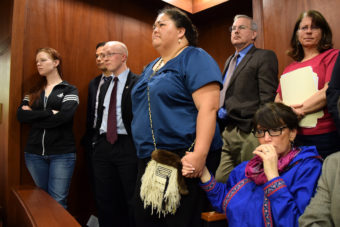
In the Senate gallery, an emotional Rep. Charisse Millett holds hands with Liz Medicine Crow while Senators debate the fate of the bill. The legislation, which passed moments later, makes 20 Alaska Native languages official state languages alongside English. (Photo by Skip Gray/Gavel Alaska)
An emotional Rep. Charisse Millett, R-Anchorage, holds hands with Liz Medicine Crow during debate on House Bill 216 in the Alaska Senate. The legislation, which passed, would make 20 Alaska Native languages official state languages along with English. (Photo by Skip Gray/Gavel Alaska)

Alaska Sen. Lisa Murkowski is introducing legislation to protect Native languages.

Murkowski and Sen. Tim Johnson, D-South Dakota, introduced the Native American Languages Reauthorization Act of 2014 this week. The act was first signed into law in 1992. Reauthorization would provide grants to indigenous language programs nationwide through 2019.

Murkowski could not be reached for comment Friday.

According to a news release from her office, some activities funded through the act include immersion programs, language schools and restoration programs.

“Native languages are at risk, and if they are not passed to the next generation the richness of our native cultures are at risk,” Murkowski said in the release.

She also thanked the Alaska Legislature for passing House Bill 216, which makes 20 Alaska Native languages official state languages. Gov. Sean Parnell is expected to sign the bill, making Alaska the second state after Hawaii to officially recognize indigenous languages.

Alaska Sen. Mark Begich is a co-sponsor of the Native American Languages Reauthorization Act.

City commission to spend $75K on Juneau Housing Action Plan

Juneau’s Affordable Housing Commission plans to hire a consultant to create a housing action plan for the city. The panel says the plan will be different from past city housing reports.

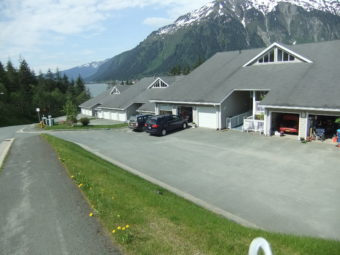
Vista Drive Douglas
Juneau’s Affordable Housing Commission wants to hire a consultant to create a housing action plan for the city. The idea is to spark more development like a 40-unit housing development planned for Vista Drive in Douglas. (Photo by Justin Heard/KTOO)

The Juneau Economic Development Council has done two housing needs assessments for the capital city. The 2012 report indicates Juneau has the highest average housing costs in the state. It recommends adding more than 500 single family homes and about 200 rental units to create a more stable and affordable housing market.

Juneau Affordable Housing Commission Chair Norton Gregory says the next step is to do a housing action plan.

We believe that the housing action plan would be the road map that we need in our community to help us to provide housing for all segments of our population,” Gregory told the Juneau Assembly Committee of the Whole this week.

He says the plan would look at specific needs from the housing assessment, such as more senior housing, more buildable land and more funding. Gregory says the idea is to recommend strategies to address those needs.

“Some of the recommendations that we would hope to see include strategies to encourage development of diverse housing types and all affordability levels in our community,” he says. “Finding ways to attract funding, including state, federal and private funding that addresses housing needs and to leverage existing funds with new funds.”

A couple years ago, the assembly created a $400,000 affordable housing fund for the commission to put toward ideas and projects that address the city’s housing shortage. The commission wants to use $75,000 from the fund to pay for the housing action plan. But some assembly members worry it will duplicate already available information.

“We know we need roughly 500-700 houses across the board,” Mayor Merrill Sanford says. “I don’t think we need that information in this plan.”

Gregory is a housing services manager for Tlingit-Haida Regional Housing Authority. He says the plan will aim to complement existing reports.

“I know just from my experience in the nonprofit housing industry here in Juneau that there is a great demand for single-bedroom apartments for young, working individuals,” he says. “But what is our strategy for making that happen? How do we get that out to the builders? How do we identify the land where they can build affordably?”

Assemblywoman Karen Crane says she’d also like to see housing solutions for homeless people and families.

“There are some really creative things that are going on in other communities to start to deal with that population as well, which is also a concern in Juneau,” Crane says.

The assembly put the city manager’s office in charge of making sure the commission gets the right information from the report. After a consultant is chosen to write the plan, Gregory says public meetings will be held to identify other issues of concern and possible solutions.

Gelbrich to interview for superintendent job in California

Glenn Gelbrich
Outgoing Juneau School District Superintendent Glenn Gelbrich at a recent school budget meeting. (Photo by Casey Kelly/KTOO)

Outgoing Juneau School District Superintendent Glenn Gelbrich is again a finalist for a position in the Lower 48.

The Red Bluff (Calif.) Daily News reports Gelbrich is one of three finalists for the open superintendent’s job in the northern California town. He’ll interview for the position next week. The Red Bluff Joint Union High School District Board of Trustees plans to make its selection the following week.

Gelbrich could not be reached for immediate comment. His administrative assistant said he’s traveling this week on personal and district business.

In March, Gelbrich announced he would not return as Juneau schools’ superintendent next year. He started in the position in July 2009, and has said he wants to move closer to family in Oregon.

Red Bluff is about 120 miles north of Sacramento. The town and surrounding area have a population of about 35,000. The high school has about 1,400 students, according to an advertisement for the vacant superintendent position.

In January, Gelbrich lost out on the superintendent’s job in Kalispell, Mont. In March, he made the final round of interviews, but was not chosen for a job in Nampa, Idaho.

The Juneau Board of Education is accepting applications for Gelbrich’s replacement through May 21. The board is paying Iowa-based firm Ray and Associates $16,000 to assist with a nationwide search. The advertised salary for the Juneau job is $162,000. Gelbrich’s salary this year is $155,000.

Big turnout for Juneau’s Blessing of the Fleet

More than a hundred people attended Saturday’s Blessing of the Fleet in Juneau to honor those who work in Alaska’s commercial fishing industry.
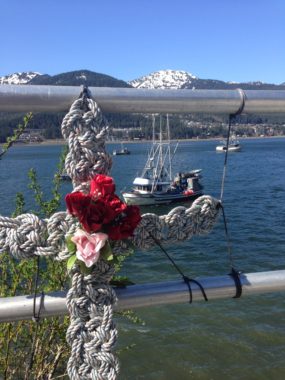
Six names were added to the Alaska Commercial Fishermen’s Memorial wall, and eight boats received blessings performed by the Rev. Gordon Blue of the Church of the Holy Trinity. The Alaska Youth Choir and the City of Juneau Pipe Band performed. Lt. Gov. Mead Treadwell was the keynote speaker.

The names added to the fishermen’s memorial wall this year were Daniel Glass, Jim McCormick, James Jensen, Peter Wright, and John and Elizabeth Clauson.

This was the 23rd annual Juneau Blessing of the Fleet. According to a fact sheet handed out with this year’s program, fishermen landed about $23 million worth of seafood in the capital city in 2012. Between fishing boats and processors, the local fishing industry employs more than 1,000 people.

City mulls housing development for downtown parking lot

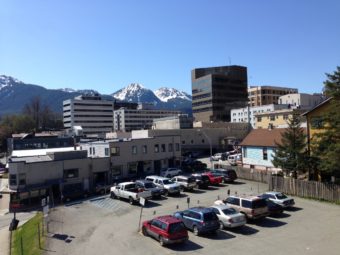
North Franklin parking lot
This could be the view from an apartment complex some Juneau investors want to build on a city-owned parking lot. (Photo by Casey Kelly/KTOO)

Local investors in Juneau want to turn a city-owned parking lot on North Franklin Street into a 40-unit apartment complex.

Juneau Legacy Properties pitched the idea to city officials in February. Before selling the lot, the Juneau Assembly decided to seek alternative proposals, which are due May 8.
Juneau Legacy Properties partner Steve Soenksen says the capital city needs downtown housing for tourism and state government workers.

Whether you’re talking about legislative workers or people that come in and work with the cruise ship industry, none of those people are willing to or able to sign a one-year lease, because they’re only in town for a certain number of months,” Soenksen says. “And it’s housing that would address more of a transient workforce that we have.”

Lack of housing was cited as the number one challenge facing the city’s economy by people who attended a recent town meeting on the Juneau Economic Development Plan.

Juneau Legacy Properties wants the lot across the street from the Baranof Hotel. It’s close to the city’s cruise ship docks and the Capitol building. The group is still fine tuning its proposal, but Soenksen thinks the roughly quarter-acre lot could support up to 40 apartments.

“We do need to hear what the assembly wants us to do on this site before we get too excited about it,” he says. “But we feel we can put that number of units on there and make that be a successful project.”

Soenksen brought the idea to the assembly in early April. Assembly members opted to seek proposals to let other interested parties have a fair shot at the property. Assemblywoman Karen Crane said the group’s initial plan lacked details.

“I’d like to see us open up at least, if we’re willing to look at something for that piece of property, open it up for at least 30 days and see if there are other members of the public that also have proposals here.”

Juneau Lands and Resources Manager Greg Chaney says other parties have inquired about the lot. But he can’t say whether they’ll submit proposals, because it’s a sealed bid process.

City code requires municipal land be sold at fair market value. Chaney says the lot is being appraised. But right now the city is just soliciting design concepts.

“Enough for the average person to understand what’s being proposed,” Chaney says. “And if the assembly likes one of the proposals they’ll ask for more information and we’ll come up with some sort of purchase agreement.”

Chaney says any sales agreement should include a provision that guarantees construction within a certain time frame, or the city would get the property back.

North Franklin Street parking lot
The North Franklin Street parking lot has about 25 spaces. (Photo by Casey Kelly/KTOO)

Before the city bought it in 2003, the lot was the site of Juneau Alliance for Mental Health Inc. offices and the 11-unit Colonial Apartments. A plan to turn it into a parking garage was scrapped when the city built the Downtown Transportation Center.

Chaney says the parking lot has about 25 spaces.

The value of the parking is still there. The need for it is still there,” says Chaney. “But it’s one of those things where you have to balance out parking need versus need for residential units.”

Soenksen says Juneau Legacy Properties would aim to provide parking for building residents. He says the surface parking that’s on the lot right now is not the highest and best use of the property.

“Housing is the main issue here that we’re trying to solve,” Soenksen says. “But we want to put together as many solutions on the site as possible. Parking is one of them, housing is one of them, people have asked about mixed use and other retail spaces that are available for things. So, the end solution is yet to be revealed.”

Soenksen is an architect who works for the Alaska Department of Transportation and Public Facilities. His partners in Juneau Legacy Properties are Jill Ramiel and Ken Alper, who own the Silverbow Inn, as well as Evelyn Rousso, an architect with NorthWind Architects.

Assembly member Jesse Kiehl is a potential investor. He recused himself when the assembly made the decision to issue the request for proposals.

City aims to open Pederson Hill to residential development

Pederson Hill
Juneau officials are pushing for Pederson Hill between the Mendenhall River and Auke Lake to be developed into a residential neighborhood. (Photo by Casey Kelly/KTOO)

City officials are hoping to address Juneau’s longstanding housing shortage by opening more public land to development.

The Juneau Planning Commission recently recommended about 150 acres of city-owned land on Pederson Hill be rezoned to allow a residential neighborhood to be built. The idea is to copy the early 20th century style subdivisions of downtown Juneau and Douglas.
I’m following Greg Chaney through the woods at the base of Pederson Hill. As we climb over downed trees, stumps and piles of deer poop, it’s hard to imagine this as the site of a residential neighborhood. But that’s exactly what Chaney envisions here.

“It’s very reminiscent of downtown,” says Chaney, Lands and Resources Manager for the City and Borough of Juneau. “If you go from the waterfront up to the Capitol building, there’s kind of a gentle hill, and that’s the kind of terrain we have here.”

When the city decides to buy or sell some property, Chaney’s the guy responsible for making it happen. In the past decade, Juneau has sold about 30 lots in the Lena Point area to private builders, many of which have been developed into high-end single family homes. The city recently put two more Lena lots on the market.

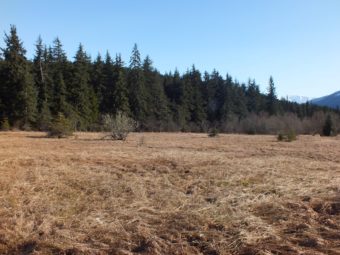
Greg Chaney
City and Borough of Juneau Lands and Resources Manager Greg Chaney stands in a wetland meadow that’s part of the city’s Pederson Hill property. (Photo by Casey Kelly/KTOO)

Chaney says Pederson Hill could be the location of the city’s next land sale.

We really have a strong mandate from the community to try to do something to provide entry level housing or workforce housing,” Chaney says. “So that’s where we’re going to try to come in and facilitate something.”

The need for more housing

The Lena Point subdivision includes lot sizes up to 66,000 square feet. Chaney says the Pederson Hill proposal is for lots a tenth that size or smaller, more like Starr Hill or the Flats neighborhoods downtown.

“When you’re developing a subdivision, the more houses you can put in that subdivision the less it costs per unit for roads, water, sewer, street lights, all the improvements,” he says. “So there’s a real advantage to doing that a little bit higher density. It also makes for a more walkable neighborhood.”

Pederson Hill is located between the Mendenhall River and Auke Lake, near Glacier Highway. Right now there’s no road access to the city’s property, something that would have to be figured out before any development takes place. Optimistically, Chaney says land could be ready for sale to private builders in the next two years, but realistically he says it will take a lot longer than that.

“There’s so many public hearings that are required and permitting,” says Chaney. “We have to go through the Army Corps of Engineers. We have to have DOT agree. We have to work out with adjacent land owners to get access. It’s amazing how much work it is to put something on the ground, especially if you’re on the government side, because you have a lot of oversight.”

When all is said and done, Chaney thinks a few hundred lots could be part of the Pederson Hill development. According to the Juneau Economic Development Council, the city could add more than 500 new single family homes and about 200 new rental units across the borough without significantly impacting the housing market.

At a recent Juneau Assembly meeting Exit Realty’s Mike Ban said the biggest need is for single-family starter homes priced between $250,000 and $300,000. Ban is part of a group of local stakeholders formed by the assembly to provide input on housing issues.

“It’s getting harder and harder and harder to find those homes,” Ban said. “And as it gets more and more difficult, people, young families typically are going to move on.”

A “very large wildlife corridor”

But not everyone is thrilled about the idea of developing Pederson Hill. Jim Sidney owns Swampy Acres, a farm and feed store that butts up against the city’s property.

I built on the very back of my property. And if you look out my window here in the dining room you can see the trees right there, and that’s right at the beginning of these little lots that they want to put in,” Sidney says. “That’s it right there, because the ditch is about my property line.”

Sidney’s wife’s family homesteaded the area around the same time as the Pederson family for which the hill is named. He says a high-density neighborhood nearby would change the character of the area. Remnants of the old Pederson Dairy Farm are still standing in a field near the hill.

“There’s something left of the milk parlor, which is where my father-in-law met my mother-in-law,” Sidney says with a chuckle.

Pederson Hill woods
Pederson Hill is habitat for a variety of wildlife, including wolves, coyotes, foxes and deer. (Photo by Casey Kelly/KTOO)

Sidney has worked in construction over the years and says he’s not opposed to more housing. But he worries about people disturbing his farm and says he’ll ask the city to put up a fence whenever development gets underway. He says he’s not worried about his livestock, but says Pederson Hill is habitat for a variety of wildlife.

“Very large wildlife corridor,” he says. “They come down here, go across to Douglas [Island] and go over to Admiralty [Island]. I’ve seen wolves back here, coyotes, foxes, deer, moose − only one moose.”

Chaney says the city will work to alleviate some of those habitat issues.

“We’ll try to leave as much forest as we can in doing the development when we get around to the development,” he says. “Right now we’re just talking about a rezone. So it’s just the broad template of what we’re going to do.”

Right now Pederson Hill is zoned for low-density development. The proposed rezone must be approved by the assembly, which could vote on the issue sometime in the next two months.

Site notifications
Update notification options
Subscribe to notifications