Casey Kelly

Alaska Native languages bill clears final House committee

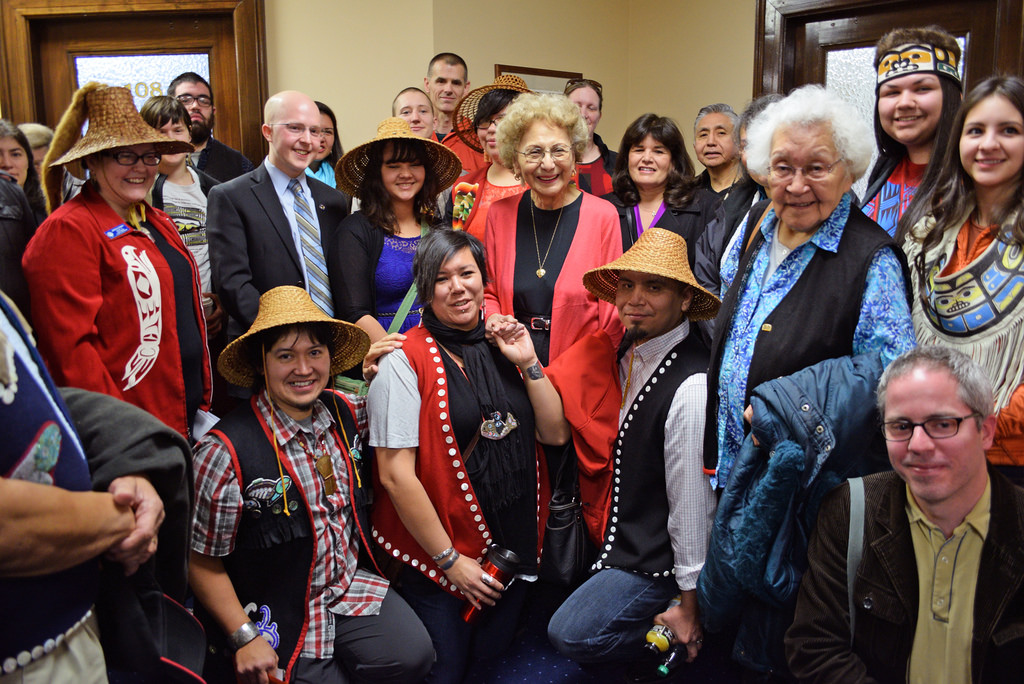
Rep. Jonathan Kreiss-Tomkins (in suit coat and blue shirt) and supporters of House Bill 216 gather in a Capitol hallway for a group photo to celebrate passage of the bill through the House State Affairs Committee, April 1, 2014. The bill would symbolically make 20 Alaska Native languages official state languages alongside English. (Photo by Skip Gray/Gavel Alaska)
Rep. Jonathan Kreiss-Tomkins (in suit coat and blue shirt) and supporters of House Bill 216 gather in a Capitol hallway for a group photo to celebrate passage of the bill through the House State Affairs Committee. The bill would symbolically make 20 Alaska Native languages official state languages alongside English. (Photo by Skip Gray/Gavel Alaska)

A bill that would symbolically make 20 Alaska Native languages official state languages is heading to the House floor for a vote.

The House State Affairs Committee on Tuesday unanimously passed House Bill 216 from Rep. Jonathan Kreiss-Tomkins, D-Sitka, less than a week after some Republicans on the panel raised concerns about the bill’s potential ramifications.

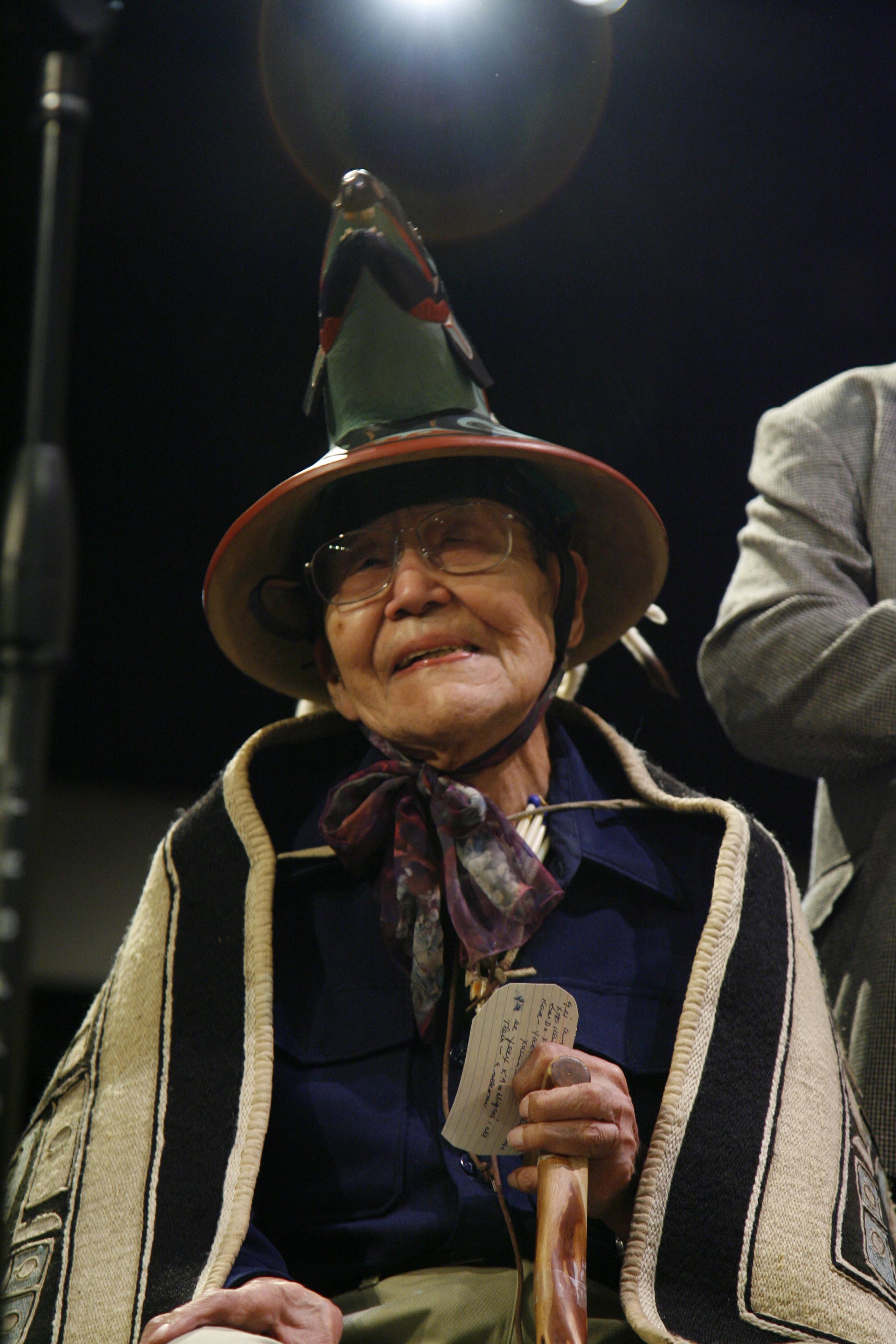
Tlingit elder Selina Everson teared up during public testimony.

“Our language is our very being. It’s our culture,” Everson said. “We were brought up with such respect to each other, to the Tlingit people, the Haida people, the Tsimshian people, the Yup’ik, the whole state of Alaska with all the different languages being spoken. It would be an honor to be recognized.”
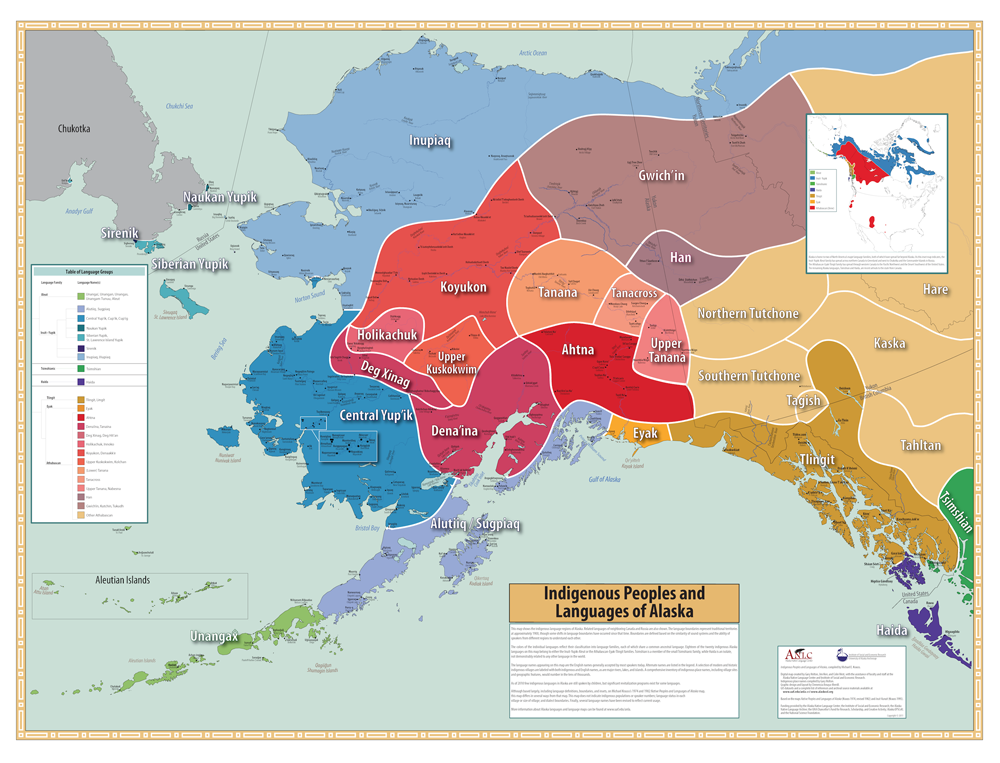
Alaska Native languages map
Indigenous Peoples and Languages of Alaska map by Michael Krauss. (courtesy of the Alaska Native Language Center)

While English is the only official language of Alaska, the state Supreme Court in 2007 struck down part of a 1998 voter initiative requiring it to be used for all government business.

Last week, Republican Reps. Doug Isaacson of North Pole, and Lynn Gattis and Wes Keller of Wasilla, raised concerns that HB 216 would be misinterpreted by future legislatures or the courts. They worried that could lead to unintended consequences, such as ballots or legislation having to be printed in every official language.

A new version of the bill adopted at Tuesday’s hearing makes clear that the official designation for Alaska Native languages is only symbolic. But Lance Twitchell, a Native languages professor at the University of Alaska Southeast, said the bill means more than that to supporters.

“This is more than symbolic. This is historic,” Twitchell said.

He went on to reference two bills the state affairs committee passed last week while Isaacson, Gattis and Keller struggled with the idea of making Alaska Native languages official languages.

“History will not remember you for specialized license plates and parking ticket processes,” Twitchell said. “History will remember you for this moment right here. What you say and do when we ask you to help us live, to find a brighter future for our languages, cultures and people.”

HB 216 must still be scheduled for a vote on the House floor. The bill has not been considered by the state Senate.
Lost teens rescued off Mt. Juneau

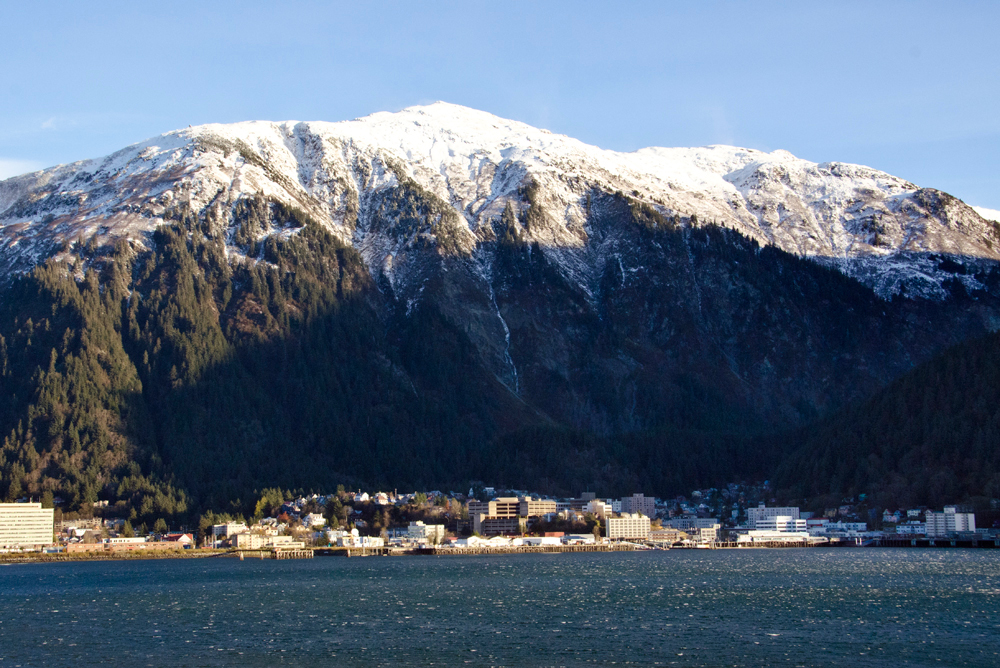
Mt. Juneau
Mt. Juneau rising above downtown Juneau. (Photo by Heather Bryant/KTOO)

Two teenage boys were rescued Sunday night after getting lost on Mt. Juneau as the temperature dropped.

According to an online post from Alaska State Troopers, a 17-year-old from Juneau and a 16-year-old from Switzerland used a cell phone to call for help at about 6:30 p.m. Sunday. The boys said they were not prepared for the weather and were already very cold and disoriented. Temperatures in the area were in the mid-20s.

Coastal Helicopters and Juneau Mountain Rescue conducted the search. The rescuers were able to locate the boys by the lights from their headlamps.

Troopers say the incident is a good reminder to bring proper gear and emergency devices for all outdoor conditions.

This story is in progress. Check back later for details.

Bartlett Regional Hospital board to begin CEO deliberations

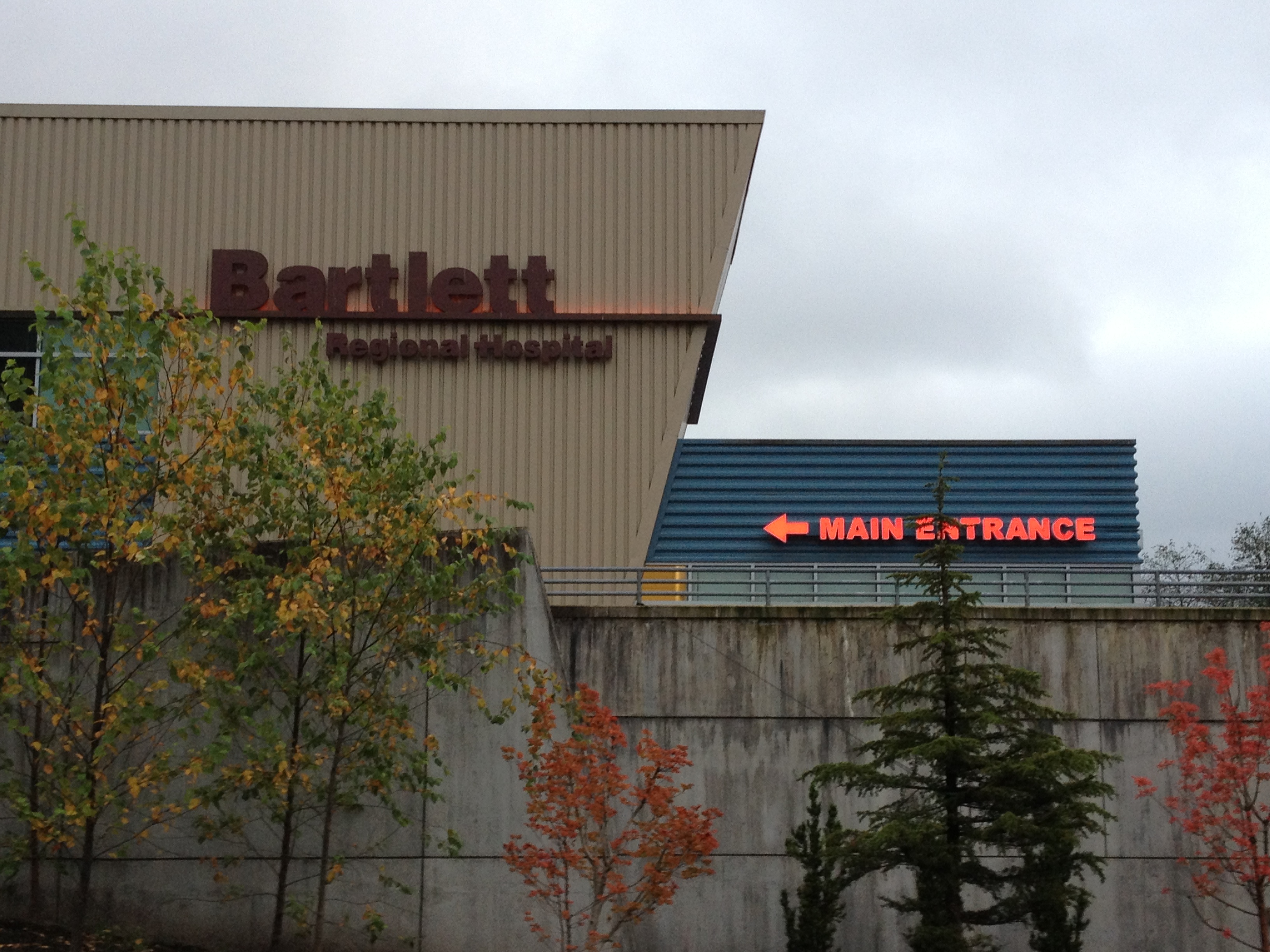
Bartlett Regional Hospital
Bartlett Regional Hospital is owned by the City and Borough of Juneau. It’s board of directors is appointed by the Juneau Assembly. (Photo by Lisa Phu/KTOO)

Bartlett Regional Hospital’s board of directors meets tonight to begin deliberations about who should be the next chief executive officer of Juneau’s city-owned hospital.

Five candidates interviewed for the position last week:

  • Dr. Paul Franke, interim administrator of the Alaska Native Medical Center in Anchorage.
  • David Abercrombie, CEO of Madison County Memorial Hospital in Madison, Fla.
  • Charles Bill, assistant administrator of Physician Development with Centura Health Physician Group in Durango, Colo.
  • Joe Cladouhos, CEO of Syringa Hospital and Clinics in Grangeville, Idaho.
  • Craig Dahl, CEO of Alaska Pacific Bank in Juneau.

During the interviews, the candidates met with the hospital board, medical staff and other employees. They also met with city officials, including Mayor Merrill Sanford and City Manager Kim Kiefer. City Human Resources Director Mila Cosgrove says a public meet and greet last Wednesday was attended by nearly 90 people.

Cosgrove says all five candidates are still under consideration.

“They all have a combination of strategic management experience, they all have experience working with boards and they all have experience heading up complex organizations,” Cosgrove said.

Bartlett’s last permanent CEO, Chris Harff, was the first chief executive hired after the board terminated its contract with longtime hospital management company, Quorum Health Resources. She lasted just over a year, and was one of three top administrators to resign following a personnel investigation into allegations of a hostile work environment at the hospital. When she announced her resignation, Harff said her professional expertise was not a good fit for the Juneau community.

Cosgrove says the board changed the recruitment process this time in an effort to hire someone who would be a good fit for Juneau. The biggest difference, she says, is the board did not use an executive recruitment firm.

“Internal staff was more heavily involved, which meant we had from the very beginning a lot more touch with candidates to talk with them about the realities of living in Juneau,” Cosgrove said.

She notes that all of the finalists except Abercrombie already have ties to Juneau or Alaska. Dahl is a longtime Juneau resident; Franke currently lives in Anchorage; Bill’s mother grew up in Juneau; and Cladouhos used to work for SEARHC, the Southeast Alaska Regional Health Consortium.

Cosgrove says the hospital board will begin deliberations on the candidates tonight, but she does not expect a decision for another two to three weeks. The discussions will mostly take place in executive session. She says the board hopes to make a hire by mid-April and have the new CEO on the job in May. Interim CEO Jeff Egbert is expected to stay on for a transition period.

Public testimony scheduled for Egan’s retirement choice bill

Sen. Dennis Egan, D-Juneau, addresses the Alaska Senate, March 27, 2014. (Photo by Skip Gray/Gavel Alaska)

An Alaska Senate committee will hear public testimony Tuesday on Juneau Sen. Dennis Egan’s latest bill to give public employees a choice of retirement systems.

Senate Bill 30 would let local and state government workers choose between a traditional pension and a 401(k)-style savings account. Those options are referred to respectively as a defined benefit and a defined contribution plan. In July 2006, Alaska became the only state in the country to offer only a defined contribution retirement plan.

Egan presented the bill to the Senate State Affairs Committee last week.

“A defined benefit pension takes time to earn, but it rewards public servants by letting them earn a guaranteed monthly benefit when they retire,” Egan said. “But many will choose the defined contribution that we currently have. Some have military or private sector pensions. Some have a spouse that’s deployed here in Alaska and don’t plan to stay in Alaska for more than a few years. Others want to control their investment or take their savings to their next job.”

The Senate passed a previous version of Egan’s bill on the last day of the 2012 legislative session. But the House didn’t have time to consider it, and the bill died. Egan says it would have saved the state $70 million in the first five years.

Alaska’s Public Employees Retirement System currently has a nearly $12 billion anticipated deficit. Deputy Commissioner of Administration Mike Barnhill says the Parnell administration is reluctant to change the system over concerns that it could add to the shortfall.

“We need to bear in mind that when we turn on a defined benefit promise, we’re making a promise for a 20-year-old new state employee that we need to keep for up to 70 years,” Barnhill said. “So when we make these promises we need to look forward and ask ourselves, what is the fiscal situation of the state going to be, not just in the 2020s, but the 2050s and 2060s?”

Only three members of the public had time to testify on the bill at Thursday’s hearing. Jacob Berra said he and his wife are teachers in Chugiak, who moved to Alaska in 2003 before the pension option was eliminated for new public employees. He said they wouldn’t have moved to Alaska without the pension option.

“We made our choice responsibly with the goal of putting our roots down and starting a family,” Berra said. “I can tell you with certainty that based on the current job outlook and the current retirement plan we wouldn’t make that same decision today. We simply couldn’t risk our family’s future.”

State Affairs Committee chairman Sen. Fred Dyson, R-Eagle River, has scheduled public testimony on the bill for Tuesday morning.

House passes Soboleff Day as Native languages bill draws critics

Rev. Walter Soboleff at Sealaska Heritage Institute's Celebration 2010. (Photo by Brian Wallace/Sealaska Heritage Institute)
The Rev. Walter Soboleff at Sealaska Heritage Institute’s Celebration 2008. (Photo by Brian Wallace, courtesy of Sealaska Heritage Institute)

Two bills dealing with Alaska Native issues got different receptions from members of the Legislature on Thursday.

At least three House lawmakers skeptically received a bill that would make 20 Alaska Native languages official state languages. About an hour later, they joined the rest of their House colleagues in voting unanimously for a bill honoring the late Rev. Walter Soboleff.
House Bill 217 would make Nov. 14 Walter Soboleff Day in Alaska. That was the day the Tlingit cultural and spiritual leader was born in 1908 in the now abandoned village of Killisnoo near Angoon. Soboleff spent most of his life in Juneau, where he established a ministry that welcomed people of all races at a time when discrimination against Alaska Natives was common. He died in 2011 at the age of 102.

Juneau Rep. Cathy Muñoz said her family belonged to Soboleff’s church.

“His words, his deeds, his presence were imbued with a strong sense of grace,” Muñoz said. “He often spoke of unity and respect and tolerance.”

Muñoz was one of several House members to share personal stories about Soboleff, who often served as chaplain to the legislature.

As the youngest member of the legislature, Sitka Rep. Jonathan Kreiss-Tomkins never got to meet Soboleff. He said he learned of his teachings by watching videos on the internet.

“I think it’s fitting, just as this bill will continue to honor his legacy in years to come, his wisdom has been preserved courtesy of the wonders of technology,” said Kreiss-Tomkins, HB 217’s prime sponsor.

(Video from Kathy Dye on Vimeo)

With Soboleff’s four children watching from the gallery, the House passed the bill, 35-0. It now heads to the Senate.

Kreiss-Tomkins is also the prime sponsor of House Bill 216, the Native languages bill, which supporters say would recognize the efforts of people working to preserve Alaska Native languages, many of which have lost or are losing their last fluent speakers.

But some members of the House State Affairs Committee are concerned about how the bill would be interpreted by future legislatures or the courts. At a hearing on Thursday, Rep. Doug Isaacson, R-North Pole, said he wanted to make sure the bill’s intent was clear before he could support it.

“So that we don’t have compounding results from a law, where a future legislature might be encumbered with having to provide everything in 20 different languages for example,” Isaacson said.

Rep. Wes Keller, R-Wasilla, wondered if there was a better way to support those working to save Native tongues.

“Like we could have a day, you know, that honors the Native languages in the State of Alaska,” Keller said. “I’ll be a co-sponsor.”

Both Isaacson and Rep. Lynn Gattis, R-Wasilla, said their ancestors had adopted English as their chosen language after coming to the U.S. from Europe.

That elicited a strong response from Rep. Benjamin Nageak, D-Barrow, a fluent Inupiaq speaker and a co-sponsor of HB 216.

“The Native people here, we’re not from another country. We were here before,” Nageak said.

Rep. Charisse Millett, R-Anchorage, also offered a passionate defense of the bill. Millett, who says she’s a quarter Inupiaq, said she didn’t remember as much push back and questioning when the legislature voted to make the Alaskan malamute the official state dog.

Committee chairman Bob Lynn, R-Anchorage, held the bill.

City readies for Douglas Highway extension

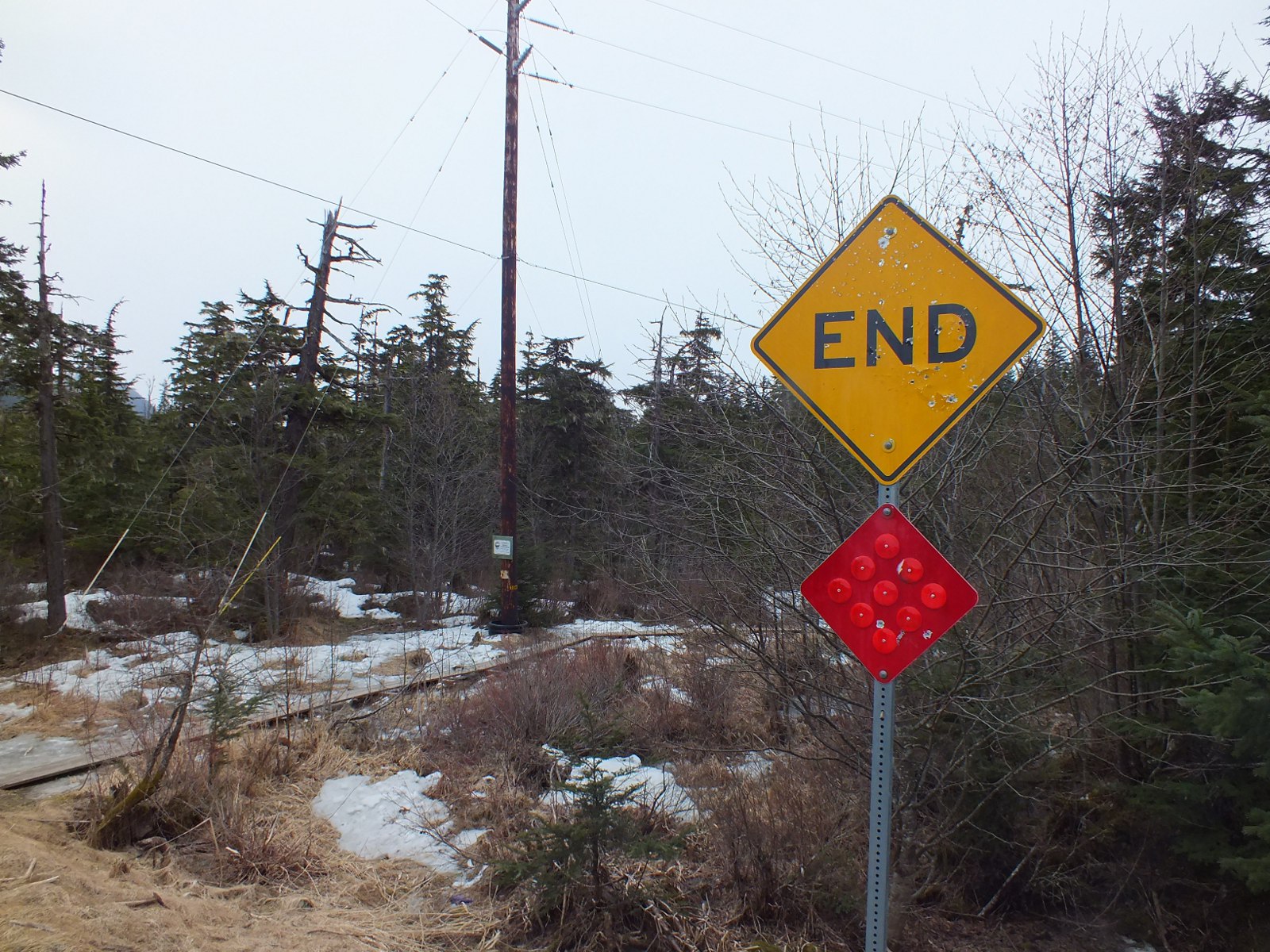
The end of Douglas Highway
Juneau officials are preparing to apply for permits to extend Douglas Highway 3 miles to open up development on the west side of Douglas Island. (Photo by Casey Kelly/KTOO)

City officials are moving forward with one of the Juneau Assembly’s top priorities: Development of the back side of Douglas Island.
As soon as this summer, Engineering Director Rorie Watt says the city will be ready to apply for permits to build a pioneer road at the end of North Douglas Highway. While it would be several years before any development takes place, Watt says the road would allow for more activity in the area called West Douglas.

“We want to make the land more accessible for exploration for development,” Watt told the assembly’s Committee of the Whole on Monday. “And by exploration I mean, make it easier for surveyors and engineers and geologists, biologists and prospective developers.”

The city has about $3.2 million for the road, mostly in the form of a state grant. The assembly has long talked about West Douglas as a possible site for future housing and commercial development.

Watt is recommending a 3-mile, one-lane gravel road, with periodic pullouts to allow vehicles to pass one another. He says a narrower road can be built farther than a more developed, two-lane street. Initially he says the road would be gated to prevent illegal dumping and other unwanted activities.

“In the short run, there’d be a fair amount of public recreational use,” Watt said. “And that might just be dog walking or mountain biking or hunting, winter skiing or some things like that.”

The entire road would be on city land, but allow access to property owned by Goldbelt Inc., Juneau’s urban village Native corporation. Over the years the city and Goldbelt have worked together on numerous proposals to develop West Douglas. Watt says that would still be the case.

“Goldbelt would certainly be involved. A lot of the development contemplated was on Goldbelt land,” Watt said. “Generally, Goldbelt’s view is they have a lot of shareholders and not a lot of land and they want to be really careful with the decisions that they make.”

While the road would span some tributaries of Peterson Creek, Watt doesn’t believe any of them are salmon-spawning streams.

The assembly generally seemed supportive of the proposal to build a one-lane pioneer road. Assemblyman Jesse Kiehl said it could be improved once the area is ready for development.

Kiehl also said he supports keeping part of West Douglas open to recreational activities.

“There’s a great deal of CBJ land back there on that side of Douglas,” Kiehl said. “The federal land gets pretty steep pretty fast, and the private land, trespass permits are not available. So, recreational access to the land on the backside of Douglas is really best accomplished through access to CBJ land.”

Watt says the most important permit needed will come from the Army Corps of Engineers. He says the corps can take six months to a year or more to issue the type of permit needed.

The assembly will hear an update on the project before the city applies for any permits.

Site notifications
Update notification options
Subscribe to notifications