Casey Kelly

After-school program asks Assembly for $48,500 funding

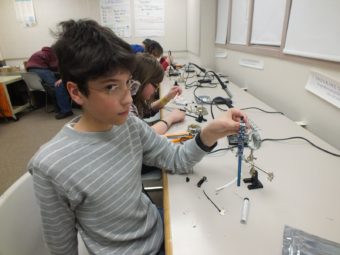
It’s 4 o’ clock in the afternoon and 12-year-old John Barresi’s school day ended an hour ago. But the sixth grader is still hanging out at Dzantik’i Heeni Middle School working on a project with seven of his classmates.

They’re turning a pencil into an electronic noisemaker called a drawdio. By attaching a small speaker and some electronic components to a circuit board, then attaching the whole thing to a pencil, Barresi and his friends can make noise while they draw.

“You put your finger on one end and then you, like, get really close by touching the tip to the lead, and then you keep going farther and it will generate different sounds,” says Barresi, imitating the noise by making a high-pitched squeak.

The drawdio class is one of several activities geared toward middle school students offered by the Juneau Afterschool Coalition. If he wasn’t in the class, Barresi says he’d probably be at home doing homework.

Former city manager and coalition member Kevin Ritchie says after-school programs are one of the best ways communities can keep kids out of trouble.

“In the United States, the crime rate in the first hour after school is over is three times any other time of the day,” Ritchie told the Juneau Assembly Committee of the Whole on Monday. “Youth not in after-school programs are three times more likely to experiment with drugs, alcohol, cigarettes and so on, bad things.”

Ritchie says a recent survey conducted by the Association of Alaska School Boards showed 25 percent of Juneau students in grades six through eight had used alcohol or drugs.

The coalition did its own survey to see what the typical after-school activities were for students at Juneau’s two middle schools.

“Two out of three reported that they hang out at home or hang out with friends three to five days a week after school,” Ritchie says.

About half of all Juneau middle school students surveyed said they were with an adult in some capacity after school two days a week or less.

The coalition formed in 2010 to address a shortage of childcare options in Juneau. It began offering an activity program two years ago. The program is called B.A.M., for body and mind. Some of the activities include arts and crafts, Junior Police Academy, archery and baby-sitting classes. Ritchie says about a third of Juneau middle schoolers have taken part in at least one activity.

The after-school coalition is asking the Juneau Assembly for $48,500 — about half the money needed to keep the program going next school year.

“We want to integrate better with the school curriculum,” Ritchie says. “One of the ways we’re doing that is working with the Juneau Economic Development Council’s Science, Technology, Engineering and Math program. We’ve had some great activities, STEM activities, and we hope to have considerably more next year.”

Bernadette Rosano with JEDC’s STEM program teaches the drawdio class.

“I’m hoping we can expand a little bit into animation, because I know kids really like working on computers and Minecraft is a really big thing,” Rosano says.

The afterschool coalition’s funding request is 5 percent less than it received from the city this year. The assembly is trying to close a $12 million shortfall in the city’s next two-year budget. The group’s request will be taken up during the assembly’s budget meetings over the next two and a half months.

Ferry workers’ testimony cut short again on salary bill

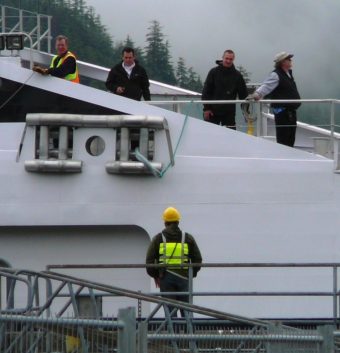
State ferry Fairweather
The crew of the state ferry Fairweather gets ready to tie up to the dock in Sitka. (Photo by Ed Schoenfeld)

For the second time this legislative session, Alaska Marine Highway workers were shut out from testifying against a bill that would cut their salaries.
Senate Bill 182 from Sen. Fred Dyson, R-Eagle River, would get rid of a geographic bonus for Alaska residents who work on state ferries. With a major port in Bellingham, Wash., the ferry system employs a large number of nonresidents. It’s the only state agency where salaries are based on the cost of living in Seattle as opposed to Anchorage. Dyson’s bill would eliminate that provision, which has been in state statute for more than 30 years. The state would save millions of dollars in wages paid to workers, according to the Department of Administration.

When SB182 was in the Senate State Affairs Committee, Dyson closed public testimony after hearing from only four people, despite the dozens who signed up. On Friday, 20 people wanted to testify on the bill in the Senate Finance Committee. But before they could, committee co-chair Kevin Meyer, R-Anchorage, said there wouldn’t be enough time.

“I apologize, we are not going to be able to get to the public testimony on this bill today,” Meyer said.

Meyer said he would reschedule public testimony for Monday. But the move frustrated members of the three labor unions representing marine highway employees.

“It’s disappointing for people to take time out of their lives to testify on something they feel passionately about, and not get an opportunity to voice their opinion,” said Ben Goldrich, Alaska representative for the Marine Engineers Beneficial Association.

The bill is being debated as the unions are negotiating new contracts with the Parnell administration. A new version of the legislation introduced Friday would only affect workers hired after June 2014; current employees would keep their higher pay.

Goldrich says that doesn’t make the bill any easier to swallow.

“Our major sticking point is that we’re up at the hill discussing it at all,” Goldrich said. “Normally the issue that’s before the Senate is something that we would resolve at the negotiating table.”

State Director of Personnel and Labor Relations Nicki Neal told the committee that state negotiators have made similar offers to the unions to grandfather the in-state geographic bonuses of current employees.

Sen. Click Bishop, R-Fairbanks, a former state labor commissioner and union administrator, said he was concerned the bill could influence negotiations.

“It could maybe slow down or have some angst on either side when something like this comes out,” Bishop said. “Not saying that the bill’s bad, but it could just shed a different light on the good faith effort on negotiations.”

Dyson said the bill is simply an attempt to bring more fairness and consistency to the contracts of ferry workers.

“The current statute is obsolete and it is different than any of the other bargaining units,” Dyson said.

Finance committee co-chair Meyer said those who want to have their opinions heard on the bill are welcome to send emails. Lawmakers have already received dozens of written comments in opposition to the measure.

Goldrich says state ferry workers will be back on Monday to testify on the bill.

“I have no doubt that we’ll be able to get some of the same people and some new people as well,” he said.

Besides MEBA, ferry workers are represented by the Inland Boatman’s Union, and the International Organization of Masters, Mates and Pilots.

New scanner to ease luggage backlog at Juneau airport

The Juneau International Airport
Juneau International Airport is getting a second X-ray machine for luggage to ease a backlog during peak travel times. (Photo by Heather Bryant/KTOO)

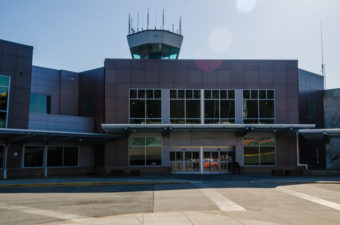
Juneau International Airport is getting a second X-ray machine to handle the piles of luggage that build up during the morning air traffic rush hour.

The Transportation Security Administration approved the new scanner after hearing from the Juneau Assembly, airport officials, Alaska Airlines and the state’s Congressional delegation.

Airport Manager Patty deLaBruere says in the past year Alaska Airlines and TSA employees have had trouble moving luggage through the scanner, even when it’s a normal amount.

“What was happening, especially if anyone had come in during those morning bank of flights, in the summer you’d see several hundred bags stacked out in the lobby and it was kind of a mess,” deLaBruere says.

Five early morning flights depart the Juneau airport every day during the summer months, with one leaving roughly every half hour between 7 and 8:30 a.m.

DeLaBruere says the baggage problem has caused delays and was still an issue over the winter, when there are fewer departures. With Delta Air Lines offering flights to and from Juneau this summer, she says it was only going to get worse.

In addition to a second X-ray machine, deLaBruere says TSA agreed to increase staffing at the airport.

“We’ve seen a decrease in the staffing over the last year,” she says. “We don’t have the numbers yet for the staffing, but we did get approval for the scanner and the staffing to go with it.”

TSA officials could not be reached for comment.

DeLaBruere’s not sure when the new scanner will arrive in Juneau. She says the machine will be located in the lobby, near the Alaska Airlines check-in counter.

Juneau budget woes worse than originally expected

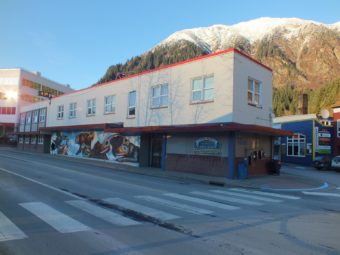
Juneau City Hall sunny winter day
Juneau City Hall. (Photo by Casey Kelly/KTOO)

After hearing more bad news about the budget, the Juneau Assembly says all options are on the table for reducing spending and increasing revenue.

Finance Director Bob Bartholomew and City Manager Kim Kiefer on Wednesday said the expected shortfall for the next two years will be about $12 million. That’s $7 million more than the administration reported last week.

Bartholomew said two things are driving the shortfall. First, he’s expecting the city to have less money left over each year to be spent in future years – a term called fund balance. Second, the city’s major revenue sources are either going down or staying flat.

“When you have your major programs going from a growth curve to flat, it’s basically helped lead to where we need to find other options for balancing the budget,” Bartholomew told the Assembly Finance Committee.

Bartholomew and Kiefer presented four preliminary proposals for balancing the budget. Right now the city has about $8 million in fund balance and another $11.2 million in savings, both of which could be partially tapped to cover the deficit. Other options include increasing property taxes and reducing programs and services by millions of dollars over the next two years.

Kiefer said she has not decided which programs and services to cut, but said they would touch every department.

“We can’t take little pieces. We’ve been little piecing since 2009, and we don’t have any little pieces left,” Kiefer said.

Assemblywoman Karen Crane, who chairs the finance committee, said the administration should consider all options, including cuts to the Juneau School District and mostly autonomous city enterprise activities like Eaglecrest Ski Area, docks and harbors and Bartlett Regional Hospital.

“I don’t know what we’ll do with that, but we have to factor that information into everything else that we’re receiving,” Crane said. “So as far as I’m concerned everything is on the table at this point.”

Other members discussed options for increasing revenue, including a seasonal sales tax and elimination of certain local tax credits.

The city manager will present her proposed budget to the assembly on April 2. The final budget must be adopted by June 15.

Meet new USFS Juneau District Ranger Brad Orr

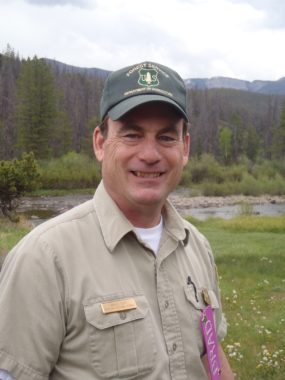
Brad Orr
Juneau District Ranger Brad Orr. (Photo courtesy US Forest Service)

New U.S. Forest Service Juneau District Ranger Brad Orr has traded the Rocky Mountains and dry grasslands of north central Colorado for the rainforest and glaciers of Southeast Alaska.

The Juneau Ranger District covers 3.5 million acres of the Tongass National Forest, making it the largest district in the United States and a popular destination for tourists.

As the man in charge of all that land, Orr brings with him a wealth of recreation management experience. You could say he was born to do the job.

“My father was a park ranger, so I grew up in the national parks. So it was sort of in the blood,” says Orr, who took over as district ranger in late February. “I’ve always had a real interest in natural resource management and getting people connected back with nature.”

A district ranger oversees all programs and projects within an area of a national forest. In Juneau that includes public cabins, trails and campgrounds, as well as private enterprises like mining, logging and heli-skiing.

Orr, 59, has spent 34 years with the Forest Service, including the past 11 managing recreation programs at the Sulphur Ranger District in Colorado’s Arapaho-Roosevelt National Forest. That district includes a national recreation area, hundreds of miles of trails, 15 campgrounds, and a major ski area within two hours of Denver.

“There are some similarities: A huge recreation workload here, as was the case on my previous district,” says Orr. “We also managed the national recreation area, which had recreation fees, just like the Mendenhall Glacier does. So I have a lot of experience implementing a recreation fee program.”

While most of his experience is in recreation, Orr also did firefighting and timber management early in his career. He has a bachelor’s degree in biology from Northern Arizona University and a master’s in forestry from Oregon State University.

He says a lot of the job is balancing competing interests.

“People want to use their national forests either for leisure activities or they are seeking to harvest resources from them,” he says. “So it’s always a challenge trying to balance those competing needs.”

He says federal budget cuts have been a challenge in recent years. A few projects he was working on in Colorado were delayed by last year’s federal government shutdown. But for the most part, Orr says, budgets do not affect the actual work.

“Being a federal agency we’re always subject to political movements one way or the other,” he says. “But in my experience, and of course I’ve worked at the lower levels you might say of the organization, we pretty much carry on.”

Jennifer Berger manages wilderness and special uses at the Juneau Ranger District. She’s only worked with Orr for three weeks, but calls him thoughtful, articulate and focused.

She says his recreation experience will be put to good use during the summer, when Juneau sees almost a million tourists.

“Since he’s been here, you know, we can see him engaging with stakeholders, whether that’s our neighbors, our locals that live right here, or folks who work with visitors all summer long,” says Berger.

Orr takes over for Marti Marshall, who retired in January.

He and his wife Marilyn have a son and a daughter in college in Colorado. His wife worked for the Forest Service in Sitka and Hoonah in the mid 1980s and he says she’s excited to move back to Southeast Alaska.

A public reception to welcome Orr to Juneau is Thursday, from 5 to 6:30 p.m., at the Mendenhall Glacier Visitor Center.

Supporters raise $1 million for new Mendenhall Valley library

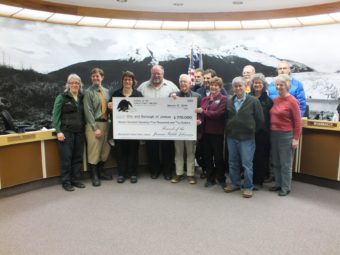
Members of the Juneau Assembly were all smiles last night while accepting an oversize check for $775,000 from Friends of the Juneau Public Libraries.

The nonprofit has now given the city $1 million for construction of a new Mendenhall Valley library. Last year the group gave the city a check for $225,000.

“This is so much fun to give away a million dollars,” said Paul Berans, president of the friends of the libraries board of directors.

The group raised most of the money by selling used books at its Amazing Bookstore.

“Can you imagine how many books at a nickel, a dime, a quarter and a dollar it takes?” Berans asked.

He gave credit to the dozens of volunteers who donate their time at the store and library events.

Planning and design are nearly complete for the new Mendenhall Valley library.

With the $1 million from the friends group, the city will pay for less than half of the nearly $14 million project. In 2012, Juneau voters approved a sales tax measure to provide some of the financing. The rest will come from a $7 million state grant.

The new library will be built at Dimond Park and replace the current branch located in the Mendenhall Mall.

Site notifications
Update notification options
Subscribe to notifications