Elizabeth Harball, Alaska's Energy Desk
Dunleavy appointee to lead state environmental agency hits back at critics

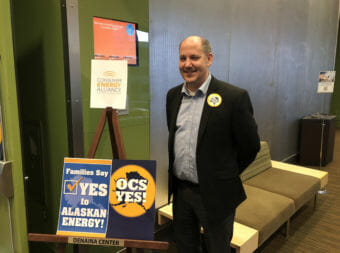
Jason Brune in Feb. 2018 advocating for offshore oil development. Gov. Mike Dunleavy has appointed Brune to lead the state Department of Environmental Conservation. (Photo by Elizabeth Harball/Alaska’s Energy Desk)

Gov. Mike Dunleavy’s appointee to lead the state Department of Environmental Conservation is speaking out against the opposition he has faced during his confirmation process.

Jason Brune’s appointment is controversial because he worked as the public affairs and government relations manager for mining company Anglo American when it backed the proposed Pebble Mine.

In a Thursday speech in Anchorage to the Resource Development Council, an industry group, Brune said he has so far enjoyed working in state government.

“Yeah, we have some issues, but it has just been such a great opportunity,” Brune said. “Now as for the confirmation process, well, I don’t know if I would wish that on anyone.”

Anti-Pebble groups have organized opposition to Brune’s appointment, and many Alaskans testified against him at recent confirmation hearings.

“Putting Brune at the helm here in Alaska will make it impossible for Alaskans to trust that fair, science based and honest decisions will be made in permitting for Pebble,” Lindsey Bloom of Commercial Fishermen for Bristol Bay said in a statement following a House Resources confirmation hearing on Friday.

In his speech, Brune did not state his position on the Pebble Mine, but he did argue his opponents are wrong.

“To me, it says that they’re scared,” Brune said. “They know that I care for the environment. They know I care for our economy. They know that I care for our future. And they are worried we are going to make Alaska open for business again. Well, I am up to the task.”

Brune said one of his big priorities will be cutting back on regulations he views as unnecessary. To an audience of mining, oil and other resource industry supporters, Brune asked for feedback on how to accomplish that goal.

“Look through the regs that oversee your businesses. If there are things that you see in there that are overly onerous, that are unnecessary, that aren’t protecting our environment, come and tell me … tell our team,” Brune said. “We don’t know everything that you do. We need to make sure we hear from you, what we can do to help make Alaska open for business.”

The House Resources Committee will hold another hearing on Brune’s appointment Monday evening at 6:30 p.m.


Watch the latest legislative coverage from Gavel Alaska:

State says BP must prove more Prudhoe Bay wells aren’t at risk of ‘catastrophic failure’

BPleak_Harball
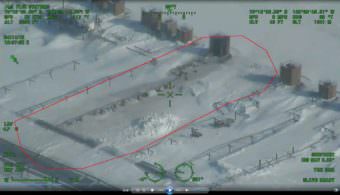
Image from a 2017 accident, taken during an overflight on April 14, 2017. Well 2 and the extent of crude misting is visible on the snow within the red-lined area. (Video still courtesy Alaska Department of Environmental Conservation/BP Exploration (Alaska))

The state is deepening its investigation into what caused several accidents at Prudhoe Bay wells operated by oil company BP.

In a recent order, the Alaska Oil and Gas Conservation Commission, a state oil and gas watchdog agency, said BP “has no evidence that permafrost subsidence will not result in sudden catastrophic failure” at other Prudhoe Bay wells.

The first accident happened in 2017, when a well at Prudhoe Bay jumped up, hit the top of the wellhouse and started spewing oil and gas. It leaked for days before it was stopped. Both the state and BP investigated the incident and linked it to thawing permafrost and the well’s design.

BP’s theory was that the only wells at risk were of a certain design; there’s a relatively small number of those wells at Prudhoe Bay. BP told the state 14 such wells were at risk and they were all shut in.

But in December, there was another accident at one of the 14 at-risk wells, and the Alaska Oil and Gas Conservation Commission required another investigation.

After hearing testimony from BP, the commission issued an order last week stating the company has not proven that thawing permafrost won’t lead to more accidents at wells with a more common design, which accounts for most of the 1,800 wells at Prudhoe Bay.

Cathy Foerster, who sits on the state commission, said while there’s no evidence either way, the commission wants to be proactive.

“That’s why we’re ordering BP to gather additional data on those wells so we can gain an understanding of whether or not there is a risk associated with those wells also,” Foerster said.

“We haven’t had anything to cause us to believe that they do have a risk, but we just want to make sure they don’t,” she added.

Among other things, the state is requiring BP to pull up oil well parts, like production tubing and casing, from deep underground to analyze what might have caused the accidents.

The commission is also requiring the 14 wells BP previously said were at risk to be not just shut in, but plugged and abandoned — meaning they won’t produce oil ever again.

According to BP, those 14 wells are being monitored in real time and their flowlines and wellhouses have been removed to prevent future accidents. BP has also proposed plugging and abandoning four additional wells next year, on top if the state’s requirements.

In an emailed statement, BP spokesperson Megan Baldino said the company is working with the state to comply with the order and “remains committed to operating Prudhoe Bay in a safe, reliable and compliant manner.”

Lois Epstein, an engineer with The Wilderness Society, said it’s worrying the state doesn’t know exactly what’s going on.

“When a regulatory agency says there can be a ‘sudden catastrophic failure’ – and that’s the language they use – that’s of great concern,” Epstein said. “If I were working on the Slope near any one of these wells, I would want to know that. I would want to know why there is so much uncertainty.”

BP’s theory is that the heat of fluids in the wells was causing the permafrost to thaw. But now that the state is expanding the investigation, Epstein said she thinks it’s important to look at other potential risks, like permafrost thaw linked to climate change.

BP has been taking measurements to better understand permafrost thaw at Prudhoe Bay since 2011.

North Slope village tribal government sues over ConocoPhillips’ drilling plans

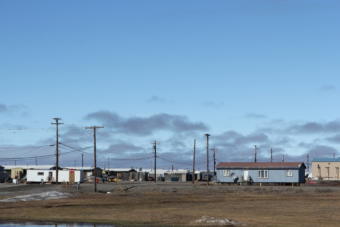
Nuiqsut in June 2018. The village is near a growing number of oil developments in the western Arctic.
Nuiqsut in June 2018. The village is near a growing number of oil developments in the western Arctic. (Photo by Elizabeth Harball/Alaska’s Energy Desk)

The tribal government for a North Slope village near a growing number of oil projects is suing the federal government over its approval of ConocoPhillips’ plans to drill more wells nearby. The complaint was submitted Thursday in federal court.

Along with five environmental groups, the Native Village of Nuiqsut is challenging the Bureau of Land Management’s approval of ConocoPhillips’ exploratory drilling program this winter in the National Petroleum Reserve-Alaska.
“The impacts outweigh the benefits and don’t address the concerns of the community, so we’re filing this lawsuit to get the impacts and concerns fully analyzed for responsible development,” said Native Village of Nuiqsut tribal administrator Martha Itta. “We’re trying to fully understand and adapt to the fast-paced changes of our environment and impacts from being surrounded by the drilling rigs and oil industry.”

ConocoPhillips has already started this winter’s drilling program and plans to complete six to eight wells. If successful, the lawsuit could require the federal government to perform a tougher environmental review process for future oil exploration activities in NPR-A.

The groups argue BLM should have completed a full environmental impact statement before approving Conoco’s plans. In December, BLM completed an environmental assessment, a less involved version of an environmental review, and determined Conoco’s drilling program would have “no new significant impacts.”

The groups disagree, saying ConocoPhillips’s drilling plans threaten caribou that migrate near the village. People in Nuiqsut rely heavily on subsistence hunting.

The environmental groups that are also involved in the lawsuit are the Alaska Wilderness League, the Center for Biological Diversity, Friends of the Earth, the Natural Resources Defense Council and the Sierra Club.

In a statement, the environmental groups said the federal government “acted irresponsibly and illegally by allowing this escalation and intrusion of industrial activity into this area without even the pretense of meaningful analysis of the impacts of this action or consideration of less harmful alternatives.”

BLM completed an overarching environmental impact statement for the National Petroleum Reserve-Alaska in 2013. The Trump administration is now redoing that plan and could potentially open up more land in NPR-A to oil development.

ConocoPhillips already operates several drill sites and an oil processing facility not far from Nuiqsut. The company has made significant oil discoveries nearby in recent years.

Nuiqsut’s village corporation, Kuukpik Corporation, said in a statement it “continues to support balanced and environmentally responsible, feasible development.”

Because the litigation is pending, both BLM and ConocoPhillips declined to comment.

Dunleavy fires head of state oil and gas watchdog agency

Hollis French responds to questions at a public hearing on Feb. 8, 2019.
Hollis French responds to questions at a public hearing on Feb. 8, 2019. (Photo by Elizabeth Harball/Alaska’s Energy Desk)

Gov. Michael Dunleavy has fired the chair of a state oil and gas watchdog agency.

In a letter sent Tuesday, the governor informed Hollis French he is “immediately” being removed from his position as chair of the Alaska Oil and Gas Conservation Commission.
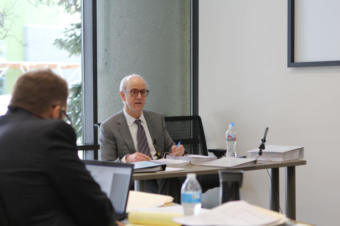
A former Democratic member of the state Senate and candidate for lieutenant governor, French had been placed on administrative leave with pay after Dunleavy accused him of five different charges in January.

Those charges were chronic absenteeism, security breaches, browbeating fellow commissioners, publicly undermining the commission’s work and neglect of duty.

French disputed the charges at a public hearing earlier this month. He claimed the move to oust him was spurred by a disagreement he had with his fellow commissioners over the limits of the agency’s jurisdiction, precipitated by a gas leak in Cook Inlet two years ago.

After reviewing the findings from the hearing, Dunleavy said his decision to fire French is based on two of the five charges: absenteeism and evidence that “he consistently failed to perform the work expected of him as a Commissioner.”

French has 30 days to appeal the governor’s decision.

In a statement, French called his firing “another bad decision by the governor.”

“I am proud of my work on the commission and intend to demonstrate that it was always directed to protecting the public interest,” he added. “It’s sad that the governor seems to want a watchdog agency without any teeth.”

With French’s firing and the coming retirement of another commissioner, Cathy Foerster, Dunleavy now will likely be in a position to make two new appointments to the three-person commission.

Findings released regarding governor’s bid to fire head of state oil and gas watchdog agency

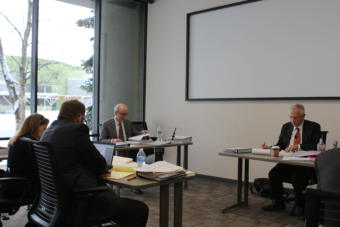
Hollis French, center, testifies at a Feb. 8, 2019 hearing regarding whether he should be fired from his post at AOGCC for cause.
Hollis French, center, testifies at a Feb. 8, 2019 hearing regarding whether he should be fired from his post at AOGCC for cause. (Photo by Elizabeth Harball/Alaska’s Energy Desk)

The state Department of Law has released a findings of fact” report on whether Gov. Michael Dunleavy has grounds to remove the head of a state oil and gas watchdog agency.

The report supports some, but not all, of the governor’s charges against the chair of the Alaska Oil and Gas Conservation Commission, Hollis French.

French said he believes the report exonerates him from what he calls “the most serious charges.”

The report was prepared by Tim Petumenos, a private attorney who, at Dunleavy’s request, presided over a hearing last week regarding whether French should remain in his position. By law, AOGCC commissioners can only be fired for cause.

Petumenos found “substantial evidence” that French was chronically absent from the office, that he failed to perform routine work that then had to be taken on by others at the agency “and that this affected morale at the office,” he wrote in the report.

Petumenos also wrote that he “finds that the absences did not affect or delay the work of the Commission in any material way.”

The governor also claimed French shared the location of confidential oil well data with a reporter. Petumenos found that, indeed, had happened.

In a previous interview with Alaska Public Media, French’s attorney, Kevin Fitzgerald, questioned whether the incident constituted a security breach, since the data itself wasn’t made public.

Also in the report, Petumenos wrote he did not find sufficient evidence to show that French engaged in “browbeating fellow commissioners,” or that he undermined the mission of the agency.

In discussing those charges, the report refers to a matter when “French fervently and ardently believed that a position he had taken in connection with an adjudicatory matter, with respect to the scope of jurisdiction of the AOGCC, was correct though it was in the minority.”

According to French, that “adjudicatory matter” was related to a lengthy disagreement over the extent of the state agency’s power, and whether it has jurisdiction over incidents like a 2017 gas leak in Cook Inlet from a pipeline operated by Texas-based oil company Hilcorp. French believes the agency should have jurisdiction; the other two AOGCC commissioners disagree.

Petumenos wrote he “believes it would set a dangerous precedent to consider removing a Commissioner … for ardently pursuing a matter though the Commissioner be in the minority.”

French responded to the findings in an interview Thursday.

“I think the hearing officer cleared me on the most serious charges, and when at the very end he found that there was some issue about my not getting routine office work done,” French said. “That’s what he found. We submitted plenty of evidence that I had, but that’s what he found.”

The governor’s office is not yet ready to make a decision, according to a statement from press secretary Matt Shuckerow.

“Governor Dunleavy has reviewed the findings of fact and is awaiting the receipt of the public hearing transcript,” Shuckerow said. “Upon reviewing that information, the Governor will make his final determination.”

As of Wednesday, French has been placed on administrative leave with pay.

Correction: An earlier version of this story stated that French was charged with sharing “confidential oil well data locations.” The charge was instead that French shared the location of where confidential oil well data was kept.

Alaska Native issues feature prominently at hearing on Arctic Refuge oil leasing

ASRC leaders and supporters held a press conference outside the Anchorage public meeting on oil leasing in the Arctic National Wildlife Refuge on Feb. 11, 2019. (Photo by Elizabeth Harball/Alaska’s Energy Desk)

At a public meeting in Anchorage on the federal government’s plan to open part of the Arctic National Wildlife Refuge to oil development, Alaska Native speakers delivered passionate testimony on both sides of the issue.

According to the Bureau of Land Management, more than 450 people attended the Monday meeting. It stretched over seven hours. And following protests at the Fairbanks meeting last week, BLM changed the format to allow public testimony.

In her testimony, Charlene Apok of Golovin said she is Inupiaq and was there to speak in solidarity with Gwich’in people, who oppose drilling in the refuge because of potential harm to caribou.

“The refuge is not a warehouse. Again, the refuge is not a warehouse,” Apok said. “Nor is it a bank. The proposed drilling won’t pay for the desired tax cuts that the state is seeking.”

Throughout the hearing, an organized group of opponents from communities across the state provided much of the public testimony against development in the refuge, holding up bandannas and signs that said: “Defend the Sacred: Protect the Arctic.”

But in his testimony, Arctic Slope Regional Corp. executive Richard Glenn talked about oil’s economic benefits to North Slope communities.

“It’s the presence of the oil and gas industry in our region, it’s the only thing that’s hung around long enough to generate an economy — to generate an economy that we depend on,” said Glenn, ASRC’s executive vice president of external affairs. “This is not bullying. This is freedom. This is what built our schools in our region. This is what keeps our communities healthy.”

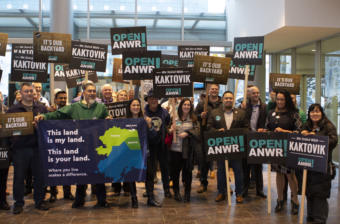
ASRC has been a major booster of oil development in the refuge. Later at the hearing, ASRC leaders, flanked by supporters from Alaska’s oil and gas industry, held a rare news conference, waving signs that said, “We Stand with Kaktovik, Open ANWR!” and “It’s Our Backyard.”

Glen Solomon, a leader and whaling captain from Kaktovik and an ASRC board member, was one of the speakers at the news conference.

“We love our people, we love our culture,” Solomon said. “And this is our fight. And we are making a stand. We stand strong. We’re tired of being silent.”

ASRC board chairman Crawford Patkotak praised the current leadership in Washington, D.C., which has made oil leasing in ANWR a priority.

“Thank God for our federal government, especially President Donald Trump, who has stood behind us,” Patkotak said.

As Patkotak was finishing his remarks, an Alaska Native woman attending the meeting began speaking over him.

“We’re supposed to be protecting the land, we’re supposed to be protecting the waters,” she said.

“When it comes to resource development, we are able to protect the environment and be able to benefit financially from all of this,” Patkotak said.

“It’s all about the money,” the woman said.

“It’s been too long, we’ve been left in poverty,” Patkotak said. “Other people would rather see us in poverty and without. This is our opportunity to enhance the lives of our people.”

“You get money, but none of the rest of the Alaska state taxpayers are benefiting,” the woman said.

The meeting culminated in competing chants outside — the woman versus a large crowd of ASRC leaders and their supporters shouting “10-02,” referring to the portion of the refuge where oil leasing is now legal.

“Money, money…shame on you!” the woman shouted in response.

The woman later identified herself as Natasha Gamache, from Nome. In an interview after ASRC’s news conference, she said she disagrees with the idea that oil development helps all Alaska Native communities.

“We have lots of examples, throughout the state, of villages where they don’t have access to running water. Where their villages are being washed away through erosion because of climate change. I think of Newtok and them having to move to Mertarvik. Is ASRC paying for their move? I don’t think so,” Gamache said.

Gamache reflected on disagreement in the Alaska Native community over resource development and how she thinks that outside entities can take advantage of that division.

“There is a reason that we are pitted against each other. There is a reason that there is disharmony between the people,” Gamache said. “Because if we were united, we would be an unstoppable force.”

“Unfortunately, it is not that way,” Gamache added.

The last public meeting on oil leasing in the refuge before the final environmental review is published is Wednesday in Washington, D.C. The public comment period has been extended to March 13.

Site notifications
Update notification options
Subscribe to notifications