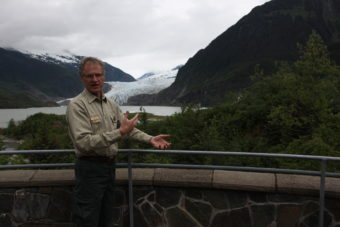
Elizabeth Jenkins, Alaska's Energy Desk - Juneau
How Mendenhall Glacier staff explain climate change

Mendenhall Glacier
About 80 percent of the people who come to the Mendenhall Glacier in the summer are tourists. (Photo by Elizabeth Jenkins/KTOO)

On a busy summer day, thousands of people — mostly cruise ship passengers — visit Juneau’s Mendenhall Glacier. The U.S. Forest Service wants those tourists to take in the dramatic views, but also consider why the glacier is shrinking. Visitor center director John Neary is making it his personal mission.

That means trying to make the message stick — long after the tourists are gone. 

In a wing of the Mendenhall Glacier Visitor Center a small crowd of onlookers is watching a debate between a man and an employee about climate change. The tourist is wearing a floppy hat and red shirt. He’s leaning on a silver tipped cane as he listens, waiting for a chance to respond.

Kat Pratt, a ranger and interpreter, was delivering talking points on sea level rise when the man — who didn’t want to give his name — challenged her. He thought rising temperatures are cyclical, not caused by people. And the climate change scientists are paid off by environmental groups.

It goes on like this for about 15 minutes. Until they move onto something they both agree on: The glacier looks blue. Pratt seems unfazed.

“I get it about once a day usually and some of them get more confrontational. Maybe some not educated as that last gentleman, and there’s a lot to learn,” she said.

She said it encourages her to do more research, and she learns how to talk to visitors from different backgrounds. Many have never seen a glacier before and haven’t been confronted with the effects of climate change. Aside, from say, experiencing a hot summer.

Kat Pratt talks to people inside the Mendenhall Glacier Visitor Center about climate change. (Photo by Elizabeth Jenkins/KTOO)
Kat Pratt talks about the effects of climate change inside the Mendenhall Glacier Visitor Center. (Photo by Elizabeth Jenkins/KTOO)

“It became our central topic really just in the last few years,” said Neary.

He’s not afraid to admit he’s on a mission. He wants the more than 500,000 people who visit the glacier each year to know that it’s rapidly retreating due to climate change, and the 18 interpreters who work for him are prepared to talk about it. He said initially, not everyone was game.

“There was resistance, and I think people viewed it as a negative thing. And uh, you know people on vacation. They don’t want to hear about negative things,” Neary said. “They want to think about the positive (things) — watch the whales, see the eagles. That sort of thing. I get that. That’s understandable.”

But he said it’s all connected. Compounds from glacial silt wash down and feed the plankton that whales and other species depend on. Salmon spawn in nearby waters.

In the past 30 years, Neary’s noticed an extreme visible difference in the glacier. He started at the Forest Service around that time. And at first, for him, Mendenhall wasn’t a big deal.

“It didn’t seem very special to me to be honest. It was just a glacier,” he said. “You appreciate things as they become diminished in your life, you look at them differently when they are disappearing.”

Now, Neary uses that when talking to visitors. He tells them about the time he was out hiking on a steep trail beside the glacier and his dog fell 90 feet onto the ice. Don’t worry, the dog survived.

“But the story comes back to me when I go back out there and realize that spot which I climbed is now more than a half mile away,” Neary said. “And there’s no glacier, there’s dense alder thicket there. So there’s big changes.”

To address those changes, Neary wants to make changes to the visitor center, too. He wants the building to be LEED certified in the next few years. That means it will be energy efficient and produce less greenhouse gas.

John Neary Mendenhall Glacier
At first, John Neary says the Mendenhall Glacier “didn’t seem very special.” But as it’s diminished, he’s made it a point to explain to visitors why it’s shrinking. (Photo by Elizabeth Jenkins/KTOO)

This approach has captured the attention of other countries. Eleven delegates from Norway are visiting in June. Neary said they’re interested in seeing what the visitor center is doing and also sharing ideas. Chilean park officials are planning a trip in the fall. Neary wonders if parks around the world are trying to figure out what their role should be when it comes to climate change.

“I think we are one in a million in the setting that we have. But I’d like to think that the conversation is happening everywhere,” Neary said.

Inside the visitor center, an interpreter lures a crowd over to touch a slick hunk of glacial ice. People stop to take selfies with it and snap pictures.

“Would you like to see some photos of the glacier in the past?” the interpreter asks.

The photos start in the 1950s and show the progression of how much the glacier has changed.

“You can’t replace it right?” a man asks. The interpreter tells him, “No, we can’t.” 

Anna Laing — one of the people who watched the presentation — traveled all the way from Glasgow, Scotland, to be here.

She said being on vacation, she had no idea she’d learn so much about climate change.

“It’s just a statement that’s just out there, normally,” Laing said. “And it doesn’t really mean much to you until you really see the physical evidence of it. Especially, since we’re able to touch the glacier there and know what we’re losing.”

Some scientists say the Mendenhall Glacier won’t be visible from the visitor center by the end of this century. John Neary hopes tourists have that in mind when they return back home.

Biomass boost: Haines and Hydaburg win renewable heating grants

Thorne Bay has been using its biomass system since XX.
The Thorne Bay School installed its biomass system 2012. It heats the school, gym and a greenhouse. (Photo courtesy U.S. Forest Service)

Two Alaska communities are receiving a federal grant to jump-start renewable energy projects. Haines and the village of Hydaburg were selected from 77 applicants nationwide.

Over the past 10 years, about 36 biomass systems have been installed in Alaska. The term sounds pretty technical, but it’s used to describe a prehistoric way to stay warm: a wood burning fire.

“You know, we’re not talking about some smoky, old wood stove here. We’re talking about high-tech equipment,” said Daniel Parrent, a program manager at the U.S. Forest Service.
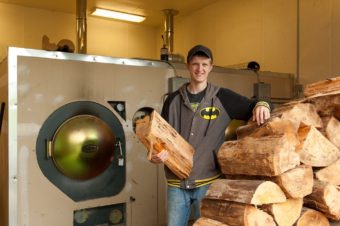
He said the Wood Innovation Grants were awarded to projects that maximize energy efficiency. Typically, the wood comes from second growth or byproducts. It also mitigates the threat of wildfire.

In the village of Hydaburg, the grant is funding the heat system for the school, which also includes a greenhouse. Cordwood will keep the buildings warm, displacing over 24,000 gallons of heating fuel a year. The total cost is about $900,000, with the bulk of the funding coming from the Alaska Energy Authority.

In the past decade, Parrent said he’s seen more cities consider biomass as a viable option.

“You know, several years ago, oil prices were through the roof, and that’s when a lot of these projects got started and got funded,” Parrent said.

Although the price of oil has dropped, that interest has remained.

A $1.5 million biomass system is in the works that could heat the Haines Borough’s schools, some public facilities and a swimming pool with wood chips. Darsie Culbeck, a biomass consultant to the borough, said the project will lessen dependency on fuel shipped in from Seattle, helping the community become more sustainable.

In turn, he said the wood chips could come from the Haines State Forest and stimulate the local economy.

“(If a) budget crisis happens and we lose our art teacher, … can we keep that art teacher because we saved enough money on fuel? That would be awesome,” Culbeck said.

In 2010, the village of Tok fired up its biomass boiler and three years later they were saving enough money to add a music teacher and school counselor.

Hydaburg and Haines’ biomass systems are expected to be completed next year.

BP selling multimillion dollar Anchorage building

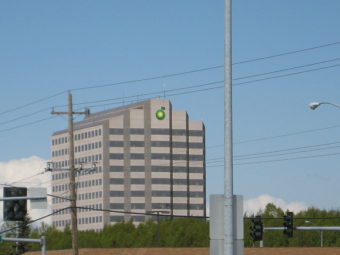
(Creative Commons photo by Mike Czyzewski)

BP announced Monday that it’s selling its midtown Anchorage building. In a statement, the company says the sale will “reduce costs and free up capital, allowing BP to focus on its core business.”

BP will become a tenant in the building rather than the owner.

Spokesperson Dawn Patience declined an interview request about the sale.

The building was opened in 1985 and is assessed at more than $80 million.

State labor economist Neal Fried is reluctant to draw any major conclusions on the future of Alaska’s oil industry based on the sale.

“I guess it’s not a big surprise, given prices, and also — of course — they have lots of other expenses that have hit them over the years,” Fried said.

The sale doesn’t include the BP Energy Center.

New tribal court programs aim to reduce recidivism

Youth Wellness Court held a meeting on XX to hear feedback from the community. Next, it will appoint members to an advisory board. (Photo by Elizabeth Jenkins/KTOO)
Youth Wellness Court held a meeting in April to hear feedback from the community. Next it will consult with elders and appoint an advisory board. (Photo by Elizabeth Jenkins/KTOO)

Two new tribal court programs are getting off the ground at Central Council Tlingit and Haida Indian Tribes of Alaska. They’re focused on reducing recidivism.

At the Elizabeth Peratrovich Hall,  a framework is being created.

It’s part of a larger conversation to identify what’s holding some people back from reaching their potential. Namely, things such as childhood trauma, unstable home lives and a disconnect from culture.

Colleen Belardi is one of the coordinators at Central Council’s Youth Wellness Court. She said the program is still being developed.

“What we do know is that we would like to intervene with youth in the court system … and also kids who may be at risk of becoming involved in the court system,” Belardi said.

The juvenile court could take the shape of therapeutic court or family conferencing. It’s funded by a 3-year $550,000 grant from the U.S Department of Justice. But they want to make the program sustainable.

Belardi said mentorship will play a key role.

“We want to teach them traditional ways — putting up food, carving, what is it to have an elder in your life and what does that mean to have an elder in your life.”

Elizabeth Peratrovich Hall is the new location of Central Council's tribal court. (Photo by Elizabeth Jenkins/KTOO)
The Andrew Hope Building is the new location of Central Council’s tribal court, which is located on the third floor. Elizabeth Peratrovich Hall is on the first floor. (Photo by Elizabeth Jenkins/KTOO)

A different program aimed at helping adult offenders is also underway.

Tribal Judge Debra O’Gara said the program primarily handles family law, but soon it will also be able to sentence some criminal cases.

State court judges reached out to the tribe, O’Gara said. Central Council signed an agreement with the state in April.

Defendants who plead guilty or are found guilty will be able to have their cases transferred to Central Council. From there, they’ll go through circle sentencing.

“We will have more time to delve into what is causing (them) to do this criminal behavior,” O’Gara said. “We’ll also have more time to inform the defendant as to what the effect their behavior has had on their family or what effect (it’s) had on their family or anybody who is harmed by that behavior.”

O’Gara said four other tribes up north have had success with the program. Eventually, Central Council wants to offer circle sentencing in other Southeast tribal courts.

Typically in the state court system, she said, the prosecutor or the judge have no connection to the defendant.

“Whereas in tribal court, we’re going to have family members and members … of their own tribe there, and often their grandma or grandpa or aunts or uncles or parents or siblings are going to be there in the court and have to explain why they’re doing what they’re doing.”

O’Gara says criminal behavior can sometimes be linked to poverty, childhood trauma or substance abuse. Depending on the case, the sentencing outcome could be job training or treatment — recommendations which will be sent back to the state.

The adult program could start up by the end of summer. O’Gara says she hopes it brings healing.

Editor’s note: A photo caption incorrectly stated the new location of the tribal court is at Elizabeth Peratrovich Hall. It’s actually located on the third floor of the Andrew Hope building, which also houses Elizabeth Peratrovich Hall. 

Healing on hold: Waiting for subsidized housing in Juneau

Kourtney Melton has been on the waitlist at Gruening Park for about eight months. (Photo by Elizabeth Jenkins/KTOO)

Imagine if 100 names stood between you and a place to live. Affordable housing is in short supply in Juneau. And for those looking for subsidized units, the wait can feel extremely long — especially when your family is on the brink of homelessness.

Kourtney Melton tries to check on her housing application at Gruening Park, an affordable housing complex, at least once a week.

She’s been on the waitlist for about eight months. She has three kids, ages 3, 7 and 11. And in her words, it’s starting to get scary. Her family lives in an RV parked in Switzer Village.

“I’m parked in my mom’s driveway, and so we can’t do that. We’d have to have our own lot and pay for our own lot space. They just don’t have one available for us, so we have to move,” Melton said.

As that day creeps closer, Kourtney is running through her options. She could stay at AWARE, a domestic violence shelter. But her boyfriend — not the person she has issues with — watches her kids when she’s at work, and the shelter doesn’t allow men.

She’s advised to call around to different places. Maybe something will open up.

“So, I’m at the top of their waiting list, and it looks like I could be in soon. But it just depends,” Melton said.

Her family used to have dual income, and money wasn’t as tight. She was married. She moved back to her hometown of Juneau with her husband last year after living in Oregon — hoping for a fresh start. She said she didn’t always feel safe in the relationship. The fighting escalated.

Then last summer, her husband took a job commercial fishing. He was gone for weeks at a time. When the season ended, he didn’t come back.

“So I was relieved at first. Now, I’m kind of torn,” Melton said. “I need him here. I need him to help with the kids. And I need help with everything.”

A greenhouse at Gruening Park.
Gruening Park has been around since the 1970s. It was initially created for middle-income housing but later took on a larger range of affordable housing. (Photo by Elizabeth Jenkins/KTOO)

In October, she put her name on the list at Gruening Park. The housing complex has 96 units and about half of those are eligible for a Section 8 voucher. Some apartments are rented out at market value. Others are subsidized based on income.

Kourtney works at a sports bar and grill — picking up extra shifts at another restaurant when the cruise ships are in town. In the off-season, she makes about $1,000 a month. And if she gets into Gruening, she would pay no more than 30 percent of that for rent.

“A lot of times people want to know to exactly when we’re going to have a unit, and that’s really impossible to know,” said Tamara Rowcroft, the general manager.

She said typically, a space opens up every month. But they don’t force anyone to move out. If someone’s income improves, the rent gets adjusted.

“The most you would pay for rent? Well, right now our market rent for a four bedroom is $1,160 a month,” Rowcroft said.

The least someone would pay is $0.

The apartments are first come, first served, and Tamara said the one and two bedrooms are the most in demand. Three and four bedrooms, like the one Kourtney is trying to get into, have the shortest wait. Still, some have been waitlisted for up to a year, Tamara said.

In the meantime, Gruening Park tries to encourage people to apply around, she said. There are other subsidized housing units, and some private landlords take Section 8 vouchers.

Tamara thinks, overall, Juneau is doing pretty good, compared to other cities. But is it enough? 

“Well, no. We need to keep working,” Rowcroft said.

The Terraces at Lawson Creek are a recently completed affordable housing complex on Douglas. (Photo by Elizabeth Jenkins/KTOO)
The Terraces at Lawson Creek are a recently completed affordable housing complex in Douglas, with 40 apartments. Next door, another 40 units are being built. (Photo by Elizabeth Jenkins/KTOO)

With no other options, Kourtney moved her RV from Switzer Village and into a friend’s garage. There are no hookups for water or sewer.

“When we can, if the door’s not locked, we can use our friend’s bathroom or we have to pee outside, like we’re camping,” Melton said.

And her oldest daughter is living with a friend.

“I can’t live without her like this because she’s 11, and that’s such an important time. And me not being there is, like, killing me,” Kourtney said.

Even though she is near the top of the list at Gruening Park, she’s trying to apply to other places. It’s been a challenge without having her own car. Without a phone, she’s worried she won’t get the message if a place does open up.

Kourtney isn’t sure what her future will look like. She just hopes it has four safe walls.

“Don’t even care if I have furniture. I just want to be with all my kids again, all together. Make dinner together. And have, you know, game night. And start healing from their dad leaving, all together,” Melton said. “Because we can’t do it separately like this.”

She’s considering packing up the RV and moving back to Oregon. She said her family can’t wait.

Funding for Chasing the Dream is provided by the JPB Foundation and the Ford Foundation. It’s part of an ongoing series about poverty and opportunity in America.

CtD-Logo2 for Web & Print

CBJ defends itself in cruise ship tax lawsuit using this one weird trick

Tourists walk toward the cruise ship Radiance of the Seas, docked at Juneau's waterfront. (Photo by Ed Schoenfeld,/CoastAlaska News)
Tourists walk toward the cruise ship Radiance of the Seas, docked at Juneau’s waterfront. (Photo by Ed Schoenfeld/CoastAlaska News)

Cruise Lines International hit Juneau with a lawsuit last month, alleging that the city misused marine passenger fees. Now the city has come up with a way to pay for legal counsel: marine passenger fees.

Mila Cosgrove, deputy city manager, said $50,000 is being transferred over.

“They’re coming out of the waterfront acquisition fund and the majority of the money in that fund are marine passenger fees or have come through that source,” Cosgrove said.

The city has its own legal team but Cosgrove said it doesn’t have the capacity to defend the case.

An estimated $8 million comes into Juneau every year through marine passenger fees. That money is supposed to be used to benefit cruise ships and passengers. The filing asks the court to permanently stop “the assessment, collection and improper use” of the fees.

And it argues a park being built — about a mile from the port — is a misuse of the funds.

But Cosgrove said a recent legislative audit of the state marine passenger fees found the city to be in the clear.

“Regarding the fees for legal defense, again, because it’s directly related to how those funds are used, we thought it was an appropriate expenditure of funds,” Cosgrove said.

Hoffman and Blasco are defending the city with another law firm, Latham & Watkins. A Cruise Line International rep could not be reached for comment.

Site notifications
Update notification options
Subscribe to notifications