Jennifer Canfield, KTOO

The meaning of names: The aftermath of generational trauma, part 4

Shyanne Chulyin Ch’ivaya Beatty.

The decline of many of Alaska’s indigenous languages happened during the era of boarding schools and missionaries. As children, some Alaska Natives were punished for speaking their mother tongue. When those children became adults, many did not speak their language to their children to spare them from the pain they experienced.

Acknowledging this generational trauma is what led Shyanne Chulyin Ch’ivaya Beatty to study Han Hwech’in, the language of her ancestors. In this fourth installment of a five-part series, Beatty talks about reclaiming identity through the use of Native names.

Listen to Beatty or read transcribed excerpts from her interview below.

Shyanne Chulyin Ch’ivaya Beatty

My first name that came to me was a Dena’ina Athabascan name, not a Han Hwech’in name. I was at the time working with a Dena’ina Athabascan in Anchorage, Alaska, and he gave me this name. He said, “You’re Chulyin Ch’ivaya.” And I said, “What does that mean?” “It means Raven Whirlwind, because you’re mischievous like a Raven and you come in and out of a room like a whirlwind.”

People are using their Native names or language within their own social identity. The generation of trauma was my grandparents’ and they see their children now being really proud of their identity.

I feel that just within the last 5-10 years we’re learning more about how are names are really. What I mean by that is I always thought we were Han Gwich’in. I’ve started learning more about my language (and) we’re actually Han Hwech’in, which is like H-W-E-C-H-I-N instead of Gwich’in.

I think that more and more people are realizing that just like Aleut people are not just Aleut people. They’re Alutiiq, they’re Sugpiaq, they’re Unangan, they’re Unangax, and we are really taking hold of owning our own identity, being educated by our identity and making sure that we educate others about that and that’s why I think we have this surge of people who are not only showcasing their Native language but their own identity.

The meaning of names: Indigenizing government, part 1
The meaning of names: A family history, part 2
The meaning of names: A time for change, part 3
The meaning of names: The aftermath of generational trauma, part 4
The meaning of names: The world of social media, part 5


The meaning of names: A time for change, part 3

Yéil Yádi Olson. (Photo courtesy of Yéil Yádi Olson)
Yéil Yádi Olson. (Photo courtesy Yéil Yádi Olson)

Legally changing a last name is common. But what about changing your first name? It can be hard for people who’ve known you for years to relearn your name. But for Yéil Yádi Olson the decision was an easy one.
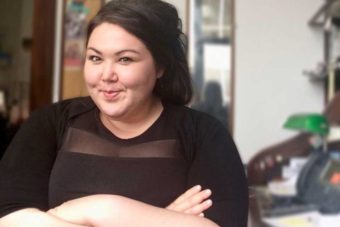
In this third installment of a five-part series, Olson talks about why he thinks more people should start using their Native names.

Listen to Olson or read transcribed excerpts from his interview below..

Yéil Yádi Olson

My name is Yéil Yádi Olson. I am T’akdeintaan Raven, Tlingit and dleit kaa yatx’i.

My name Yéil Yádi was first given to me by my grandma many, many years ago. It is the second of two Tlingit names that I have, and this was the name that I chose to go by legally. To me, it just represents who I am as a human being, because I believe every Tlingit person out there deserves a name, a proper name.

I like to use it very casually in everyday speech. I like the fact that it’s not anything ceremonial, it’s not anything heavy, it’s not anything deep. It’s just a name. Me, as a human being, I’m represented by Yéil Yádi Olson all day, every day, all the time. For me, it’s who I am — it means it’s me.

I changed my name legally like that (because) I like the idea of teaching people a little bit of Tlingit. Since I believe that all Native people were forced to use English, and now, in today’s world, it’s my opportunity to force the same people to learn a little, tiny bit about the Tlingit language.

It’s very important I think that more people do the same thing that I did. We have to start using these names because we’re trying to revitalize and bring back our languages and a part of that is using it every day, all the time.

By me changing my name to Yéil Yádi Olson, I’m making people who aren’t Tlingit, and even Tlingits who don’t know anything about the language, I’m making them use it and learn a little bit about our culture.

The meaning of names: Indigenizing government, part 1
The meaning of names: A family history, part 2
The meaning of names: A time for change, part 3
The meaning of names: The aftermath of generational trauma, part 4
The meaning of names: The world of social media, part 5


The meaning of names: A family history, part 2

Cordelia Qiġnaaq Kellie. (Photo courtesy of Cordelia Qiġnaaq Kellie)
Cordelia Qiġnaaq Kellie. (Photo courtesy Cordelia Qiġnaaq Kellie)

What’s in a name? For some, it’s just a name. For others, it represents generations of family history.

Cordelia Qiġnaaq Kellie started using her Iñupiaq name at work a few years ago for practical reasons. In this second installment of a five-part series, Kellie talks about what her Native name tells people about her.

Listen to Kellie or read transcribed excerpts from her interview below.

Cordelia Qiġnaaq Kellie

Uvaŋa Qiġnaaq. My name is Cordelia. Ulġuniqmiuguruŋa. I am from Wainwright. Tagarookquyaaġlu, James quyaaġlu.

I use my Iñupiaq name for very practical reasons. I was emailing back and forth with a cousin of mine for work. She was working at the North Slope Borough at the time and I was emailing as Cordelia and signing my name as Cordelia. Finally I actually inserted my Iñupiaq name and said, “Alright, see you later. Qiġnaaq.” And she replied, “Oh, it is you! I thought it might be you!”

She didn’t know me as Cordelia. She didn’t know she was emailing with her cousin. It was only when I said “Qiġnaaq” that she knew who she was speaking with and I thought to myself that there must be a lot of other people that might only know me as Qiġnaaq first and Cordelia second. So I added it on Facebook so that if I’m friending somebody, they know who I am.

If I say “Cordelia Kellie” that doesn’t mean anything. It unlocks nothing about me like saying “Qiġnaaq” can because when I use that name, it immediately associates me with the person I was named after and who he was and who my family is.

When you hear “Qiġnaaq” you’re going to know that I’m named after somebody from Wainwright and I have a connection to Wainwright, which is where my family is from. If you say “Qiġnaaq” it’s going to shed light on the fact that I’m Iñupiaq and that I come from a northern region. It’s going to shed light on my relationships and my family connections to 150 people that are closest to me in a way that “Cordelia” is just not going to do.

The meaning of names: Indigenizing government, part 1
The meaning of names: A family history, part 2
The meaning of names: A time for change, part 3
The meaning of names: The aftermath of generational trauma, part 4
The meaning of names: The world of social media, part 5

The meaning of names: Indigenizing government, part 1

Valerie Nurr'araaluk Davidson. (Photo courtesy of Valerie Nurr'araaluk Davidson)
Valerie Nurr’araaluk Davidson and her daughters.

More and more Alaska Natives are choosing to use their Native language names on social media, at work and in their everyday lives. It’s a cultural shift from previous generations in which many avoided speaking their language, let alone self-identifying with it.

Department of Health and Social Services Commissioner Valerie Nurr’araaluk Davidson, however, has been using her Yup’ik name professionally for about 20 years. In this first installment of a five-part series on Alaska Native names, Davidson talks about the importance of her name as it relates to her role in Alaska’s state government.

Listen to Davidson or read transcribed excerpts from her interview below.

Valerie Nurr’araaluk Davidson

I’ve always used my Yup’ik name. I didn’t actually know I had an English name until I started school and when I did I thought I was in big trouble. For me and for Yup’ik people, our Yup’ik names tell who we are related to and where we’re from.

I’ve used my Yup’ik name on my business cards for years, for probably about 20 years. One of the reasons I do that — not only on my business cards but also when I introduce myself — is because I think it’s really important for people to know that Alaska Natives are still here, we are relevant and we do our part to contribute positively to our state and I think that’s especially important for our children to hear.

One of the things that has been a really nice surprise is when I send emails from my work email address I always say at the end “Quyana” and I’ve been really pleased how many people have started using that. For example, when the governor emails me back he almost always says, “Quyana, Val.”

I’ve had people ask me when I’ve said “Quyana” to them, “What’s the appropriate word for ‘You’re welcome’?” Which is “aa-ang” and people have started using that. So it’s really been nice to be able to incorporate that into our everyday work and how we’re starting to indigenize a little bit state government. In a small way, but that’s how big things start — one step at a time.

The meaning of names: Indigenizing government, part 1
The meaning of names: A family history, part 2
The meaning of names: A time for change, part 3
The meaning of names: The aftermath of generational trauma, part 4
The meaning of names: The world of social media, part 5

Police respond to false report of hostage situation

Juneau Police responded to a false report of a hostage situation Thursday.

Lt. Dave Campbell says a 25-year-old man called police and reported that a man with a gun was in his backyard holding a female hostage. The man said shots had been fired.
JPD responded to the home on Slim Williams Way expecting a hostage situation. But after talking with the man, his grandmother and neighbors, police determined there was no threat.

“We had our critical incident person go out there and talk to him, and it looks like we’re looking at setting up some services for the guy,” Campbell said. “Fortunately what we responded to and what we were told, it just didn’t happen.”

Campbell said JPD has encountered the man before.

New federal rule could prevent litigation over Native children in state custody

Under new federal guidance, it will be easier for potential Alaska Native and Native American parents to adopt Native children in state custody.

The 360-page rule issued by the Bureau of Indian Affairs Wednesday aims to make interpretation of the Indian Child Welfare Act more consistent, regardless of the state, judge or social worker involved.

With the new BIA regulations, state courts across the country now must establish at the beginning whether the placement of a child is subject to the Indian Child Welfare Act, or ICWA. The new regulations also clarify the law’s placement preference and how states and tribes determine jurisdiction.

“This is going to be entirely helpful for us,” says Christy Lawton, director of Alaska’s Office of Children’s Services. “I think that these rules are providing a lot more clarity to areas of practice that have been somewhat gray and open for interpretation. I think It’s going to reduce, potentially, future litigation.”

The rules likely would have prevented litigation in the Tununak case by requiring ICWA eligibility to have been determined at the outset.

In 2015, the Alaska Supreme Court declined to reconsider a case in which a Native child dubbed “Baby Dawn” was permanently placed into a non-Native home. The child’s grandmother told the state that she wanted to adopt her. But the state argued that since the grandmother did not did not formally file paperwork, there was no ICWA placement preference to apply.

Matt Newman is an attorney with the Native American Rights Fund, which represented the grandmother in the case. Newman says there’s a pattern of Native children being moved to Anchorage or other urban centers. The thinking is that there are more services there to help a child and parent, improving chances of reunification.

But when that isn’t possible, Newman says the court often decides that the foster care family bond should not be broken. Those children do not return to their home villages.

“We saw these situations where time and time again children were being placed in Anchorage or Mat-Su or on the Railbelt road system under the premise that they would be returned or reunified with their communities and their families, only to have the opposite eventually happen,” Newman said. “Once you’re in Anchorage or you’re in the urban centers, you stay there.”

That scenario happens far less frequently, Newman says, since Valerie Nurr’araaluk Davidson, a Yup’ik woman with a background in health care and law, became commissioner of the Department of Health and Social Services. Her department oversees the Office of Children’s Services.

“I think our biggest opportunity is to leverage relationships with tribes and tribal organizations to really improve outcomes for Alaska Native and American Indian children in our communities,” Davidson said.

“When you can provide that care as close to home as possible, we know that we’re going to have better outcomes for children. Tribes are really in the best position to be able to provide that local care.”

In March 2015, under Davidson’s guidance, the state issued emergency regulations that essentially formalized any contact regarding the immediate placement of a child. That means if a grandmother calls the Office of Children’s Services and tells them that she wants to take care of her grandchild, that phone call is documented as a formal request to initiate adoption or foster care placement.

Legislators codified those emergency regulations last month in House Bill 200. Gov. Bill Walker made it a priority for the legislature. The Alaska Federation of Natives strongly advocated for the bill.

Nicole Borromeo is an executive vice president and general counsel at AFN.

“We’re encouraged by the Department of the Interior releasing these BIA guidelines and regulations, and we are looking forward to the state courts complying with the regulations because they’re no longer guidance, they are in fact federal regulations and they are binding,” Borromeo said.

In 1978, Congress adopted the Indian Child Welfare Act to remedy the high rate of removal of Native children from their homes.

According to a 1976 study by the Association on American Indian Affairs, before ICWA, it’s estimated that between 25 and 35 percent of indigenous children in the United States were being removed from their homes. In most cases, those children were placed in homes away from their culture and extended family.

While ICWA is intended to keep Native children in Native homes, the law has been criticized by both its supporters and detractors. Opponents, many of which are Christian adoption groups, say that non-Native families should have the same right to adopt Native children, and that preventing them from doing so is to the detriment of those in state custody. Supporters of ICWA have long spoken against how much power a judge has in interpreting the law, a problem which the new regulations aim to resolve.

The new federal regulations clarify what has been for decades a murky and often divisive law. Newman, the Native American Rights Fund attorney, noted that coincidentally the regulations were announced within two days of the anniversary of the state court declining to reconsider the Tununak case.

Site notifications
Update notification options
Subscribe to notifications