Julia Caulfield, KTOO

Long ago, Patsy Ann left her mark on historic Juneau, but where?

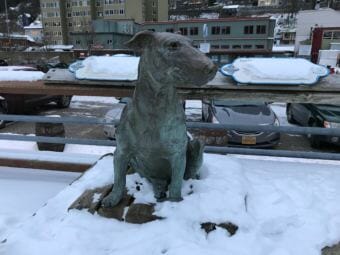
The statue of Patsy Ann, once Juneau's official greeter, watches downtown Juneau's waterfront in December 2017. The Friends of Patsy Ann commissioned the famous bull terrier's statue, which was presented in July 1992. (Photo by Julia Caulfield/KTOO)
The statue of Patsy Ann, once Juneau’s official greeter, watches downtown Juneau’s waterfront in December 2017. The Friends of Patsy Ann commissioned the famous bull terrier’s statue, which was presented in July 1992. (Photo by Julia Caulfield/KTOO)

Brooks Pinney, 7, and his 4-year-old brother Bridger love learning about the bull terrier Patsy Ann. They love listening to their mom, Amy Pinney, read them the children’s book “Patsy Ann of Alaska: the true story of a dog” by Tricia Brown.

“The kids got super into it. They read it over and over and over, and we took a pedi cab around downtown this summer and learned a little bit more about the sculpture and then it just made it even more fascinating,” Pinney said.

On one page the book reads:

“She walked the aisles of the theater while string musicians played Beethoven. She warmed herself by the hotel’s wood stove as gold miners swapped tall tales. She pressed her paw prints in the fresh cement of a new sidewalk.”

Where are those paw prints? Pinney and her kids wanted to know.


Curious Juneau stars you and your questions. Every episode we help you find an answer. Catch up on past episodes, or ask your own question on the Curious Juneau page.

Born in 1929 in Portland, Oregon, Patsy Ann moved to Juneau with her owners as a puppy.

Several authors have written that she hated staying indoors, and often wandered around downtown. She would wait on the docks for the ships to come in.

Despite being deaf, she became famous for knowing exactly when the ships would arrive. By 1934, the mayor named her the “Official Greeter of Juneau.”

So those paw prints would’ve been set about 80 years ago.

“Who knows where they would have been downtown, because downtown was so different when Patsy Ann was alive … so maybe nobody even knows where they are. Other than the author, and maybe the author doesn’t even know,” Pinney wondered.

That seemed like a good place to start. So I called up Tricia Brown, author of “Patsy Ann of Alaska.”

“What I remember is when I read about it, I wish I knew when it was because it didn’t say and that was, you know, it sparked my interest as well, so I’m not surprised it’s also inviting somebody else’s curiosity. I just didn’t, I don’t know,” Brown said.

Brown thought she read about the paw prints in a short book by Carl Burrows published in 1939.

I found it in the Alaska State Library’s historical collections. Burrows’ book is actually a red, 8-page booklet. A sketch of Patsy Ann is on the cover, but there wasn’t a word about paw prints in cement.

But Historical Collection library assistant Jacki Swearingen had a lead.

“It’s the Kinky Bayers collection, and he wrote down a lot of newspaper articles,” she said. “I’m going to look and see if maybe he has specific references to Patsy Ann.”

Swearingen came back with list of dates and brief descriptions of newspaper articles.

At the bottom of the page one description began, “Patsy Ann leaves her footprints for posterity …”

“I think this probably says ‘July 20, 1939’ and maybe that, the seven might mean seventh page of the newspaper,” Swearingen added.

Soon I was scrolling through copies of old Daily Alaska Empires on microfilm.

July 20, 1939: Below a crossword puzzle and comic strips, I spotted the article: “Patsy Ann Leaves Marks For Posterity.”

The article reads:

“Patsy Ann, Juneau’s canine boat greeter, many years a ‘landmark’ on the waterfront, left her footprints for posterity today.

“Workmen had just completed paving the South Seward Street sidewalk and it lay smooth and clean in the light of high noon — until Patsy Ann came along.

“Without concert, Patsy Ann trotted down the middle of the new cement. Workmen chased her and she increased her speed, but she kept to the middle of the fresh sidewalk and assured coming generations to some memory of Patsy Ann, the dog that all Juneau knows.”

So that’s that. Patsy Ann left her paw prints on a South Seward Street sidewalk.

Someone from City and Borough of Juneau Public Works told me that the sidewalk had probably been through two to four iterations since then.

I met with Amy Pinney and her kids on a snowy, windy day on South Seward, to share with them what I had found.

But seven-year-old Brooks still had a question.

“Why did they have to rip apart Patsy Ann’s track?” he asked.

His mom chimed in.

“I guess back then when they tore up the first sidewalk they wouldn’t have known what kind of a mascot she would have been for the town,” Pinney said. “But it should have been known since the mayor named her ’official ship greeter’ … and it just seems so romantic. If we get a dog we’ll have to get one just like Patsy Ann.”

Patsy Ann passed away in 1942, but you can still see her statue on the downtown Juneau waterfront. Even though her paw prints are gone, her story is still capturing Juneau kids’ imaginations.

For some Native corp shareholders, cultural role outweighs the economic

The mission of Sealaska Corp. is to strengthen people, culture and homelands. It pays its shareholders cash dividends and supports Alaska Native culture through the Sealaska Heritage Institute and other programs. But do Alaska Native corporations like Sealaska help their shareholders climb the economic ladder?

Sasha Ivan Soboleff was 26 when the Alaska Native Claims Settlement Act, or ANCSA, was signed into law on Dec. 18, 1971.

“I was teaching in Kake at the time, and I signed up on Kake Tribal, so I have 100 original shares and I was on the original board of incorporators for Kake Tribal,” he said. “I also belong to Sealaska Corp., because that’s the large regional corporation.”

Sealaska is one of 12 for-profit regional Alaska Native corporations the legislation created. It also created many village corporations, including Kake Tribal. Alaska Natives at the time, like Soboleff, enrolled as original shareholders.

Sitting in his small apartment in the Mendenhall Valley, he said he doesn’t think Native corporations can help with economic mobility.

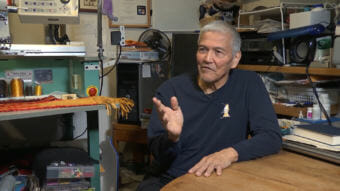
Sasha Soboleff discusses the role of Alaska Native corporations at the his home in the Mendenhall Valley in November. (KTOO video still)

“The business nature of ANCSA corps., which is the formation of an economic vehicle called a profit-making business, is not the way the culture of Southeast Alaska Natives … thinks, or exists,” he said.

Sasha Soboleff was born in Juneau in 1945. That was five years after his parents, Walter and Genevieve Soboleff, moved back to Juneau from the Lower 48. He said his parents instilled in him the value of hard work.

“They came back here and they ran into terrible racism. They weren’t allowed to rent. They weren’t allowed to apply for jobs, but to their persistence, they started making it, and so the Soboleff family has always followed that mold,” he said.

Soboleff is a retired school teacher and principal. He’s the grand president of the Alaska Native Brotherhood.

He said the Native corporations fail to support the culture, and the distributions don’t make up for it.

“I barely even recognize except a couple of times a year when they give out one or $200,” he said. “It doesn’t set the standard for making a culture come alive. … It doesn’t recognize where you live, the lands that your clans and your family has had for years where you pick berries or you go fishing, or where you dry the foods that are going to be due, or you have seaweed. It doesn’t do any of that.”

Rosita Worl disagrees. She is also an original shareholder and recently retired from being a board member of Sealaska Corp. after 30 years. She said the purpose of the corporation is more than just monetary.

“In addition to our economic responsibilities, through employment and dividends, we also have a host of other responsibilities, and things to meet our mission objectives, like scholarships, things to grow, help out shareholders so they could lead a healthy lifestyle.”

Nathan Soboleff, Sasha’s nephew, received one of those college scholarships and an internship with Sealaska. Now he manages grants at Bartlett Regional Hospital in Juneau, where he has his own office.

Nathan Soboleff got a few shares of Sealaska and the village corporation Kootznoowoo from his father. Financially, they’re not worth much.

“I think I received a shareholder check of like $5 before,” he said.

What matters more to him is the connection to the land.

“Not having some kind of ownership to that land is sad, and a lot of people do have strong feelings about having some kind of ownership, even if it’s not in the modern sense of private ownership … but knowing that it’s still Haa Aaní, it’s still our lands, is important,” he said. “And if you don’t have any of that shared ownership in there, there’s something missing.”

Nathan Soboleff has three young children and looks forward to passing some of his shares along to them.

“They are growing up being raised Tlingit-Norwegians, and they culturally know who they are, and where they’re from, and in the near future, you know, within the next six or seven years, I will give them some of my shares,” he said.

Rosita Worl said she’d like to see Sealaska develop that connection to the land further by advocating for more subsistence rights for its shareholders.

“I’m not saying that we have to go back to a hunting and fishing economies, but I want to see us … moving forward in a way that brings us into the 21st centuries but also allows us to sustain our traditional cultures.”

Rosita Worl, and Sasha and Nathan Soboleff are just three voices among tens of thousands of shareholders in more than 200 Alaska Native corporations. Do you have a story about how your corporations affected your family? Share it at ktoo.org/chasingthedream.

This story is part our public media partnership with Chasing the Dream: Poverty and Opportunity in America. Major funding is provided by the JPB Foundation. Additional funding is provided by the Ford Foundation. Support on KTOO comes from thread, advancing the quality of early care and education in Alaska. 

Chasing the Dream

Newscast – Thursday, November 30, 2017

In this newscast:

  • The U.S. Senate votes to begin debate on tax bill, including language to open the Arctic National Wildlife Refuge for oil development,
  • The number of jobs in the Prudhoe Bay region has dropped to the lowest levels since 2007, and
  • The Sealaska Heritage Institute, University of Alaska Southeast and several Southeast school districts are partnering to encourage Northwest Coast art in schools.
New developments in the works for Juneau’s downtown waterfront

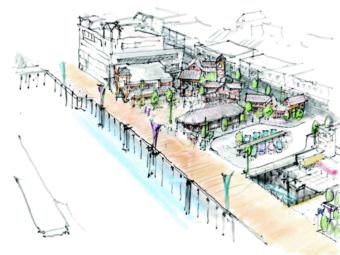
NorthWind Architects and Corvus Design created this concept art illustrating what part of Juneau's downtown waterfront could look like in 2019.
NorthWind Architects and Corvus Design created this concept art illustrating what part of Juneau’s downtown waterfront could look like in 2019. The concept is part of a Juneau Docks and Harbors master plan process underway.

More food trucks, retail, parking and an expanded USS Juneau Memorial are in the works for Juneau’s downtown waterfront.

Last week, the city released a design plan to develop the area from Marine Park to Taku Smokeries.

Gary Gillette, port engineer for Juneau Docks and Harbors, said the aim is to create a space both for visitors and locals.

“Our waterfront that we’ve been building up with the new cruise berths and stuff has been primarily focused towards serving the cruise industry,” Gillette said. “But we really hope that something will spark locals to get encouraged to come to the area in the off season, which in turn would spark some of those business owners to stay open in the winter.”

A large portion of the area for development is the Archipelago Lot, directly next to the public library. Docks and Harbors owns a portion of the land. But most of the lot is owned by Morris Communications, a Georgia based media company. They previously owned the Juneau Empire.

Gillette said they plan to work with the company to develop the area.

“We’ve been working with the private owner to make sure they get what they need and we get what we need and it all works together, so when it’s done it’ll all be one logical, cohesive plan, and cohesive area,” Gillette said.

Docks and Harbors is looking for community feedback on the design plan. You can see the plan on the Docks and Harbors website, and send feedback to Gary Gillette at gary.gillette@juneau.org.

The Docks and Harbors board is scheduled to vote on the design plan at 5 p.m. Nov. 30 in Assembly Chambers at City Hall.

Gillette said they hope to have the Archipelago Lot portion developed in 2019. Other portions will be developed as funds allow.

Newscast – Thursday, November 16, 2017

In this newscast:

  • The U.S. Senate Energy Committee approves legislation to open the Arctic National Wildlife Refuge to oil drilling,
  • Alaska officials want the U.S. State Department to raise concerns about the impacts of mining in British Colombia waters,
  • The National Weather Service issues a winter storm warning for Juneau and northern Admiralty Island, and
  • Icebreaker Healy is open for tours.

Government database aims to slow opioid crisis in Alaska


Lifelong Juneau resident Mary Alissia Parr is unable to walk because of spine damage.

She has been in physical therapy, she said sitting in a wheelchair in her Mendenhall Valley living room, but also takes prescribed OxyContin and Percocet for chronic pain management.

She’s worried about new regulations restricting opioid prescriptions.

“It’s a very tough situation. Yes, the drug abuse on the streets needs to stop, it’s awful,” she said. “But what happens to the other people. I don’t have any answers for that yet. And I’m looking.”

The Prescription Drug Monitoring Program, or PDMP, has been in Alaska since 2008.

While the monitoring program was originally voluntary, it became mandatory in July.

It’s an online database, set up by the state.

Physicians, pharmacists or even veterinarians log the controlled substances, including opioids, they prescribe.

The program allows prescribers to check whether a patient is already receiving a prescription from another doctor, and discourages over-prescribing.

“The primary goal of the PDMP is to be a meaningful force to curb opioid misuse and addiction in the state.”

The monitoring program informs doctors when patients ask for duplicate opioid prescriptions, said Sara Chambers, the deputy director of the Division of Corporations, Business and Professional Licensing.

“And that can be done through, at the front end, through providing medical personal with information to make decisions before prescribing,” Chambers said. “The PDMP data can be used after the fact as information to help feed our health care experts in the state and make sure that they’re aware of prescribing trends and practices. From the front end of prevention to the back end of analysis and treatment, the PDMP provides an excellent glimpse into how Alaska is utilizing opioid prescriptions.”

The main purpose of the program is to be an educational resource, but Chambers said over-prescribers could face disciplinary action.

Juneau surgeon Dr. David Miller registered for the monitoring program once it became mandatory. He said trying to reduce over prescribing is worth the extra effort, but he worries it won’t have the desired effect.

“I would like to see some numbers that this has an effect. If all you’re doing is increasing work load for physicians, and you don’t get the desired effect, that’s always a possibility,” he said. “I have a feeling that physicians that over prescribe narcotics are still going to continue to do that. But it’s at least a step in the right direction to try to rein some of this practice in.”

But the new regulations may be hurting patients who use prescribed opioids as a form of pain management, including Parr.

Mary Alissia Parr takes prescribed opioids for chronic pain management. She believes new legislation has made it harder to find a doctor to prescribe her medication. (Photo by Julia Caulfield/KTOO)

“They’ve helped me a great deal,” she said. “They’ve made it so I can get up during the day and be mobile, whereas before I couldn’t hardly move.”

She understands the restrictions, but she’s nervous about the effects.

“Yes, it has been abused greatly, by a lot of people,” Parr said. “Unfortunately the people with chronic pain are getting caught in the middle of this.”

Parr said she used to go to a pain management clinic in Juneau, but since it closed earlier this year, she’s had trouble finding a doctor who will prescribe what she needs.

She believes it has to do with the changes in legislation.

“They’re frightened to do this, and I understand, but what about the few of us that aren’t abusing the medications and are following the programs, what happens to us?”

Chambers, who oversees the program, said there are provisions that allow for doctors to prescribe larger amounts, as long as it’s appropriate treatment, and documented properly.

She said the program hasn’t collected enough data to see if the changes are helping, but she hopes more data — due out this winter — will show the program is working.

For more information about opioid addiction and treatment visit the Alaska Department of Health and Social Services website.

Site notifications
Update notification options
Subscribe to notifications