KOTZ - Kotzebue

KOTZ is our partner station in Kotzebue. KTOO collaborates with partners across the state to cover important news and to share stories with our audiences.

REAL hassle: Tribal officials press lawmakers on getting REAL IDs to villages

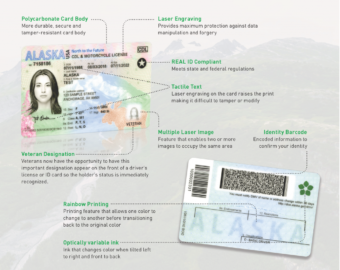
Starting October 1, 2020, Alaska residents will need to present a REAL ID compliant license/ID, or another acceptable form of identification, for accessing Federal facilities, entering nuclear power plants, and boarding commercial aircraft. (Photo courtesy of Alaska Department of Administration)

Starting in October, if you want to fly on a commercial flight anywhere in the United States, you will need a federally-compliant REAL ID, or an official alternative like a passport.

Getting one of those IDs  requires a lot of documentation and lines at the Department of Motor Vehicles (DMV) can last three hours or longer. And that’s if your community has a DMV in the first place.

Many, if not most, rural residents will need access to flights for medical appointments or emergencies at some point.

“In case of life-threatening emergencies, patients are often medevaced to Anchorage or Seattle. And once they get better and are able to return home, they’ll have to take a regular flight back home,” said Jacqueline Bergstrum, Executive Director of Medical Services for the Tanana Chiefs Conference. “So all these scenarios happen routinely and will require that patients have a compliant ID by Oct. 1 under the current act.”

Bergstrum is concerned that if villagers can’t get REAL IDs, they may get stranded after medical flights.

State lawmakers in the House Tribal Affairs committee heard testimony Thursday, Feb. 20, from Bergstrum and other rural Alaska leaders who are concerned about getting REAL IDs for their communities and want lawmakers to help.

“I do think it’s the Legislature’s job to appropriate funding to ensure that every village in the state of Alaska has somebody going to their community at least once, and providing that as an opportunity, versus a community of 800 people trying to fly into Nome to obtain their REAL ID,” said Melanie Bahnke, CEO of Kawerek, a tribal consortium in the Bering Straits Region.

Even if a village could organize flying everyone who wanted a REAL ID to the nearest hub DMV, it would be expensive. Round trip tickets from surrounding villages to Kotzebue can cost as much as $600.

Charlie Nelson, VP and Tribal Affairs head for Maniilaq Health Consortium based in the Northwest Arctic Borough, says Kotzebue’s DMV hours are very limited since the one person who works there also works as an admin for the local police department. Plus — it’s closed on Wednesdays for road tests.

“Our DMV office is only open for four hours a day,” Nelson said. “When that person is out sick or has other issues, personal and or business, it is usually closed. So we don’t have any direct access to it on a full-time need.”

The state has been trying to solve this problem for awhile now — without much success so far.

Last year, it put out a pitch for Alaskans to donate to the state DMV to get workers out to rural communities, though they’ve since ditched that idea.

Then, there’s a state mobile DMV pilot program that has been going through villages to help get tribal members signed up, though it’s not always on the state’s dime. The village of Eek’s tribal council had to approve their own funds to get state workers to the village. Residents also had to individually foot the $40 bill for their IDs. In New Stuyahok, about a third of residents who applied for a REAL ID were denied, according to the state DMV.

Now, the state has been pushing for residents to use alternatives to the REAL ID when the deadline hits. Those include passports, military IDs and federally-recognized tribal IDs with photos.

State DMV Deputy Director Jenna Wamsganz made a presentation to the sub-committee after the public testimony.

“We know that 350,000 Alaskans have passports, and then 65,000 Alaskans have military IDs, and then about 67,000 Alaskans are eligible for veteran IDs as well,” Wamsganz said.

While it’s unclear how much overlap there is with the alternatives, Wamsganz says currently, 115,000 REAL IDs have been issued to Alaskans.

With the October deadline looming, Rep. Tiffany Zulkosky of Bethel, who chairs the House Tribal Affairs committee, told the DMV representative at the hearing that the department should be more proactive in explaining REAL ID alternatives to tribes.

“If it’s being shared with a group of legislators, it seems like it could be shared as a ‘Dear Tribal Leader’ letter so people know what opportunities there are to meet other standards, specifically if the department is relying on tribal IDs as an alternative option,” Zulkosky said. “That’s something to consider moving forward.”

One more wrinkle is that even with the tribal IDs, tribal officials are concerned that that local Transportation Security Administration (TSA) officials have not all been trained properly on recognizing the various forms of acceptable IDs. Additionally, Bahnke with Kawarek says just because someone is an enrolled tribal member of a tribe, it doesn’t mean they live there.

“I don’t want to be stranded somewhere thinking that the TSA is going to accept my Native Village of Savoonga-issued tribal ID,” Bahnke said. “I’m a state citizen, and I should have the access to a state-issued REAL ID.”

Including the alternatives, the state DMV estimates that about 6,700 rural Alaskans who don’t have a DMV in their community still need help with getting an ID.

Calls made to the state DMV office concerning state outreach went unanswered.

Alaska representative for North Slope and Northwest Arctic says he’s not running for reelection

Rep. John Lincoln, D-Kotzebue, takes an oath during his swearing-in ceremony in the Alaska House of Representatives on Jan. 31, 2018.
Rep. John Lincoln, I-Kotzebue, takes an oath during his swearing-in ceremony in the Alaska House of Representatives on Jan. 31, 2018. On Thursday, Lincoln announced via Facebook that he would not seek reelection. (Photo by Skip Gray/KTOO)

The Alaska representative who represents the Northwest Arctic and North Slope boroughs says he will not run for reelection.

In a Facebook post, John Lincoln, an independent from Kotzebue, wrote, “I’m at a stage in life – as a husband and father of young children – that makes it extremely important for me to be present and to provide for my family.”

https://www.facebook.com/RepJohnLincoln/posts/2909052379155316

He said he plans to return to work for NANA Regional Corp. after his term ends.

Lincoln has served in the Alaska House of Representatives since 2018, when he was appointed to replace Dean Westlake of Kiana. Westlake resigned after multiple sexual harassment allegations were made against him from legislative aides and other women.

Initially a Democrat, Lincoln dropped his party affiliation late last year. He serves in the bipartisan House Majority, and is co-chair of the House Resources Committee.

So far, Ely Cyrus of Kiana is currently the only person who has filed to run for House seat 40.

The deadline to file to run for Lincoln’s seat in June 1, 2020.

‘We will rebuild’: Kaktovik prioritizes getting kids back to class following school fire

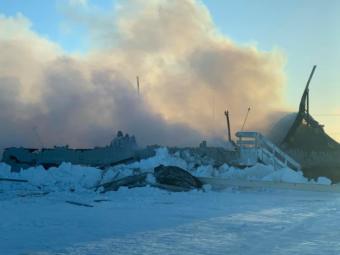
Smoke fills the air in the North Slope village of Kaktovik. A fire destroyed much of the community’s only school on Feb. 7. (Photo courtesy of Amanda Kaleak)

The village of Kaktovik is still clearing the rubble after a Friday morning fire destroyed much of the only school in town. The community plans to rebuild the school, but the timeline is still unknown.
Kaktovik Mayor Amanda Kaleak said the first priority is restoring a sense of normalcy for the students as they resume school.

“We have a five-plex that we’re going to be using for classrooms,” she said. “Just getting everything to where the kids don’t have to fall back, and so we don’t have to extend the school year any longer.”

Kaleak said the city hopes to get kids back into classes next week.

Currently, the city building’s internet bandwidth isn’t set up to accommodate the needs of the students, so that is something Kaleak said is being worked on. Additionally, the building will need more power to adjust to the students.

Kaleak said the North Slope Borough met with Kaktovik officials over the weekend to discuss the long-term plans for replacing the school. While the building was insured, she said, the borough doesn’t yet know how long it will take to build a new school.

“There’s still all that rubble and all the frames and stuff of what was once our new gym and our school that are still there,” Kaleak said. “We still have the fire marshal here investigating. So after they have that all turned over, then we will be able to demo all that and go from there.”

“We will rebuild,” Kaleak continued. “That’s our plan. Everyone’s in high hopes.”

Kaleak said the students and the community are still in shock over the loss of the school. She said about 20 students were away at a basketball tournament in the village of Atqasuk when the fire started last week. They returned home to a huge loss.

“We had all our banners from every award that we ever won, from the ’70s and ’80s, all the trophies,” Kaleak said. “All those memories. It’s kinda hard to think about it.”

When they do end up rebuilding the school, staff will be able to decorate with the sportsmanship trophies the boys and girls won during their weekend tournament.


Fire in North Slope village of Kaktovik engulfs school overnight

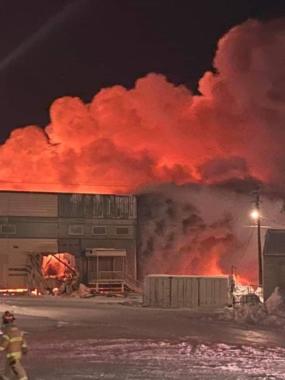
A fire engulfs the school in the North Slope village of Kaktovik on Feb. 7. (Photo courtesy of Melvin Jack Kayotuk)

The school in the North Slope village of Kaktovik is a “total loss” after a fire burned Thursday night into early Friday morning, according to local officials.

North Slope Borough Mayor Harry Brower Jr. said there were no injuries to report. He said the weather, which dipped to -35 degrees, made fighting the fire difficult for first responders. Western winds between 16-18 mph had hit the community all morning.
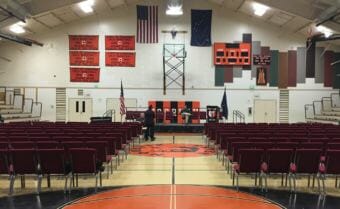
Kaktovik resident Wayne Kayotuk said he brought his son to the gymnasium at the Harold Kaveolook School on Thursday night.

“When I brought my son there and let him play, I could smell something in the air,” said Kayotuk. “But I thought it was just smoke from the landfill burning.”

That was around 6 p.m. By around 8 p.m., Kayotuk said the building was on fire. By midnight, it was engulfed.

In a Facebook message posted at about 3:30 a.m., the North Slope Borough School District wrote that everyone had been evacuated from the school and fire departments were trying to contain the fire.

According to Kaktovik City Clerk Katheryn Aishanna, officials had a heater going at the school to thaw frozen pipes, and the heater ignited a fire. She wrote that Kaktovik Mayor Amanda Kaleak says the school is a “total loss.”

Local residents posted video and photos of the fire, showing tall, bright-orange flames across the dark early morning sky.

https://www.facebook.com/melvin.kayotuk/videos/1840980236032488/

https://twitter.com/katzyn/status/1225766422179020800

The school was a gathering place for the 250-person village, and it was connected to a recently-opened $16 million basketball gymnasium.

“We lost a community place,” said Kaktovik resident Marie Rexford. “It’s where everyone goes to for their gym nights. What are they going to do now? What are the kids going to do now? What is the community going to do now?”

She said the whole town is feeling immense sorrow.

“A lot of the community members are crying,” Rexford said by phone. “Our kids got no more school. How long is it going to take to build our school?”

Kaktovik is the easternmost village in the North Slope Borough, about 50 miles north of the Brooks Range. It’s the only village within the boundaries of the Arctic National Wildlife Refuge.

Reporter Nat Herz with Alaska’s Energy Desk contributed reporting from Anchorage.

This story has been updated.

Noorvik’s mayor says he was denied a REAL ID. He’s concerned other villagers will have the same problem.

The gymnasium at Aqqaluk High and Noorvik Elementary School will host Gov.-elect Mike Dunleavy's swearing-in ceremony on Monday morning.
The gymnasium at Aqqaluk High and Noorvik Elementary School. Noorvik hosted the governor’s swearing-in ceremony in 2018. The mayor of Noorvik was recently denied a REAL ID at a DMV office in Anchorage. (Photo by Andrew Kitchenman/KTOO and Alaska Public Media)

October 1 is a deadline that will affect all Alaskans who travel by plane. That’s the day passengers will need a federally-recognized REAL ID-compliant form of identification in order to travel on a commercial airline.

It’s about nine months away, but the deadline is causing trouble for a lot of rural Alaska communities, many of which don’t have Department of Motor Vehicle (DMV) offices, forcing residents to have to travel to other cities. Another concern is the documentation required to get a REAL ID.

Like many Alaskans in small communities, Noorvik mayor Verne Cleveland had to travel from the community of under 700 people to a city with a DMV. He opted for Anchorage.

“I tried getting my ID and I didn’t have no street address, no home number, no house number, nothing,” Cleveland said. “So I didn’t get my new card. And that’s a problem.”

There are several requirements needed to get issued a REAL ID. One of them is two documents showing proof of residence, with a physical address on them.
A couple of buildings in Noorvik have addresses, but Cleveland says none of the homes do. Locals rely on PO Boxes for mail. Cleveland says there had been efforts in the past from the local village government to establish home addresses in Noorvik, but they went nowhere.

Cleveland says if that requirement remains strict, he’s worried that no one in the village will qualify.

“And I told [the DMV] that we don’t have anything. All we have is PO Box numbers,” Cleveland said. “And that’s gonna be a big problem. And it’s not just gonna be in our areas. It’s gonna be in other areas.”

Among the forms of ID that are REAL-ID compliant are passports and federally-issued tribal ID cards with photos. While Cleveland says that many community members have those alternatives, he says the state should still be helping get those IDs to communities like his.

“I lucked out and had my passport, so that was no big deal,” Cleveland said. “But if this comes to where we’re gonna be travelling for ball games and we don’t have the ID, then we’re stuck at home.”

Interview requests made to state DMV officials and the state Department of Administration went unanswered, though last month, Administration Commissioner Kelly Tshibaka requested Alaskans donate to the state DMV in order to help with getting rural residents their IDs.

Heavy, expensive wind storms projected to hit Northwest Alaska harder in coming decades

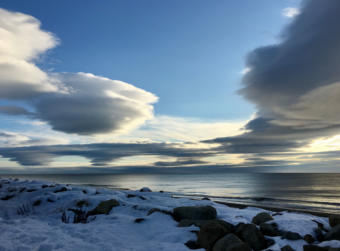
Bering Sea coastline near Nome, October 2017. (Photo by Zoe Grueskin/KNOM.)

During the week of Thanksgiving this year, Northwest Alaska communities were inundated with heavy wind storms that affected travel and caused infrastructure damage. Over time, these kinds of storms could subject coastal communities to flooding and erosion.

Historically, Arctic communities have had thick layers of sea ice to help buffer those storms, but that protection is disappearing.

As the Arctic has warmed over the last several decades, due to climate change, average temperatures have increased and shrinking sea ice — typically used for travel and hunting — has become less reliable. New research suggests that the change in climate is also affecting wind storms.

“We do see that, with the change in climate, some types of wind events may be becoming more or less likely,” said Sarah Pearl. Pearl is a Dartmouth College undergraduate student who has been researching wind storms with the International Arctic Research Center at the University of Alaska Fairbanks.

Northern coastal communities like Nome, Kotzebue and Utqiagvik saw heavy wind storms last month — with wind speeds between 30 to 40 miles per hour, or higher.

In a study published in October, Pearl and other researchers project that these heavy wind storms will increase along Northwest Alaska. She says that could have major repercussions.

“Based on the direction of the wind, there may be onshore flooding,” Pearl said. “There can also be coastal erosion, which is also related to sea ice extent which we know is also changing.”

John Walsh is the chief scientist with the Arctic Research Center. He says that historically, sea ice in coastal communities worked effectively to minimize the effects of high-wind storms.

“It essentially acts as a lid on the ocean,” Walsh said. “So that the waves cannot build up to the height they normally would. And when you get the flooding and the erosion along the coast, it’s mainly the waves that do the damage.”

He says that buffer is disappearing.

“The fact that the sea ice is diminishing, you have a couple extra months now of open water, means that the coastal areas are much more vulnerable than they used to be,” Walsh said.

The research that Pearl, Walsh and others put together states that these high wind events would increase by the year 2099. While that’s 80 years away, Walsh says that data has already shown more immediate impacts. Over the last four decades, he says the number of these heavy storms has doubled.

“If that trend continues into the future, which the models say it will, it’s going to affect people who will be around while we’re still alive,” Walsh said. “So it’s not really several generations or a century down the road. It’s the more immediate future.”

While the storms are projected to hit communities harder due to shrinking sea ice, the storms also disrupt sea ice growth, creating what Walsh likened to a feedback loop.

“The sea ice is prevented from forming by the storms and then the absence of ice in turn has an effect on the storms that cascades,” Walsh said. “And that result is you end up with an unusually late and thin ice cover that goes away sooner in the spring and you’re also more vulnerable in that part of the year.”

Both Pearl and Walsh say that communities will likely have to make major infrastructure changes as these heavy storms continue. Federal officials have estimated that relocation efforts for the most vulnerable communities could cost between $80 and $200 million per community.

The research center has a web tool that shows the historic wind data for Alaska. Walsh says it will be expanded next year to show projections, so coastal residents can know how many storms to expect.

The UAF study was published in the journal Atmospheric and Climate Sciences in October. Walsh, Pearl and other researchers are in San Francisco this week, presenting their findings to the annual American Geophysical Union meeting.

Site notifications
Update notification options
Subscribe to notifications