KUAC - Fairbanks

KUAC is our partner station in Fairbanks. KTOO collaborates with partners across the state to cover important news and to share stories with our audiences.

Following JBER, Eielson Air Force Base restricts interactions off-base due to COVID

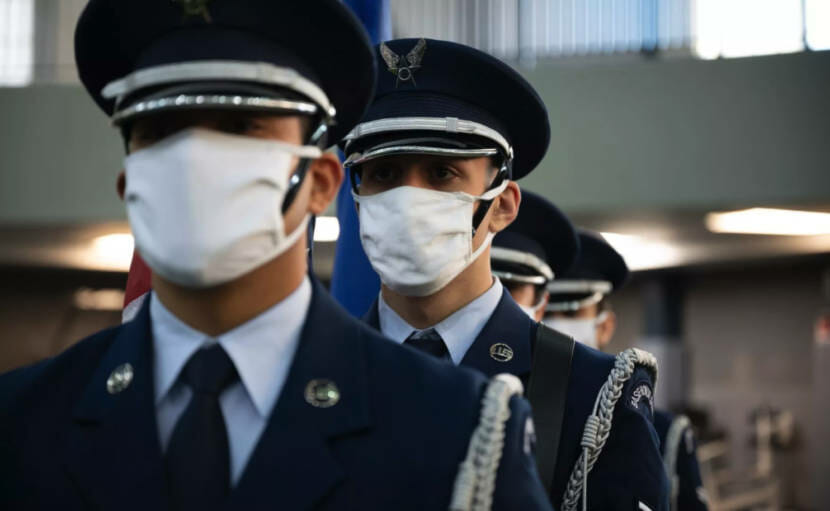
A Sept. 20 command directive limited on-base gatherings at Eielson Air Force Base and restricted interactions with the off-base community due to Alaska’s high rates of COVID-19 transmission. (Courtesy of Eielson AFB)

Eielson Air Force Base in Interior Alaska has increased its COVID-19 precautions after Joint Base Elmendorf-Richardson’s commander declared a public health emergency on Friday due to a surge in COVID cases.

An updated command directive published Monday limits on-base gatherings and restricts interactions with the off-base community, including forbidding in-person dining and patronizing bars. Takeout is acceptable, with masks.

“The 354th Fighter Wing Commander has directed a Health-Protection Condition Bravo, due to the increased community COVID-19 transmission rate,” said Col. David Berkland, who heads up Eielson’s main fighter wing.

Air Force Col. Kirsten Aguilar, who commands JBER and its 673rd Air Base Wing, said in statement released Friday that the emergency declaration reflects the “continued reality” of sustained, community transmission of COVID-19.

JBER officials are urging service members to avoid places that don’t require masking and to maintain social distancing and other COVID-19 mitigation measures. According to the statement, if the situation at JBER worsens, commanders will take additional measures to protect military personnel, possibly including restricting their access to off-base establishments.

Commanders at the two Army installations in the Interior have not elevated their health protection condition levels — at least, not yet.

Fort Wainwright spokesperson Eve Baker said post officials will require personnel to continue using the precautions that the post had established months ago.

“We are not increasing the health protection condition at this time, though the garrison leadership is monitoring the situation and may adjust, if necessary,” she said. “We are maintaining the mask requirement for all indoor spaces. And then for outdoor spaces, if you cannot maintain 6 feet of separation, you do have to wear a mask.”

A Fort Greely spokesperson said Monday that post also hasn’t elevating its health protection condition level.

Vaccinations against the virus are required for military members, under an order from Defense Secretary Lloyd Austin last month. But different branches have different deadlines. For the Air Force, the deadline is Nov. 2, and for the Army, it’s Dec. 15.

Julia O’Malley and Casey Grove contributed to this report.
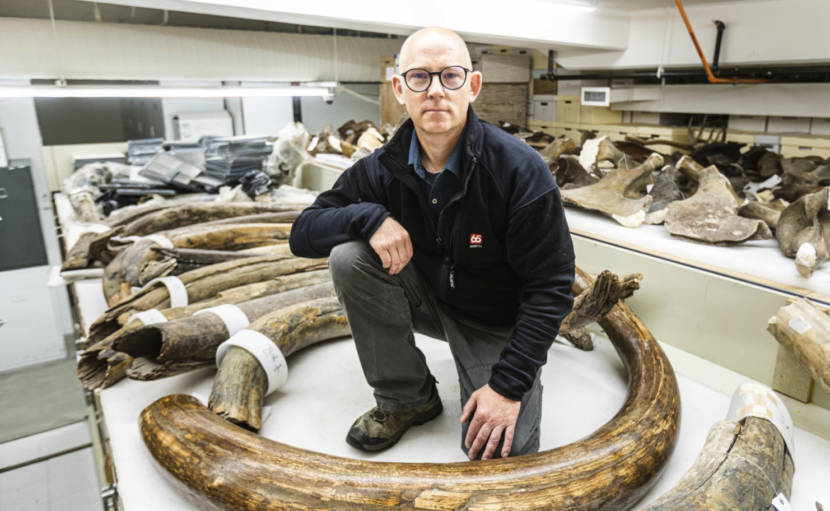
From a fossilized tusk, UAF researchers unraveled the life story of a woolly mammoth

Mat Wooller with mammoth tusks (JR Ancheta/University of Alaska Fairbanks)

A new University of Alaska Fairbanks study featured on the cover of the journal Science explores the life story of a woolly mammoth that lived 17,000 years ago.

Thousands of years ago, a woolly mammoth that researchers have named Kik lumbered across what is now the state of Alaska. There were times when he stayed in one area, likely in a group with other mammoths.

At one point Kik took off on a long trip, covering great distances of icy landscape. Researchers think that means he left his mother’s herd and struck out on his own. At 28 years old Kik, died above the Arctic Circle, likely of starvation.

“It was kind of like watching this soap opera of this mammoth’s life kind of emerge in front of our eyes real time,” said lead researcher Mat Wooller, who directs the stable isotope facility at UAF.

How could researchers uncover such detail about the life of a long-dead animal? They used information stored in Kik’s fossilized tusk to learn about his life. The first step was figuring out how to cut the tusk down its center.

“It took us an entire day to split it, and six people and a very large band saw. You don’t want to destroy a fossil like this,” Wooller said.

Then researchers chemically analyzed each section of the tusk.

“This is the young mammoth, here,” Wooller said, showing off the tusk in his office. “You see this dark part here? This is what’s called the pulp cavity.”

The scientists found clues about Kik’s life in the isotopes in the fossil. Isotopes are different versions of atoms of a single element. When an animal eats or drinks, its body takes on the unique isotopes from the materials they ingest.

The character of those  isotopes depends on the location that food comes from.

“There’s a little phrase that goes with isotope science,” Wooller said. “You are what you eat. And you’re not just what you eat, you’re also where you eat.”

Parts of the body that grow longer over time — like hair, or in Kik’s case, tusks — serve as a record of what and where an animal ate and drank. Scientists matched the isotopes in Kik’s tusks with the isotopes present in different areas in Alaska to create a map of his life.

“It’s like a chemical GPS unit,” Wooller said.

Wooller said the study contributes to a large body of research about the reasons woolly mammoths went extinct. And Kik’s story could also hold answers about the future. That’s because changes in climate likely played a role in mammoths’ extinction.

“It’s also shining a light on our concerns for existing animals that live in the Arctic today and are facing very significant environmental change and climate change,” Wooller said.

Kik’s tusk will be displayed at the Museum of the North in Fairbanks, accompanied by a life-sized artistic rendering of the mammoth painted by paleo artist James Havens.

Wooller worked with the artist, so the painting reflects what the study uncovered about Kik’s life. In it, the mammoth stands enormous against an icy backdrop, staring at the viewer from deep in the past.

Two more Alaskapox cases reported in Fairbanks area

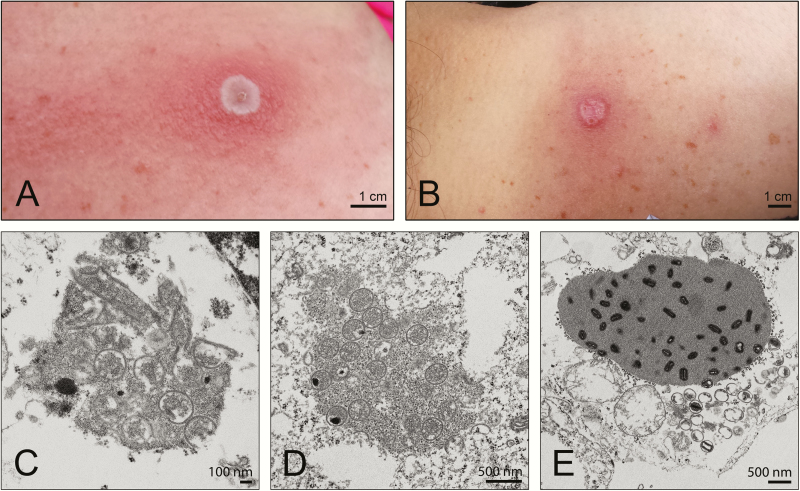
Images from 2017 article “Novel Orthopoxvirus Infection in an Alaska Resident.” The virus is also referred to as “Alaskapox.” Images A and B show the patient’s lesion in 2015. Images C–E show electron microscopic images of the virus isolated from the patient. (Creative Commons)

Another two cases of the emerging Alaskapox virus were recorded in the Fairbanks area this summer.

They’re the third and fourth cases of the virus ever confirmed, according to the Alaska Department of Health and Social Services. The first two cases, logged in 2015 and 2020, were also in the Fairbanks area.

The Alaskans who contracted Alaskapox did not suffer serious illness and have recovered, but the unique virus remains the subject of a multi-party investigation, as health officials and researchers try to determine what’s causing it and how long it’s been circulating.

They’re looking for patterns.

Dr. Eric Mooring, an epidemiologist with the Centers for Disease Control and Prevention, said the four Fairbanks area residents diagnosed with Alaskapox had single small skin lesions.

“That varied a bit in color, but reddish-whitish and then sometimes even went on to become a darker sort of a brownish shade,” said Mooring, who is part of a team investigating Alaskapox. “And then I think the other thing that’s notable is that these lesions have been associated with some surrounding redness. And then the patients have had swollen lymph nodes and pain in a nearby part of the body that has lymph nodes.”

Mooring said the swelling and pain dissipated within a few days to a few weeks. The four known cases lived in “low-density housing in forested areas,” according to a health department report. All occurred in the summer, and three of the four people infected had cats.

“But we don’t know if cats have any role to play in the spread of this virus,” Mooring said. “So that’s something we’re still looking at, but it is a similarity.”

Mooring said small mammals are suspected to be carriers of the virus. An ongoing trapping and testing project has found evidence of it in shrews, voles and squirrels.

“Both evidence of the virus’s genes, so that would be a sign of a current infection, and then we also found antibodies in some mammals, so that would be a sign of a past infection,” he said.

Still, Mooring said, no firm conclusions have been made about the animals’ role in spreading Alaskapox, so the public health recommendations are pretty routine.

“Avoiding touching wildlife, trying to keep small mammals out of your home, washing your hands and avoiding animal droppings to the extent possible,” he said.

Mooring said it’s unclear if the virus is restricted to the Fairbanks area and whether additional cases have occurred and gone unreported. He said identification of the Alaskapox virus is significant as only a couple of new viruses are discovered worldwide each year. The CDC is working with local health care providers, the State Virology Lab and the University of Alaska Museum of the North.

“Their experts on mammalogy have been a key part of our work to understand the virus in small mammals in interior Alaska,” he said.

Museum of the North mammals curator Link Olson said researchers are still doing baseline surveys “to get an idea of how widespread in the local mammal fauna this virus is.”

Olson said the two new cases of Alaskapox have accelerated the trapping project.

“And the idea is to trap as close to the patients’ residences as possible. And then to try and sample in similar habitat nearby as kind of a control,” Olson said.

Olson said the Alaskapox discovery underscores the intersection of animal and human health.

“As the pandemic has shown us, we’re all interconnected,” Olson said. “And that sounds a little woo-woo. But it’s true. And scientists like me are sort of having to take a more holistic approach to what we do just in order to make sense of it all.”

Fairbanks hospital faces persistent staff shortages, higher turnover

Fairbanks Memorial Hospital
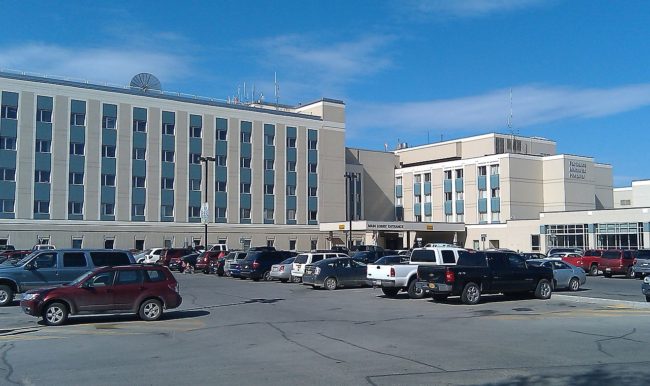
Fairbanks Memorial Hospital in May 2011. (Creative Commons photo by RadioKAOS)

Like health care facilities across the state and nation, Fairbanks Memorial Hospital, Tanana Valley Health Clinic and the Denali Center long-term care facility are short staffed as the COVID-19 case surge continues.

“We currently, as an organization, have about 200 openings across the system,” said Nicole Welch, chief human resources officer for Foundation Health Partners, the local organization which owns and operates the Fairbanks hospital, health clinic and Denali Center.

Welch said there are twice as many unfilled positions now as there were prior to the pandemic. While the doctor and nursing staff is thin, she said, the primary shortage is in certified nursing assistants and other jobs.

“So that’s, you know, your registration, your environmental service worker, nutrition service worker, security officer,” she said.

In hopes of attracting staff as COVID-19 hospitalizations spike, Welch said the hospital has created a new temporary, part-time position.

“What we’re calling COVID relief aides,” she said. “So people who don’t have to have any experience. They can come in and take care of menus for patients and just do some of that stuff that’s sort of being overwhelmed and allow the clinicians to really focus on providing that direct patient care.”

Welch said the hospital is also trying to hire emergency medical technicians to assist in the emergency department.

“That’s a new trigger for us. We’ve not hired them in the past,” she said. “But there is a pool of those in our community. And so we do have several coming aboard right now.”

Meanwhile, Welch said bonuses and incentives are being offered to attract and retain staff as the pandemic wears on and the employee turnover rate increases.

“We would normally see around 18 to 20% turnover, we’re more at the 28% currently,” she said.

Welch said the hospital, clinic and Denali Center staffing shortage is being compounded by 15 to 20 employee absences every day due to COVID-19.

Fairbanks hospital to require COVID-19 vaccine for staff as it wrestles with full ICU

Fairbanks Memorial Hospital
Fairbanks Memorial Hospital in May 2011. (Creative Commons photo by RadioKAOS)

Foundation Health Partners in Interior Alaska is the latest health care provider to require all of its employees to get vaccinated against COVID-19, said its board chair Jeff Cook.

Foundation Health Partners operates the Fairbanks Memorial Hospital, Tanana Valley Clinic and Denali Center.

The board approved the vaccine mandate on Wednesday, said Cook. He said it’s an expansion of a rule approved last month that required the shot for all new employees.

The new mandate comes as Fairbanks Memorial, like many health care providers, is struggling with a maxed-out Intensive Care Unit and is having to divert some patients to other hospitals.

“We’re having to look to Seattle, Portland and other areas,” Cook said. “But, unfortunately, it’s across the board, across the country.”

Cook said Fairbanks Memorial, also like hospitals everywhere, is dealing with staffing shortages made worse by the surging delta strain.

“People with this variant too are much sicker,” he said. “It takes much more time and attention to take care of them.”

The situation is disheartening, he said.

“It’s really tough right now and I just feel for our employees who are overworked and — to some degree, I think —underappreciated when people don’t look at the science and don’t wear masks and don’t get vaccinated,” he said.

Many other Alaska health care providers are also requiring their employees to get vaccinated against the coronavirus, including Providence Health & Services Alaska, the Alaska Native Tribal Health Consortium and the Yukon-Kuskokwim Health Corporation.

Fairbanks Pioneer Home reports 8 COVID-19 cases over past month

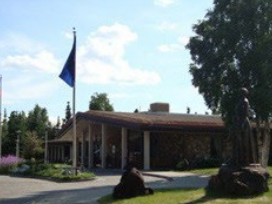
Fairbanks Pioneer Home (Photo from Department of Health and Social Services)

The Fairbanks Pioneer Home has had four staff and four residents test positive for COVID-19 over the last month, according to the state health department.

“Currently one staff member and three residents are off of quarantine precautions,” Department of Health and Social Services spokesman Clinton Bennett said on Thursday. “The Fairbanks Pioneer Home still has three staff members and one resident who are in quarantine.”

Bennet said unvaccinated residents and staff are being tested weekly.

“Additionally, the Fairbanks Pioneer Home recently tested all employees, regardless of vaccination, on Aug. 26 of this year,” he said. “And everyone will be tested again this week.”

Carolyn Hall said her 78-year-old father is one of the Fairbanks Pioneer Home residents who recently tested positive for COVID-19.

“I feel like the communication hasn’t been great,” she said. “Reaching out and leaving messages and not necessarily getting speedy replies was very frustrating and discouraging.”

Hall said her dad, who has Parkinson’s disease and received the COVID-19 vaccine back in January, ended up in the hospital with cold-like symptoms, and a doctor called her asking about his care.

“And I said, ‘Are you basically asking me if you should bother even treating him?’ And he said, ‘Yes.’ And I said, ‘Please don’t give up on my dad,’” she said.

Hall said the experience illustrates how bad the pandemic has gotten again.

“This isn’t just a story about my dad, my loved one, my family,” she said. “It’s about our entire community because you never know when it might be your loved one.”

Hall said her dad has returned to the Pioneer Home. She thanks facility staff for arranging a time for her to visit this week despite an ongoing quarantine.

Editor’s note: Carolyn Hall is director of television programming at KUAC in Fairbanks.  

Site notifications
Update notification options
Subscribe to notifications