KUAC - Fairbanks

KUAC is our partner station in Fairbanks. KTOO collaborates with partners across the state to cover important news and to share stories with our audiences.

Alaskans have been spotting turkey vultures all over the state this year

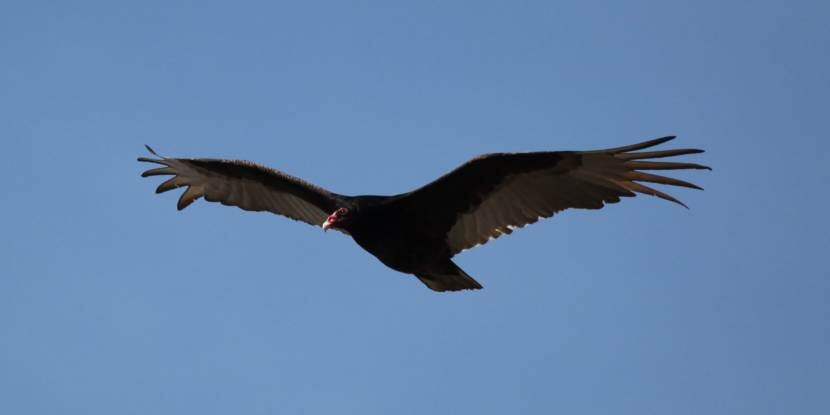
A soaring turkey vulture
A turkey vulture near the Grand River, in Kitchener, Ontario. (Creative Commons photo by Liam Quinn)

An unusual bird was sighted in the Yukon Flats village of Chalkyitsik recently. The raptor, uncommon to the state, has also been spotted in a few other Alaska locations.

Chalkyitsik resident Kyle Joseph says his uncle told him about seeing a strange looking bird. 

“He said there was a weird eagle flying around and it had a red beak, and I was like, ‘Oh, OK.'”

Joseph says he later spotted the bird while helping his aunt cut firewood.

“It flew by, and it was like nothing I had ever seen,” he said.
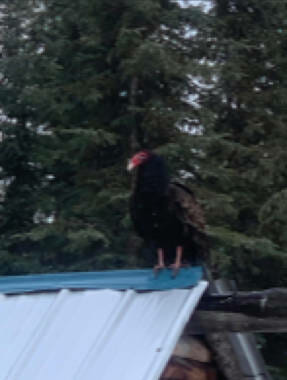
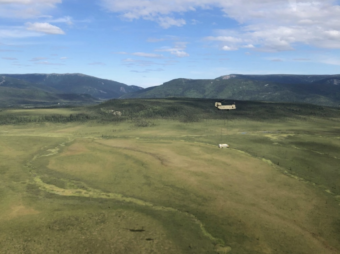
a blurry photo of a turkey vulture perched on a roof
Turkey vulture atop a cache in Chalkyitsik. (Courtesy of Kyle Joseph)

Joseph says the bird landed on a cache and he was able to get close.

“I slowly walked up to and took a picture of it, and I was like, ‘What the heck,'” he said. “And then I looked it up, and it was a turkey vulture.”

Turkey vultures survive on carrion. Joseph suspects the bird was drawn in by a pile of moose meat scraps. 

“It looked like someone had dropped their waste back near the lake for the crows and stuff. And it would just fly over their, pick up a little chunk of meat and fly up into the trees,” he said.

Joseph says he posted about the sighting on Facebook and has received a lot of comments.

“Nobody’s ever seen a vulture in our area before,” he said.

U.S. Fish and Wildlife Service migratory bird biologist Jim Johnson says the Chalkyitsik turkey vulture sighting was preceded by a sighting earlier this year in the Northwest Alaska village of Noatak, and later in Juneau, as well as a few earlier year observations as far north as Utqiagvik.

“With their bright red, featherless heads, you just can’t mistake them for anything else,” he said.

Johnson says although the bird’s normal range only extends to southern Canada, turkey vultures are migratory raptors built to fly long distances.

“They’re really fascinating birds. They weight about three pounds and have six-foot wingspans, which enables them to ride thermals or rising warm air, and it’s not unusual for a bird to be able to travel 100-200 miles per day without flapping, just soaring,” he said.

Predisposed to marathon travel in search of carrion, Johnson suspects the turkey vultures spotted in Alaska follow geographic corridors north.

“Entering our state via large river systems or following the slopes of large mountain ranges like the Alaska Range,” he said.

Johnson says there’s broader evidence that the nomadic turkey vulture is expanding north, adding that Alaska is a place where migratory birds often show up outside their normal ranges. 

“Alaska is really a nexus for birds from all over the world,” he said.

Johnson notes that there are hundreds of birds uncommon to Alaska that sporadically show up in the state, but many less distinctive species go unnoticed. 

He applauds observers like Kyle Joseph of Chalkyitsik for taking a picture of the turkey vulture and sharing it.
Man accused of threatening Sens. Murkowski and Sullivan must remain in custody, judge rules

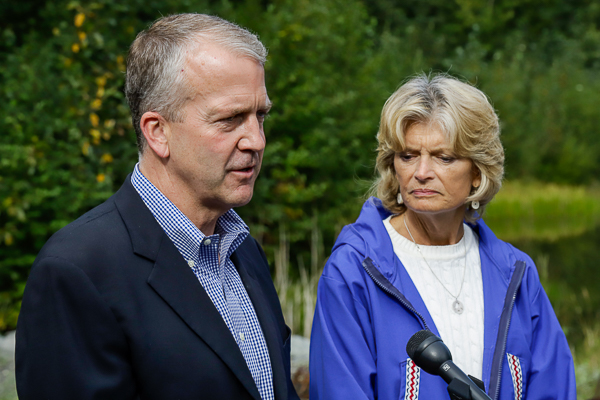
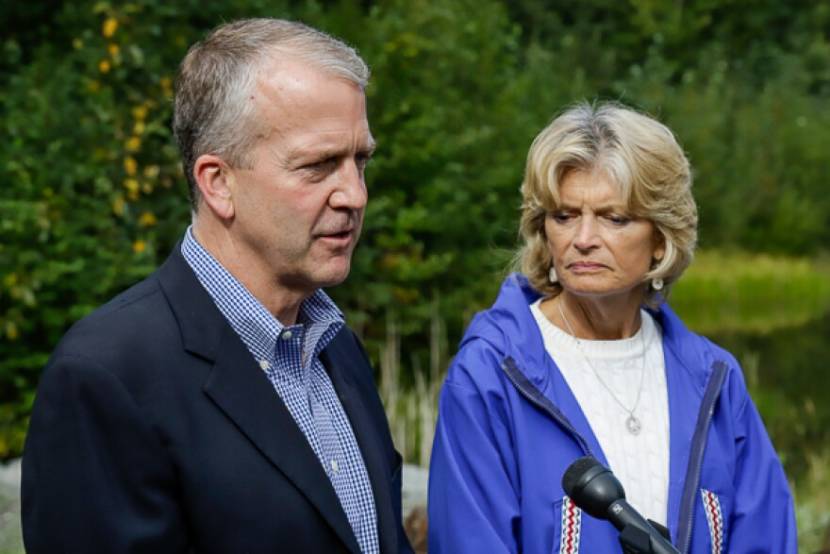
Sens. Dan Sullivan and Lisa Murkowski in August, 2020. (Jeff Chen/Alaska Public Media)

A federal judge ruled Friday that a Delta Junction man accused of threatening to kill Sen. Lisa Murkowski must remain behind bars until an Oct. 19 preliminary hearing.

That’s what Murkowski had asked the judge in a letter to do out of concern over threats that Jay Allen Johnson made against her and Sen. Dan Sullivan. Murkowski wasn’t able to phone-in for Friday’s online detention hearing because she was traveling back to Alaska.

In the letter, Murkowski said she’d be worried if the judge released Johnson from Fairbanks Correctional Center, where he’s been held since federal agents arrested him a week ago.

“I am concerned for my personal safety if he is not detained while I’m in the state,” she wrote. “If he is released, I would like to know what the FBI is doing to ensure my safety and security while I’m here in Alaska.”

Murkowski’s concerns stem from threats that Johnson allegedly made in 17 voicemail messages to her and Senator Dan Sullivan.

Federal Magistrate Judge Scott Oravec read transcripts from a couple of the profanity-laced messages, including one left on Sept. 2 when the caller threatened to burn the senator’s properties and asked if she knew what happens when a .50-caliber bullet hits a human head.

Assistant U.S. Attorney Ryan Tansey argued that Johnson should remain in jail because he remains a threat and could flee the area. The prosecutor played an audio clip of a Sept. 29 message on Murkowski’s voicemail in which the caller claims he’ll hire a hitman from among the “terrorists and assassins” that he said she was letting into the country.

In another message, he said that “Nobody in this state wanted you to impeach Trump!”

Tansey said some of the voicemails also threatened the two senators’ staff members. He cited an Aug. 30 message in which the caller said that if the staffers don’t quit their jobs, “We are coming for you. The next insurrection will be an insurrection – period!”

Tansey called the messages, “extremely serious.” He said Johnson had the means to back up his threats, as shown when FBI agents raided his home last week and seized seven firearms. The prosecutor said it’s illegal for firearms to be left accessible to a felon like Johnson, who Tansey said has a decades-long criminal record.

Johnson’s wife, Catherine Sue Pousson Johnson, told Tansey that those were her weapons. She admitted that they were not secured and kept inaccessible from her husband, as is required for a convicted felon.

But Gary Colbath, Johnson’s defense attorney, said there’s nothing unusual about having seven guns in a home located in a rural area in Alaska. He said Pousson Johnson wasn’t able to secure the weapons because she was upset last month when she flew to Texas after her father died.

Colbath suggested that the court should release Johnson from jail and place him in the custody of his wife because she promises to lock up the guns and keep him from driving or using a telephone.

Pousson Johnson told Colbath that her 65-year-old husband is frail and disabled.

“My husband is an old man,” she said, “and he gets very angry listening to politics on the news.”

When Tansey asked her if she knew that her husband has threatened the senators, she replied, “Who hasn’t? I think half the nation is very upset.”

Oravec cited those statements as part of his concerns over releasing Johnson to the custody of his wife. He said that arrangement wouldn’t protect the senators or the community where the Johnson lives.

Correction: An earlier version of this story misspelled Judge Scott Oravec’s last name in one instance.

Now you can watch as the Museum of the North readies the ‘Into the Wild’ bus for display

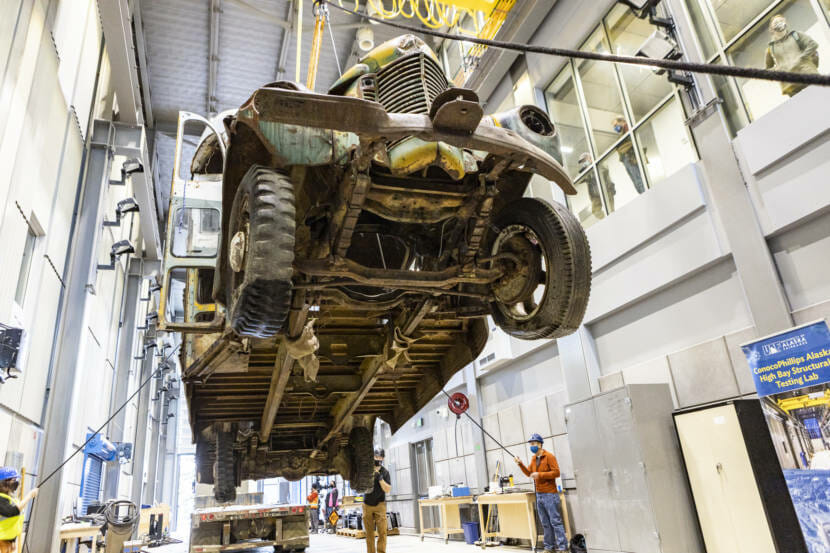
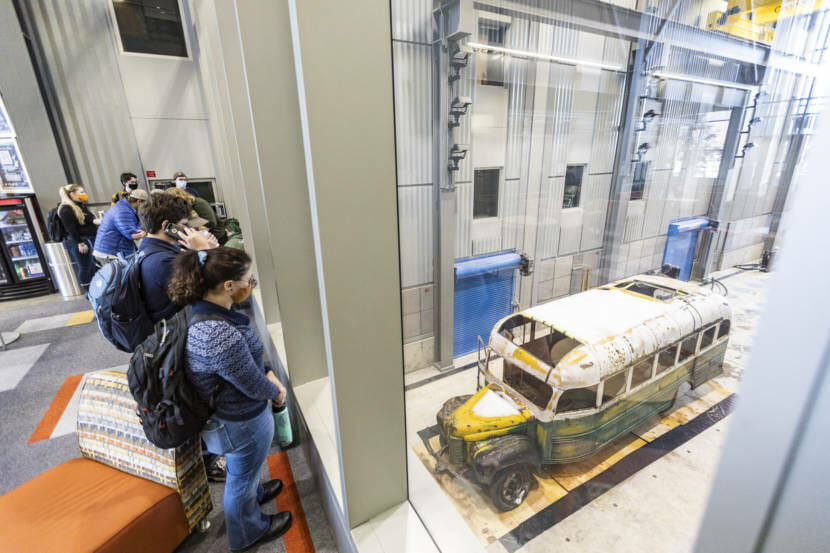
Students looking down on the Chris McCandless bus in a high-ceilinged vehicle bay
A group of students gather to observe Fairbanks Transit Bus 142 at the Engineering, Learning and Innovation Facility Wednesday, Oct. 6, 2021 at the Fairbanks campus. (JR Ancheta/UAF)

The University of Alaska Fairbanks has moved the “Into the Wild” bus to a UAF engineering building lab for repairs.

Originally dragged into the wilderness for a road-building camp along the Stampede Trail, the 1940’s Fairbanks public transit bus is where young adventurer Christopher McCandless lived and starved to death in 1992. His story was popularized by the book and movie, “Into the Wild.”

The state helicoptered the bus out of the wilderness in June 2020 to stop people from making a dangerous hike out to see it. Under an agreement with the state, the UAF Museum of the North plans to create an exhibit around the vehicle. But up until this week it remained in storage.

Chinook helicopter removing the 'Into the Wild' bus
An Army National Guard Chinook helicopter carries the dilapidated Fairbanks bus away from its former resting place near the Teklanika River, close to Denali National Park. (Alaska National Guard)

Senior Collections Manager Angela Linn, who is leading the bus project, says the UAF Engineering Building’s high bay lab is an ideal facility to begin preparing the bus for display.

“It’s dry, it’s warm, it’s safe there. It’s kind of the best possible solution on the campus for doing this next phase,” she said.

Linn says the bus project involves materials science as well as structural engineering, so it will provide learning opportunities for students.

“Understanding the structural elements of objects and how they degrade over time and what can we do to slow that degradation process down,” Linn said. “It’s a great educational opportunity.”

She says the first project is to thoroughly photograph and 3D-scan the bus for both documentation purposes and potential development of a virtual tour, which could have an “augmented reality component.”

“You could place yourself in the bus back on the Stampede Trail,” Linn said.

A team of about 25 people are helping guide the broader bus project. Linn says the future exhibit will be about the bus’s entire history, not just Christopher McCandless’s story.

view of the underside of the McCandless bus as it's lowered into place indoors
Bus 142 is lowered at the Engineering, Learning and Innovation Facility’s high bay structural lab for preservation Wednesday, Oct. 6, 2021 at the Troth Yeddha’ campus. (JR Ancheta/UAF)

As far as readying the actual bus for eventual permanent outdoor exhibition, Linn the plan is to stabilize its condition and make it safe. The bus has rust holes, broken windows, and worse.

“There’s big holes in the ceiling and in the floor from when they helicoptered it out,” she said

Linn says a cost estimate for the project is still being developed.

“It’s gonna be a big number, though, for sure,” she said.

Linn says the museum plans to raise money for the bus repairs and exhibit development through a mix of sponsorships, crowd funding and grants.

In the meantime, the public can view the bus inside the UAF Engineering Building on weekdays from 8 a.m. to 8 p.m. through large windows overlooking the high bay lab. The museum says it also plans to install a webcam so the public can watch the conservation work online.

Delta Junction man charged with threatening Sens. Murkowski and Sullivan

Sens. Dan Sullivan and Lisa Murkowski in August. (Jeff Chen/Alaska Public Media)

A Delta Junction man will appear before a federal judge Friday on charges that he made several violent threats against Alaska’s two senators.

Federal investigators say 65-year-old Jay Allen Johnson left a message early last month on Senator Lisa Murkowski’s Washington, D.C, office voicemail. On the message, Johnson asked if Murkowski knew what happens when a .50-caliber bullet hits a human in the head.

According to court documents unsealed Wednesday, the threat was part of a profanity-laced tirade that included quote, “I will find out … where you’re at. I will find out all of your properties, and I will burn everything you hope to have.”

The affidavit is based on an FBI investigator’s findings. It says Johnson left four messages on Murkowski’s voicemail, including one on Sept. 29 in which he allegedly threatened to hire a hitman.

He added, quote, “Resign or get the eff gone, or die!”

The document says Senator Dan Sullivan got 13 phone calls over a six-month period last year from the same phone number. In several of those message, the caller identified himself as Jay Johnson and even left his Delta Junction post office box address.

The senators weren’t named in the affadavit, but spokespersons for Murkowski and Sullivan both confirmed the voicemails. Both declined comment.

Johnson was arrested Monday and is being held at Fairbanks Correctional Center. He’s scheduled to appear Friday before federal Magistrate Judge Scott Oravec of the U.S. District Court for Alaska for an online arraignment and detention hearing.

“The hearing is to determine whether he will continue to be detained,” said Lisa Houghton, a spokesperson for the U.S. District Attorney’s Alaska office.

“This will be his initial court appearance and his initial arraignment. I would expect that he will enter a plea, but we’ll see what he and his attorney determine,” Houghton said.

A news release issued Wednesday says Johnson is charged with threatening U.S. officials with intent to intimidate them while they were engaged in the performance of official duties. He’s also charged with making interstate threats and an interstate threat to damage property by fire or explosive.

If convicted on the most serious charges, Johnson could be sentenced to a maximum of 10 years in federal prison.

The investigation by the FBI and U.S. Capitol Police continues.

Marine geology expedition takes research ship Sikuliaq farther north than it’s ever been

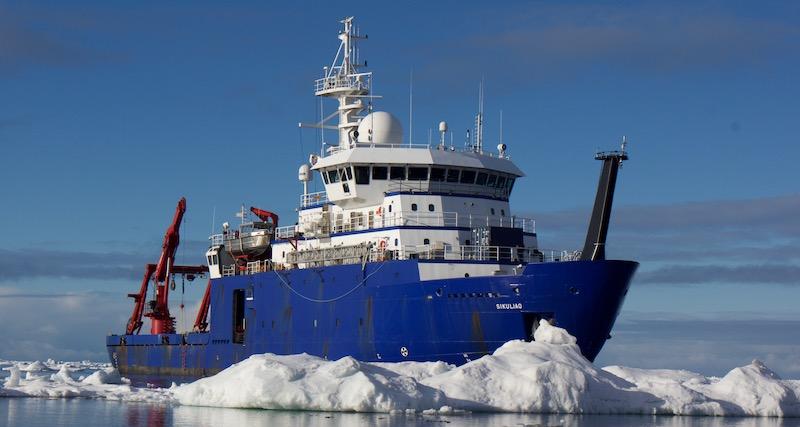
(Photo courtesy Mark Teckenbrock/University of Alaska)
The R/V Sikuliaq, owned by the National Science Foundation and operated by the University of Alaska Fairbanks. (courtesy of Mark Teckenbrock/University of Alaska)

The research ship Sikuliaq is wrapping up a marine geology expedition this week. The nearly 2-month long journey took the ice capable ship — which is owned by the National Science Foundation and operated bu the University of Alaska Fairbanks — over 500 miles north of Utqiagvik.

That’s the farthest north the Sikuliaq ever been.

“Where we were up in the northern Chukchi, we were breaking new ground,” said UAF Geophysical Institute professor Bernard Coakley, speaking from the Sikuliaq by satellite phone.

Coakley and colleagues have used an array of technology to survey the ocean floor of the Canada Basin and adjacent Chukchi Borderlands. Coakley says the features they observed included channels in the sea bottom.

“Where the gouges are parallel, we call them mega-scale glacial lineations,” he said. “They’re evidence that a continental glacier once scraped across the top.”

Coakley says other features, like random plow marks made by icebergs and piles of sediment created by now inactive faults, can help us better understand the ocean area’s formation. 

“I like to say we’ve been working backwards in the Arctic, where we stand on the edges and make our observations, and then we say ‘well, therefore, the ocean is this,’” Coakley said. “But I think the real answer to the question of how the ocean formed is to be found by looking at the features.”

Coakley says surveying the seafloor has practical implications for things like mineral exploration and defining the extent of U.S. territory in the Arctic, but there’s also the pure intellectual pursuit.

“We want to know, we want to understand. That’s what drives me,” he said.

Coakley and fellow UAF researchers are scheduled to disembark from the Sikuliaq in Nome and be back in Fairbanks this week.

Work on $55 million bridge over slumping part of Denali Park Road could start next year

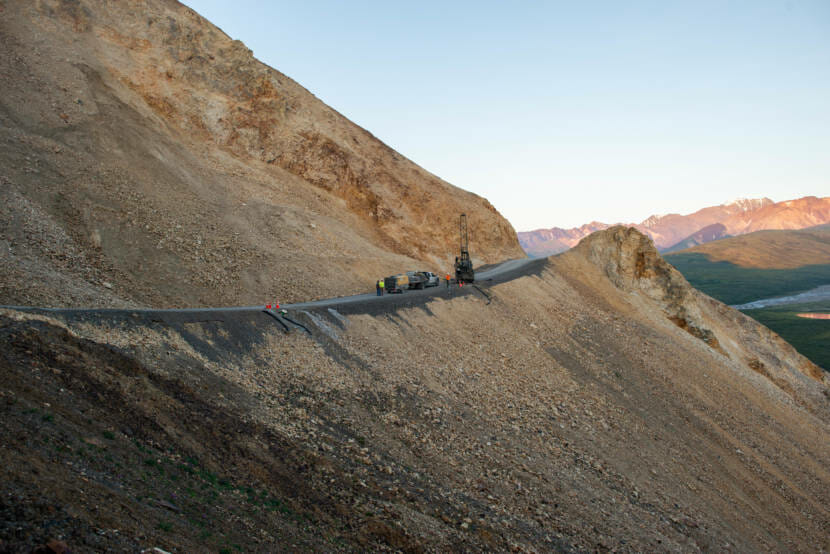
Drilling occurred at Pretty Rocks in 2018. Core samples from the drilling indicate how much ice underlies this part of the Denali Park Road. (NPS Photo/Mary Lewandowski)

The National Park Service hopes to start work on a bridge over a slumping portion of the 92-mile road into Denali National Park next summer. The affected stretch of the gravel road is at mile 45 in an area known as Pretty Rocks in Polychrome Pass, where subterranean ice is melting due to climate warming. 

The melt-caused landslide is accelerating, prompting action to maintain the route used to transport thousands of visitors through the park every summer. Denali National Park officials addressed the landslide and proposed $55 million bridge to span over it during an online meeting with the Denali Citizens Council.

Park science and resources team leader Dave Shirokauer says that when the road was cut into a mountainside 90 years ago, the section that is now slumping was constructed over a then-unknown underground rock glacier.

“We recently determined that the mechanism here is a rock glacier, so there’s a large ice component,” Shirokauer said.

Schirokauer says warming temperatures have accelerated melting of that ice and slumping of the roadbed over the last 3 years.

“In ’18 and ’19 it went from inches a month to inches per day,” he said. “And in 2021, this August, it kicked up to over half an inch an hour.”

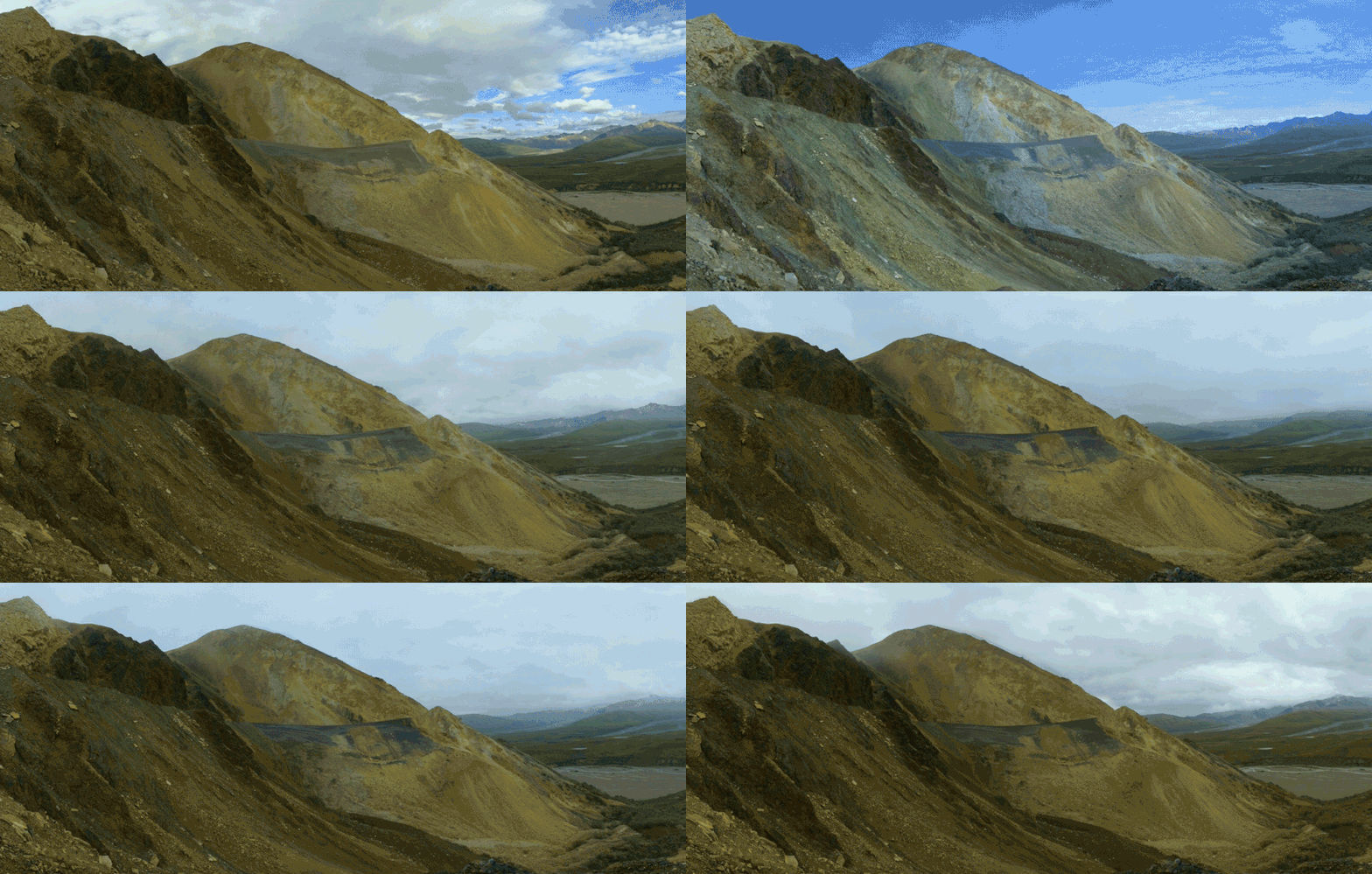
Time lapse of the Pretty Rocks slump, from July 21 to Aug. 25, 2021. During this time, the road displacement was about 21 feet. (NPS Geology Team)

Schirokauer says it was taking more than a hundred dump truck loads of gravel per week to maintain the road this summer, and that still wasn’t enough. 

“The landslide has moved far enough now that the ice is actually exposed at the surface,” he said.

Unable to keep up, the park service closed the road at mile 42 in August. 

Refreezing during the winter should make the section useable again for a portion of next season, but the plan is to span the trouble spot with a bridge anchored in solid rock on either side.

Following analysis by the Park Service and the Federal Highway Administration, park Deputy Superintendent Brooke Merrell said the bridge proposal was selected as the best option “in all respects — in terms of timeline to put the option into place, cost, impacts to resources.”

Environmental analysis of the bridge project and other Polychrome Pass area road work will be conducted this winter on an accelerated timeline, according to park planner Miriam Valentine.

“If we are successful in getting funding, and Federal Highways can get the contracting lined up, we can actually start work in the end of summer in ’22,” she said.

Valentine says there will be opportunities for public comment in October and again in January. She says the Federal Highway Administration anticipates that it will take between two and three seasons to complete the bridge and other area road repairs, which are estimated to cost a total of $118 million.

Park superintendent Don Striker says the $55 million bridge portion of the funding is in President Biden’s budget, working its way through Congress. 

“The money for everything is in queue right now and looking promising,” he said.

Striker has been at Denali for 9 years but will not be overseeing the bridge project. The National Park Service announced this week that he’s been selected to be the new superintendent of North Cascades National Park in Washington State. 

Striker is scheduled to leave Denali in November. Deputy Superintendent Brooke Merrell will be at the helm until a new superintendent is named.  

Site notifications
Update notification options
Subscribe to notifications