KUAC - Fairbanks

KUAC is our partner station in Fairbanks. KTOO collaborates with partners across the state to cover important news and to share stories with our audiences.

Molly of Denali episodes getting translated and dubbed in the Gwich’in and Koyukon languages

Nanibaa' Frommherz (left) and Isadora Kizer participated in a voice acting workshop led by creators of Molly of Denali, organized by the Central Council of the Tlingit and Haida Indian Tribes of Alaska, on Aug. 9, 2019. (Photo by Zoe Grueskin/KTOO)
Nanibaa’ Frommherz (left) and Isadora Kizer participated in a voice acting workshop led by creators of Molly of Denali, organized by the Central Council of the Tlingit and Haida Indian Tribes of Alaska, on Aug. 9, 2019. (Photo by Zoe Grueskin/KTOO)

Molly of Denali, about a 10-year old Interior Alaskan girl and her friends, has been airing in English since 2019. Now the Doyon Foundation is working to dub two episodes of the show into the Gwich’in and Koyukon languages.

The language revitalization program of Doyon Foundation put out a call for actors who can speak two of the languages of the region. The Foundation is working with WGBH Boston, which produces the fictional PBS Kids’ cartoon to create episodes representing all the real Mollys out there.

The Molly of Denali project is just one effort of Doyon Foundation’s language revitalization program, which works to preserve the ancestral languages of the Doyon region.

Allan Hayton, the Language Revitalization Program Director says the episodes of the show called “King Run” and “Grandpa’s Drum” will be dubbed into Dinjii Zhuh K’yaa (Gwich’in).
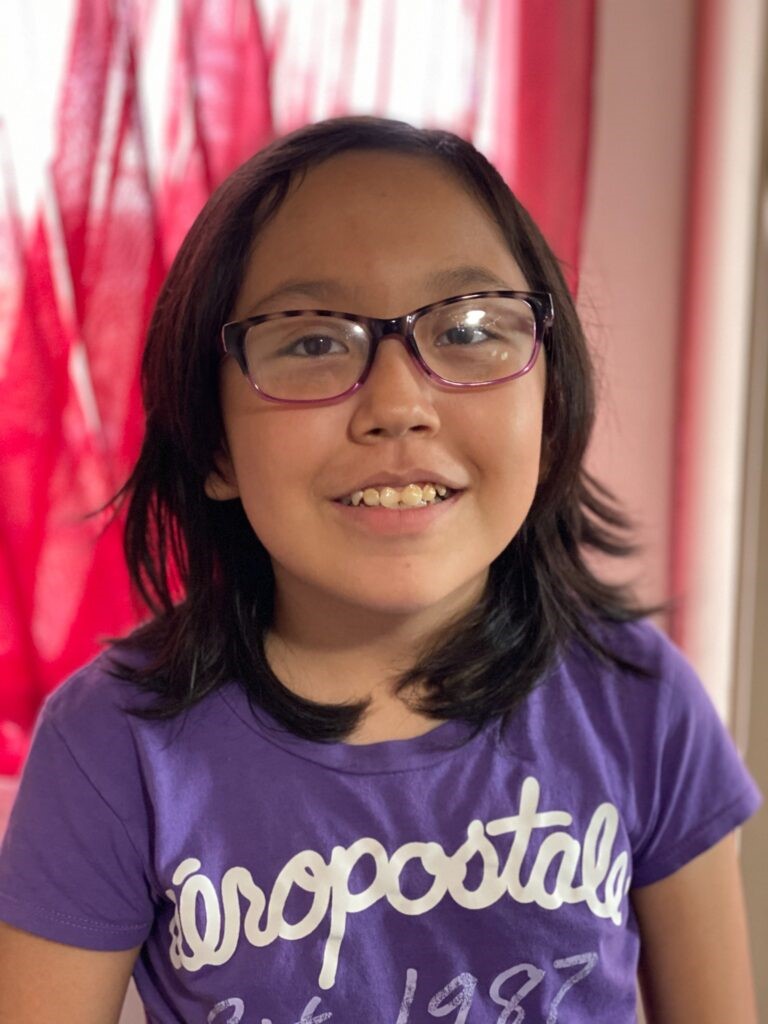

Lynnea Frank was cast as Molly in the Gwich’in episodes of Molly of Denali. (Photo courtesy of Doyon Foundation)
Adriel Ginnis will be the voice of Tooey, Molly’s best friend, in the Gwich’in episodes of Molly of Denali. (Photo courtesy of Doyon Foundation).

“We did have quite a number of auditions,” he said. “I’ve been reviewing those, and we were able to nail down the Gwich’in cast; we’re still working on the second cast, the Denaakk’e, or Koyukon.”

Children have been cast in the lead roles. Lynnea Frank will play Molly and Adriel Ginnis will play her friend Tooey.

Gwich’in cast members will rehearse to perfect the language pronunciations and the emotions of the stories. Then they will record at KUAC’s radio studio in Fairbanks.

“And then, once we have the audio, we’ll have to make sure it times out as well,” Hayton said. “Because Athabaskan language is very different than English and a word in Athabaskan could be full sentence length, especially the verbs. So you have to time it with the actual animation, because we can’t change that that’s going to stay the same.”

When the Gwich’in audio is correctly timed with the animation, the tracks will be sent to Atomic Cartoons in Vancouver, Canada, who will integrate the audio into the existing Molly of Denali episodes. Hayton said he’s consulted on the show and trusts folks in British Columbia and Boston to represent Alaska faithfully.

“They do a really good job at WGBH and integrating culture and making sure that they vet things, including all those cultural elements that maybe most people would miss, but people that are here in Alaska watching the show would definitely know,” he said.

The cartoons will be used in Doyon region language revitalization efforts. They will likely air across the state and perhaps in the Athabascan-speaking areas of Canada.

The Denaakk’e/Koyukon group chose the episodes “Have Canoe Will Paddle” and “Main Game.” Hayton says the cast for the Denaakk’e episodes will be chosen soon.

The second season of Molly of Denali began on November 1.
Federal judge denies bail for Delta Junction man accused of threatening Sullivan and Murkowski

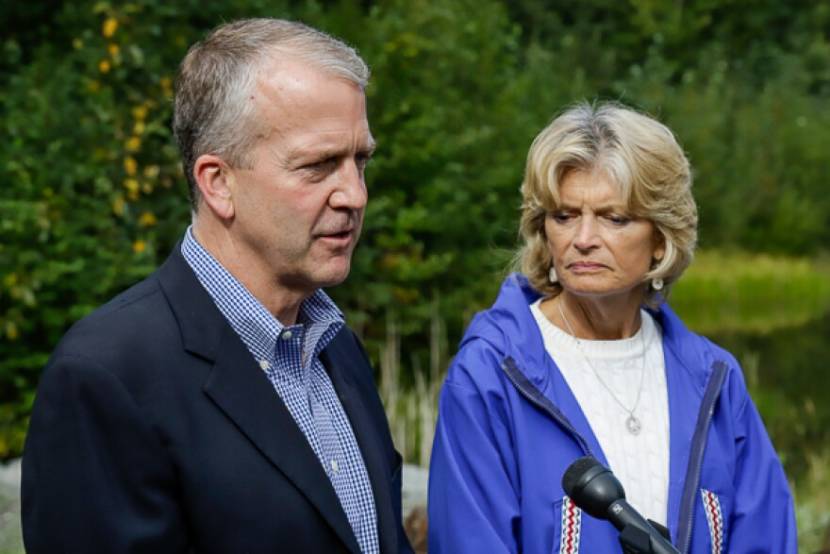
Sens. Dan Sullivan and Lisa Murkowski in August, 2020. (Jeff Chen/Alaska Public Media)

A federal magistrate has ordered a man accused of threatening Alaska’s two U.S. senators to remain behind bars.

A spokesperson for the U.S. Attorney’s Alaska District Office says U.S. Magistrate Judge Scott Oravec ruled Friday that 65-year-old Jay Allen Johnson of Delta Junction will continue to be held at Fairbanks Correctional Center. He’s been there since FBI agents arrested him on Oct. 4 on suspicion of leaving a total of 17 threatening voicemail messages for Sens. Lisa Murkowski and Dan Sullivan earlier this year.

The U.S. Attorney’s Office spokesperson said in an email Friday that Oravec’s ruling came at the end of a bail review hearing requested by Johnson’s defense lawyer. The email says that “the court did not find any condition that will sufficiently protect the community if Mr. Johnson is released.”

A grand jury indicted Johnson last week on charges that include threatening to murder a federal official, threatening to destroy property by fire and being a felon in possession of firearms.

An arraignment on the indictment is scheduled to be held on Monday morning, Nov. 22.

Fairbanks mayor files to run against state Sen. Scott Kawasaki

Mayor Jim Matherly, left, with state Sen. Scott Kawasaki during a 2019 visit to the Capitol in Juneau. (Courtesy of Jim Matherly)

Fairbanks Mayor Jim Matherly says he’s been thinking for a while about running for the Legislature. He didn’t want to run against fellow Republican Bart LeBon. LeBon represents House District 1, which encompasses most of Fairbanks.

But Matherly says he decided to run for a different office on Saturday, a day after the Alaska Redistricting Board completed re-drawing the state’s legislative districts.

“So I was trying to wait things out, and when I saw redistricting, it seems to be the right time for me,” he said in an interview Monday.

The Republican-controlled redistricting board moved Democratic-majority areas around the city — including the west side, University of Alaska Fairbanks and the Goldstream Valley — into larger and mainly rural districts that extend well beyond Fairbanks.

Matherly says the newly reconfigured Senate District P helped him decide to run.

“So I filed my letter of intent, which means I can fund-raise,” he said, “But I wanted to get my name out there ahead of time, just to let folks know.”

Matherly said that with one more year to go in his second term as mayor, after two terms as a City Council member, it was a good time to take the leap.

“This has been a dream of mine for a very long time,” he said. “And I think serving as mayor for the City of Fairbanks, and council … has given me a lot of good experience, and I’m looking forward to taking that down to Juneau.”

Senator Scott Kawasaki represents District A, most of which would become District P, if the redistricting board’s decision withstands potential challenges. Kawasaki, couldn’t be reached for comment, but he’s also has filed to run in 2022, setting up a likely matchup against Matherly.

But the mayor says he thinks he could do a better job than the incumbent.

“I’ve had to do a lot with budgeting, a lot with employee management,” Matherly said. “I led a city through COVID, and I led a city through many balanced budgets, and I’m looking to bring those skills down to Juneau.”

Matherly describes himself as a “moderate, fiscally conservative Republican” who can join with Democrats to get work done.

“I don’t think people (who) lean too far left or far right get much done,” he said.

The mayor says that if he wins next year, he hopes to continue climbing the political ladder into statewide office, and higher.

“If I’m blessed enough to go to the state Senate, yeah, I’ve already talked to some people about possibly Senate — you know, national Senate seat — Congress, maybe even governor,” he said

But first, Matherly would need to prevail in 2022, starting with the Aug. 16 primary and the Nov. 8 general, which will be Alaska’s first statewide ranked-choice election.

Tok’s electric school bus performs well, even at 40 below zero

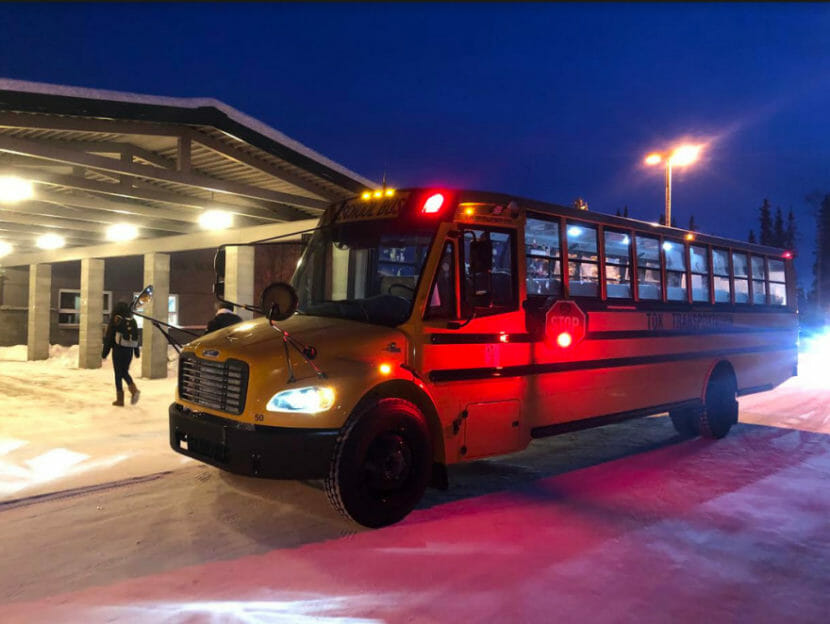
The electric school bus drops off students at Tok School last January, when the temperature was 38 below. (Gerald Blackard)

Alaska’s first and so far only electric-powered school bus is performing well in its second year of service for the Tok-based Alaska Gateway School District. And with temperatures in the eastern Interior forecast to drop overnight to 20 below or colder next week, the company that owns the bus will again be able to test its ability to operate in the frigid Alaskan winter.

Tok Transportation co-owner Gerald “Stretch” Blackard says the bus ran its routes every day that classes were in session last year, including when the temperature dropped to nearly 40 below.

“What we found out is the bus heated well,” he said. “It kept the interior at normal temperature.”

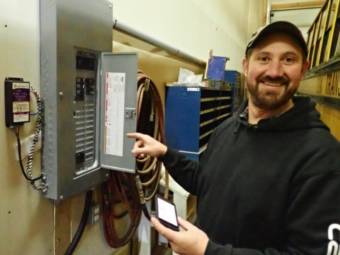
Stretch Blackard checks out the panel in the Tok Transportation bus barn. (Courtesy of Alaska Gateway School District)

Normal in the sense that the inside of the bus must be kept at a minimum of 45 degrees Fahrenheit, according to state regulations. The district requires the kids to dress warmly, so 45 feels comfortable.

But Blackard says keeping the bus that warm at 30 or 40 below zero drains its batteries more quickly than it would on warmer days.

“Even with a little bit of insulation on the batteries and kind of covering up the engine compartment, to try to hold in as much heat as we could, we were still using more energy to heat the bus than we were to drive the bus,” he said.

Blackard says warming the bus during its runs on those cold days drained a little over half of the battery’s charge, whereas driving the bus used a bit more than 40%. He expresses that so-called efficiency in terms similar to that of a conventionally powered vehicle’s fuel economy.

“On Jan, 27 we had 38 below,” he said. “The bus’s efficiency that day was 3.46 kilowatts per mile. So this fall, in August-September, we were running between 1.4 and 1.7 kilowatts per mile.”

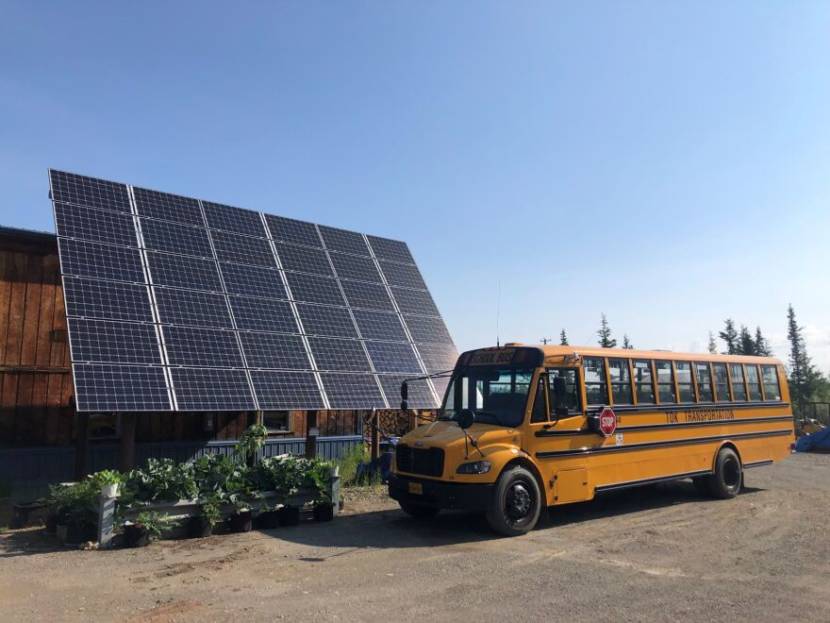
The electric school bus parked in front of a large bank of solar panels, about twice as tall as the bus
Blackard uses his solar panels to help charge the electric bus. But the charger draws a maximum of 22 kilowatts, and the solar panels only generate a maximum output of 10.8 kilowatts. Blackard says he either has to wait longer for the solar energy to charge the bus or buy electricity from the local utility, Alaska Power and Telephone. (Courtesy of Gerald Blackard/Tok Transportation)

Blackhard says his solar panels generate only half the electricity needed to charge the bus’s batteries, so he has to buy the rest from the local utility. He says he’s looking into adding a battery bank to the solar-power system to fully charge the bus, without the grid backup.

“But that’s going to have to come at a later time, because that’s another cost that I don’t have the money to put for right now,” he said.

Blackard paid $50,000 last year to buy the $400,000 bus. The remaining amount came from a program administered by the Alaska Energy Authority.

He says he’s been sharing the data he’s collected with the AEA, as well as the University of Alaska Fairbanks’s Alaska Center for Energy and Power. Also, Proterra, the battery manufacturer, and Thomas, the bus’s North Carolina-based manufacturer.

“I’m in contact with them often,” he said, referring to Thomas. “and they’re always curious to see how things are going and making sure that it’s working properly.”

Blackard says he’s also sharing his data with nonprofits operated by Alaskans who share his enthusiasm for electric vehicles and renewable energy.

Man killed at Fairbanks Safeway was ‘doing nothing more than walking outside with his groceries,’ mayor says

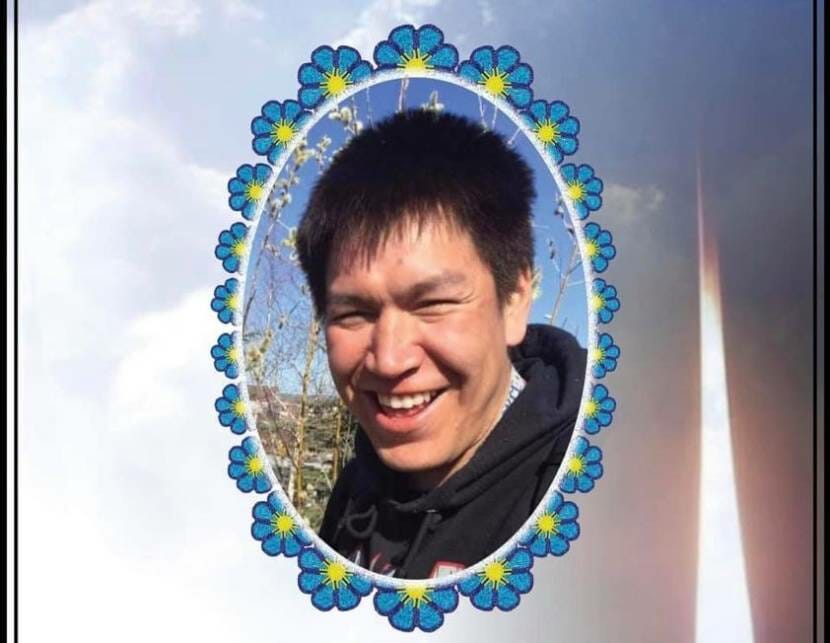
Harley Ray Titus was killed in a shooting at Safeway in Fairbanks. This is the image on a poster for a vigil held for Titus at the store on Nov. 12, 2021. (Screenshot)

A candlelight vigil was held Friday at a Fairbanks Safeway store where Harley Ray Titus was fatally shot last week.

Video of the vigil posted by organizer Peter Captain Jr. shows a large group gathered around the store’s doorway where Titus was killed.

“Harley was doing nothing more than walking outside with his groceries, and it was so unexpected and so tragic,” said City of Fairbanks Mayor Jim Matherly.

Police say Titus, 41, was shot by Joshua Eric Butcher, who also fired inside the store, injuring a Safeway employee. Butcher then turned himself in at the police station.

Butcher is a former Safeway employee, according to his Facebook page, but it’s not known what motivated the shooting.

Titus’ family told the Anchorage Daily News that Titus had walked to the grocery store last Sunday to grab a few things. He was shot walking out of the store. He was described as an easygoing man who loved the outdoors and worked as a wildland firefighter.

At the vigil, Matherly, the mayor, described the shooting as senseless. He pledged to assist law enforcement in prosecuting the case.

“I will work as closely as I can with the police department and the DA’s office to make sure this is brought to justice, just as all of you would like,” he said.

Butcher is charged with first-degree murder.

An online fundraiser has raised more than $18,000 for Titus’ burial in his home village of Minto, as well as for a son, Raymond, he leaves behind.

A musher from the world’s southernmost city is headed to Alaska to compete

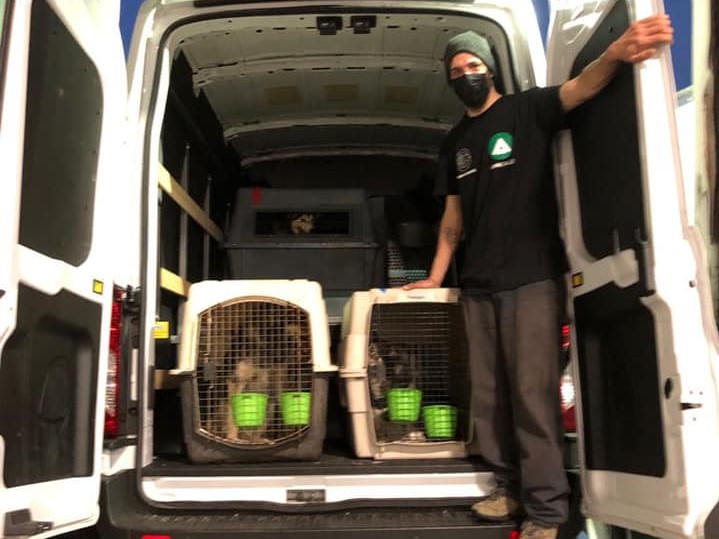
Miguel Isla Casares with a rental van and his dogs at the John F. Kennedy International Airport in New York City (Santiago Cullen)

It’s spring in the southern hemisphere, but the lure of another season of cold and snow to run dogs is drawing a musher named Miguel Isla Casares from the southernmost city in the world to Alaska.

“I’m from Argentina,” he said. “Ushuaia, Patagonia.”

Casares said he and his 10 sled dogs flew to New York and then drove a rental van to Michigan, where they are temporarily staying with Iditarod veteran Lloyd Gilbertson.

“They give us food and everything,” he said. “I feel like home here, and I am really far from home.”

Casares said Gilberston even gave him a dog truck for the next leg of the journey north.

“To drive all the way to Fairbanks,” he said.

It isn’t Casares first trip to Alaska or Fairbanks. He said he met Yukon Quest and Iditarod Sled Dog Race champion Lance Mackey in 2019 and spent last winter at his Fairbanks area kennel after Mackey’s partner was killed in an ATV accident.

“I went there to be with them and help with the dogs, and we become good friends,” said Casares. “They are a great family.”

Casares credits Mackey, Gilbertson and other mushers for helping him, as well as people all over the world who’ve donated money after seeing a video he posted on Instagram about his goal of racing his dogs in Alaska.

“The idea or the plan in my brain today is to bring the first team from the Southern Hemisphere to compete in the Northern Hemisphere,” he said. “I made all the money to come all the way here just through Instagram with showing the video and telling the people this is my dream and if someone want to help me. And thousands of people start to show up and here I am.”

Casares wants to run the 1,000-mile Iditarod but says his first challenge will be completing shorter, qualifying races like the Copper Basin 300 or the Yukon Quest 550.

Site notifications
Update notification options
Subscribe to notifications