Nat Herz, Alaska Public Media

Thousands of summer workers are headed to Alaska from Outside, where infection rates are higher

More than 90 percent of the seafood landed in Dutch Harbor in 2017 was Alaska pollock.
More than 90 percent of the seafood landed in Dutch Harbor in 2017 was Alaska pollock. (Photo by Sarah Hansen/KUCB)

The rhythm of Alaska’s economy is deeply seasonal. Tens of thousands of people arrive each summer for jobs in fish processing, tourism and other industries.

The COVID-19 pandemic means that far fewer workers will arrive than usual, particularly in the hard-hit tourism sector, but Alaska, which has one of the lowest rates of infection in the nation, is still about to see a deluge of people arriving from places with higher infection rates.

Many of them will be in the fishing industry. The summer salmon harvest appears to be proceeding at close to normal levels, and Gov. Mike Dunleavy’s administration says it’s working to reduce the risks posed by the seasonal workers who do show up.

“This is a question about levels of risk that Alaska is willing to tolerate,” said Bryan Fisher, the incident commander for Alaska’s pandemic response. He added, “I will say that the business industry, and the critical infrastructure industry, has done an amazing job putting measures in place to be able to accommodate the number and quantity of workers that are heading up this way.”

Workers arriving from elsewhere have driven COVID-19 infection in other places around the world, notably in Singapore, where authorities have been unable to contain the spread of the virus in worker dormitories.

Alaska’s workforce is by far the most seasonal in the country, with 1.15 jobs in the peak summer months for every one job in winter, according to a report published this week by the Department of Labor and Workforce Development. That translated into about 355,000 jobs last summer, compared to 310,000 the previous January, said Neal Fried, an economist with the department.

Many of those positions are in fish processing, which scales up to 20,000 jobs during the summer from 3,000 during the winter months, Fried added.

“We’re talking about a pretty large workforce that’s assembled in a relatively short period of time,” he said.

Nearly three-fourths of fish processors are non-residents, according to the state.

With the near-complete cancelation of Alaska’s cruise season so far, Fisher, the incident commander, expects that the number of incoming tourism workers will be far smaller this year.

For people coming into Alaska from outside the state, there’s one piece of guidance that’s paramount, Fisher said: a two-week quarantine after arrival.

“The testing strategies and the care and treatment strategies, we also have them in place,” he said. “But there really is nothing that indicates a level of risk mitigation more than complying with that 14-day quarantine period.”

The fish processing industry’s major trade group, the Pacific Seafood Processors Association, didn’t respond to an interview request. But in a prepared statement, it said most companies are planning on a two-week quarantine for workers.

“Alaska processors have been working to develop and implement plans to protect the health of the communities in which we operate, as well as that of our employees,” said the statement, sent by Nicole Kimball, an Anchorage-based vice president. “Companies are also focused on retaining as much of a resident workforce as possible, and trying to limit movement of workers between seasons to avoid unnecessary risk associated with travel.”

The two-week quarantine is currently a requirement for anyone coming into the state. But essential industries, which include fishing, can be exempted if companies can get emergency managers to approve a plan that shows how they’ll put people to work without risking the spread of COVID-19.

Workers at the Ocean Beauty seafood plant in Kodiak. (Photo by Eric Keto/Alaska’s Energy Desk)

Fisher said sometimes people can’t quarantine because of the urgent nature of their work: He gave an example of seasonal workers who fly into rural Alaska communities to watch for flooding, as part of a program called River Watch.

“If you need to work before the 14-day quarantine period, you need to do all of your handwashing, all of that — you need to wear a mask, you need to socially distance as practical as possible,” Fisher said. “If you’re in our state, we expect you to go to work, get your work done and go back to your hotel or your lodging.”

Some local officials in fishing towns have said they’re frustrated that they haven’t always been able to get access to the COVID-19 protection plans that companies are sending to Fisher’s team at the state.

“There should be nothing behind closed doors on something like that,” David Powell, an Assembly member in the Southeast Alaska town of Wrangell told KSTK.

Fisher said the state has to weigh transparency against its obligation to not release confidential industry information, like how companies keep their workplaces secure.

“We’re trying to balance the need to have all of that stuff out and available for everybody’s review, while protecting the data that does need to be protected,” he said.

Southeast Alaska is one of the state’s busiest areas for seafood and tourism. And the region’s major health-care provider, the Southeast Alaska Regional Health Consortium, has started working directly with industry as things start to open up, says Chief Medical Officer Dr. Elliot Bruhl.

“We’re beginning the process of creating a dialogue with all those different commercial groups, in hopes of coming up with solutions that meet their needs and provide for increased safety,” he said.

SEARHC initially questioned one seafood company’s plans to bring hundreds of seasonal workers to Sitka, with Bruhl calling it “contradictory to medical reason.” But he said in a phone interview Tuesday that companies have responded to the consortium’s recommendations to reduce risks, like bringing in workers in smaller groups instead of all at once.

Communities and companies that are working with the consortium have been thoughtful and sincere in their efforts to get things as right as possible, Bruhl said. But there are no guarantees, and decisions about what level of risk is acceptable are made through a political process, he said.

“There’s no perfect solutions. This is what it is — it’s a disease, it’s a medical problem, so it really doesn’t matter what our opinion is about it,” Bruhl said. “The reality is, we’re trying to come up with good solutions that can be practically integrated.”

Fisher, the incident commander, said officials are watching closely as the fishing season ramps up around Alaska. And if certain things aren’t working to limit the spread of the pandemic, the state will change plans accordingly, he added.

Officials have been reviewing the failures to contain the spread of COVID-19 at Outside meat plants, and they’re adjusting protocols for fish processing to potentially include fewer people and barriers between them, Fisher said.

“Everything is dynamic and fluid,” he said. “If we see that the protocols we’ve agreed to with industry and with government for some reason weren’t working, we are absolutely willing to adjust those as we move throughout the summer.”

Anchorage Daily News wins Pulitzer Prize for rural justice investigation

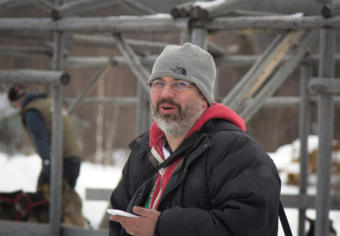
Anchorage Daily News reporter Kyle Hopkins authored the Anchorage Daily News’ Pulitzer Prize-winning series. (Photo by Zachariah Hughes/Alaska Public Media)

The Anchorage Daily News was awarded the Pulitzer Prize for public service Monday for “Lawless,” the newspaper’s collaborative investigation with ProPublica that revealed shocking inequities in law enforcement between Alaska’s rural and urban communities.
The “riveting” series, led by reporter Kyle Hopkins, “revealed that a third of Alaska’s villages had no police protection, took authorities to task for decades of neglect, and spurred an influx of money and legislative changes,” the Pulitzer organization said.

The two other finalists were The Washington Post and The New York Times.

The Pulitzer Prize is one of journalism’s highest honors, and the public service category is most coveted in the array of awards bestowed by the organization. Monday marks the third time the ADN has claimed the award, after winning it in 1989 for “People in Peril,” a series on alcoholism and suicide among Alaska Natives, and in 1976 for an exposé on the Teamsters Union.


Coronavirus toll on Alaska oil industry grows by 300 as Doyon Drilling announces layoffs

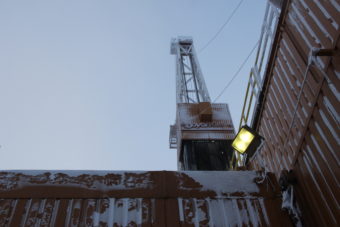
A Doyon drill rig putting in new wells at the ConocoPhillips CD5 drill site on the North Slope. (Rachel Waldholz/APRN}

Another North Slope oil-field contractor said Thursday that it is laying off 300 workers as the coronavirus pandemic continues to hammer the industry in Alaska and around the world.

Doyon Drilling, a subsidiary of the Interior Alaska Native regional corporation Doyon Ltd., said in a notice to the state that the layoffs are expected to be permanent “until the crisis is over and the industry recovers.”
“As a result of the unforeseen business circumstances resulting from the sudden and dramatic effects of the coronavirus outbreak, the declaration of a national emergency and the drop in oil prices on our business and client’s operations, Doyon Drilling will be demobilizing its rig fleet on the Alaska North Slope and conducting layoffs,” Ron Wilson, the company’s president, wrote in the notice.

Doyon officials did not immediately respond to a request for further comment.

Other major oil-field service companies have already notified the state of more than 250 layoffs, and one of Alaska’s major producers, ConocoPhillips, announced Thursday that it’s cutting daily production in half, to 100,000 barrels from 200,000, in June.

A global crash in demand for oil tied to the pandemic has caused the price of the commodity to plummet: Alaska North Slope crude was as high as $57 a barrel in February, before falling to $13 on Thursday.

Doyon said last month that its workers had already been “severely” affected by a decision by ConocoPhillips to suspend the company’s drilling program.

The company operates eight drilling rigs and has “over 300 employees,” according to its website. Doyon Ltd.’s oil-field service business — which includes Doyon Drilling and three other subsidiaries — generated $126 million in revenues in 2018, according to the company’s annual report.

State of Alaska receives $3M worth of PPE from China

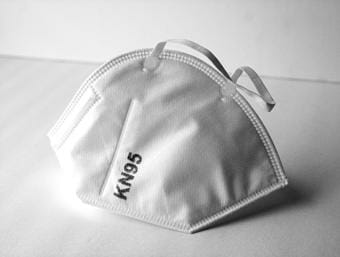
A KN95 mask, similar to the ones obtained by the state of Alaska from China in its fight against the COVID-19 pandemic. (Creative Commons photo by 2C2K Photography)

A chartered FedEx plane packed with personal protective equipment landed Wednesday in Anchorage, according to state health officials.

The shipment included 160,000 face shields, 1.2 million pairs of gloves, 31,000 protective Tyvek suits, 100,000 disposable gowns, and 20,000 shoe covers and head caps, state emergency officials said.
The items came from six different Chinese manufacturers, said Heidi Hedberg, Alaska’s public health director.

“It was huge,” Hedberg said of the effort to acquire the equipment. She added: “It was really a lot of time and energy spent with building the relationship, educating them what our needs were, working through and understanding what’s happening in China and how to navigate through the process of ordering PPE.”

The total cost of the supplies and shipping was just over $3 million, and it’s eligible for federal reimbursement, said Jeremy Zidek, a spokesman for the state’s emergency response effort.

The effort to acquire the PPE came at the direction of Gov. Mike Dunleavy, as providers’ requests piled up. Medical providers were struggling to get supplies through their normal vendors and were turning to local and state stockpiles, but “we were never able to fulfill all of the requests,” Hedberg said.

“That’s when it became incredibly apparent that we had to order PPE,” she added.

Hedberg said she worked with a consultant to assemble the different orders, which took weeks, as samples had to be shipped back to Alaska so that officials could test their quality. Some didn’t pass — namely those of the N95 masks, which are tighter-fitting and filter out smaller respiratory droplets than surgical masks.

The state ultimately was not able to secure an order of N95 masks in China’s competitive market for supplies amid the COVID-19 pandemic, Hedberg said.

“It’s incredibly volatile over there,” she said. “We would finally find a manufacturer, and then we would finally agree on a price, and then somebody would come in. Other states are doing the exact same thing, and they would have cash on hand and they would purchase it and it would go away.”

At one point, the state was closing in on an order of N95 masks only to lose out to the Bill and Melinda Gates Foundation, Hedberg said. The foundation didn’t immediately respond to a request for comment.

Instead of N95 masks, Alaska bought 200,000 KN95 masks, which are made to a slightly different standard regulated by the Chinese government. It will keep those masks as backup and use N95 masks obtained by the federal government, Hedberg said.

Once the Chinese suppliers were lined up, Hedberg said, a state contractor with employees in China would watch it being manufactured and placed into boxes. The supplies ended up at a warehouse for quality checks before being loaded on to the FedEx plane.

In Petersburg, the Southeast Alaska fishing town of 3,000 where there have been three confirmed cases of COVID-19, health care providers have had enough supplies so far. But if there’s a local outbreak, there won’t be time to put in an order with the state, so Petersburg officials placed one a few days ago, said Karl Hagerman, the town’s emergency operations center commander.

Protective supplies, he added, “are very hard to come by.”

“If the state has procured a large amount of PPE for distribution to all the EOCs across our large state, I think that’s a very reassuring fact,” he said. “And we will look forward to receiving that PPE as needed.”


From her home office yurt, Alaska’s chief medical officer navigates ‘uncharted territory’

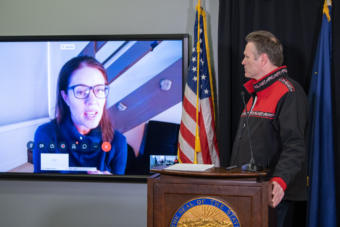
Anne Zink, Alaska’s chief medical officer, now works from a repurposed yurt beside her family’s home in Palmer, where she appears with Governor Dunleavy in webcam teleconferences. (Anne Zink)

When Anne Zink was 15, she was hiking in Wyoming with a few other teenagers at the end of an outdoor leadership course, without adults, when a storm moved in. As they retreated toward a ravine, a boy stepped on an unbalanced rock and went tumbling with it down a field of boulders.

The group thought the boy was dead. But when he regained consciousness, he started complaining about his foot, and they pulled off his boot.

A toe came off with it. And another was dangling.

Zink had first-aid training, which included a lesson on amputations, but no practical experience. The group set up a shelter, put the toe in a water bottle and hunkered down in the boulder field for two stormy nights before rescuers arrived.

Her mother, Carol Braun, found out only afterwards, and she said it was the only time she ever suggested that Zink become a doctor.

“I was just impressed at how she used all of her first aid that they had taught her, her ability to calm people down and see through the problems and figure it out — and did it with quite a bit of equanimity and care,” Braun said. “Ever since she was a little kid, she’s been somebody that could persuade anybody to do anything.”

Zink, 42, chose a career in medicine, as an emergency room doctor and director, and has settled in Palmer with her husband and 12- and 15-year-old daughters. And last year, she took a new job as Alaska’s chief medical officer.

Now, through her appearances at Gov. Mike Dunleavy’s nightly briefings, she’s become a trusted voice as she appeals to Alaskans to follow strict social distancing and other public health guidelines adopted by the administration, which have helped keep the state’s COVID-19 numbers among the lowest in the country.

She’s also been widely praised for the same qualities she showed as a teenager in that boulder field: her ability to work with others, project calm under pressure and communicate in a clear and relatable way.

“We’re doing what she’s asked us to do, because she’s encouraging us — she’s not threatening us,” said Sarah Erkmann Ward, an Anchorage communications consultant who recently published a blog post headlined: “Five reasons Dr. Zink is crushing it as a crisis communicator.

“She is the right person at the right moment that we never knew existed,” Erkmann said.

After initially participating in the nightly news conferences in-person, Zink spent two weeks in quarantine and now works from a repurposed yurt beside her family’s home, where she appears with Dunleavy by webcam. In a phone interview, she called the attention “a little surreal.”

“I sit by myself at a computer talking to the computer — all sorts of people see it, hear it in a way that I’m not always expecting,” she said.

“It’s been a struggle with each of these decisions, and this is definitely uncharted territory for all of us,” Zink added. “At the end of the day, what matters is how well Alaskans do.”

Patients and policy

Zink grew up in the Denver area, where both her parents were doctors.

Her maternal grandfather, Al Bartlett, was a University of Colorado Boulder physics professor and a nationally recognized speaker on exponential growth and humans’ inability to comprehend it — a lesson not lost on Zink as she navigates the COVID-19 pandemic.

“I think about him all the time,” she said. “Particularly in this world of trying to understand exponential growth, and trying to keep our state from getting into a place of exponential growth.”

Bartlett delivered his most famous lecture more than 1,700 times, in 49 states and seven countries, and one segment has more than 5 million views on YouTube. Like Zink, he was known for translating scientific concepts in ways that a broad audience could grasp.

During college, Zink spent summers in Alaska as an instructor for the National Outdoor Leadership School. After finishing her medical degree at Stanford University and her residency in Utah, she and her husband moved to Palmer, and Zink started work as an emergency room doctor at Mat-Su Regional hospital — where she was still working weekly shifts until the pandemic took hold.

Zink rides a bicycle next to the Knik Glacier, not far from her home in the Mat-Su. (Courtesy Anne Zink)

Zink said she was initially leery of the emergency room; it seemed to her like a job that allowed doctors to check in and check out, rather than fully engage with their work. But she came to appreciate how democratic it was, with opportunities to treat homeless people, chief executives and children.

The emergency room also gave Zink a firsthand view of the policy failures of Alaska’s social safety net, like its limited treatment options for drug addiction and mental health problems. At one point, she was punched in the face by a disturbed patient, leaving her with a black eye.

“I realized that if I wanted to care about my patients, I had to care about the policies in the hospital,” Zink said in a December episode of the Alaska Landmine podcast.

Zink and a group of her peers worked to reinvigorate Alaska’s chapter of an emergency room doctors advocacy group, the American College of Emergency Physicians. Her work with ACEP took her to lobby at Alaska’s Capitol in Juneau, and to Washington, D.C., where she made an impression on U.S. Sen. Lisa Murkowski.

“She was this young, articulate, hard-charging woman that you just think, ‘Man, TV shows should revolve around people just like her,’” said Murkowski, who’s friendly with Zink and calls herself a “huge fan.”

The political work appealed to Zink in part, she said, because she could actually see it produce change. Working with the state health department, ACEP developed guidelines for prescribing opioids to emergency room patients, with the aim of using the drugs more carefully.

The group also helped adjust computer systems to better guide the prescription of opioids. And it worked with different hospitals and other providers to launch a system to better coordinate the care of patients with complex medical and mental health problems.

Ask a question, “she’s all facts”

Zink with her daughters and husband in Bhutan during her recent sabbatical. (Courtesy Anne Zink)

Zink’s advocacy connected her with Jay Butler, who was then Alaska’s chief medical officer. When Butler was named to a top job at the Centers for Disease Control and Prevention, he suggested that Zink consider replacing him. She was ultimately offered the job by Adam Crum, the new health and social services commission.

It was not long after Dunleavy had been elected. Zink was in Bhutan with her husband and her daughters — one of a number of countries where the family lived during a year-long sabbatical.

Dunleavy, in his first months in office, was proposing deep cuts to health care, homeless services and other safety net programs — moves that drew sharp criticism from many providers. Some of Zink’s emergency room peers were surprised she took the job, and thought she would face obstacles in Dunleavy’s administration, said Nathan Peimann, the current president of Alaska’s ACEP chapter.

“There were, on so many levels, so many affronts to so much of what we were taking for granted that we thought there was no way to stem this tide,” he said. “As one voice, the influence you can have is probably small.”

Zink is not registered with a political party and describes her affiliation as the “party of health.” She said she didn’t really know the governor or Crum, or what it would be like to work with them. “But I just also felt like I wouldn’t know unless I tried,” she said.

Dunleavy, in a phone interview, said he’s come to trust Zink as an “honest broker” who presents him with information and choices, without advocating for a specific position.

“You get to me by using data. You don’t get to me by using emotion or threats,” Dunleavy said. “You ask her a question, she’s all facts.”

The Dunleavy administration’s aggressive measures to contain the coronavirus have undercut emergency room doctors’ initial skepticism about Zink taking the job, and so has the state’s low number of cases, said Peimann.

“That was because of the actions of the administration,” he said. “I give Anne and the governor credit.”

Alaska Chief Medical Officer Anne Zink talks to reporters at a press conference about the coronavirus on Monday, March 9, 2020, while Gov. Mike Dunleavy looks on in the background. (Joey Mendolia/Alaska Public Media)

After more than a month of frenetic work organizing Alaska’s initial response to the pandemic, Zink and other top administration officials now face a different and more prolonged challenge: trying to revive the state’s devastated economy while keeping the virus at bay, as residents grow increasingly impatient with the limitations on their lives.

Zink is working from her yurt with three phones and three laptops, sometimes starting at 4 a.m. She said she still makes time for runs or walks with her two daughters, but spends most of her days on conference calls and in videoconference meetings — sometimes two or three at once.

In her first several months on the job, Zink said she felt like the state was making progress toward fixing some of the systemic problems she saw as an emergency room doctor. But since January, the work demanded by the coronavirus just “grew and grew and grew,” she said.

Murkowski said she called Zink early on a recent Saturday morning, just to remind her to take care of herself.

“We exchanged the pleasantries, going back and forth. But then she wanted to spend the next half hour with me, updating me on everything that was going on, and all the good things and where the challenges were,” Murkowski said. “She’s just that type of person.”

Alyeska imposes 10% cut to North Slope production as COVID-19 hammers oil demand

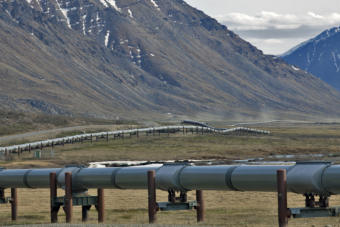
An above-ground section of the Trans-Alaska Pipeline System near the Toolik Lake Research Station in the North Slope Borough. (Photo by Rashah McChesney/Alaska's Energy Desk)
An above-ground section of the Trans-Alaska Pipeline System near the Toolik Field Station in the North Slope Borough. (Photo by Rashah McChesney/Alaska’s Energy Desk)

The company that runs the trans-Alaska pipeline announced a 10% cut to North Slope oil production Friday, amid a global oversupply of crude caused by the COVID-19 pandemic.

North Slope producers have pumped an average of 500,000 barrels a day into the pipeline this month, according to state data, so the 10% reduction amounts to some 50,000 barrels. That lost production is worth about $575,000 at Thursday’s price of $11.55 a barrel.

Alyeska Pipeline Service Co., which operates the pipeline on behalf of owners BP, ExxonMobil and ConocoPhillips, can store some 6.6 million barrels of oil at the end of the pipeline in Valdez, where tankers pick it up and deliver to West Coast refineries. Friday’s decision to pro-rate North Slope production is aimed at averting a storage crunch that Alyeska expects at the end of May, said spokesperson Michelle Egan.

The 10% reduction is the only one planned for now, she added.

“With all the information we have about oil coming in and the movement of tankers visiting the terminal in Valdez, this is the pro-ration needed to manage through the month of May,” she said. “If information changes, the pro-ration rate might change.”

Alyeska isn’t directly involved in hiring the tankers that pick up the oil from Valdez, so Egan said she wouldn’t speculate about the specific factors causing the crunch or how connected it is to the crash in demand caused by COVID-19. Similar cuts have been imposed in the past, and sometimes at higher levels, she added.

Nonetheless, the decision to pro-rate comes as global markets are awash in crude. April demand was expected to be 30% less than the year before, according to the International Energy Agency. And dozens of tankers filled with crude are currently anchored off the California coast, with nowhere to sell the oil.

Experts say that Alaska’s oil production is somewhat less susceptible to market turmoil because major producers own their own refineries and sell North Slope crude farther in advance because of its distance from markets.

The market value of a barrel of North Slope oil was as high as $57 just two months ago, according to state figures, before crashing to negative territory earlier this week.

Friday’s announcement is the latest blow to Alaska’s oil industry, whose companies have already announced spending cuts and delayed projects as prices have plummeted. Oil-field service companies have laid off workers, and lower prices and production also translate into less revenue for the state treasury.

“It’s disappointing for Alyeska and people who work for us, and we also understand what the implications are for the state of Alaska,” Egan said. “We try to avoid these situations with every tool that we have in our tool belt, and the tool that we’re able to use at this time is to do a lighter pro-ration for a longer period of time and watch for changing circumstances.”

Site notifications
Update notification options
Subscribe to notifications