NPR News

KTOO is the NPR member station in Juneau. NPR offers its members radio and digital stories.

Deep sea rescues have a mixed track record. The Pisces III is one that succeeded

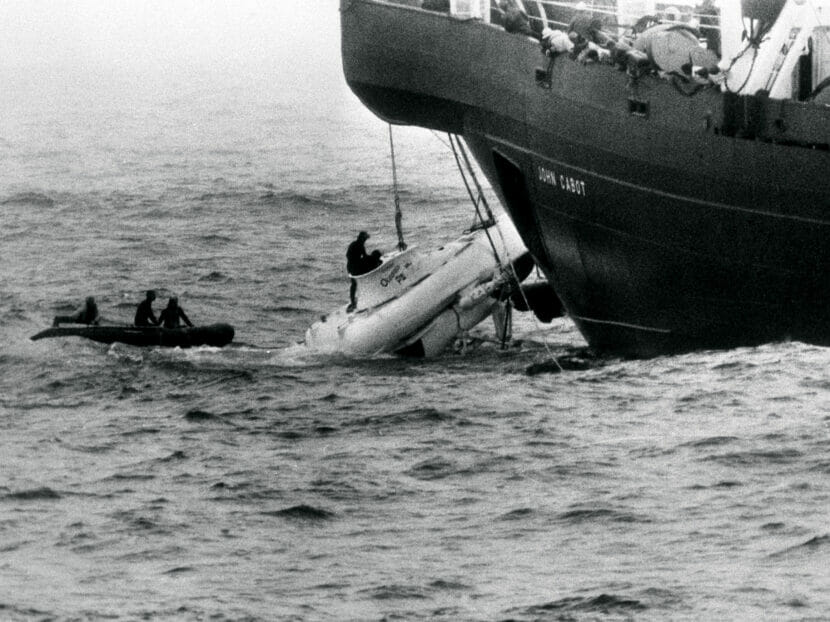
Divers begin to open the hatch of Pisces III as she breaks water under the John Cabot after being hauled from the Atlantic seabed off the coast of Cork, Ireland. (PA Images via Getty Images)

The clock is ticking in the all-hands-on-deck search for the tourist submersible that went missing during a deep-sea dive to the Titanic shipwreck on Sunday.

The vessel has five people on board and, according to the U.S. Coast Guard, a dwindling oxygen supply of 40 hours.

That gives responders just two days to locate the Titan — which is believed to be hundreds of miles from the nearest coast and potentially thousands of feet below sea level — plus bring it back to the surface to rescue those inside.

It’s a complex mission, with retired U.S. Navy submarine Capt. David Marquet putting the odds of passengers’ survival at “about 1%.”

And it’s certainly not the first of its kind: There have been several prominent rescue missions for both submarines and submersibles (which are not fully autonomous) over the course of the last century.

The deepest underwater rescue ever accomplished, officially, was that of the commercial submarine Pisces III, off the coast of Ireland in 1973.

In that dramatic incident, two crewmen — both named Roger — spent three days trapped in a vessel measuring 6 feet in diameter, subsisting off a single sandwich and condensation licked from the walls, until they were rescued with just 12 minutes of oxygen to spare.

One of them, Roger Mallinson, told NBC News on Tuesday that the search for the Titan has evoked tough memories of his own experience.

“You just rely,” he said, “on the thing being well-made.”

The submersible sank after a routine dive

It was August 1973, and two British sailors were heading out on a routine dive to lay transatlantic telephone cable on the seabed about 150 miles southwest of Cork.

Senior pilot Mallinson, an engineer, was 35 at the time. Former Royal Navy submariner Roger Chapman, who died in 2020, was 28. They were clocking eight-hour shifts, crammed into a small vessel with very poor visibility, according to the BBC.

On the morning of August 29, as the two were getting ready to be towed back to their mother ship, a hatch was accidentally pulled open. Water flooded a self-contained part of the submersible, adding extra weight and plunging the vessel about 1,575 feet below sea level.

“There was lots of banging of ropes and shackles — as normal during the last phase of the operation — when suddenly we were hurtled backward and sank rapidly,” Chapman told the BBC in 2013. “We were dangling upside down, then heaved up like a big dipper.”

The two hastily prepared to crash, dropping a lead weight to lighten their load, curling up in safety positions and stuffing cloth in their mouths so as not to bite their tongues off. They hit the ground in about 30 seconds, at 40 miles per hour.

They weren’t injured, but they were stuck.

They had to conserve oxygen and food

Author Stephen McGinty, who recounted the rescue in his book The Dive (which is reportedly being made into an action movie), explained the severity of the situation in a 2021 Newsweek interview.

“Try to imagine you are in a phone box with a friend, the phone box is at the bottom of the Empire State Building, then everything around you floods to ten stories above the top of the Empire State Building,” he said. “Then turn out all the lights and start bleeding oxygen, then you realize that a rescue — if it can even be attempted — is roughly two days away.”

Mallinson and Chapman didn’t have a water supply, just one can of lemonade and a cheese sandwich, which they wanted to save for later.

By a stroke of luck, Mallinson had replaced the oxygen tank just before the dive — but they only had 66 hours left.

The two decided to conserve oxygen by doing as little as possible. Once they telephoned for help and made sure the nearly upside-down vessel was in order, they didn’t talk or move.

They lay in the pitch-black submersible as high up as possible, where the air quality was better, thinking about their families.

“We hardly spoke, just grabbing each other’s hand and giving it a squeeze to show we were alright,” Mallinson told the BBC. “It was very cold — we were wet through.”

The rescue operations suffered a series of setbacks

Meanwhile, an international rescue operation was underway, involving dive teams from the United Kingdom, Canada and the U.S.

“The plan was relatively simple: a sister sub would go down with a two-man crew and attach a specially designed grapple hook to the sub then lift it to the surface,” McGinty explained. “But they do say: how do you make God laugh? Tell him your plans.”

McGinty said the floating buoy that ran on a rope from the surface had been disconnected from the submersible several minutes before it sank, so crews knew “where the haystack was, just not the needle.” They were able to detect the vessel using sonar by making Chapman sing — “in the hope of picking up the high notes.”

Then they had to actually reach it. Multiple attempts to raise the submersible failed over the next two days, leaving the responders with two broken vessels and the passengers without much hope.

“The first sub to go down lost its lift line; the second sub down couldn’t find them,” McGinty said. “On a third trip they finally found Pisces III, but when they attempted to fix the lift line it locked on then fell out.”

On Sept. 1, a team was finally able to make repairs to one of the other submersibles and send it back down, where it managed to attach a tow rope to the vessel.

Chapman told the BBC that it was only once the pilots knew the line was safely attached that they had the sandwich and lemonade. Mallinson later wrote that “it tasted like champagne to us.”

The lift itself proved difficult and had to be stopped and restarted twice, with lots of swinging around. The crew described the ride up as disorienting, with Chapman saying rescuers “thought we’d died when they looked at us, it had been so violent.”

Once they made it to the surface, it took them about half an hour to open the hatch and get fresh air. And there hadn’t been a moment to waste.

“We had 72 hours of life support when we started the dive so we managed to eke out a further 12.5 hours,” Chapman said. “When we looked in the cylinder, we had 12 minutes of oxygen left.”

The incident left a lasting impact on both survivors

The doctor who examined the pair commented “incredible,” McGinty said. They were dehydrated, and Mallinson had mild hypothermia, but they were otherwise in good shape.

The incident left a lasting impact on both Mallinson and Chapman in other ways, including forming a lifelong bond.

“Each year on the anniversary Roger Mallinson would call Roger Chapman at the exact moment they reached the surface,” McGinty said.

Chapman went on to set up a company specializing in submersible rescues and was able to help with several incidents, according to his obituary. The “grandfather of submarine rescue” said even years later that he occasionally felt uncomfortable in elevators.

Mallinson, who became renowned for his work on steam engines, was awarded an MBE at the beginning of 2023.

In a September 1973 Daily Mail column, Mallinson wrote that he owed his life to Chapman.

“The ex-Navy lieutenant, who was my second pilot and observer aboard the stricken Pisces III, pulled me through the blackest hours of that incredible rescue,” he wrote. “Without him, I would not be here to tell this story.”

Few other sub rescues have been as successful

The Pisces III incident took its place in the history books as the deepest underwater rescue ever achieved, according to Guinness World Records. Many others have been attempted, with varying degrees of success.

Take for example the USS Squalus, a submarine that sank 240 feet off the coast of New Hampshire during a test dive in 1939, killing 26 people immediately.

The remaining 32 crew members and one civilian used smoke bombs and, later, morse code to signal for help. A Navy submarine found them that same morning, and rescuers were able to bring the survivors to the surface in four separate trips over the next day or so. It took another three months to recover the vessel, by attaching pontoons to both sides and inflating them full of air.

Russia saw one of the world’s worst naval disasters several decades later, in 2000, when the nuclear submarine Kursk sank during a training exercise in the Arctic Circle. All 118 crew members ultimately died, though some two dozen had survived the initial sinking.

The Russian government — led by newly minted President Vladimir Putin — was slow to launch search and rescue efforts, even rejecting offers of help from Western countries. By the time a team of British and Norwegian divers found the vessel nine days later, there were no survivors.

Five years later, when the Russian AS-28 sank in the Pacific Ocean after becoming entangled in fishing nets, the government took a different tack and called for international help. British and American rescue crews were able to free the vessel and save all seven people on board.

Copyright 2023 NPR. To see more, visit https://www.npr.org.

FDA advisers back updated COVID shots for fall vaccinations

The COVID-19 vaccine will be updated in hopes of targeting the strains of omicron that will be circulating later this year. (Esteban Felix/AP)

A panel of expert advisers to the Food and Drug Administration voted unanimously Thursday to recommend that the COVID-19 vaccine be updated to target emerging subvariants of omicron.

The COVID shot that’s currently available is known as a “bivalent” vaccine because it was tailored to target both the original strain of the coronavirus and the omicron subvariants that dominated last winter.

But the FDA panel recommended that drugmakers abandon the bivalent design and instead move to a “monovalent” vaccine that only targets omicron subvariants. The idea is to roll out the newly formulated shots in anticipation of a possible uptick in cases this fall.

The committee specifically supported targeting the subvariant XBB.1.5, which accounts for about 40% of new infections in the U.S.

In an analysis, FDA scientists said data from vaccine manufacturers indicate that an updated monovalent formulation that targets XBB subvariants “elicits stronger neutralizing antibody responses” against XBB strains than current bivalent vaccines.

“There doesn’t seem to be any particular advantage to a bivalent vaccine,” said Dr. Eric Rubin, a professor of immunology and infectious diseases at Harvard who is also a member of the advisory committee.

While there was wide agreement about moving to a monovalent vaccine, there was considerable debate among committee members over whether the COVID-19 vaccine should be handled like the influenza vaccine, which is revamped every year in anticipation of flu season.

“People understand a yearly influenza vaccine,” said Dr. Peter Marks, director of the FDA’s Center for Biologics Evaluation and Research. “At this point it may not be yearly, but, for all intents and purposes, it looks like by next fall there will be further drift from this [strain] and we may have to come back here.”

But some worried that drawing too close a parallel to influezna could actually lead to confusion among Americans.

“This is not the flu,” said committee member Dr. Paul Offit, a professor of pediatrics at the Children’s Hospital of Philadelphia. He pointed out that many Americans already have some protection against severe illness from COVID-19 because of prior infection, vaccination, or both.

“I’m all for updating this vaccine, but I think we need to define… who really benefits from booster dosing? Because it’s not everybody,” he said.

It’s not yet clear who federal officials will recommend should get the updated omicron vaccine.

During the meeting, the CDC shared data that shows that, since last April, COVID hospitalizations and deaths have been low in most groups. But they have been disproportionately high in people who are 75 or older, suggesting this group might need extra protection. Those with health issues like chronic lung disease or diabetes might also have higher risks.

The FDA is now going to consider the committee’s discussion and will likely issue an official recommendation about the vaccine formulation within a few days, which will give vaccine makers a path to follow.

If all goes according to plan, it’s expected the new vaccines should be out in the fall — by around late September or early October.

Copyright 2023 NPR. To see more, visit https://www.npr.org.

Revenge of the killer whales? Recent boat attacks might be driven by trauma

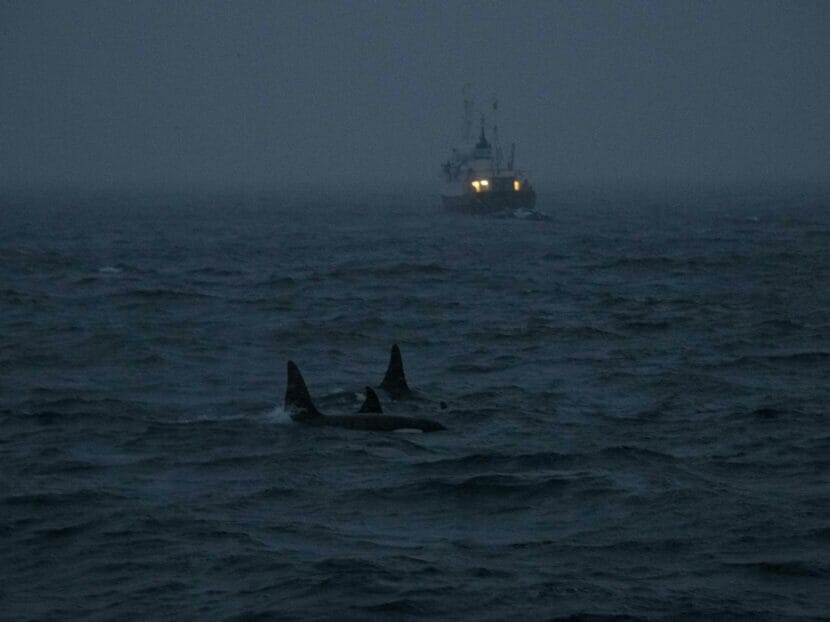
Killer whales are pictured during a storm in the fjord of Skjervoy in 2021 off the coast of northern Norway. Researchers say orcas are stepping up “attacks” on yachts along Europe’s Iberian coast. (Olivier Morin/AFP via Getty Images)

Scientists and sailors say orcas, also known as killer whales, are stepping up “attacks” on yachts along Europe’s Iberian coast, with one skipper who’s been pursued by the marine mammals on two separate occasions suggesting that their tactics are becoming more stealthy.

Delivery skipper Dan Kriz, who had to be towed into port after orcas destroyed the rudder on a boat he was on in 2020, had an almost identical experience in April.

“My first reaction was, ‘Please! Not again,'” Kriz told Newsweek.

Unlike last time, the orcas made a stealthier approach without the characteristic squeaks they normally use to communicate, he says. They made quick work of the two rudders on the catamaran Kriz was delivering. “Looks like they knew exactly what they are doing. They didn’t touch anything else,” he said.


View this post on Instagram


A post shared by Catamaran Guru (@catamaranguru)

Most marine scientists have characterized hundreds of encounters between boats and orcas that have sunk at least three vessels and damaged dozens of others over the years as a “fad,” implying that the animals will eventually lose interest and resort to more typical behavior.

But if that’s the case, there are few signs this behavior is going out of style anytime soon. According to a June 2022 study published in the journal Marine Mammal Science, orcas have stepped up the frequency of their interactions with sailing vessels in and around the Strait of Gibraltar, the busy waterway that links the Mediterranean Sea with the Atlantic Ocean.

Some researchers think it’s merely playful behavior

As NPR first reported last August, many scientists who study orca behavior believe these incidents — in which often one or more of the marine mammals knock off large chunks of a sailboat’s rudder — are not meant as attacks, but merely represent playful behavior.

One hypothesis put forward by Renaud de Stephanis, president and coordinator at CIRCE Conservación Information and Research, a research group based in Spain, is that orcas like the feel of a boat’s rudder.

“What we think is that they’re asking to have the propeller in the face,” de Stephanis told NPR last year. “So, when they encounter a sailboat that isn’t running its engine, they get kind of frustrated and that’s why they break the rudder.”

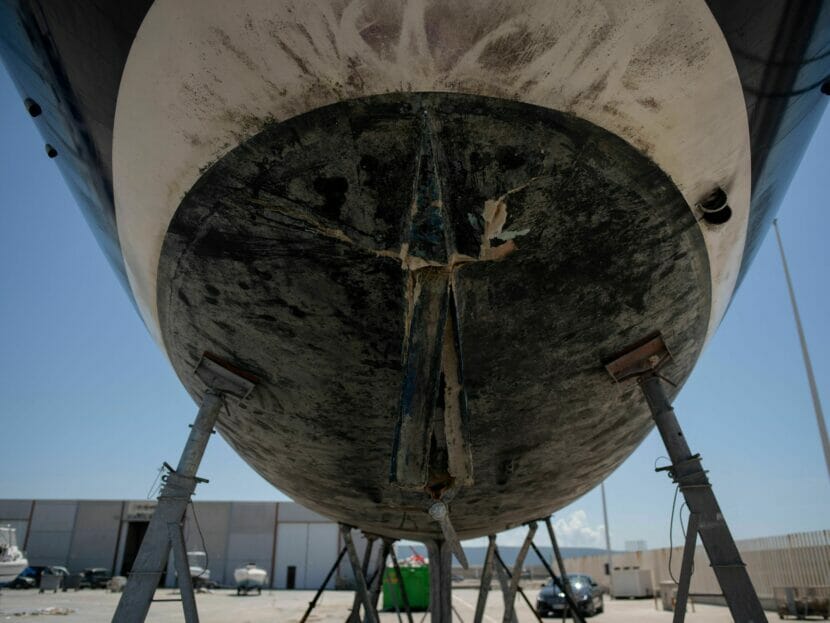
A picture taken on May 31 shows the rudder of a vessel damaged by killer whales (Orcinus orca) while sailing in the Strait of Gibraltar and taken for repairs at the Pecci Shipyards in Barbate, near Cadiz, southern Spain. (Jorge Guerrero/AFP via Getty Images)

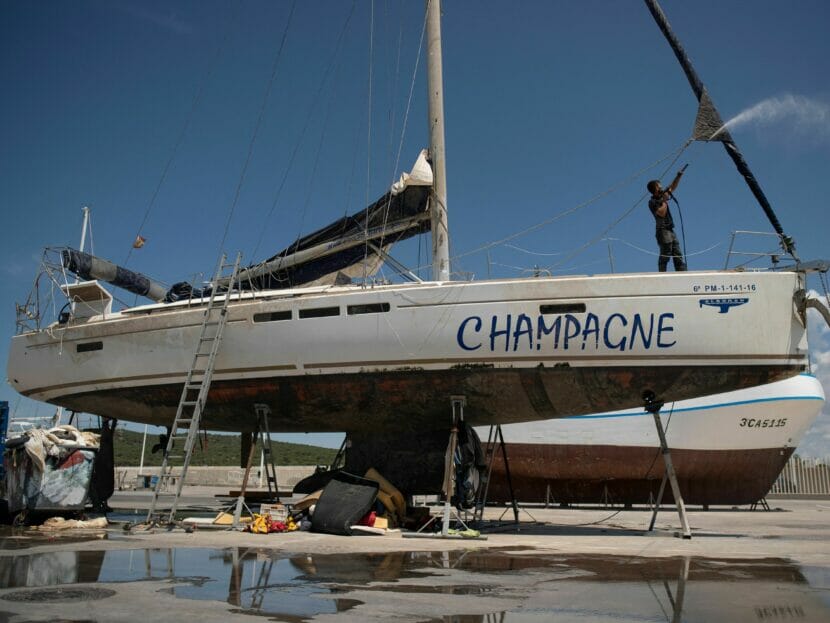
In another recent encounter, Werner Schaufelberger told the German publication Yacht that his vessel, Champagne, was approached by “two smaller and one larger orca” off Gibraltar.

“The little ones shook the rudder at the back while the big one repeatedly backed up and rammed the ship with full force from the side,” he said.

The Spanish coast guard rescued Schaufelberger and his crew, towing Champagne to the Spanish port of Barbate, but the vessel sank before reaching safety.

The encounters could be a response to past trauma

Since 2020, there have been more than 500 encounters between yachts and orcas in the area, according to one of the study’s co-authors, Alfredo López Fernandez, a biologist at the University of Aveiro in Portugal and a representative of the Grupo de Trabajo Orca Atlántica, or Atlantic Orca Working Group.

López Fernandez believes that a female known as White Gladis, who leads the group of around 40 animals, may have had a traumatizing encounter with a boat or a fishing net. In an act of revenge, she is teaching her pod-mates how to carry out revenge attacks with her encouragement, researchers believe.

A worker cleans Champagne, a vessel that sank after an attack by orcas in the Strait of Gibraltar and was taken for repairs at the Pecci Shipyards in Barbate, near Cadiz, southern Spain, on May 31. (Jorge Guerrero/AFP via Getty Images)

“The orcas are doing this on purpose, of course, we don’t know the origin or the motivation, but defensive behavior based on trauma, as the origin of all this, gains more strength for us every day,” López Fernandez told Live Science.

It’s an intriguing possibility, says Monika Wieland Shields, director of the Orca Behavior Institute.

“I definitely think orcas are capable of complex emotions like revenge,” she says. “I don’t think we can completely rule it out.”

However, Shields is not ready to sign on to the “revenge” hypothesis just yet. She says that despite humans having “given a lot of opportunities for orcas to respond to us in an aggressive manner,” there are no other examples of them doing so.

Deborah Giles, the science and research director at Wild Orca, a conservation group based in Washington state, is also skeptical of the hypothesis. She points out that killer whale populations in waters off Washington “were highly targeted” in the past as a source for aquariums. She says seal bombs, small charges that fishers throw into the water in an effort to scare sea lions away from their nets, were dropped in their path while helicopters and boats herded them into coves.

“The pod never attacked boats after that,” she says. “It just doesn’t ring true to me.”

Shields says it’s important to remember that whatever the motive is for the behavior of the orcas off the Iberian coast, it isn’t being transmitted to pods in other parts of the world.

“We’ve had folks here in Washington [asking] ‘is it safe to go out in the water here with these orcas?'” she says. “While this is kind of an ongoing situation in that specific place, I don’t think there’s any reason to think it’s going to start spreading to other populations of orcas.”

Copyright 2023 NPR. To see more, visit https://www.npr.org.

The US dollar conquered the world. Is it at risk of losing its top spot?

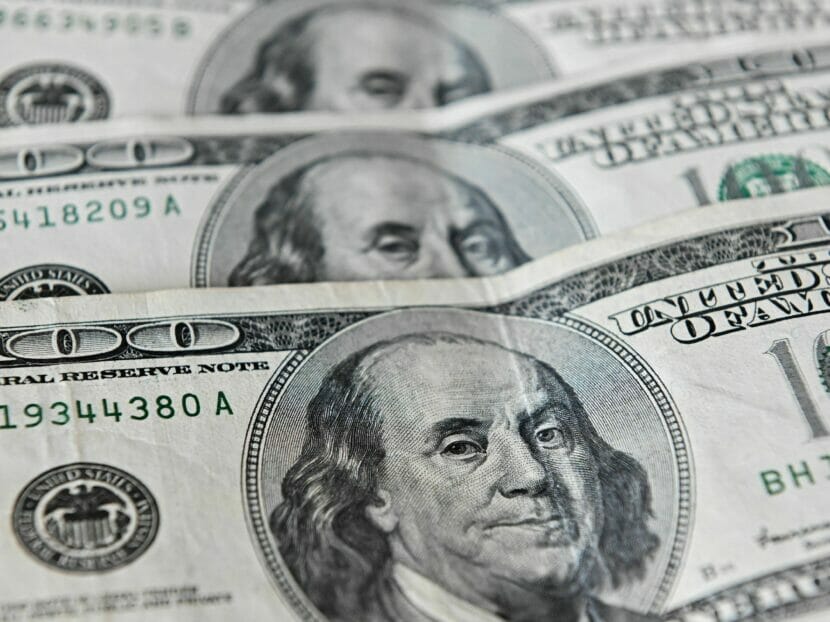
The dollar is not just the currency used in the U.S., it is very much the world’s currency. It’s been that way for 80 years – but that could change. (Luis Robayo/AFP via Getty Images)

You might just think of the dollar as the money in your wallet, the cash you use to buy your morning coffee.

But the dollar is much, much bigger than that.

The dollar is the world’s currency: It dominates global business.

Economists call it the “global reserve currency,” a fancy title the dollar got about 80 years ago that has brought some pretty serious perks to the U.S. economy.

But could the dollar get knocked off the top spot? There are challengers emerging, and history shows that countries whose currency dominated the globe can fall from that top spot pretty fast … even over the course of a few days.

How it started: timing + muscle + lots of gold

The U.S. dollar did not luck its way into the top spot.

It was a carefully engineered plan that unfolded in the mountains of New Hampshire nearly 80 years ago. At the time the British Pound Sterling was the international currency. A title it had held for decades.

The dollar’s rise happened pretty suddenly at the Bretton Woods International Monetary Conference in 1944. Bretton Woods was a gathering of world leaders at the end of World War II. They came together to try and establish an international system for trade and finance, to help bind the world together and increase prosperity for all.

Everyone agreed that in order to ease international trade, there needed to be a common currency, a standard everyone could use.

At the time of the conference, the British economy in shambles. The costs of fighting a war on its own soil had been enormous. It was clear that the British Pound Sterling could not be the currency everyone counted on.

So the British pushed for a new currency that would solely be used for inter-country trades: Economist John Maynard Keynes, who was at Bretton Woods on behalf of the British, proposed the “Bancor” (a mix of the French work for bank, ‘banc’ and the French word for gold ‘or) but also suggested “Orb” and even … “Unicorn.”

But the U.S. dollar left the Bancor, the Orb and the Unicorn in its dust. The U.S. was economically quite strong. It also had lots of gold in its vaults, which made people feel like its wealth was backed up.

It used these advantages to help muscle the dollar in as the official currency of international business at the conference.

The perks of being the world’s currency

Being the world’s reserve currency essentially means the U.S. dollar is at the center of most of the business on Earth.

Example: If you’re a clothing designer in Chile and you order cotton from Egypt for some shirts you plan to make, you will pay for that cotton in U.S. dollars. Not Chilean pesos and not Egyptian pounds.

To be clear, the U.S. isn’t involved in that deal at all, but the U.S. dollar is. When international deals happen, they usually happen in dollars.

This is a big boost to the U.S. in all kinds of way: For example, it means domestic businesses have a home court (home currency) advantage when they do business overseas.

But as the Bretton Woods conference demonstrated, that top spot can slip away pretty fast

“We have an important advantage, which may whittle away slowly if we’re not careful,” says economist Michael Boskin, a former White House advisor.

The challenges to the dollar

There are a couple reasons why the dollar’s status is suddenly being talked about as at risk.

Earlier this year, China, Russia, Saudi Arabia, the United Arab Emirates and even Brazil started making trades in other currencies: The Chinese Yuan and the Russian ruble. This was a very direct challenge to the U.S. dollar’s central position.

A delegation from China led by Chinese President Xi Jinping meet with their Saudi counterparts led by Saudi Crown Prince Mohammed bin Salman at the Great Hall of the People in Beijing on Feb. 22, 2019. Countries like Saudi Arabia and China are looking to chip away at the dollar’s dominance. (How Hwee Young/AFP via Getty Images)

China has long been pushing to have its currency replace the dollar, but it’s getting momentum now for a couple of possible reasons:

First: the debt ceiling. Being the currency everyone counts on to do business means people have to believe that your currency is reliable. That recent debt ceiling drama made the U.S. (and, by extension, the dollar) look potentially risky and unstable.

Using the dollar as an economic weapon

The debt ceiling is not at the heart of the recent spate of non-dollar trades, says Benn Steil, an economist with the Council on Foreign relations.

“The real issue is the U.S. government’s increasing use of the dollar as a tool for financial sanctions,” he says.

The dollar is so powerful, if you can’t use it, you are essentially iced out of being able to do most business anywhere in the world.

The U.S. has used this as a nonviolent way to put pressure on countries: North Korea, Iran and most recently Russia. After the invasion of Ukraine, the U.S. said, ‘No dollar for you!’

Steil says the economic impacts of those sanctions have been massive and other countries have noticed.

“Sanctions are an effective tool, but we have to be careful,” he says. “It’s like over-prescribing an effective antibiotic. It encourages the development of new strains of bacteria that are resistant to the antibiotic.”

If you are a country that has a complicated relationship with the U.S., watching the effect of American financial sanctions on Russia is scary. It’s been enough to push China, Saudi Arabia and others to make deals that get around the dollar, trying to chip away at its power

“This is not nearly as efficient as using the dollar,” Steil says of these deals. “That can lead to a massive fragmentation in the global economy and a much less efficient and less productive global economy.”

It’s still all about the Benjamins… for now

Right now, the dollar has a lot of momentum and is not at any immediate risk of losing its top spot, says economist Michael Boskin.

Still, he says momentum can change fast.

“Other countries in previous times have been the reserve currency and they fritter that away,” he says. “We need to be very careful.”

And right now, with so much global turmoil, China and others have started to see a possible opening to grab that top spot – or at least start to chip away at the U.S. dollar’s dominance.

Copyright 2023 NPR. To see more, visit https://www.npr.org.

America is going through an oil boom — and this time it’s different

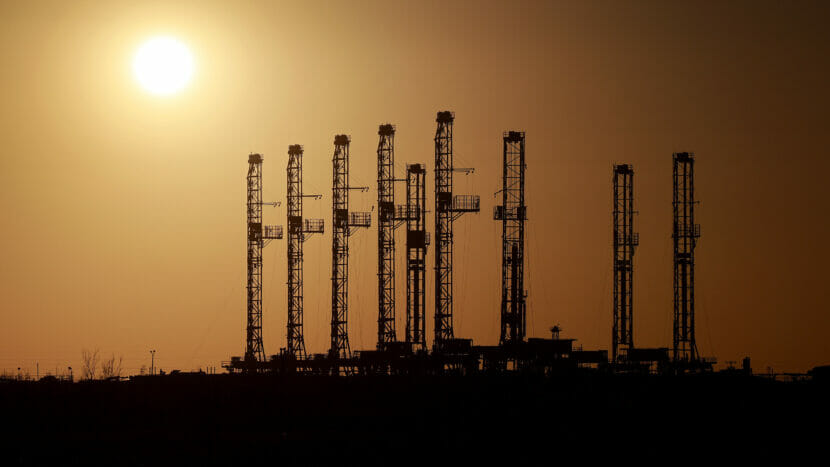
Drilling rigs sit unused on a lot in Odessa, Texas, in the Permian Basin, in March 2022. U.S. oil companies are thriving as they look to avoid the boom-and-bust cycles of the past. That has big implications, including for consumers and global producers. (Joe Raedle/Getty Images)

MIDLAND, Texas — America’s oil industry is booming — in a surprising way.

It doesn’t look much like the booms of the past, when companies would scramble to pump as much oil as possible and the region would attract so many workers it became impossible to find housing and free hotel rooms.

Instead, a sector infamous for its booms and busts is finally learning how to embrace the one thing they’ve never been known for: moderation.

This shift is doing a lot of good in the Permian, America’s most prolific oil basin. Oil companies are raking in profits, and the steadier work has also been good for workers across the region.

But the economic, geopolitical and climate implications are more complicated.

Here are five things to know about this shift, and what it means.

Oil prices are volatile — but still very profitable

Last year, Russia’s invasion of Ukraine sent crude prices soaring well past $100 a barrel, and that meant producers were making money hand over fist.

Prices have since fallen, but they remain at or above their pre-pandemic levels. Significantly, they’ve consistently been high enough for most producers to drill new wells at a profit.

The most recent survey from the Dallas Federal Reserve found that the average Permian producer can break even on a new well when WTI (a key reference price for oil prices) is trading at $61 a barrel. And currently, prices are well above that level.

The result: Big profits for companies and higher employment and wages for workers in the Permian Basin.

… but something unexpected is happening

Before the pandemic, the U.S. oil industry followed a predictable pattern.

“When there was an increase in prices, the U.S. shale players would rush in and increase production to try to capture that price increase,” says Angie Gildea, the head of U.S. energy for global accounting firm KPMG.

In previous boom times, more than 500 drilling rigs were operating simultaneously across the Permian as oil companies chased high oil prices.

All those wells contributed to a huge growth in oil supply, which then led to a huge oversupply, which then inevitably led to … huge price crashes and a resulting collapse in drilling activity. Boom, bust. Boom, bust.

But last year, despite prices topping $100 a barrel, rig counts stayed in the mid-300s. They held there as prices dropped. And that’s where they remain today, more or less leveling off.

There are multiple factors keeping companies from drilling even more — supply chain shortages, trouble hiring workers, or for some companies, a lack of good sites to drill.

But a huge factor in this shift towards moderation is pressure from investors who want oil companies to share their profits with them, rather than funneling the earnings back into the ground to make more oil.

“Investors are actually demanding … more discipline from these shale producers,” says Gildea. “They want return of dividends and cash back to shareholders versus prioritizing just growing production.”

The result: Production in the Permian is still growing, but it’s growing more gradually. And it’s been growing steadily even as prices swing around.

That’s good for producers, including OPEC+

More restrained investment means oil companies are less likely to suffer the busts that used to roil the industry.

And while oil prices are high, companies are paying down debt, merging with rivals to strengthen their positions and churning out cash. That has positive economic impacts for individual companies, for oil-producing regions like the Permian and for a major segment of the American economy.

More discipline from American oil companies is also good for the global cartel known as OPEC+.

The shale revolution has reshaped global oil politics, turning the U.S. into the world’s top’s producer and an OPEC+ rival instead of just a customer.

That means that any time OPEC+ considers cutting production, it has to weigh whether U.S. producers will jump in to pump more crude, seizing more market share from the cartel.

That’s much less of a concern today. With shale producers keeping their growth in check, OPEC and its allies can cut output, pushing up prices, without risking a shale bonanza.

In fact, Saudi Arabia announced yet another voluntary cut in production over the weekend, while some other members of OPEC+ extended their own voluntary cuts.

“They believe, over the medium term, that they are in a very strong position in the market, that shale companies do have to respond to shareholders who do ask for capital discipline,” says Helima Croft, global head of commodity strategy at RBC Capital Markets, who was in Vienna for the OPEC+ meeting.

The impact on markets will play out for years, Croft predicts.

And it’s not great for consumers

As usual, good news for oil companies is bad news for oil consumers – even if it’s not currently visible from prices at the pump.

Gasoline prices in the U.S. currently average a little over $3.50 nationally, more than a dollar lower than last year. For the next few weeks and months, gasoline analysts aren’t predicting anything close to last year’s sky-high prices.

But in the medium- and long-term, less investment in oil production means less supply, which drives prices up.

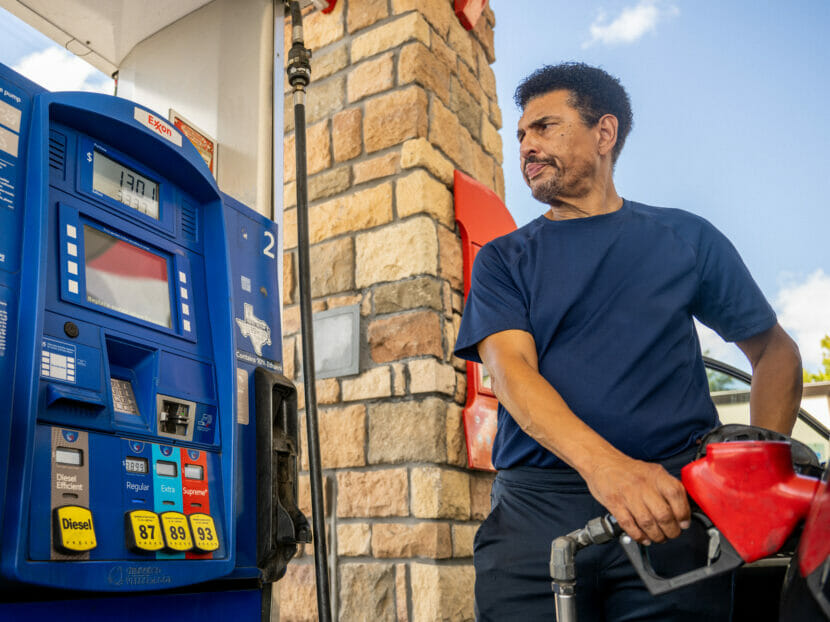
A customer pumps gas at an Exxon gas station in Houston, on July 29, 2022. U.S. oil companies are becoming a lot more restrained about production, and that could keep gas prices high over the longer term. (Brandon Bell/Getty Images)

To be clear, U.S. oil production is still increasing, but it’s not increasing as quickly as it once would have.

The big wild card is whether a global recession materializes. But if it doesn’t, analysts think supply will continue to lag demand, given the restrained production from U.S. and OPEC+ producers.

A forecast released this week by Enverus, an energy data analytics company, predicts Brent, the global crude benchmark, will top $100 a barrel again later this year.

The impact on climate is less clear

Climate scientists say the world needs to rapidly reduce its use of oil and natural gas and implement other emissions cuts to limit the devastating impacts caused by climate change. And that’s doable, they say, thanks to cheaper renewable energy and other alternatives.

So is a slower-growing Permian in line with a transition away from oil?

Gildea argues that this restraint from producers could free up money and bandwidth for companies to focus on cleaner energy and emissions reduction, positioning themselves to continue to profit as the world shifts away from oil.

But so far, oil and gas companies are sending the bulk of their cash back to investors in the form of dividends and share buybacks, rather than dedicating it to new, greener ventures.

And the sheer profitability of oil means that companies have very little incentive to invest in anything else — in fact, they can be punished by the market if they try.

Oil companies are also unconvinced that the world actually will transition away from oil, at least at anything approaching the speed necessary to stop climate change.

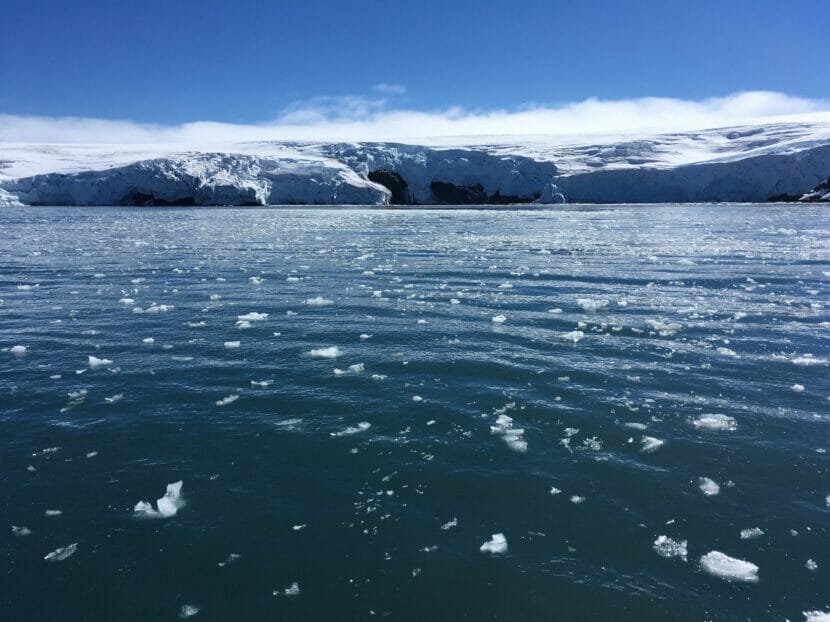
Blocks of ice drift on the water off the coast of Collins glacier on King George Island, Antarctica, on Feb. 1, 2018. Climate scientists say the world needs to quickly start addressing the devastating impacts caused by climate change. (Mathilde Bellenger/AFP via Getty Images)

The oil industry is talking (and advertising) about climate change now, but companies are openly skeptical about the actual speed of a transition away from oil. That’s true for big companies — and small ones.

The U.S. oil patch may have discovered restraint. But there’s no indication that it’s on the road to reinvention.

Copyright 2023 NPR. To see more, visit https://www.npr.org.

Sky-high egg prices are finally coming back down to earth

Eggs are on display at a Sprouts grocery store on April 12 in San Rafael, Calif. (Justin Sullivan/Getty Images)

Egg prices soared in recent months, driving up grocery bills for many Americans, but buyers can see the sunny side now that the cost of a dozen eggs is dropping in stores across the country.

The spike in egg prices was caused by a number of factors, including an avian flu outbreak that affected tens of millions of birds across the country.

But the bird flu outbreak has eased, inflation has loosened its grip on the economy, and whipping up an omelet has suddenly become more affordable.

The USDA’s most recent report on national egg prices puts the typical wholesale price of a dozen eggs somewhere between $0.99 and $1.39.

It’s a far cry from the wholesale price of $5 for a dozen eggs in many places across the country earlier this year, according to department figures.

The most recent data from the Bureau of Labor Statistics estimated that the average consumers would pay for a dozen eggs in April was around $3.27, the lowest it had been since September.

Phil Lempert, editor of the website SupermarketGuru.com, said that not only have egg prices fallen, but stores are no longer running out of the protein-rich commodity, as they had been in recent months.

“The good news is, if you go into a grocery store, you’re going to see eggs. versus just a couple months ago when you weren’t going to see eggs,” Lempert told NPR, “and if you were, they were $5, $6, $7 a dozen.”

Likely the main reason egg prices are coming back down is that the poultry industry is recovering from the bird flu outbreak.

According to the Centers for Disease Control and Prevention, more than 58 million birds have been affected by highly pathogenic avian influenza (HPAI) in the most recent outbreak, including commercial poultry as well as backyard chickens.

Lempert said it takes months for newly born hens, unaffected by the highly contagious and lethal bird flu, to be able to lay eggs that can then be sold to consumers.

Grocery prices can also be tied to inflation, which remained high in April but decreased slightly. Consumer prices increased 4.9% over the same period a year ago, but they dipped compared to prior months.

Egg prices may not fully return to previous levels anytime soon though, Lempert said, since egg producers will want to make up for lost earnings and other supply chain issues, such as labor shortages and trucking industry woes.

Copyright 2023 NPR. To see more, visit https://www.npr.org.
Site notifications
Update notification options
Subscribe to notifications