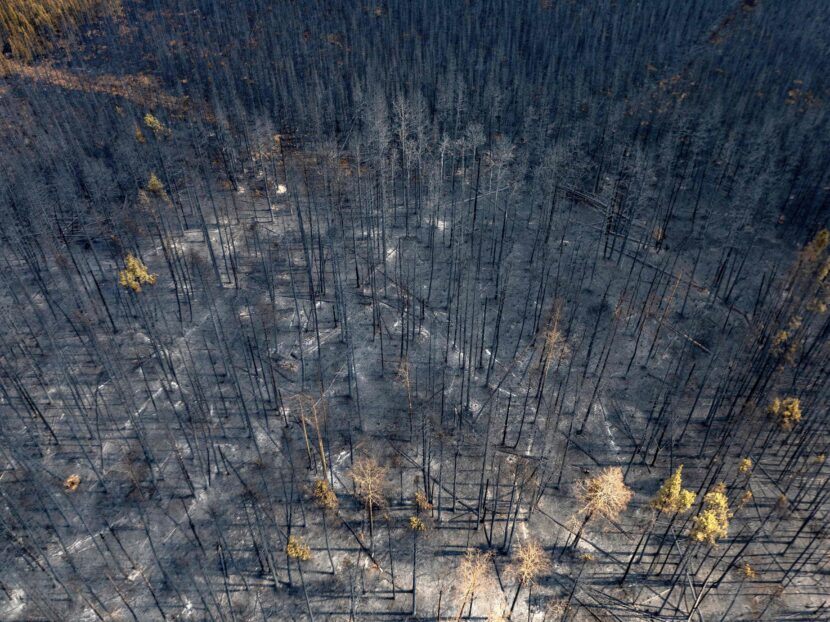
A burnt landscape caused by wildfires is pictured near Entrance, Wild Hay area, Alberta, Canada on May 10, 2023. Canada struggled on May 8, 2023, to control wildfires that have forced thousands to flee, halted oil production and razed towns, with the western province of Alberta calling for federal help. (MEGAN ALBU/AFP via Getty Images)
Copyright 2023 NPR. To see more, visit https://www.npr.org.
Transcript :
MARY LOUISE KELLY, HOST:
Early and record-breaking wildfires are burning across multiple Canadian provinces from the east coast to the west coast. They’ve forced more than 50,000 people to evacuate this month. Some fires have been so huge smoke has drifted as far south as Philadelphia. Emma Jacobs reports.
JANINE MUISE: I can see the smoke billowing in the sky.
EMMA JACOBS, BYLINE: Volunteer Janine Muise steps outside the rec center in rural Shelburne County, Nova Scotia, to speak on the phone.
MUISE: When we first came here, we could – you know, you could smell it. There’s been a lot of calls that have been dropped. I think there may be some towers down.
JACOBS: Many of the 5,000 evacuees in this area have been stopping at the Red Cross shelter here to register – some with children and many with pets. Most plan to stay with friends and family, but others will sleep on cots set up in the hockey rink.
MUISE: Anxiety is the main thing, around their home. I mean, people have worked for years to build what they have. And then, all of a sudden, it’s just gone.
JACOBS: This fire, known as the Barrington Lake fire, has grown quickly, becoming the largest in the history of the province. Another wildfire on the outskirts of Halifax has destroyed around 200 structures – mostly houses – and forced another 16,000 evacuations. It’s unknown when they will be allowed to return home.
DAVE STEEVES: This is a very dangerous situation.
JACOBS: Dave Steeves with Canada’s Department of Natural Resources and Renewables said dry, windy weather today would create treacherous conditions for firefighting.
STEEVES: It’s changing every moment with wind, with fuels, with the lay of the land, how the sun is heating the fuels. Everything is constantly evolving.
JACOBS: Nova Scotia Premier Tim Houston has banned all travel and activity in the woods and pleaded with people to stop any behavior that could ignite more fires.
TIM HOUSTON: For God’s sake, stop burning – stop flicking your cigarette butts out your car window. Just stop it. Our resources are stretched incredibly thin right now fighting existing fires.
JACOBS: Halifax Deputy Fire Chief Dave Meldrum said the wildfire had hopscotched through neighborhoods, destroying some homes while leaving others nearby untouched.
DAVE MELDRUM: It’s terrible to see. There’s – you know, these are people’s homes. This is a community.
JACOBS: But it’s not just been a bad spring for fires in Nova Scotia. The area burned this year in the western province of Alberta is about half the size of Massachusetts.
MIKE FLANNIGAN: And this is the highest amount of area burned for May.
JACOBS: Mike Flannigan studies wildfires. He’s a professor at Thompson Rivers University in British Columbia.
FLANNIGAN: Things are still burning actively in British Columbia, Alberta, Saskatchewan, Northwest Territories and now Ontario.
JACOBS: He says climate change is exacerbating conditions that make for bigger, more destructive fires – more hot, windy weather and more dry vegetation.
FLANNIGAN: The warmer we get, the longer our fire seasons are. And we’re seeing that pretty well across much of Canada. Fire season starts earlier in the spring, goes later in the fall.
JACOBS: And these wildfires can have impacts far outside the fire line. Heavy smoke led to health warnings in Nova Scotia this week. And plumes of smoke from wildfires in western Canada led to air quality alerts in U.S. states from Colorado to Montana and Minnesota.
For NPR News, I’m Emma Jacobs in Montreal. Transcript provided by NPR, Copyright NPR.
The welcome screen for the OpenAI ChatGPT app is displayed on a laptop screen in February in London. (Leon Neal/Getty Images)
AI experts issued a dire warning on Tuesday: Artificial intelligence models could soon be smarter and more powerful than us and it is time to impose limits to ensure they don’t take control over humans or destroy the world.
“Mitigating the risk of extinction from AI should be a global priority alongside other societal-scale risks such as pandemics and nuclear war,” a group of scientists and tech industry leaders said in a statement that was posted on the Center for AI Safety’s website.
Sam Altman, CEO of OpenAI, the Microsoft-backed AI research lab that is behind ChatGPT, and the so-called godfather of AI who recently left Google, Geoffrey Hinton, were among the hundreds of leading figures who signed the we’re-on-the-brink-of-crisis statement.
The call for guardrails on AI systems has intensified in recent months as public and profit-driven enterprises are embracing new generations of programs.
In a separate statement published in March and now signed by more than 30,000 people, tech executives and researchers called for a six-month pause on training of AI systems more powerful than GPT-4, the latest version of the ChatGPT chatbot.
An open letter warned: “Advanced AI could represent a profound change in the history of life on Earth, and should be planned for and managed with commensurate care and resources.”
In a recent interview with NPR, Hinton, who was instrumental in AI’s development, said AI programs are on track to outperform their creators sooner than anyone anticipated.
“I thought for a long time that we were, like, 30 to 50 years away from that. … Now, I think we may be much closer, maybe only five years away from that,” he estimated.
Dan Hendrycks, director of the Center for AI Safety, noted in a Twitter thread that in the immediate future, AI poses urgent risks of “systemic bias, misinformation, malicious use, cyberattacks, and weaponization.”
He added that society should endeavor to address all of the risks posed by AI simultaneously. “Societies can manage multiple risks at once; it’s not ‘either/or’ but ‘yes/and.’ ” he said. “From a risk management perspective, just as it would be reckless to exclusively prioritize present harms, it would also be reckless to ignore them as well.”
NPR’s Bobby Allyn contributed to this story.
Copyright 2023 NPR. To see more, visit https://www.npr.org.
President Biden and House Speaker Kevin McCarthy, seen here speaking at the U.S. Capitol on March 17, agreed to a deal that would raise the debt ceiling. (Drew Angerer/Getty Images)
While many families in the U.S. were relaxing over the Memorial Day weekend, top negotiators for President Biden and House Speaker Kevin McCarthy, R-Calif., were working late into the night to finalize the details of a measure that, if passed, would avoid a historic government default and raise the nation’s debt ceiling.
McCarthy released the outcome of those efforts, 99 pages of legislative text, on Sunday evening, giving House lawmakers 72 hours to review the bill before a planned vote in that chamber.
Both Biden and McCarthy say the bill includes necessary trade-offs.
“The agreement prevents the worst possible crisis: a default for the first time in our nation’s history, an economic recession, retirement accounts devastated, millions of jobs lost,” Biden told reporters Sunday evening, arguing that the compromise preserves a series of Democratic priorities.
The bill would hold non-defense spending for fiscal year 2024 at roughly current levels and raise it by 1% in 2025. The agreement separately suspends the debt limit for nearly two years until Jan. 1, 2025.
Its completion follows weeks of negotiations as the government crept toward the date when it would run out of money to pay its bills.
“When you sit and negotiate within two parties, you got to deal with both sides of the aisle,” McCarthy told reporters on Sunday. “So it’s not 100% of what everybody wants.”
Even as McCarthy and Biden praise the bill as a framework that can gain bipartisan support, many lawmakers are waiting until they review the text to make a decision on whether to support it.
The bill would limit spending and expand work requirements
The measure was unveiled Sunday evening just after Biden and McCarthy spoke to discuss final details.
If passed, the bill would:
Set spending caps for the federal budget in the first two years in 2024 and 2025, and then sets appropriations targets for the following four years;
Raise the age of food stamp recipients subject to work reporting time limit requirements from 50 to 54, but only until 2030;
Create new exemptions that waive work requirements for: young adults ages 18 to 24 aging out of foster care, and all veterans and those experiencing homelessness, but also only until 2030;
Place new restrictions on how often states can waive work requirements for food stamp recipients; require the Agriculture Department to publish a report of which state waivers it approves and rejects;
Reduce the timeline for when environmental impact statements need to be released for proposed projects;
Reform how federal agencies conduct environmental impact statements;
Claw back funding for the Internal Revenue Service;
End the current pause on student loan repayments and interest accrual 60 days after June 30.
The measure would also recover unspent pandemic funding, including money allocated by the American Rescue Plan and the Coronavirus Aid, Relief and Economic Security (CARES) Act, both landmark COVID relief packages. Republicans previously touted clawing back billions from these measures.
These rescissions include federal funding originally allocated for COVID testing, vaccine coordination at the Centers for Disease Control and Prevention and vaccine distribution, and for mental health awareness and education, and different industry pandemic responses including agriculture and railroads.
Biden and McCarthy are urging Congress to pass the bill
On Sunday night, Biden said he will “strongly urge both chambers to pass that agreement.” He told reporters upon his return to the White House on Sunday he expects to see the bill on his desk.
The president previously insisted he wanted Congress to authorize a debt ceiling increase without any conditions. But in April, House Republicans approved a bill that would raise the debt ceiling in exchange for spending cuts. GOP negotiators used that proposal as a framework for talks with the White House.
Asked what he’ll tell some Democrats who say he made too many concessions, Biden disputed that stance.
“They’ll find I didn’t,” Biden said.
The House speaker told reporters Sunday morning he expects to get a majority of support from his GOP conference, despite early signs of pushback from some members.
“We’re going to have Republicans and Democrats be able to move this to the president,” McCarthy said.
If the bill is approved in the House chamber, it would then head to the Senate for a days-long process to try to greenlight the plan before it can head to the president’s desk.
Senators were briefed on the plan Sunday evening. Majority Leader Chuck Schumer, D-N.Y., warned them that as a result of some opposition to the plan, they should be prepared to vote on the measure as early as Friday and into the weekend.
Senate Minority Leader Mitch McConnell, R-Ky., who has been steadfast in his belief that a deal would be reached in time to avert default, lauded the agreement.
“Today’s agreement makes urgent progress toward preserving our nation’s full faith and credit and a much-needed step toward getting its financial house in order,” McConnell said, urging swift passage in the Senate.
The timeline to avoid a default remains tight. On Friday, Treasury Secretary Janet Yellen updated her guidance on the so-called “X date” — when the U.S. would run out of money to pay its bills — to June 5. Previously she had said it would be as early as June 1.
Copyright 2023 NPR. To see more, visit https://www.npr.org.
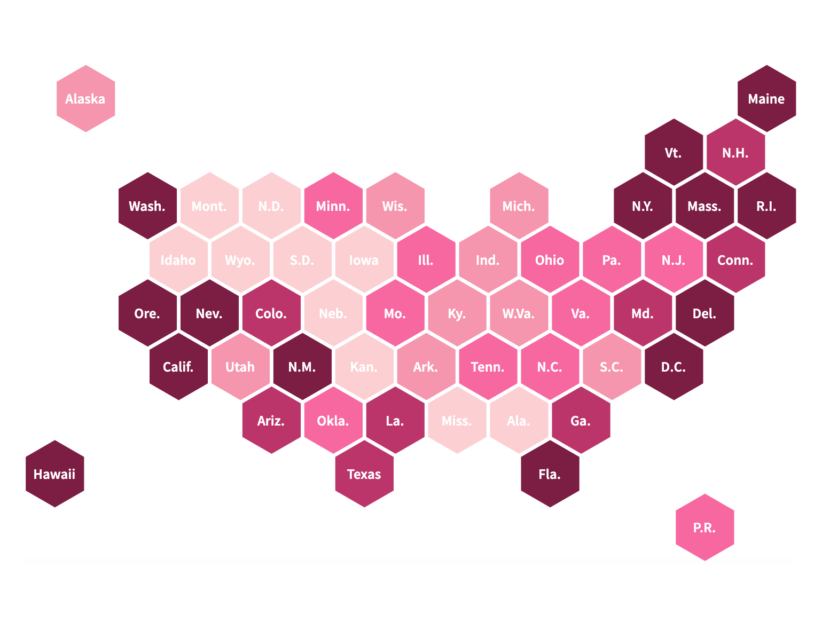
Source: U.S. Census Bureau, 2020 Census Demographic and Housing Characteristics File (Connie Hanzhang Jin/NPR)
States along the West Coast and in the Northeast have the highest shares of households with same-sex couples, according to the latest 2020 census results released Thursday.
The new numbers from the Census Bureau make up the most comprehensive statistics the federal government has produced to date about married and unmarried same-sex couples living together.
But many other LGBTQ+ people, including those who are not living with a partner or are in different-sex relationships, remain invisible in this key national dataset that’s used to determine political representation, enforce civil rights protections, inform research and policymaking, and guide an estimated $1.5 trillion a year in federal money for public services in local communities.
“A lot is tied to Census Bureau data,” says Kerith Conron, research director of the Williams Institute at the UCLA School of Law. “Being invisible in those systems or only sort of partially counted is, I think, problematic.”
Former President Donald Trump’s administration blocked efforts to get questions about sexual orientation and gender identity onto a Census Bureau survey that’s considered a testing ground for changes to the forms for the decennial national head count.
Now, the Biden administration has renewed that process as advocates for more official statistics about LGBTQ+ populations continue to grapple with long-standing data gaps that make it difficult to fully understand people’s needs amid rising anti-LGBTQ+ sentiment from right-wing groups.
Why are only same-sex couples who live together represented in 2020 census data about LGBTQ+ people?
While forms for the last U.S. census did include a question about a person’s sex with options for “male” and “female,” they did not ask about sexual orientation or gender identity.
The bureau, however, did provide checkboxes for a question about household relationships that allowed people to identify as a “same-sex” or “opposite-sex” spouse or unmarried partner. Those new response options were introduced to improve the agency’s data about same-sex couples, which the bureau first began collecting in 1990 by matching people’s responses about their sex and household relationship.
“At this point, less than 20% of LGBT people live in same-sex couple households,” Conron explains, based on the institute’s estimates. “That means we don’t know a lot about the 80% or more of LGBT people who have different-sex partners or aren’t living in a household with a partner. And that’s significant.”
For Josie Caballero, the lack of an opportunity to identify as a trans woman on the 2020 census was disappointing.
“If we’re not asking the question, if you’re trans or not, in these surveys, it is impossible for us to actually identify those disparities and make sure that funds and resources go to the communities that are desperately in need,” adds Caballero, who is the director of the U.S. Trans Survey and special projects for the National Center for Transgender Equality.
What is the Biden administration doing to get more comprehensive census data about LGBTQ+ people?
Late last year, the Justice Department sent a formal request to the Census Bureau for questions about sexual orientation and gender identity to be added to the bureau’s American Community Survey, which goes out to about 1 in 38 households every year, according to a recently released working paper by a bureau official.
“The request included citations of several statutes to justify the collection, including a need for data to properly enforce discrimination laws,” wrote Andrew Roberts, the chief of the agency’s sex and age statistics branch. Roberts also referenced a 2020 U.S. Supreme Court ruling that confirmed the Civil Rights Act of 1964 protects workers against discrimination based on their sexual orientation or gender identity.
Changes to the census questions are often tested first on experimental versions of the American Community Survey. The bureau — which has been asking about sexual orientation and gender identity on an experimental survey about how the COVID-19 pandemic is affecting households — is planning more experiments starting this year on how the American Community Survey can ask about these topics in English and Spanish after the administration requested $10 million for this research.
Are there privacy concerns related to using the census to collect more data, especially with more anti-LGBTQ+ sentiment from right-wing groups?
Federal law prohibits the federal government from releasing personally identifiable census records until 72 years after a head count’s Census Day, and it is illegal for the government to use census data against a person.
But the rise of anti-LGBTQ+ legislation and sentiment among right-wing politicians and other groups has underlined concerns about how census data can be misused and individuals can be re-identified in anonymized statistics, a risk the bureau has been trying to address through a new, controversial privacy protection system.
Protecting the confidentiality of people’s information, however, may be harder with AI and other advances in computing becoming more accessible to bad actors who may try to trace publicly available statistics back to an individual by cross-referencing different datasets, says Stephen Parry, a senior statistical consultant at Cornell University who has written about best practices for collecting gender and sex data.
“I do think that the question about privacy is important, but I also wonder whether people weight privacy as not being as important as it was in the past because they are so used to giving up their privacy and showing on social media facets of their lives that previous generations hadn’t,” Parry adds.
One of the guidelines for collecting data on sexual orientation and gender identity that the Biden administration has released is to allow survey participants to choose whether or not to respond to those kinds of questions and “make an informed decision about whether to provide this information based on its intended uses, potential risks, and their privacy preferences.”
“I think that people being given an opportunity to volunteer that information is important,” says Rebecca Moon, president of the Shoals Diversity Center, a nonprofit organization based in Florence, Ala., that offers mental health support for the LGBTQ+ community and supports increasing government data collection. “Not everyone is out, especially in the South. There’s a lot of LGBTQ hatred.”
Caballero of the National Center for Transgender Equality says it’s “a very scary time” for many transgender people living in the U.S. and not feeling comfortable reporting your gender identity to the government is “very valid.”
But, Caballero adds, those who do choose to be counted as transgender for the census, if given the chance one day, make it “easier for the next trans person to tell their story and say that they are here.”
“You can’t argue with the fact that hundreds of thousands of trans folks have been able to say in a quantitative, scientific way that we exist and this is what it looks like to live here,” Caballero says. “And if we did not have that data, it would be extremely difficult to prove that we deserve human rights.”
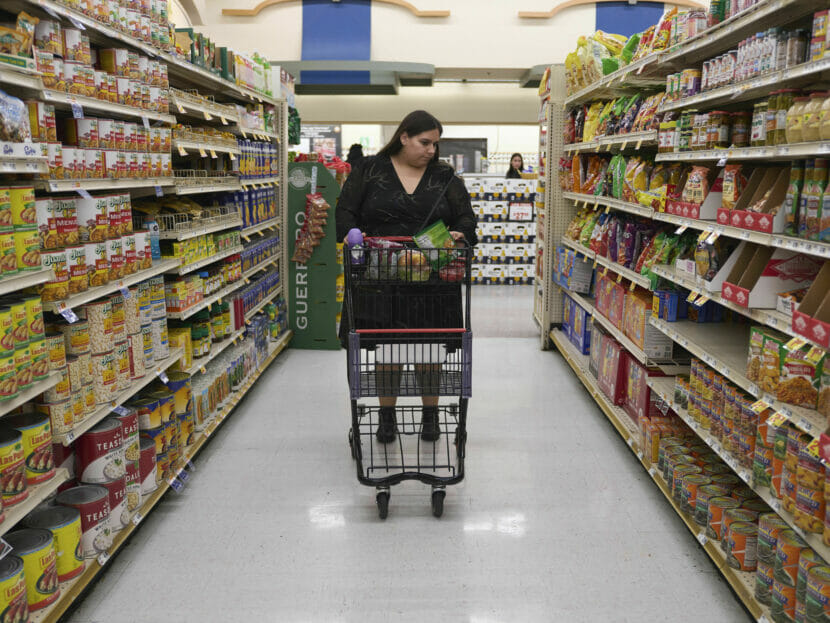
Preschool teacher Jaqueline Benitez depends on California’s Supplemental Nutrition Assistance Program (SNAP) to help pay for food. If the debt ceiling isn’t raised, SNAP and other federal payments would be delayed. (Allison Dinner/AP)
If the U.S. defaults on its debt, the fallout could be huge for Americans.
And not just for retirees who may not get Social Security payments on time, or military veterans who may have trouble accessing benefits, or federal employees and contractors who may see a lag in payments owed to them. The cost of borrowing money would soar, making it harder for everyone to buy homes, cars, or pay off credit card debts.
It could make things worse for families at a time when many are already under financial strain. Inflation remains high, and Americans have racked up almost $1 trillion in credit card debt. That’s up 17% from a year ago, according to the Federal Reserve Bank of New York.
The Treasury Department says Congress has until June 1 to raise the federal debt limit. With negotiations still going and time running out, here are some ways to prepare your finances for a worst-case debt default scenario.
Tried and true basics
“We’re advising people to prepare for a potential default as you would for an impending recession,” says Anna Helhoski of NerdWallet.
That means tamping down on excess spending, making a budget, and shoring up emergency savings to cover at least three months of living expenses.
Since a debt default would likely send interest rates soaring, any credit card debt you’re saddled with may soon cost you more. Personal finance experts advise paying off those debts with the highest interest rates as quickly as possible.
While tightening finances, you may find that keeping up with car payments or a home mortgage will become a struggle. Helhoski recommends reaching out to lenders early to discuss any options for lowering payments, adding that the U.S. Department of Housing and Urban Development has “housing counselors who can also help homeowners explore any alternatives to delinquency and anything that would have long lasting impacts on their credit.”
Don’t panic
The stock market will certainly take a hit if the U.S. defaults on its debt. At moments, the losses could seem significant to anyone with investments or retirement accounts.
But for those with diversified portfolios who aren’t nearing retirement, investment experts advise that you stay the course.
“Fight your worst instinct to act on the news,” says Teresa Ghilarducci, labor economist and retirement security expert at The New School. “All the academic research shows that if you buy and hold, you will do so much better than if you try to follow market trends, whether that be responding to an economic crisis or a recession.”
Historically, markets have roared back after major declines. Stocks rebounded following the Arab oil embargo in the 1970s, Black Monday in the ’80s, the dot-com bubble of the early aughts, and certainly the 2008 financial crisis, according to an analysis by MFS Investment Management of market recoveries dating back to the Great Depression.
Act fast, or postpone big purchases
If you’re in the market for a new car or home, what you can afford today may be well beyond reach in a matter of weeks. It may be wise to close that deal on a new car now. And make sure your interest rate is locked in, if you are working towards closing on a home.
Real estate website Zillow estimates mortgage rates could reach 8.4% in the event of a default, which would send a chill through a housing market already on ice thanks to the interest rate hikes of the last year.
“You’ll see a dramatic drop in buyers and when that happens, then you’re going to see property prices fall, a halt on different construction and home improvement projects,” says Artin Babayan, a home loan officer based in Los Angeles.
By some estimates, housing activity accounts for nearly a fifth of the U.S. economy. A stall in the real-estate market would reverberate, Babayan notes.
“I think it’ll really screw up the economy,” he adds.
Copyright 2023 NPR. To see more, visit https://www.npr.org.
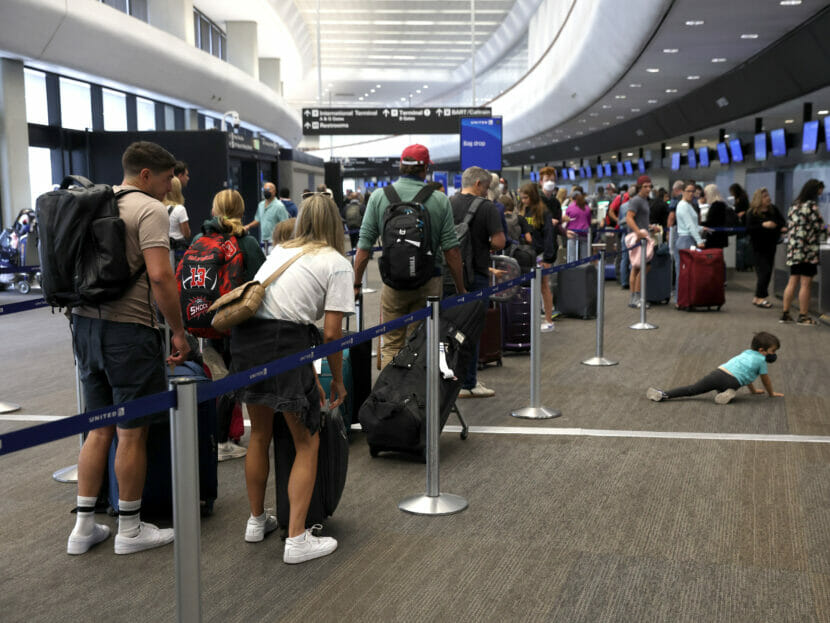
Travelers line up to check in for United Airlines flights at San Francisco International Airport on July 1, 2022 in San Francisco, Calif. This summer is expected to be a record for air travel. (Justin Sullivan/Getty Images)
Memorial Day weekend is upon us, kicking off the busy summer vacation season, and airlines are forecasting that this could be their busiest summer ever. Industry projections indicate that despite relatively high airfares, U.S. airlines could carry a record number of passengers this summer, even though they’re still operating fewer flights than before the pandemic.
The coming months are likely to be a “stress test” for a national aviation system plagued by recent staffing shortages, antiquated technology, air traffic control problems, scheduling issues and labor disputes.
After widespread flight delays and cancellations last year, consumer advocates and some within the travel industry worry air travelers could face similar disruptions that will mess up their summer travel plans again.
If you’re among those hoping to jet off to somewhere fun this summer, here’s what you can expect.
Long lines and packed planes starting this weekend
“This summer’s travel demand will be as strong as we’ve seen since before the pandemic and potentially the strongest ever,” says Geoff Freeman, president and CEO of the U.S. Travel Association, which represents airlines, hotels and other travel-related businesses.
The crush of travelers starts Memorial Day weekend, with AAA forecasting that about 3.4 million Americans will be flying this Thursday through Monday.
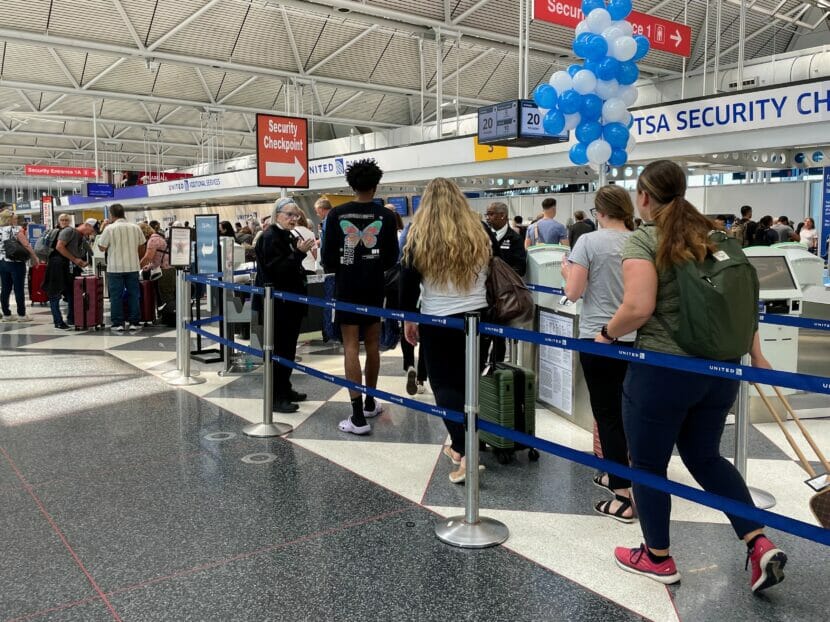
Travelers line up to get into the security checkpoint at Chicago’s O’Hare airport last summer. (David Schaper/NPR)
Including the numbers of commercial airline flights and those on smaller general aviation aircraft, there will be more than 313,000 flights over the seven-day holiday period from May 24 to May 30, according to the Federal Aviation Administration. While that is just below pre-pandemic 2019 levels, the airlines may actually be flying more people by using bigger planes than they normally would on many routes.
The FAA projects that this Thursday will be the busiest day of the Memorial Day weekend, with more than 51,000 flights forecast.
Among the commercial airlines, United is predicting this Memorial Day weekend will be its busiest in more than a decade. Delta expects a whopping 17% increase in passengers from last year.
“The airports are packed,” says Steve Solomon, chief commercial officer of the Airlines Reporting Corp., which processes and tracks airline ticket sales. “So travelers should prepare to get to the airport early, allow adequate time to get through security screening, through the TSA, and expect to see a lot of people on really full planes.”
Solomon says Europe is especially popular this summer, with huge increases in the number of airline tickets purchased for the top ten destinations across the Atlantic, even though prices are up significantly.
“Summer 2022 was pretty rocky”
If last summer is any indication, air travelers might be in for some turbulence before they get off the ground this summer.
“Things were very bad for air travelers last year. They were as bad as they’ve been in 25 years or more,” says Andre Delattre, national program director for PIRG, the Public Interest Research Group. The consumer advocacy group analyzed airline passenger complaints filed with the U.S. Department of Transportation.
“There were five times more complaints in 2022 compared to 2019 before the pandemic, even though fewer people were flying,” he says.
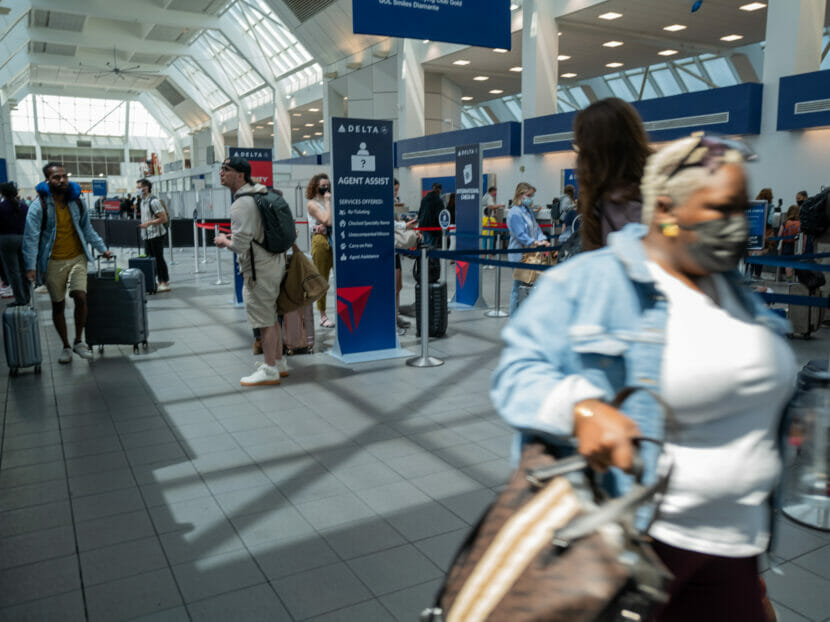
People travel through the terminal at John F. Kennedy Airport at the start of the Memorial Day weekend on May 27, 2022 in New York City. This coming Memorial Day is the start of a busy summer air travel season. (Spencer Platt/Getty Images)
Airlines delayed and canceled a staggering number of flights last year — more than 210,000 were canceled, according to the flight tracking firm FlightAware. “Other than the early months of the pandemic, that’s more canceled flights than any year since 2001, when, of course, 9/11 disrupted air travel,” Delattre says.
A recent Government Accountability Office investigation found that the sharp increase in airline flight disruptions in recent years was largely caused by factors within the airlines’ control, including maintenance issues, technology glitches and staffing problems.
Even though taxpayers shelled out $50 billion to keep airlines in business and pilots, flight attendants and other employees on the payrolls during the pandemic, airlines offered early retirements and other incentives for workers, including experienced flight crews and ground crews, to leave.
Then air travel demand returned much more quickly than airlines expected. Many tried to cash in with aggressive scheduling, but the staff was stretched too thin to meet that demand, especially during severe weather, which led flight crews to time out without fresh crew members to replace them. With planes and flight crews out of place and too few replacements available, it would take some airlines a week or more to get caught up from one series of thunderstorms.
Add to that a new pilot training backlog, and shortages of mechanics, maintenance workers, gate agents and customer service staff, along with technology glitches and outdated scheduling software at some airlines, and it all cascaded into several periods over the last year in which hundreds of thousands of would be travelers were stranded, the worst of which was over the Christmas holiday, when Southwest alone had to cancel 17,000 flights.
Airlines say they’re better prepared now
American and its rival airlines all say they’re much better prepared for this summer than last. They’ve all gone on a hiring spree, with passenger airlines adding nearly 4,500 employees just in March alone.
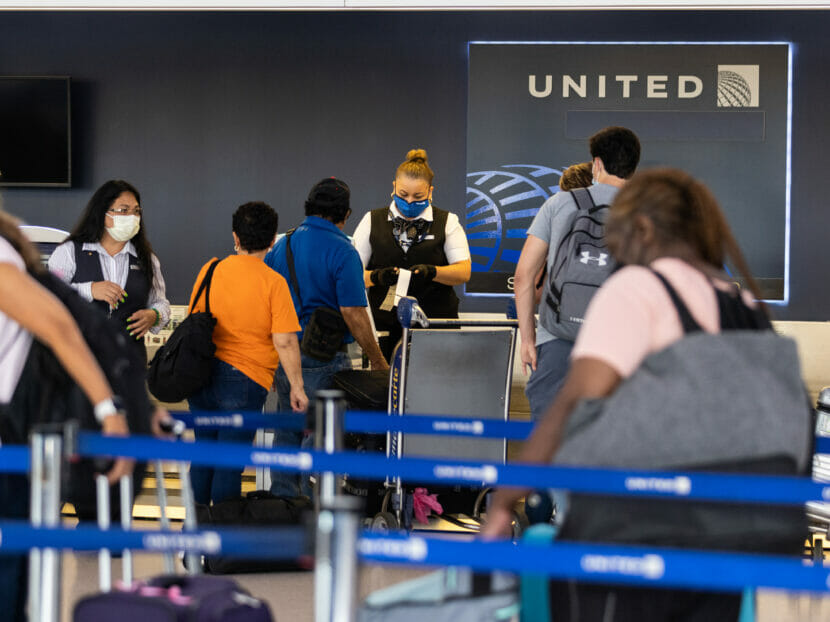
Travelers line up to check in for United Airlines flights at Newark Liberty International Airport on July 1, 2022 in Newark, N.J. Experts are predicting heavy travel this summer. (Jeenah Moon/Getty Images)
Most airlines handled the recent surge in spring break travelers relatively well, and the cancellation rate so far this year is down significantly from last year. According to the federal Bureau of Transportation Statistics, airlines canceled 1.7% of flights over the first three months of this year, far lower than the 2.7% flight cancellation rate for all of last year, and 4.1% for the first quarter of 2022.
“We are as prepared as we can possibly be,” says Nick Calio, president and CEO of Airlines for America, the lobbying group representing the nation’s biggest air carriers. “We’ve got a lot more employees. We have reduced our schedules and adjusted how we’re flying,” in an effort to minimize flight disruptions.
But many industry experts warn travelers to be prepared for significant flight delays and cancellations anyway, caused by things outside of the airlines’ control.
The FAA’s air traffic control issues
While the Biden administration is turning up the heat on the airlines to fulfill their obligations to passengers, the airlines are growing frustrated with the federal government’s own aviation shortcomings.
The FAA warns that a significant shortage of air traffic controllers overseeing the very congested New York area airspace could increase flight delays into and out of Newark, LaGuardia and JFK airports by 45% this summer.
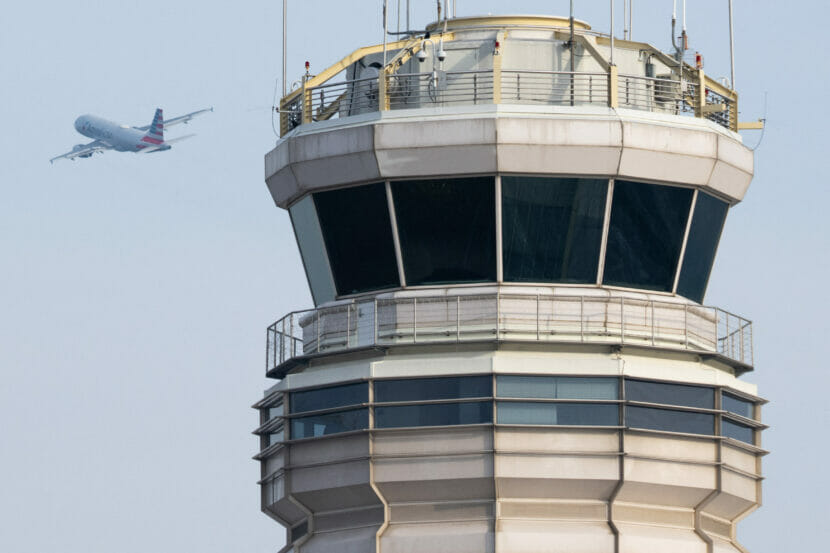
An American Airlines Airbus A319 airplane takes off past the air traffic control tower at Ronald Reagan Washington National Airport in Arlington, Va., in January. (Saul Loeb/AFP via Getty Images)
In addition, the chronically underfunded FAA is also struggling to replace outdated technology. The failure of a pilot notification system in January led the FAA to briefly halt all flight departures nationwide, causing thousands of flight delays and cancellations that day.
Meanwhile, Customs and Border Protection staffing shortages in many airports has led to hourslong waits for international travelers returning to the U.S. to get through customs.
Geoff Freeman of U.S. Travel puts the blame for many of these problems not on the airlines, but on Congress and the federal government.
“These problems have come out of years and years of underinvestment,” Freeman says. “If the government doesn’t act now, the headaches won’t just happen during peak travel season and holidays, it will become our daily reality.”
Summer air travel tips
Airline passengers who run into problems from flight disruptions to lost luggage this summer can find out more about their rights and the airlines’ responsibilities at the Department of Transportation’s Office of Aviation Consumer Protection. The site also links to a dashboard listing which airlines are willing to pay for meals, ground transportation, hotels and other expenses incurred because of significant delays and cancellations that are the airline’s fault. It also link to a site where consumers can file complaints.
Experts recommend booking flights earlier in the day as storms tend to develop later in the afternoon and evening. It’s also a good idea to check the weather forecast for your destination and any cities where you have a layover. The FAA has a site showing where severe weather may cause problems for air travelers each day.
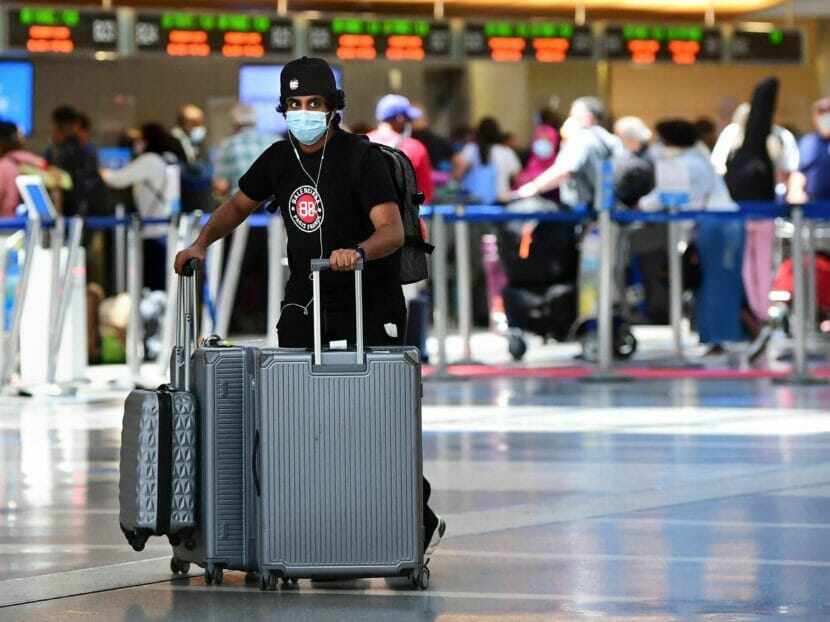
A man pushes his bags at Los Angeles International Airport (LAX) on May 27, 2021 in Los Angeles as people travel for Memorial Day weekend. The Department of Transportation has a website to assist travelers with knowing their rights. (Frederic J. Brown/AFP via Getty Images)
Use the airline’s app to track not just whether your flight is on time, but where the plane is coming from and if there are delays there. Book nonstop flights, if possible, so you don’t get stranded on a layover.
Travelers who are checking luggage should also be sure to pack an extra change of clothes or two and medications and other necessities in their carry-on bag, in case there’s a significant delay or cancellation after you’ve checked in.
The bottom line for those of us flying this summer is to plan ahead, prepare for the worst — and hope for the best.
Copyright 2023 NPR. To see more, visit https://www.npr.org.
Close
Update notification options
Subscribe to notifications
Subscribe
Get notifications about news related to the topics you care about. You can unsubscribe anytime.

9(MDEwMjQ0ODM1MDEzNDk4MTEzNjU3NTRhYg004))

9(MDEwMjQ0ODM1MDEzNDk4MTEzNjU3NTRhYg004))

9(MDEwMjQ0ODM1MDEzNDk4MTEzNjU3NTRhYg004))
9(MDEwMjQ0ODM1MDEzNDk4MTEzNjU3NTRhYg004))
9(MDEwMjQ0ODM1MDEzNDk4MTEzNjU3NTRhYg004))
9(MDEwMjQ0ODM1MDEzNDk4MTEzNjU3NTRhYg004))