Pew Charitable Trusts

Stalled effort to ban ‘bump stocks’ illustrates challenge of changing state gun laws

In the wake of the Las Vegas concert massacre last fall, lawmakers in at least 30 states introduced legislation to ban “bump stocks,” which convert semiautomatic guns into automatic weapons and which were used by the gunman.

Only two of the bills passed.

President Donald Trump this week said he’ll direct the Department of Justice to outlaw bump stocks nationwide.

But the lack of state action on a device that allowed one man to shoot more than 500 people in a quarter-hour serves as a cautionary tale for those who think the latest tragedy — the killing of 17 at a high school in Florida — might finally prompt states to enact tougher gun laws.

In fact, the Florida House voted not to move ahead on a proposed ban on assault-style weapons just days after the school shooting with an AR-15 – as tearful students from the school looked on from the House gallery.

As Congress continues to resist taking action to restrict firearms – and the National Rifle Association suggests arming more teachers as an answer — some are looking to state legislatures for change. This week, high school students and others in Florida, Georgia, Colorado and North Carolina marched on state capitols to demand more restrictions.

Daniel Webster, director of the Johns Hopkins Center for Gun Policy and Research, said he expects that states will take some action on firearms, perhaps pairing some tighter gun regulations with other measures that make it easier to own a weapon.

Following the 2012 Sandy Hook Elementary School shooting, for example, the state of Oregon closed the gun-show loophole that allowed people to buy guns in private sales or at gun shows without background checks. But it also made it easier for people with concealed-carry permits for guns to prove they have the right to carry them.

“Politicians make deals,” Webster said. “They are appealing to fear. One group feels more comfortable with more regulations and the other feels more comfortable with a gun at their side. I suspect something like that will happen in Florida.”

After the Florida high school shooting, areas of possible action include increasing the age at which residents are allowed to buy semi-automatic weapons and tightening restrictions on gun ownership for those with mental health issues.

But the bump-stock debate over the past few months illustrates how difficult it will be for gun-control advocates to enact other changes state by state. The challenge goes beyond the National Rifle Association, which is among the top outside-money spenders on the federal level and wields significant influence in statehouses. In each state, gun control supporters must navigate labyrinths of special interests, geography and partisan politics in order to succeed.

That was the case in Massachusetts and New Jersey – two Northern, relatively liberal states with Republican governors but Democratic legislatures – that approved bump-stock bans late last year. Outgoing New Jersey Gov. Chris Christie, a Republican, signed the legislation just before he left office, without comment.

In Massachusetts, Gov. Charlie Baker, also a Republican, allowed his lieutenant governor, Karyn Polito, to sign the bill, also with no comment.  The governor’s office later issued a statement that the two leaders support the “Second Amendment to the Constitution and Massachusetts’ strict gun laws.”

Advocates for the bump-stock bans were successful in those two states because the NRA is not particularly strong in either one, said Adam Winkler, author of “Gunfight: The Battle Over the Right to Bear Arms in America,” and a law professor at the University of California at Los Angeles. And, in the case of New Jersey, Christie had nothing to fear from the gun lobby because he was on his way out.

The strength of the NRA and other gun groups, Winkler said, is that its supporters vote on guns as a single issue and turn out to vote. The gun-control community, by contrast, is not as single-minded, he said. He and others suggested that might be changing with the grass-roots movements that are developing after the Florida high school shooting.

“The student involvement is remarkable,” said Kristin Goss, a Duke University professor of public policy and author of “Disarmed: The Missing Movement for Gun Control in America.”

“Their involvement at critical-mass levels,” she said, “and their formal incorporation into national gun control organizations, is probably the most significant development on the pro-regulation side that I’ve seen since I began studying this issue two decades ago.”

Days after high school students demonstrated in his state, Republican Gov. Bill Haslam told Stateline early Friday that he would support a ban on bump stocks. There’s such a bill pending in his state legislature.

Still, political analyst Larry Sabato, director of the University of Virginia Center for Politics, said recent mobilization of high school students is important — but not game-changing — because of the political entrenchment regarding guns.

“The parties are in their foxholes on so many issues, and this is a basic issue,” he said. “People think Republicans will be crawling out of their foxholes, and making their way across the DMZ to visit the Democrats. It’s not going to happen.”

In Virginia, for example, a House subcommittee in late January defeated a bump-stock ban, along with several other gun-control bills, on a party line 4-2 vote with Republicans in the majority, despite testimony from a state resident who had survived October’s Las Vegas shooting.

The subcommittee chairman, Republican Del. Thomas Wright of Amelia County, said that while he was sympathetic to the survivor, he did not think banning bump stocks was the answer.

“Until the evil in people’s hearts changes, the laws we pass cannot fix that,” he told a local news outlet.

Ari Freilich, staff attorney at the Giffords Law Center to Prevent Gun Violence, suggested that Trump’s support for a ban on bump stocks would be “helpful” but not necessarily enough in the states.

A bump-stock ban passed in the Washington state Senate, but it may not pass the House, where opponents argue it amounts to a path to “gun seizure.” Proposed bump-stock bans failed in Mississippi and New Mexico, states with high rates of gun ownership, according to a 2015 analysis published in the journal Injury Prevention. They already were illegal in California before the Las Vegas massacre.

Other states weighing bump-stock bans include Colorado, Connecticut, Delaware, Georgia, Hawaii, Idaho, Illinois, Indiana, Kansas, Maryland, Minnesota, Nebraska, New Hampshire, Ohio, Pennsylvania, Rhode Island, South Carolina and Wisconsin.

Consider Georgia, where Democratic Rep. Mary Margaret Oliver introduced a bill last fall to ban bump stocks. The bill is still pending. Gun regulation supporters marched on the Georgia capitol in recent days, but the outlook for stiffer regulation there is still bleak.

Jerry Henry, executive director of Georgia Carry, the predominant gun-rights group in the state, said he does not believe that there will be changes to gun laws this year.  Henry said group members work to contact every state representative and senator each year to push their issue, demonstrating their single-minded commitment. Henry said they are less about giving money and more about personal contacts, reminding lawmakers of their presence.

Notably, the Pew Research Center (the Pew Charitable Trusts also funds Stateline) found last year that about 21 percent of gun owners have contacted a public official about gun policy, while just 12 percent of non-gun owners have.

“We do represent people who strongly believe in the Second Amendment,” Henry said. “If you start giving up one right, even a portion of a right, you will eventually lose all of them.”

Florida has some of the most lax gun laws in the nation, and legislators resisted efforts to tighten them after earlier shooting tragedies, including the massacre at an Orlando nightclub in 2016. The only laws Florida has passed recently are ones to expand concealed-carry rights or further loosen gun regulations.

Nevertheless, after high school students demonstrated and met with lawmakers in the past few days, the Florida House and Senate are readying a package of gun bills.

Those efforts include raising the minimum age to obtain and buy assault-style rifles from 18 to 21, providing more mental health counselors and security at schools, and enacting a waiting period for semi-automatic weapons purchases.

A bump-stock bill is also pending in the Florida Legislature, but lawmakers have not acted on it.

Overdose deaths fall in 14 states — including Alaska

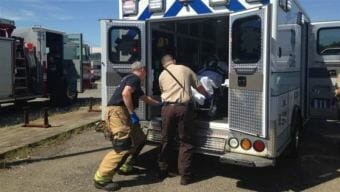
A woman is loaded into an ambulance in Huntington, West Virginia, following an opioid overdose rescue. Experts say a decline in overdose deaths in 14 states is due in part to increased use of the overdose antidote naloxone. (Photo by Pew Charitable Trusts)

New provisional data released this month by the Centers for Disease Control and Prevention shows that drug overdose deaths declined in 14 states during the 12-month period that ended July 2017, a potentially hopeful sign that policies aimed at curbing the death toll may be working.
In an opioid epidemic that began in the late 1990s, drug deaths have been climbing steadily every year, in nearly every state. A break in that trend, even if limited to just 14 states, has prompted cautious optimism among some public health experts.

“It could be welcome news,” said Caleb Alexander, an epidemiologist and co-director of Johns Hopkins University’s Center for Drug Safety and Effectiveness.

“If we’re truly at a plateau or inflection point, it would be the best news all year,” he said. “But we’re still seeing rates of overdose that are leaps and bounds higher than what we were seeing a decade ago and far beyond any other country in the world.”

The reported drop in overdose deaths occurred in Wyoming, Utah, Washington, Alaska, Montana, Mississippi, Kansas, Rhode Island, Oregon, California, Tennessee, Massachusetts, Arizona and Hawaii. That compares with declines in only three states — Nebraska, Washington and Wyoming — reported for an earlier 12-month period that ended in January 2017.

But even as more states saw a drop in deaths, several saw death spikes of more than 30 percent, most likely due to the increasing presence of the deadly synthetic drug fentanyl in the illicit drug supply, drug experts say. Those are Delaware, Florida, New Jersey, Ohio and Pennsylvania, along with the District of Columbia.

Published monthly since August, the new CDC statistics are a compilation of death certificate data from all 50 states for a rolling 12-month period ending seven months prior to release of each report. The seven-month delay is roughly the amount of time it takes for states to complete death investigations and report causes of death, and for the CDC to compile the data.

Previously, the CDC only made death data available once a year and it was 12 to 14 months behind. In a fast-moving opioid scourge, epidemiologists say the increased frequency of overdose death reporting is a welcome improvement.

Farida Ahmad, a public health expert with the CDC, cautioned that the monthly provisional death numbers are subject to change because as many as 2 percent of death certificates for the time period have not been reported. A final death count for 2017 will not be available until November, she said.

Increased Volatility

In Alaska, where deaths declined more than 11 percent between the 12-month period ending July 2016 and the 12-month period ending July 2017, the state’s public health chief, Jay Butler, said the trend has been cause for some optimism.

The greatest portion of that decline was in prescription opioids, drugs such as OxyContin, Percocet and Vicodin, Butler said.

“And we may be seeing a plateauing, if not a decline, in overdose deaths from heroin,” he added. “The bad news is that we’re seeing more deaths from fentanyl.”

Indeed, fentanyl-related deaths spiked more than 70 percent nationwide in the 12-month period ending July 2017, according to the report.

“Using illicit drugs has always been a game of roulette,” Butler said. “There’s just more bullets in the chamber now.

“When the epidemic was driven primarily by prescription opioids, we saw a smoldering and chronically escalating problem,” he said. “Now we’re seeing outbreaks and clusters of death resulting from bad batches of heroin or counterfeit pills laced with fentanyl.”

Still Rising

The recent drop in opioid deaths in some states might be significant, experts say, but they caution it should be seen in the context of the worst drug death epidemic in U.S. history.

In 2016, the annual overdose death count reached nearly 64,000, more than three times as many as in 1999. It surpassed the number of fatalities from automobile crashes and homicides, becoming the No. 1 cause of death among Americans 50 and younger.

Aside from the 14 states seeing declines, there are few signs of relief ahead.

Nationwide, the death toll is still rising, although possibly at a lower rate than in the past two years. According to the CDC’s current provisional report, the total number of overdose deaths increased 14 percent in the 12-month period ending in July 2017, compared to a 21 percent increase in the 12- month period that ended in January 2017.

One reason could be a decline in the availability of prescription painkillers. Even as overdose deaths spiraled over the last five years, the rate of prescribed opioid consumption began to decline.

That could mean lower rates of heroin use, addiction and overdose deaths in the future, Alexander said. A vast majority — 86 percent — of young, urban injection drug users started misusing prescription opioids before turning to heroin, according to surveys by the National Institute on Drug Abuse.

Another likely reason for a tapering in death counts is the widespread use of the overdose antidote naloxone, public health experts say.

“It’s hard to imagine how high the death toll would be without naloxone,” said Michael Kilkenny, the Cabell-Huntington public health director in West Virginia.

“It’s a little too soon to tell,” he said, “but we may be seeing the beginning of a decline in the number of deaths in Huntington,” a small city that has the highest overdose death rate in West Virginia, the state with the highest overdose death rate in the country.

How voters with disabilities are blocked from the ballot box

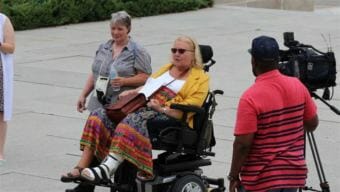
Kathy Hoell, second from left, joins another activist to advocate for disability rights at the state Capitol in Lincoln. Hoell helped Nebraska become a nationwide leader in voter access for people with disabilities. (Photo courtesy Kathy Hoell)

For decades, Kathy Hoell has struggled to vote.

Poll workers have told the 62-year-old Nebraskan, who uses a powered wheelchair and has a brain injury that causes her to speak in a strained and raspy voice, that she isn’t smart enough to cast a ballot.

They have led her to stairs she couldn’t climb and prevented her from using an accessible voting machine because they hadn’t powered it on.

“Basically,” Hoell said, “I’m a second-class citizen.”

The barriers Hoell has faced are not unusual for the more than 35 million voting-age Americans with disabilities.

As many jurisdictions return to paper ballots to address cybersecurity concerns — nearly half of Americans now vote on paper ballots, counted digitally or by optical scanners — such obstacles are likely to get worse.

Many people with disabilities cannot mark paper ballots without assistance, so they rely on special voting machines that are equipped with earphones and other modifications.
But the return to paper ballots has made poll workers less comfortable with operating machine-based systems, said Michelle Bishop, a voting rights advocate for the National Disability Rights Network.

Under increasing pressure to oversee a smooth, secure election, untrained poll workers have discouraged the use of accessible voting machines, leaving voters with disabilities behind.

It’s a constant complaint from voters with disabilities nationwide, Bishop said. In the last election, for example, a voter called her to report that a machine was placed in the corner, turned off, with a flower wreath hung on it.

“The message is: You’re not wanted here,” Bishop said. “We get reports of poll workers discouraging their use. They say, ‘I haven’t been well trained,’ ‘It’s intimidating to me,’ ‘We’ll set it to the side and get through Election Day.’ ”

Indeed, according to an October study by the Government Accountability Office, nearly two-thirds of the 137 polling places inspected on Election Day 2016 had at least one impediment to people with disabilities. In the 2008 presidential election, it was fewer than half. The GAO also reported that state inspections of voting accessibility had fallen nationally over the same time.

Among the infractions: The accessible voting machine wasn’t set up and powered on, the earphones weren’t functioning, the voting system wasn’t wheelchair-accessible, or the voting system didn’t provide the same privacy as standard voting stations.

Lack of access to proper voting machines, among several other issues, has led to a decline in participation, according to a survey of voters in the 2016 election by Rutgers University. Voter participation among people with disabilities has gone down over the past two presidential elections — from 57.3 percent in 2008 to 56.8 percent in 2012 and 55.9 percent in 2016.

Among non-disabled Americans, voter participation also dropped between 2008 and 2012 — from 64.5 to 62.5 percent, according to the Rutgers survey. But that percentage changed little from 2012 to 2016.

The Rutgers study also notes that many polling places have physical barriers, such as steep ramps and poor path surfaces, which block people with disabilities from voting. Political parties don’t target “get out the vote” efforts to people with disabilities and many of them struggle to find transportation to polling places.

Other factors that contribute to the problem — such as a lack of training for poll workers, limited access to registration materials, and insufficient resources for election officials — were laid out in a September 2016 white paper from the Ruderman Family Foundation, a disability rights advocacy organization.

The proliferation of voter ID laws may compound the problem, since people with disabilities are less likely to drive and to carry a photo ID.

“We’re segregating in the way we vote,” Bishop said. “Separate is not equal. That’s a lesson this country should have already learned by now.”

Barriers to Voting

In few places is this gap more visible than in West Virginia — a state with the highest percentage of people with disabilities, according to the U.S. Census Bureau, and one of the worst voter participation rates for people with disabilities.

Just 46 percent of West Virginians with disabilities who were eligible to vote participated in the 2016 election, worse than any other state but Kentucky, at 42.5 percent, according to the Rutgers researchers. Gina Desmond, an advocate for Disability Rights of West Virginia, said the lack of access has led many people with disabilities to question their role in the democratic process.

“It’s surprising how many people don’t think they have the right to vote,” Desmond said.

In a predominantly rural and mountainous state, transportation options are limited, said Susan Given, the executive director of Disability Rights of West Virginia. Polling places in the state’s 55 counties are spread out and often located in outdated buildings that aren’t accessible to people with disabilities.

People with disabilities who can’t get into polling places often have to vote curbside with assistance from a poll worker, Given said, robbing the voter of a private and independent ballot.

The organization also gets complaints that machines for voters with disabilities often don’t work or are turned off, following a similar national pattern.

Recently, Disability Rights of West Virginia hired an advocate who will visit polling places this year to see whether they are accessible. The organization also holds outreach events at high schools, psychiatric hospitals, homeless shelters and service providers to explain the voting rights of people with disabilities.

Voter participation among West Virginians with disabilities did go up by 3 percentage points since the 2012 election. But, Desmond said, the state has a long way to go.

Success in Colorado

In Colorado, where 69 percent of registered voters with disabilities voted in 2016 — among the highest rates in the country — advocates and state officials have taken numerous steps to make voting accessible, according to Jennifer Levin, a senior attorney at Disability Law Colorado.

In the decade following the passage of the 2002 Help America Vote Act, or HAVA, Disability Law Colorado went to all 64 counties in the state, met with clerks, checked for accessibility barriers, and used state funding to help polling places meet federal HAVA and Americans with Disabilities Act standards. (Nationwide, physical barriers to voting places have steadily dropped since 2000, according to the GAO.)

Now after every election, the secretary of state releases a county-by-county audit on whether localities are meeting standards for accessible polling places. After the 2016 election, for example, Denver satisfied a majority of disability access criteria, while El Paso County, home to Colorado Springs, met every one. Because of this enforcement, Levin said, accessibility shortcomings in the state are rare.

In 2015, her organization again partnered with the secretary of state’s office to test five new voting machines. After collecting data, officials settled on one machine that every county will use for voters with disabilities. Now, voters can choose to use a paper ballot or an accessible machine ballot.

The state’s adoption of vote-by-mail and automatic voter registration for all voters also has made it easier for people with disabilities to cast their ballots.

Other states have taken similar measures. Before the 2016 election, New Hampshire adopted a new tablet-based voting system for the blind, while Rhode Island recently became the ninth state to enact automatic voter registration — which eliminates the need for people with disabilities to submit paper forms that are not accessible to them.

Levin finds poll workers are still afraid of new technology. “We get complaints where a person walks in and asks to use the machine, and a worker says, ‘It doesn’t look like you need it,’ ” Levin said. “They were discouraged and intimidated by it.”

City officials in Washington, D.C., said they had poll workers ask every voter whether they want to use a paper ballot or a machine, taking away any excuse for unplugged machines or untrained workers. But several polling places still fall short, according to a 2016 survey by Disability Rights DC at University Legal Services, a nonprofit advocacy organization.

Some states are trying to bridge the access gap through legislation. In New York state, where the voter participation rate among people with disabilities is 48.8 percent, Senate Democrats in January introduced 13 voter-focused pieces of legislation. One bill would redesign paper ballots to be more readable. Another, written by state Sen. Michael Gianaris, would allow the distribution of voter registration forms at offices that provide services to people with disabilities, while also allowing voters to change their precinct to one whose voting systems are more accessible.

“We’re looking for ways to make voting easier at a time when people are trying to make voting harder,” said Gianaris, a Queens Democrat. “Our record for voter participation is abysmal. The fight we’re having right now is to open up the process.”

Hoell, now the executive director of Nebraska’s independent living council, which advocates for independent living among people with disabilities, said she was tired of facing obstacles.

“Part of my way of dealing with these things is I just go to the top and start yelling,” Hoell said. After HAVA was enacted, Hoell went to John Gale, Nebraska’s secretary of state, to persuade him to invest in accessible voting machines, better train poll workers, and make polling stations compliant with federal disabilities regulations.

In the years since, she said, his office has found ways to include people with disabilities in the voting process.

As a result, according to the Rutgers study, Nebraska has the highest voter participation rate among persons with disabilities in the country, at more than 70 percent.

As Trump attacks the federal health law, some states try to shore it up

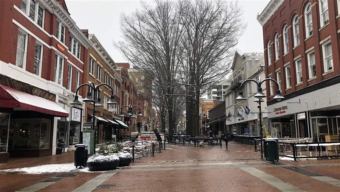
Charlottesville, Virginia, has the highest health insurance premiums in the country for individuals who do not qualify for federal subsidies and are not enrolled in employer-sponsored insurance. Market uncertainty, spurred by White House efforts to chip away at the Affordable Care Act, has resulted in heftier premiums nationwide. Some states are trying to mitigate further hikes. (Photo by Christine Vestal, The Pew Charitable Trusts)

CHARLOTTESVILLE, Va. — Repeatedly rated one of the healthiest and happiest places to live in the United States, this medium-sized college town with spectacular views of the Blue Ridge Mountains tends to attract entrepreneurs, freelancers and creative types who can live anywhere they want because they’re not tied to a corporate job.

But this year, many of those untethered workers may be wishing they lived anywhere but here. Residents of Charlottesville and three surrounding counties who buy health insurance without employer support or government subsidies have been hit with the highest health insurance premiums in the country — more than three times the price they paid last year.

Premiums are also substantially higher than average, although not as high as in Charlottesville, in southwestern rural Georgia, certain Colorado ski resort towns, the Connecticut suburbs of New York City, and large parts of Wisconsin and Wyoming, among other places.

Charlottesville’s premium spike may be an anomaly. But insurance experts say it could be an indication of what might happen in other parts of the country next fall, when insurers post their final rates for 2019.

Nationwide, premiums for average-priced policies — according to a Kaiser Family Foundation analysis — offered on and off the health insurance exchanges created under the Affordable Care Act rose by more than a third compared with 2017. The biggest statewide hikes were in Iowa (88 percent), Utah (78 percent), New Hampshire (78 percent), Wyoming (72 percent), and Virginia (66 percent).
The underlying cause of the rate hikes is clear: efforts last year by the Trump administration and its allies in Congress to dismantle the Affordable Care Act — and promises of further attempts in the year ahead.

“It all added up to chaos and uncertainty in the insurance market,” said Sabrina Corlette, a Georgetown University research professor and insurance expert. “And uncertainty always leads to higher premiums.”

This year, a handful of Democratic-led states are gearing up to curb further rate hikes by enacting laws and adopting insurance regulations designed to shore up the traditional insurance industry and restore parts of the ACA, known as Obamacare.

At the same time, at least one Republican-leaning state has moved to further unravel the federal health law by encouraging insurance companies to offer cheap policies with fewer benefits. Others are expected to follow.

Both red and blue states are reacting to a series of federal actions.

The federal tax overhaul enacted in December repealed the individual mandate, which required everybody to have health insurance or pay a financial penalty. The requirement was designed to ensure that healthy people signed up for insurance so that premiums for everyone remained affordable.

Two months earlier, President Donald Trump withdrew billions in federal insurance industry subsidies that allowed insurers to keep premiums affordable while holding down copays and deductibles.

Around the same time, Trump also cut the health exchange enrollment period in half. And earlier in the year, he slashed the marketing budget for federal exchanges to further damage the health law by curtailing enrollment.

This year, both branches of government promise further attacks on the health law, including final actions on two administration proposals. One would encourage insurers to offer short-term policies with variable copays and deductibles, and the other would allow people to form groups to create so-called association health plans with cheap premiums and limited benefits.

Known for its scenic views of the Blue Ridge Mountains and the Shenandoah National Park, Albemarle County, Virginia, which includes Charlottesville, has the highest health insurance rates in the country for residents who earn too much to qualify for federal subsidies. Virginia and other states are considering measures to protect consumers from unreasonably high health insurance rates. (Photo by Christine Vestal, The Pew Charitable Trusts)

States Respond

In Idaho, Republican Gov. Butch Otter followed the administration’s cues, signing an executive order this month that directs the state insurance agency to draft rules allowing insurance companies to offer cheap plans with stripped-down benefits.

Going in the opposite direction, California, Connecticut, the District of Columbia and Maryland are considering legislation that would recreate the Affordable Care Act’s individual mandate by requiring nearly all residents to enroll in a health plan or pay a fee. Massachusetts has a mandate on the books that it said it intends to enforce.

Taking a different tack — one that has been endorsed by members of both political parties — Alaska, Minnesota and Oregon have created so-called reinsurance programs designed to cover higher-than-average claims with state money and thereby reduce overall risk for insurance companies so they can offer consumers lower premiums.

Under the health law, the federal government can reimburse states for any money spent on reinsurance programs that results in lower premiums, and thus reduced federal tax subsidies, as long as the reimbursements do not exceed federal savings. Washington state and Wisconsin are considering similar programs this year.

In New Jersey, newly elected Democratic Gov. Phil Murphy signed an executive order this month directing state agencies to invest in greater outreach and education to encourage more people to sign up for coverage on the state insurance exchange when it opens in November. California and New York launched similar advertising and marketing campaigns last year for the same reason.

By encouraging more people to enroll, states can improve the odds that their insurance markets will stabilize and premiums will remain affordable.

“Consumers are still confused about health insurance subsidies, and they’re hearing a lot of bad news about the ACA,” said Sarah Lueck, an insurance analyst at the left-leaning Center on Budget and Policy Priorities. “States need to tell consumers that the market isn’t crumbling, because it’s not. There are still some really good deals out there.”

It’s too early to know how many other states will move this year to fill the policy gaps in the tattered Affordable Care Act. But consumer advocates are urging lawmakers and governors to act sooner rather than later.

“States need to prepare now if their initiatives are going to have the desired effect,” Lueck said. If states want to stabilize the insurance industry by establishing individual mandates or reinsurance programs, they need to have their policies in place before spring and summer, when companies are required to file preliminary rates for 2019, she said.

For states that want to follow New Jersey’s lead and beef up outreach and marketing for their insurance exchanges this year, there’s a little more time. Insurance exchange marketing typically doesn’t start until September, two months prior to open enrollment in November.

But there’s another approach states can take at any time to protect their traditional insurance markets from the continued uncertainty created by attacks on the ACA from Congress and the Trump administration.

Once federal agencies finalize rules allowing cheaper, substandard health policies, states can prohibit those policies from being sold within their borders unless they comply with ACA consumer protections, according to a recent article by a group of consumer advocates in the policy journal Health Affairs.

New Jersey and New York already have such prohibitions, and Minnesota allows non-complying health plans to be sold only under limited circumstances.

Unsubsidized Consumers

Before the Affordable Care Act took effect in 2014, people who were self-employed, between jobs or working part time and were not offered employer-sponsored health plans typically had to pay the highest prices for health coverage because insurers considered the relatively small pool of individuals riskier than larger groups.

Many people who faced high-priced individual insurance policies took their chances and went without coverage. Others opted for cheaper plans with high out-of-pocket expenses and limited benefits.

For this group, the ACA’s consumer protections were a huge boon. Confident they could find affordable health insurance, many workers were able to strike out on their own for the first time.

Insurers were prohibited from refusing coverage to people with pre-existing conditions or charging people higher premiums because of their medical history. And although individual market premiums still tended to be higher than group plans, rates and coverage improved in the first four years after the federal health law took effect.

But last year’s revisions to the law may have changed all that.

As a result, many states can be expected to take action this year to protect this group of consumers from unreasonably high insurance premiums, said Timothy Jost, a retired law professor at Washington and Lee University in Virginia and an ACA expert. They will either be propping up the ACA and the traditional health insurance market, or further undermining the federal health law by promoting cheaper, lower quality policies, he said.

The result, he said, will be even greater disparities than already exist between states in the number of people who can afford quality health care coverage.

In fact, the Trump administration’s tactics are likely to bolster the overall proportion of Americans enrolled in Medicaid and federally subsidized exchange policies, said Joel Ario, a health care analyst with the law firm Manatt, Phelps and Phillips who worked in the Obama administration. That’s because the policies will remain affordable and people will enroll in them even without the coercion of the individual mandate, he said.

Sara Stovall, Karl Quist and Ian Dixon at Stovall’s kitchen table in Charlottesville, Virginia. On behalf of 700 other residents, they’re gathering data to convince state regulators that the health insurance premiums in their community are unjustified. (Photo by Christine Vestal, The Pew Charitable Trusts)

Left out will be people not covered by employer-sponsored insurance and with incomes too high to qualify for Medicaid or federal exchange subsidies. Nationwide, about 22 million people purchase insurance in the individual market, according to Kaiser. About 43 percent of them have incomes too high to qualify for federal tax subsidies on the exchange.

Charlottesville resident Sara Stovall is among them. She, and fellow residents Ian Dixon and Karl Quist, have hired an attorney to represent them and a group of more than 700 other locals who in November were hit with exorbitant premiums. They’re arguing in a case before the Virginia Insurance Bureau that the rates filed by Optima Health — a Virginia-based insurance carrier and the sole remaining provider of health coverage in their area — violated federal law.

But even if they win the case and the state orders Optima to issue refunds, they and the others in their group won’t personally benefit. The money would go to a regional insurance pool and ultimately would be deducted from future premiums for all policies.

Stovall, Dixon and Quist, all of whom had incomes just above the federal limit, could not afford their 2018 insurance premiums, roughly $3,000 a month for a family of four. Stovall, whose husband’s freelance photography business is growing, said their premiums would have been more than their mortgage payment.

Dixon, a self-employed software developer, said he and his family moved from Washington, D.C., to Charlottesville two-and-a-half years ago, when he quit his day job. “I heard there was a good startup community here,” he said. “But if individual insurance rates had spiked that year like they did this year, we never would have come here.”

Distracted dogging: Legal in most states, controversial in all

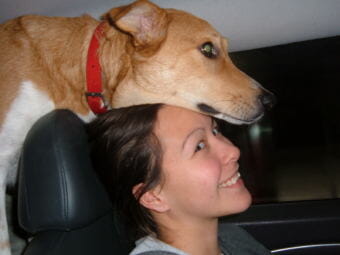
While traffic safety experts say a dog moving freely in a car can be dangerous for the driver, passengers, other motorists and the pet, it’s perfectly legal in most states. (Photo by Emmett Unlimetted/Flickr)

Those happy dogs sitting in a driver’s lap or hanging their heads out the car window may look like the model of canine companionship. But they’re also potential projectiles, poised to rocket through the air if there’s a crash.
“A 10-pound dog can turn into 300 pounds of force at 30 miles an hour,” said Richard Romer, AAA’s state relations manager. “Going on a trip with Fido can really turn fatal if it’s not restrained.”

But while traffic safety experts say a dog moving freely in a car can be dangerous for the driver, passengers, other motorists and the pet, it’s perfectly legal in most states.

Hawaii is the only state that specifically prohibits drivers from holding an animal in their lap or allowing one in their immediate area if it interferes with their ability to control the car, according to AAA.

In at least three states — Nevada, New Jersey and Washington — animal cruelty laws that make it illegal to improperly transport an animal could apply to driving with an unrestrained pet, but Romer said they are likely to be enforced only in egregious situations.

Washington and at least seven other states and the District of Columbia have comprehensive distracted driving laws that generally prohibit careless driving or tasks not associated with operating the vehicle, and interacting with a pet might be considered a distraction, Romer said.

D.C.’s law is the only one that specifically mentions pet interactions in its definition of distracted driving.

But passing laws specifically to forbid furry friends from sitting in drivers’ laps is another matter. In the past five years, nearly a dozen states have considered such bills, but none has become law, according to the National Conference of State Legislatures.

In California, the Legislature passed a measure in 2008. It was vetoed by then-Gov. Arnold Schwarzenegger, a Republican, who said the bill wasn’t a priority.

This year, at least five states — Indiana, Maine, North Carolina, Oregon and Pennsylvania — considered such bills.

Four either died or were withdrawn by sponsors; the Pennsylvania measure is pending.

In November, a Michigan state legislator filed a similar bill for the 2018 session.

State legislators who have sponsored bills to ban animals in laps or require them to be restrained in cars often have been met with howls from pet owners.

“The public outcry was unreal,” said North Carolina state Rep. Garland Pierce, a Democrat who filed a bill in February that would have imposed a $100 fine for driving with an animal in your lap. Facing a deluge of complaints from angry dog owners, he withdrew the bill just a week later.

“I got ridiculed. I got beat up bad,” said Pierce, who previously sponsored a successful bill to ban texting while driving. “I saw this as a highway safety issue. I had no idea that I was opening a can of worms.”

Pennsylvania Democratic state Rep. Angel Cruz, who is sponsoring a bill to ban pets in drivers’ laps, said he has tried to get the measure passed in previous sessions but it hasn’t gotten anywhere — and still isn’t.

“You can’t drive with a child on your lap. You have to put it in a car seat. And you can’t be distracted with a cellphone,” he said. “So how can you drive with a pet in your lap?”

Untethered Pets

While some pet owners use harnesses, crates or carriers to transport pets in their cars, many prefer driving with their animals untethered.

A 2011 survey of dog owners by AAA and Kurgo, a pet travel product manufacturer, found that most agreed that having an unrestrained dog in the car could be dangerous, but only 16 percent said they used some form of restraint.

The survey also revealed how distracting it can be for drivers to have an unrestrained canine in the car.

Fifty-two percent admitted petting their dog while driving, 19 percent said they have used their hands or arms to keep it from climbing into the front seat, and 17 percent have held it or allowed it to sit in their lap.

The results can be serious — even tragic.

Last year, a 76-year-old North Dakota woman drove her car into a pond when her Shih Tzu jumped into her lap and blocked her view.

In November, a 19-year-old Maine driver with a cat in her lap got distracted, swerved into the oncoming lane and ran into a school bus, injuring herself, some students and the bus driver — and killing her cat.

And in 2012, police say, a 47-year-old Washington state driver who was killed after crashing into an SUV may have been distracted by the Chihuahua sitting in her lap.

The American Veterinary Medical Association recommends restraining animals in a vehicle with a secure harness or carrier. It says a pet sitting in a driver’s lap could be injured or killed by an airbag and an untethered pet could be thrown out of a window or through the windshield.

Lindsey Wolko, founder of the Center for Pet Safety, a nonprofit consumer watchdog group that tests the safety of pet products, said pets should be in back seats and restrained, but those restraints need to be crash-tested and certified to be safe.

Her center has tested harnesses, crates and carriers and found that many are not safe, she said.

But educating pet owners about the risks of driving with an unrestrained animal is much more effective than trying to enact laws, she said.

“Pet owners often don’t want that type of regulation. It’s a very emotional thing. They think it’s overkill, that it’s not necessary.”

Legislative Resistance

Some state legislators see distracted dogging measures as overreach or question whether they really are necessary.

Connecticut Republican state Rep. Fred Camillo, a dog lover who frequently drives around with his unrestrained German shepherd in his SUV, said he was skeptical about a 2015 bill that would have barred drivers from having pets in their laps and made it a distracted driving offense.

“I’m all for tougher distracted driving laws, but they didn’t come up with any statistics showing this was a problem,” Camillo said. “Are we going to pass laws without any hard evidence? If the stats are out there, I’m willing to be open-minded. But I haven’t seen anything.”

The National Highway Transportation Safety Administration doesn’t keep data on how many crashes or fatalities are linked to unsecured pets, and traffic safety experts say it’s unlikely states do either. Nor is there much information available about how often police ticket drivers for being distracted by their pets.

Even in Hawaii, which has had its law for decades and imposes a $97 fine for driving with a “person, animal, or object” in your lap, officials don’t track how many of those citations by police specifically involved animals.

Last year, Honolulu police issued 38 such citations; this year they issued 13, according to the Hawaii Department of Transportation.

Brooks Baehr, spokesman for the Honolulu Department of the Prosecuting Attorney, said that in the past four years, two people have been prosecuted for driving with a pooch in their lap or close by. One was a man with a little dog in the passenger seat of his Mercedes. The other was a woman in a Cadillac Escalade whom police spotted with a small, long-haired dog in her lap. One of her hands was on the wheel. In the other she had a cellphone, and she was looking down at it.

Coaching overdose survivors to avoid the next one

Community Health Action of Staten Island recovery coaches Jamie Longo, left, and Tarik Arafat discuss care for people recovering from drug addiction and alcoholism in New York. In recovery themselves, they are among the growing number of trained addiction professionals on the front lines of the opioid epidemic. (Photo courtesy The Pew Charitable Trusts)

NEW YORK — Five months into his job at a 24-hour walk-in behavioral health center here on Staten Island, Tarik Arafat has a new assignment. In three weeks, he’ll be on call for a nearby hospital to counsel people who have just been revived from an opioid overdose.

In recovery from drug addiction himself, Arafat, 25, said he understands why someone in a brightly lit emergency room who uses drugs would be more comfortable talking to him than to a medical professional. “My job is to open myself up and be like a toolbox for them,” he said.

Arafat’s mission, and that of other so-called recovery coaches, is not to convince overdose survivors to get into treatment, but to offer them advice on how to get started once they’ve decided they’re ready to quit. If they’re not interested in that moment, he’ll follow up with phone calls to see how they’re doing after they leave the hospital. He’ll also advise them on how to use drugs more safely, if that’s what they choose to do.

Nationwide, tens of thousands of opioid overdose victims have been saved over the last two decades by first responders, friends, family and bystanders who administered naloxone, an opioid overdose antidote.

But the majority of those who are rescued from near death go back to using drugs as soon as they leave the hospital, pushed by the brutal withdrawal symptoms that accompany an opioid overdose reversal.

In fact, the likelihood of a second overdose among those who survive their first is substantially higher, said Dr. Hillary Kunins, assistant commissioner for New York City’s alcohol and drug abuse agency.

To reduce those odds, New York City, Connecticut and Massachusetts are replicating a Rhode Island program that sends recovery coaches like Arafat to hospital emergency departments to meet overdose survivors and offer them support, whether it’s on the day of their ER visit or weeks or months later.

Officials in at least seven other states — California, Maine, North Carolina, Ohio, Oklahoma, Texas and Vermont — have been talking to the program’s founders over the last year about starting similar programs in their states. And New Hampshire and New Jersey have created similar programs.

And federal money under the Comprehensive Addiction and Recovery Act and the 21st Century Cures Act is available through the Substance Abuse and Mental Health Services Administration to local jurisdictions that want to start pilot recovery coach programs.

Harm reduction

Called AnchorED, the Rhode Island program dispatches recovery coaches to the bedside of overdose survivors in every hospital in the state. The coaches let the survivors know what resources are available to help them quit, or how they can reduce their chances of a fatal overdose, if they choose to keep using.

In the three years since it started, AnchorED’s recovery coaches have counseled more than 2,000 overdose survivors, with 87 percent of them opting to engage in some type of recovery service after being discharged from the ER, according to Michelle Harter, director of the state-funded program.

Not all of those who engage in recovery services — such as detox, spiritual guidance, medication-assisted treatment, peer counseling, job training and nutrition programs — end up quitting drugs, Harter said. “But we help them get started on a recovery pathway of their choice.”

New York City’s recovery coach program, called Relay, is slated to begin this month. It will start by employing 18 recovery coaches to be on call at hospitals in three of the city’s hardest hit communities: Richmond University Medical Center on Staten Island, Montefiore Medical Center in the Bronx, and New York-Presbyterian/Columbia University Medical Center in Washington Heights.

The plan is to set up similar programs in seven more hospitals by 2019, at an annual cost of $4.3 million. While the hope is that more people will get into treatment, the city’s primary goal is to reduce overdose deaths, Kunins said.

In addition to offering overall support, recovery coaches in New York’s program will talk to survivors about where to find drug treatment and mental health services and how to pay for them, as well as how to reduce their risk of a fatal overdose.

They’ll distribute naloxone kits, train survivors and their friends and family on how to use them, and tell them where they can get clean syringes and needles to avoid contracting HIV/AIDS and hepatitis C.

Once patients leave the hospital, the recovery coaches will follow up with daily or weekly phone calls for 90 days, or longer. But recovery coaches will hand off the work of providing services to a team of addiction specialists, health care providers and case managers.

Here on Staten Island, Arafat will rely on his colleagues at Community Health Action of Staten Island, located in a freshly painted new headquarters on Bay Street, to provide counseling and support services and to make referrals to local mental health and addiction treatment providers. He’ll take calls about overdose patients from nearby Richmond University Medical Center during his regular shift, 4 p.m. to midnight. Two other recovery coaches will cover the rest of the day. They expect to receive roughly one call a day because the hospital is taking in on average 30 overdose survivors a month.

In general, the job of a recovery coach is to help overdose survivors stay alive and as healthy as possible and, when they’re ready, work on their own personal goals for recovery. “I know that no one could talk me into getting treatment until I was ready,” he said. “I feel like this is what I was meant to do.”

Recovery coaches — sometimes called peers, peer professionals, outreach workers or people with lived experience — are not new. They’ve been working with people with mental illness and drug addiction for decades and they have proven highly effective at gaining patients’ trust and engaging them in programs designed to improve their health and long-term survival. As the opioid epidemic spreads, their numbers are increasing.

More than 33,000 people died of an opioid overdose in 2015, and with the advent of fentanyl and other powerful synthetic opioids in the illicit drug supply, the number of deaths is increasing dramatically, according to the Centers for Disease Control and Prevention.

Lived experience

New York’s Kunins says the city’s experience with the HIV/AIDS epidemic in the 1980s will be helpful as it dispatches peer recovery coaches to hospitals to try to reduce overdose deaths. Back then, the city was among the first to enlist peer professionals to meet injection drug users at needle exchanges and warn them about the dangers of the deadly disease and offer them help, she said.

“What set us up to do this work is the availability of these recovery organizations throughout the city and our historical knowledge that it’s important to tell people about them,” she said.

In Rhode Island, George O’Toole was the first recovery coach dispatched to an emergency room when the program started, in July 2014. He was on call from 8 p.m. on Fridays to 8 a.m. on Mondays. But demand was so high hospitals started calling him throughout the week, too.

By 2015, AnchorED was sending recovery coaches to 10 hospitals around the clock, seven days a week. Today, O’Toole manages a staff of 20 coaches who assist not only opioid overdose survivors but people who come into emergency rooms for drug- or alcohol-related problems.

Anchor Recovery Community Centers, the umbrella organization that runs the Providence-based program, also offers a mobile outreach service. Recovery coaches meet people in homeless shelters, tent cities and soup kitchens in and around Providence to tell them about recovery services they can access. “Most of the people they talk to have no idea these services are available,” O’Toole said.

There are no hard numbers, but O’Toole guesses that only about one in five people who land in Rhode Island emergency rooms after an overdose consents to seeing a recovery coach. An emergency room nurse or doctor asks them if they would like to talk to someone about recovery and harm reduction services and most refuse, he said.

“I get that. They just overdosed. You ruined their high. They’re embarrassed, ashamed, and don’t want to hear about it,” he said. “The ones who agree may already be motivated. They realize they just died and got brought back to life, and they need a plan for how that isn’t going to happen again. That’s why we’re here.”

Site notifications
Update notification options
Subscribe to notifications