Rashah McChesney

Daily News Editor

I help the newsroom establish daily news priorities and do hands-on editing to ensure a steady stream of breaking and enterprise news for a local and regional audience.
Oil company fined $10 million for illegally transporting a drill rig to Alaska

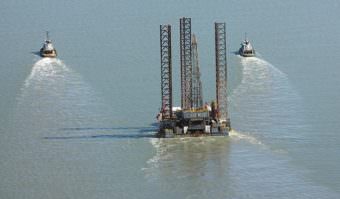
Tugs pull the Spartan 151 jack-up drilling platform up Cook Inlet in August 2011. Furie Operating Alaska, formerly Escopeta Oil, expects to be drilling again in the spring. (Photo courtesy Peninsula Clarion)
Tugs pull the Spartan 151 jack-up drilling platform up Cook Inlet in August 2011. The rig will be operated by Furie Operating Alaska, formerly Escopeta Oil. (Photo courtesy Peninsula Clarion)

An oil company operating in Alaska will pay $10 million for violating federal law that prohibits foreign vessels from transporting merchandise within the United States.

The U.S. Department of Justice announced a settlement on Tuesday with Furie Operating Alaska.

The company primarily operates in Cook Inlet. In 2011, it brought a drill rig to work in the Kitchen Lights unit in Cook Inlet.  

But, when Furie transported the rig from the Gulf of Mexico to Alaska, it used a foreign-flagged vessel without getting a waiver from the Department of Homeland Security. Waivers may be granted if no U.S. vessel is able to transport the merchandise.

Furie has been contesting the penalty since 2012.  No one from the company immediately returned a phone call about the settlement.

The rig is still in Alaska, currently docked in Seward.  Furie isn’t using it anymore; the company replaced it with a larger rig.

Hilcorp reports another leak in Cook Inlet; this time it’s oil


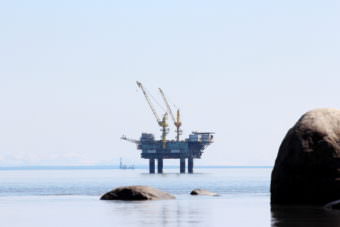
Glacial erratics protrude from the water near Bruce Platform, near Granite Point in Cook Inlet. (Creative Commons photo courtesy Ground Truth Trekking)


Updated at 1:00 p.m. Monday, April 3

The state of Alaska clarified Monday that Hilcorp only shut down one drilling platform, the Anna platform, to respond to the oil leak, not two platforms as the state previously reported.

Updated at 6:00 p.m. Sunday, April 3

The dominant oil and gas producer in Cook Inlet has shut down production at two of its platforms after discovering an oil spill.

Hilcorp reported the spill to the state at noon on Saturday after employees on the company’s Anna platform felt an impact. When they looked over the side of the platform to see what was going on, workers saw bubbles near one of the platform legs and saw a sheen on the water.

“And at that time, they shut the wells in on both platforms to stop the flow of oil and reduced the pressure in the line,” said Kristin Ryan, director of the Alaska Department of Environmental Conservation’s Division of Spill Prevention and Response.

Ryan said the company flew over the area and saw six sheens in the water.  One had migrated more than three miles from the Anna platform.

The spill is about 45 miles southwest of Anchorage, near the native village of Tyonek. It’s coming from an underwater pipeline that was carrying about 19,000 gallons of crude when the leak was discovered. The state doesn’t have an estimate for how much oil has spilled into the Inlet.  

Hilcorp shut down oil production on its Anna and Bruce platforms; the two are connected by the pipeline. And, it’s also called its spill response contractor for help.

According to a state situation report, the oil spill response vessel Perseverance got to the platform about two hours after the company discovered the spill on Saturday.  

The company is attempting to send a mobile, mechanical foam pig down the line.

“[It is] sort of like a squeegee that is going to push the oil through the line, past the point we believe the leak is occurring,” Ryan said. “And at that point, the leak would cease completely”

Ryan says the pig has made it past the spot where the company thinks the leak is coming from and is pushing the remaining oil into a holding tank on the Bruce platform.  From there, the company can estimate the amount of oil it recovered and tell state regulators just how much ended up in the water.

The oil spill is another blow for the Houston-based company that just last week agreed to shut down oil production on two other platforms in Cook Inlet to slow a leak from an underwater natural gas line. The company has delayed repairing that line, saying the sea ice is too thick to safely send divers down to fix the leak.

And that sea ice, and Cook Inlet weather, is going to be a problem in repairing the oil pipeline as well.

Ryan said the state wasn’t able to get an inspector out to the platform until mid-morning Sunday because the flight was weathered-in. And Cook Inlet’s powerful tides are carrying a lot of wide sheets of sea ice right now.

“So it’s big, flat, kind of pancake-looking ice and it’s just moved very easily,” Ryan said. “It’s just floating on the surface and the currents move it around very quickly.”

The company told the state that it has hired a diving contractor to investigate the line and repair it, but that isn’t expected to happen until later in the week.


Hilcorp has had a troubled history in Alaska with dozens of regulatory enforcement actions with various state agencies.

But, Ryan says that having multiple leaking lines in Cook Inlet could be a byproduct of the company’s business model, not necessarily an indicator that they’re operating irresponsibly.

“Hilcorp owns a lot of infrastructure that’s old. That is part of their business model,” Ryan said. “They come in and they purchase old infrastructure and they keep it working. So it’s not completely surprising that they’ve had more failures than other operators.”

Ryan says the company has been responsive to her department when it comes to fixing those issues.

Lori Nelson, a Hilcorp spokesperson, said the company is too busy responding to the spill to answer questions about the incident.  

The company’s leaking gas pipeline and the oil spill are drawing concern from environmental groups and state and federal agencies.

One environmental group, Cook Inletkeeper, sent notice to Hilcorp in mid-February, telling the company that the group would sue under the federal Clean Water Act. Bob Shavelson of Cook Inletkeeper said the group was planning to fly over the site of the newest spill on Sunday, to assess the magnitude of the problem. He says the company should shut down and inspect all of its Cook Inlet infrastructure.  

“I think we have a systemic problem across Cook Inlet,” Shavelson said. “You’ve got these antiquated pipelines and you’ve got an operator here that routinely cuts corners and that’s a recipe for problems down the road.”

Alaska Gov. Bill Walker met privately with the company last week to talk about its ongoing natural gas leak and Hilcorp agreed to shut down production on the two oil platforms powered by that line.

On Sunday, Walker’s office issued a press release saying the governor is deeply concerned about the potential impact on Cook Inlet’s wildlife.

There are dozens of species of fish, birds and marine mammals likely to be in that area of the Inlet this time of year, including endangered beluga whales, Steller sea lions and humpback whales.

State and federal fish and wildlife experts are monitoring the spill. Kristin Ryan says there have been no animals observed in the areas where the oil sheens were spotted.

Original story | Posted 10:30 a.m. Sunday, April 2

The dominant oil and gas producer in Cook Inlet has shut down production at two of its platforms after discovering an oil spill. 

The Alaska Department of Environmental Conservation said Hilcorp Alaska reported the spill at noon on Saturday, after employees on the company’s Anna Platform felt an impact.  When they looked over the side of the platform to see what was going on, workers saw bubbles near one of the platform legs and saw a sheen on the water.

According to a DEC report, the company flew over the area and saw six more sheens, including one that was more than 3.5 miles south of the platform. The spill is on the west side of Cook Inlet, just south of the native village of Tyonek, near Granite Point.  

The oil is leaking from an underwater pipeline that’s about 75 feet below the surface of Cook Inlet.  It’s not clear how much crude is spilling into the inlet, but the 8-inch line was at full capacity at the time of the leak. It’s carrying more than 19,000 gallons of crude.

The company lowered the pressure in the line and shut down production at its Anna and Bruce platforms; the two are connected by the pipeline. It also called for help. The oil spill response vessel Perseverance got to the platform at about 12:45 p.m. on Saturday, according to the DEC report.  And the company has hired a diving contractor to repair the line, they anticipate that work could be done later in the week, according to the DEC report. 

Hilcorp, the U.S. Coast Guard and the Department of Environmental Conservation have set up a command post in Nikiski to respond to the spill. There are dozens of species of fish, birds and marine mammals likely to be in that area of Cook Inlet this time of year, including endangered beluga whales, Steller sea lions and humpback whales.

It’s another blow for the company that just last week agreed to shut down oil production on two other platforms in Cook Inlet to slow a leak from an underwater natural gas line. The company has delayed repairing that line, saying the sea ice is too thick to safely send divers down to fix the leak.

The two spills are unrelated.

This story is developing. Check back frequently for new information.

Alaska lawmakers, industry, grapple with oil subsidies

Lobbyists Kevin Jardell and Dan Seckers talk to Alaska Department of Revenue Commissioner Randall Hoffbeck during a break in a hearing on a state House oil tax credit bill on Wednesday, March 22, 2017, in Juneau, Alaska. (Photo by Rashah McChesney/Alaska's Energy Desk)
Lobbyists Kevin Jardell and Dan Seckers talk to Alaska Department of Revenue Commissioner Randall Hoffbeck during a break in a hearing on a state House oil tax credit bill on Wednesday, in Juneau, Alaska. (Photo by Rashah McChesney/Alaska’s Energy Desk)

House Bill 111 is the latest proposed tweak to the state’s oil tax system, one that supporters hope will hold oil companies to a minimum tax rate and get the state out of the business of writing checks to companies.

Right now, Alaska has a system of tax credits designed to drive new development to the North Slope. It does this, in part, by offering credits for exploration and development of new fields and then offering cash payments for those credits.

But, as oil prices have dropped, so has the state’s production tax revenue. And that’s left it in the awkward position of paying more in cash credits to incentivize new production then it’s making from actual production.  

House Bill 111 proposes getting the state out of the business of cutting checks to companies and forcing them to pay a minimum tax rate. Not everyone is happy about it.  

Pat Galvin, Chief Operating Officer of Great Bear Petroleum Operating, LLC., waits for his turn to testify before a House Finance committee on Wednesday in Juneau, Alaska. Galvin and other oil industry representatives were weighing-in on a bill that would curb the state’s oil tax credit program. (Photo by Rashah McChesney/Alaska’s Energy Desk)

“I mean, I think the state worked feverishly hard to attract some of the new players. And the current bill, House Bill 111, seems to be chasing away those new investors,” said Vice President for Alaska Operations at Caelus Energy, Pat Foley.

Caelus is one of those independent companies that headed to the North Slope to look for oil. It has had a lot of support from the state.

Foley said the company spent about $125 million drilling two wells out in Smith Bay, earning enough tax credits on those wells to leave the state on the hook for about 70% of the costs. (Though, he said the state hasn’t actually reimbursed the company for those credits yet.)

That investment could pay off in a big way: Caelus announced in October, that it thinks its found at least 6 billion barrels of oil in Smith Bay.

But the site will be hugely expensive to develop. The company estimates it could cost up to $10 billion. And, under the current tax credit structure the state could be on the hook for hundreds of millions of dollars in cash subsidies as the company builds the infrastructure it will need to get that oil into the pipeline.

For many lawmakers, like House Resources Committee co-chair Geran Tarr, D-Anchorage, that’s an untenable position.

“The state cannot afford cash subsidies to the oil industry. We have over $900 million obligated right now. We’re having a struggle meeting our basic needs and paying for essential services. The cash credits have to go,” she said.

Tarr said the bill is a change in philosophy for the state. But she, and others in the House, see it as a shift that needs to happen as the state  grapples with low oil prices and a multi-billion dollar budget deficit.

Caelus isn’t the only company that has some potentially game-changing finds on the North Slope. And lawmakers are trying to find ways to continue leveling the playing field between legacy producers and the new companies — without writing checks.

One change in the bill would let companies carry forward half of their operating losses, plus a little bit of interest for up to seven years–essentially lowering their tax bill instead of giving them credits.

And Foley said that could be key to keeping independent producers operating on the North Slope.

“If they eliminate all the future cash payments, but there’s something in the system that compensates us for that change – we’re totally going to keep going forward,” he said.

The bill has a long way to go. It’s gotten a lot of push back from companies who see it as a tax hike at a time when companies are struggling with low oil prices.  

Plus, it still has to make it through the House Finance committee and over to the Senate with fewer than 23 days left in the regular session.

Legislature briefed on nearly 30 legal conflicts the state has with federal government

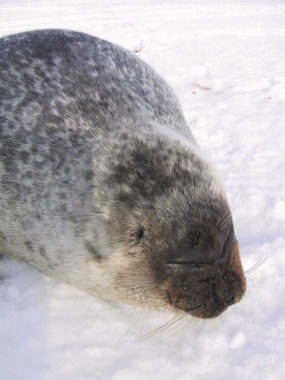
A ringed seal.
A ringed seal. (Public domain photo by Lee Cooper)

From rivers to ringed seals, Alaska is not always seeing eye-to-eye with the federal government on how its resources should be managed. Legislators recently got an update from the Department of Law on nearly 30 ongoing cases or conflicts the state has with the federal government, Alaska’s largest landowner.
Questions about how that land can be used, who controls it and how it can be developed often wind up in court.

“The theme that you’ll see in a lot of these cases is that in recent years the federal government, through regulation, has tried to expand federal jurisdiction and federal powers in this state,” said Alaska’s acting Attorney General Jahna Lindemuth.

Jahna Lindemuth
Gov. Bill Walker named Jahna Lindemuth Alaska’s next attorney general on June 28, 2016. (Photo courtesy Alaska Governor’s Office)

She and members of the Department of Law started briefing legislators last month on everything from the road to King Cove to protecting seals through the Endangered Species Act.

The state isn’t necessarily suing the federal government in these dozens of cases. In the case of Alaska moose hunter John Sturgeon who is suing the U.S. Department of the Interior, the state is not a party to lawsuit. It’s just intervening.

That case started when rangers in the Yukon-Charley Rivers National Preserve told Sturgeon that he couldn’t use his hovercraft there. It wound up in the Supreme Court last year and is now back in front of a court of appeals and has since morphed into a debate on federal overreach.

The state has also weighed in on the battle between the Environmental Protection Agency and the development of the Pebble Mine.

Some issues haven’t made it to court yet, but could. Last year, President Barack Obama banned drilling in large portions of the Chukchi and Beaufort seas. The state is trying to figure out what, if any, legal recourse it as.

But Attorney General Lindemuth said there may be change on the horizon. President Donald Trump has already rolled back at least one federal rule that Alaska was involved in challenging.

“You know, with this change in administration at the federal level we’re hopeful that we’ll be able to work through many of these issues more quickly and without litigation on some of these things. So, we have hope and we’ll see what happens,” Lindemuth said.

Lindemuth said the Department of Law is also taking that “wait and see” approach with some of the state’s other disputes with federal agencies.

Short-lived proposition to cut funds for Alaska’s gasline corporation dies in committee

Rep. Tammie Wilson, R- North Pole, reads through a series of amendments to the state’s budget as Rep. Lance Pruitt, R-Anchorage, listens, during the House Resources on Tuesday in Juneau. (Photo by Rashah McChesney/Alaska’s Energy Desk)

Updated March 9, 2017 | 4:30 p.m.

Two House Republicans proposed stripping the Alaska gasline corporation of more than $10 million this week during a finance committee meeting.

In the end, the proposals were tossed out, but they served as a warning shot to the corporation which has seen its finances come under increasing scrutiny from lawmakers working to trim the state’s budget.

In some ways, the first proposal to strip funding from the Alaska Gasline Development Corporation wasn’t a surprise.

The corporation is currently being audited by a legislative committee, and its president has appeared before lawmakers who questioned the corporation’s perceived lack of financial transparency.

In a House Finance committee meeting this week, North Pole Republican Tammie Wilson proposed cutting more than $10 million from the state’s operating budget earmarked for the corporation.

“It doesn’t belong in the operating budget,” Wilson said. “And not just that, I think the bigger discussion is, what project are we talking about and what one are we funding at this point?”

She’s referring to the two separate funds the legislature has funneled money into for two separate gasline projects. One, a smaller diameter in-state pipeline; the other, the massive Alaska LNG project that would pipe gas down for the North Slope, then ship it to markets in Asia.

Lawmakers have continually questioned whether the corporation has been mixing money from both accounts.

Anchorage Republican Lance Pruitt proposed a similar amendment to the budget, highlighting the corporation’s mission to develop gas infrastructure.

“Well if they’re an infrastructure project, shouldn’t they be competing with the other infrastructure projects that are out there,” Pruitt said.

Both Pruitt and Wilson said they aren’t looking to defund the corporation, but they don’t want to see the state paying for it out of its operating budget.

The two Republicans got some pushback from other members of the finance committee.  

Rep. David Guttenberg, D-Fairbanks, said the corporation is working on two gasline projects as one is a backup for the other.

Additionally, Guttenberg said,  Gov. Bill Walker has been communicating with the federal government  and cutting funds for the corporation could send a mixed message.

“If we start pulling this money back, it’s going to tell them that we don’t really care and they don’t have to do anything. We don’t want to do that,” Guttenberg said.

Wilson’s amendment was shot down on a bipartisan 7-3 vote.  And Lance Pruitt withdrew his, after that vote.

The corporation isn’t asking the legislature for any more money this year. But, it has asked lawmakers to approve a transfer of funds from its in-state gasline project to the Alaska LNG project.

Corporation spokesperson Rosetta Alcantra said it’s not clear what the agency will do if that transfer isn’t approved.

“We haven’t fleshed out a plan,” she said.

She said the corporation would try to use the funds it currently has, but didn’t elaborate on specifics. 

Alcantra said the corporation has taken steps to be more transparent to lawmakers. She said it has been giving bi-monthly reports to legislators.

And, offering a deeper dive for legislators willing to keep quiet.

“We’ve also been asked about working with individual legislators to do a confidentiality agreement. We have started that ball rolling, AGDC is very interested in working with the legislature and the ones, the individuals who want to peek in the tent,” Alcantra said.

So far, Alcantra said, no one has signed one of those agreements.


Editor’s note: This story has been updated from a previous version to add a response from the Alaska Gasline Development Corporation. 

Posted March 8, 2017 | 4:30 p.m.

Two House Republicans want to cut funding for the state’s gas line corporation. During a House Finance committee meeting, Rep. Tammie Wilson proposed cutting more than $10 million from the state’s operating budget, earmarked for the Alaska Gasline Development Corporation.

“It doesn’t belong in the operating budget,” Wilson said.  “And not just that, I think the bigger discussion is, what project are we talking about and what one are we funding at this point?”

She’s referring to the two separate funds the legislature has funneled money into for two separate gasline projects. One, a smaller diameter in-state pipeline; the other, the massive Alaska LNG project that would pipe gas down for the North Slope, then ship it to markets in Asia.

Anchorage Republican Lance Pruitt proposed a similar amendment to the budget, highlighting the corporation’s mission to develop gas infrastructure.

“Well if they’re an infrastructure project, shouldn’t they be competing with the other infrastructure projects that are out there,” Pruitt said.

Pruitt and Wilson said infrastructure projects should compete for capital funds, not money used to operate the state.

The two Republicans got some pushback from other members of the finance committee.  

Rep. David Guttenberg, D-Fairbanks, said the corporation is working on two gasline projects as one is a backup for the other.

Additionally, Guttenberg said,  Gov. Bill Walker has been communicating with the federal government  and cutting funds for the corporation could send a mixed message.

“If we start pulling this money back, it’s going to tell them that we don’t really care and they don’t have to do anything. We don’t want to do that,” Guttenberg said.

Wilson’s amendment was shot down on a 7-3 vote.

Rosetta Alcantra, a spokesperson for Alaska’s Gasline Development Corporation, did not have a response to the potential funding cut before this story aired.

Lawmakers look to the north as Juneau prepares for Arctic Council meeting

Arctic Council Flags
The flags of the eight Arctic Council member states and six indigenous permanent participant organizations. (Photo by Linnea Nordström/Arctic Council Secretariat)

On a cold, sunny day in Juneau, about 40 people gathered in the Capitol to eat lunch and learn about the Arctic. Juneau will host an Arctic Council meeting later this week, and state lawmakers got a visit from national and international scientists, policymakers, and researchers on Tuesday.

Roberta Burns chairs the Sustainable Development Working Group for the Arctic Council. She started the lunchtime presentation with a geography quiz, asking which countries were permanent, participating members of the council.

“Norway,” “Russia,” “Greenland,” the crowd shouted answers, eventually coming up with all eight Arctic countries.  As part of the council, representatives from these countries work on the scientific, social and economic problems facing their shared regions, and collaborate with indigenous groups throughout the Arctic.

The U.S. currently chairs the council, but will be handing control over to Finland later this year.

Burns says that while the council has been led by the U.S. it has been focused on economic and living conditions in the Arctic, working on  projects designed to combat suicide and improve rural water and sanitation.

Lawmakers in a House committee focused on the Arctic also heard from the Institute of the North and ended their day with a group from Nome.

Ukallaysaaq Okleasik bounced his six-month-old daughter in his hands and kept a close eye on his son, during a break in the meetings.

Okleasik is Inupiaq and Qawiaraqmuit. He was in Juneau on behalf of the Sitnasuak Native Corporation. He said he and has family have been adapting to a region that is very different from the one his ancestors knew.

And alongside those changes in weather, shrinking ice coverage and open Arctic water, shipping traffic has moved into the region.  And Okleasik said Nome wants to evolve with those changes and expand its port.

But, he said, he also wants to personalize the region for policymakers.

“I think I’d like to say the Arctic is a place, the Arctic is also the people and the Arctic is also communities and so, when we talk about the Arctic, there’s a sense to make it abstract or make it a place only, and we forget that it is a people and its has been our homeland for many generations,” Okleasik said.

The Arctic Council will meet in Juneau on Wednesday and Thursday, March 8th and 9th.

Site notifications
Update notification options
Subscribe to notifications