National News

Supreme Court guts affirmative action, effectively ending race-conscious admissions

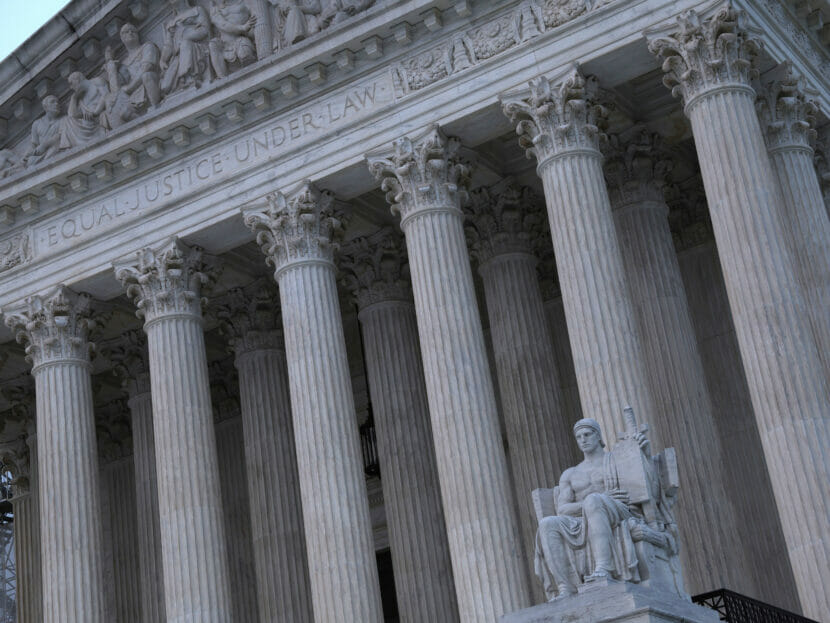
A view of the U.S. Supreme Court in Washington, D.C., on June 5. (Alex Wong/Getty Images)

Follow NPR’s live coverage for the latest updates and reaction to this ruling

The U.S. Supreme Court has found that Harvard and the University of North Carolina’s admissions policy violated the equal protection clause of the 14th Amendment.

The decision reverses decades of precedent upheld over the years by narrow court majorities that included Republican-appointed justices. It could end the ability of colleges and universities — public and private — to do what most say they still need to do: consider race as one of many factors in deciding which of the qualified applicants is to be admitted.

Chief Justice John Roberts, a longtime critic of racial preferences of any kind, wrote the court’s majority decision saying that the nation’s colleges and universities must use colorblind criteria in admissions.

“The Court has permitted race-based college admissions only within the confines of narrow restrictions: such admissions programs must comply with strict scrutiny, may never use race as a stereotype or negative, and must—at some point—end,” the court wrote in its majority opinion. “Respondents’ admissions systems fail each of these criteria and must therefore be invalidated under the Equal Protection Clause of the Fourteenth Amendment.”

The ruling in the UNC case was 6-3 along ideological lines; in the Harvard case, it was 6-2, with Justice Ketanji Brown Jackson recusing.

The majority added: “At the same time, nothing prohibits universities from considering an applicant’s discussion of how race affected the applicant’s life, so long as that discussion is concretely tied to a quality of character or unique ability that the particular applicant can contribute to the university. Many universities have for too long wrongly concluded that the touchstone of an individual’s identity is not challenges bested, skills built, or lessons learned, but the color of their skin. This Nation’s constitutional history does not tolerate that choice.”

Chief Justice Roberts explicitly exempted military academies from this ban on race-conscious admissions “in light of the potentially distinct interests” they may present.

In furious dissents, the court’s liberals pilloried the majority’s reasoning and its view of racial reality in the United States.

“The Court subverts the constitutional guarantee of equal protection by further entrenching racial inequality in education, the very foundation of our democratic government and pluralistic society,” Justice Sonia Sotomayor wrote.

Added Justice Ketanji Brown Jackson: “With let-them-eat-cake obliviousness, today, the majority pulls the ripcord and announces ‘colorblindness for all’ by legal fiat. But deeming race irrelevant in law does not make it so in life. And having so detached itself from this country’s actual past and present experiences, the Court has now been lured into interfering with the crucial work that UNC and other institutions of higher learning are doing to solve America’s real-world problems.”

Thursday’s decisions are likely to cause ripples throughout the country, and not just in higher education, but in selective primary and secondary schools like Boston Latin in Massachusetts, Thomas Jefferson high school in Virginia, and Bronx High School of Science in New York. Similarly, the decision will almost certainly facilitate legal challenges to minority scholarship and fellowship programs, and ultimately, effects will be felt on a much larger scale in employment, and elsewhere. Indeed, almost every business or institution in America has some sort of a race-conscious program, at least to facilitate race relations.

But Edward Blum, who for decades has been a one-man crusader against everything from the Landmark 1965 Voting Rights Act to affirmative action in higher education, plans to challenge some corporate boards on racial preference grounds, and he says he knows of other plans to challenge minority scholarship and fellowship programs.

“It’s going to open a Pandora’s box across the country and across institutions and industries,” said Harvard co-counsel Bill Lee in an NPR interview last fall.

The court’s decisions came in cases involving two elite institutions, one the oldest public university–the University of North Carolina–and the other, the oldest private university, Harvard. Blum, the anti-affirmative activist, likely chose these highly visible schools as his legal targets precisely because of their elite status.

UNC did not admit Black undergraduates until 1955, and then only after it was ordered to by the federal courts. Harvard, by contrast, became the model for affirmative action programs in 1978 when the Supreme Court cited the school’s consideration of race as similar to other traits the school relied on to ensure a diverse student body. Thus, the court said back then that race could be one of many factors that the school considered, just as other characteristics were considered– geography, or being raised on a farm, or special achievements in everything from science to athletics, or being a so-called “legacy student,” the son or daughter of someone who attended Harvard.

That system, reaffirmed twice by the Supreme Court, has remained in place not just at Harvard, but at most of the institutions of higher learning across the United States. Until Thursday, when the court, as it did last year in the abortion case, upended decades of its own precedents.

The court’s conservatives said that the Constitution and the nation’s civil rights laws bar both public and private colleges and universities from using any consideration of race in choosing which students are offered admission.

The court majority made clear that it agreed with Students For Fair Admissions, which sued Harvard and UNC, claiming, among other things, that the schools discriminated against Asian American students who had SAT and grade scores higher than any other racial group, including whites, and who made up, at Harvard, for instance, 29% of the entering class last year. SFFA asserted that the number should have been higher than that, though Asians are just 7.2 per cent of the U.S. population.

Harvard, in defending its current iteration of affirmative action, noted that each class has only 1,600 slots, but, by the numbers, it has thousands of equally qualified applicants. In the class of 2019, for instance, it had 35,000 applicants, 3,700 of them with perfect math SAT scores; 2,700 with perfect verbal SAT scores, and more than 8,000 with perfect grade point averages. There are no similar figures for the most recent incoming class at Harvard, but the number of applicants in 2023 has nearly doubled in the last four years.

The reaction to Thursday’s decision may be consternation in some quarters, but public opinion on affirmative action is not like abortion, a subject on which virtually every poll shows the public completely at odds with the court. Public opinion on affirmative actions is more nuanced and more mixed. Polls on the subject conflict: some show upwards of 60% approval for affirmative action programs, and others show less than 50% support.

Indeed, in liberal California, for instance, 57% of voters in 2020 cast their ballots against reinstating affirmative action in the state’s public colleges and universities.

Generally, polls show that public support for affirmative action has grown in recent years, but voters are conflicted on the subject, with the outcome depending on how the question is asked. A recent Washington Post-Schar School Poll found that 6 in 10 Americans say race should not be considered in college admissions. But when the question was asked a slightly different way, the numbers showed big majorities endorsing programs to boost racial diversity on campuses.

And yet no alternative to affirmative action has worked as well as some consideration of race.

College admission administrators say schools that have tried to raise the numbers of black and Latin0 students without any consideration of race have found that no other criterion — class, or economic status, or programs like a guarantee of admission for students in the top 5 or 10% of their high school class–works as well.

“The research is exceptionally clear,” University of Texas professor Stella Flores, whose specialty is higher education and public policy, told NPR in an interview last fall. “There’s no other alternative method that will racially diversify a student body, other than the use of race as one factor of consideration.”

Copyright 2023 NPR. To see more, visit https://www.npr.org.

Global heat waves show climate change and El Niño are a bad combo

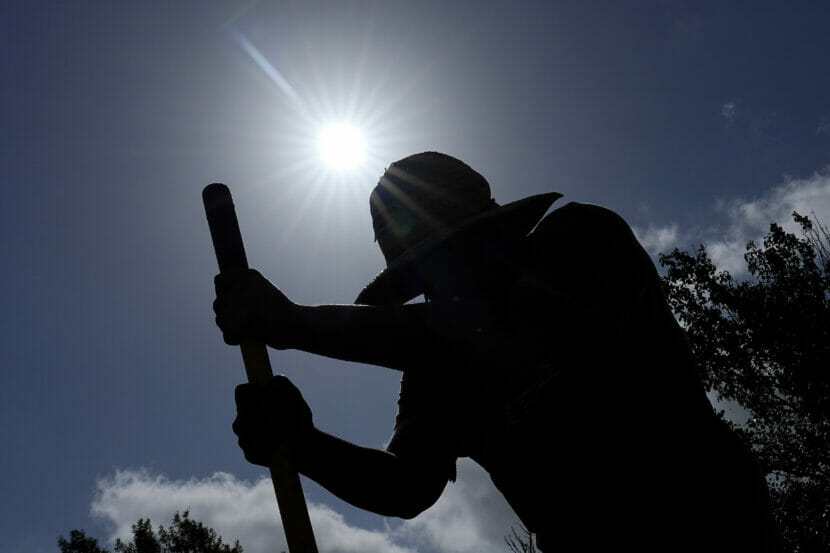
Outdoor workers are vulnerable to prolonged heat waves like the one hitting Texas, which climate scientist warn are becoming more common. (David J. Phillip/AP)

If there’s one kind of weather extreme that scientists clearly link to climate change, it’s worsening heat waves.

“They are getting hotter,” says Kai Kornhuber, adjunct scientist at Columbia University and scientist at Climate Analytics, a climate think tank. “They are occurring at a higher frequency, so that also increases the likelihood of sequential heat waves.”

In Texas, the Southern U.S. and Mexico, a three-week heat wave has gripped the region with temperature records falling for days in a row. Extreme heat has also hit India, China and Canada, where widespread wildfires are burning.

“Most of the world’s population has experienced record-breaking heat in recent days,” says Daniel Swain, climate scientist at the University of California-Los Angeles.

This year, something else is adding fuel to the fire: the El Niño climate pattern. That seasonal shift makes global temperatures warmer, which could make 2023 the hottest year ever recorded.

Longer heat waves are more dangerous

Heat waves are already the deadliest weather-related disaster in the U.S. Not only do extreme temperatures cause heat exhaustion and severe dehydration, it also raises the risk of having a heart attack or stroke. Those risks are even higher in neighborhoods that are lower-income and communities of color, where research has found temperatures are hotter than in white neighborhoods.

Temperatures in the weather report also don’t tell the whole story about the danger. With higher humidity, the toll that heat takes on the human body is much more taxing. Weather forecasters try to capture that with a heat index warning, which shows what the temperature actually feels like. But that’s only calculated for someone sitting in the shade, underestimating the risk for outdoor workers and others in the sun.

In recent years, scientists have done rapid assessments to determine how heat waves are being influenced by climate change. In several, they found the extreme temperatures were nearly impossible without climate change, like in the Mediterranean in April, in the Pacific Northwest in 2021, and in the United Kingdom in 2022.

El Niño is the exclamation point

This year, the planet also made a seasonal shift to an El Niño pattern. It starts when the ocean in the central and eastern Pacific warms up. That extra heat alters weather patterns, raising the temperatures globally.

“That’s its role in the global climate system – is moving some of the energy up from depth and dumping it into the atmosphere,” Swain says.

With El Niño just getting started this year, it’s likely the full effect isn’t being felt yet in heat waves or rainfall patterns. Typically, the Southern U.S. gets wetter and the Northern U.S. gets drier.

“That lag is because it takes some time for that extra heat near the surface of the ocean to actually make it into the atmosphere and be moved around by wind currents,” Swain says.

Climate experts say signs point to a strong El Niño this year, which could break global temperature records. The past 8 years have already been the hottest since record-keeping began, and 2016, the hottest ever recorded, was also a year with a powerful El Niño.

“Even if it’s not going to be the hottest on record, we’re certainly seeing the warmest decade so far,” Kornhuber says. “That alone should already be worrying enough.”

If the world continues emitting fossil fuels, these kinds of heat events are expected to become far more likely. Even if the world can meet its goal of limiting warming to 1.5 degrees Celsius (2.7 Fahrenheit), extreme heat waves still are likely to be more than eight times more common than they once were.

“The long-term driver is human-caused climate change where we’re sort of stair-stepping up along that inexorable upward trend,” Swain says. “El Nino represents the exclamation point on that trend.”

Copyright 2023 NPR. To see more, visit https://www.npr.org.

US pedestrian deaths reach a 40-year high

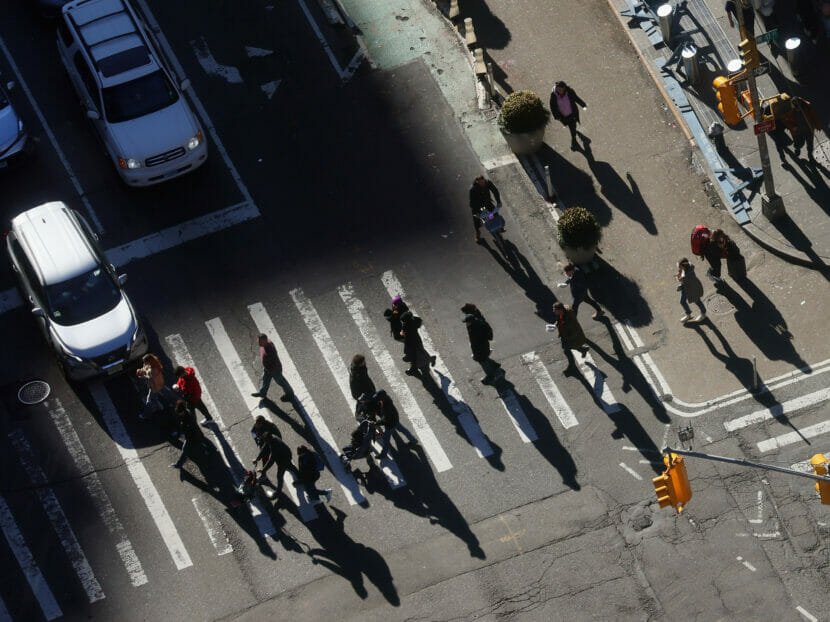
In 2022, drivers struck and killed the highest number of pedestrians since 1981. (Bruce Bennett/Getty Images)

A new study paints a grim picture of American roads: every day, 20 people walk outside and end up killed by a moving vehicle.

“There are more pedestrians being killed today than in decades,” Russ Martin, the senior director of policy and government relations at the Governors Highway Safety Association, told NPR.

The organization, which tracks pedestrian deaths in the U.S., estimates that more than 7,500 pedestrians were killed by drivers last year — the highest number since 1981. The final tally may be even greater given that Oklahoma was unable to provide data due to a technical issue.

Pedestrian deaths have been climbing since 2010 because of unsafe infrastructure and the prevalence of SUVs, which tend to be more deadly for pedestrians than smaller cars, according to Martin. When the pandemic arrived, there was an even greater surge as empty roads gave way to speeding and distracted driving.

The pandemic has waned, but cases of reckless driving — and subsequently the number of Americans killed while walking — has not. The new data, released on Friday, shows the U.S. continues to lag in its effort to improve road safety, even as experts say some solutions are within reach.

States below the Sun Belt ranked as having the highest rate of pedestrian deaths in 2022

For the seventh year in a row, New Mexico was ranked as the most dangerous state for pedestrians.

Arizona and Florida were also placed in the top spots for having high rates of pedestrian deaths in GHSA’s estimates.

It is not a coincidence that all three states are situated below the country’s Sun Belt. Martin said Southern states tend to see more traffic deaths but it is not exactly clear why.

There are multiple theories: in bigger states, communities are more spread out and as a result, people need to drive more to get around, he said. Another possibility is that Southern states have better weather and people spend more time outside.

“This is all just conjecture, but I think it’s certainly worthwhile to take a closer look into what’s going on in those states,” he added.

Local lawmakers can implement traffic calming measures today

Traffic safety has been an uphill battle in the U.S. for years but there are strategies at lawmakers’ disposal to address the crisis today, according to Peter Norton, a professor at the University of Virginia who has studied the history of driving in America.

“The best things we can do will take years, but there are some things we can do now, they don’t cost much money and they make a big difference,” he said.

For instance, implementing sharp corners instead of round curves at the end of roads forces drivers to slow down to turn and therefore prevents speeding. That technique, along with adding pedestrian islands and large sidewalk bulb-outs, is known as “traffic calming.”

Norton said installing speeding and red light cameras can also be effective if they work properly. Adding bike lanes can also keep drivers more alert on the road.

Lowering speed limits is also an important step but only if it is enforced and used alongside other safety measures. Norton warned that roads with a mix of different vehicle speeds tend to be more dangerous.

There are also some local and regional measures the GHSA pointed to that could help prevent deaths.

In Hawaii, police officers are stationed in areas that have seen a higher volume of crashes or foot traffic to look out for reckless driving.

And in Idaho, the state’s highway safety office gave out walk audits for community members to identify safety concerns on the street. Local officials then use the results to improve the walkability of neighborhoods.

Copyright 2023 NPR. To see more, visit https://www.npr.org.

Supreme Court denies Navajo Nation water rights claim

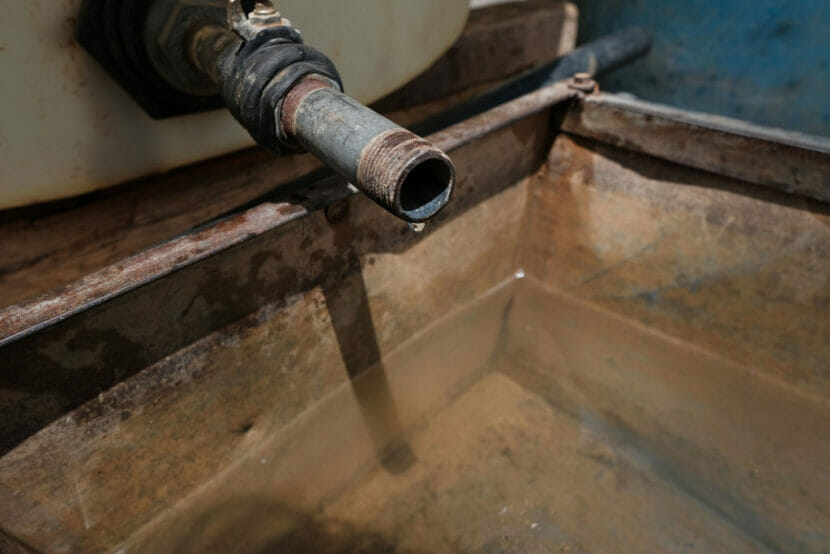
A tap drips water at a spigot on land of the Navajo Nation in the town of Thoreau on June 06, 2019 in Thoreau, New Mexico. (Photo by Spencer Platt/Getty Images)

The Navajo Nation continues its fight for water after the U.S. Supreme Court ruled Thursday that the United States has no treaty obligation to identify and account for the Navajo Nation’s water rights in the Colorado River.

The Supreme Court indicated that the 1868 treaty between the Navajo Nation and the federal government contained no language saying that the government was responsible for helping the Navajo Nation secure water rights.

“The 1868 treaty reserved necessary water to accomplish the purpose of the Navajo Reservation,” Supreme Court Justice Brett Kavanaugh said in the opinion. “But the treaty did not require the United States to take affirmative steps to secure water for the Tribe.”

The 5-4 decision overturns the U.S. Court of Appeals for the Ninth Circuit ruling from April 2021, indicating that an Arizona federal judge was wrong to dismiss litigation by the Navajo Nation without letting the tribe file an amended complaint that would ask the U.S. Department of the Interior to secure the Navajo Nation water rights.

In the court’s decision, Kavanaugh wrote that the 1868 treaty establishing the Navajo Nation included granting the tribe the land, minerals below the land’s surface, the timber on the land, and the right to use needed water on the reservation.

The question in Arizona v. Navajo Nation concerns reserved water rights, Kavanaugh wrote, meaning that it focuses on the water rights implicitly reserved to accomplish the purpose of the reservation.

“The Navajos’ claim is not that the United States has interfered with their water access,” Kavanaugh said. “Instead, the Navajos contend that the treaty requires the United States to take affirmative steps to secure water for the Navajos.”

The affirmative steps could include assessing the Navajo Nation’s water needs, developing a plan to secure the needed water, and potentially building pipelines, pumps, wells or other water infrastructure.

“In light of the treaty’s text and history, we conclude that the treaty does not require the United States to take those affirmative steps,” Kavanaugh said. “And it is not the Judiciary’s role to rewrite and update this 155-year-old treaty.”

Navajo Nation leaders expressed their disappointment in the Supreme Court ruling but said they would continue fighting for their tribe’s water rights.

“As our lawyers continue to analyze the opinion and determine what it means for this particular lawsuit, I remain undeterred in obtaining quantified water rights for the Navajo Nation in Arizona,” Navajo Nation President Buu Nygren said.

Nygren said his job as president of the Navajo Nation is to represent and protect the Navajo people and their land, but the only way that is achieved is by securing water rights to the Lower Basin of the Colorado River.

The Navajo Nation has the largest tribal land mass in the country, consisting of 27,000 square miles in Arizona, New Mexico and Utah. The tribe has more than 300,000 citizens, with about 175,000 living on the Navajo Nation.

The Navajo Nation established a water rights negotiation team earlier this year, according to Nygren, and they are working hard to settle the Navajo Nation’s water rights in Arizona.

“I am confident that we will be able to achieve a settlement promptly and ensure the health and safety of my people,” Nygren said. “And in addition, the health and productivity of the entire Colorado River Basin, which serves up to thirty tribes and tens of millions of people who have come to rely on the Colorado River.”

Speaker of the 25th Navajo Nation Speaker Council Crystalyne Curley said that long ago Navajo leaders fought for their people to be able to return to their homeland and have always fought to protect their rights, including water rights.

“Through the sacrifices and prayers of our ancestors, we secured the right to have access to water based on our treaties,” Curley said. “Our leaders negotiated the terms of our treaties in good faith with the federal government.”

“Today’s ruling will not deter the Navajo Nation from securing the water that our ancestors sacrificed and fought for — our right to life and the livelihood of future generations,” she added.

As climate change and increasing resource demands put additional stress on water supplies, Navajo leaders stated that the Navajo Nation’s battle for water rights is a critical reminder of the importance of protecting access to this essential resource for all communities.

The Navajo Nation’s suit received a wide range of support.

In February, an amicus brief in support of the Navajo Nation was filed by 37 tribal governments, the National Congress of American Indians, the Affiliated Tribes of Northwest Indians and the San Luis Rey Indian Water Authority.

The brief urged the Supreme Court to respect the Winters water rights doctrine and enforce the trust relationship under which the United States has an obligation to ensure water for the Navajo Nation. The Winters doctrine assures water rights for tribal nations to ensure their tribal lands are livable and productive.

“Water is necessary for all life, and when our ancestors negotiated agreements with the United States to secure our lands and our protection, water was understood and still is understood to be inseparable from the land and from our peoples,” NCAI President Fawn Sharp said.

“Today, the Supreme Court has once again assisted in the United States’ centuries-long attempts to try to get out of the promises they have made to Tribal Nations by stating that treaties only secure access to water but do not require the United States to take any steps to protect or provide that water to our people,” Sharp added.

The Native American Rights Fund noted that in the ruling, the Supreme Court agreed that Tribal Nations have water rights under the Winters doctrine. Nevertheless, the court concluded there was no obligation to take steps to secure or even identify the water needed for the tribal land.

“The U.S. government excluded Navajo tribal citizens from receiving a share of water when the original apportioning occurred, and today’s Supreme Court decision for Arizona v. Navajo Nation condoned this lack of accountability,” NARF Executive Director John Echohawk said.

“Despite today’s ruling, Tribal Nations will continue to assert their water rights, and NARF remains committed to that fight,” Echohawk added.

In the court’s dissenting opinion, Supreme Court Justice Neil Gorsuch wrote that the court rejected a request the Navajo Nation never made. He indicated the case was not about compelling the federal government to take affirmative steps to secure water for the Navajo Nation.

“Respectfully, the relief the Tribe seeks is far more modest,” Gorsuch said, noting that the court does agree that the Navajo Nation received enforceable water rights by treaty.

But he added that the U.S. holds some of those water rights in trust, and the extent of those water rights have never been assessed.

Adding those pieces together, Gorsuch said the Navajo Nation made a simple request.

“They want the United States to identify the water rights it holds for them,” Gorsuch wrote. “And if the United States has misappropriated the Navajo’s water rights, the Tribe asks it to formulate a plan to stop doing so prospectively.”

Gorsuch indicated that there is nothing remarkable about any of this, and he would affirm the Ninth Circuit’s judgment and allow the Navajo Nation’s case to proceed.

Since the federal government does hold some of the Navajo Nation water rights in trust, Gorsuch wrote that “the government owes the tribe a duty to manage the water it holds for the tribe in a legally responsible manner.”

In this lawsuit, Gorsuch wrote that the Navajo Nation is asking the United States to fulfill part of that duty by assessing what water rights it holds for them.

“The government owes the Tribe at least that much,” Gorsuch wrote.

This article was originally published the Arizona Mirror, a sibling outlet of the Alaska Beacon as part of States Newsroom, a network of news bureaus supported by grants and a coalition of donors as a 501c(3) public charity.

Deep sea rescues have a mixed track record. The Pisces III is one that succeeded

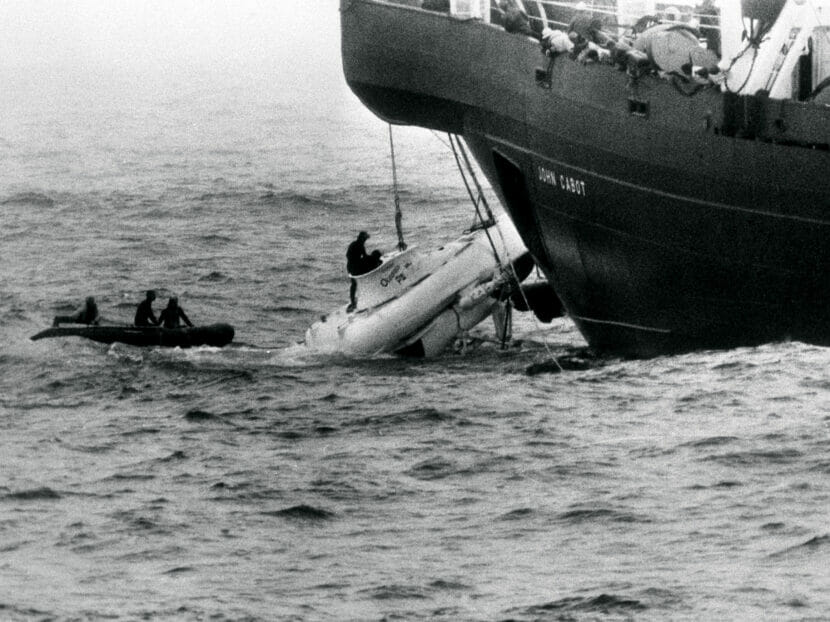
Divers begin to open the hatch of Pisces III as she breaks water under the John Cabot after being hauled from the Atlantic seabed off the coast of Cork, Ireland. (PA Images via Getty Images)

The clock is ticking in the all-hands-on-deck search for the tourist submersible that went missing during a deep-sea dive to the Titanic shipwreck on Sunday.

The vessel has five people on board and, according to the U.S. Coast Guard, a dwindling oxygen supply of 40 hours.

That gives responders just two days to locate the Titan — which is believed to be hundreds of miles from the nearest coast and potentially thousands of feet below sea level — plus bring it back to the surface to rescue those inside.

It’s a complex mission, with retired U.S. Navy submarine Capt. David Marquet putting the odds of passengers’ survival at “about 1%.”

And it’s certainly not the first of its kind: There have been several prominent rescue missions for both submarines and submersibles (which are not fully autonomous) over the course of the last century.

The deepest underwater rescue ever accomplished, officially, was that of the commercial submarine Pisces III, off the coast of Ireland in 1973.

In that dramatic incident, two crewmen — both named Roger — spent three days trapped in a vessel measuring 6 feet in diameter, subsisting off a single sandwich and condensation licked from the walls, until they were rescued with just 12 minutes of oxygen to spare.

One of them, Roger Mallinson, told NBC News on Tuesday that the search for the Titan has evoked tough memories of his own experience.

“You just rely,” he said, “on the thing being well-made.”

The submersible sank after a routine dive

It was August 1973, and two British sailors were heading out on a routine dive to lay transatlantic telephone cable on the seabed about 150 miles southwest of Cork.

Senior pilot Mallinson, an engineer, was 35 at the time. Former Royal Navy submariner Roger Chapman, who died in 2020, was 28. They were clocking eight-hour shifts, crammed into a small vessel with very poor visibility, according to the BBC.

On the morning of August 29, as the two were getting ready to be towed back to their mother ship, a hatch was accidentally pulled open. Water flooded a self-contained part of the submersible, adding extra weight and plunging the vessel about 1,575 feet below sea level.

“There was lots of banging of ropes and shackles — as normal during the last phase of the operation — when suddenly we were hurtled backward and sank rapidly,” Chapman told the BBC in 2013. “We were dangling upside down, then heaved up like a big dipper.”

The two hastily prepared to crash, dropping a lead weight to lighten their load, curling up in safety positions and stuffing cloth in their mouths so as not to bite their tongues off. They hit the ground in about 30 seconds, at 40 miles per hour.

They weren’t injured, but they were stuck.

They had to conserve oxygen and food

Author Stephen McGinty, who recounted the rescue in his book The Dive (which is reportedly being made into an action movie), explained the severity of the situation in a 2021 Newsweek interview.

“Try to imagine you are in a phone box with a friend, the phone box is at the bottom of the Empire State Building, then everything around you floods to ten stories above the top of the Empire State Building,” he said. “Then turn out all the lights and start bleeding oxygen, then you realize that a rescue — if it can even be attempted — is roughly two days away.”

Mallinson and Chapman didn’t have a water supply, just one can of lemonade and a cheese sandwich, which they wanted to save for later.

By a stroke of luck, Mallinson had replaced the oxygen tank just before the dive — but they only had 66 hours left.

The two decided to conserve oxygen by doing as little as possible. Once they telephoned for help and made sure the nearly upside-down vessel was in order, they didn’t talk or move.

They lay in the pitch-black submersible as high up as possible, where the air quality was better, thinking about their families.

“We hardly spoke, just grabbing each other’s hand and giving it a squeeze to show we were alright,” Mallinson told the BBC. “It was very cold — we were wet through.”

The rescue operations suffered a series of setbacks

Meanwhile, an international rescue operation was underway, involving dive teams from the United Kingdom, Canada and the U.S.

“The plan was relatively simple: a sister sub would go down with a two-man crew and attach a specially designed grapple hook to the sub then lift it to the surface,” McGinty explained. “But they do say: how do you make God laugh? Tell him your plans.”

McGinty said the floating buoy that ran on a rope from the surface had been disconnected from the submersible several minutes before it sank, so crews knew “where the haystack was, just not the needle.” They were able to detect the vessel using sonar by making Chapman sing — “in the hope of picking up the high notes.”

Then they had to actually reach it. Multiple attempts to raise the submersible failed over the next two days, leaving the responders with two broken vessels and the passengers without much hope.

“The first sub to go down lost its lift line; the second sub down couldn’t find them,” McGinty said. “On a third trip they finally found Pisces III, but when they attempted to fix the lift line it locked on then fell out.”

On Sept. 1, a team was finally able to make repairs to one of the other submersibles and send it back down, where it managed to attach a tow rope to the vessel.

Chapman told the BBC that it was only once the pilots knew the line was safely attached that they had the sandwich and lemonade. Mallinson later wrote that “it tasted like champagne to us.”

The lift itself proved difficult and had to be stopped and restarted twice, with lots of swinging around. The crew described the ride up as disorienting, with Chapman saying rescuers “thought we’d died when they looked at us, it had been so violent.”

Once they made it to the surface, it took them about half an hour to open the hatch and get fresh air. And there hadn’t been a moment to waste.

“We had 72 hours of life support when we started the dive so we managed to eke out a further 12.5 hours,” Chapman said. “When we looked in the cylinder, we had 12 minutes of oxygen left.”

The incident left a lasting impact on both survivors

The doctor who examined the pair commented “incredible,” McGinty said. They were dehydrated, and Mallinson had mild hypothermia, but they were otherwise in good shape.

The incident left a lasting impact on both Mallinson and Chapman in other ways, including forming a lifelong bond.

“Each year on the anniversary Roger Mallinson would call Roger Chapman at the exact moment they reached the surface,” McGinty said.

Chapman went on to set up a company specializing in submersible rescues and was able to help with several incidents, according to his obituary. The “grandfather of submarine rescue” said even years later that he occasionally felt uncomfortable in elevators.

Mallinson, who became renowned for his work on steam engines, was awarded an MBE at the beginning of 2023.

In a September 1973 Daily Mail column, Mallinson wrote that he owed his life to Chapman.

“The ex-Navy lieutenant, who was my second pilot and observer aboard the stricken Pisces III, pulled me through the blackest hours of that incredible rescue,” he wrote. “Without him, I would not be here to tell this story.”

Few other sub rescues have been as successful

The Pisces III incident took its place in the history books as the deepest underwater rescue ever achieved, according to Guinness World Records. Many others have been attempted, with varying degrees of success.

Take for example the USS Squalus, a submarine that sank 240 feet off the coast of New Hampshire during a test dive in 1939, killing 26 people immediately.

The remaining 32 crew members and one civilian used smoke bombs and, later, morse code to signal for help. A Navy submarine found them that same morning, and rescuers were able to bring the survivors to the surface in four separate trips over the next day or so. It took another three months to recover the vessel, by attaching pontoons to both sides and inflating them full of air.

Russia saw one of the world’s worst naval disasters several decades later, in 2000, when the nuclear submarine Kursk sank during a training exercise in the Arctic Circle. All 118 crew members ultimately died, though some two dozen had survived the initial sinking.

The Russian government — led by newly minted President Vladimir Putin — was slow to launch search and rescue efforts, even rejecting offers of help from Western countries. By the time a team of British and Norwegian divers found the vessel nine days later, there were no survivors.

Five years later, when the Russian AS-28 sank in the Pacific Ocean after becoming entangled in fishing nets, the government took a different tack and called for international help. British and American rescue crews were able to free the vessel and save all seven people on board.

Copyright 2023 NPR. To see more, visit https://www.npr.org.

FDA advisers back updated COVID shots for fall vaccinations

The COVID-19 vaccine will be updated in hopes of targeting the strains of omicron that will be circulating later this year. (Esteban Felix/AP)

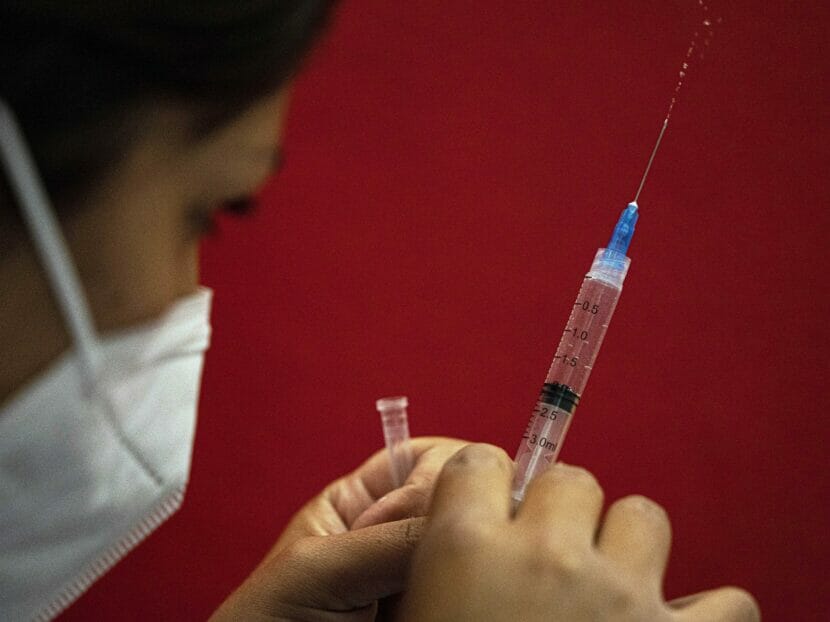
A panel of expert advisers to the Food and Drug Administration voted unanimously Thursday to recommend that the COVID-19 vaccine be updated to target emerging subvariants of omicron.

The COVID shot that’s currently available is known as a “bivalent” vaccine because it was tailored to target both the original strain of the coronavirus and the omicron subvariants that dominated last winter.

But the FDA panel recommended that drugmakers abandon the bivalent design and instead move to a “monovalent” vaccine that only targets omicron subvariants. The idea is to roll out the newly formulated shots in anticipation of a possible uptick in cases this fall.

The committee specifically supported targeting the subvariant XBB.1.5, which accounts for about 40% of new infections in the U.S.

In an analysis, FDA scientists said data from vaccine manufacturers indicate that an updated monovalent formulation that targets XBB subvariants “elicits stronger neutralizing antibody responses” against XBB strains than current bivalent vaccines.

“There doesn’t seem to be any particular advantage to a bivalent vaccine,” said Dr. Eric Rubin, a professor of immunology and infectious diseases at Harvard who is also a member of the advisory committee.

While there was wide agreement about moving to a monovalent vaccine, there was considerable debate among committee members over whether the COVID-19 vaccine should be handled like the influenza vaccine, which is revamped every year in anticipation of flu season.

“People understand a yearly influenza vaccine,” said Dr. Peter Marks, director of the FDA’s Center for Biologics Evaluation and Research. “At this point it may not be yearly, but, for all intents and purposes, it looks like by next fall there will be further drift from this [strain] and we may have to come back here.”

But some worried that drawing too close a parallel to influezna could actually lead to confusion among Americans.

“This is not the flu,” said committee member Dr. Paul Offit, a professor of pediatrics at the Children’s Hospital of Philadelphia. He pointed out that many Americans already have some protection against severe illness from COVID-19 because of prior infection, vaccination, or both.

“I’m all for updating this vaccine, but I think we need to define… who really benefits from booster dosing? Because it’s not everybody,” he said.

It’s not yet clear who federal officials will recommend should get the updated omicron vaccine.

During the meeting, the CDC shared data that shows that, since last April, COVID hospitalizations and deaths have been low in most groups. But they have been disproportionately high in people who are 75 or older, suggesting this group might need extra protection. Those with health issues like chronic lung disease or diabetes might also have higher risks.

The FDA is now going to consider the committee’s discussion and will likely issue an official recommendation about the vaccine formulation within a few days, which will give vaccine makers a path to follow.

If all goes according to plan, it’s expected the new vaccines should be out in the fall — by around late September or early October.

Copyright 2023 NPR. To see more, visit https://www.npr.org.
Site notifications
Update notification options
Subscribe to notifications