National News

Supreme Court just made it harder for federal agencies to regulate in sweeping ruling

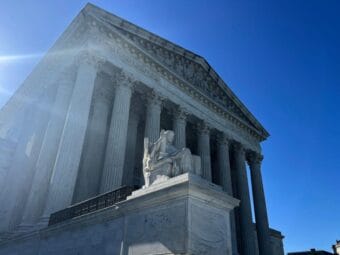
The U.S. Supreme Court made it far more difficult for federal agencies to issue rules and regulations that carry out broad mandates enacted by Congress. (Chip Somodevilla/Getty Images)

The U.S. Supreme court on Friday undid decades of regulatory law, making it far more difficult for federal agencies to issue rules and regulations that carry out broad mandates enacted by Congress. Along ideological lines, the court reversed a 40-year-old precedent that has governed what agencies can and cannot do in interpreting federal statutes.

The decision overturned Chevron v. The Natural Resources Defense Council, a 1984 decision that was not particularly controversial when it was announced 40 years ago. Indeed, the vote was unanimous in declaring that when a statute is ambiguous, courts should defer to reasonable agency interpretations of what it means.

The idea was that when Congress enacts broad regulatory mandates, agencies fill in the gaps, using their expertise to carry out what are reasonably deemed to be Congress’ intent.

Writing for the court’s conservatives, Chief Justice John Roberts said Chevron “defies the command of” the law that governs federal administrative agencies, “that the reviewing court–not the agency whose action it reviews–is to decide all relevant questions of law and interpret … statutory provisions.”

He added: “It requires a court to ignore, not follow, the reading the court would have reached had it exercised its independent judgment as required by the” law.

But, in an important caveat, Roberts noted that the decision does “not call into question prior cases that relied on the Chevron framework. The holdings of those cases that specific agency actions are lawful–including the Clean Air Act holding of Chevron itself–are still subject to statutory stare decisis despite our change in interpretive methodology.”

In recent years, conservatives, including some current members of the Supreme Court, have called for the landmark Chevron decision to be abolished. They contended that if Congress isn’t specific enough in its legislating, the highly trained experts at various agencies should not be allowed to interpret what Congress meant.

But drawing that line can be very difficult. For instance, is a new product aimed a lowering cholesterol a dietary supplement, which is regulated one way, or a drug, which is regulated a different way? At oral argument in the case Justice Elena Kagan cited as one example a hypothetical bill to regulate artificial intelligence. Congress “knows there are going to be gaps because Congress can hardly see a week in the future,” she observed, adding that Congress would want experts who know about AI to make decisions about artificial intelligence, not judges who “don’t even know what the questions are about AI,” much less the answers.

That argument, however, didn’t carry the day at the Supreme Court. The conservative supermajority, and its long time opposition to Chevron deference, carried the day instead. As Justice Brett Kavanaugh observed during oral argument in the case deferring to agency interpretations “ushers in shocks to the system every four or eight years when a new administration comes in” and implements “massive change” in areas like securities law, environmental law, and communications law.

In dissent, the liberal justices countered that abandoning Chevron deference will have a ripple effect throughout the government, making it difficult to respond to urgent new problems and limiting the ability of agencies to carry out Congressional mandates on everything from the environment to food and drug safety.

Writing for the liberals, Justice Elena Kagan said Chevron “has become part of the warp and woof of modern government, supporting regulatory efforts of all kinds–to name a few, keeping air and water clean, food and drugs safe, and financial markets honest.”

While it is true that in recent years the Supreme Court has not often relied on Chevron deference, it is also true that the lower courts make thousands of decisions deferring or not deferring to agency interpretations. Chevron deference has been the meat and potatoes of regulatory law in the lower courts, so Friday’s decision likely will have a profound effect across the government.

The court’s decision came in a case involving a longstanding fishery conservation law that clearly authorizes the government to require trained, professional observers on regulated fishing vessels. The issue wasn’t whether the observers were required; it was whether they had to be paid by the ship owners. In short, if Congress has not specifically addressed the question of who pays, should the court defer to the agency’s view that Congress expected the fishing vessel owners to pay.

The court’s answer was that without specific Congressional authorization, the agency had no power to order the fishermen to pay for their on-board observers.

The surgeon general declared gun violence a public health crisis. What does that do?

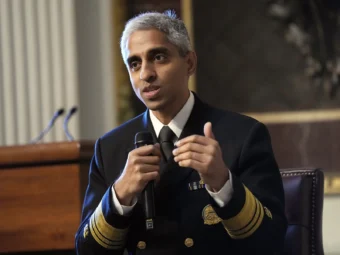
Surgeon General Dr. Vivek Murthy speaks during an event on the White House in April. The nation’s top doctor has issued an advisory about the public health risks of widespread gun violence. (Susan Walsh/AP)

America’s top doctor issued a first-of-its-kind advisory on Tuesday declaring gun violence a national public health crisis and recommending it be treated as such.

The 40-page publication from U.S. Surgeon General Vivek Murthy outlines the scope of firearm violence, its impact on victims and communities and a slew of policy suggestions for lawmakers, community leaders and health systems.

A public health approach, Murthy said in the report, can guide the nation’s strategy and actions “as it has done in the past with successful efforts to address tobacco-related disease and motor vehicle crashes.”

“It is up to us to take on this generational challenge with the urgency and clarity the moment demands,” he added. “The safety and well‑being of our children and future generations are at stake.”

The advisory notes that firearm-related injury has been the leading cause of death for U.S. children and adolescents since 2020 — when it surpassed car accidents — and that ever-common instances of gun violence are taking not only a physical but also a mental toll on survivors, families and community members at large.

A recent national survey found that 54% of U.S. adults or their family members have experienced a firearm-related incident. And, linking gun violence to mental health, the advisory also notes that nearly 6 in 10 U.S. adults say they worry either sometimes, almost every day or daily about a loved one becoming a victim.

Some of the advisory’s recommendations — which, despite being strongly worded, are not enforceable — include increasing federal funding for gun violence prevention research, more community investment in educational programs and mental health resources and nationwide policy changes like an assault weapons ban and universal background checks.

Murthy, who has served as President Biden’s surgeon general since 2021, has issued advisories over the years warning about the risks of loneliness, health misinformation and social media on youth mental health.

But this is the first time the Office of the Surgeon General has ever published a warning focused on gun violence, a political minefield in the U.S.

The National Rife Association has long opposed the framing of gun violence as a public health issue and successfully lobbied for legislation that effectively froze federal funding into gun violence research over the last three decades. NRA opposition to Murthy, over his support for a federal assault weapons ban, also nearly cost him the nominationwhen then-President Barack Obama first picked him for the job in 2014.

The advisory comes after a second consecutive weekend of mass shootings across the U.S., two days before the first presidential debate between Biden and former President Donald Trump and a week after the Supreme Court upheld a federal ban on guns for domestic abusers, its first major gun ruling in two years.

The advisory lays out the problem …

Police investigate the scene of a shooting on June 15 at the Brooklands Plaza Splash Pad in Rochester Hills, Michigan, where a gunman wounded nine people. (Bill Pugliano/Getty Images North America)

The document begins by painting a grim picture of gun violence in the U.S.

Among the stark statistics: 48,204 people died from firearm-related injuries (including suicides, homicides and unintentional deaths) in 2022, after that number reached a near three-decade high the previous year.

The rate of firearm-related suicide grew by 20% between 2012 and 2022, with the highest increases among young people between 10 and 34 years old.

The advisory also notes the disproportionate impacts of gun violence across demographic groups.

Black Americans had the highest age-adjusted firearm homicide rates across all ages (27 per 100,000 in 2022). The firearm suicide rate was highest among white individuals older than 45 (14.8 per 100,000 in 2022) and American Indian and Alaska Natives under 45 years old (12.3 per 100,000).

Gun violence also disproportionately impacts veterans, male children and men — though firearms are used in about 50% of intimate partner violence-related homicides, of which more victims are female.

Mass shootings only represent about 1% of all firearm-related deaths in the U.S., but their number is increasing: The country experienced more than 600 mass shooting incidents each year between 2020 and 2023, according to the Gun Violence Archive. The organization defines a mass shooting as any incident in which four or more people are shot, not including the perpetrator.

The advisory also depicts the problem as uniquely American.

It points to 2015 data from the Centers for Disease Control and Prevention and World Health Organization that found the overall firearm-related death rate was 11.4 times higher in the U.S. compared to 28 other high-income nations.

It goes on to detail the collective toll that the exposure to gun violence takes, even on those who do not experience bodily harm themselves.

“There is increasing evidence that exposure to firearm violence can contribute to elevated stress levels and mental health challenges and threaten the sense of well‑being for entire communities,” it reads.

Examples include healthcare and community workers suffering secondary traumatic stress, adults avoiding certain places or events out of fear of a possible mass shooting, children experiencing long-term mental and behavioral problems, and a studied increase in psychiatric disorders among family members of victims.

… And prescribes recommendations

Murthy then discusses some of the factors that contribute to the problem, namely socioeconomic, geographic and racial inequities and the lethality and availability of guns, before recommending a “public health approach” to fixing it.

“A public health approach is designed to prevent and reduce harm by changing the conditions and circumstances that contribute to risk of firearm violence as measured by deaths, injuries, as well as the reverberating mental health and emotional impacts detailed in this Advisory,” it reads.

The advisory recommends more investment in firearm prevention research, which receives less federal funding than causes of death with relatively comparable mortality, like sepsis and drowning.

In the meantime, it says, communities can invest in interventions and educational programs to try to support populations with increased risk of gun violence involvement, including by organizing them into workplace safety trainings. It similarly recommends communities do more to increase access to quality mental health care, substance-use treatment and trauma-informed resources.

And, addressing public health leaders and policymakers, it suggests a number of prevention strategies that can “build distance in terms of time and space between firearms and people who are at risk of harming themselves or others.”

Those include requiring safe and secure firearm storage (including child access prevention laws), implementing universal background checks, banning assault weapons and large-capacity magazines for civilian use and regulating the safety of firearms like any other consumer products.

While some individual states have passed such laws, including requiring universal background checks, secure storage and red flag laws, Congress would need to act to make those recommendations a reality nationwide.

And even though a majority of Americans are in favor of stricter gun laws, as several 2023 surveys found, a deeply divided Congress has struggled to pass them. It passed its first major gun law legislation in 30 years in 2022, which Biden signed one month after the Uvalde school shooting. It extended background checks on prospective gun buyers between 18 and 21 years old and further incentivizes states to pass red flag laws, among other provisions.

Murthy’s advisory cites two examples of successful public health approaches in the past: tobacco use and motor vehicle safety.

They have contributed to a more than 70% decline in the prevalence of cigarette smoking among U.S. adults since the 1960s, and a more than 93% decrease in the mileage death rate over the past century, according to the report.

“Taking such an approach to firearm violence prevention has the potential to curb the alarming trends of firearm‑related injury and death in America and the resulting health impacts,” he adds.

Congress would have to act on the surgeon general’s recommendations to make them a nationwide reality. (Jemal Countess/Getty Images North America)

How much power does an advisory have?

Calls to address gun violence as a public health issue rather than a political problem are not entirely new, and this advisory amplifies them even louder.

Tuesday’s publication was released alongside statements of support from 10 different medical, public health and children’s groups, applauding the advisory for raising awareness and calling for policymakers to act.

“Firearm violence is indeed a public health crisis, and the data now show it touches the majority of U.S. adults,” said the American Medical Association. “We applaud the Office of the Surgeon General for issuing this Advisory and for outlining an evidence‑based public health approach to addressing firearm violence.”

Opposition came from the NRA, which released a statement slamming the advisory as “an extension of the Biden Administration’s war on law-abiding gun owners” and blaming “a crime problem caused by criminals,” in a familiar refrain for the gun lobby.

Whether Tuesday’s publication will lead to legislation or policy changes at the state and federal level is unclear.

The advisory explains that is just that: “A public statement that calls the American people’s attention to an urgent public health issue.”

“Advisories are reserved for significant public health challenges that require the nation’s immediate awareness and action,” the introduction reads.

Advisories tend to be shorter and more urgent than the office’s full reports. Its landmark 1964 report on smoking and health for example, is credited with saving an estimated 8 million lives in half a century.

Dr. Deborah Prothrow-Stith, a physician who has spent decades defining youth violence as a public issue, used the analogy of cigarette smoking to explain prevention strategies in a 2023 interview with NPR.

She remembered how ubiquitous smoking was when she was younger, and that it took roughly half a century after the first report on its health effects for the public understanding to follow — and hopes something similar will happen with guns.

“It is time again to treat this epidemic, reduce our rates and stay with it,” she said. “We’ve done it before. We can do it again.”

U.S. is ‘flying blind’ with bird flu, repeating mistakes of COVID, health experts say

During COVID, shortages of tests led to backlogs in getting tested. Experts worry that the U.S. hasn’t learned from those mistakes and wouldn’t be prepared for a major bird flu outbreak. (Rebecca Blackwell/AP/AP)

It’s been nearly three months since the U.S. government announced an outbreak of the bird flu virus on dairy farms. The World Health Organization considers the virus a public health concern because of its potential to cause a pandemic, yet the U.S. has tested only about 45 people across the country.

“We’re flying blind,” said Jennifer Nuzzo, director of the Pandemic Center at the Brown University School of Public Health. With so few tests run, she said, it’s impossible to know how many farmworkers have been infected, or how serious the disease is. A lack of testing means the country might not notice if the virus begins to spread between people — the gateway to another pandemic.

“We’d like to be doing more testing. There’s no doubt about that,” said Nirav Shah, principal deputy director of the Centers for Disease Control and Prevention. The CDC’s bird flu test is the only one the Food and Drug Administration has authorized for use right now.

Shah said the agency has distributed these tests to about 100 public health labs in states. “We’ve got roughly a million available now,” he said, “and expect 1.2 million more in the next two months.”

But Nuzzo and other researchers are concerned because the CDC and public health labs aren’t generally where doctors order tests from. That job tends to be done by major clinical laboratories run by companies and universities, which lack authorization for bird flu testing.

Clinical labs say they’re ‘stuck on the bench’

As the outbreak grows — with at least 114 herds infected in 12 states as of June 18 — researchers said the CDC and FDA are not moving fast enough to remove barriers that block clinical labs from testing. In one case, the diagnostics company Neelyx Labs was on hold with a query for more than a month.

“Clinical labs are part of the nation’s public health system,” said Alex Greninger, assistant director of the University of Washington Medicine Clinical Virology Laboratory. “Pull us into the game. We’re stuck on the bench.”

The CDC recognized the need for clinical labs in a June 10 memo. It calls on industry to develop tests for the H5 strain of bird flu virus, the one circulating among dairy cattle. “The limited availability and accessibility of diagnostic tests for Influenza A(H5) poses several pain points,” the CDC wrote. The points include a shortage of tests if demand spikes.

Researchers, including former CDC director Tom Frieden and Anthony Fauci, who led the nation’s response to COVID, cite testing failures as a key reason the U.S. fared so poorly with COVID. Had COVID tests been widely available in early 2020, they say, the U.S. could have detected many cases before they turned into outbreaks that prompted business shutdowns and cost lives.

In an article published this month, Nuzzo and a group of colleagues noted that the problem wasn’t testing capability but a failure to deploy that capability swiftly. The U.S. reported excess mortality eight times as high as other countries with advanced labs and other technological advantages.

A COVID test vetted by the WHO was available by mid-January 2020. Rather than use it, the United States stuck to its own multistage process, which took several months. Namely, the CDC develops its own test then sends it to local public health labs. Eventually, the FDA authorizes tests from clinical diagnostic labs that serve hospital systems, which must then scale up their operations. That took time, and people died amid outbreaks at nursing homes and prisons, waiting on test results.

In contrast, South Korea immediately rolled out testing through private sector laboratories, allowing it to keep schools and businesses open. “They said, ‘Gear up, guys; we’re going to need a ton of tests,’” said Frieden, now president of the public health organization Resolve to Save Lives. “You need to get commercials in the game.”

Nuzzo and her colleagues describe a step-by-step strategy for rolling out testing in health emergencies, in response to mistakes made obvious by COVID. But in this bird flu outbreak, the U.S. is weeks behind that playbook.

Ample testing is critical for two reasons. First, people need to know if they’re infected so that they can be quickly treated, Nuzzo said. Over the past two decades, roughly half of about 900 people around the globe known to have gotten the bird flu died from it.

Although the three farmworkers diagnosed with the disease this year in the United States had only mild symptoms, like a runny nose and inflamed eyes, others may not be so lucky. The flu treatment Tamiflu works only when given soon after symptoms start.

The CDC and local health departments have tried to boost bird flu testing among farmworkers, asking them to be tested if they feel sick. Farmworker advocates list several reasons why their outreach efforts are failing. The outreach might not be in the languages the farmworkers speak, for example, or address such concerns as a loss of employment.

If people who live and work around farms simply see a doctor when they or their children fall ill, those cases could be missed if the doctors send samples to their usual clinical laboratories. The CDC has asked doctors to send samples from people with flu symptoms who have exposure to livestock or poultry to public health labs.

“If you work on a farm with an outbreak and you’re worried about your welfare, you can get tested,” Shah said. But sending samples to public health departments requires knowledge, time, and effort.

“I really worry about a testing scheme in which busy clinicians need to figure this out,” Nuzzo said.

Labs ask for ‘right to reference’ but federal agencies’ response is slow

The other reason to involve clinical laboratories is so the nation can ramp up testing if the bird flu is suddenly detected among people who didn’t catch it from cattle. There’s no evidence the virus has started to spread among people, but that could change in the coming months as it evolves.

The fastest way to get clinical labs involved, Greninger said, is to allow them to use a test the FDA has already authorized: the CDC’s bird flu test. On April 16 the CDC opened up that possibility by offering royalty-free licenses for components of its bird flu tests to accredited labs.

Several commercial labs asked for licenses. “We want to get prepared before things get crazy,” said Shyam Saladi, chief executive officer of the diagnostics company Neelyx Labs, which offered COVID and mpox tests during shortages in those outbreaks. His experience over the past two months reveals the types of barriers that prevent labs from moving swiftly.

In email exchanges with the CDC, shared with KFF Health News, Saladi specifies the labs’ desire for licenses relevant to the CDC’s test, as well as a “right to reference” the CDC’s data in its application for FDA authorization.

That “right to reference” makes it easier for one company to use a test developed by another. It allows the new group to skip certain analyses conducted by the original maker, by telling the FDA to look at data in the original FDA application. This was commonplace with COVID tests at the peak of the pandemic.

At first, the CDC appeared eager to cooperate. “A right of reference to the data should be available,” Jonathan Motley, a patent specialist at the CDC, wrote in an email to Saladi on April 24. Over the next few weeks, the CDC sent him information about transferring its licenses to the company, and about the test, which prompted Neelyx’s researchers to buy testing components and try out the CDC’s process on their equipment.

But Saladi grew increasingly anxious about the ability to reference the CDC’s data in the company’s FDA application. “Do you have an update with respect to the right of reference?” he asked the CDC on May 13. “If there are any potential sticking points with respect to this, would you mind letting us know please?”

He asked several more times in the following weeks, as the number of herds infected with the bird flu ticked upward and more cases among farmworkers were announced. “Given that it is May 24 and the outbreak has only expanded, can CDC provide a date by which it plans to respond?” Saladi wrote.

The CDC eventually signed a licensing agreement with Neelyx but informed Saladi that it would not, in fact, provide the reference. Without that, Saladi said, he could not move forward with the CDC’s test — at least not without more material from the agency. “It’s really frustrating,” he said. “We thought they really intended to support the development of these tests in case they are needed.”

Shah, from the CDC, said test manufacturers should generate their own data to prove that they’re using the CDC’s test correctly. “We don’t have a shortage such that we need to cut corners,” he said. “Quality reigns supreme.”

The CDC has given seven companies, including Neelyx, licenses for its tests — although none have been cleared to use them by the FDA. Only one of those companies asked for the right of reference, Shah said. The labs may be assisted by additional material that the agency is developing now, to allow them to complete the analyses — even without the reference.

“This should have happened sooner,” Saladi told KFF Health News when he was told about the CDC’s pending additional material. “There’s been no communication about this.”

Flashback to early COVID response

Greninger said the delays and confusion are reminiscent of the early months of COVID, when federal agencies prioritized caution over speed. Test accuracy is important, he said, but excessive vetting can cause harm in a fast-moving outbreak like this one. “The CDC should be trying to open this up to labs with national reach and a good reputation,” he said. “I fall on the side of allowing labs to get ready — that’s a no-brainer.”

Clinical laboratories have also begun to develop their own tests from scratch. But researchers said they’re moving cautiously because of a recent FDA rule that gives the agency more oversight of lab-developed tests, lengthening the pathway to approval. In an email to KFF Health News, FDA press officer Janell Goodwin said the rule’s enforcement will occur gradually.

However, Susan Van Meter, president of the American Clinical Laboratory Association, a trade group whose members include the nation’s largest commercial diagnostic labs, said companies need more clarity: “It’s slowing things down because it’s adding to the confusion about what is allowable.”

Creating tests for the bird flu is already a risky bet because demand is uncertain. It’s not clear whether this outbreak in cattle will trigger an epidemic or fizzle out. In addition to issues with the CDC and FDA, clinical laboratories are trying to figure out whether health insurers or the government will pay for bird flu tests.

These wrinkles will be smoothed eventually. Until then, the vanishingly slim numbers of people tested, along with the lack of testing in cattle, may draw criticism from other parts of the world.

“Think about our judgment of China’s transparency at the start of COVID,” Nuzzo said. “The current situation undermines America’s standing in the world.”

KFF Health News is a national newsroom that produces in-depth journalism about health issues and is one of the core operating programs at KFF—an independent source of health policy research, polling, and journalism.

As they enter their 60s, Gen Xers projected to see higher cancer rates than Boomers

New research projects higher cancer rates for Gen X when they hit age 60 compared to Baby Boomers.
(FatCamera/Getty Images/E+)

As they head into their golden years, Gen-Xers are more likely to be diagnosed with cancer than the generation born before them, the Baby Boomers, a new National Cancer Institute study finds.

If current cancer trends continue, the paper published this month in JAMA Network Open concludes, “cancer incidence in the U.S. could remain unacceptably high for decades to come.”
What’s driving the projected rise in rates of invasive cancer remains an open question.

“Our study can’t speak to any particular cause,” said lead author Philip S. Rosenberg, senior investigator in the institute’s biostatistics branch. “It gives you boots-on-the-ground intelligence about what is happening. That’s where you go and look for clues about causes.”

Researchers believe early detection, obesity and sedentary lifestyles might explain some of the rise in cancer rates. Some research also points to pollutants, including a class of manmade chemicals known as PFAS, as possible culprits.

Rosenberg and his team used data from 3.8 million people diagnosed with malignant cancer in the U.S. from 1992 until 2018 to compare cancer rates for members of Generation X (born between 1965 and 1980) and Baby Boomers (born between 1946 and 1964). He then ran modeling that shows that when Gen-Xers turn 60 years old (starting in 2025), they are more likely to be diagnosed with invasive cancer than Boomers were at age 60.

In fact, cancer is more likely to hit Gen-Xers than any prior generation born from 1908 through 1964, the study’s projections found.

For decades, the news about cancer had largely been encouraging. Lung cancer rates were dropping as a result of educational efforts about the harms of tobacco. In women, incidences of cervical cancer, and in men, incidences of liver, gallbladder and non-Hodgkin lymphoma also were dropping.

But the declines have been overshadowed by an alarming uptick in colorectal and other cancers in Gen-Xers and younger people.

The new study’s models found increases in thyroid, kidney, rectal, colon cancers and leukemia in both men and women. In women, it also found increases in uterine, pancreatic and ovarian cancers and in non-Hodgkin lymphoma. In men, the study also projected increases in prostate cancer.

Rosenberg was surprised about how many different types of cancer appeared to be rising at higher rates in members of Generation X compared to Baby Boomers, he said in an interview. He also was surprised that projected increases in cancer rates would offset what he described as prior “very important and impressive declines” in cancers.

The increases for Generation X over Baby Boomers appeared in all racial and ethnic groups except Asian or Pacific Islander men, who were less likely to be diagnosed with cancer at age 60 if they were Gen-Xers than Baby Boomers.

Douglas Corley, chief research officer for the Permanente Medical Group and a Kaiser gastroenterologist in San Francisco, sees generational divisions for cancer trends as “somewhat artificial,” he said in an email.

Over the past century, for example, the incidence of kidney cancer has increased steadily in young Americans. “So it is not that being part of a particular more recent generation puts you at risk,” he said. “It is not that one generation was necessarily exposed to something that others born one generation earlier were not. It is a year-by-year change.”

He believes the environment likely plays a role in the rising cancer rates.

Previous epidemiological studies point to pesticides, toxic chemicals and air pollutants as possible culprits, said Olga Naidenko, vice president of science investigations at the Environmental Working Group, who was not involved in the research. She said in an email that the U.S. should do more reduce exposure to pollutants like PFAS, or “forever chemicals,” and pesticides.

“It is absolutely essential to invest in cancer-prevention research,” she said.

Corley also pointed to obesity, increasingly sedentary lifestyles and early cancer detection as part of the picture too.

He also said it’s worth noting that the new study does not examine cancer death rates. For most cancers, earlier detection and better treatment have improved survival, Corley said.

Study author Rosenberg agrees. “We’re in a situation where America’s made great progress, but there’s also great challenges in terms of preventing cancer,” Rosenberg said.

His data promised no reprieve for Millennials, the generation born after Gen-X.

“Is there anything that gives us hope that things are going to turn a corner for the Millennials?” he asked. “What we found is, no.”

Ronnie Cohen is a San Francisco Bay Area journalist focused on health and social justice issues.

Copyright 2024 NPR

Creating a throw-away culture: How companies ingrained plastics in modern life

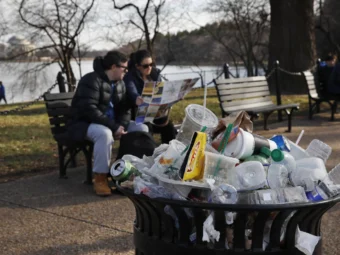
A trash can overflows as people sit outside of the Martin Luther King Jr. Memorial in Washington, D.C. (Jacquelyn Martin/AP)

Just for a minute, think about how much of the plastic you use today will end up as trash. Drink bottles? Grocery bags? Food wrappers? If you live in the United States, it’ll probably add up to about a pound of stuff — just today.

Most plastic is dumped in landfills or becomes pollution in places like rivers and oceans, according to the Organisation for Economic Co-operation and Development. Along the way, it sheds microplastics that can make their way into animals and people. Just 4% of plastic in the U.S. is recycled.

It wasn’t always this way. But over the past 70 years, plastic has become embedded in nearly every aspect of human life. The world produces around 230 times more plastic now than it did in 1950, according to Our World in Data.

As production soared, so did pollution. Many scientists and activists say chemical and fossil fuel companies make too much plastic now for society to manage sustainably. The United Nations says the problem is also being fueled by a “worrying shift” toward single-use products and packaging, which are designed to be used once and thrown away.

Plastic became ingrained in modern life in large part because the plastics industry started working in the 1950s to convince people to embrace the material as cheap, abundant and disposable.

The marketing campaign worked so well that litter soon became a problem across the U.S., and there was a public backlash. The industry responded by pitching recycling. But almost from the outset, corporations knew that recycling probably wouldn’t work to rein in waste, multiple investigations have shown.

Now, faced with spiraling plastic pollution, the U.N has set out to write a legally-binding agreement to deal with the problem. But the negotiations are fraught.

And even if nations can broker a deal, it’ll be a daunting task to actually reduce the world’s consumption of plastic, which is in almost everything, from clothing and diapers to medical devices.

“We’ll continue to need plastic for specific uses,” Inger Andersen, executive director of the United Nations Environment Programme, said at the latest round of U.N. negotiations in Canada in April. “But there’s a growing agreement,” she said, that a lot of single-use plastic “can probably go.”

Vintage Bakelite and other plastic objects at a museum in England. (Matt Cardy/Getty Images/Getty Images Europe)

The plastics industry pitched disposability to make more money

As part of the treaty talks, some countries want to cap production of new plastic, which is made from oil and gas. However, those efforts are opposed by big fossil fuel producers that are determined to keep plastic demand growing. State and local governments in the U.S. have tried to limit pollution by passing laws that ban plastic shopping bags or single-use plastic bottles.

The industry has responded by fighting regulations that could hurt demandfor its products. It says the solution to environmental problems is better recycling, not using less plastic.

Matt Seaholm, chief executive of the Plastics Industry Association, says his group is advocating on behalf of plastic producers and consumers alike, since “it is an essential part of society at this point.”

Synthetic plastic was patented in the early 1900s. It was known as Bakelite, and it sparked a boom in durable and affordable consumer goods. Soon, companies started selling different kinds of plastic. At first, most of it was marketed as sturdy and reusable. One television ad from 1955 — about a made-up homemaker named Jane in a made-up place called Plasticstown, USA — touts how plastic containers are ideal for families because they won’t break if kids accidentally drop them.

But soon, the messaging started to change. In 1956, the industry learned about a new way to boost sales — and profits. At the plastics industry’s annual conference in New York, Lloyd Stouffer, the editor of an influential trade magazine, urged executives to stop emphasizing plastics’ durability. Stouffer told the companies to focus instead on making a lot of inexpensive, expendable material. Their future, he said, was in the trash can.

Companies got the message. They realized they could sell more plastic if people threw more of it away. “Those corporations were doing what they’re supposed to do, which is make a lot of money,” says Heather Davis, an assistant professor at The New School in New York who’s written about the plastics industry.

Garbage is dumped at the Fresh Kills Landfill in Staten Island, New York, in 1989. (David Cantor/AP/AP)

Throw-away living was a foreign concept in 1950s America

But getting people to throw away items after a single use took a lot of work.

Adults in the 1950s had lived through The Great Depression and World War II, and they were trained to save as much as possible, Davis says.

“It was a really difficult sell to the American public in the post-war period, to inculcate people into a throwaway living,” she says. “That is not what people were used to.”

A solution companies came up with was emphasizing that plastic was a low-cost, abundant material.

A 1960 marketing study for Scott Cup said the containers were “almost indestructible,” but that the manufacturer could still convince people to discard them after a few uses. To counter any “pangs of conscience” consumers might feel about throwing them away, the researchers suggested a “direct attack”: Tell people the cups are cheap, they said, and that “there are more where these came from.”

A few years later, Scott ran an advertisement saying its plastic cups were available at “‘toss-away prices.”

In a 1963 report for another plastics conference in Chicago, Stouffer congratulated the industry for filling dumps and garbage cans with plastic bottles and bags.

“The happy day has arrived,” Stouffer wrote, “when nobody any longer considers the [plastic] package too good to throw away.”

Workers remove garbage floating on the Negro River in Manaus, Brazil. (Edmar Barros/AP/AP)

A booming market hit a consumer backlash

By the early 1970s, plastics were booming. The market was expanding faster than the “rosiest of predictions,” and its growth prospects were “out of sight,” an executive at the chemical company DuPont told the Chamber of Commerce in Parkersburg, West Virginia, in 1973. Soon, big soft drink companies introduced plastic soda bottles.

But the industry faced a growing public-relations problem that was especially threatening to beverage companies, whose names were stamped on the packaging: Plastic litter was becoming an eyesore across the country.

“Even if you’ve convinced people that maybe the disposability of plastics isn’t such a bad thing, people are still seeing this waste out in public,” says Bart Elmore, a professor of environmental history at Ohio State University.

So drink makers went on offense. Elmore says they fought bans on throw-away bottles and joined the plastics industry in pushing recycling as an environmental solution.

However, multiple investigations, including by NPR, have shown that plastics industry representatives long knew that recycling would probably never be effective on a large scale. Officials have said they encouraged recycling to avoid regulations and ensure that demand for plastic kept growing.

Trade groups for plastic companies say those investigations don’t accurately reflect today’s industry.

There isn’t evidence that drink makers were part of those internal discussions about recycling’s viability. But Elmore says they should have had enough information at the time to know recycling was a risky bet.

In 1976 — two years before big soft-drink makers introduced plastic soda bottles — a study by the U.S. Food and Drug Administration concluded that “substantial recycling of plastics is unlikely in the near future.” That echoes the agency’s 1975 draft report that found “recycling of plastic bottles is unlikely to be commercially feasible.”

“To make a gamble like that, where public agencies and public documents are saying this at the time, I think raises real questions about culpability, accountability in an era when I think a lot of people are asking for that,” Elmore says.

Less than 10% of plastic waste is recycled globally. As countries try to negotiate a global waste agreement, activists and scientists are focusing a lot of their attention on chemical and fossil fuel companies that make plastic. But Elmore says consumer goods companies like beverage makers also deserve scrutiny, because they use a ton of plastic packaging and rank as some of the biggest plastic polluters globally.

“If they take a stand, one way or the other, it has a huge global impact,” Elmore says.

A business group called the American Beverage Association said in a statement to NPR that one of its highest priorities is creating a so-called circular economy where plastic is recycled and reused to prevent waste.

An aerial view of Buffalo, New York, facing Lake Erie. (Bruce Bennett/Getty Images/Getty Images North America)

A lawsuit aims to hold a major plastic polluter accountable

The disposable culture that was fostered by the plastics industry is playing out in places like the Buffalo River, which empties into Lake Erie in western New York. Plastic debris litters the banks of the river, and it breaks down into fragments called microplastics that accumulate in the lake, contaminating drinking water for about 11 million people.

One morning this spring, volunteers met at the river to clean up some of the pollution. “We see plastic tops, bottles, we have single-use plastics from takeout food,” says Jill Jedlicka, who leads Buffalo Niagara Waterkeeper, a nonprofit that organized the event.

It’s constant work. The debris that volunteers collected will be replaced in weeks by more plastic trash. “It’s an onslaught,” Jedlicka says.

A lot of the plastic waste around the Buffalo River is packaging sold by the food and beverage giant PepsiCo, according to a lawsuit that New York State Attorney General Letitia James filed last year against the company. New York prosecutors say plastic pollution around the Buffalo River is a public nuisance, and that Pepsi contributes to the problem by selling tons of single-use packaging.

Activists say lawsuits like the one New York filed against Pepsi are a way to try to hold corporations accountable.

In a court filing, Pepsi said it isn’t responsible for the Buffalo River pollution, and that it shouldn’t have to warn people that plastic waste poses environmental and health risks.

“Consumers are more than capable of purchasing a beverage or snack product, consuming it, and placing the packaging in a recycling or waste bin,” the company said.

Researchers say companies often blame consumers when plastic waste gets into the environment.

Pepsi said in statements to NPR that “no single group or entity bears responsibility for plastic pollution,” and that it is trying to improve recycling and reduce how much new plastic it uses.

However, in its latest sustainability report, Pepsi said its use of new plastic increased slightly in 2022, partly because recycled material was expensive and hard to find. Pepsi isn’t alone: Despite growing public pressure, companies increased their use of new plastic by 11% between 2018 and 2022, according to data compiled by the Ellen MacArthur Foundation.

“There is so much that the plastics industry needs to do to improve the sustainability of plastics,” says Shelie Miller, a professor at the School for Environmental Sustainability at the University of Michigan. But she says consumer culture is also part of the problem.

“If our stance is, consumers should be able to consume whatever they want in whatever quantity they want and it’s someone else’s job to deal with it,” Miller says, “that’s not a path toward sustainability.”

They were there on D-Day, on the beaches and in the skies. This is what they saw

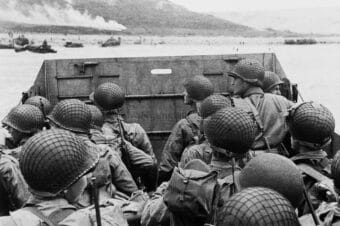
American soldiers huddle inside a landing craft approaching Utah Beach during the Allied invasion of Normandy, France, on D-Day. (U.S. Army Photo/AFP via Getty Images)

This is part of a special series where NPR looks back at our coverage of major news stories in the past.

Frank Walk was in a hurry.

The U.S. Army captain had been ordered to bring top-secret planning documents to Gen. Dwight D. Eisenhower’s headquarters, which at the time was a 19th-century manor near Portsmouth, England. It was just before the Allied invasion of Nazi-occupied Normandy, France, on June 6, 1944.

Walk said he remembered a speedy, cross-country jeep ride to make his delivery.

“That was a pretty hairy ordeal, and all the time, I was afraid that I wasn’t going to get back to our staging area in time to board the ship for the crossing,” he told NPR’s Talk of the Nation in 2004. Later, Walk said, he wished he’d missed the trip.

He was one of more than 150,000 U.S., British and Canadian troops who stormed the Normandy beaches on D-Day — and one of a handful who in the decades after told NPR about their experience. The invasion was the largest amphibious assault in history, and a crucial turning point in World War II.

More than 6,000 ships and landing craft crossed the English Channel in the mission. Before dawn, Allied gliders and paratroopers dropped behind enemy lines. There were more than 11,000 planes, including bombers that sought to weaken the so-called Atlantic Wall of German defenses.

Jim McLaughlin had a front-row seat: the top turret of a B-26 bomber.

“I couldn’t believe that there were that many ships in the whole world — all headed in the same direction,” he told NPR in 1994. “And then a few moments later to see that beach.”

Hitting the sand

Troops crowded into small, narrow landing craft, designed to hold about three dozen men in an area smaller than a parking space. Walk, a combat engineer tasked with clearing Nazi fortifications, was caught in strong winds and rough seas.

“We had a hard time getting into the boat in the first place. It was bouncing around, waves blowing over the side. Wasn’t long before all of us aboard that little boat were seasick,” he said. “Then we began to say, ‘Gee, when can we get to shore?’ ”

“Again, when we got there, we wished we weren’t there,” Walk added.

Allied troops landed at five beachheads along a 50-mile stretch of coastline. The beaches were codenamed Utah, Omaha, Gold, Juno and Sword. Cpl. William Dabney served with the First Army’s 320th Anti-Aircraft Barrage Balloon Battalion, an all-Black unit.

“We saw guys crying, we saw guys after they got off, they [were] throwing up,” he said. “Everybody was scared to death. But you did what you had to do. You tried to protect yourself and save your life.”

Soldiers charged head on into Nazi gunfire, landmines and barbed wire. Pvt. Harold Baumgarten remembered wading through neck-deep water, and a bullet striking his rifle near the trigger.

“A half-inch to either side would have gone through my chest,” Baumgarten told NPR’s Morning Edition in 1994.

What reporters saw on D-Day

Correspondents covered the invasion, including writer Cornelius Ryan. His 1959 book The Longest Day told the story of June 6, becoming a best-seller with an all-star film adaptation led by John Wayne.

Ryan remembered thousands of planes filling the sky.

“It was absolutely incredible,” he told NPR’s All Things Considered in 1972. “It was such an incredible, staggering sight that it was almost impossible to comprehend.”

There was another moment Ryan said he would never forget.

“I saw a French man and his son in a rowboat, rowing back and forth out from Omaha Beach picking up wounded and bringing them in,” he said. “We were never able to find out who that man was because if we had we would have had him decorated.”

CBS reporter Larry LeSueur came ashore, typewriter in tow, with the Army’s 4th Infantry Division. He saw dead soldiers and others badly wounded.

“I think everybody thinks of death coming as sort of a blinding flash in which you are no more. But you don’t think of being maimed or wounded,” he told All Things Considered in 1994.

LeSueur said D-Day’s human toll was at times too difficult to share to the American public.

“It never occurred to me to tell them about certain things I had witnessed. It wasn’t my place to do so,” LeSueur said. “I mean, everybody would think it was their own son — I didn’t have his name. Next of kin had to be notified anyway if a man were wounded or dead. It wasn’t my place.”

A pivotal moment

Securing the Normandy beaches gave the Allies a solid foothold on the European continent, but the victory came at enormous cost. More than 4,000 Allied troops were killed or wounded, including 2,501 Americans. There were several thousand German casualties.

As D-Day turned to D-Day “plus one,” Eisenhower said in a broadcast address that the invasion was “but the opening phase of the campaign in Western Europe.

“I call upon all who love freedom to stand with us now. Keep your faith staunch. Our arms are resolute. Together we shall achieve victory,” he said.

Copyright 2024 NPR
Site notifications
Update notification options
Subscribe to notifications