For decades, researchers in the U.S. had to use only marijuana grown at a facility located in Oxford, Mississippi. A few other approved growers have been added in recent years. (Brad Horrigan/Hartford Courant/Tribune News Service via Getty Images)
As the Biden administration moves to reclassify marijuana as a less dangerous drug, scientists say the change will lift some of the restrictions on studying the drug.
But the change won’t lift all restrictions, they say, neither will it decrease potential risks of the drug or help users better understand what those risks are.
Marijuana is currently classified as a Schedule I controlled substance, which is defined as a substance with no accepted medical use and a high potential for abuse. The Biden administration proposed this week to classify cannabis as a Schedule III controlled substance, a category that acknowledges it has some medical benefits.
The current Schedule I status imposes many regulations and restrictions on scientists’ ability to study weed, even as state laws have made it increasingly available to the public.
“Cannabis as a Schedule I substance is associated with a number of very, very restrictive regulations,” says neuroscientist Staci Gruber at McLean Hospital and Harvard Medical School. “You have very stringent requirements, for example, for storage and security and reporting all of these things.”
These requirements are set by the Food and Drug Administration, the Drug Enforcement Administration, the Institutional Review Board and local authorities, she says. Scientists interested in studying the drug also have to register with the DEA and get a state and federal license to conduct research on the drug.
“It’s a burdensome process and it is certainly a process that has prevented a number of young and rather invested researchers from pursuing [this kind of work],” says Gruber.
Reclassifying the drug as Schedule III puts it in the same category as ketamine and Tylenol with codeine. Substances in this category have accepted medical use in the United States, have less potential for abuse than in higher categories and abuse could lead to low to moderate levels of dependence on the drug.
This reclassification is “a very, very big paradigm shift,” says Gruber. “I think that has a big trickle down effect in terms of the perspectives and the attitudes with regard to the actual sort of differences between studying Schedule III versus Schedule I substances.”
Gruber welcomes the change, particularly for what it will mean for younger colleagues. “For researchers who are looking to get into the game, it will be easier. You don’t have to have a Schedule I license,” she says. “That’s a big deal.”
The rescheduling of cannabis will also “translate to more research on the benefits and risks of cannabis for the treatment of medical conditions,” writes Dr. Andrew Monte in an email. He is associate director of Rocky Mountain Poison and Drug Safety and an emergency physician and toxicologist at the University of Colorado School of Medicine.
“This will also help improve the quality of the research since more researchers will be able to contribute,” he adds.
But the change in classification won’t significantly expand the number of sources for the drug for researchers, says Gruber. For 50 years, researchers were allowed to use cannabis from only one source – a facility at the University of Mississippi. Then, in 2021, the DEA started to add a few more companies to that list of approved sources for medical and scientific research.
While she expects more sources to be added in time, she and many of the researchers she knows have yet to benefit from the recently added sources, as most have limited products available.
“And what we haven’t seen is any ability for researchers –cannabis researchers, clinical researchers – to have the ability to study products that our patients and our recreational consumers or adult consumers are actually using,” she adds. “That remains impossible.”
There is very little known information about what is in cannabis products on the market today. Some studies show that the level of THC, the main intoxicant in marijuana, being sold to consumers today is significantly higher than what was available decades ago, and high THC levels are known to pose more health risks.
And Monte cautions that the reclassification itself doesn’t mean that cannabis has no health risks. Monte and his colleagues have been documenting some of those risks in Colorado by studying people who show up in the emergency room after consuming cannabis. Intoxication and cyclical vomiting (cannabinoid hyperemesis syndrome) and alarming psychiatric symptoms such as psychosis are among the top problems bringing some marijuana users to the hospital.
Research on cannabis has been lacking surveillance of these kinds of impacts for decades, he says. And rescheduling the drug will not fill that “gaping hole in risk surveillance,” he writes.
Copyright 2024 NPR. To see more, visit https://www.npr.org.
White-tailed deer have expanded their range in North America over many decades. Since the early-2000s, these deer have moved north into the boreal forests of western Canada. These forests are full of spruce and pine trees, sandy soil and freezing winters with lots of snow. They’re basically your typical winter wonderland in theory — but actually living there can be harsh.

Ecologists haven’t known whether a warmer climate in these forests is drawing deer north, or whether human land development might play a bigger role.
“Human land use and climate change are both leading causes of biodiversity loss. But more often than not, those two things are highly intertwined, and it’s really tricky to tell which one is the root cause — or if it’s both,” Melanie Dickie, a wildlife biologist at the University of British Columbia, Okanagan says. “We really need to know which one it is so we can have a better idea of what to do about it.
Dickie described these deer as an “invasive species.” Because more deer in these forests can have an impact on other species like boreal caribou. With deer come more predators like wolves. While deer are able to cope with living alongside predators like wolves, caribou are not. Dickie says they’ve evolved to mostly just avoid areas with lots of predators. And that gets tricky when there are more wolves around.
She also says that deer are really just one piece of the puzzle for boreal caribou — but having more information about what exactly is driving deer expansion helps her and other researchers figure out where to start when it comes to restoring land and protecting wildlife.
Listen to every episode of Short Wave sponsor-free and support our work at NPR by signing up for Short Wave+ at plus.npr.org/shortwave.
Today’s episode was produced by Rachel Carlson and Kai McNamee. It was edited by Rebecca Ramirez and Christopher Intagliata. Emily Kwong, Regina G. Barber and Rachel Carlson checked the facts. Patrick Murray and Stu Rushfield were the audio engineers.
Copyright 2024 NPR. To see more, visit https://www.npr.org.
Built in 1921, the New Salem Baptist Church served Black coal miners and their families in Tams, W.Va. (Cody Straley/WV SHPO/National Trust for Historic Preservation)
There’s a lonely old church in the mountains of West Virginia that holds a hidden history. Black coal miners in a segregated camp worshipped there starting in the 1920s. Now, the New Salem Baptist Church is listed as one of America’s 11 most endangered historic sites.
The National Trust for Historic Preservation has released a list highlighting such places every year since 1988. Carol Quillen is the organization’s new president and CEO. Trained as a historian, she was the first female president of Davidson College in North Carolina.
“I studied the past largely through texts, not places,” Quillen told NPR. “And the difference between imagining one’s relationship to the past through experiencing a place and reading a book in a library is really profound. So I love the way these places, which themselves hold layers and layers of stories, and invite us in the present to connect our stories to the ones these places hold.”
Quillen said the push to preserve the New Salem Baptist Church came from a white Catholic woman whose father was the town’s milkman. She enlisted not just the descendants of the church’s original parishioners but also local ATV riders who could see and admire the church from a mountain trail.
“I love stories like that where a preservation project can mobilize folks who normally wouldn’t encounter one another to work together on something significant to all of them,” Quillen said. “And in that work, transform what the place can mean.”
Black residents of Eatonville, Fla., have been trying to preserve their hometown for decades. One of the first self-governing all-Black towns in the United States, Eatonville was immortalized in the classic 1937 novel Their Eyes Were Watching God by Zora Neale Hurston. The legendary Harlem Renaissance writer and anthropologist once described her hometown as “the city of five lakes, three croquet courts, 300 brown skins, 300 good swimmers, plenty guavas, two schools and no jailhouse.”
Hungerford Vocational School students in 1933 in Eatonville, Fla. (Preserve the Eatonville Community Archives/National Trust for Historic Preservation)
In a 2015 NPR story reported by Renata Sago, residents dreamed of an Eatonville reborn as a year-round heritage destination and remembered it as a refuge during the days of Jim Crow.
“We didn’t lock our doors and kids could go out and play,” recalled an elderly resident, Maye Saint Julian. “And everybody knew everybody. And all of these people that we honor so — James Brown, B.B. King, Lionel Hampton — these people came to Eatonville on a regular basis.”
Thomas House is the oldest structure in Eatonville and the original site of the St. Lawrence African Methodist Episcopal Church. (Melissa Jest/National Trust for Historic Preservation)
Ideally, Eatonville and many other sites on the list, such as the Cindy Walker House, could eventually become better-known cultural destinations. Located in Mexia, Texas, the ramshackle white frame structure was where a remarkable, unsung figure in country music lived for many years. Walker was one of the few female songwriters of her era. She wrote country standards and number one hits for Roy Orbison, Merle Haggard, Elvis Presley and more.
Country singer Cindy Walker’s home in Mexia, Texas. (Cindy Walker Foundation/National Trust for Historic Preservation)
After she died in 2006, Walker’s house was left abandoned. A handful of fans and heirs formed a foundation in her honor and purchased it in 2022.
“They found all kinds of things there,” Quillen said. “They found her typewriter. They found her country music awards. They found songs that no one had ever heard before.” One of those songs was a lost demo, called “Tennessee Rain,” that can be heard in the audio version of this story.
This press photo of country singer Cindy Walker was among many never-before-seen photos recovered from the home. (Cindy Walker Foundation/National Trust for Historic Preservation)
Over the past three decades, the National Trust has seen some triumphs with its annual list of endangered places. Dozens of them have been saved, including the Antietam National Battlefield in Maryland, which narrowly missed becoming the site of a shopping mall, and Little Rock Central High School, where young Arkansas students helped overturn a legacy of legal segregation in 1957.
Now established by Congress as a National Historic Site, it’s still a working public high school and a center for education about the country’s civil rights.
“We don’t want to spray these sites with ScotchgarEd, you know, and roll them off,” Quillen said. “We really want to reinvigorate them so that they’re active, exciting places for people to go so that they can continue to bring people together now and long into the future.”
Here are the rest of the endangered historic places on the list this year:
Tarps cover hurricane damage on the roof of the Estate Whim Great House. (St. Croix Landmarks Society/National Trust for Historic Preservation)
Estate Whim Museum, Frederiksted, St. Croix, U.S. Virgin Islands: “Established during the colonization of St. Croix by Denmark, Estate Whim was a plantation producing cotton and sugar for export. The lives and legacies of those enslaved by plantation owners and those who continued to labor there for meager wages for a century after emancipation are inextricably tied to the site, which now hosts a museum, library and archives, and public programming. Repeated hurricanes have damaged many of Estate Whim Museum’s historic buildings and structures.”
The Hudson-Athens Lighthouse is one of two “middle-of-the-river” lighthouses left standing on the Hudson River. (David Oliver/National Trust for Historic Preservation)
Hudson-Athens Lighthouse, Athens, N.Y.: “Opened in 1874, the Hudson-Athens Lighthouse used to be one of several ‘middle-of-the-river’ lighthouses on the Hudson River. Now, it’s one of only two left standing. However, due to erosion and other preservation challenges, engineering reports indicate the building is at risk of collapse within three years if no action is taken.”
1st Street is the major thoroughfare in Los Angeles’ Little Tokyo. Kristin (Fukushima/National Trust for Historic Preservation)
Little Tokyo, Los Angeles, Calif.: “Little Tokyo is one of only four remaining Japantowns in the United States and one of the oldest neighborhoods in Los Angeles, but its unique character is endangered by large-scale development and transit projects and displacement of legacy businesses and restaurants.”
Minute Men and British reenactors fire a musket salute off the North Bridge at Minute Man National Historical Park. (Neil Lynch/National Trust for Historic Preservation)
Minute Man National Historical Park, Walden, and nearby landmarks, Massachusetts: “Minute Man National Historical Park and the nearby areas of Concord, Lexington, Lincoln, and Bedford are home to places of great significance in American history, including Walden Pond and Woods and the preserved homesteads of authors and environmentalists: Little Women’s Louisa May Alcott, Nathaniel Hawthorne, Ralph Waldo Emerson, and Henry David Thoreau. A proposed major expansion of nearby Hanscom Field airport could significantly increase private jet traffic, leading to increased noise, vehicular traffic, and negative environmental and climate impacts.”
Theodore Roosevelt High School in Gary, Ind., in 2015. (Tiffany Tolbert/National Trust for Historic Preservation)
Roosevelt High School, Gary, Ind.: “Theodore Roosevelt High School in Gary was built in 1930 specifically to serve the educational needs of Black Americans and has graduated notable alumni including professional athletes, well-known actors, and members of The Jackson 5. The school has been unoccupied and deteriorating since 2019.”
A view of Sitka Indian Village from across Sitka Harbor, circa 1900-1930. (Library of Congress/National Trust for Historic Preservation)The Sitka Tlingit Village in 2024. (James Poulson/National Trust for Historic Preservation)
Sitka Tlingit Clan Houses, Sitka, Alaska: “The Sitka Tlingit Clan Houses in southeast Alaska are critically important to both the history and the future of the Lingít (commonly spelled in English as “Tlingit”). For many years, the matrilineal clan structure of multigenerational extended families living together in clan houses was discouraged in favor of the Western practice of living with nuclear families. Today, only eight of the original 43 clan houses remain and even fewer still function as clan houses in the traditional way.”
Tangier American Legation’s main courtyard. (Tangier American Legation Institute for Moroccan Studies/National Trust for Historic Preservation)
Tangier American Legation, Tangier, Morocco: “In 1821, the Tangier American Legation in Morocco was gifted to the United States by the Moroccan Sultan as a token of friendship, becoming the first American public property located abroad, and subsequently served as a U.S. diplomatic mission for a record 140 years. Now a cultural center, museum, and research library, the Legation is in urgent need of structural stabilization and repairs following the recent collapse of an adjacent building.”
A cannon on the Wilderness National Military Park. (Lori Coleman/American Battlefield Trust/National Trust for Historic Preservation)
Wilderness Battlefield Area, Orange County, Va.: “The Battle of the Wilderness marked a pivotal turning point in the Civil War, but today, not all the historically significant landscape is protected. Proposed large new developments, including millions of square feet of industrial data centers and thousands of homes, may negatively impact important historic sites and landscapes and degrade the visitor experience.”
Copyright 2024 NPR. To see more, visit https://www.npr.org.
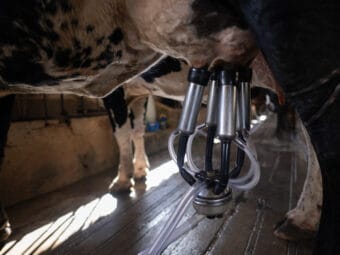
Bird flu is spreading through U.S. dairy cattle. Scientists say the risk to people is minimal, but open questions remain, including how widespread the outbreak is and how the virus is spreading. (DOUGLAS MAGNO/AFP via Getty Images)
Still, scientists don’t view this as an immediate threat to human health.
Genetic material is not the same as infectious virus and pasteurization is expected to inactivate the virus in milk, but the findings speak to the broader uncertainty about the extent of the spread.
“There’s so many critical things that we still need to know to get a better perspective on how bad this is, or maybe it’s not so bad,” says Dr. Rick Bright, a virologist and the former head of the Biomedical Advanced Research and Development Authority (BARDA).
Federal health agencies started sharing more details publicly this week, but Bright says there’s still not enough transparency.
“It’s the void that just leaves everyone nervous,” he says
Other scientists say the reality is that there are still many unresolved questions about this outbreak, given how novel it is.
“There’s a couple big unknowns at this point,” says Louise Moncla, a virologist at the University of Pennsylvania School of Veterinary Medicine.
Here’s what scientists who are tracking the virus still want to know:
How widespread is the virus in dairy cattle?
That’s still far from clear.
While the official tally shows it’s been detected in nine states and just over 30 herds, the actual number could be much larger.
First of all, there hasn’t been widespread testing in cattle.
The fact that viral material is now being found in retail milk suggests “this virus is probably spread around quite a bit,” says Richard Webby, a virologist at St. Jude Children’s Research Hospital in Tennessee.
On Thursday, the FDA said that preliminary results from nationwide samples of retail milk indicate about one in five samples are positive for viral traces. A survey of retail milk in the Midwest found 58 out of 150 samples were positive, according to Andrew Bowman at the Ohio State University.
Webby discovered this himself when he went to the store to grab a carton of milk, which he intended to use as a negative control in his work on H5N1.
To his surprise, even that ended up being positive (unfazed, he kept the milk).
Currently the virus has only been detected in a tiny fraction of dairy herds in the U.S., but it’s hard to know the significance of that finding when you don’t also have details on the overall number of cattle tested, says Dr. Tom Inglesby, director of the Johns Hopkins Centers for Health Security.
“Those are kind of basic questions that would really help get us more ground truth quickly,” he says.
The USDA has just taken some new steps that could offer a better picture of the outbreak. There will be mandatory reporting of positive tests in cattle and a requirement that dairy cattle test negative for the virus before they move across state lines.
Potentially complicating the picture: Some unknown number of cattle could be shedding the virus without showing obvious symptoms. Federal health officials have confirmed this.
“We don’t know how many animals have this,” says Alexis Thompson, a veterinarian at Texas A&M Veterinary Medical Diagnostic Laboratory. “There has been very little sampling done. We don’t know how many [sick] animals we have. We don’t know how many asymptomatic animals we have. That testing has not been done.”
Because milk from sick cows is supposed to be discarded, this could help explain how remnants of the virus entered the milk supply.
If it turns out there are lots of animals shedding the virus and not symptomatic, the outbreak could be “substantially larger” than we realize, says Inglesby. “To get to the bottom of that, we would need to do surveillance testing in places that don’t already have clear outbreaks.”
Does the milk testing positive on retail shelves contain infectious virus?
So far, it doesn’t appear that way, but scientists who are studying this possibility acknowledge it’s too soon to say that with absolute certainty.
The PCR testing that has found evidence of viral fragments in the milk on grocery store shelves doesn’t actually tell you whether or not it’s “live” virus, meaning whether it’s capable of replicating.
This form of testing is extraordinarily sensitive and detects small pieces of genetic material, says Lee-Ann Jaykus, a food microbiologist at North Carolina State University.
“There’s evidence that that milk at one point in time may have had virus associated with it, but there is no evidence that that virus would be infectious, at least with the information we currently have,” she says.
Pasteurizing milk can knock out bacteria and viruses; however, it doesn’t erase every trace of those germs.
Federal health officials have stressed that avian influenza doesn’t stand up well to the high temperatures and past research on pasteurization indicates “it’s very likely to effectively inactivate heat-sensitive viruses like H5N1 in milk from cows.”
“We’ve seen nothing that would change our assessment that the commercial milk supply is safe,” said Don Prater from the Food and Drug Administration.
Research on pasteurization in eggs, which happens at a lower temperature than milk, shows that the process inactivates the bird flu virus.
Jaykus and other scientists agree that finding viral material doesn’t necessarily suggest an immediate threat to human health.
“It’s really important to sort of not get out of control about fear of consuming milk,” says Jaykus.
There is an important caveat though: There has been no direct research on how pasteurizing cow milk affects bird flu virus. Those studies are taking place right now.
Early experiments on a small number of samples suggest there is no viable virus in these positive samples, said Jeanne Marrazzo, who directs the National Institute of Allergy and Infectious Diseases.
Webby, who looked at samples of milk sent by Bowman, says they tried to grow the virus in cultured cells and embryonated chicken eggs — two places where flu loves to grow — and found that it did not reproduce.
“It’s pretty good evidence,” he says, “We could never say there’s none, but we could say if it’s there, it’s at a very, very, very low level.”
Jaykus says even if the milk did happen to have a small amount of infectious virus, “there just isn’t evidence that that is a transmission route for flu.”
Rick Bright, on the other hand, has more concerns about the milk.
“It’s a small inconvenience for me not to drink milk until we have more data,” he says, “It doesn’t mean that I think everyone should stop drinking milk. It’s a personal risk assessment.”
He says the key question is how much virus is in the milk, and whether that changes if more cows get sick and more virus enters the milk supply.
“The higher the viral load in the milk, the more difficult it is for pasteurization to work completely,” he says. “If they show at this point there’s no viable virus in the milk, that’s a point in time. And what’s going to be really critical is that the FDA continues to monitor this.”
How exactly is the virus spreading?
For weeks, the leading theory has been that the primary route of spread is through the milk. This is where high concentrations of the virus are being found.
This general idea was affirmed again this week by Mike Watson with the United States Department of Agriculture’s Animal and Plant Health Inspection Service, who said the evidence still points to some form of “mechanical transmission.”
Virus could be spread on “milking equipment,” by “individuals moving from facility to facility,” and via rodents that come in contact with milk and then move around, he said.
Federal health officials and scientists believe the virus has moved with lactating cattle from one herd to another. But how it’s getting from one cow to another on a given farm “is a key missing piece of knowledge,” says Webby.
Genetic sequencing indicates that there was likely a single introduction from birds into cattle, which then resulted in further spread among cattle, says Moncla, who has been analyzing the genomic data.
“A lot of these cattle sequences are quite similar to each other, suggesting that there’s almost certainly some degree of cattle-to-cattle transmission going on,” she says.
Moncla says it’s hard to say exactly how long the virus has been spreading through dairy cattle, although some scientists have suggested it may have been circulating for many months, even earlier than February.
The USDA has also noted another concerning development — that there have been some instances of the virus moving from domesticated poultry to cattle.
“The degree of transmission, combined with the fact that we’re likely missing cases in cattle, leads to a bit of concern,” says Moncla.
What is the risk to humans as the virus keeps spreading?
First the reassuring news: Even with all these cows being infected, there has only been one documented human infection during the current outbreak in dairy cattle.
That person, a dairy worker in Texas, had conjunctivitis.
This week, federal health officials reiterated that the overall risk to the general public remains low, in part because “we have not observed changes to the virus’s genetic makeup that would suggest an enhanced ability to spread to humans or among humans,” said Dr. Nirav Shah, principal deputy director at the CDC.
So far, states have tested 23 people for avian flu and have monitored 44 people who were considered exposed and at risk for infection, he said.
Generally, cases of bird flu are rare in humans and it takes a big dose of virus — for example through direct contact while slaughtering poultry — to get infected. Since 2022, there have been 26 human cases of H5N1 virus infection reported worldwide.
Webby says it is possible that cows don’t put that much “pressure on the virus to change,” which could be one reason scientists haven’t seen alarming mutations in the samples collected.
“I don’t think the needle has moved at all” in terms of human risk, he says.
Of course, the perennial fear is that the virus could mutate while in cows, or an intermediary animal, and then find its way into humans.
Scientists have documented some mutations in bird flu when it has spread in other mammals. But previous research has shown there needs to be a host of changes — most of all, the virus would have to evolve a way to bind to receptors in the upper airway of humans — to become a pandemic threat.
When it comes to cattle, the CDC’s Sonja Olsen says they still aren’t sure if it’s the exposure to raw milk on the farms that’s the primary risk to humans. “We don’t know if it’s [surface] transmission. We don’t know if there’s aerosolization of the milk.”
Dr. Bright says the CDC should be conducting antibody studies on dairy workers to see if human cases have escaped detection, rather than waiting for cases to show up in the emergency room.
“I am going to keep my radar up,” he says. “If this were to get out of hand, we have to be prepared to respond really quickly. And I’m not quite sure we’re fully ready to respond if we needed to.”
Copyright 2024 NPR. To see more, visit https://www.npr.org.
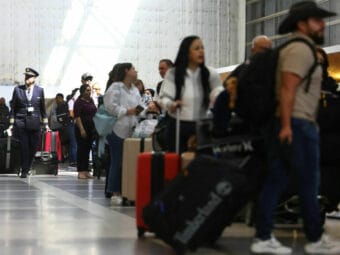
Travelers and their luggage in a terminal at Los Angeles International Airport in August 2023. (Mario Tama/Getty Images)
WASHINGTON — In an effort to crack down on airlines that charge passengers steep fees to check bags and change flights, the U.S. Department of Transportation has announced new regulations aimed at expanding consumer protections.
One of the final rules announced Wednesday requires airlines to show the full price of travel before passengers pay for their tickets. The other will force airlines to provide prompt cash refunds when flights are canceled or significantly changed.
“Passengers deserve to know upfront what costs they are facing and should get their money back when an airline owes them – without having to ask,” said Transportation Secretary Pete Buttigieg in a statement announcing the new rules.
Surprise junk fees have become a large and growing source of revenue for airlines in recent years, according to the DOT.
“Today’s announcements will require airlines to both provide passengers better information about costs before ticket purchase, and promptly provide cash refunds to passengers when they are owed — not only saving passengers time and money, but also preventing headaches,” Buttigieg said.
The airline industry is unlikely to welcome the new rules. At a hearing on the proposed fee rule in March 2023, an industry lobbying group representing American, Delta and United said it would be too difficult for airlines to disclose their charges more clearly.
“The amount of unwanted and unneeded information forced upon passengers” by the new policy would only cause “confusion and frustration,” warned Doug Mullen, the deputy general counsel at Airlines for America. “Very few, if any, need or want this information, and especially when they are initially trying to understand schedule and fare options.”
But the DOT insists its new rule will give consumers the information they need to better understand the true costs of air travel.
“I believe this is to the benefit of the sector as a whole,” Buttigieg said in an interview with NPR’s Morning Edition, because passengers will have “more confidence in the aviation sector.”
The new rules require airlines to disclose all baggage, change, and cancellation fees, and to share that information with third-party booking sites and travel agents.
The regulation also prohibits bait-and-switch tactics, the DOT says, that disguise the true cost of flights by advertising a low base fare that does not include all mandatory fees.
“This is really about making sure that we create a better experience for passengers, and a stronger aviation sector in the United States,” Buttigieg said in the NPR interview.
Copyright 2024 NPR. To see more, visit https://www.npr.org.
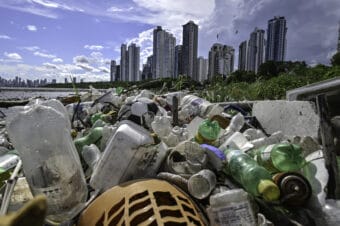
Plastic waste and garbage are seen at a beach in Panama. (Luis Acosta/AFP via Getty Images)
Negotiators from about 175 countries have been sparring for more than a year over a treaty to clean up plastic pollution that’s choking rivers and piling up in landfills. As a critical new round of deliberations starts this week in Canada, the talks are floundering.
Some scientists and civil society groups say the United States bears a lot of the blame.
Almost every piece of plastic is made from fossil fuels, and major oil and natural gas producers like Russia and Saudi Arabia have also been widely criticized for throwing up roadblocks in the negotiations. However, scientists and environmentalists following the talks say the U.S. exerts outsized influence on the process. The country is the top producer of oil and gas globally, and it has the world’s biggest economy, which has historically given the U.S. huge sway in environmental negotiations.
So far, American negotiators have been unwilling to push for measures in the treaty that would drive big cuts in plastic waste, critics say, like caps on manufacturing. Instead, they say, U.S. government representatives have put their weight behind policies around recycling and waste management that are favored by the country’s giant fossil fuel and petrochemical industries. Researchers say those actions on their own won’t drastically reduce plastic pollution.
“I don’t think it’s an understatement to say that where we’re headed at right now with progress in negotiations is towards failure. And if there’s one country that I think is responsible for that, I think it’s the United States,” says Douglas McCauley, a professor of environmental science at University of California, Santa Barbara, who has consulted with the U.S. State Department about the treaty and is attending the talks in Ottawa.
NPR spoke to seven scientists and environmental advocates who have consulted with the U.S. government about the plastics negotiations, some multiple times. Many of those experts contend that an absence of U.S. leadership is hindering efforts to push forward a treaty with effective regulations. The outcome of the negotiations could also have big implications for human health. A recent study found plastics contain more than 4,200 hazardous chemicals, the vast majority of which aren’t regulated globally, according to the researchers.
“It’s not that the U.S. is actively opposing some of these policies that could make a difference,” McCauley says. “It’s that they are showing no action whatsoever, no ambition whatsoever, for adopting any of these policies.”
In a letter to President Biden in March, a coalition of more than 300 scientists said policy recommendations the government received from plastic manufacturers — and the government’s own stance in the talks to date — are “inconsistent” with efforts to deal comprehensively with plastic waste. And a group of nine Democratic attorneys general whose states are grappling with plastic pollution recently urged the U.S. treaty delegation to back stronger global rules, saying the country is “uniquely positioned” to influence the negotiations.
“There is an important role the U.S. could play in addressing the growing influence of industry on these negotiations,” says Carroll Muffett, chief executive of the Center for International Environmental Law who is an observer at the negotiations and whose organization has consulted with the State Department about the treaty. “So far, we have yet to see the U.S. on the right side of that issue.”
A State Department spokesperson said in a statement to NPR that U.S. officials met with “a wide set of stakeholders” ahead of the negotiations in Canada, and that the country has a “central role in bridging differing positions” in the talks. For an agreement to be effective, it needs to be supported by every country, the spokesperson said, including major plastic producers and consumers.
Matt Seaholm, chief executive of a business group called the Plastics Industry Association, says the U.S. is doing “a very good job of trying to balance all of the interests” of different stakeholders.
“The U.S. government has positioned itself well to drive forward a workable, consensus-based agreement,” Ross Eisenberg, president of another industry group called America’s Plastic Makers, said in a statement.
A climate activist holds a banner next to a plastic installation after marching to demand reductions in global plastic production ahead of negotiations in Kenya in November 2023. (Luis Tato/AFP via Getty Images)
It’s a pivotal moment in the negotiations
The world produces about 400 million metric tons of plastic waste every year, according to the United Nations Environment Programme — roughly the weight of every human on the planet. Most of it ends up in places like oceans, shorelines and landfills, where it breaks down into tiny pieces called microplastics that have been found in every corner of the environment and inside human bodies.
The problem is getting worse. The amount of plastic waste the world produces is expected to almost triple in the coming decades, with less than a fifth recycled, according to the Organisation for Economic Co-operation and Development. So in 2022, countries agreed to negotiate a legally binding agreement to “end plastic pollution.”
With months to go before a deadline to hash out the treaty, interest groups on all sides of the issue say this is a pivotal moment. The last round of negotiations in Kenya ended in deadlock. Afterward, environmental groups warned the talks were at risk of collapsing after some oil- and gas-producing countries blocked a final decision on how to move forward.
The negotiations are happening at a time when the oil and gas industry increasingly sees petrochemicals as a core part of their business. Efforts to limit the risks from climate change threaten demand for fossil fuels, but oil and gas demand for petrochemicals is expected to keep rising for years, industry analysts say.
Magnus Løvold, a policy advisor at the Norwegian Academy of International Law, says fossil-fuel producers including Russia, Saudi Arabia, Qatar, Iran and Bahrain “want this process to fail.”
An observer at the negotiations, Løvold adds: “The reason for that is that these countries, they have huge oil production, they have a considerable petrochemical industry, so they see that regulation of plastics is a threat to their economic interest.”
Experts who have met with the State Department and who have attended the talks say U.S. negotiators could be handcuffed by domestic politics. It would be “probably impossible” for the Biden administration to convince two-thirds of the Senate to approve a plastics treaty, says Løvold of the Norwegian Academy of International Law.
The U.S. government “does not want to be the bad guy,” says Erica Nuñez, head of The Ocean Foundation’s plastics initiative who has consulted with the State Department. “I think they do really want to come out of this with some wins. And I think they’re very challenged right now in identifying what those wins are [realistically] within the U.S. context.”
Against the backdrop of booming fossil fuel production, U.S. negotiators at the talks have declined to back a binding global agreement, say the state attorneys general and environmental advocates who have attended the talks. Instead, they say the U.S. has sought an accord that would leave countries free to decide for themselves how to clean up plastic pollution.
“The U.S. is really trying to reshape what could be a binding global treaty with binding global targets into a ground-up treaty where every country just says, ‘Alright, this is what we’re willing to do,'” says Muffett of the Center for International Environmental Law. “And that is inadequate.”
A State Department spokesperson said the agreement needs to include “universal obligations,” but that “overly prescriptive approaches” could dissuade countries that are big producers and consumers of plastic from joining. Countries should be able to meet their obligations “in ways that take into account their respective priorities and circumstances,” the spokesperson said.
The sun sets behind an oil refinery in Texas. Almost every piece of plastic is made from fossil fuels. (Marc Felix/AFP via Getty Images)
The plastic industry says cutting production is off limits
The plastics industry is fighting on two fronts to block treaty provisions that could constrain manufacturing. It is trying to stop countries from limiting how much new plastic is produced, and it opposes global regulations on the chemicals that companies use.
Scientists and environmental advocates say that to make a significant dent in plastic pollution, countries have to cut how much new plastic they manufacture. But plastic makers and the oil and gas industry, which includes national oil companies and publicly traded corporations, say the world needs all the plastic they can produce, and that negotiators should focus on creating a so-called circular economy where plastic is recycled and reused to prevent waste.
Current officials have said those investigations don’t accurately portray today’s industry.
“We fully and readily admit that we don’t recycle enough plastic,” says Seaholm of the Plastics Industry Association. “But what we’re saying is we want to recycle more. The industry is putting billions of dollars into recycling technologies that get us where we need to be.”
Seaholm says the industry also supports policies to encourage recycling, like making producers help pay for recycling infrastructure, and requiring companies to use some recycled material in plastic products.
A lot of experts say recycling will have to be part of the solution, because plastic is ingrained in modern life. But they say governments need to regulate manufacturing for recycling to work. The Business Coalition for a Global Plastics Treaty, which includes major brands like Coca-Cola, Unilever and Walmart, is calling for governments to phase out “problematic plastics” that are hard to recycle or that are likely to end up as waste in the environment.
A State Department spokesperson said the U.S. is advocating for measures to reduce demand for new plastic, including through government procurement policies. However, the spokesperson said countries wouldn’t be stopped from also trying to limit the supply of new plastic. A lot of countries want to do that with caps on manufacturing.
Reducing demand for new plastic is “great,” says Nuñez of The Ocean Foundation. But “we still need to directly implement policies to limit fossil fuel extraction — which is something that the U.S. is avoiding,” she says.
As for the chemicals that go into plastic, industry representatives say they should be regulated by national governments, not by a global treaty on plastic pollution.
But scientists and environmental advocates calling for global chemical regulations note that plastic waste – and the chemicals it’s made from – doesn’t stay in the country where it is produced. It floats down rivers and around oceans.
To protect people and the environment, governments that are part of the High Ambition Coalition to End Plastic Pollution, including the European Union, Canada, and the United Kingdom, as well as a number of developing countries from Rwanda to the Maldives, want to “eliminate and restrict” hazardous plastics and chemicals globally. They also want to force companies to disclose information about the chemicals they use.
“We have the evidence to show that human health and environmental health are being impacted,” says Susanne Brander, an ecotoxicologist at Oregon State University who was on a call recently with the State Department discussing the plastics treaty. “If we can’t get information on what’s being used,” she adds, “we have no way of truly making these products safer.”
Pakistani laborers, mostly women, sort through empty bottles at a plastic recycling factory in Hyderabad, Pakistan. (Pervez Masih/AP)
Lawmakers and observers warn of industry influence
But groups advocating for aggressive global rules say there’s been little progress in the negotiations. After more than a year of talks, governments still haven’t come up with a plan that has the “ambition and strength” to limit plastic production and cut down on pollution, the group of state attorneys general wrote to the State Department earlier this month. The group faulted the U.S. delegation for taking a position that “lacks concrete objectives or standards.”
“The United States has the power to persuade and to be forward-leaning,” says Margaret Spring, chief conservation and science officer at the Monterey Bay Aquarium who has consulted with the State Department on the plastics treaty and is leading a delegation at the talks for the International Science Council. “Right now, you’ve seen other countries doing that. And so that’s been disappointing to many of us.”
Negotiators face intense lobbying from groups that have big financial stakes in the plastics industry. The influence of plastic producers and petrochemical companies is “one of the largest barriers to strong action,” a group of Democrat lawmakers, as well as Vermont Sen. Bernie Sanders, an Independent, and Mohammed Chahim, a member of the European Parliament, wrote recently to Biden and leaders of the UN and European Commission.
Ahead of this week’s negotiations in Canada, the industry said it would be a mistake to talk much about manufacturing. “Certainly there are those in the [Biden] administration who would like to see some much more aggressive policies towards our industry, which we certainly don’t agree with,” says Seaholm of the Plastics Industry Association. “But there are those who are truly honest brokers that we’re continuing to work with.”
Copyright 2024 NPR. To see more, visit https://www.npr.org.
Close
Update notification options
Subscribe to notifications
Subscribe
Get notifications about news related to the topics you care about. You can unsubscribe anytime.