National News

You asked, we answered: Your questions about electric vehicles

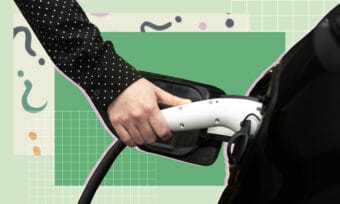
(Photo Illustration by Becky Harlan/NPR)

If you’re thinking about getting an electric vehicle, you’re not alone.

People in the U.S. buy more than a million new cars every month, and as of March, less than 10% of those are electric vehicles. But more than half of car shoppers are at least considering battery-powered cars and SUVs, according to multiple studies.

And shoppers have lots of questions. In January, The Sunday Story, an NPR podcast, asked listeners for their EV questions. More than 60 listeners sent in queries, and The Sunday Story and Life Kit teamed up to answer them. The listener questions have been edited for length and clarity.

Are EVs truly better for the planet, even with mining for batteries and fossil-fuel-based electricity to charge them? (This was the No. 1 question asked by our listeners.)

The answer is yes. Many researchers have confirmed it, and online tools let you compare the impacts for yourself. One of the most recent analyses comes from Corey Cantor with the energy research company BloombergNEF, who headlined his report last month: “No Doubt About It: EVs Really Are Cleaner Than Gas Cars.”

“Big picture, moving away from spewing more CO2 into the atmosphere is a good thing for the climate,” he says. And the environmental benefits of EVs are getting bigger over time as grids get cleaner.

Is it better from an environmental standpoint to buy an electric vehicle now, or keep driving the gas car you have until you need a new car? –Ali Mercural, Portland, Ore.

For the climate, there’s a strong case for switching now.

Yes, creating that new EV — getting the materials to build it from scratch — is resource-intensive. But the climate impact of a gas-powered car increases every single day you drive it.

To be precise, more than 85% of a gas-powered vehicle’s lifetime emissions come from using the car, not from building the car. That’s according to researchers at Argonne National Laboratory. And that means the new EV, despite its manufacturing costs, will be cleaner over time.

Jessika Trancik, a professor at the Institute for Data, Systems and Society at Massachusetts Institute of Technology, suggests taking the long view on decisions like these. Think not just about emissions right now but over the entire time you’ll own a vehicle.

“Generally speaking, switching to that electric vehicle is going to provide a benefit over the lifetime of the car,” she says.

I’m not proud, but I’ve run out of gas twice in my life. Luckily, I had friends nearby to bring me a gallon of gas. What would happen if I ran out of charge in an EV? Would a tow truck come to charge me up? How long would that take? And how embarrassing would that be?–Robin Rzechula, Chicago

We can’t promise it won’t be embarrassing, but a tow truck could tow you to a charger. In some cities, AAA will bring a mobile charger to you.

Overall, charging is a different experience than fueling up. With a combustion engine, you have to regularly make a stop at a gas station to fill up. With an EV, for daily driving, most people charge at home overnight – which drivers frequently cite as a major perk of EV ownership. (This does require the ability to charge at home).

For road trips, on the other hand, many parts of the country still have limited availability of fast chargers, which are high-speed chargers designed for use in the middle of a trip. Charger speeds and reliability at public charging stations vary, and charging takes much longer than filling up at a gas station.

So charging takes less work day-to-day, but more planning on long trips. Map out chargers on your route so you won’t find yourself calling AAA.

Does leasing an electric car come with the same perks (like tax rebates) as buying an electric car? –Hallie Andrews, Washington, D.C.

The same or better.

There’s a federal $7,500 tax credit for purchasing an EV, now available as an up-front credit toward the cost of the car. But the list of vehicles that qualify is short because of requirements meant to support U.S. jobs and supply chains. Buyers also have to be under an income cap.

Leased electric vehicles all qualify for a $7,500 credit – no matter where they’re built, with no income cap. Check your lease paperwork to confirm that the credit is being fully passed along to you.

Wouldn’t it be better to design cities around mass transit and use mass transit than get everyone to convert to electric vehicles? –Thomas Guffey, Los Angeles

Yes, designing cities to encourage mass transit – and to make them more walkable and bikeable – has a lower carbon footprint than relying on electric vehicles, in addition to other benefits. Electric bikes also have a fraction of the environmental footprint of EVs.

Switching to EVs is an important part of fighting climate change, but far from the only change that needs to happen.


The digital story was edited by Malaka Gharib. The visual editor is Beck Harlan. We’d love to hear from you. Leave us a voicemail at 202-216-9823, or email us at LifeKit@npr.org.

Listen to Life Kit on Apple Podcasts and Spotify, and sign up for our newsletter.

Copyright 2024 NPR. To see more, visit https://www.npr.org.

This year, colleges must choose between fast financial aid offers, or accurate ones

Annelise Capossela for NPR

Countless prospective college students are eager to commit to colleges, acceptances in hand, but are stuck waiting for one last piece of the puzzle: their college financial aid package. Those offers are coming later than normal this year, due to the troubled launch of the U.S. Education Department’s new federal student aid form, or FAFSA.

Some institutions are doing anything they can to get those offers out as soon as possible — even if it means they aren’t a guarantee. For example, Cal Poly Pomona has decided to send “provisional” aid offers for now, with final offers coming by the time students officially start classes.

“The goal is to have these done, you know, for sure before school starts,” says Jeanette Phillips, head of financial aid there. Phillips says other financial aid administrators in the California State University system, the largest in the country, have decided to do the same thing.

With students and families eagerly awaiting the results of their FAFSA applications, college financial aid offices are in a tough position: They need to send aid offers out as soon as possible to give students time to weigh their options, but they also don’t yet trust the FAFSA data the Education Department is sending them.

That’s because the data has been “riddled with errors or incompletions,” says Justin Draeger, the president and CEO of the National Association of Student Financial Aid Administrators.

To navigate this dilemma, Draeger says, “different schools are trying different tactics.”

“Some schools are going to send out provisional or estimated aid offers as soon as they can. Other schools aren’t able to sort through the data. They feel like they are stuck until they get more information.”

At Oregon State University, the financial aid office is taking its time. Keith Raab, the head of financial aid at OSU, tells NPR they’ve had the conversation about provisional offers, but ultimately decided against it.

“Our experience has been that those mostly add to confusion instead of making things more clear,” he says. “Students and families don’t understand why things change and we don’t want to add to their stress.”

Instead, they’re trying to be transparent about timelines, and sending frequent updates to students and parents who have already submitted their forms.

Towson University, outside Baltimore, is taking a similar approach. Boyd Bradshaw, who runs the admissions and financial aid offices there, says he wants families to know the school will be flexible.

“We’re going to work individually with each student to make sure that their financial aid package doesn’t deter their attendance,” he says.

Compounding FAFSA delays have forced colleges to act

The revamped FAFSA got off to a slow start last year, debuting three months late, and pushing back the timeline for colleges to start processing student financial aid offers. Those offers were further delayed while the department worked to fix a FAFSA math error that failed to take inflation into account. The department said it would start sending financial aid data to schools in the first half of March, just weeks before the traditional college commitment deadline of May 1.

Schools did start to receive student data in March, but in many cases, it was only by the handful: single-digit numbers of student files to start, then a few hundred, then a few thousand. The department finally cleared the backlog of applications last Friday, but shortly after, it announced that about 20% of the data was impacted by other errors.

The department said it “recognizes how important it is that schools and states have the information they need to extend financial aid offers and that families have the information they need to make critical education decisions.”

In an email to NPR, a department spokesperson said they are working to make it easier for students to apply for and receive financial aid.

The compounding delays have pushed many schools — including George Mason University in Northern Virginia and Colorado State University — to shift their commitment deadlines to mid-May or June.

And while the department is working to fix many of the errors, one is still causing difficulty for some mixed-status families, or families where the students are citizens, but the parents or guardians are not. For a while it wasn’t possible for parents without a social security number, which many non-citizens don’t have, to fill out the new form. In mid-March the department said they had fixed the problem, but was aware of continued difficulties for some students.

Some students are still locked out

Georgina García Mejía, a senior at Bethesda-Chevy Chase High School in the Maryland suburbs outside Washington, D.C., has been trying to submit her FAFSA since the beginning of February.

“I try like, four times a week,” she says. She submits the form over and over hoping for a different response. García Mejía has citizenship, but her mom does not, so she falls into that bucket of students from mixed-status families who are still locked out.

García Mejía hopes to go to Towson University, where she’s already been accepted, to stay close to her family and work toward a nursing degree. Towson’s commitment deadline is May 15.

“I’m scared that the deadline is coming really soon,” she says. “And I won’t be able to get the help that I want.”

The only guidance her counselors can give her is to call the FAFSA helpline and see if someone picks up. She says she hasn’t been calling every day, but definitely most days. “I’m never able to get to someone.”

Boyd Bradshaw, at Towson, says he’s been hearing from a lot of mixed-status students like García Mejía.

“We’ve heard the same story,” he says. “And there’s no real answer to why it works for some and not for others.”

His advice for mixed-status applicants is to try the FAFSA helpline first, and if that doesn’t work, reach out to Towson’s financial aid office.

“We’re not going to shut our doors, particularly with students who are having these challenges.”

His office is hoping to get aid offers out to students by the end of April. Towson has already extended its commitment deadline once, and Bradshaw says he’s not opposed to extending it again, if the errors continue.

“What I can tell families: 110% we will be flexible after May 15,” he says.

This year, everyone is flexible, whether they want to be or not.

Copyright 2024 NPR. To see more, visit https://www.npr.org.

Fish out of water story ends with 77,000 young salmon in the wrong creek

A fish tanker truck was carrying some 102,000 spring chinook smolts from Lookingglass Hatchery in northeast Oregon when it overturned near the water. (Oregon Department of Fish and Wildlife)

First, the good news. When a 53-foot fish tanker truck crashed and rolled upside down on an embankment next to a creek in northeast Oregon, its driver suffered only minor injuries. And as the truck came to a rest, its tank settled downhill, next to the water.

That last detail was crucial for the truck’s cargo: some 102,000 spring chinook smolts, or young salmon, that had been raised in a hatchery. The truck overturned on a twisting road that mirrors Lookingglass Creek — and some 77,000 fish made it from the tanker into the creek’s fresh, inviting water, according to the Oregon Department of Fish and Wildlife.

But there is also bad news: 25,529 smolts died, recovered from the tanker and the bank of the creek. And the fish that survived are now living in the wrong waterway.

The fish had been raised at Lookingglass Hatchery to give a population boost to wild salmon in the Imnaha River, around 90 miles to the east.

“The smolts lost represent about 20 percent of the total that will be released into the Imnaha River this year,” the Oregon Department of Fish and Wildlife said.

Thousands of young salmon died after the truck crash, unable to reach nearby Lookingglass Creek in northeast Oregon. (U.S. Fish and Wildlife Service)

The smolts — the term for young salmon that are old enough to transition from freshwater to the salty ocean — had been on the cusp of freedom, ready for release in the hopes that hundreds of them would migrate to the Pacific and back to spawn.

Instead of the Imnaha River, the smolts are in Lookingglass Creek, a tributary of the Grande Ronde River. And for those that survive long enough to spawn, the creek is now the destination they’ll punch into their piscine GPS system.

“Fishery managers expect to see about 500-900 fewer adult fish returning in 2026 and 2027 due to the loss,” Oregon’s wildlife agency said. “The 77,000 fish that made it into Lookingglass Creek will likely return there and produce approximately 350-700 additional adults.”

Both the Imnaha and Grande Ronde are tributaries of the Snake River, which in turn feeds into the Columbia River and, finally, the ocean.

The spring chinook salmon is federally listed as a threatened species in the Snake River, including the fish’s important origin locations such as the Grande Ronde and Imnaha rivers.

The hatchery program is part of a plan to mitigate challenges to the salmon population posed by hydropower projects, according to the Oregon Department of Fish and Wildlife. For decades, the Nez Perce Tribe and the Confederated Tribes of the Umatilla Indian Reservation have been working to return salmon to Lookingglass Creek and other habitats in the area, looking to restore historic cycles of animal life and human tradition.

Copyright 2024 NPR. To see more, visit https://www.npr.org.

You’ll need more than $100,000 in income to afford a typical home, studies show

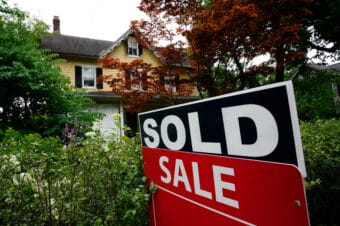
A sold sign stands outside a home in Wyndmoor, Pa., on June 22, 2022. Two recent studies suggest that prospective homeowners will have to earn more than $100,000 annually to afford a typical home in much of the U.S. (Matt Rourke/AP)
You’ve heard that it’s a tough time to buy a house, but exactly how tough is it?

A pair of recent studies predicts that you’d need to earn more than $100,000 per year to comfortably afford a typical home in much of the U.S. right now.

That’s a major jump from just four years ago, and it comes at a time when fewer homes are on the market and mortgage rates and housing prices have been high. House hunters, meanwhile, haven’t seen their wages increase at the same pace.

“Housing costs have soared over the past four years as drastic hikes in home prices, mortgage rates and rent growth far outpaced wage gains,” Zillow senior economist Orphe Divounguy said in a statement.

The six-figure threshold

A Zillow analysis released in February found that prospective homeowners would have to earn more than $106,000 annually to be able to buy a typical home in the U.S.

That’s an 80% increase from the $59,000 yearly income the website predicted a household would need to comfortably afford a home in 2020.

In a separate study released Monday, the financial website Bankrate suggested Americans would have to rake in $110,871 per year to afford a median-priced home, which the outlet says costs $402,343. That income level surged nearly 50% from its 2020 estimate.

“Home values are near record highs, and if you want a house, you have little choice but to pay a high price,” Bankrate housing market analyst Jeff Ostrowski said.

The national median household income, according to data from the U.S. Census Bureau, is around $74,500.

Location, location, location

Of course, those figures are based on national data, and home prices vary depending on where you want to live.

Bankrate found that aspiring homeowners in 22 states and Washington, D.C., should earn at least $100,000 per year to afford a typical home. Buyers in the South and Midwest require less to pay for new digs than those in the West and Northeast.

Still, the 22 states requiring a six-figure income is an increase from the only six states (and D.C.) where that much money would have been necessary to buy a typical house in 2020.

The states that saw the largest increase in the annual income necessary to buy a typical home were Montana, Utah, Tennessee, South Carolina and Arizona.

In Seattle, New York City, Boston and four major metro areas in California — San Jose, San Francisco, Los Angeles and San Diego — prospective households would have to earn more than $200,000 per year to afford a typical home, according to Zillow.

Memphis, Cleveland, New Orleans and Birmingham were among the most affordable cities.

But Zillow found only three major metro areas in the U.S. where homebuyers making the median income could afford a typically priced home: Pittsburgh, St. Louis and Detroit.

Copyright 2024 NPR. To see more, visit https://www.npr.org.

After years of trying, the US government may finally mandate safer table saws

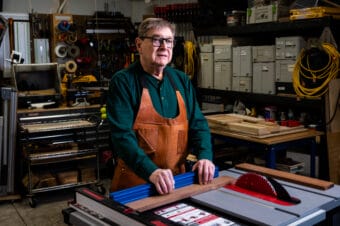
Tom Noffsinger stands in his garage workshop, where he uses a SawStop table saw for woodworking at his home in Raleigh, North Carolina. About 20 years ago, Noffsinger had a table saw accident and almost lost his thumb. (Cornell Watson for NPR)

One day about 20 years ago, Tom Noffsinger experienced every woodworker’s worst nightmare: One final cut on his table saw before knocking off for the day turned into a trip to the emergency room. It was afternoon, and he’d been in his shop since morning.

“I was a little tired. I should’ve quit,” Noffsinger says. “I ran my hand right into the blade and nearly cut my thumb off.”

Table saws are widely considered the most dangerous power tool, and approximately 30,000 blade-contact injuries require medical treatment each year in the United States. About 4,000 result in amputations that can be career-ending for some professional carpenters and contractors. The Consumer Product Safety Commission says that when a person is hospitalized, the societal cost per table saw injury exceeds $500,000 when you also factor in loss of income and pain and suffering.

Noffsinger was lucky by comparison. Although he needed 14 stitches, doctors at a hospital near his home in Raleigh, N.C., were able to save his thumb. Reconstructive surgery followed. Even so, all these years later, he says he still has recurring pain.

Noffsinger opens a wooden box that he made using a SawStop table saw, which uses technology to prevent serious injury. (Cornell Watson for NPR)

Woodworking has been a nearly lifelong passion for Noffsinger, and he was no stranger to power tools. Back before his accident, he’d seen a demonstration of a new and much safer type of table saw at a local woodworking store. Marketed under the name SawStop, it was designed to stop and retract the spinning blade within a few milliseconds of making contact with flesh — fast enough to turn a potentially life-changing injury into little more than a scratch. Noffsinger’s table saw wasn’t equipped with the high-tech safety feature because manufacturers aren’t required to include it.

But that may be about to change. The federal Consumer Product Safety Commission (CPSC) appears poised to mandate a SawStop-type safety brake on all new table saws sold in the United States. The move would follow years of failed efforts and false starts by the agency to impose such a standard.
Manufacturers have consistently fought a new rule, saying it would raise the price of table saws for consumers. Safety advocates liken it to air bags in cars and argue that the benefits outweigh the costs.

Over the years, Republicans on the commission have sided with the power tool industry in opposing further regulations. But with new Biden administration appointees, proponents on the commission appear to have a majority. In October, the CPSC voted to move forward on the mandate, which is expected to get approval later this year.

“We’ve got a [proposed] rule that is designed to prevent tens of thousands of medically treated table saw injuries per year,” says CPSC Commissioner Richard Trumka Jr. “That’s something that I very much support.”

Proponents say a new standard is long overdue

Former acting CPSC Chairman Robert Adler says a standard requiring a blade brake “is long, long overdue.” An average of more than 10 people per day in the U.S. suffer amputations on these types of saws, and “that is staggering when you think about it,” he says. “I’m so thrilled to see it’s very likely to occur now.”

Adler, who was appointed by President Barack Obama in 2009 and served on the commission for 12 years, is a veteran of the fight for a new table saw safety standard. He calls the failure to require this type of feature on saws “the greatest single frustration I felt” while on the commission. He says that’s because table saws are far and away the most dangerous tool that most Americans ever buy.

SawStop’s competitors are represented by the Power Tool Institute, the trade group that includes big power-tool makers such as Bosch, DeWalt and Milwaukee, as well as lesser-known brands. The group maintains that the new safety rule would be an overreach.

“Small manufacturers may go out of business,” Susan Orenga, the Power Tool Institute’s executive manager, said at a public hearing on the new rule in February. Requiring the safety brake would raise the cost of table saws too much, she said. “Sales of table saws will decrease, resulting in unemployment, and the government could be creating a monopoly.”

The industry has long maintained that since SawStop owns patents surrounding the safety technology, the company would unduly benefit from such a government-imposed standard. But at the same hearing where Orenga spoke, SawStop pledged to allow manufacturers to produce safer saws regardless of those patents.

Table saw safety comes at a price

Exactly how much the safety brake would add to the price of a saw is unclear. An entry-level SawStop retails for $899. A comparable saw without the safety technology goes for several hundred dollars less.

But with the economies of scale enjoyed by larger competitors, the price difference could be narrower down the road.

SawStops retail for hundreds of dollars more than the competition, depending on the manufacturer and the type of table saw. Unlike less expensive brands sold in big-box stores, SawStops are at the premium end of the market. (Cornell Watson for NPR)

Since SawStop came onto the market in 2004, tens of thousands of the company’s table saws have been sold in the U.S., and the company estimates that this has saved tens of thousands of professional and hobbyist woodworkers from injury.

The key to the SawStop is its active injury mitigation (AIM) system, which sends a small electrical charge through the saw blade, and because skin is conductive, the system senses whether the blade is touched. Basically, wood doesn’t conduct electricity, but people do. When a hand comes in contact with the blade on a SawStop, this triggers a brake to stop the blade from spinning. This occurs so quickly that there’s not enough time for a serious injury.

Sally Greenberg, executive director of the National Consumers League, has been interested in table saw safety since first hearing about the SawStop technology on NPR in 2004. Like Adler, she has been frustrated by the slow progress on a new safety standard.

“This is a category of product that could be made in this case 100% safe, but because of industry foot-dragging and resistance and lobbying power in Congress and with agencies, you have a situation of two steps forward, one step back,” she says.

Until recently, SawStop competitors were largely prevented from developing AIM-type technology by a web of patents now owned by German-based TTS Tooltechnic Systems, which bought SawStop in 2017. But 20 years after the first SawStop was sold, most of those patents have now expired.

SawStop vows to free up a key patent for rivals

However, one key patent — the “840” patent — is not set to expire until 2033. To stave off potential competitors, it describes the AIM technology very broadly. In a surprise move at February’s CPSC hearing, TTS Tooltechnic Systems North America CEO Matt Howard announced that the company would “dedicate the 840 patent to the public” if a new safety standard were adopted. Howard says that this would free up rivals to pursue their own safety devices or simply copy SawStop’s. At the hearing, he challenged them “to get in the game.”

Howard’s concession follows years of bad blood between SawStop and the larger power tool companies. Before starting SawStop, the inventor of its technology, Steve Gass — himself a patent attorney — tried to interest manufacturers in licensing his idea. He got no takers. And years later, when Bosch Power Tools began selling a saw with its own version of an injury-mitigation system, SawStop won a patent-infringement suit against the company. TTS subsequently agreed to let Bosch sell the saw, but Bosch never reintroduced it to the U.S. market.

That lawsuit, however, has been cited by the industry to buttress its claim that any move to develop similar safety features would be aggressively met by SawStop and TTS.

There are other industry objections as well. Orenga notes that manufacturers already comply with a voluntary standard requiring blade guards and anti-kickback features designed to prevent a blade from catching a piece of wood and throwing it violently back at the operator.

“Flimsy, poorly functioning guards” don’t help

But according to the CPSC, it’s common for table saw users to “remove modular blade guards,” often for reasons of “improved visibility” — in other words, because they can’t easily see the cut they are trying to make.

As a result, the CPSC says, it has seen no discernible change in the number of blade-contact injuries since the industry adopted a voluntary requirement for improved blade guards and other safety features in 2010. In short, the voluntary standard “doesn’t adequately reduce the risk of injury,” Trumka says, which is why the commission is pursuing a mandatory standard.

Jim Hamilton, who hosts a popular woodworking channel on YouTube, says most table saw injuries could be prevented if woodworkers consistently used a blade guard. “Sadly, a culture has developed around many power tools, including table saws, that suggests safety devices are unnecessary or obstructive,” he says, noting that even “veteran workers, including those who have worked at the highest levels of their trade, are seriously injured every day.”

The situation is made worse, Hamilton says, by manufacturers including “flimsy, poorly functioning guards” that actually encourage users to remove them.

Table saws cause a “vaporizing” type of injury

Richard Bodor, a San Diego-based plastic surgeon, is all too familiar with the kind of catastrophic hand injuries that saw blades can cause.

The one he remembers most vividly occurred about 25 years ago, before SawStops were on the market. While he was operating one night to replant an amputated finger, the emergency room called about another “four-finger replant” being referred from Bodor’s colleague — a senior surgeon and mentor. At first, Bodor thought his colleague was simply inquiring about another patient. He soon realized it was the surgeon himself who was injured.

That surgeon had been operating a table saw when his glove caught the saw blade and pulled in his hand. Bodor says the injured surgeon was surprisingly calm during pre-op, as the two discussed the complicated procedure to reconstruct the man’s mangled hand.

Referring to each of his shredded fingers, the injured surgeon applied his own expertise to the reconstruction. “‘I think this finger is going to make it. Now, I’m a little worried about this guy. However, I think this small one might be toast,'” Bodor said, recalling their conversation.

After a long recovery, Bodor said, the man eventually was able to resume surgeries. But these types of saw injuries are especially challenging and difficult to repair, he says. Unlike a clean amputation from a sharp cooking knife, he explains, a table saw blade actually obliterates the tissue. “It’s a vaporizing type of injury,” he says, adding that replantation typically requires hours of meticulous microsurgery.

But not everyone is convinced that a new safety standard alone will prevent such devastating injuries. Dale Juntunen owns a contracting firm in Deer River, Minn., that has been building homes for more than 40 years. “In all the years I’ve been in business, we’ve never had anybody get hurt” on a table saw, he says.

“If it’s mandated, you’re going to have people hanging on to their old saws forever,” Juntunen says. “And, you know, that’s when I’d say there will be more injuries on an old saw.”

Noffsinger purchased a SawStop when he returned from the hospital after his table saw injury, and he has been using it ever since. (Cornell Watson for NPR)

Noffsinger, the North Carolina hobbyist woodworker, says even though he was injured, he’s not sure mandating new safety technology on all saws is the best idea.

Still, when he returned home from the emergency room after nearly severing his thumb on a saw blade, he was met by his wife, “hands on her hips,” he says. “She said, ‘You will buy that SawStop thing.’ So that’s what I did.”

Copyright 2024 NPR. To see more, visit https://www.npr.org.

How anti-vaccine activists and the far right are trying to build a parallel economy

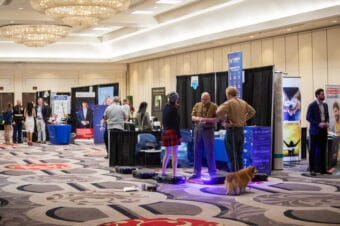
Attendees visit booths at the RePlatform conference in Las Vegas in March. The conference crowd was a hybrid of anti-vaccine activists, supporters of former President Donald Trump and Christian conservatives. (Krystal Ramirez for NPR)

Entrepreneurs and influencers from across a spectrum of conspiracist and religious communities gathered in Las Vegas in March to discuss building an “uncancellable” future together.

But the conference almost didn’t happen. A few weeks before the RePlatform conference was scheduled to begin, the event organizers lost access to their money from ticket sales. Their payment processor, Stripe, had frozen their account.

“Stripe just said, well, we’re going to hold 70%. And what they do is they say, we’ll give it back to you after the show,” speaker Dan Eddy told the audience from the Vegas stage.

Conveniently for everyone involved, Eddy is the chief operating officer of an alternative payment processor, GabPay. It’s a third-party company that works with the social media platform Gab.

“We’ll process for you. No problems, no questions asked. We’ll do it,” Eddy described telling the event organizers.

Dan Eddy (left), the chief operating officer of alternative payment processor GabPay, and Lonnie Passoff, who runs a payment processing company that works with the social media platform Gab, speak at the RePlatform conference in Las Vegas last month. (Krystal Ramirez for NPR)

For people in the business of opposing vaccination or unwelcome election results, mistrust of big financial institutions and tech companies is common. Increasingly, they can find alternatives being built by a community with a head start in developing the tools of the so-called freedom economy: the far right.

“Leave all these woke corporations behind”

At RePlatform in Las Vegas, GabPay got to be the hero. But it’s also possible that the company was part of why Stripe froze the conference’s money in the first place. A few weeks earlier, a news story by Mother Jones about the event highlighted a promotional appearance that GabPay’s executives had made on far-right conspiracy theorist Stew Peters’ streaming show.

GabPay founder Lonnie Passoff’s interview with Peters included an exchange where the two sarcastically dismissed the idea that antisemitic conspiracy theories are hate speech.

The company also recently began processing payments for the prominent white nationalist website VDARE. But the audience at the RePlatform event in Vegas didn’t hear any of this from the GabPay speakers. The crowd was a hybrid of anti-vaccine activists, supporters of former President Donald Trump and Christian conservatives. Most were entrepreneurs in these movements, looking for ways to build what they call the “freedom economy.”

Chris Widener, founder of the Red Referral Network, speaks at the RePlatform conference. (Krystal Ramirez for NPR)

“We are here together because we are people who have either been canceled or we really understand what is going on in America today as it relates to cancelization,” conference emcee Chris Widener told the crowd.

While many of the event’s panels delivered familiar complaints about “woke” culture and media, speakers from businesses sponsoring the event leaned into pitches aimed at drawing the audience away from the conveniences offered by large banks, financial institutions and tech providers.

“Leave Amazon, leave GoDaddy, leave all these woke corporations behind and start spending money with organizations that have your best interests in mind,” said Megan Greene of Patmos, a web-hosting company named after the Greek island that the Christian apostle John is said to have been exiled to.

It’s hard to say just how large the market of conservative-focused businesses is. One recent report from a conservative shopping app estimated that there are at least 80,000 American small businesses in what it calls the “freedom economy,” from coffee sellers and razor companies to dating apps and plumbers. Some of these businesses aren’t small: At one point, pillow salesman turned pro-Trump conspiracy theorist Mike Lindell’s MyPillow company had almost $300 million in revenue.

A matter of survival

In some religious communities, building a parallel society is an old idea, according to Amarnath Amarasingam, a professor of religion at Queen’s University in Ontario. One example is fundamentalist Christians after the Scopes Monkey Trial in 1925.

“They got destroyed in kind of the media sphere. They were depicted as this kind of backwater, Bible-thumping dummies,” he said. “They retreated from the public, and they created a kind of network, a kind of parallel society, their own publishing houses, their own media, their own magazines, newsletters and so on.”

A woman sits at the Christian Chamber of Commerce booth at the RePlatform conference. (Krystal Ramirez for NPR)

But the entrepreneurs gathered in Vegas represent a broader fusion of communities reacting to years of COVID-19, stolen election narratives and transgender visibility, he said. A shared, embattled subculture.

“They feel like they’re on the outs,” said Amarasingam. “They believe that the governments are against them, intellectuals are against them, that science is moving in the opposite direction, that science education is moving in the opposite direction. So they just see a lot of trends that they feel are against traditional Christian values, family values.”

And adding in a spoonful of current-day conspiracism helps to frame the building of a separate, untainted economy as a matter of survival.

“Tragedy in the real world”

The situation that the conference itself faced with Stripe was a fitting, if muddy, illustration of a concern often referred to as “debanking.” The power that financial organizations have to freeze or shut down accounts is real. And while figures on the right have often framed debanking as political persecution, it’s nearly impossible to know how often it happens. That’s because banks and payment processors rarely spell out their reasons, according to Jessica Davis, who runs Insight Threat Intelligence.

Stripe, for instance, did not comment on what happened with the conference, citing customer privacy.

In many cases, Davis said, people are cut off over mundane, technical violations, such as someone using their account the wrong way.

“But there is social capital to be gained by a lot of these people who are claiming that they have their accounts closed,” she added.

On the other hand, there is another category of very high-profile examples, in which extremists have lost access to payment services or social media accounts after violent events.

“The bulk of it happens as a response to some tragedy in the real world,” said Megan Squire, a computer and data scientist tracking extremism with the Southern Poverty Law Center.

White nationalists, neo-Nazis and members of the alt-right clashed with counterprotesters during the Unite the Right rally in 2017. One aftermath of that event was that some far-right groups lost access to financial and technology platforms. (Chip Somodevilla/Getty Images)

She said waves of debanking and deplatforming have followed violent episodes like the deadly Unite the Right white nationalist rally in Charlottesville, Va., in 2017 and a number of mass shootings explicitly motivated by hate. Another big wave came after the Jan. 6, 2021, Capitol riot. Squire said that for years, she has watched some far-right extremists experiment with building infrastructure to get around these bans.

“They’ll talk about how we need this payment [platform]. … We need to make our own web-hosting companies. We need to make our own social media. We need to make our own domain registrars. We need to make our own computers,” she said.

Building those tools is a huge challenge, requiring planning, technical skill, money and, crucially, finding a sustainable customer base. Squire says GabPay is one of many such experiments, born out of necessity. It’s part of a dream that the founder of Gab has been promoting for years.

Attendees visit booths at the RePlatform conference in Las Vegas in March. The conference crowd was a hybrid of anti-vaccine activists, supporters of former President Donald Trump and Christian conservatives. (Krystal Ramirez for NPR)

“The broadest audience possible”

Gab is a glitch-prone alternative to X, formerly Twitter, that launched in 2016 in response to perceived anti-conservative censorship at major social media companies. It bans pornography but otherwise brands itself as a free-speech absolutist space by explicitly allowing hate speech that other mainstream platforms prohibit.

One of Gab’s most notable active users was the man who shot and killed 11 people and wounded six at a Pittsburgh synagogue in 2018. The platform’s founder, Andrew Torba, has said he doesn’t hate Jews but has also said they have no place in what he calls his conservative Christian movement.

“And it’s really thanks to the folks on Gab that I became aware of these issues: issues like [the] Jewish Question, issues like Zionist power and Zionist Occupied Government,” Torba said on an episode of his podcast in November 2023.

“‘The Jewish Question’ is literally a Nazi term,” said religion professor Amarasingam, “about what to do with the Jewish population in areas controlled by the Third Reich.”

Asked for comment, Torba responded, “Christ is King” to NPR in a post on X. The phrase is a common, uncontroversial expression of faith for many Christians, but in recent years it has also become popular among the far right and conspiracists. Torba says he uses it as a regular signoff on his emails after learning that his doing so offended Jonathan Greenblatt at the Anti-Defamation League.

Onstage at the RePlatform event in Las Vegas, GabPay’s Eddy described Gab and Torba as “all about being First Amendment. And, yes, they have a Christian slant because the guy that built it is a Christian. So he goes out and says, ‘I’m a Christian. I think you should have Christian values.'” He added, “Whether you agree with that or not is inconsequential to the fact that he can say it and so can you.”

NPR spoke with several banks and other organizations at the conference about Gab and GabPay’s background. But as brands there to promote free speech absolutism, none wanted to be seen as unwilling to engage or do business with them.

Eric Ohlhausen, chief strategy officer at Old Glory Bank, stands in front of his company’s sign at the RePlatform conference. (Krystal Ramirez for NPR)

Eric Ohlhausen, with the conservative Old Glory Bank, said his company will do business with anyone operating legally.

“Our whole premise is one to not censor, and there might be organizations who promote policies that maybe, personally, I don’t adhere to, but we really welcome all as customers,” said Ohlhausen.

Ashton Cohen is the creative manager of the conservative media nonprofit PragerU. (Krystal Ramirez for NPR)

Ashton Cohen of the conservative media nonprofit PragerU told NPR that charges of antisemitism on the right are overblown.

“My mother was pushed out of her country because she was Jewish, because she was persecuted for being a Jew in Iran. And the very people who support that regime today and that mindset today are on the left,” said Cohen.

Anti-vaccine activist Steve Kirsch helped organize the RePlatform conference. (Krystal Ramirez for NPR)

Wealthy anti-vaccine activist Steve Kirsch, who helped organize the RePlatform conference, said in a written statement: “I don’t support racism and never have. People are dying, and lives are on the line. We want to reach the broadest audience possible.”

Within each of these movements, the benefits of supporting each other appear to outweigh any reputational risks. There was a clear message at RePlatform: So long as you’re not breaking laws, let’s do business.

Copyright 2024 NPR. To see more, visit https://www.npr.org.
Site notifications
Update notification options
Subscribe to notifications