National News

How do we halt the next pandemic? Be kind to critters like bats, says a new paper

When Australia’s black flying foxes are well-fed, they tend to be healthy. A lack of food stresses the bats — and stress causes them to shed, or release, viruses into the environment. (Ko Konno/Getty Images/iStockphoto)

Almost every pandemic we’ve seen over the last century has come from a virus that’s spilled over into humans from an animal. “Generally, pandemics are seen as a biomedical problem,” says Raina Plowright, an infectious disease ecologist at Cornell University. “Certainly, once the pandemic is underway, it is a biomedical problem because you need to have vaccines, you need therapeutics, you need testing,” she says.

“But the genesis of the pandemic is actually an ecological problem,” says Plowright. That is, it’s due to the complex interactions between wildlife, habitat, climate and people.

But there’s been relatively little discussion about a spillover’s ecological origins and how to stop it from happening in the first place. Plowright found only four publications on how the coronavirus circulates in natural bat populations. That’s compared to the tens of thousands of research articles she’s pulled up on the coronavirus spike protein, which has been the focus of vaccines and efforts to understand how the virus enters and infects our cells.

Now, in a new perspective paper in Nature Communications, Plowright and a team of 24 ecologists, infectious disease scientists and policy experts have distilled their collective observations into three recommendations to prevent spillovers and halt epidemics and pandemics before they even start.

José Chies, an immuno-geneticist at Federal University of Rio Grande do Sul in Brazil who wasn’t involved in the research, says the paper demonstrates the importance of proposing solutions based on the whole ecosystem at once. It’s something public health researchers call the One Health approach.

Human health is not something that should be considered in isolation, says Chies. “You should consider animals, microorganisms and environment altogether. It’s ecology in a broad approach.”

How flowers can stop spillovers

For Plowright, these ideas grew out of her work on black flying foxes in eastern Australia, which she’s studied for over two decades. These bats are a sight to behold.

“They have a wingspan of a bald eagle,” says Plowright, “and they have these big beady eyes to see in the dark. Little pointy noses.”

Black flying foxes feed on nectar. And they’ll fly hundreds of miles to find it. “They plunge their heads into the flowers and become covered in pollen,” she says. “And then they move that pollen from forest to forest, so they’re actually really important pollinators in the Australian forest system.”

When black flying foxes are well-fed, they tend to be healthy. “But over time,” says Plowright, “the trees that produce flowers in winter were selectively cleared” for agriculture and property development. “And when this happened, the bats then had to move into human-dominated environments — so farmlands and cities — to find alternative food.”

A lack of food stressed the bats — and stress causes them to shed, or release, viruses into the environment. In eastern Australia, this included the deadly Hendra virus, which the flying foxes shed in their urine and feces.

When horses have become infected with Hendra from bat excretions, the virus has a fatality rate of 80%. Only seven people have fallen ill from infected horses, but Hendra killed four of them.

“It’s a very scary virus,” says Plowright. It’s especially concerning because each time the virus finds its way into humans, it gets another opportunity to evolve and become more infectious.

(Hendra and a variety of other pathogens don’t harm bats, however. The prevailing explanation, Plowright says, is that bats “are very good at controlling viral replication while limiting the inflammation that would usually be associated with feeling sick.”)

When hungry and stressed bats roam into human settlements, it creates the perfect storm for a Hendra spillover from bat into horse and occasionally from horse into human.

But here was the crucial observation: Whenever the remaining trees that hadn’t been cut down produced a big pulse of nectar in the winter, “we found the bats actually emptied out of these human areas and went back to native forests and started feeding back in these trees,” says Plowright. “And when that happened, the spillover stopped.”

In other words — the ecological problem of spillover had an ecological solution. “And if spillover doesn’t happen,” she says, “then a biomedical intervention isn’t needed.”

Easier to reach the bat cave

Plowright’s work with the flying foxes suggested the tantalizing possibility that spillovers could be brought to a standstill simply by restoring these forests. And she figured this approach was likely to work elsewhere in the world. When she spoke with other researchers during a series of workshops and meetings she convened in 2022, she heard echoes of the flying fox story playing out all over the world — all pointing to a planet in which humans and wildlife are bumping into each other more often as natural habitats are being destroyed.

A virologist at Rocky Mountain Laboratories who’s studied bats in the Congo for a decade explained the trek to their field site used to take days and involve motorbikes and dugout canoes. Now it’s a short few-hour drive down a two-lane highway. A researcher from the Pasteur Institute in Cambodia described how they once had to machete their way through the jungle to study a particular bat cave. Now they can drive there. A colleague from Uganda said they used to research bats in the forest, but now the bats live in the cities. That’s because as habitat is cleared and native food disappears, the bats seek alternatives like “mango trees in backyards, fig trees for shade, flowering trees for ornamentation,” says Plowright.

“And so what I saw was this picture of this environmental degradation happening worldwide at a really rapid pace,” she recalls. “So of course, spillover must be becoming more likely.”

It was this set of collective observations, gathered over decades of research, that formed the basis for the three recommendations in the new paper. These strategies, the authors argue, should work for any animal harboring viruses with spillover potential, including bats, birds, rodents and primates.

The three recommendations

First, they suggest protecting where and what animals eat.

“If animals have enough to eat,” explains Plowright, then they don’t have to move to new environments “to find food, which often is what brings them into higher encounter rates with humans and domestic animals.”

In addition, sufficient amounts of food mean less stress, which means “they’re more likely to be able to maintain a strong immune system and keep viruses in check.”

Second, the authors of the paper advise protecting where animals aggregate — where they “sleep, shelter, mate, socialize and raise their young,” as they write in the paper. Bats, for instance, can roost by the tens of thousands. By safeguarding the caves and canopies and other habitats where animals congregate — or introducing buffers around those spots to further minimize human disturbance — that reduces stress considerably too.

Finally, they propose keeping people at risk safe, which they admit isn’t an ecological solution but is just as crucial. “There are many communities who have contact with wild animals as part of their vocation or part of their culture,” says Plowright. And so the idea is to protect these individuals by providing adequate gear, like masks to guard against aerosolized viruses and PPE to prevent contact with animal fluids and excretions. Plowright says this effort also involves education and training, since some of her colleagues found that “when communities were aware of bat ecology and how important bats are to pollination, seed dispersal and insect consumption, they were less likely to harm or harass the bats, creating conditions where the bats were less stressed.”

The proposed solutions are simple enough to articulate. But Plowright acknowledges that implementing them won’t be easy.

“Land is extremely valuable,” she says. “It’s valuable for agriculture. It’s valuable for mining, for development, and nature doesn’t generate dollars.”

Still, for Plowright, the answer is clear. “Nature doesn’t stand up and say you have to fight,” she says. “It’s up to us to figure out a mechanism whereby we are protecting our future and the common interest of all.”

Copyright 2024 NPR. To see more, visit https://www.npr.org.

Transcript :

AILSA CHANG, HOST:

Humans have spent a lot of time and money trying to stop outbreaks of serious viruses like COVID and Ebola, viruses that originated in animals. Now a group of scientists say the key to preventing animal viruses from infecting humans is to protect animal habitats. Science reporter Ari Daniel has more.

ARI DANIEL, BYLINE: There’s a kind of fruit bat in eastern Australia that Raina Plowright has worked with for more than two decades, the black flying fox. When these bats have enough nectar to eat, they tend to be healthy. But over the years, people have cleared the trees that produce the nectar-rich flowers they depend on.

RAINA PLOWRIGHT: And when this happened, the bats then had to move into human-dominated environments – so farmlands and cities – to find alternative food.

DANIEL: Plowright is an infectious disease ecologist at Cornell University. She says bats carry numerous viruses that don’t make them sick. But when bats don’t have enough food, the stress causes them to release viruses into the environment through their urine and feces. In eastern Australia, that includes the deadly Hendra virus, which can spill over from bats into horses and occasionally humans.

PLOWRIGHT: It’s a very scary virus. It kills 80% of horses and 60% of people who are infected.

DANIEL: Hungry and stressed bats roaming into human settlements. It’s the perfect storm for a Hendra spillover. But here’s the interesting thing. Whenever the remaining trees that hadn’t been cut down produced nectar…

PLOWRIGHT: The bats actually emptied out of these human areas and went back to native forests and started feeding back in these trees. And when that happened, the spillover stopped.

DANIEL: That is, the Hendra virus stopped showing up in horses and people. Plowright’s work with the flying foxes suggested this tantalizing possibility – that spillovers could be brought to a standstill simply by restoring these forests. And she figured this approach was likely to work elsewhere. When she spoke with other researchers, she heard fragments of the flying fox story playing out all over the world, all pointing to a planet in which humans and wildlife are bumping into each other more often as natural habitats are being destroyed.

PLOWRIGHT: One person said, I’ve been studying these bats in the Congo for a decade, and we used to have to go in on motorbikes and dugout canoes. And it took us days, but now we can drive to our field site in a few hours.

DANIEL: A researcher from Cambodia said something similar. A colleague from Uganda said they used to research bats in the forest. Now the bats live in the cities.

PLOWRIGHT: And so what I saw was this picture of this environmental degradation happening worldwide at a really rapid pace. So of course spillover must be becoming more likely.

DANIEL: All this led Plowright and a team of ecologists, infectious disease scientists and policy experts to propose a set of recommendations to help prevent spillovers. First, protect where animals eat so they don’t come into contact with humans in their search for food. And second, protect where animals congregate.

PLOWRIGHT: Means they’re less likely to be stressed and therefore more likely to be able to maintain a strong immune system and keep viruses in check.

DANIEL: These recommendations are published in the journal Nature Communications. Jose Chies wasn’t involved in the research. He’s an immuno-geneticist at Federal University of Rio Grande do Sul in Brazil, and he says the paper demonstrates the importance of solutions based on the whole ecosystem.

JOSE CHIES: The human health – you should not consider this alone. You should consider animals, microorganisms and the environment altogether.

DANIEL: It’s such a complicated problem, says Raina Plowright.

PLOWRIGHT: Protecting nature isn’t always easy.

DANIEL: But, she says, it’s up to us to figure out how to do so. For NPR News, I’m Ari Daniel.

(SOUNDBITE OF ADRIAN YOUNGE SONG, “LA BALLADE”) Transcript provided by NPR, Copyright NPR.

Supreme Court seems doubtful of challenge to abortion pill

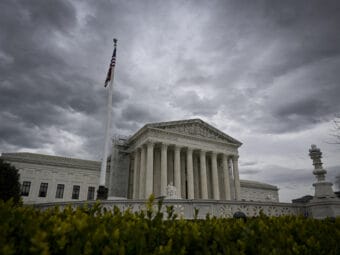
The Supreme Court of the United States building is seen in Washington, D.C., on March 15, 2024. (Celal Gunes/Anadolu via Getty Images)

A majority of the Supreme Court’s justices, both conservative and liberal, did not seem inclined to block the FDA’s existing rules for prescribing and dispensing the abortion pill mifepristone.

The case is widely seen as a threat not just to the increased accessibility of abortion pills, but to the FDA’s entire structure of regulating pharmaceuticals.

More than half the women in this country who choose to terminate a pregnancy use a combination of pills approved by the FDA, one of which is mifepristone, marketed by Danco Laboratories as Mifeprex.

The FDA first approved the pill regimen 24 years ago, and over the last eight years, the agency has eliminated some restrictions that it found to be unnecessary. For instance, the pills can now be prescribed during the first 10 weeks of pregnancy, instead of the original seven weeks, and prescriptions can be filled by mail or at pharmacies, instead of, as before, only at a doctor’s office.

Who has standing?

A group of anti-abortion doctors called the Alliance for Hippocratic Medicine challenged the FDA’s decisions providing for increased accessibility. But in the Supreme Court Tuesday, the justices focused less on the FDA’s actions and more on whether the anti-abortion group had legal standing to be in court at all.

To have standing to sue, the group would have to show that its members had suffered a concrete harm, even though they don’t prescribe mifepristone.

Lawyer Erin Hawley, representing the anti-abortion group, contended that particularly at hospitals, doctors opposed to abortion might well be drafted into finishing incomplete abortions. But she was unable to cite any example of that happening.

Instead, she pointed to affidavits filed by two Alliance doctors, examples that Justice Amy Coney Barrett found unpersuasive. The fact that she performed a D&C does not necessarily mean that there was a living embryo or a fetus because you can have a D&C after a miscarriage,” she said, referring to the procedure known as dilation and curettage.

Barrett, a mother of seven, who herself suffered miscarriages, wasn’t the only justice to ask medical questions. Indeed, all four of the female justices asked detailed questions that likely would not have been asked at the Supreme Court prior to the appointment of the first woman in 1981.

Among the questions were inquiries about ultrasound tests and why they are not required prior to getting the pill and about the FDA’s findings that prescriptions after telemedicine or phone appointments produced no uptick in emergency room visits.

Criticism of a lower court order

Barrett and Justice Brett Kavanaugh also asked Solicitor General Elizabeth Prelogar whether there is a conscience exception that protects doctors from being required to perform abortions.

“Just to confirm on the standing issue, under federal law, no doctors can be forced against their consciences to perform or assist an abortion, correct?” Kavanaugh asked.

“Yes,” confirmed Prelogar.

Justice Neil Gorsuch pointed to this case as typical of what he called “a rash” of recent orders from individual federal judges, orders that apply nationwide—in this case, the original decision from federal Judge Matthew Kacsmaryk in Texas sought to bar the abortion pill entirely.

Gorsuch referred to the decision as “a prime example of turning what could be a small lawsuit into a nationwide legislative assembly on an FDA rule or any other federal government action.”

There was, of course, in Tuesday’s case, a larger question, which got short shrift. And Justice Samuel Alito, author of the decision overturning Roe v. Wade, seemed to despair that his colleagues did not seem interested in using this case to directly address the powers of the FDA.

“Is there anybody who could challenge in court the lawfulness of what the FDA did here?” he asked. “Do you think the FDA is infallible?”

Justice Ketanji Brown Jackson asked about what she called “the flip side of that question. Which is, do you think that courts have specialized scientific knowledge…do you have concerns about judges parsing medical and scientific studies?”

Yes, replied Danco lawyer Jessica Ellsworth, pointing to the first decision in this case from Judge Kacsmaryk–a decision which she said “relied in part on an analysis of anonymous blog posts,” as well as studies that were subsequently withdrawn as flawed by the journals that had printed them.

This story has been updated.

Copyright 2024 NPR. To see more, visit https://www.npr.org.

Most animals don’t go through menopause. So why do these whales?

A post-reproductive toothed whale mother and her son. (David Ellifrit/Center for Whale Research)

Across the animal kingdom, menopause is something of an evolutionary blip. We humans are one of the few animals to experience it.
Sam Ellis, an animal behavior researcher at the University of Exeter, says that this fact isn’t so surprising.

“The best way to propagate your genes is to get as many offspring as possible into the next generation,” says Ellis. “The best way to do that is almost always to reproduce your whole life.”

So perhaps it’s more surprising that a handful of animals ever evolved this trait.

Ellis and his team at the University of Exeter have recently published a study in the journal Nature that sheds light on how this trait may have evolved in toothed whales. There are five species of toothed whales that undergo menopause — short-finned pilot whales, false killer whales, killer whales, narwhals and belugas — making it the type of animal that is known to have evolved menopause most frequently.

A winning intergenerational survival strategy

The rare nature of menopause across animals doesn’t mean, however, that it’s a bad strategy.

Ellis and his team, in partnership with the Center for Whale Research, looked at the welfare and longevity of menopausal toothed whales versus non-menopausal toothed whales. They found that not only do the menopausal female whales live, on average, 40 years longer than females of other species — these females also live longer than the males of their own species.

Researchers think that reason for this could be tied to reproductive competition.

Generally, if a mother and her daughter are both reproducing and living in the same group at the same time, they’re competing for the same resources. “There’s a limited amount of food around and you’ve got to choose who you give it to,” says Ellis. “And so there’s competition.”

According to the grandmother hypothesis, menopause could help avoid that competition. Older females can better protect their offspring — and better ensure their genes are passed on — by instead helping to protect and provide for their children and grandchildren.

Why toothed-whales?

For menopause to evolve, very specific circumstances are needed.

First, females must spend their lives in close contact with both their immediate offspring and their grand-offspring in order to create this reproductive competition. In menopausal toothed whales, not only do the lifespans of females overlap with their direct kin and grand-kin, they can continue to interact with these generations throughout their lives — as observed in killer whales, for example.

Second, the females must have an opportunity to help their families after they can no longer reproduce. There are various ways that older female toothed whales can provide intergenerational help. They might share food with relatives, share their knowledge of the ecosystem and lurking dangers, or even help babysit their grand-calves.

All of this behavior has been documented in toothed whales. While much of whales’ social structures are still unknown, beluga whales and narwhals are usually called “matrifocal,” meaning the oldest female takes charge.

Essentially, menopause helps create a social role of the whale grandmother. She sticks close to her descendants, helps them in times of need and shares her wisdom.

Ellis says that while scientists can’t say for sure, humans likely evolved menopause for similar reasons. “It looks like there’s only one pathway for the evolution of menopause.”

He and his team plan to dive deeper into intergenerational help – instances they see in these whales and other menopausal species.

But for now, this research reveals some of the similarities we humans share with creatures that at first glance seem quite different from us. Not only are both animals menopausal, we’re also long-lived — with grandmothers that play a large role in our social structures.

Curious about other animal behavior mysteries? Email us at shortwave@npr.org.

Listen to Short Wave on Spotify, Apple Podcasts and Google Podcasts.

Listen to every episode of Short Wave sponsor-free and support our work at NPR by signing up for Short Wave+ at plus.npr.org/shortwave.

Today’s episode was produced by Rebecca Ramirez and Gus Contreras. It was edited by Rebecca, Viet Le and Christopher Intagliata. Rebecca also fact-checked it, alongside Rachel Carlson. Kwesi Lee and Ko Takasugi-Czernowin were the audio engineers.

Copyright 2024 NPR. To see more, visit https://www.npr.org.

A mom’s $97,000 question: How was an air-ambulance ride not medically necessary?

About two months after undergoing open-heart surgery, Sara England’s infant son, Amari Vaca, was sick and struggling to breathe. Staff members at a local medical center in Salinas, California, arranged for him to be transferred to a different hospital via air ambulance. (Kevin Painchaud/Kevin Painchaud)

Sara England was putting together Ghostbusters costumes for Halloween when she noticed her baby wasn’t doing well.

Her 3-month-old son, Amari Vaca, had undergone open-heart surgery two months before, so she called his cardiologist, who recommended getting him checked out. England assigned Amari’s grandparents to trick-or-treat duty with his three older siblings and headed to the local emergency room.

Once they arrived at Natividad Medical Center in Salinas, California, she said doctors could see Amari was struggling to breathe and told her that he needed specialized care immediately, from whichever of two major hospitals in the region had an opening first.

Even as they talked, Amari was declining rapidly, his mother said. Doctors put a tube down his throat and used a bag to manually push air into his lungs for over an hour to keep his oxygen levels up until he was stable enough to switch to a ventilator.

According to England, late that night, when doctors said the baby was stable enough to travel, his medical team told England that a bed had opened up at the University of California-San Francisco Medical Center and staffers there were ready to receive him.

She, her son, and an EMT boarded a small plane around midnight. Ground ambulances carried them between the hospitals and airports.

Amari was diagnosed with respiratory syncytial virus, or RSV, and spent three weeks in the hospital before recovering and returning home.

Then the bill came.

The patient: Amari Vaca, now 1, who was covered by a Cigna policy sponsored by his father’s employer at the time.

Medical services: An 86-mile air-ambulance flight from Salinas to San Francisco.

Service Providers: Reach Medical Holdings, which is part of Global Medical Response, an industry giant backed by private equity investors. Global Medical Response operates in all 50 states and has said it has a total of 498 helicopters and airplanes.

Total bill: $97,599. Cigna declined to cover any part of the bill.

What gives: Legal safeguards are in place to protect patients from big bills for some out-of-network care, including air-ambulance rides.

Medical billing experts said the No Surprises Act, a federal law enacted in 2022, could have protected Amari’s family from receiving the $97,000 “balance bill,” leaving the insurer and the air-ambulance provider to determine fair payment according to the law. But the protections apply only to care that health plans determine is “medically necessary” — and insurers get to define what that means in each case.

According to its coverage denial letter, Cigna determined that Amari’s air-ambulance ride was not medically necessary. The insurer cited its reasoning: He could have taken a ground ambulance instead of a plane to cover the nearly 100 roadway miles between Salinas and San Francisco.

“I thought there must have been a mistake,” England said. “There’s no way we can pay this. Is this a real thing?”

In the letter, Cigna said Amari’s records did not show that other methods of transportation were “medically contraindicated or not feasible.” The health plan also noted the absence of documentation that he could not be reached by a ground ambulance for pickup or that a ground ambulance would be unfeasible because of “great distances or other obstacles.”

Lastly, it said records did not show a ground ambulance “would impede timely and appropriate medical care.”

When KFF Health News asked Cigna what records were referenced when making this decision, a spokesperson declined to respond.

Caitlin Donovan, a spokesperson for the National Patient Advocate Foundation, said that even though Amari’s bill isn’t technically in violation of the No Surprises Act, the situation is exactly what the law was designed to avoid.

“What they’re basically saying is that the parents should have opted against the advice of the physician,” Donovan said. “That’s insane. I know ‘medical necessity’ is this nebulous term, but it seems like it’s becoming a catch-all for turning down patients.”

On Feb. 5, the National Association of Emergency Medical Services Physicians said that since the No Surprises Act was enacted two years ago, it has seen a jump in claim denials based on “lack of medical necessity,” predominantly for air-ambulance transports between facilities.

In a letter to federal health officials, the group cited reasons commonly given for inappropriate medical-necessity denials observed by some of its 2,000 members, such as “the patient should have been taken elsewhere” or “the patient could have been transported by ground ambulance.”

The association urged the government to require that health plans presume medical necessity for inter-facility air transports ordered by a physician at a hospital, subject to a retrospective review.

Such decisions are often “made under dire circumstances — when a hospital is not capable of caring for or stabilizing a particular patient or lacks the clinical resources to stabilize a patient with a certain clinical diagnosis,” the group’s president, José Cabañas, wrote in the letter. “Clinical determinations made by a referring physician (or another qualified medical professional) should not be second-guessed by a plan.”

Patricia Kelmar, a health policy expert and senior director with the U.S. Public Interest Research Groups, noted, however, that hospitals could familiarize themselves with local health plans, for example, and establish protocol, so that before they call an air ambulance, they know if there are in-network alternatives and, if not, what items the plan needs to justify the claim and provide payment.

“The hospitals who live and breathe and work in our communities should be considering the individuals who come to them every day,” Kelmar said. “I understand in emergency situations, you generally have a limited amount of time, but, in most situations, you should be familiar with the plans so you can work within the confines of the patient’s health insurance.”

England said Cigna’s denial particularly upset her.

“As parents, we did not make any of the decisions other than to say, ‘yes, we’ll do that,'” she said, “And…I don’t know how else it could have gone.”

The resolution: England twice appealed the air-ambulance charge to the insurer, but both times Cigna rejected the claim, maintaining that “medical necessity” had not been established.

The final step of the appeals process is an external review, in which a third party evaluates the case. England said staff members at Natividad Medical Center in Salinas — which arranged Amari’s transport — declined to write an appeal letter on his behalf, explaining to her that doing so is against the facility’s policy.

Using her son’s medical records, which the Natividad staff provided, England said she is writing a letter herself to assert why the air ambulance was medically necessary.

Andrea Rosenberg, spokesperson for Natividad Medical Center, said the hospital focuses on “maintaining the highest standards of health care and patient well-being.” Despite receiving a waiver from England authorizing the medical center to discuss Amari’s case, she did not respond to questions from KFF Health News, citing privacy issues.

A Cigna spokesperson told KFF Health News that the insurer has in-network alternatives to the out-of-network ambulance provider, but — despite receiving a waiver authorizing Cigna to discuss Amari’s case — declined to answer other questions.

“It is disappointing that CALSTAR/REACH is attempting to collect this egregious balance from the patient’s family,” the Cigna spokesperson, Justine Sessions, said in an email, referring to the air-ambulance provider. “We are working diligently to try to resolve this for the family.”

On March 13, weeks after being contacted by KFF Health News, England said, a Cigna representative contacted her and offered assistance with her final appeal, the one reviewed by a third-party. The representative also told her the insurer had attempted to contact the ambulance provider but had been unable to resolve the bill with them.

Global Medical Response, the ambulance provider, declined to comment on the record.

England said she and her husband have set aside two hours each week for him to take care of their four kids while she shuts herself in her room and makes calls about their medical bills.

“It’s just another stress,” she said. “Another thing to get in the way of us being able to enjoy our family.”

The takeaway: Kelmar said she encourages patients to appeal bills that seem inaccurate. Even if the plan denies it internally, push forward to an external review so someone outside the company has a chance to review, she said.

In the case of “medical necessity” denials, Kelmar recommended patients work with the medical provider to provide more information to the insurance company to underscore why an emergency transport was required.

Doctors who write a letter or make a call to a patient’s insurer explaining a decision can also ask for a “peer-to-peer review,” meaning they would discuss the case with a medical expert in their field.

Kelmar said patients with employer-sponsored health plans can ask their employer’s human resources department to advocate for them with the health plan. It’s in the employers’ best interest since they often pay a lot for these health plans, she said.

No matter what, Kelmar said, patients shouldn’t let fear stop them from appealing a medical bill. Patients who appeal have a high likelihood of winning, she said.

Patients with government health coverage can further appeal insurance denials by filing a complaint with the Centers for Medicare & Medicaid Services. Those who believe they have received an inappropriate bill from an out-of-network provider can call the No Surprises Act help desk at 1-800-985-3059.

This article was produced by KFF Health News, a national newsroom that produces in-depth journalism about health issues and is one of the core operating programs at KFF — the independent source for health policy research, polling, and journalism. KFF Health News is the publisher of California Healthline, an editorially independent service of the California Health Care Foundation.

Emmarie Huetteman of KFF Health News edited the digital story, and Taunya English of KFF Health News edited the audio story. NPR’s Will Stone edited the audio and digital story.

Copyright 2024 KFF Health News. To see more, visit KFF Health News.

FBI letter tells Alaska Airlines passengers they are ‘a possible victim of a crime’

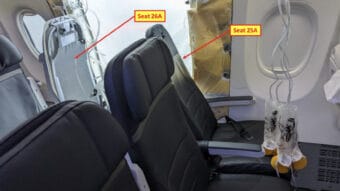
A photo from the National Transportation Safety Board shows seats that were near the door plug expelled from a Boeing 737 Max 9 in flight. Seats 26A and 26B were unoccupied — a fact that helped prevent the incident from being worse, officials said.
(NTSB)

People who were aboard a Boeing 737 Max 9 jet whose door plug was explosively expelled after departing an airport in Portland, Oregon in January are being contacted by the FBI about a criminal investigation.

“I’m contacting you because we have identified you as a possible victim of a crime,” the letter from a victim specialist with the FBI’s Seattle Division begins.

The message, a copy of which was shared with NPR by Mark Lindquist, an attorney representing passengers, lists an investigative case number and tells the passengers they should contact the FBI through an email address set up specifically for people who were on the flight.

“We are pleased the DOJ is investigating,” Lindquist said. “We want answers, accountability, and safer planes. Pressure from the DOJ should help.”

Lindquist, who represents 27 of the 171 passengers on the Boeing airliner, says his clients will speak to federal investigators if they’re asked.

When asked about the investigation and the letters to potential victims on Friday, a spokesperson for the FBI’s office in Seattle told NPR, “Per DOJ policy, the FBI does not confirm or deny the existence of an investigation.” A Boeing representative said the company also declines to comment.

News emerged earlier this month that the Department of Justice was opening a criminal investigation into Alaska Airlines Flight 1282, which took off from Portland shortly after 5 p.m. PST on Jan. 5, bound for Ontario, California.

The plane climbed above 16,000 feet, but a rapid decompression from losing the large panel terrified passengers and sucked phones and other items out of the gaping hole in the fuselage. The flight returned to the airport and made an emergency landing almost exactly 20 minutes after it took off.

At least two groups of passengers have filed lawsuits against Boeing and Alaska Airlines alleging negligence and other failures. Plaintiffs in one lawsuit include Huy Tran, who was seated one row behind the door plug.

“It’s not like when somebody bumps your car on the freeway,” Huy recently told Portland TV station KPTV. “It’s like you almost died and the feelings that come with that.”

The National Transportation Safety Board’s preliminary report found that four important bolts were missing from the Boeing plane — bolts that were meant to prevent the door plug from sliding upward, the agency said.

The debacle is the latest black eye for Boeing, whose reputation was already tarnished by deadly crashes of its 737 Max 8 jets in 2018 and 2019. The Max 8 version of the 737 is around 9 feet shorter than the Max 9.

The door plug failure has put new scrutiny on the deal Boeing reached with the Justice Department to settle a criminal charge related to those crashes, which killed 346 people. The deal angered many families who lost loved ones in the crashes, who said it was too lenient and failed to hold the company and its employees accountable.

Boeing had been accused of engaging in a criminal conspiracy to defraud the Federal Aviation Administration, as the regulator evaluated its 737 MAX airplane.

“Federal prosecutors say key Boeing employees ‘deceived the FAA,’ misleading the safety regulators about a new flight control system on the 737 Max called MCAS,” as NPR reported in January of 2021.

The deferred prosecution agreement had been set to expire three years after it was filed on Jan. 7, 2021. But the agreement also allows the DOJ’s Fraud Section to extend its heightened scrutiny for up to an additional year if Boeing is found to have failed to fulfill its obligations — including the airplane company’s promise to strengthen its compliance and reporting programs.

While the deal was set to expire on Jan. 7 of this year, that doesn’t mean the charges would be automatically dismissed on that date.

“Six months after the Agreement’s expiration,” the agreement states, “the Fraud Section shall seek dismissal with prejudice of the Information filed against the Company … and agree not to file charges in the future against the Company based on the conduct” related to the prosecutors’ allegations.

Copyright 2024 NPR. To see more, visit https://www.npr.org.

If you recently sold your home, you might get part of your realtor fee back

A ‘For Sale’ sign is posted on the lawn in front of a home on March 15, 2024, in Miami, Fla. The National Association of Realtors announced that it had reached a nationwide $418 settlement of claims that the industry had conspired to keep agent commissions high. (Joe Raedle/Getty Images)

Big changes are coming to the way people buy and sell houses in the United States. The National Association of Realtors settled a lawsuit last week that could up-end the way real estate agents are paid, doing away with the traditional agent’s commission of 5-6%. That’s prompting a reckoning for buyers, sellers and real estate agents. Here are six things to know.

What if you already sold a house?

As part of the settlement, the National Association of Realtors agreed to pay $418 million over the next four years. That’s in addition to $210 million that various brokerage firms had already agreed to pay. Lawyers will get a chunk of that money, but the rest will go to people who sold their homes in recent years and paid what critics argue were inflated real estate commissions. Eligibility depends on where you live, but in some parts of the country, the settlement covers people who sold homes as much as a decade ago.

“We don’t know the exact number, but we estimate it to be in the neighborhood of 40 or 50 million” people, says Benjamin Brown, co-chair of the anti-trust practice at Cohen Milstein, one of the law firms involved in the class-action case.

To find out if they’re entitled to compensation, sellers can check the lawyers’ website: www.realestatecommissionlitigation.com.

How will this change real estate commissions ?

For decades, the norm in this country has been for the person selling a home to pay both her own agent and the buyer’s agent. What’s more, the buyer’s share of that commission had to be spelled out in order to advertise the home on the big regional listing sites. Realtors insist they never fixed those commissions, but as a practical matter, the public notice worked to set a standard — often in the neighborhood of 5 or 6%, split between the seller’s agent and the buyer’s agent.

For a home priced at $400,000 — which is close to the national average — that works out to $20,000 to $24,000 in commissions — much higher than people in other countries typically pay. In Germany, commissions average 4.5%. In the UK, they’re under 2%.

Starting in July, sellers will no longer have to spell out a commission for the buyer’s agent. Advocates say that should lead to more negotiation, more competition and ultimately lower costs.

What increased negotiations mean for buyers and sellers?

There’s going to be more opportunity to shop around, and likely a wider array of services, from deluxe agents who charge a premium price to discount agents with more limited services — similar to what exists in other markets like stock brokers and travel agents.

Sellers may be able to negotiate a flat fee to market their house, not connected to the selling price. Buyers may be able to purchase a la carte services — paying less if they do their own house-hunting on the Internet and more if they want to be chauffeured around to open houses.

Many sellers may decide not to pay the buyer’s agent, leaving buyers to shoulder that cost on their own, or go without an agent altogether.

Overall expenses are expected to be significantly lower, however. Economists at the Federal Reserve Bank of Richmond estimate the changes could save homebuyers $30 billion a year, with most of those savings coming out of the pockets of real estate agents.

Prospective home buyers leave a property for sale during an Open House in a neighborhood in Clarksburg, Md. on September 3, 2023. The new real estate commission structure could mean buyers have to pay more out-of-pocket fees starting in July. (Roberto Schmidt/AFP via Getty Images)

What does this mean for agents?

Agents are still sorting out what this might mean for their business. When fees are more negotiable, agents will have to make the case for what they’re worth. But the best agents feel like they do that already.

“Do I think that realtors have to learn to do business in a different way? Absolutely,” says Kevin Wilson, president of the Greater Nashville Realtors. “But I also think this is a wrinkle in the landscape. Not a landmine.”

A drop in commissions might drive some agents into other lines of work, but that’s not necessarily a bad thing. The U.S. has 2.5 to 3 million real estate agents — which is far more than any other country, relative to the size of its housing market. For example, the U.S. has about six times more home sales each year than the U.K. does, but 26 times more agents.

“Do we see agents that work with buyers start to phase out of the business because they’re just not getting as many clients?” asks Jovani Ortiz, an agent on Long Island. “These are sort of the unknowns that most agents are looking at right now.”

While the commission pie is likely to shrink, it may be cut into fewer slices, so the remaining agents might end up making the same amount of money.

With home prices and mortgage rates already high, how will homebuyers pay for their own agents?

While sellers have traditionally paid buyers’ agents in the U.S. (and built that expense into the sales price of their home), many sellers may opt not to pay buyers’ agents in the future. In that case, buyers will have to pay their own agent out of pocket, on top of a down payment and other closing costs. Finding thousands of dollars to pay an agent could be a challenge, especially for first-time buyers, who typically have limited funds and also the greatest need for an agent’s guidance. First-time buyers accounted for just 26% of existing home sales in February — tying a record low.

“Many first time buyers are already at the absolute max of what they’re able to borrow,” says Vanessa Perry, a professor at George Washington University School of Business and a fellow at the Urban Institute’s Housing Policy Finance Center. “They’re not going to be able to come up with any additional cash to pay their own agent.”

Home sellers could still agree through negotiation to pay the buyer’s agent. But in a hot housing market, sellers may have little incentive to do so. Eventually, buyers may be able to fold the cost of their agent’s commission into their mortgage, stretching the payments out over the life of the loan. But that will require a change in mortgage underwriting rules. Over time, lower real estate commissions should lead to somewhat lower housing prices.

What should people who are thinking of buying or selling in the next six months do?

The settlement’s changes in commission rules take effect in July, just as many people will be shopping for homes ahead of a new school year. But it’s not clear how quickly the landscape will change. Buyers and sellers may want to talk with their agent about the costs and benefits of moving before the deadline or waiting until the new rules are in place. Remember, commissions account for $20,000 to $24,000 on a typical home. Still, that’s just one factor to consider when deciding when to buy or sell — along with interest rates, the supply of homes on the market and life circumstances like a new job or family member.

Copyright 2024 NPR. To see more, visit https://www.npr.org.
Site notifications
Update notification options
Subscribe to notifications