
Donkey Creek Road, near where Jimmy Smith-Kramer was killed last year, outside Taholah, Washington (Photo by Andrew Burton for ProPublica)
The May 11 sentencing of James Walker proceeded as planned inside Grays Harbor, Washington, Superior Court: The 32-year-old pleaded guilty to second-degree manslaughter in the death of Jimmy Smith-Kramer, a young father of two and member of the Quinault Indian Nation.
Judge Ray Kahler accepted the plea and sentenced Walker to 7 1/2 years in prison in Washington state for having run Smith-Kramer over with his pickup.
There was one moment, however, when a matter not part of the formal proceeding was broached: Was Walker’s killing of Smith-Kramer driven by hate for Native Americans?
The authorities had concluded there was not sufficient evidence to make such a charge.
But many in the Quinault Nation had remained insistent that Smith-Kramer, struck dead at a local campsite as he celebrated his 20th birthday, had been targeted for his heritage.
And so when the local prosecutor invited members of the Quinault Nation to speak, Fawn Sharp stood and addressed the court.
“From our perspective we don’t believe it was an accident,” Sharp, the tribe’s president, said. “But something that came from a deep dark place.”
The Smith-Kramer killing on the Olympic Peninsula along Washington’s Pacific coast briefly gained local and national notoriety when early accounts included claims that Walker or others with him in his truck that night had used Native slurs during the fatal incident.
And for some involved with advocacy on behalf of indigenous peoples, the case shone a rare light on the often underappreciated issue of hate crimes against the country’s Native population.
According to a joint 2017 study by NPR, the Robert Wood Johnson Foundation and Harvard University, 39 percent of Native Americans surveyed reported they had experienced offensive comments about their race or ethnicity.
Meanwhile, 34 percent said they or a family member had experienced violence for being Native.
The Grays Harbor Sheriff’s Office investigated the possibility that the case could have been a hate crime after one of the witnesses said she heard “war whoops” from Walker before the attack.
Two other witnesses who had been camping nearby told ProPublica that they also heard racial slurs from Walker’s group and told as much to investigators.
No hate crime charge was lodged for the deadly episode some 40 miles from the Quinault reservation.
“There just wasn’t enough there,” local prosecutor Katie Svoboda said.
Walker had been charged by prosecutors with first-degree manslaughter, and had he been convicted at trial he might have faced a sentence as long as life behind bars.
In court, Walker made no mention of Smith-Kramer’s heritage when he publicly admitted his guilt.
He had insisted to detectives that he drove his truck into Smith-Kramer after members of the young man’s birthday party confronted him.
He’d even claimed a minor Native heritage himself.
“I am responsible for this,” Walker told the court. “I pray for the families to heal. I realize he has children who will never know him, and he will never know the joy of being a father. All I can do is beg for mercy and say to the family I am very sorry.”
For Smith-Kramer’s great uncle Richie Underwood, Walker’s admission and his negotiated sentence was in the end enough.
Underwood, who addressed the court as well, said the young man’s family was looking forward to moving on and healing.
“Jimmy would not want to continue on this path,” Underwood said.
The Justice Department seeks to bolster the FBI’s efforts at apprehending violent criminals — issuing grants for local police departments to test rape kits and requiring that those agencies submit information to an underutilized FBI database designed to catch serial killers and rapists.
The Justice Department will make $40 million in grants for rape kit testing, including $2 million to assist localities in sending case information to what is known as the FBI’s Violent Criminal Apprehension Program, or ViCAP.
The program, which includes a national database, is designed to catch serial rapists and killers who exhibit specific, distinctive behaviors while committing their crimes.
For instance, the database might link several attacks committed by a rapist who uses a certain kind of weapon.
The bureau plans to make up to 25 awards to different agencies, ranging from $500,000 to $3 million.
The new grants will pay for staff and training to enter information into the ViCAP system.
“Entry into ViCAP will expand the number of cases in the system and ultimately make it a more robust and useful crime fighting tool for every law enforcement agency in the country,” said a statement issued by the Justice Department’s Bureau of Justice Assistance, which is overseeing the new grants.
The announcement comes after a ProPublica investigation in 2015 found that law enforcement agencies rarely use the database, which was created more than 30 years ago.
Criminal justice experts say ViCAP could be a useful tool in helping solve cases where DNA plays no role — from half to 70 percent of all rape cases, according to estimates.
Police investigators told ProPublica that the database was cumbersome to use, requiring several hours to enter dozens of fields of information.
Only about 1,400 of the 18,000 law enforcement agencies in the country used the system.
In Canada, where law enforcement agencies are required to enter information into a system similar to ViCAP, police have gathered more than 500,000 case records which have generated more than 7,000 leads over the years.
The FBI’s ViCAP program has just 89,000 records three decades after it was created.
The Justice Department “was aware that the time and cost associated with making ViCAP entries were important considerations in terms of law enforcement actually being able to enter the cases into the system,” the agency said. “The overarching goal … is to identify violent offenders, resolve crimes, prevent additional violent crimes, and do everything possible to get justice for victims.”
Unused tablets that were collected and treated as medical waste. (Creative Commons photo by Pöllö)
In Maine, there’s a warehouse the size of a middle school gymnasium, stuffed with brand-new medical supplies and gently used medical equipment. Several pallets are piled with boxes of surgical sutures, still in their shrink wrap, each box worth hundreds of dollars. Tubs overflow with diabetes supplies and surgical instruments that may run hundreds of dollars apiece. There are bins of bandages and gauze and saline and ostomy bags and every other medical supply you can imagine. These materials, unexpired, could easily stock any hospital or clinic. But each item has actually been thrown away by a local medical facility.
The cost of health care has been rising for decades, and Americans are paying the price. In a recent Gallup poll, people cited the high cost of care as their No. 1 financial concern. It’s an enormous problem, and trying to solve it all at once brings on panic and paralysis. But after reporting for a year on the ways the medical industry blows through our money, I have one idea: Let’s end the egregious waste that’s draining our health care system.
The National Academy of Medicine has estimated the health care system wastes around $765 billion a year — about a quarter of what we spend. Eliminating all the waste could allow us to insure 150 million Americans, the Academy of Medicine said, and saving half of it could provide groceries for every household in the country for a year. Eliminating the waste would also stop our rising health care costs from eating up our wage increases. My premiums go up 9 percent next year. Same thing happened last year. Odds are your costs are rising, too.
It’s hard to downplay what I found when I began investigating the issue. Hospitals throw out so many valuable supplies that a cottage industry of charities has sprung up to collect this stuff and ship it to the developing world — otherwise, all those goods in that Maine warehouse would be headed for a landfill.
Nobody tracks how much hospitals waste rather than donate, and I couldn’t track down where each item came from. But experts told me when hospitals change vendors for a type of supply, they often toss the old stuff. Or, if they take over a clinic or facility, they get rid of the items that come with it, even if they are unused and unexpired.
The operating room is a major source of wasted spending. One hospital tracked the value of unused items that went to waste during neurosurgery procedures in a single year. The total: $2.9 million — for one type of surgery at just one hospital. In that case, the surgeons hadn’t updated their system of telling the staff which supplies to prep for each operation. They were opening many items they didn’t need, which then had to be thrown away even though they were unused. The hospital updated its approach to make sure they aren’t setting up for operations with excess supplies.
I learned that nursing homes throw away hundreds of millions of dollars’ worth of valuable medication every year. They typically dispense drugs a month at a time for patients and often have them discontinued if the patient dies or transfers. The excess drugs get trashed, incinerated or even flushed down the toilets, contaminating our water supply. The chief executive of a pharmacy that serves nursing homes in Florida told me that his company alone throws away about $2.5 million a year in valuable medication.
In Iowa, the state government funded a program to recover these castoff nursing home meds and donate them to needy patients, for free. This year, they’re on pace to recover and redistribute $6 million in medication. My story led policymakers in Florida and New Hampshire to introduce legislation to try to replicate the Iowa program.
Drugs are a huge source of waste, partly because drug expiration dates don’t mean what we think they mean. The Food and Drug Administration makes pharmaceutical companies show their medication is safe and effective until its expiration date. It doesn’t make them find out how long they actually last.
Studies show it’s common for a drug to be safe after its expiration date. The FDA runs a program that tests and then extends expiration dates on drugs in the federal government’s stockpiles. Those same drugs get thrown away in pharmacies when they “expire,” even though many of them are in short supply. How much of our money does it waste? One midsize hospital in Boston throws away about $200,000 worth of drugs a year that hit their expiration date. If that’s true for other hospitals, the total would be about $800 million a year for hospital pharmacies alone.
Meanwhile, drug companies are making eyedrops two or three times larger than what the eye can even contain. We are paying for the wasted medicine running down our cheeks. I spoke to the former head of research for Alcon Laboratories, a global leader in the eye care industry now owned by Novartis. He told me that in the early 1990s his team created a “microdrop” that eliminated the waste. The microdrops were effective and reduced the burning caused by larger drops. But Alcon’s leaders killed the project because they were worried it could reduce sales.
Vials of cancer drugs are also made too large, which one study said wastes about $1.8 billion a year in the valuable medication. Earlier this year, one drug company switched from a multiuse vial, which could be shared by patients, to a single-use vial that could not be shared, thereby increasing the amount of wasted cancer medication. The change would make the supply chain more reliable worldwide, the company said. But one cancer center calculated that the change would cost each patient an average of $1,000 in waste per infusion. Imagine: You’re fighting cancer and then get billed an extra thousand dollars for medication they toss in the trash. Two U.S. senators responded to my story by introducing legislation to solve the problem of oversized eyedrops and cancer drug vials.
These are not isolated examples or small sums being squandered. Let’s say my reporting identified about $10 billion in wasted spending. That’s a rough estimate because no one is actually tracking how much we’re wasting. What else could we be doing with that money? The Kaiser Family Foundation says it costs an average of $6,690 to pay one person’s insurance premium in 2017. At that rate, the $10 billion saved could insure about 1.5 million people for a year. Tell those people it isn’t important to reduce our wasted health care spending.
The Academy of Medicine did something smart when it reframed our health care overspending as waste. We may be a wasteful country, but we still teach our kids to eat everything on their plates. “Waste not, want not,” is baked into our cultural DNA. It’s a powerful concept because it’s a moral one. It’s wrong to squander the hard-earned dollars Americans are paying into the health care system and then demand they pay more.
We can’t be naive and think it will be easy to fix this problem. Our wasted spending represents revenue and profit for the medical industry. But our health care spending should not be an entitlement program for the medical industrial complex. I put together a prescription for reducing the wasted spending I identified. Our policymakers should stand up to the medical industry and stamp out the waste.
Guests make their way around Mar-a-Lago in West Palm Beach, Florida, in a photo dated Jan. 22, 2014. (Creative Commons photo by Emilio Labrador)
Last month, the Trump administration said it could not comply with a court order to disclose the names of people who met with the president at Mar-a-Lago in part because they do “not maintain any system for keeping track” of them.
In response to a lawsuit filed by the nonprofit Center for Responsibility and Ethics in Washington, or CREW, seeking to make the records public, Department of Justice lawyers insisted “the Secret Service does not maintain any ‘visitor logs’ at Mar-a-Lago.”
But seven Mar-a-Lago members and their guests told ProPublica that uniformed officers, who appear to be Secret Service, stand at the doors of the resort on weekends when the president is there, and hold lists of people approved for access.
Anne Weisman, CREW’s attorney on the case, said the visitor lists, whether they are compiled by Trump Organization employees or the federal government, are subject to the Freedom of Information Act and should be made public.
Several Mar-a-Lago members and guests said security checked their names against lists if they entered the club on weekends when Trump was present. When Lynn Aronberg, who runs a public relations firm in West Palm Beach, visited the resort this year during one of the president’s visits, she had to provide her driver’s license to officers at the door. While she is not certain the officers were Secret Service agents, Aronberg said they were dressed very differently from the police officers she is used to seeing around Palm Beach. The officers held a clipboard, and checked her name against what looked to her like a list of names attached to it.
Other visitors remember officers holding a clipboard at the door. Boca Raton resident Heidi Klein has visited Mar-a-Lago “probably 10 times” as a member’s guest or for charity events. She also said the officers looked at a list before allowing her through, and that they always check guests’ names.
Phil Nicozisis, a Mar-a-Lago member who runs his own real estate development company, says that every time he brings a guest to the Palm Beach club, he has to email the club and provide the visitor’s full name. (This was true before Trump’s inauguration but Mar-a-Lago is now stricter about the rule.)
Members are told of the president’s visits in advance, Nicozisis said, so that they can prepare for the heightened security and scrutiny of those entering.
The Secret Service and Department of Justice declined to comment on the Mar-a-Lago visitor lists, citing the ongoing lawsuit with CREW. The Trump Organization did not respond to ProPublica requests for comment.
Former Secret Service officials and other experts say it’s exceedingly unlikely that the government does not know who is getting close to the president. In addition to keeping track of people coming into the club, the Secret Service also regularly conducts criminal background checks on any guests or staff members who will spend more than a passing moment in physical proximity to the president. This protocol applies at Mar-a-Lago in the same way it does everywhere else the president goes.
“It makes zero sense to me that they would have no records related to [protective intelligence] name checks or background checks at Mar-a-Lago,” said Jonathan Wackrow, who served on the Secret Service’s presidential protection detail for 14 years. “You would never want to be surprised.”
Watchdog groups and journalists have tried to find out who has had audiences with Trump at the place he’s dubbed the “Winter White House.” Advocates contend the public has a right to know who has access to the president, especially since it can be bought for $200,000 a year, the current price of a Mar-a-Lago membership. This money flows into the Trump Organization, enriching the president.
Kathleen Clark, a law professor at Washington University Law School who writes and teaches about government ethics, says the list of presidential visitors at Mar-a-Lago would give the public necessary information.
“The president is enriching himself, probably at the expense of the country, because he’s inducing people to pay him and his companies so they can have access,” Clark said.
Trump has spent 25 days of his presidency at Mar-a-Lago. The Secret Service recently told the court that the division responsible for conducting background checks did not have any records related to presidential visitors between Trump’s inauguration and March 8. During that span, Trump visited Mar-a-Lago three times and was spotted at a 500-person cancer fundraiser sitting next to former Canadian Prime Minister Brian Mulroney and Boston financier and club member Howard Kessler, along with their spouses.
Trump has known Kessler for years and Mulroney is a former head of state. It’s unclear if they avoided a background check by the Secret Service or if their background checks simply went undisclosed in the administration’s legal response.
In response to the CREW lawsuit, the government only disclosed the names of 22 people they considered to be presidential visitors. All 22 were government, diplomatic or support staff who went to Mar-a-Lago as part of Japanese Prime Minister Shinzo Abe’s delegation in February.
The federal judge in the case, Katherine Failla, also expressed “surprise” at the minimal visitor records handed over, but declined CREW’s motion to sanction the government.
During President Obama’s two terms, the White House released its visitor lists, with some national security exemptions, as part of a settlement of lawsuits seeking the records. Media pool reports would sometimes fill the gaps, namely on presidential trips to Camp David; flights aboard Air Force One; and vacations to Martha’s Vineyard.
Previous administrations, including those of Presidents Bill Clinton and George W. Bush, refused to voluntarily disclose presidential visitor lists altogether. Over eight years, Bush spent roughly 490 days at his ranch in Crawford, Texas, which he called the “Western White House,” and guests included former Israeli Prime Minister Ariel Sharon, former Chinese President Jiang Zemin and German Chancellor Angela Merkel. Such visits were typically made public through the media pool reports.
But the differences between previous presidential vacation spots and Trump’s are stark. “Mar-a-Lago is a commercial establishment,” Clark said. “There was no indication that President Bush was charging any of the people who visited his ranch. It was not a commercial relationship, and he was not enriching himself, so there was not the same kind of public interest in knowing who was paying for access.”
Have any more ideas on how to help us find lists of people with access to Mar-a-Lago and President Trump? Send an email to leora.smith@propublica.org.
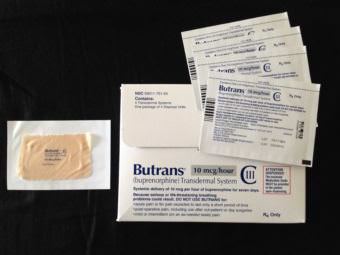
Butrans is a skin patch that delivers buprenorphine. It treats pain and opioid addiction. (Creative Commons photo by 9ballguy)
This story was co-published with The New York Times.
At a time when the United States is in the grip of an opioid epidemic, many insurers are limiting access to pain medications that carry a lower risk of addiction or dependence, even as they provide comparatively easy access to generic opioid medications.
The reason, experts say: Opioid drugs are generally cheap while safer alternatives are often more expensive.
Drugmakers, pharmaceutical distributors, pharmacies and doctors have come under intense scrutiny in recent years, but the role that insurers — and the pharmacy benefit managers that run their drug plans — have played in the opioid crisis has received less attention. That may be changing, however. The New York State attorney general’s office sent letters last week to the three largest pharmacy benefit managers — CVS Caremark, Express Scripts and OptumRx — asking how they were addressing the crisis.
ProPublica and The New York Times analyzed Medicare prescription drug plans covering 35.7 million people in the second quarter of this year. Only one-third of the people covered, for example, had any access to Butrans, a painkilling skin patch that contains a less-risky opioid, buprenorphine. And every drug plan that covered lidocaine patches, which are not addictive but cost more than other generic pain drugs, required that patients get prior approval for them.
In contrast, almost every plan covered common opioids and very few required any prior approval.
The insurers have also erected more hurdles to approving addiction treatments than for the addictive substances themselves, the analysis found.
Alisa Erkes lives with stabbing pain in her abdomen that, for more than two years, was made tolerable by Butrans. But in January, her insurer, UnitedHealthcare, stopped covering the drug, which had cost the company $342 for a four-week supply. After unsuccessfully appealing the denial, Erkes and her doctor scrambled to find a replacement that would quiet her excruciating stomach pains. They eventually settled on long-acting morphine, a cheaper opioid that UnitedHealthcare covered with no questions asked. It costs her and her insurer a total of $29 for a month’s supply.
The Drug Enforcement Administration places morphine in a higher category than Butrans for risk of abuse and dependence. Addiction experts say that buprenorphine also carries a lower risk of overdose.
UnitedHealthcare, the nation’s largest health insurer, places morphine on its lowest-cost drug coverage tier with no prior permission required, while in many cases excluding Butrans. And it places Lyrica, a non-opioid, brand-name drug that treats nerve pain, on its most expensive tier, requiring patients to try other drugs first.
Erkes, who is 28 and lives in Smyrna, Georgia, is afraid of becoming addicted and has asked her husband to keep a close watch on her. “Because my Butrans was denied, I have had to jump into addictive drugs,” she said.
UnitedHealthcare said Erkes had not exhausted her appeals, including the right to ask a third party to review her case. It said in a statement, “We will work with her physician to find the best option for her current health status.”
Matthew N. Wiggin, a spokesman for UnitedHealthcare, said that the company was trying to reduce long-term use of opioids. “All opioids are addictive, which is why we work with care providers and members to promote non-opioid treatment options for people suffering from chronic pain,” he said.
Dr. Thomas R. Frieden, who led the Centers for Disease Control and Prevention under President Obama, said that insurance companies, with few exceptions, had “not done what they need to do to address” the opioid epidemic. Right now, he noted, it is easier for most patients to get opioids than treatment for addiction.
Leo Beletsky, an associate professor of law and health sciences at Northeastern University, went further, calling the insurance system “one of the major causes of the crisis” because doctors are given incentives to use less expensive treatments that provide fast relief.
The Department of Health and Human Services is studying whether insurance companies make opioids more accessible than other pain treatments. An early analysis suggests that they are placing fewer restrictions on opioids than on less addictive, non-opioid medications and non-drug treatments like physical therapy, said Christopher M. Jones, a senior policy official at the department.
Insurers say they have been addressing the issue on many fronts, including monitoring patients’ opioid prescriptions, as well as doctors’ prescribing patterns. “We have a very comprehensive approach toward identifying in advance who might be getting into trouble, and who may be on that trajectory toward becoming dependent on opioids,” said Dr. Mark Friedlander, the chief medical officer of Aetna Behavioral Health who participates on its opioid task force.
Aetna and other insurers say they have seen marked declines in monthly opioid prescriptions in the past year or so. At least two large pharmacy benefit managers announcedthis year that they would limit coverage of new prescriptions for pain pills to a seven- or 10-day supply. And bowing to public pressure — not to mention government investigations — several insurers have removed barriers that had made it difficult to get coverage for drugs that treat addiction, like Suboxone.
Experts in addiction note that the opioid epidemic has been changing and that the problem now appears to be rooted more in the illicit trade of heroin and fentanyl. But the potential for addiction to prescribed opioids is real: 20 percent of patients who receive an initial 10-day prescription for opioids will still be using the drugs after a year, according to a recent analysis by the CDC.
Several patients said in interviews that they were terrified of becoming dependent on opioid medications and were unwilling to take them, despite their pain.
In 2009, Amanda Jantzi weaned herself off opioids by switching to the more expensive Lyrica to treat the pain associated with interstitial cystitis, a chronic bladder condition.
But earlier this year, Jantzi, who is 33 and lives in Virginia, switched jobs and got a new insurer — Anthem — which said it would not cover Lyrica because there was not sufficient evidence to prove that it worked for interstitial cystitis. Jantzi’s appeal was denied. She cannot afford the roughly $520 monthly retail price of Lyrica, she said, so she takes generic gabapentin, a related, cheaper drug. She said it does not manage the pain as well as Lyrica, which she took for eight years. “It’s infuriating,” she said.
Jantzi said she wanted to avoid returning to opioids. However, “I could see other people, faced with a similar situation, saying, ‘I can’t live like this, I’m going to need to go back to painkillers,’ ” she said.
In a statement, Anthem said that its members have to meet certain requirements before it will pay for Lyrica. Members can apply for an exception, the insurer said. Jantzi said she did just that and was turned down.
With Butrans, the drug that Erkes was denied, several insurers either do not cover it, require a high out-of-pocket payment, or will pay for it only after a patient has tried other opioids and failed to get relief.
In one case, OptumRx, which is owned by UnitedHealth Group, suggested that a member taking Butrans consider switching to a “lower cost alternative,” such as OxyContin or extended-release morphine, according to a letter provided by the member.
Wiggin, the UnitedHealthcare spokesman, said the company’s rules and preferred drug list “are designed to ensure members have access to drugs they need for acute situations, such as post-surgical care or serious injury, or ongoing cancer treatment and end of life care,” as well as for long-term use after alternatives are tried.
Butrans is sold by Purdue Pharma, which has been accused offueling the opioid epidemic through its aggressive marketing of OxyContin. Butrans is meant for patients for whom other medications, like immediate-release opioids or anti-inflammatory pain drugs, have failed to work, and some scientific analyses say there is not enough evidence to show it works better than other drugs for pain.
Dr. Andrew Kolodny is a critic of widespread opioid prescribing and a co-director of opioid policy research at the Heller School for Social Policy and Management at Brandeis University. Kolodny said he was no fan of Butrans because he did not believe it was effective for chronic pain, but he objected to insurers suggesting that patients instead take a “cheaper, more dangerous opioid.”
“That’s stupid,” he said.
and I am now forced to be on stronger pain meds after dealing with out of control pain for weeks. How is this ok?
Erkes’s pain specialist, Dr. Jordan Tate, said her patient had been stable on the Butrans patch until January, when UnitedHealthcare stopped covering the product and denied Erkes’s appeal.
Without Butrans, Erkes, who once visited the doctor every two months, was now in Tate’s office much more frequently, and once went to the emergency room because she could not control her pain, thought to be related to an autoimmune disorder, Behcet’s disease.
Tate said she and Erkes reluctantly settled on extended-release morphine, a drug that UnitedHealthcare approved without any prior authorization, even though morphine is considered more addictive than the Butrans patch. She also takes hydrocodone when the pain spikes and Lyrica, which UnitedHealthcare approved after requiring a prior authorization.
Erkes acknowledged that she could have continued with further appeals, but said the process exhausted her and she eventually gave up.
While Tate said Erkes had not shown signs of abusing painkillers, her situation was far from ideal. “She’s in her 20s and she’s on extended-release morphine — it’s just not the pretty story that it was six months ago.”
Many experts who study opioid abuse say they also are concerned about insurers’ limits on addiction treatments. Some state Medicaid programs for the poor, which pay for a large share of addiction treatments, continue to require advance approval before Suboxone can be prescribed or they place time limits on its use, both of which interfere with treatment, said Lindsey Vuolo, associate director of health law and policy at the National Center on Addiction and Substance Abuse. Drugs like Suboxone, or its generic equivalent, are used to wean people off opioids but can also be misused.
The analysis by ProPublica and The Times found that restrictions remain prevalent in Medicare plans, as well. Drug plans covering 33.6 million people include Suboxone, but two-thirds require prior authorization. Even when such requirements do not exist, the out-of-pocket costs of the drugs are often unaffordable, a number of pharmacists and doctors said.
At Dr. Shawn Ryan’s addiction-treatment practice in Cincinnati, called BrightView, staff members often take patients to the pharmacy to fill their prescriptions for addiction medications and then watch them take their first dose. Research has shown that such oversight improves the odds of success. But when it takes hours to gain approval, some patients leave, said Ryan, who is also president of the Ohio Society of Addiction Medicine.
“The guy walks out, and you can’t blame him,” Ryan said. “He’s like, ‘Hey man, I’m here to get help. What’s the deal?’”
Have you had trouble paying for prescription drugs? Tell us about it.
ProPublica deputy data editor Ryann Grochowski Jones contributed to this report.
U.S. Attorney General Jeff Sessions attends the National Law Enforcement Officers Memorial Fund’s 29th annual Candlelight Vigil on the Mall in Washington, D.C., on May 13, 2017. (Creative Commons photo by Shane T. McCoy/U.S. Marshals)
The Trump administration made false assertions to justify an executive order expanding police forces’ access to military equipment such as tanks and grenade launchers.
Attorney General Jeff Sessions announced on Monday that President Trump would make defensive gear available to police again by undoing a policy from the Obama administration. Trump then signed an executive order whose title emphasized that branding: “Restoring State, Tribal, and Local Law Enforcement’s Access to Life-Saving Equipment and Resources.”
“He is rescinding restrictions from the prior administration that limited your agencies’ ability to get equipment through federal programs, including life-saving gear like Kevlar vests and helmets and first-responder and rescue equipment like what they’re using in Texas right now,” Sessions said in the speech.
But that’s not what the Obama administration’s restrictions did, according to documentation from a unit inside of Sessions’ own Justice Department, the Bureau of Justice Assistance.
Kevlar vests were never subject to any restrictions. Most helmets weren’t, either. Riot helmets (defined as those with shields over the face), Humvees and helicopters that are sometimes used in rescue missions, were still available to police forces as long as they explained why they needed them and certified that they had protocols and training in place so officers would use them safely. That requirement was dropped for riot helmets last October.
“Kevlar vests were never on any lists. That part is simply lying about what we did,” said Roy Austin, who worked on the Obama policy as a deputy assistant to the president for the Office of Urban Affairs, Justice and Opportunity. “He was being untruthful about helmets as well.”
A Justice Department spokesman acknowledged that the items Sessions cited were never prohibited by the Obama administration and that only some of them were even subject to additional procedures. Still, the spokesman, who did not want to be named, said: “There is absolutely nothing misleading about what the Attorney General said.”
What the Obama administration did actually prohibit were tanks, weaponized vehicles, .50 caliber guns, grenade launchers, bayonets and digital-pattern camouflage uniforms. Those restrictions applied only to purchases using federal dollars through a Pentagon surplus program. Police departments remained free to buy them with state, local or private funds.
“The attorney general and whoever advised him on these policies didn’t read them carefully and didn’t understand what they actually did,” said Ed Chung, who worked on the Obama administration policies in the Justice Department’s Office of Justice Programs. “The safety of officers was never jeopardized because the overwhelming majority of equipment, including the ones cited by the attorney general, were still available to law enforcement.”
The Obama administration implemented the restrictions in the spring of 2016 in response to public concerns over the display of military-style hardware deployed by police to control riots in Ferguson, Missouri, after an officer fatally shot Michael Brown. Chung said the administration worked with civil rights organizations and police groups in an effort to meet law enforcement agencies’ needs while improving their relations with the communities they protect.
Sessions, in his speech, harshly dismissed such considerations. “We will not put superficial concerns above public safety,” he said.
The attorney general asserted that the types of equipment limited by the Obama administration saved an officer from a bullet at the Pulse nightclub shooting in Orlando and helped police pursue the shooters in San Bernardino. But that’s not accurate, either. As shown in the very articles that Justice Department officials provided to reporters to support Sessions’ speech, the Orlando officer’s helmet that blocked the bullet wasn’t a riot helmet, so it never faced any restrictions. And the armored vehicles used in San Bernardino had wheels, so the Obama policy still permitted them, with the additional precautions described above. The Obama administration only prohibited buying tanks (armored vehicles that run on tracks instead of wheels) using federal resources.
Sessions shared an anecdote in which a sheriff told him that the Obama administration “made his department return an armored vehicle that can change the dynamics of an active shooter situation.” The Obama administration did ask those few departments that had tanks to return them, according to Chung and Austin, but offered to replace them with equivalent wheeled vehicles.
“For every tracked vehicle, we replaced it with a wheeled vehicle so they didn’t lose anything,” Austin said. “His anecdote makes no sense because it skips the whole part that if they really needed this thing, all they had to do was say we want a replacement and we’d provide a replacement.”
Sessions’ anecdote referred to Sheriff Mike Bouchard of Oakland County, Michigan, who is also vice president of government affairs for the advocacy group Major County Sheriffs of America. In an interview, Bouchard confirmed that the Obama administration replaced his tracked armored personnel carrier with a wheeled one, but he said the wheeled version wasn’t as useful on the sandy and marshy terrain he has in his county.
The Justice Department spokesman said the Obama administration’s additional measures were onerous because departments had to demonstrate a “clear and persuasive” need for the equipment, certify approval from a civilian governing body and keep records of incidents when the equipment was used.
By repealing the Obama administration’s policy, the Trump administration also abolished reporting procedures to help the government keep better track of the equipment it distributes. The Government Accountability Office recently tested the controls in the same program by creating a fake agency that was able to obtain $1.2 million worth of night-vision goggles, and simulated pipe bombs and other potentially lethal items.
“We viewed the Obama reforms as very modest,” said Kanya Bennett, a lobbyist for the American Civil Liberties Union. “We’re certainly disappointed not only by the action that the administration took on Monday but again in suggesting to the public that the previous administration had taken away critical tools for law enforcement. In reality, there was very little that the Obama administration did with respect to taking military weapons and equipment out of rotation for state and local law enforcement use.”
Sessions’ speech cited studies showing that such equipment reduces crime, assaults on officers and complaints against them. In the materials provided to reporters, Justice Department officials pointed to a pair of studies in the American Economic Journal. But those studies considered all equipment supplied through the Pentagon’s surplus program, without distinguishing the items the Obama administration restricted. They also studied the years 2006 to 2012, before the Obama policies took effect.
“Our findings do not necessarily mean that saturating our local law enforcement agencies with military hardware is good policy,” researchers at the University of Tennessee wrote in one of the papers. “These results should not be used to diminish concerns about police-community relations, the role of police in our society, violence against civilians by police, or vice versa.”
The other study observed that the type of equipment that had the biggest effect on reducing crime was nonlethal non-military gear, such as computers and office supplies. The researchers suspect that’s because those supplies free up time and money for officers to spend on policing.
“There is a tendency to conflate military equipment with weapons,” the lead researcher, Vincenzo Bove at the University of Warwick of England, told ProPublica in an email. “Whereas we find that weapons is an unproductive category (it does not significantly affect crime) the miscellaneous category has the strongest effect, followed by vehicles and gear.”
“We do not explore the effect on crime of the items prohibited under the Obama policy,” Bove added. “But, as most of the prohibited items were weapons, note they do not seem to have (in aggregate) any effect on crime.”
Sessions announced the change of policy at a meeting of the Fraternal Order of Police, which viewed repealing the Obama-era restrictions as one of its top-priority asks for the Trump administration. “The previous administration was more concerned about the image of law enforcement being too ‘militarized’ than they were about our safety,” the organization’s president, Chuck Canterbury, said in a statement.
But not all police groups agree. The Obama policy was sensible to restrict non-essential lethal equipment like bayonets and to encourage police to consult local elected officials before acquiring equipment that could be controversial, said Jim Bueermann, president of the Police Foundation and a retired police chief in Redlands, California.
“The Obama executive order represented a best practice for acquiring military surplus equipment for local policing, and I still think it could serve and should serve as a best practice even though the rules have changed,” he said. “I was supportive of the overarching goals of the previous executive order, but I also understand what this president is trying to do. I view this through the lens of a police chief, and I would say to my city manager and council, ‘Ignore all of this that’s the federal government’s activity — under both sets of rules, we should still go to the public to explain our rationale.’”
Close
Update notification options
Subscribe to notifications
Subscribe
Get notifications about news related to the topics you care about. You can unsubscribe anytime.