Pew Charitable Trusts

Poverty Rate Drops in 34 States, DC

The Roadrunner Food Bank in Albuquerque offers a map that depicts food distribution points across the state. New Mexico nearly surpassed Mississippi last year as having the nation’s highest poverty rate. Susan Montoya Bryan/AP
The Roadrunner Food Bank in Albuquerque offers a map that depicts food distribution points across the state. New Mexico nearly surpassed Mississippi last year as having the nation’s highest poverty rate. (Photo by Susan Montoya Bryan/AP)

New Mexico almost surpassed Mississippi last year as the state with the highest percentage of its population living in poverty, although both states were among 34 along with the District of Columbia that experienced a drop in poverty rates.

In Mississippi, 21.5 percent of the state’s nearly 3 million people lived in poverty, according to figures from the U.S. Census Bureau’s annual American Community Survey, out Sept. 17. New Mexico, with a population of nearly 2.1 million, followed at 21.3 percent.

Nationally, the poverty rate was 14.8 percent last year, meaning 46.7 million people lived in poverty—as many people as there have been the past four years.

The poverty rates for men, 13.4 percent, and women, 16.1 percent, also remained about the same nationally compared to 2013. About 15.5 million, or 21.1 percent, of the nation’s children under 18 lived in poverty last year.

Demographers in New Mexico and Mississippi half-heartedly joke about their states being in a “race to the bottom.” Mississippi has had the dubious distinction of having the highest poverty rate for much of the decade.

Adelamar Alcantara, a senior demographer at the University of New Mexico, said many New Mexicans in the northern part of the state live frugal lives in homes they own, subsisting mostly on their own crops and livestock without much monetary income.

“It’s a different kind of poverty, a different kind of economy,” Alcantara said. “But the Census only measures monetary income.”

Mississippi’s poverty rate actually dropped 2.5 points last year from 2013, which helped allow New Mexico’s to nearly surpass it.

Clifford Holley, who studies Mississippi demographic trends at University of Mississippi’s Center for Population Studies, said the state’s drop, which was the largest of any state, was not cause for celebration.

“We could be losing poor people to outmigration,” Holley said. The state tends to gain people in recessions and lose them again when the national economy recovers, he said.

“If you’re going to be poor, there’s no reason to be poor away from home,” he said.

Mississippi and New Mexico have a relatively low cost of living, which may cause poverty to be overstated because it may be relatively easier to live in those states on a low income. The poverty threshold nationwide is $24,008 for a family of four with two children.

With all states showing an improvement in health insurance rates, some economists had hoped to see a larger improvement in poverty rates. The Census analysis of national figures released on Sept. 16 showed that unreimbursed medical expenses were one of the largest single factors in pushing people into poverty.

Beth Mattingly, a sociologist who is working on alternative poverty measures at the University of New Hampshire, said poverty in California and New York is understated because of high housing costs.

“No doubt there’s a lot of suffering in places like Mississippi and New Mexico,” Mattingly said. “It’s a rough place to be. But they are relatively low housing-cost states. Poverty is understated in places like New York and California—there’s a lot of housing poverty.”

The Census has begun a supplemental poverty measure that accounts for other economic factors, including local housing prices. But it was not used to calculate state poverty rates this year because it must be averaged over several years, said Kathleen Short, a Census economist.

Some states have begun to investigate calculating their own poverty measures, Mattingly said. California, New York, Oregon, Virginia and Wisconsin have recently announced plans to try to go beyond the Census in estimating how many people in their states have financial stress or live on the edge of poverty.

Read Original Article – Published September 18, 2015
Poverty Rate Drops in 34 States, DC

States Grapple With Public Disclosure of Police Body-Camera Footage

A body camera shows police in Spokane, Washington, making an arrest. Police body cameras are becoming more popular, but some lawmakers want to restrict public viewing of the footage. (Spokane Police Department via The Associated Press)

The images inside the police cruiser are fuzzy, impossible to discern until a laptop glows and street lights illuminate the dash. A few minutes pass and the officer is on foot, approaching a white sedan. There are flashlights in the darkness, and maybe that’s the light of a shopping center in the distance.

The half-hour video, which looks like it was shot through a Vaseline-smeared lens, is among hundreds of hours of recordings from body cameras the Seattle Police Department has uploaded to YouTube. Before roughly 800 officers begin using the cameras next year, Seattle police want to know whether posting the videos online is an efficient and affordable way to ensure the public can access them. The videos are “redacted” so that viewers cannot identify the people in them.

As police departments across the country equip their officers with body cameras, many are struggling to strike a balance between the public’s right to know and privacy protections. This year 10 states—Arizona, Florida, Georgia, Maryland, Nevada, North Dakota, Oklahoma, Oregon, South Carolina and Texas—have passed laws concerning public access to the footage, according to the Reporters Committee for Freedom of the Press, a nonprofit group that assists journalists.

The South Carolina law exempts footage recorded by the cameras from public disclosure under the state’s Freedom of Information Act. A Georgia law that took effect in July limits who can request the videos and pending legislation would deem the videos “records of law enforcement” and not subject to disclosure under that state’s public records law.

In South Carolina, the goal was to protect the privacy of people recorded by police, according to Democratic state Sen. Gerald Malloy, who sponsored the legislation. Malloy noted that the measure allows people with a direct interest in a body-camera video, including the state attorney general, law enforcement agencies and subjects of recordings, to watch it.

“What you want is to have some responsibility,” Malloy said. “[So] you don’t just have everyone requesting it, placing it on the Internet, those kinds of things.”

Earlier this month in Washington, D.C., Democratic Mayor Muriel Bowser proposedlegislation that would restrict public access to police videos of assaults and limit what people can review if charges are brought against an officer. In Minnesota, 16 cities have petitioned to make the videos private until legislators decide otherwise.

But Adam Marshall, a legal fellow with the Reporters Committee, called the public records restrictions a “misguided effort” that is unnecessary and risks complicating existing public records laws. “Our position is that almost all are duplicative or unwarranted.”

Existing privacy standards cover which body-camera videos cannot be released, he said, and creating more regulations might hide police misconduct from the public.

“We don’t disagree by any means that there may be body-camera videos that shouldn’t be disclosed under public records laws,” Marshall said. “It seems bizarre to say that if a police officer did something inappropriate and the police officer was inside their home and not on their front porch, then the public wouldn’t have access.”

The Seattle Experiment

The Seattle Police Department seeks to protect people’s privacy by heavily redacting the dashboard- and body-camera images it posts. People can sift through video by date and other tags to find a specific incident, and then file a public information request to view an unedited copy, expediting public access to certain videos and conserving police resources, said Mike Wagers, the department’s chief operating officer.

Officials in the department, which has been operating under a federal consent decree since 2012 when the U.S. Department of Justice identified a pattern of excessive force among officers, realized they had to address public access last year, when a local man requested all of the videos from the city’s in-car police dash cameras.

Watching and appropriately redacting the roughly 2 million dashboard videos was impossible, Wagers said, prompting him to host hackathons in the hope that members of Seattle’s high-tech workforce would find efficient, automated ways to make the videos available as required by Washington’s Public Records Act.

The amount of time needed to manually redact videos may prompt some police departments to shy away from implementing body-camera programs. Jay McDonald, national vice president for the Fraternal Order of Police (FOP), said some agencies estimate it takes about two hours to redact one hour of footage by hand.

In Seattle, hackers wrote codes to automatically distort the dash- and body-camera videos in various ways before posting them to YouTube, where the police department temporarily publishes the footage, Wagers said. He is hopeful companies making body cameras will eventually offer built-in options for redaction.

Police department records account for more than 75 percent of Seattle’s public disclosure requests, about 6,000 requests this year, he said. During the pilot program, which wrapped up earlier this year, 12 officers wore the cameras and the department uploaded selected footage ahead of next year’s roll out to all patrol officers.

Department officials are now determining what types of redacted video they should post online. They likely won’t upload videos taken inside homes or images of juveniles or sexual assault victims, Wagers said.

“We’re not going to put things on the site that are going to revictimize someone or really isn’t in the public interest,” he said.

This attempt to automate access to videos for the public is a good first step, said Jared Friend, who works on technology and liberty issues at the American Civil Liberties Union of Washington. But Friend said the redacted videos aren’t particularly helpful because it is so difficult to determine what is going on, and that the public should have access to unredacted versions.

“It is really important that the public has an unedited view of what transpires in events where police involvement is called into question,” he said.

Balancing Privacy and Access

High-profile deaths involving police have spurred both policing reform advocates and law enforcement officials to lobby for camera policies. The cameras, their costs and the price associated with storing and disseminating their data have created roadblocks in some jurisdictions, and the federal government has responded with a $20 million pilot program to equip local law enforcement officers with the devices.

The ACLU has drafted model body-camera legislation for states. Under the sample legislation, police would only be required to release footage that is covered by automatic 3-year retention policies for certain kinds of recordings. Videos that are required to be kept are typically ones that illustrate a use of force, result in a felony-level arrest or complaint, or have been requested by a law enforcement officer or subject of a video.

No state has adopted the ACLU law outright, though the law in Maryland closely mirrors it, said Chad Marlow, an attorney with the ACLU. North Dakota and Floridarecently enacted measures that would exempt from public records requirements videos taken in private places, like someone’s home.

Footage from body cameras should be treated in line with other government documents because the devices collect information on private citizens, said Jay Stanley, a senior policy analyst for the ACLU.

Those records should be available for review, Stanley said. “Police officers are going to wear body cameras and they will be routinely collecting photographs with the potential to invade privacy in a way that government does not ordinarily do, and I think that’s the biggest issue,” he said.

But McDonald, of the FOP, said public information laws need to be adapted to manage body cameras. Protecting private citizens is the chief reason police officers want to carefully regulate which videos can be released, he said, pointing to videos recorded during routine patrol duties, like visiting a home during a domestic argument, as footage not to be released.

“No crime has been committed, but now we have a video that could be used to ruin somebody’s life,” he said.

Read Original Article – Published September 22, 2015
States Grapple With Public Disclosure of Police Body-Camera Footage

First Library to Support Anonymous Internet Browsing Effort Stops After DHS Email

Kilton Public Library's area. (Library Freedom Project)
Kilton Public Library’s area. (Library Freedom Project)

Since Edward Snowden exposed the extent of online surveillance by the U.S. government, there has been a surge of initiatives to protect users’ privacy.

But it hasn’t taken long for one of these efforts — a project to equip local libraries with technology supporting anonymous Internet surfing — to run up against opposition from law enforcement.

In July, the Kilton Public Library in Lebanon, New Hampshire, was the first library in the country to become part of the anonymous Web surfing service Tor. The library allowed Tor users around the world to bounce their Internet traffic through the library, thus masking users’ locations.

Soon after state authorities received an email about it from an agent at the Department of Homeland Security.

“The Department of Homeland Security got in touch with our Police Department,” said Sean Fleming, the library director of the Lebanon Public Libraries.

After a meeting at which local police and city officials discussed how Tor could be exploited by criminals, the library pulled the plug on the project.

“Right now we’re on pause,” said Fleming. “We really weren’t anticipating that there would be any controversy at all.”

He said that the library board of trustees will vote on whether to turn the service back on at its meeting on Sept. 15.

Used in repressive regimes by dissidents and journalists, Tor is considered a crucial tool for freedom of expression and counts the State Department among its top donors. But Tor has been a thorn in the side of law enforcement; National Security Agency documents made public by Snowden have revealed the agency’s frustration that it could only identify a “very small fraction” of Tor users.

The idea to install Tor services in libraries emerged from Boston librarian Alison Macrina’s Library Freedom Project, which aims to teach libraries how to “protect patrons’ rights to explore new ideas, no matter how controversial or subversive, unfettered by the pernicious effects of online surveillance.” (The Library Freedom Project is funded by Knight Foundation, which also provides funding to ProPublica.)

After Macrina conducted a privacy training session at the Kilton library in May, she talked to the librarian about also setting up a Tor relay, the mechanism by which users across the Internet can hide their identity.

The library board of trustees unanimously approved the plan at its meeting in June, and the relay was set up in July. But after ArsTechnica wrote about the pilot project and Macrina’s plan to install Tor relays in libraries across the nation, law enforcement got involved.

A special agent in a Boston DHS office forwarded the article to the New Hampshire police, who forwarded it to a sergeant at the Lebanon Police Department.

DHS spokesman Shawn Neudauer said the agent was simply providing “visibility/situational awareness,” and did not have any direct contact with the Lebanon police or library. “The use of a Tor browser is not, in [or] of itself, illegal and there are legitimate purposes for its use,” Neudauer said, “However, the protections that Tor offers can be attractive to criminal enterprises or actors and HSI [Homeland Security Investigations] will continue to pursue those individuals who seek to use the anonymizing technology to further their illicit activity.”

When the DHS inquiry was brought to his attention, Lt. Matthew Isham of the Lebanon Police Department was concerned. “For all the good that a Tor may allow as far as speech, there is also the criminal side that would take advantage of that as well,” Isham said. “We felt we needed to make the city aware of it.”

Deputy City Manager Paula Maville said that when she learned about Tor at the meeting with the police and the librarians, she was concerned about the service’s association with criminal activities such as pornography and drug trafficking. “That is a concern from a public relations perspective and we wanted to get those concerns on the table,” she said.

Faced with police and city concerns, library director Fleming agreed to turn off the Tor relay temporarily until the board could reconsider. “We need to find out what the community thinks,” he said. “The only groups that have been represented so far are the Police Department and City Hall.”

Fleming said that he is now realizing the downside of being the first test site for the Tor initiative.

“There are other libraries that I’ve heard that are interested in participating but nobody else wanted to be first,” he said. “We’re lonesome right now.”

ProPublica is a Pulitzer Prize-winning investigative newsroom. Sign up for their newsletter.

Read Original Article – Published Sep. 10, 2015, 11:20 a.m.
First Library to Support Anonymous Internet Browsing Effort Stops After DHS Email

Despite Same-Sex Marriage Ruling, Gay Adoption Rights Uncertain in Some States

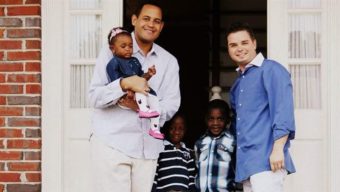
Casanova and Daniel Nurse stand with children Ava Rose, 2, and Neijal and Cameron, both 4, whom they adopted from Florida’s foster care system. Some states still have barriers for married gay couples looking to adopt from foster care. (Photo courtesy of Pew Charitable Trusts)

As soon as Daniel Nurse met baby Cameron in 2011, he knew he wanted to adopt him.

“It was just like instant love. He was so sweet and loving, and seeing him smile—it was just an instant connection,” Nurse, of Tallahassee, Florida, said of the baby, then 11 months old.

But going about adopting Cameron proved challenging for Nurse and his husband, Casanova. Florida’s 1977 ban on gay adoption had only recently been overturned when the Nurses began looking to take in foster children in 2011 with the hope of ultimately adopting them.

While same-sex couples have long been able to adopt from private, gay-friendly adoption agencies, adopting children from the foster care system has proved more difficult in some states.

The U.S. Supreme Court decision in June that made same-sex marriage legal nationwide is changing that, but not everywhere—particularly in states with laws that limit joint adoption to a husband and wife.

“Marriage doesn’t create this completely certain playing field,” said Ellen Kahn, director of the children, youth and families program at the Human Rights Campaign, which advocates for gay rights.

And some states have taken up legislation that would allow taxpayer-funded contractors that oversee state adoptions to refuse to let gay or lesbian individuals adopt children if it conflicts with the organization’s religious beliefs. Michigan passed such a law right before the court decision.

The Nurses became familiar with all these roadblocks when adopting Cameron and their two other children.

The couple found they were limited in which contractors they could work with because some wouldn’t allow gay and lesbian couples to adopt. And though Florida’s ban on gay adoption was overturned in 2010, the Nurses were unable to marry in the state until this year. Thus, they couldn’t file adoption paperwork together. The adoptions had to be filed under Daniel’s name only, and the couple faced the added time and expense of adding Casanova’s name later.

Change Comes State by State

Thirteen states—Arkansas, Georgia, Kentucky, Louisiana, Michigan, Mississippi, Missouri, Nebraska, North Dakota, Ohio, South Dakota, Tennessee and Texas—prohibited same-sex marriage before the Supreme Court decision.

All but Arkansas and Tennessee also had policies that did not allow gay and lesbian couples to adopt foster children jointly, according to the Human Rights Campaign. In Alabama, where a federal court overruled the state’s ban on gay marriage, gay couples were also not allowed to adopt jointly.

But many of those states are changing their policies in the aftermath of the Supreme Court decision. That’s the case in North Dakota, where the law allows single people to adopt but specifies that adopting couples must be “husband and wife.”

“It’s simple,” said Julie Hoffman, adoptions administrator for the state Department of Human Services. “Now that gay couples are allowed to marry, they’ll be treated like any other married couple who’s adopting.”

Georgia, Kentucky, Louisiana, Missouri, Ohio and South Dakota also are changing their practices to allow married gay couples to go through the adoption process together. Some of them said they’re starting to update their forms to make them gender neutral.

In Alabama, married gay couples will be allowed to adopt a foster child, but they’ll have to wait longer than most—the state requires married couples interested in adopting to have been married for a year before beginning the adoption process.

Mississippi is the only state that has a law that specifically bars gay couples from adopting foster children, and Julia Bryan, spokeswoman for the state Department of Human Services, said the law will be followed unless the legislature makes any changes when it reconvenes in January. However, the ban is being challenged in the courts.

The Texas Department of Family and Protective Services also will wait on the legislature before changing how it operates, according to spokeswoman Julie Moody. Gay couples in the state will have to continue to have one member of the couple formally adopt the child, she said, and then the other member has to come back later to do a second parent adoption—a similar process to a step parent adopting a stepchild.

Nebraska policy prevented unmarried couples, gay or straight, from fostering or adopting state wards until 2012, when the state started allowing gay couples to become foster parents, ultimately placing foster children with 15 same-sex couples, according to the Omaha World Herald.

A county judge recently struck down the unmarried couple ban. But the state is planning to challenge that, saying that the broad scope of the order would require its Department of Health and Human Services to treat “unrelated, unmarried adults residing together” the same as it treats individuals and married couples. A statement from the Attorney General’s Office said that would make it more difficult to make placements in the best interest of the child.

Religious Interests

Although the court decision is leading to changes in some states, others are creating new roadblocks to gay adoption.

Michigan is one of the first states to enact a law that allows groups that contract with the state to oversee adoptions to decline service to any person or couple that conflicts with their “sincerely held religious beliefs.” Similar bills were considered in Alabama, Florida and Texas.

Republican state Rep. Thomas Hooker, who worked on the Michigan bill, said he was worried that if the state didn’t pass the law, it might have lost the roughly 30 percent of adoption agencies the state contracts with that are religiously affiliated.

That has happened in other states. Some Catholic organizations in Illinois andMassachusetts shut down rather than violate their conscience by serving gay couples.

But opponents of the Michigan law say its language is too broad, giving religious organizations leeway to discriminate against not just gay couples, but single people, interracial couples, people of other faiths or anybody who they say conflicts with their faith.

“Discrimination shouldn’t be happening at all, and it shouldn’t be done using taxpayer dollars,” said Lonnie Scott, executive director of Progress Michigan, an advocacy group that lobbied against the law.

Hooker said the law doesn’t pose a disadvantage to gay couples because the organizations will have to refer anyone they turn down to an organization that is willing to serve them.

While religious groups often argue that same-sex parents could be damaging to children, nearly all research has found the opposite. A 2015 project at Columbia University assembled scholarly, peer-reviewed studies on the well-being of children with gay parents. Of 77 studies, just four found that having gay parents negatively impacts a child.

Even in states that require agencies to work with gay couples, there are no guarantees against discrimination in deciding whether to allow them to adopt.

“It’s easy to find a way to say no to a couple. It’s easy to prioritize some couples over others,” said April Dinwoodie, chief executive of the Donaldson Adoption Institute, which researches adoption policy. She said if case workers have a bias, “they can find something within a home study that doesn’t suit them or find a reason a child wouldn’t be a good fit for a home.”

‘Love Is Love’

Daniel Nurse went to Florida’s Capitol earlier this year to testify against a bill that would have protected state contractors’ ability to turn him away. He put up pictures of his family. In addition to Cameron, now 4, the couple has adopted Neijal, also 4, and Ava Rose, 2.

Nurse questioned how someone could look at faces like those and argue they didn’t deserve the home that they now have.

“Love is unconditional. Love is love, and it’s what these children deserve,” Nurse said. “A person’s lifestyle shouldn’t matter if they can provide love and compassion.”

The bill passed in the House, but later died in the Senate. It was a big year for gay rights in Florida. The legislature also passed a bill that formally removed the 1977 ban on gay adoption from law. This wasn’t just a symbolic move—it was an appellate court that overturned the ban, but the matter never came before the state’s Supreme Court.

Read Original Article – Published August 19, 2015
Despite Same-Sex Marriage Ruling, Gay Adoption Rights Uncertain in Some States

Heirs’ Property Challenges Families, States

Alex Singleton is a board member of the Center for Heirs' Property Preservation, which helps families clear titles to heirs’ property in South Carolina. States are just now moving to help families hold on to the value of land that has been passed down through generations without deeds. (AP)
Alex Singleton is a board member of the Center for Heirs’ Property Preservation, which helps families clear titles to heirs’ property in South Carolina. States are just now moving to help families hold on to the value of land that has been passed down through generations without deeds. (AP)

In Mount Pleasant, a suburb of Charleston on the South Carolina coast, 72-year-old Richard Mazyck only recently acquired the title to the land on which he’s lived his entire life.

The land once belonged to Mazyck’s father, and when he died it was passed down to Richard and his four sisters and brothers. But the elder Mazyck did not have a will, leaving his African- American descendants with what is known as heirs’ property. Without a deed, the heirs are unable to develop the land and are at risk of losing it entirely.

This type of succession — property passed without a will — stems from the Reconstruction era, when African-Americans gained property rights. At that time, African-Americans often did not create wills to establish formal ownership for future generations because they were denied access to the legal system, did not trust it or could not afford it.

Across the country, states are identifying family properties passed down without deeds. Some of them are taking action to ensure that property owners can retain their land and its value.

Six states — Alabama, Arkansas, Connecticut, Georgia, Montana and Nevada — have adopted versions of the Uniform Partition of Heirs Property Act, a draft bill being shopped to state legislatures by the nonprofit Uniform Law Commission to make it easier to divide property and preserve family wealth as the owners multiply over generations.

The problem with passing down property without a formal legal record is that any single owner can petition the court for a forced sale of the property. Over time, as the number of owners reaches into the dozens, the risk of a money grab increase and family members become targets for real estate developers looking to score property below market value in popular locations.

Mazyck and his siblings, whose land is not far from beach resorts, were able to evenly divide their 5 acres about three years ago with the assistance of the Center for Heirs’ Property Preservation, a Charleston nonprofit that helps families to establish formal land ownership. With a proper deed, a family can leverage its equity and qualify for home improvement loans that were impossible to get with no official living owner.

“It’s much easier now than before,” Mazyck said. “I can get anything I want now through the bank because everything is in my name. [My siblings] all are happy with it now because they’ve got something they can call their own.”

Risks of Joint Ownership

Before they split up their property, Mazyck and his siblings were challenged by a property tax burden. Each having built or contributed to various structures on the land, the siblings had a hard time agreeing on how much of the tax each owed.

“[My father’s] house was the only house on the land,” Mazyck said. “He used to do a little bit of farming, but people started building on the land. Everybody had a section, but it wasn’t in anybody’s name.”

Having generations of landowners all entitled to the same tract of land challenges families whose co-owners may disagree on how or whether to preserve it, said Tish Lynn, resource development coordinator for the heirs’ center.

A distant family member looking for some money, for instance, could try to force a sale contrary to the wishes of other family members. Developers eager to capitalize on attractive and profitable properties could buy a single share, become the newest member of the family, and try to force a sale.

Heirs’ property is typically sold quickly and for less than market value, robbing owners of what is sometimes their only source of wealth.

“There isn’t a family we’ve served that doesn’t have a story about land lost,” Lynn said.

Her group serves families in seven counties representing at least 47,000 acres of heirs’ property to protect. It aims to determine a statewide total by the end of the year.

Such holdings, however, are not always large rural and agricultural land. It is especially difficult to establish a title to heirs’ property in cities, where small, single family parcels cannot be physically divided. Urban owners often take a loss because such sales tend to fetch below market value.

Without a deed, co-owners are also unable to access government assistance or relief. In Houston and other areas of Texas, low-income homeowners had trouble accessing federal recovery money following hurricanes Ike and Dolly in 2008, said Heather Way, a clinical professor and director of the Entrepreneurship and Community Development Clinic at University of Texas School of Law.

“At some point, that was the greatest asset that a family ever had and that asset has been lost by becoming heirs’ property,” she said.

A Uniform Law for All States

A handful of states have passed piecemeal measures to support families owning heirs’ property, but the law-writing group is urging legislatures to adopt its draft bill.

The proposal would allow a co-owner to buy out another who wants to push the property to sale and establish a thorough review process for courts to determine whether the property should be sold or divided among the owners. It also would require courts to order open market sales to ensure properties are not sold below market value.

Courts would have to consider six factors: whether it can be practicably divided, whether its division would create parcels for which the aggregate value would be less than the whole, duration of ownership, an owner’s sentimental attachment, whether an owner would be harmed if he or she cannot continue to use the property and how much each owner has contributed to taxes, insurance and other expenses.

Thomas Mitchell, a law professor at the University of Wisconsin Law School and author of the draft bill, said problems with heirs’ property aren’t confined to South Carolina’s low country, a popular tourist destination along the state’s coast that was previously known for its agricultural assets and as a place where African-Americans settled following their emancipation from slavery.

“You’re going to see it anywhere you have poor, or sometimes even just middle-class, property owners who have not been able to organize their common property ownership in a sophisticated way,” Mitchell said. For landowners with means, it is typical to pass down property via a will, limited liability corporation or family trust, he said.

The proposed act was also introduced this year in Hawaii, as well as in South Carolina, where lawmakers are expected to continue working on the bill next year during the second half of the legislative session. Mitchell said he and others at the commission are working with legislators in Hawaii, where a lot of property has been passed down without a will, to illustrate the success of the law in other jurisdictions.

Heirs’ property also contributes to the deterioration or abandonment of properties in urban areas, Mitchell said. Without a formal title to their property, families rarely qualify for mortgages or home improvement loans, leaving properties to fall into disrepair.

Division is sometimes physically impossible in urban settings, where many properties are small parcels or single-family homes. That’s why Mitchell’s proposal pushes for open market sales rather than typical court-ordered sales that turn property around in a matter of weeks — often for far less than it is worth.

“If you have a single-family home in Washington, D.C., where you have six relatives who own it and they’re not getting along, you can imagine it would be difficult to divide the house,” he said. “There should be a sales procedure that is utilized that would more appropriately yield a price that [matches] fair market value.”

There aren’t many opponents to the partition act, said Benjamin Orzeske, who helps state lawmakers pass uniform laws as legislative counsel for the commission.

Typically, judges and court clerks oppose the measure because it creates more steps for them to follow when they must decide between selling and dividing, he said.

It is not known how much land around the country is heirs’ property, but some localities have analyzed the issue. A study from Philadelphia VIP, a group that provides legal services to low-income Philadelphians, showed there were 14,000 pieces of property with what they called tangled title issues in 2007.

“It’s enough of a problem, I think [the act] is potentially good legislation for every state, but whether it will ever get there is hard to say,” Orzeske said. “There are a lot of other priorities before people get around to this problem.”

Transfer of Deed on Death

Twenty-five states and the District of Columbia have adopted other measures to protect property upon the original owner’s death. Through transfer-on-death laws, these jurisdictions have made it possible for owners to designate someone who will acquire the deed to their property when they die.

While these laws do not address the land partitioning process as the commission’s proposal does, they do create a way to ensure a deed does not die with the owner of a property, eliminating the need for a formal will and probate process.

The laws are also beneficial because many low-wealth property owners may be skeptical of creating wills or lack the resources to do so, said Joanne Savage, a staff attorney at AARP’sLegal Counsel for the Elderly in Washington.

In the District, the model partition act has been proposed but not passed. The transfer law, however, has been in effect since 2013, helping seniors who would otherwise consider adding a family member as a co-owner of their house — a move Savage advises against.

“The transfer on death deed is really a great step forward,” she said. “It keeps the title free and clear in the owner until they pass.”

Read Original Article – July 15, 2015
Heirs’ Property Challenges Families, States

States Limiting Patient Costs for High-Priced Drugs

States are beginning to limit what patients pay out of pocket for expensive specialty drugs that treat serious, chronic diseases such as rheumatoid arthritis and multiple sclerosis. AP

As more expensive specialty drugs come on the market to treat some of the most serious chronic diseases, more states are stepping in to cushion the financial pain for patients who need medicine that can cost up to hundreds of thousands of dollars a year.

At least seven states — Delaware, Louisiana, Maine, Maryland, Montana, New York and Vermont — limit the out-of-pocket payments of patients in private health plans. Montana, for instance, caps the amount that patients pay at $250 per prescription per month. Delaware, Maryland and Louisiana set the monthly limit at $150 and Vermont at $100. Maine sets an annual limit of $3,500 per drug.

New York prevents insurers from listing specialty drugs in a separate category that allows for charging higher payments out of pocket.

In an effort to hold down prices, legislators in other states, including California, Massachusetts and North Carolina, have proposed requiring companies to make broad financial disclosures justifying their high drug prices. So far, no such law has passed.

Critics of pharmaceutical pricing say that while the measures would help bring financial relief to some patients, they would fail to control spiraling drug prices set by drugmakers. As expensive specialty drugs proliferate, consumers likely will incur higher out-of-pocket payments and health insurance premiums.

“None of those measures is going to be very effective in my view because they don’t get at the underlying issue of how drug prices are set,” said John Rother, president and CEO of the National Coalition on Health Care, a nonprofit that focuses on improving health care while lowering costs.

Expensive Class of Drugs

Specialty drugs are in a class called biologics, extremely complex medicines made from organic materials. They are often used to treat serious, chronic diseases, including some advanced forms of cancer, autoimmune diseases such as rheumatoid arthritis and diseases of the central nervous system such as multiple sclerosis. They also are used to treat hepatitis C, which afflicts approximately 2.7 million Americans, according to the Centers for Disease Control and Prevention.

In most cases, biologics are far more effective and cause fewer side effects than conventional drugs, leaving patients with no alternative but to take them.

But the price for these drugs far exceeds that of conventional drugs, largely because they have little or no competition. They also require special handling, such as refrigeration, and often must be administered intravenously, adding to their costliness.

On average, biologics cost 22 times what conventional medicines do. A 2011 AARP Public Policy Institute report said that the average specialty medicine cost more than $34,550 for a year’s course of treatment.

“The cost of these drugs is simply unsustainable,” said Leigh Purvis, director of health services research in AARP’s Public Policy Institute.

Biologics also are gaining a growing share of the prescription market. According to a report last year from Express Scripts, a large prescription management company, specialty drugs already represent nearly a third of the spending on pharmaceuticals in the U.S., although they represent only 1 percent of all prescribed medications. Within two years, Express Scripts projects that spending on specialty drugs will account for $4.40 out of every $10 spent on medicine.

Coinsurance Limits

At least seven states are tackling the problem of high out-of-pocket payments for expensive specialty drugs by limiting coinsurance payments.

Insurers use coinsurance and copayments to impose cost-sharing on beneficiaries. Copayments are a set price — often $5, $10, or $15 — that patients pay for medicine, whatever the cost of the drug. With coinsurance, patients are required to pay a percentage of the actual cost of the drug. That means that the higher the cost of the drug, the more the patient has to pay out of pocket.

Coinsurance payments for specialty drugs range nationally from 28 to 50 percent of the price of a drug, according to a 2013 policy paper by Chad Brooker, a lawyer with the Connecticut health exchange.

The state-imposed caps apply both to copayments and to coinsurance. They provide some price protection for the patients taking the drugs, but also spread the high cost of the drugs to a wider population of consumers in the form of higher insurance premiums.

“The caps don’t actually lower the costs of the medicine, it just raises the premiums for everyone,” said Rother of the National Coalition on Health Care.

Covered California, that state’s health exchange, this year became the first state exchange in the country to impose a coinsurance cap on specialty drugs of $250 per prescription per month.

James Scullary, a spokesman for Covered California, said the cap would result in an overall premium increase of no more than 1 percent in the first year and no more than 3 percent in the first three years.

New York has taken a slightly different approach. It won’t allow insurers to put biologics in their own special category of drugs. Insurers place medications in separate tiers depending on whether they are generics, preferred prescription drugs or specialty drugs. The higher the tier, the greater the cost-sharing burden for the patient. New York has prohibited the use of the specialty tier.

In Delaware, the state forbids insurers from putting all specialty drugs for a particular disease in the specialty tier, so that patients are given at least one lower-cost alternative.

Neither method gets around the problem of higher premiums for everyone, Rother said. He and other critics call for another method of setting the price of prescription medicine.

Right now, drug prices are set by manufacturers subject to mandated discounts for various federal health plans and Medicaid, and through negotiation with other health plans. Critics have argued for a system of pricing based on the relative effectiveness of each drug.

‘Shaming’ Drugmakers

A bill currently before the California Assembly would require drugmakers to report their costs for the development and manufacture of any drug with a price tag of more than $10,000 for a course of treatment. Massachusetts and North Carolina are considering similar measures.

The purpose of disclosure measures is to create pressure on the drug companies to lower their prices, AARP’s Leigh Purvis said.

“It’s meant to be educational and also to be used in kind of a shaming way,” she said. “If the manufacturer can’t produce information that makes the prices seem justifiable, it may give people more ammunition to say that they’re not.”

The pharmaceutical industry argues that transparency laws, which it opposes, would not provide a fair representation of what it costs drugmakers to develop new drugs. For every drug that makes it to market, the industry says, nine or 10 do not. Nor would disclosure provide information on what costs patients would have to bear, it says.

“All of [the proposed transparency laws] would create an inaccurate and misleading overview of costs of providing treatment, and don’t provide information on costs patients will have to pay out of pocket,” said Priscilla VanderVeer, a spokeswoman for the Pharmaceutical Research and Manufacturers of America.

Read Original Article – July 02, 2015
States Limiting Patient Costs for High-Priced Drugs

Site notifications
Update notification options
Subscribe to notifications