Syndicated

Canada rejects transboundary mine permit protest

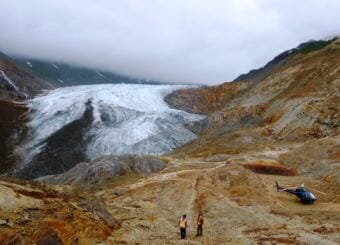
Seabridge Gold staff stand in a rust-colored valley that’s part of its Kerr-Sulphurets-Mitchell exploration project in 2014. A federal agency in Canada has rejected a permit appeal from an Alaska conservation group.  (Photo by Ed Schoenfeld/CoastAlaska)

An Alaska environmental group has lost its appeal of a large Canadian mining project planned for just across the border.

The developer said the decision shows it’s behaving responsibly. But the conservation group said project owners, and Canada’s government, didn’t follow their own rules.

About a year ago, the Southeast Alaska Conservation Council tried a new tool to protest plans for the Kerr-Sulphurets-Mitchell transboundary mining project.

It appealed to a Canadian agency called the National Contact Point. SEACC staff scientist Guy Archibald said it’s supposed to address international business disputes.

“We’re exploring every venue we can to try to protect the transboundary rivers and the communities and fisheries they support from the large-scale development of Canadian mines across the border,” he said.

Guy Archibald of the Southeast Alaska Conservation Council, left, discusses issues with former Sitka Mayor Mim McConnell, right, during a 2015 transboundary mine meeting in Juneau. (Photo by Ed Schoenfeld/CoastAlaska News)

It tried to convince Canadian authorities that project owners didn’t fully follow guidelines requiring stakeholder engagement and environmental protections.

But last month, that agency rejected that appeal.

“There is no formal requirement for us to engage in Alaska,” said Rudi Fronk, chairman and CEO of Seabridge Gold.

The Toronto-headquartered corporation owns the KSM — and another British Columbia mine-exploration project.

“The confirmation from the National Contact Point in Canada just clearly reinforces the process we went through during the environmental assessment process, that the engagement we had not only with the Canadian authorities, but also the Alaska authorities, was appropriate and bountiful,” he said.

(Read the National Contact Point report rejecting SEACC’s appeal of the KSM project.)

SEACC acknowledges meetings took place, involving conservation, tribal, fisheries and other Southeast Alaska groups.

But Archibald said the Canadian government failed to look into what happened at those meetings.

“They did not consider at all whether that communication between Seabridge Gold and SEACC was adversarial at all. Or particularly informative at all,” he said. “Just that Seabridge had attended some meetings, presented their PowerPoint and that was adequate.”

Seabridge Gold said it’s listened to concerns and made changes in its plans.

(Watch Seabridge Gold’s Rudi Fronk discuss plans for the KSM Mine.)

For example, it moved its tailings storage site at the request of British Columbia tribal leaders. And Fronk said it added protections to its design for that site, where waste rock is kept after being processed.

The KSM, Red Chris and Galore Creek projects are among several planned for northwest British Columbia, near the Alaska border. (Map courtesy Seabridge Gold)

“There is no requirement, or there was no requirement, in British Columbia to actually line the tailings facility,” he said. “But we agreed that we would line a portion of the tailings facility to deal with material that went through the mill that would actually touch cyanide.”

The company continues drilling at its KSM site to locate valuable concentrations of gold, copper and other metals.

But its biggest challenge is to find investors and partners to turn the exploration project into a mine.

Fronk said the corporation has turned down several offers because they were not the right match.

He said non-disclosure agreements prevent him from identifying those companies.

SEACC, meanwhile, continues to push for high-level talks between U.S. and Canada’s federal governments.

It, other organizations, the Walker-Mallott administration and Alaska’s Congressional delegation want stronger protections for Alaska fisheries.

(Take a tour of the KSM exploration projects during the summer drilling season.)

State ferry Taku won’t become a Portland hotel after all

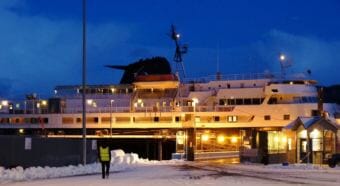
The ferry Taku waits to load passengers in Sitka Jan. 22, 2012, while it was still sailing. It’s been sold to a company based in Dubai after a Portland, Oregon, bidder withdrew its offer. (Photo by Ed Schoenfeld/CoastAlaska News)
The ferry Taku waits to load passengers Jan. 22, 2012, in Sitka, while it was still sailing. It’s been sold to a company based in Dubai after a Portland, Oregon, bidder withdrew its offer. (Photo by Ed Schoenfeld/CoastAlaska News)

The state ferry Taku is not hip enough for Portland, Oregon.

Earlier this fall, a company based there placed the winning bid of $300,000 for the 54-year-old vessel. KeyMar LLC’s plans were to turn it into a floating hotel.

The company withdrew its bid earlier this month, said John Falvey, Alaska Marine Highway general manager.

“They cited regulatory issues, potentially, other competing projects within their group, within their company … and things like that,” he said.

KeyMar representative Jonathan Cohen said his group could not gain enough support from neighboring property owners to win the required permits.

“The team did not want to introduce a property that wouldn’t be fully embraced by the surrounding community,” Cohen wrote in an email. He said the group is instead turning an old Columbia River school into a hotel.

After the Portland company pulled out, the state informed two other bidders from the last round that the 350-foot ferry was again for sale.

Falvey said the top bidder offered $171,000, two-thirds more than the minimum needed.

“Tuesday at 3 o’clock, we opened the bids. And the winner was the Jabal Al Lawz Trading Co., from the (United Arab) Emirates, who I believe is purchasing the ship to take it for scrap,” he said.

So it might end up in a marine junkyard. But he’s not sure.

Attempts to contact the company were not successful. But the Juneau Empire reports the company plans to use it as a ferry in the Philippines.

Falvey said the company already paid a $25,000 deposit. The balance will need to be in hand before he can sign sale documents. The timing has not been determined.

“We prefer to do it before the end of the year. But that may not happen with the holidays and things like that. If they’re going to get a crew here, they’ve got to bring a foreign crew to the United States and they need to get visas and things like that,” he said.

He said the state will continue to pay to store the Taku at Ketchikan’s Ward Cove for 30 days after the sale is completed.

After that, storage or transport is up to the buyer.

Falvey said the company indicated it could be reflagged to another country, which would allow transit through U.S. waters.

Right now, the Taku lacks equipment and certifications needed to sail under the U.S. flag.

The Taku was tied up in 2015 as the ferry system looked for ways to balance its budget. The ship can carry about 350 passengers and 50 vehicles. It has 40 staterooms, a cafeteria, observation lounges and a covered solarium.

State officials have been trying to sell the Taku since last spring. It was first priced at $1.5 million.

Editor’s note: This report was updated Dec. 1, 2017, with information from the Portland bidding group .

Some of Southeast’s recycling is headed to the landfill

Sitka's recycling center has separate bins for different materials. But mixed paper containers are gone, due to new restrictions tied to import rules in China. (Photo by Robert Woolsey/KCAW)
Sitka’s recycling center has separate bins for different reusable materials. But its mixed paper containers are gone, due to new restrictions tied to import rules in China. (Photo by Robert Woolsey/KCAW)

Much of the cardboard, plastic bottles and other items recycled in Alaska end up in China. The East Asia country is about to impose new rules limiting what it will accept.

Here’s how that affects our part of the world.

Locals sort through tubs and boxes of empty bottles and cans on a recent afternoon at Juneau’s recycling center.

They toss aluminum in one bin and plastics numbered 1 and 2 in another. Cardboard has its own place, as does mixed paper. Nearby containers hold glass and tin cans.

Those recycling generally like the idea of reusing items and keeping them out of the nearby landfill.

But soon, that’s going to be a little harder to pull off.

A substantial amount of Alaska’s recycling is shipped to China, where it’s shredded or melted down or both before being turned into new products at that nation’s numerous factories.

“China takes so much of the U.S. materials they have a lot of market power,” said Mary Fisher, executive director of Alaskans for Litter Prevention and Recycling.

She said China will start limiting what it takes at the beginning of next year.

Juneau residents drop off cans, bottles, paper and cardboard at the local recycling center.  (Photo by Casey Kelly/KTOO)

Plastics No. 1 and 2, such as soda bottles and milk jugs, will continue to be accepted.

The same is true for aluminum cans and corrugated cardboard.

But the higher-number plastics, Nos. 3 through 7, — including some takeout food containers, plastic cups and shower curtains — will not.

Neither will mixed paper, such as mail, magazines and newspapers.

“Most communities in Alaska are not accepting mixed plastics like that. So I don’t see that as being a major impact up here. And the mixed paper, a little bit more problematic as China uses a lot of mixed paper,” Fisher said.

A number of Southeast Alaska communities barge their recycling – as well as their garbage – south.

Republic Services has the contract to barge recycling from Ketchikan, Sitka and Petersburg. It recently informed those communities it stopped recycling plastics Nos. 3-7 earlier this month.

Sandra Woods is a municipal landfill specialist for the state.

“What they’ve told everybody is they’re going to accept everything like they have been. But it’s important that the communities know that plastics 3-7 and the mixed paper is going to be landfilled after China no longer accepts it,” she said.

China also is cracking down on what’s called contamination, or too many unrecyclable items, mixed in.

Juneau’s municipal solid waste coordinator Jim Penor blames curbside recycle, which also is done in Juneau, as well as Petersburg.

“When you think of the single-stream recyclable collection program at the curbside, and everybody can just throw in everything all in one bin,” he said. “That, I believe, has created the problem that has increased the percentage of contaminates going to China.”

The new import rules don’t kick in until January.

But Penor said it’s already had an impact on recycling revenue, which helps fund local collection and shipping efforts.

“I was getting approximately $130 a ton for cardboard up until October,” he said. “In October, it went to $40. I was getting $85 to $100 a ton for my plastics. That went to $10.”

He said contamination can only improve at the home or business level – or with expensive sorting.

It is possible China will roll back some of its restrictions before they take effect. Or, they may be short-term.

Penor said it gives large recyclers that take Alaska’s material motivation to look for other customers.

“They’re looking at world markets. Where else can we ship our stuff? We’re shipping it to China. Can we get Vietnam excited about making some manufacturing plants using recycled material from the United States? The Netherlands, Australia, different places,” he said.

Some recyclables haven’t been shipped south to find new uses for a while.

Glass, for example, mostly stays here, due to low prices and high shipping costs. But some places crush it and use it for sand or gravel.

Learn about other garbage issues and solutions in Southeast Alaska through CoastAlaska’s Talking Trash series.

Sealaska Corp. expands Seattle-area seafood investments

Orca Bay is Sealaska Corp.'s latest Seattle-based seafood investment. It's merging with Odyssey Enterprises, another processor investment. (Courtesy Orca Bay Seafoods)
Sealaska Corp.’s latest Seattle-based seafood investment Orca Bay is merging with Odyssey Enterprises, another processor investment. (Image courtesy Orca Bay Seafoods)

Sealaska is increasing its investments in Seattle’s seafood-processing industry, as part of the Southeast Alaska regional Native corporation’s effort to boost revenues and increase dividends.

The first investment in the industry came in 2016.

Sealaska bought a minority interest in Independent Packers Corp., a Seattle processor employing about 180 people.

It later purchased a majority stake in Odyssey Enterprises, also based in Seattle and has about 200 workers.

Both do value-added processing, which means they turn seafood into fillets, soups, stews, breaded products and similar items.

The new addition is Orca Bay, based in Renton, about 10 miles southeast of Seattle, makes similar products and has about as many workers.

“The products they have, their customer base, their marketing strategies, their access to resources, all is very complimentary,” said Anthony Mallott, president and CEO of Sealaska, with nearly 23,000 mostly Tlingit or Haida shareholders.

He said Orca Bay is in the process of merging with Odyssey.

“The combination of the two offers not only good scale, but the opportunity to have an expanded customer base and give us a platform where we can continue to build our marketing expertise, try innovative new products and be the beginning of the seafood platform that we envisioned,” he said.

Cliff White, executive editor of the website SeafoodSource, said the acquisitions make Sealaska a medium-sized player in the industry. He said the latest purchase is a good move.

“Orca Bay is renowned for its marketing and its strong ability to connect with customers. It’s a smaller player, but it’s doing things the right way,” he said.

Mallott said it’s Sealaska’s last processing investment for now, but the corporation also plans to purchase Alaska seafood for the plants.

McDowell Group senior seafood analyst Andy Wink said too much of the catch heads overseas.

“To have another buyer out there in the U.S. that’s looking to grow their line of products using fish from Alaska is just another bump in demand,” he said. “Alaska produces something like 5 to 6 billion pounds in harvest volume. So it’s probably relatively minor, but it helps.”

Sealaska Plaza, headquarters of the Southeast regional Native corporation, in Juneau. (Photo by Ed Schoenfeld/CoastAlaska News)

Sealaska’s seafood buys are part of a five-year recovery plan after its construction company lost more than $25 million and other businesses more than doubled that amount in 2013.

With revenues, the loss added up to about $35 million.

Among other things, the plan called for development of businesses closer to Southeast Alaska and the Pacific Northwest, where many shareholders live.

Earlier investments included plastics factories as far away as Alabama and Guadalajara, Mexico.

Mallott said processing is one reason the corporation has been able to boost its businesses’ part of this month’s $11 million shareholder distribution.

“The earnings have improved across the board,” he said. “Natural resources, government services and the new seafood investments are all adding to the earnings that are culminating in this increased dividend.”

The dollar-per-share contribution isn’t a lot, but it’s the largest in the past few years. Earnings from Sealaska’s Marjorie Young Permanent Fund added another 86 cents per share.

But the largest amount comes from natural-resource earnings shared by all 12 regional Native corporations. The amount, $4.10 per share, is down.

“The distribution is driven by oil income from Arctic Slope Regional Corp. So the main driver is the lower oil price,” Mallott said.

Sealaska also pays shareholders a spring dividend. It’s driven, in part, by revenues from the Red Dog zinc mine. That‘s on property owned by the Kotzebue-based NANA Regional Corp.

Read more about the dividends’ breakdown.

Sealaska to pay $11 million in dividends

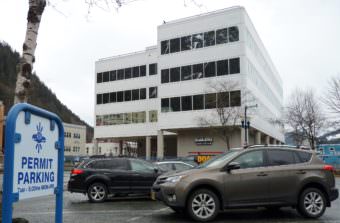
Sealaska's corporate headquarters are in this Juneau building. Nearly 23,000 shareholders will receive their fall dividends mid-November. (Photo by Ed Schoenfeld/CoastAlaska News
Sealaska’s corporate headquarters are in this Juneau building. Nearly 23,000 shareholders will receive their fall dividends mid-November. (Photo by Ed Schoenfeld/CoastAlaska News

Southeast Alaska’s regional Native corporation will distribute close to $11 million to its shareholders Nov. 17.

Juneau-headquartered Sealaska announced the distribution Oct. 27.

Payments will range from $596 to $186 for those with 100 shares. The amount depends on the class of shareholder and other factors.

Sealaska has 22,950 shareholders living in Alaska, the Pacific Northwest and elsewhere.

Operational income will make up $1 per share of the payments. That includes revenues from recently purchased fish processing plants, as well as timber and gravel operations, plus government contracting.

Officials said the amount demonstrates progress in developing its corporate businesses.

“We expect the operations dividend payment to nearly double due to continued growth in net income and cash flow. This will be the first increase in an operations dividend over the last five years,” board Chairman Joe Nelson said in a press release.

Sealaska’s Permanent Fund investment account makes up 86 cents per share.

The largest source, at $4.10 per share, is a pool of natural resource earnings from all 12 regional Native corporations.

Shareholders who are also members of an urban Native corporation, such as Juneau’s Goldbelt, will get the full dividend of $596 for those with 100 shares. That includes the resource pool earnings.

Those who are also members of village Native corporations, such as Kake Tribal, receive $133 for those with 100 shares. They do not include the resource pool earnings. Those go to the village corporation.

Recently enrolled shareholders’ dependents also receive the smaller payments.

Developers say Yakutat-area beach mine looks promising

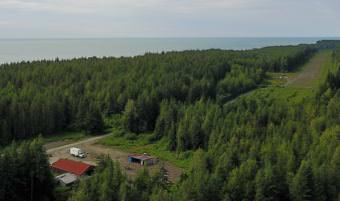
An old airstrip and work camp are being used in the effort to develop mineral deposits at Icy Cape. The Alaska Mental Health Trust Land Office owns the land and mineral rights and is overseeing exploration. (Photo courtesy The Alaska Mental Health Trust Land Office)
An old airstrip and work camp are being used in the effort to develop mineral deposits at Icy Cape. The Alaska Mental Health Trust Land Office owns the land and mineral rights and is overseeing exploration. (Photo courtesy Alaska Mental Health Trust Land Office)

Developers are optimistic about the potential for a beach-sand-mining operation in northern Southeast Alaska.

The Alaska Mental Health Trust Land Office claims good results from its second season of exploring Icy Cape, on the Gulf of Alaska between Yakutat and Cordova.

When mountains erode, they shed tiny particles of rock. They’re washed into streams to be deposited in lakes, deltas or the ocean.

In the Gulf of Alaska, strong waves toss them back on shore to help form beaches.

When those mountains contain veins of rare minerals, those sediments may have enough value to be worth mining.

That’s what’s happening at Icy Cape, where crews are drilling into the beach to see what – and how much — is there.

“There is gold, there’s zircon, there’s garnet, there’s epidote, there’s some platinum,” said Wyn Menefee, acting executive director of the land office of the Alaska Mental Health Trust Authority.

Its Icy Cape property includes about 25 miles of beach, plus forested uplands as wide as 2.5 miles. Those forests cover layers of sand and could be developed.

It’s an isolated area, about 75 miles west-northwest of Yakutat and nearly twice that distance east-southeast of Cordova.

“Right now, we’re in the exploration phase, which is determining what the resource is now, the lay of it … and we’re not at the point of identifying how we’re actually going to mine it,” he said.

About a year ago, the trust’s board allocated $2 million toward the project.

Officials said the new source of income could surpass all of its other efforts, bringing in hundreds of millions of dollars annually.

A work crew of about 16 spent last summer drilling cores from the sands, which stretch as far as 100 feet below the surface in some areas. Menefee said those samples are being analyzed.

The results have caught the attention of potential investors.

“We already have international companies that are interested in the project. They’ve already been visiting the site. They’ve already been trying to check out the resource and trying to see what quality it is,” he said. “This is a continual process.”

Land trust officials will discuss their plans for mining Icy Cape at meetings in two nearby communities.

The first is 6:30 p.m. Nov. 1 at Yakutat High School. The second is 6:30 p.m. Nov. 2 at the Cordova Center.

Gold and platinum’s value is obvious.

The other minerals have industrial uses as sand-sized particles.

The Trust Land Office manages its property to support mental health services for Alaskans.

It usually does that by leasing property or selling resources, such as timber, for others to harvest or extract.

But in this case, the agency is putting its own money into exploration and – possibly – development.

“We could potentially lease it out to an entity. We could lease it out to multiple entities. We could potentially go into a joint venture with entities,” he said. “There’s a lot of options that could be on the table.”

Menefee said further exploration is needed to determine whether there’s enough value to develop.

He expects that to take several more years.

The Alaska Mental Health Trust Land Office is developing its property at Icy Cape, which runs from the beach to the mountains. Logging will begin next year and and a mining projects is in the exploration phase. (Photo courtesy Alaska Mental Health Trust Land Office)
The Alaska Mental Health Trust Land Office is developing its property at Icy Cape, which runs from the beach to the mountains. Logging will begin next year and and a mining project is in the exploration phase. (Photo courtesy Alaska Mental Health Trust Land Office)

Menefee said it will be a placer-mining operation, which sifts through material near the surface, which would impact the environment less than mining into bedrock. It will also take advantage of existing roads, left over from earlier development.

But the potential project still raises concerns, especially about salmon habitat.

“Virtually every river and creek within the proposed area is listed on the anadromous streams catalog,” said Guy Archibald, staff scientist for the Southeast Alaska Conservation Council.

He worries, because a dozen streams and rivers flow through the land that could be mined. Like most nearby waterways, they’re short and their mouths are sometimes protected by sandbars or spits.

Archibald said they’re susceptible to the gulf’s frequent heavy winds and waves.

“I’m just concerned if they start removing these barrier sands, basically strip-mining them, that it’s going to expose the foot of these rivers to massive erosion during the winter storms and create a barrier to fish passage,” he said.

The Mental Health Trust Land Office plans to harvest more than minerals from the site.

It’s sold roughly 50 million board feet of timber to Sealaska Corp., Southeast’s regional Native corporation.

Menefee said he expects Sealaska to begin logging next year.

The property is within the boundaries of the Yakutat Borough. Officials there did not respond to requests for comment by deadline.

A somewhat similar proposal was made by an out-of-state company for mining beach sands in and near Yakutat about six years ago. That effort ended after initial mineral values could not be confirmed.

Editor’s note: KTOO’s building sits on land leased from the Alaska Mental Health Trust Authority. KTOO has also applied for and received occasional grants for special reporting projects from the authority.

Site notifications
Update notification options
Subscribe to notifications