Interior

Why do Bush Democrats caucus with the Republicans?

Willie William Hensley historical
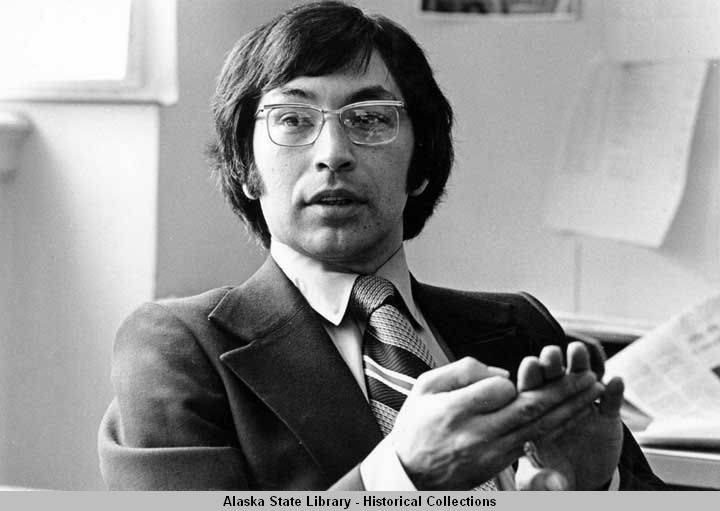
An undated photo of William “Willie” “Iggiagruk” Hensley, who served as a state representative, a House majority leader and a state senator on and off in the ’60s, ’70s and ’80s. Hensley represented his home region of northwest Alaska. (Photo courtesy Alaska State Library Portrait File)

The outcome of the disputed primary contest between Rep. Benjamin Nageak and Dean Westlake is uncertain. Whoever wins, it may unsettle what’s been a unique tradition in Alaska politics.

Democratic legislators have a long history of joining Republican-led legislative majorities.

To understand why Alaska is so different, it pays to go back to the 1960s. Democrats had dominated Alaska, but a resurgent Republican Party disrupted that. Regional divisions prevented a single party from forming a legislative majority, so they turned to partners across the aisle.

Willie Hensley is a Democrat who caucused with members of both parties in the House and Senate in the 1960s, ‘70s, and ‘80s, representing Kotzebue and the North Slope. He said rural legislators were able to accomplish much during periods of bipartisan politics – they worked to allow village children to attend locally controlled schools, improve rural access to affordable power, and build local housing authorities.

“Partly because we were able to put ourselves in a position of influence with these various coalitions, that enabled a lot of that to happen,” Hensley said.

Rural lawmakers became powerbrokers in the legislature. For example, in 1981, then-Rep. Al Adams of Kotzebue led a mid-session revolt in which rural Democrats joined with Republicans to switch control of the House. And every Republican-led House majority since then has had at least one Bush Democratic caucus member.

But by the late 1990s, Bush legislators had become fragmented, with members split between the majority and minority caucuses. Mary Sattler represented Bethel from 1999 to 2009, and chose not to caucus with the majority.

“My focus was really on building the Bush Caucus back up to where it had been in the ‘70s and ‘80s,” Sattler said.

Sattler says that even minority-caucus rural lawmakers were able to build relationships that led to capital projects in their districts.

“One of the kind of hallmarks of rural legislators – you know, it’s a lot like rural Alaskans, where we tend to be very non-confrontational,” Sattler said. “We much prefer governing with consensus. And being confrontational and combative doesn’t work really well if you’re from a small town and intend on living in a small town.”

The rural lawmakers have faced challenges in recent years to maintain their influence. Alaska’s population is increasingly urban, which means fewer rural seats in the legislature.

And as the drops in oil prices and production have shrunk the state’s capital budget, rural lawmakers haven’t been able to bring home as many state dollars to villages with small economies.

Now it’s the Republican Party that usually leads in state politics. And all four Democratic House members from northern and western Alaska have caucused with the Republicans since House Speaker Mike Chenault invited them to join in 2008. Chenault said this has allowed the caucus to include a broader range of voices.

“It made our caucus stronger, because at that point in time, we represented all areas of the state, from Barrow to Nome to Adak to Ketchikan, and all areas in between,” Chenault said. “And it made us a better caucus, in our opinion.”

Rep. Nageak’s predecessor, Reggie Joule, said that after having spent 12 years in the minority, he chose to join the majority in 2008. He said this gave rural lawmakers a say in the budget, including the capital budget.
Reggie Joule 2012-04-05
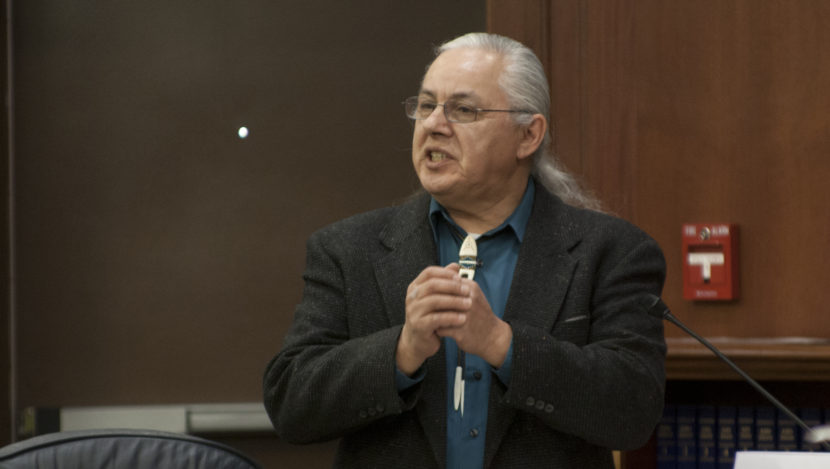
Rep. Reggie Joule stands to ask the House to support a bill he sponsored during a floor session in Juneau, April 5, 2012. (Photo courtesy Alaska House Majority)

“You know, I tried throwing rocks before and sometimes we were quite effective,” Joule said. “But when you’re inside the tent, you can make your case inside the tent on what’s important, and still stay true – I think – to many of the values that you hold dear.”

Voters generally have re-elected rural Democratic legislators who crossed party lines, and they have faced few primary challenges from other Democrats.

That pattern changed this year, with state Democratic leaders supporting Dean Westlake over Nageak, as well as Zach Fansler in his successful bid to unseat Bethel Representative Bob Herron.

Joule said the extended and special legislative sessions cut into the time that the incumbents had to fundraise and campaign. He says this made it difficult for them to dissuade challengers, like rural Democrats have in the past.

“At one point when the Democratic Party would try to assert itself in rural races, I think the Bush Caucus did a pretty good job of keeping people out of those races – but we would go right to people and have a direct conversation with them,” Joule said.

Former University of Alaska Southeast political scientist Clive Thomas said it appears that the party is more willing to assert itself in challenging rural Democrats who break with the party.

“They definitely I think are saying enough is enough in that regard and they’re trying to do something about it,” Thomas said.

Thomas said the drop in the capital budget may be causing the changed approach.

“Maybe now there’s no capital money, capital budget, there’s nothing in it for the Democrats to keep quiet about it,” Thomas said.

It isn’t just Democrats who are challenging sitting legislators who cross caucus lines. For the first time since Chenault invited the Bush Democrats to join the House majority, one Bush Democrat is facing a Republican challenger. Dillingham Representative Bryce Edgmon is challenged by William Weatherby, who’s receiving support from state Republican leaders.

Opinions are split over whether the primary challenges and increased competition will lead to long-term changes in how rural Democrats choose to caucus. But as Democrats aim to build a bipartisan coalition that would include moderate Republicans, it could have an effect on the next legislature.

Richardson Highway tank spill totals more than 3,500 gallons

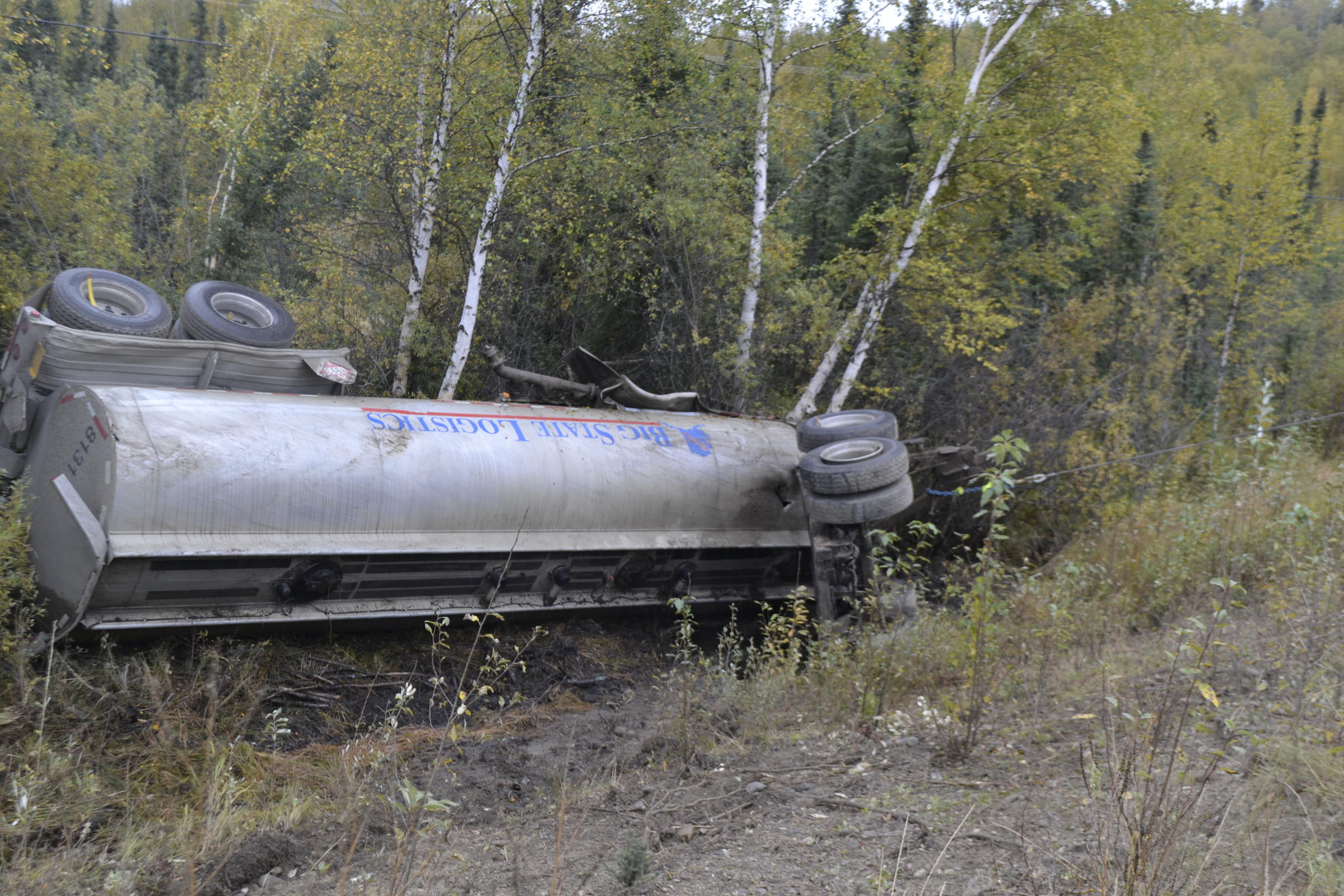
Investigators say multiple punctures enabled most of the 5,000 gallons of diesel fuel in this tanker to quickly leak out after it overturned Monday near the intersection of Lost Lake Road and the Richardson Highway. (Photo courtesy of Alaska Department of Environmental Conservation)
Investigators say multiple punctures enabled most of the 5,000 gallons of diesel fuel in this tanker to quickly leak out after it overturned Monday near the intersection of Lost Lake Road and the Richardson Highway. (Photo courtesy of Alaska Department of Environmental Conservation)

Cleanup work continues today near Birch Lake where a tractor-trailer tank loaded with 5,000 gallons of diesel fuel overturned Monday, spilling the fuel into a ditch that runs between a small wetland and the Richardson Highway.

The workers are trying to keep fuel from seeping into the wetland or the lake.

Alaska state environmental officials say a fuel spill from an overturned fuel tank off the Richardson Highway totaled more than 3,500 gallons, the Associated Press reported.

The Department of Environmental Conservation said Wednesday the cleanup continues at mile 306 of the highway, where the accident involving the Big State Logistics tank occurred Monday afternoon.

Alaska Department of Environmental Conservation on-site coordinator Tom DeRuyter said workers Tuesday suctioned just more than 11,000 gallons of fuel-and-water mix from a ditch just south of the roadside pulloff to the Birch Lake State Recreation Site.

they also plugged some culverts that runs under that stretch of the Richardson Highway to prevent contaminated water from flowing in to Birch Lake, DeRuyter said.

“No oil has been seen on the lake,” he said Tuesday afternoon. “Is there oil infiltrating underneath the roadway? I suspect there is.”

Workers pushed up dirt berms to limit fuel from flowing into the wetland. He says the marshy area sits a bit higher than the lake, so he thinks the fuel is more likely to flow downgradient in the other direction.

“It all goes toward the lake,” he said, “and that’s why the culverts are plugged and … we’re watching those to make sure no oil gets into the culvert system.”

Tests will be conducted to determine whether diesel leaked into the wetland or lake. DeRuyter said the first priority is removing fuel and contaminated soil, which is why workers began building a roadway Tuesday to enable equipment to get in to the area to begin excavating.

“We still have pure fuel that’s leaking out of the vegetative mat and is forming pools on-site,” he said. “We need to get rid of that and the heavily contaminated soil and the vegetation that’s hold the oil and allowing it to leak out slowly. And that’s really the first step in this process.”

DEC and Alaska State Troopers both are investigating the spill and the equipment failure that apparently led to it.

Troopers say there were no injuries.

DEC says it hasn’t received any reports of wildlife being affected by the fuel.

A Trooper spokesperson couldn’t yet provide specifics, but said it appears the driver was not speeding.

Photos taken by DEC show what appeared to be jagged edges around the tip of the tongue that connected the rear tank to the tanker truck – which was carrying another 9,000 gallons of diesel.

Troopers said the Big State Logistics tanker was just rounding the bend of the long curve along the southern shore of Birch Lake about 1 p.m. Monday when somehow the trailer in tow broke loose, hit the ditch and overturned.

ADEC said the tank had multiple punctures and that most if not all of the 5,000 gallons of diesel in the tank quickly leaked out.

Mark Lockwood says he saw the tanker approach as he was sitting in his truck at the intersection of Lost Lake Road, waiting to get onto the highway and get back to Fairbanks.

“The fuel truck got past me,” he said, “I looked again, nobody was coming, pulled out. And the fuel truck was pulling over to the side of the road – sans trailer, and a hitch dangling. And so I just missed seeing that happen.”

A DEC news release says crews and equipment will be working around the cleanup site today, and that flaggers will be controlling traffic along that stretch of the highway around milepost 306.

FCC subsidies to expand rural broadband and cell service

A new Alaska Plan for universal service will extend high-speed broadband and cell service in rural areas. (Photo illustration by Ed Schoenfeld)
A new plan will extend high-speed broadband and cell service in rural areas. (Photo by Ed Schoenfeld)

More Alaskans will have affordable access to mobile phones and broadband internet, thanks to a change in federal communication rules and funding.

Rural communities throughout the United States benefit from what’s called the Universal Service Fund, which subsidizes expansion of and improvements to telecommunication systems.

It also keeps costs in small communities closer to those in big cities.

The Federal Communications Commission recently adopted a Universal Service Fund plan for Alaska that includes more than $1 billion to be spent over the next decade.

Communities from Adak to Kotzebue to Ketchikan will see improved service.

“Broadly, it just excludes Anchorage, Fairbanks and Juneau. So pretty much any areas outside of that,” said Christine O’Connor, executive director of the Alaska Telephone Association.

“It’s going to vary by company, but you’ll see speeds going up and more locations being reached over the next 10 years, starting immediately,” she said.

The plan requires wireless providers to deploy 4G LTE or better mobile service to at least 85 percent of rural Alaskans. That’s almost 10 times more than have that access now.

Broadband speeds will be at least 10 megabits per second for downloading and 1 megabit per second for uploading.

The goal is to provide that service to 90 percent of rural Alaska, up from the current 60 percent.

Each of the 15 companies involved will develop their own plans and timelines. And there are options other than the Alaska Plan within the Universal Service Fund.

Michael Garrett of the Alaska Power and Telephone Co. said the business will add more fiber optic cables to expand bandwidth.

“Look for us to be able to provide a better value service for what they pay us for, increased data caps and faster speeds, hopefully at at least the price we’re offering now or lower,” he said.

Alaska Power and Telephone provides internet service in Southeast’s Petersburg, Wrangell, Haines, Skagway and Prince of Wales Island. It also serves Tok and several other Interior communities.

Many of the companies have already expanded their services.

Alaska Telephone Association President Ed Cushing, of Ketchikan’s KPU Telecommunications, said there are limits without federal assistance.

“We are obligated and required by the FCC to charge the equivalent of urban rates. It’s financially impossible, unless you have a subsidy behind the scenes that makes it possible,” he said.

Some of the companies involved are small, serving a particular community or part of a region. But Alaska’s largest telecommunications company will also taking advantage of the funding.

Heather Handyside is a spokeswoman for GCI, which has about 200,000 customers.

“This dedicated 10-year investment from a partnership with the federal government … helps us make a business case for bringing these services to more communities in rural Alaska,” she said.

Expanding and speeding up broadband and cellphone service will help rural businesses and schools. Handyside said it will also create jobs, including in Alaska’s smaller communities.

The Alaska Telephone Association lists other partners in the Alaska Plan as Adak Eagle Enterprises, Arctic Slope Telephone Association Cooperative, Bristol Bay Telephone Cooperative, Bush-tell, Copper Valley Telecom, Cordova Telephone Cooperative, Matanuska Telephone Association, Nushagak Cooperative, OTZ Telephone Cooperative, Summit Telephone Company, TelAlaska, United Utilities and Yukon Telephone.

Native groups criticize fair board over rappers’ ejection

FAIRBANKS — Alaska Native organizations are calling on an Interior Alaska state fair board to address issues of minority treatment and cultural insensitivity after a performance by two rappers was cut short and the men were ordered to leave the fairgrounds.

The Fairbanks Daily News-Miner reports the groups told the Tanana Valley State Fair board in a letter that they won’t support the fair until the issues are addressed.

Natasha Singh with the Tanana Chiefs Conference said the organizations are encouraging the board to apologize to rappers Julian Lillie and Michael Cofey, who are known by their stage names as Bishop Slice and Starbuks.

The fair said the men, who are Alaska Native and black, were ordered to leave mid-performance because their music contained inappropriate lyrics.

The fair apologized in a statement for the incident and to “those who may have been offended.”

The Native groups said the action wasn’t sincere.

Cooperative Extension to keep doors open in Anchorage, Sitka

Leadership for Cooperative Extension Service at the University of Alaska Fairbanks announced Aug. 31 a plan to keep two offices open that it planned to close this fall due to state budget cuts –- one in Anchorage and the other in Sitka.

The Sitka office now will be funded largely through grants, some with 4-H and the National Park Service.

The program assistant Jasmine Shaw, based at the University of Alaska Southeast, will continue her work offering programs to the community.

Fred Schlutt, Director of the Cooperative Extension, said this arrangement reduces the cost of running the Sitka office from roughly $25,000 a year to less than $5,000.

The Anchorage office will change in both location and function.

The office will close its doors Oct. 28 and move into the Chugachmiut Tribal Consortium Building. Schlutt said this change will allow the Extension to maintain a physical presence in Anchorage, while significantly reducing the cost.

“(The Anchorage office) cost us almost $300,000 a year in operating costs,” Schlutt said. “With a $1 million cut, that was an easy decision to make because that was 30 percent of the cut. But my goals was to try to eliminate, or rather save as many staff and faculty position s that we have as possible.”

The Anchorage office also will also change in focus, converting from a district office into an “outreach center.”

Classes still will be available, but taught by grant-funded faculty and staff. Among them is an invasive plants instructor, an integrated pest management technician and nutrition educator.

The five Extension agents in Anchorage will no longer be on staff.

Three of them will move to vacant positions at the Fairbanks and Soldotna offices. The fourth is transferring to the MatSu office in Palmer, while the fifth is retiring.

Schlutt said the Extension also wants to modernize distance learning, through mobile and video conferencing technology. Most of their clientele is over 45 years old, and Schlutt wants to attract a younger crowd.

“(The new clientele group) is not as prone to do face-to-face workshops, conferences, that kind of thing. They like to take courses that are offered online when they have time in their lives to do that. And they’re also very attached to, whether it’s a cell phone, an iPad, technology,” Schlutt said. “We really need to make that change, because we really have been using the same delivery method for 86 years in Alaska.”

For fiscal year 2017, the Cooperative Extension was cut by $1 million. To absorb that cut, the program also laid off a half-dozen staff members, reduced contracts and cut down travel and operating expenses.

Despite the depth of the cut, Schlutt is pleased the program found a way to maintain the Sitka and Anchorage locations. He added that, with FY18 budget cuts unknown, the Cooperative Extension may face future shortfalls.

Founded in 1930, the UAF Cooperative Extension Services has a particular focus on food security and safety.

“How can we become more self sustainable by teaching people how to grow more of their own food supply? You can look at health issues, obesity, diabetes, the work that we do there. I think Alaska needs us more than ever before,” Schlutt said.

The Cooperative Extension has nine offices and up to 90 staff members in the summer months.

Following robbery and assault, Fairbanks man fatally shot by police

Fairbanks police fatally shot a man yesterday.

FPD spokeswoman Yumi McCulloch said officers were called to a robbery and assault at the Alaska Motel on South Cushman Street.

She said a man, later identified as James Robert Richards, 28, of Fairbanks, was reported to have aimed a gun at a woman in a motel room.

“A short time after that, it was late. Officers said a shot was fired,” McCulloch said. “And once the officers got there, they found the suspect leaving the Alaska motel, still armed on foot, so they followed him.”

McCulloch said officers repeatedly ordered Richards to drop his gun, but he refused.

“The police deployed their tasers, but those were ineffective, and at oe point, the armed suspect grabbed an elderly man waiting at the bus stop and was trying to put him between himself and officers. So, at a last resort, the suspect was fatally shot.”

McCulloch said the officer who shot Richards has been placed on administrative leave. His name will be released in 3 days. McCulloch said the incident was captured on video.

“Most of the officers on scene had body cameras on and we have in-car cameras also,” McCulloch said.

McCulloch said the recordings and other case evidence will be reviewed by the State Office of Special Prosecution.

Site notifications
Update notification options
Subscribe to notifications