Interior

Marijuana social clubs are illegal, attorney general says

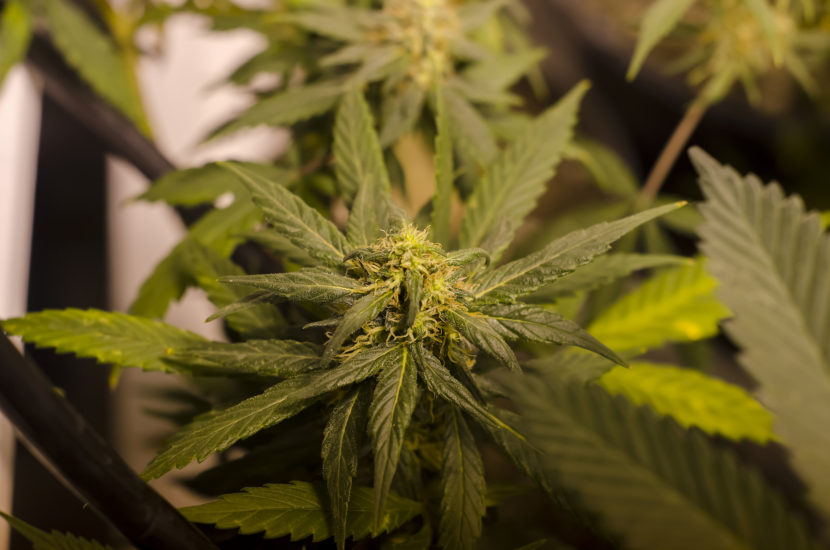
Voters approved the legal the production, sale and use of marijuana for Alaskans over 21 years old in the Nov. election. (Creative Commons Photo by Brett Levin)
(Creative Commons photo by Brett Levin)

Private clubs that allow people to consume marijuana in exchange for a fee are illegal, according to Alaska Attorney General Jahna Lindemuth.

She issued an opinion Wednesday that also said offering marijuana samples to paying patrons may violate state criminal law that bars distributing marijuana without a valid commercial license.

The state Marijuana Control Board has authorized retail marijuana stores to allow marijuana consumption on their premises.

Social clubs are like any other place of business where marijuana consumption is not allowed by law, Lindemuth said.

Department of Law spokeswoman Cori Mills reinforced the point.

“If that place is not a licensed retail marijuana store, consuming marijuana there is unlawful,” Mills said.

The ballot question that Alaskans approved in 2014 allowed the state to tax and regulate marijuana retailers. But it banned the public use of marijuana, and Lindemuth said social clubs are public places like other unlicensed businesses.

Mills said a person who operates a social club that provides marijuana samples would be violating the law if they receive a fee.

“Without a license from the Marijuana Control Board, a person may not possess more than 1 ounce of marijuana, or transfer marijuana for any sort of payment,” she said.

Lindemuth issued the opinion in response to a request from Chris Hladick, the commissioner of the Department of Commerce, Community, and Economic Development.

Clubs have either started or are planned in Anchorage, Fairbanks and Homer, but the opinion appeared to put those clubs in doubt.

One business that’s sure to be affected by the ruling is Pot Luck Events, a marijuana/cannabis club in Anchorage that’s been open for about a year and a-half, since March 2015.

In that time, the club has charged dues for access to an events space where members can use and trade cannabis.

The club has had a murky but diplomatic legal relationship with state and local officials.

Though the owners couldn’t be reached for comment, Lance Wells, Pot Luck’s attorney, said he’s still “digesting” the ruling and can’t say yet what it means for his client.

How the opinion will be enforced will be determined by local police, state troopers and the Marijuana Control Board, like other marijuana laws, Mills said.

Alaska Public Media’s Zachariah Hughes contributed to this report.

Should Alaskans fear diseases frozen in the permafrost?

Coastal erosion reveals the extent of ice-rich permafrost underlying active layer in the Teshekpuk Lake special area of Alaska's National Petroleum Reserve . (Photo: Brandt Meixell/USGS)
Coastal erosion reveals the extent of ice-rich permafrost underlying the active layer in the Teshekpuk Lake special area of Alaska’s National Petroleum Reserve. (Photo: Brandt Meixell/USGS)

Russian officials say warming permafrost could be linked to a deadly anthrax outbreak in Siberia this month.

Permafrost can be found almost everywhere in Alaska — from the Arctic coast to Anchorage.

But at least one expert isn’t alarmed about the potential for thawing ground to bring old diseases back to life.

After a Siberian heat wave, anthrax hit the Yamal Peninsula in early August.

The bacterial disease has claimed the life of a child and thousands of reindeer.

Permafrost expert Vladimir Romanovsky of the University of Alaska Fairbanks said melting permafrost and erosion may have worked together to spread anthrax into the water supply.

“Thawing of permafrost can release microorganisms first into the active layer, then into water and air,” Romanovsky said. “They were sequestered there for many, many years — tens of years, even thousands and tens of thousands of years.”

Scientists have talked about the possibility of epidemics caused by thawing permafrost, but until now, it’s only been a theory, Romanovsky said.

If the Siberian anthrax outbreak is traced back to spores in the permafrost, then it would be a troubling development.

“This release of these dangerous microorganisms could actually be spread very easily from the north, because we have lots of birds who are migrating all kind of places in the world,” he said. “So this problem could be not just local problem. It could be global problem.”

More research is needed to tie this anthrax outbreak to warming permafrost, Romanovsky said.

Infectious disease specialist Dr. David Morens, with the National Institutes of Health, isn’t worried about anthrax — or any other disease — surfacing from the ground.

Anthrax is hardy and virtually everywhere, he said.

“Anthrax is sitting in the grass in farms in Texas,” Morens said. “It’s in Asia. It’s in Africa. It’s everywhere. And so the fact that some might be in the permafrost doesn’t really add to whatever the risk is.”

Although anthrax is widespread, the chance of getting sick from it is really small.

The likelihood of contracting anthrax from spores exhumed from the permafrost, is even tinier.

Morens has studied the 1918 Spanish influenza pandemic that decimated rural villages in Alaska. Brevig Mission was hit especially hard.

Spanish flu killed 90 percent of the village over the course of six days.

The remains of victims were buried together.

Researchers have used samples from that mass grave to reconstruct the genetic code of the virus.

But Alaskans shouldn’t be afraid of getting sick as the ground in Brevig Mission thaws, Morens said. Unlike anthrax, Spanish flu is very fragile.

“What came out of the so-called permafrost was just broken pieces of RNA,” Morens said. “Nucleic acid. There was nothing infectious. A ton of it swallowed would have been harmless.”

Freezing and thawing breaks up viruses like Spanish flu, killing them.

“So if we are talking about viruses and deadly things, I would say whatever might be there in the permafrost is not going to be contagious,” he said.

Morens doesn’t fear viruses or bacteria emerging from their cryogenic slumber, but he is concerned about the threat of new diseases.

“All these emerging viruses that are coming on — Zika, chikungunya, severe acute respiratory syndrome (SARS), and all that,” Morens said. “It’s not that they’re being created. It’s not that they’re being dug up from the permafrost. They’re already there. And we human beings do things that invite them to come in, infect us, and cause epidemics.”

Officials in Russia are trying to stop the anthrax outbreak from spreading further. They are incinerating all infected reindeer carcasses and have banned hunting in the region.

Search continues for missing hiker by Chena Hot Springs

A search continues for an overdue hiker in the hills surrounding Chena Hot Springs Resort.

Resort employee Anatoliy Balko, 19, left on what was he anticipated to be a two-day hike Friday morning, said Alaska State Trooper spokeswoman Megan Peters.

“It was told last that he left the resort at approximately 9:30 Friday morning, and he was going to hike Far Mountain and back via the Charlie Dome area,” Peters said. “It’s about a 30-mile hike. He was supposed to be back at work on Sunday at 9 and did not show up.”

Troopers are part of a multi-agency search effort, Peters said.

“We’re involved with Wilderness Search and Rescue, and we got our helicopter up and we’re working with the University of Fairbanks,” Peters said. “They have a drone that’s gonna help us hopefully search the area.”

Balko is thought to have a pink backpack and be using a blue tarp for shelter, Peters said, and asks anyone in the area to be on the lookout for him.

North Star Borough assembly seeks help for Denali wolves

The Fairbanks North Star Borough assembly passed a resolution last Thursday asking Gov. Bill Walker to protect Denali National Park wolves and other predators on state land along the park’s northeast boundary.

Denali wolves commonly use the strip of state land near the Stampede Trail, west of Healy, and several have been trapped or shot there in recent years.

That’s contributed to a broader decline of the park’s wolf population to record lows and fewer visitors seeing the animals.

Much of Denali National Park’s wolf decline has occurred since a 10-year harvest ban was ended by the State Board of Game in 2010.

Wildlife advocates have unsuccessfully pressed the state to re-implement protections.

The North Star Borough assembly resolution lends weight to the effort, but revealed sharp contrasts in public opinion.

Fairbanks resident Heather Koponen asked the assembly to pass the resolution, citing the value of Denali wolves.

“The decision by the Board of Game not to reinstate this limited buffer zone has caused serious setbacks in wolf research as well as damage to the draw for tourists,” Koponen said.

That sentiment was countered by commenters like Mark Knapp of Fairbanks, who cautioned that wildlife management is outside of borough government purview.

“The state has a mandate to manage wildlife for sustained yield,” Knapp said. “The state has in place professional biologists and wildlife managers to manage wildlife based on sound management practices. The Borough should leave management of wildlife to those qualified to do it.”

Others testified that state management is heavily bent toward consumptive uses because the Game Board is solely comprised of hunters and trappers.

Resolution sponsor assembly member Van Lawrence said he brought the measure forward out of concern for the local economic impact of Denali National Park visitors who come to see wolves and other predators.

“Economic development is a power of this Borough, and Denali Park is a major economic engine for the state and for this Borough,” Lawrence said. “Almost 600,000 people visited it last year and more than that will visit this year. And at least half, if not more of those visitors, end up coming through Fairbanks.”

Lawrence acknowledged that harvest of wolves in the contested area is not the main reason for their decline, but said it is contributing to decreased wolf viewing in the park entrance area, where visitation is concentrated.

Assembly member Diane Hutchison cited tourism promotional information, noting that wolf sightings are not billed as a primary draw.

“Nowhere is the wolf number one in any of these tours and I don’t think any of these tours are getting people here because they are guaranteed a wolf sighting,” Hutchison said.

Hutchison, and members Lance Roberts and Matt Cooper voted against the resolution, while members Lawrence, Janice Westlind, Christopher Quist, Guy Sattley, Katherine Dodge and John Davies voted in favor.

Fairbanks citizens gather more than 500 signatures to ban commercial marijuana sales

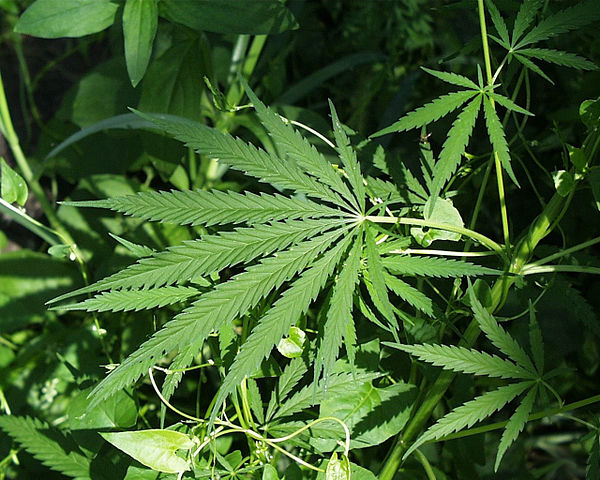
Marijuana
(Wikimedia Commons Photo)

Sponsors of a voter initiative to ban commercial marijuana businesses in the City of Fairbanks submitted more than 500 signatures Friday in an effort to get the measure on the fall 2017 ballot.

Petition sponsor Vivian Stiver, with the group “Drug Free Fairbanks,” said petitioners have gathered well above the 519 required, but the signatures must be of registered voters who live in the city, and are subject to review.

“Say they look at the signatures, there are several that bring us under 519 because theyr’re thrown out for whatever reason,” Stiver said. “We would then be given an additional two weeks to collect the difference.”

Petition sponsors have until September 15 to get the required number of valid signatures, Stiver said. Stiver gathered signatures at several locations this summer including outside the library and at the Tanana Valley State Fair.

“It was interesting,” Stiver said. “A lot of people were just unsure about what all had been legalizded under this law. I think one of the biggest things they’re surprised by are the edibles that can be out there. They are very much likened to national brand foods. Very hard to distinguish for young children … the difference.”

Many people Stiver talked to also did not realize that under the statewide ballot proposition passed in 2014 legalizing recreational and commercial marijuana, local governments have the option of banning retail sale of the drug by ordinance or voter initiative, she said.

Drug Free Fairbanks also has a petition in the works to ban retail sale of marijuana in the North Star Borough, outside of the cities of Fairbanks and North Pole.

Alaska prison farm helps food bank meet demand

FAIRBANKS — Vegetable donations from a prison farm in Wasilla are helping the Fairbanks Community Food Bank handle a 25 percent increase in food requests this summer.

The Fairbanks Daily News-Miner reports the organizations’ CEO, Anne Weaver, says shipments from the Point Mackenzie Correctional Farm have helped provide tens of thousands of pounds of food in recent months. The food bank has been raising money to transport the food more than 300 miles to Fairbanks.

The farm began donating earlier this year after the prison discovered it had leftovers from last summer’s garden season.

Weaver says Fairbanks and North Pole residents have also pitched in by bringing in vegetables from their home gardens.

The food bank is hoping for more produce as Interior Alaska’s harvest season goes into full force.

Site notifications
Update notification options
Subscribe to notifications