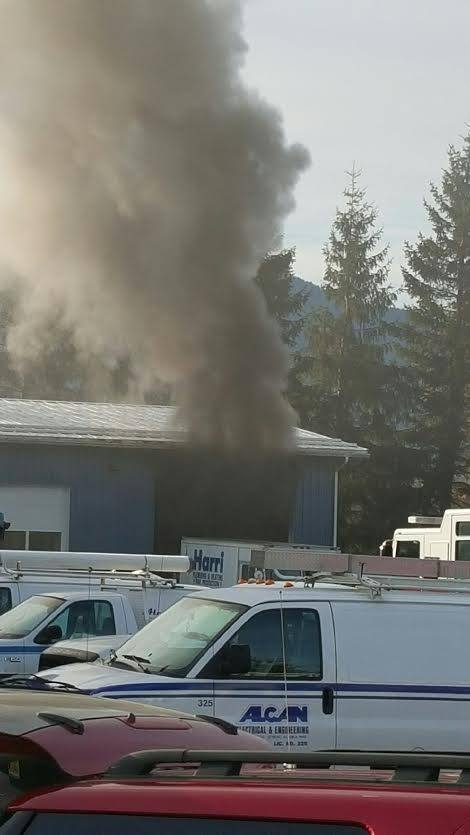
The fire at the Alcan Electrical and Engineering building at 8415 Airport Blvd. was caused by a welder’s torch used on a boat inside the structure. (Photo courtesy of Jennifer Canfield/KTOO)
Firefighters responded to a commercial structure fire near the airport Tuesday morning.
The incident at the Alcan Electrical and Engineering building at 8415 Airport Blvd. was caused by a welder’s torch used on a boat inside the structure.
Assistant Fire Chief Ed Quinto said hot slag from the torch dropped onto combustible material inside a confined space on the boat’s deck.
Quinto said the fire grew too fast for the welder to put it out himself, but he was able to close a large garage door which prevented the fire from spreading to other nearby structures.
Firefighters arrived to find flames and heavy dark smoke inside the building.
Quinto said losses were estimated at $750,000, but the building was insured. No one was reported injured.
“Capital City Fire/Rescue would like to remind people of the importance of having a fire extinguisher, on how to use it, and make sure it’s in working condition,” Quinto said.
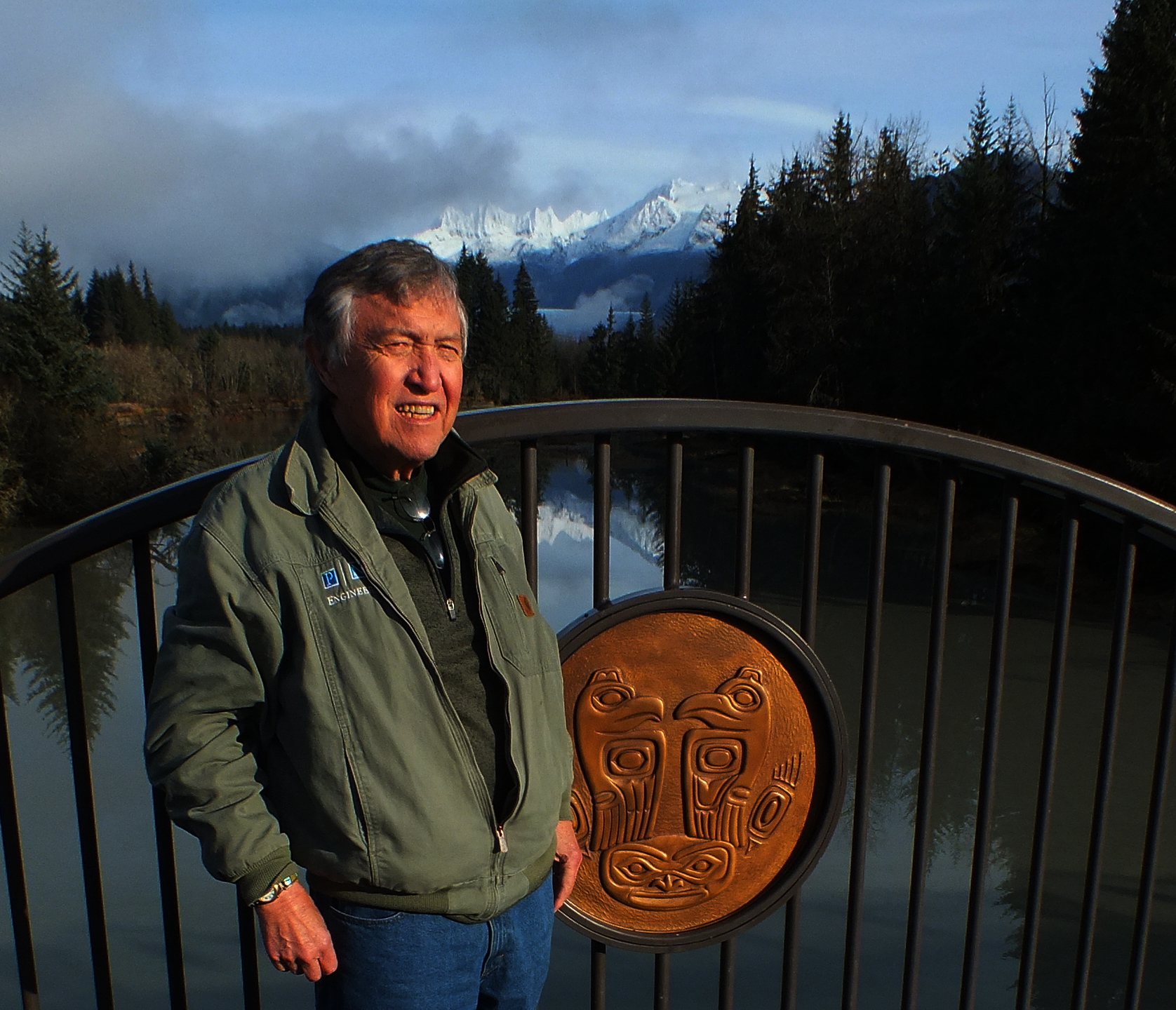
Roy Peratrovich Jr. stands next to one of the bronze medallions he designed for the first Brotherhood Bridge created in 1965. The medallions were recovered, restored and installed on the new Brotherhood Bridge that was dedicated on Saturday. (Photo by Matt Miller/KTOO)
Roy Peratrovich Jr. says he never had any intentions of becoming a bridge designer. He just sort of fell into the profession.
“By doing other things that civil engineers don’t do: digging ditches, working in construction, and just doing some miserable jobs,” Peratrovich says. “And I said ‘I don’t want to be doing this all the time.’”
Peratrovich, a designer of the original Brotherhood Bridge that was completed in 1965, was in Juneau for last weekend’s dedication of the new Brotherhood Bridge. It’s the fifth bridge for the Glacier Highway crossing at Mendenhall River and the second bridge honoring the Alaska Native Brotherhood, the organization created in 1912 that advocated for Alaska Native civil rights.
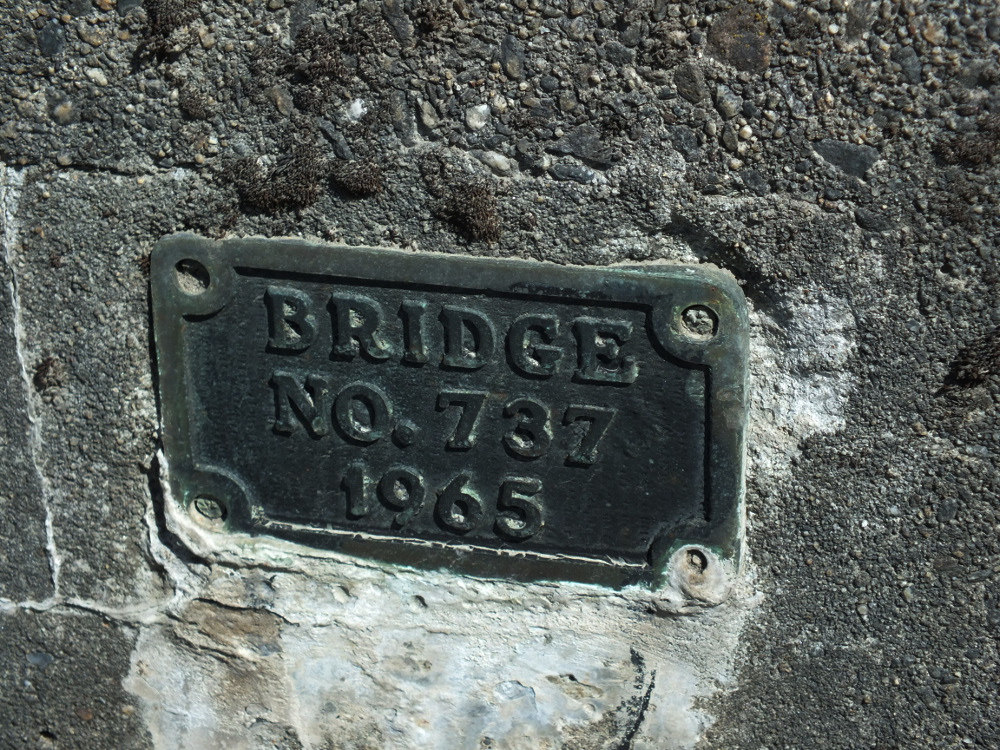
Construction plate for the old Brotherhood Bridge. (Photo by Matt Miller/KTOO)
After graduating from the University of Washington in 1957, Peratrovich says he was newly married and needed a job. He was hired by the City of Seattle largely because he got an ‘A’ in a bridge design class.
“At that time, there were no overpasses, no freeway systems, and we got involved in designing one of the first interchanges, separated interchanges,” Peratrovich says. “There’s a lot of firsts that we worked on down there. I found I had a natural leaning toward that. I just loved it. Bridge design became my thing.”
Peratrovich, who says he is the first Alaska Native to be registered as a professional civil engineer, later returned to Alaska shortly after statehood.
Peratrovich gets a lot of recognition for designing the original Brotherhood Bridge, but he credits his boss, chief bridge engineer Charlie Smith, with coming up with the idea.
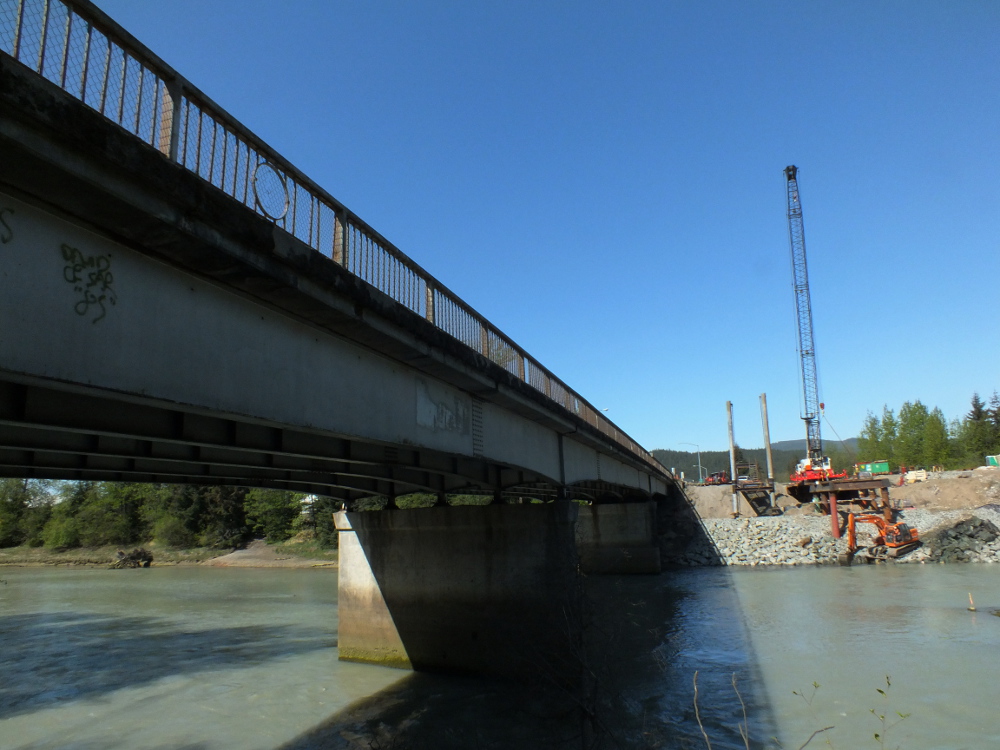
View of now-dismantled Brotherhood Bridge, pile template, and work trestle for the new bridge at Mendenhall River. Bronze medallions have already been removed from the pedestrian hand railing. (Photo by Matt Miller/KTOO)
“He learned of my Tlingit background and I kind of told him – and this is talking to him in 1962 – 50 years ago ANB was formed,” Peratrovich says. “Later on, he came back to me and he said, ‘We need to do something to celebrate that, for the ANB. Maybe we should do something with the bridge.’ At that time, it was called the Mendenhall River Bridge, bridge number 737.”
The Brotherhood Bridge symbolized the bridging of the gap between Native and non-Native Alaskans, and the project allowed Peratrovich to incorporate his first love, art, into his profession.
Peratrovich says he and Smith figured out a way to make the bridge unique and distinctive, and also honor ANB by installing art in the bridge railings.
Peratrovich remembers being inspired by a small medallion that he borrowed.
“Kind of a dollar, a bronze dollar that was made with that medallion picture on it, only a lot cruder,” Peratrovich says.
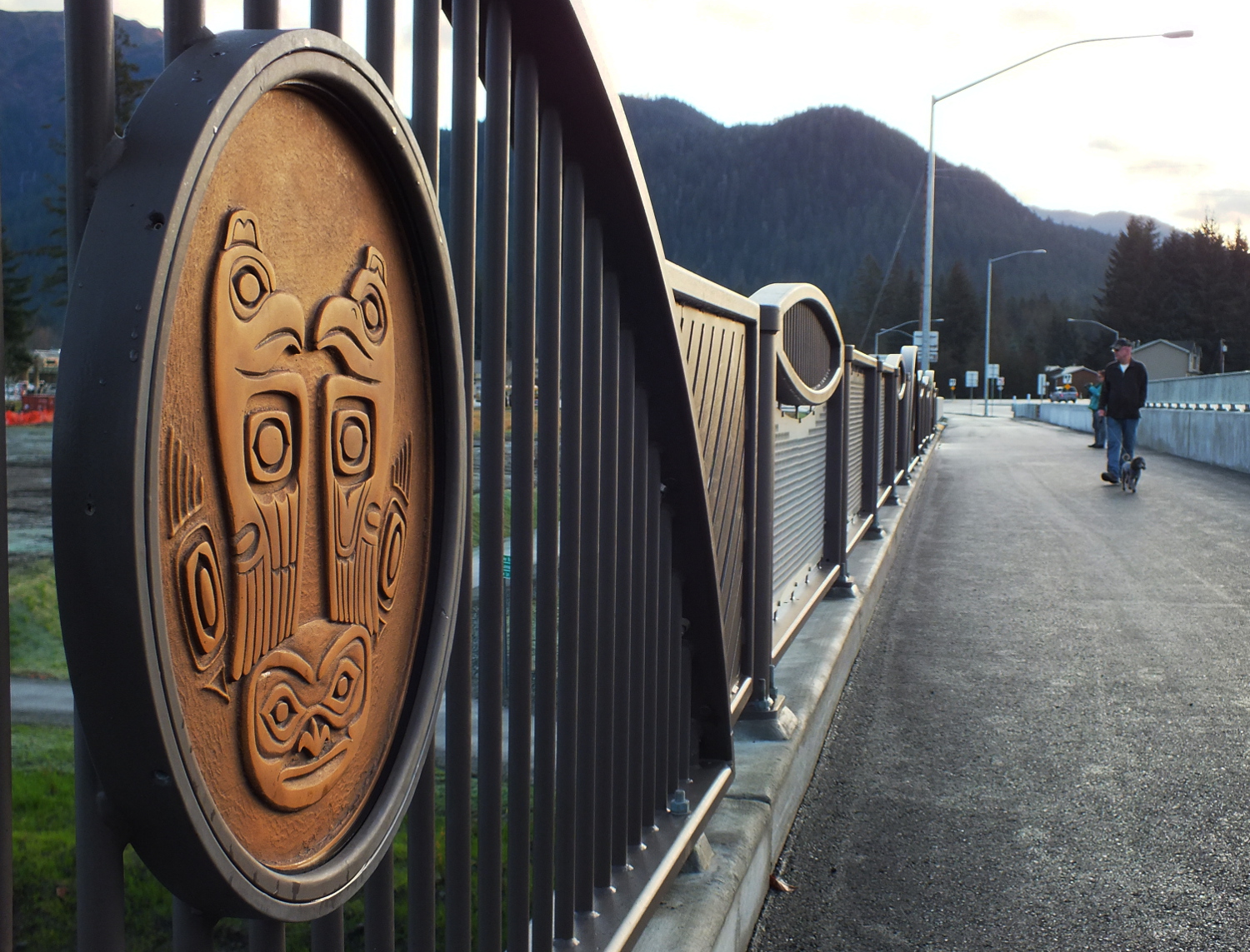
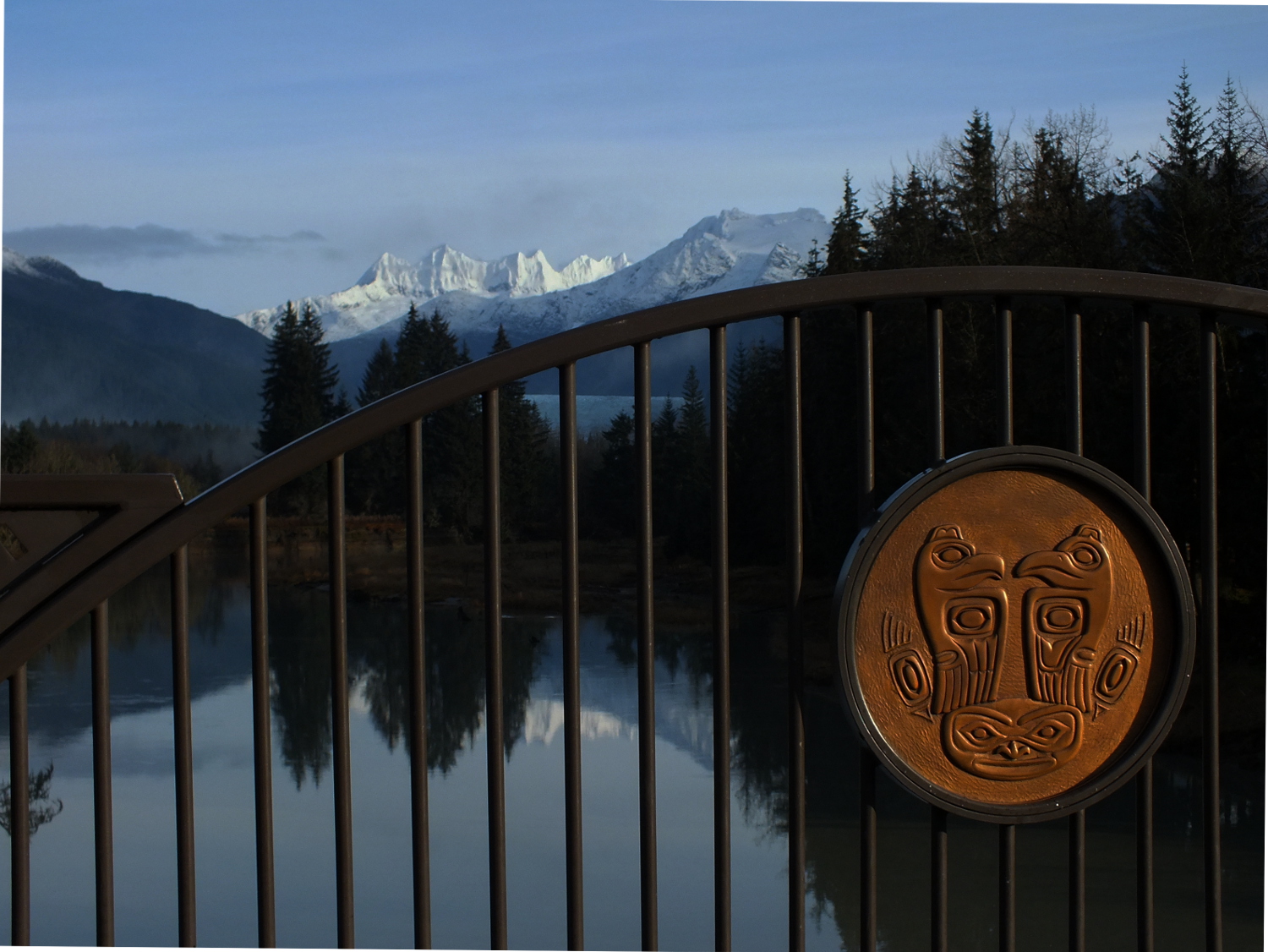
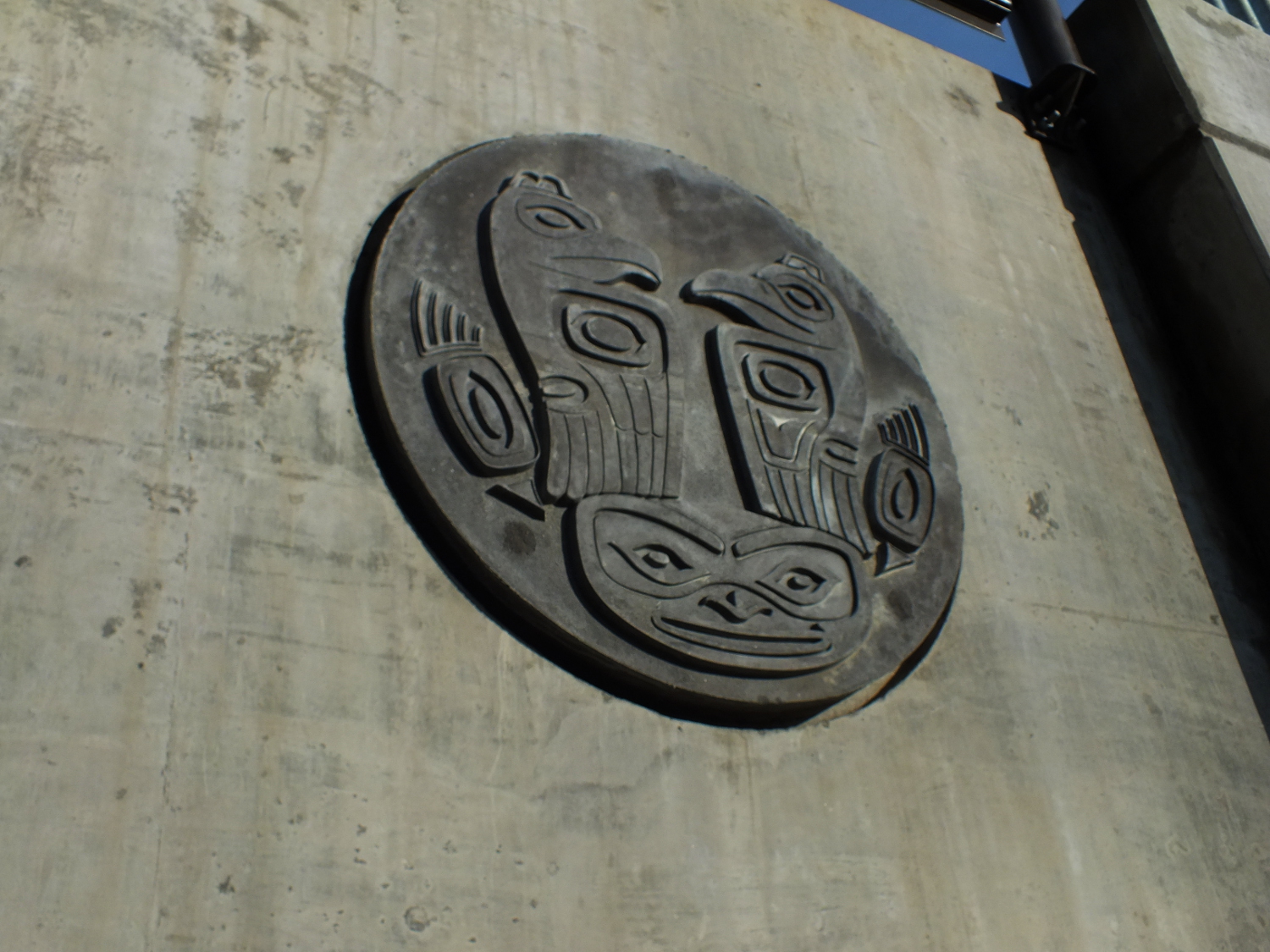
He enlarged the design so that it was 2 feet in diameter and redid it with the ovoids and other formlines seen in Northwest Coast art. Eagle and Raven, representing Tlingit moieties, face each other and both are standing on a rock that represents ANB.
Peratrovich says bridge superintendent and silversmith artist Tom Paddock carved the design into a plank of yellow cedar. At Seidelhuber Iron & Bronze Works of Seattle, the wood was pressed into oiled sand. Aluminum was poured into the sand to create a master mold for the bronze casting.
Listen to Roy Peratrovich Jr. describe creation of the bronze medallions for the Brotherhood Bridge built in 1965:
Peratrovich remembers the original medallion installation: “I think I used a stainless steel bolt in that thing and left a big enough gap in here so there wouldn’t be any contact between this and the metal. Bronze and steel will react to one another. You’ll end up eating away the bronze. Electrolysis.”
Peratrovich says three additional medallions were made. He gifted the first one to the Sitka ANB camp, where it started. A second medallion was loaned to his dad, and it eventually made its way to the ANB camps in Anchorage and then Ketchikan.
Peratrovich says he eventually got one to keep himself.
Roy Peratrovich Jr. is the son of Alaska Native civil rights leader Elizabeth Peratrovich. Among those attending the dedication of the original Brotherhood Bridge was his dad, Roy Peratrovich Sr. who represented the Alaska office of the Bureau of Indian Affairs and his uncle, Frank Peratrovich, a state senator from Klawock.
The textured surface of the medallion comes from Tom Paddock’s carving 50 years ago. (Photo by Matt Miller/KTOO)
The 10 medallions from the old bridge were recovered, restored and installed on the upstream pedestrian railing of the new Brotherhood Bridge. Pedestrians can see large concrete replicas of the medallions that have been mounted on the side of the bridge abutments.
The John O’Connell Memorial Bridge in Sitka — considered as the first cable-stayed vehicular bridge in the country — and the West Seattle Bridge were among the other projects that Peratrovich says he worked on.
After leaving state service, Peratrovich and a friend created the consulting and design firm Peratrovich & Nottingham, later called Peratrovich, Nottingham and Drage, and then PND Engineers, Inc.
“It’s been an interesting career,” Peratrovich says. “Then after I retired, I took up art. So, I did a lot of bronze.”
Now 81 years old, Peratrovich creates art in his studio in Gig Harbor, Washington. His 10-foot bronze sculpture, Flight of the Raven, located at Fourth and E streets in Anchorage, was created to honor his parents and tells the story of how Raven brought light to the world. He currently creates bronze sculpture, mostly smaller pieces, with the lost wax casting method.
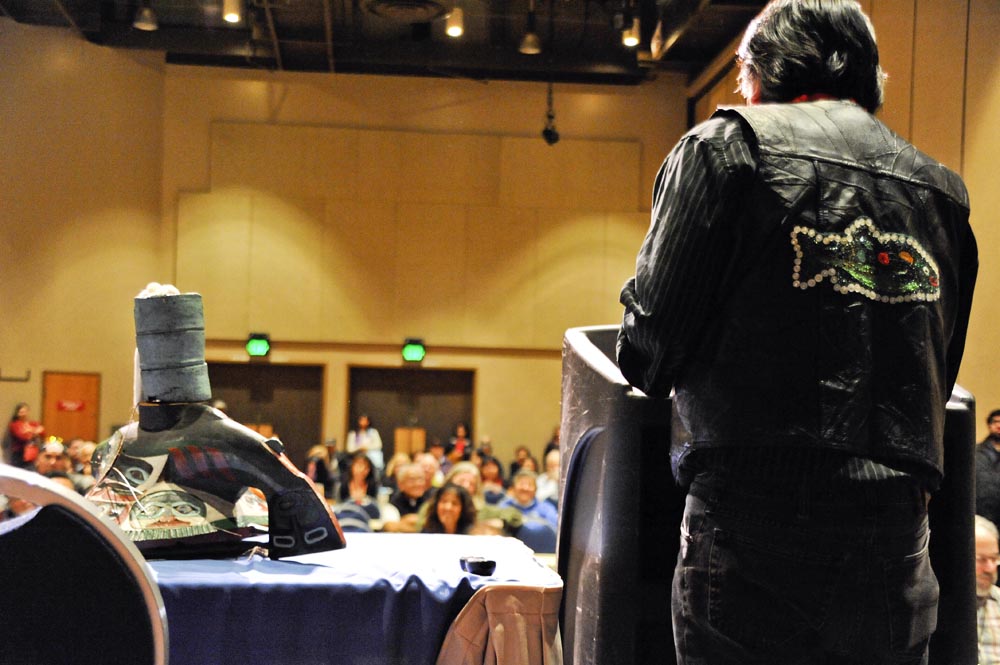
The clan conference is a gathering of elders and academics, tradition bearers and students. The concept of the event, which started in 1993, came from the late Tlingit scholar Andrew Hope III.
“In many ways there was a power imbalance where our stories were being told, our culture was being talked about, our people were being talked about, and the people had very little control over that. They had very little way to exercise their voice and to share who they really are. And so it was the idea that we come together as equals,” Hope’s son, Ishmael Hope, said.
The first clan conference was in Haines and Klukwan and the event continued taking place around Southeast Alaska through 1997. It was revived in 2007 and now takes place every two years.
Hope is looking forward to hearing from the elders.
“Our elders have a vast library of knowledge, things to share, and we still have our elders. Sometimes people talk so much about cultural loss, how much is not there, but I think it’s a gift with the elders that we have, and what they’ll present,” Hope said.
The clan conference includes three days of presentations and seminars. The roughly 40 sessions range in topics from art to ecology. Plenary sessions take place Thursday, Friday and Saturday mornings.
“The conference theme – Haa Saax’ú, Haa Latseení, Our Names, Our Strength – that theme will be illuminated by Norma Shorty who’ll be talking about finding our names. Friday morning, Tom Thornton and Harold Martin will be talking about place names. And Saturday morning, there will be an author’s panel,” said linguist Alice Taff, one of the event organizers.
Della Cheney and Percy Kunz at the 2013 Conference of Tlingit Tribes & Clans. (Photo courtesy Peter Metcalfe)
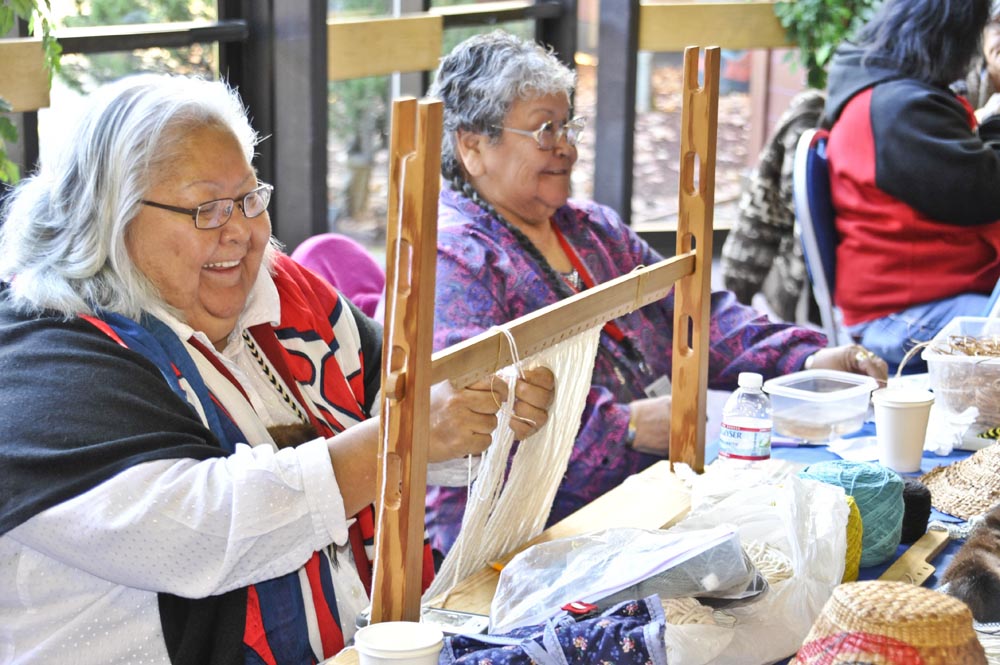
The conference’s all-day events include a weaving exhibit, a Native Arts market, a viewing of photos from the Cyril George collection and a chance to listen to Alaska Native educational stories through “StoryCorps @ your library.”
Beth Weigel with Juneau Public Libraries says the listening booth will feature excerpts from interviews recorded in Juneau, Haines and Klukwan. Clan conference attendees can also record their own stories alone or with a friend or family member.
“It’s a great format for passing down stories through the generations and telling people about experiences that they’ve lived and they want to share and make sure that that voice stays alive, the sound of that voice as well as the stories from that person,” said Weigel.
The clan conference will also feature special events honoring the late Walter Porter, the late Richard Dauenhauer and a reading of indigenous literature at the Governor’s Mansion.
A zoning ordinance that allows growing commercial marijuana in low-density neighborhoods is heading back to the Juneau Assembly for public testimony.
It allows marijuana cultivation in D-1 residential areas, zoned for one house per acre.
Rural reserve areas would be zoned for pot cultivation, manufacturing and retail. That’s basically everything off of the road system, plus parts of North Douglas and out the road.
On Monday, a couple of members from the public weighed in at a worksession meeting. James Barrett, who’s interested in marijuana business, said the more the market is restricted, the less opportunity there is for economic growth.
“So I feel like maybe there’s some things we can do. Maybe we can take some risks. Maybe we say, ‘Hey, let’s give it a try,’” he said. “Let’s let the cannabis people, the responsible ones, give them a shot. Maybe they can do a little part for our economy.”
Barrett said it was also a way the city could attract young entrepreneurs.
But for Marjorie Menzi the issue hit close to home. Menzi lives on Thane Road in a D1 area. She said she was concerned about the pungent smell and glare from greenhouse grow lights.
“We should not be discriminated against because we have lower density or we’re outside the urban service area. We have people with children living in our areas,” Menzi said.
The state is proposing a 500-foot buffer around schools, day cares and childcare facilities.
Assemblymember Karen Crane agreed with Menzi’s points. She said the idea that the assembly treats neighborhoods differently is accurate, and the problem wasn’t going to go away.
“As we have more and more development outside the urban service area, we are going to come up against this area more and more and I think it’s one we need to take a look at,” Crane said.
Crane attempted to get the ordinance sent back to city planners, but the motion failed. The city is trying to figure out zoning before a moratorium expires at the end of the year. After that, pot entrepreneurs will be able to apply for conditional use permits.
The public will get another to chance testify at the next assembly meeting Nov. 9.
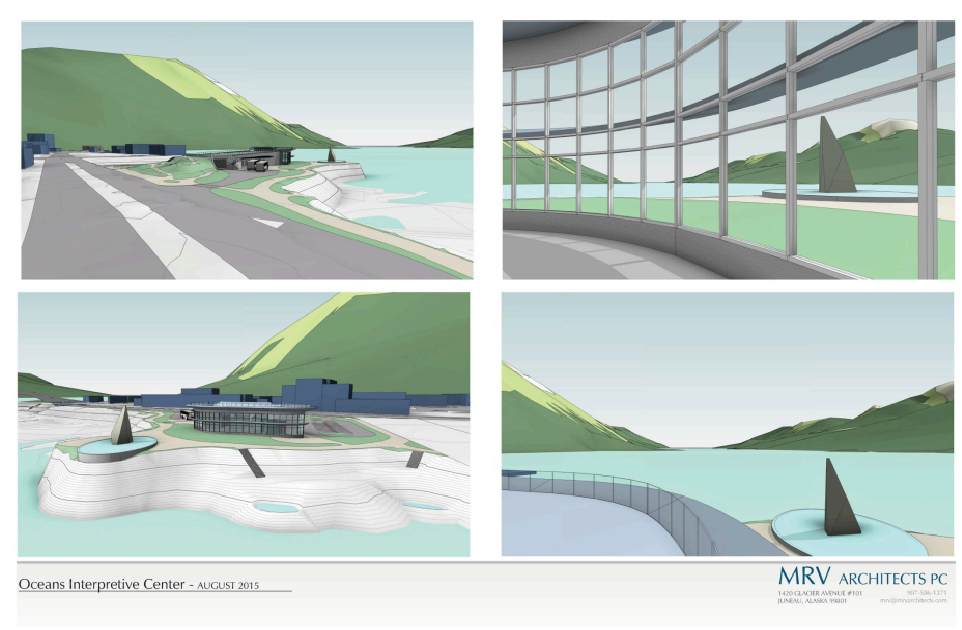
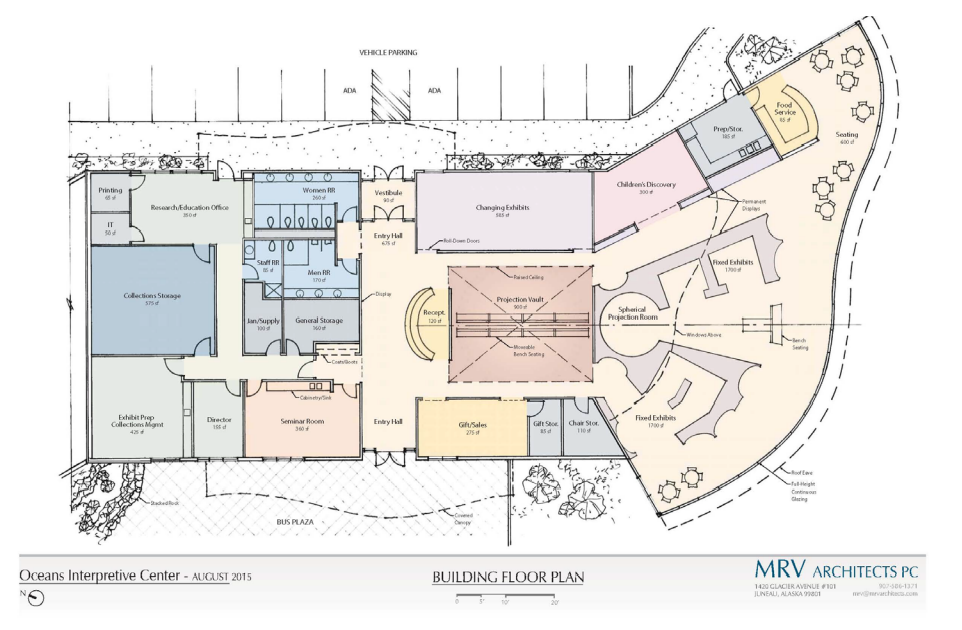
Tentative design plans of Juneau Ocean Center courtesy of MRV Architects.
Plans for a whale park were suspended recently after contractor bids came in millions of dollars over budget. Now a new project called the Juneau Ocean Center wants to offer the whale a different home and provide a hub for marine science.
The Juneau Ocean Center could be a space to hear lectures on marine mammals and climate change, relax and eat lunch or take in an IMAX movie on whales.
In the design plans, the glossy 7,000-square-foot building overlooks the Gastineau Channel from Egan Drive.
“The front is two stories of windows looking out at the channel and roof is actually a sod roof, a green roof rather, that’s a park,” said Linda Nicklin. She’s one of the organizers for the $12 million project proposed on Alaska Mental Health Trust land.
The bronze, life-size whale statue at a workshop. (Photo courtesy City and Borough of Juneau)
The center will be open year-round and geared toward “citizen scientists” and tourists.
“We’re going to have an electric powered boat … (to bring) people in the summer to the cruise ship piers so that we’re reducing congestion and bus traffic in downtown,” she said
Not too far away from Nicklin’s proposed center is the future site of Bridge Park. The park recently hit a development snag. The contractor bids came back way over budget — more than 25 percent over the city engineer’s estimate.
“The sculpture and the ocean center are a great pairing. I think that both would benefit for being in the same location,” she said.
Nicklin and other organizers presented the plan to the Juneau Assembly Monday.
Assemblymember Mary Becker asked why the ocean center couldn’t be built at Bridge Park, where the permitting is already complete. Organizer Bob Janes said it comes down to location.
“I’ve looked at that property right on the edge of the water, looked down the channel,” Janes said. “Unfortunately it does not have all the stuff and that’s why we’re not interested in that property. And I think that will be a failure with the whale placed down there as well.”
Organizers hope to fund the ocean center with a national campaign kicking off in the spring, when the humpback whale comes off the endangered species list. Cruise ships passenger fees could supply another source of funding.
As for the whale statue, they say they want to move forward with or without it.
Tentative design plans of Juneau Ocean Center courtesy of MRV Architects.
Glass-smooth Mendenhall River, Mendenhall Glacier, and the Juneau Icefield form the backdrop for one of the bronze medallions designed by Roy Peratrovich Jr. Tlingit moieties Eagle and Raven stand upon a rock that represents the Alaska Native Brotherhood. (Photo by Matt Miller/KTOO)
State transportation officials and Juneau Native leaders dedicated a new bridge crossing the Mendenhall River as the Brotherhood Bridge Saturday.
The new, wider structure was constructed for $25 million and it was designed to accommodate Glacier Highway’s future traffic needs. The bridge is the fifth crossing of the river at that location, and it replaces the former Brotherhood Bridge that was constructed in 1965 and dismantled last year.
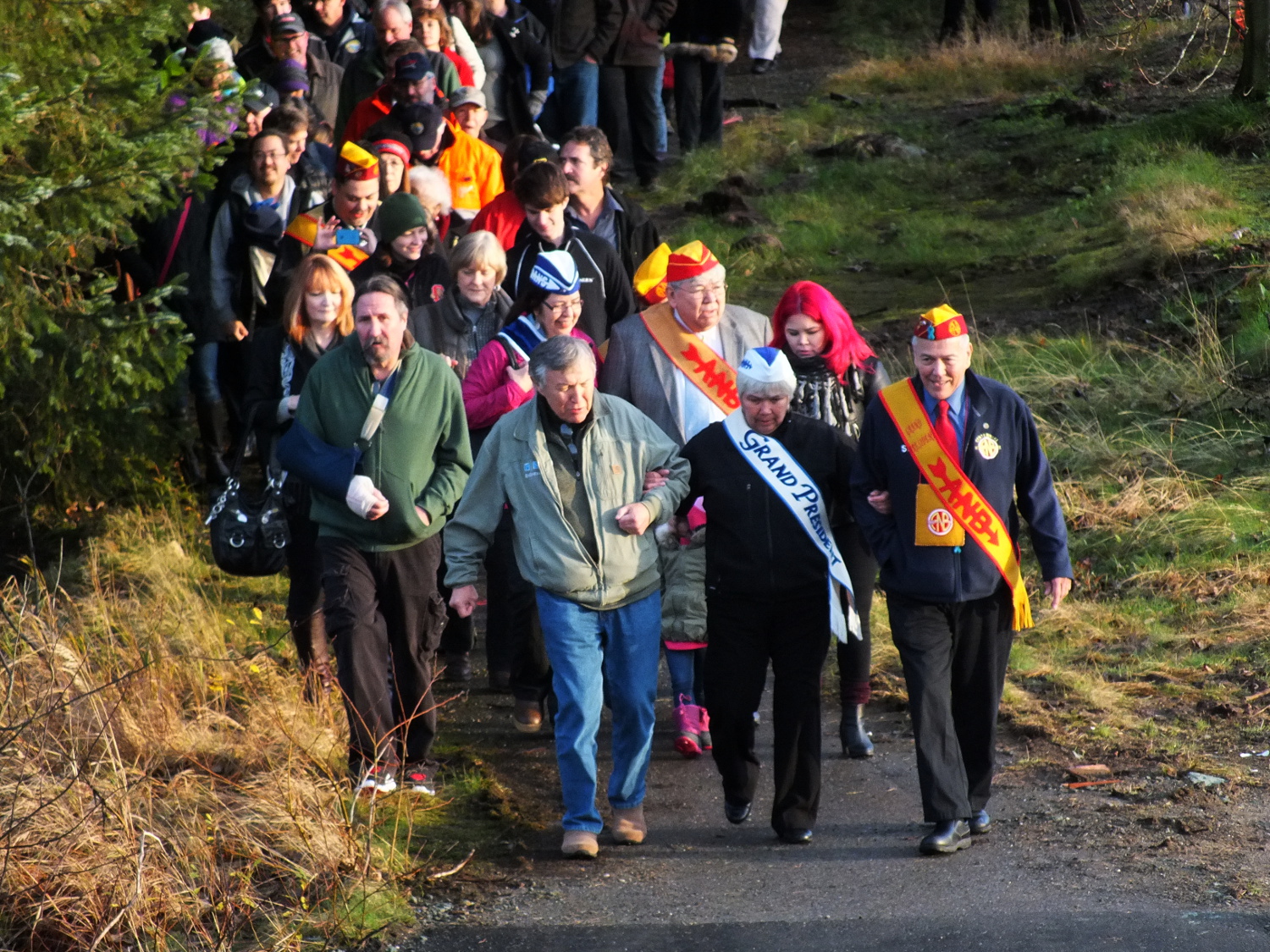
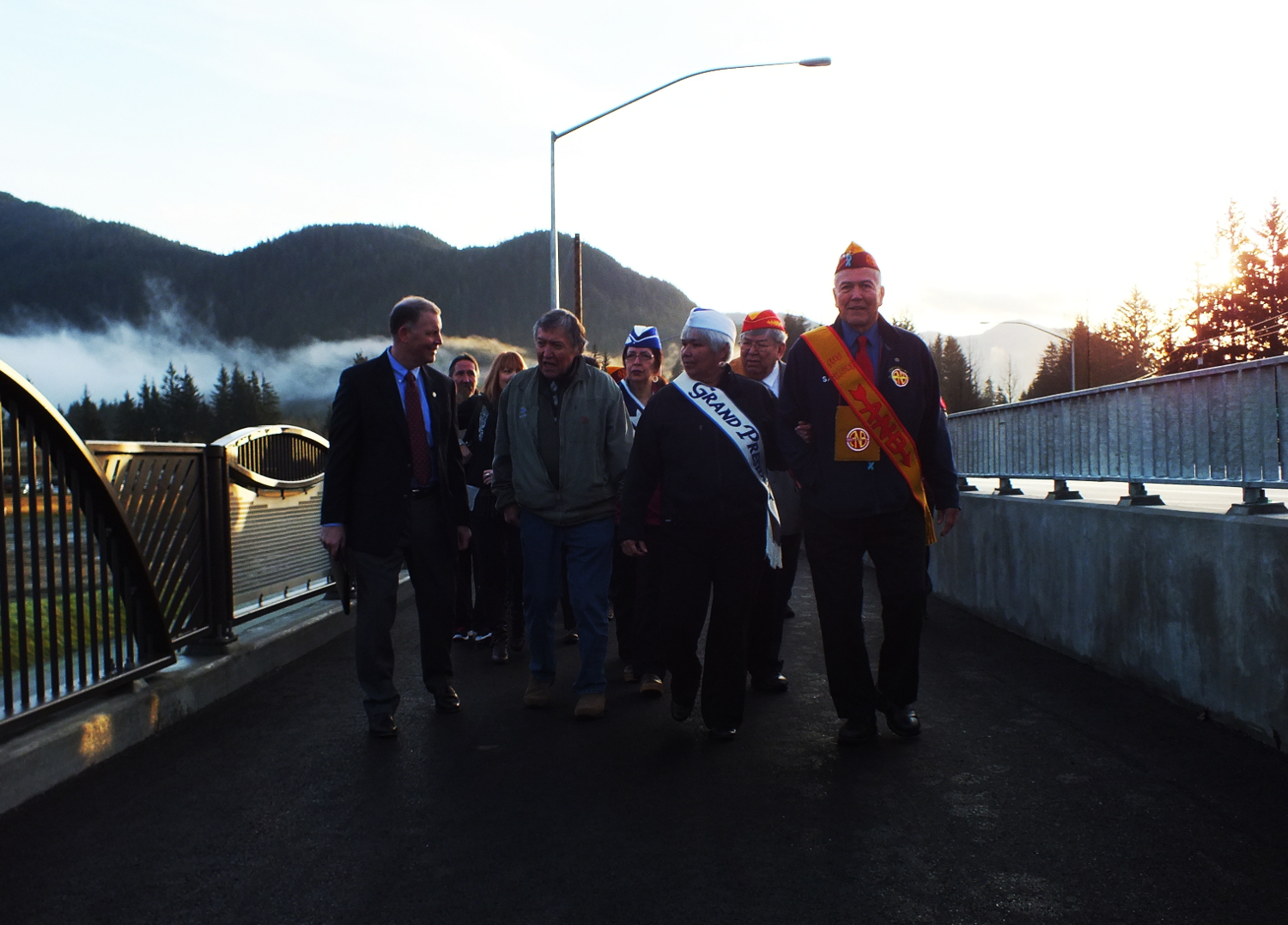
A bright, rising sun shone on Saturday morning’s dedication, which featured a procession of Native leaders and comments from Roy Peratrovich Jr., designer of the original Brotherhood Bridge and the ten bronze medallions that were installed along the hand railing of the old bridge.
Roy Peratrovich Jr. (from left at front), Alaska Native Sisterhood Grand President Johanna Dybdahl, and Alaska Native Brotherhood Grand President Sasha Soboleff lead the procession to the new Brotherhood Bridge that includes Peratrovich’s family and transportation officials. (Photo by Matt Miller/KTOO)
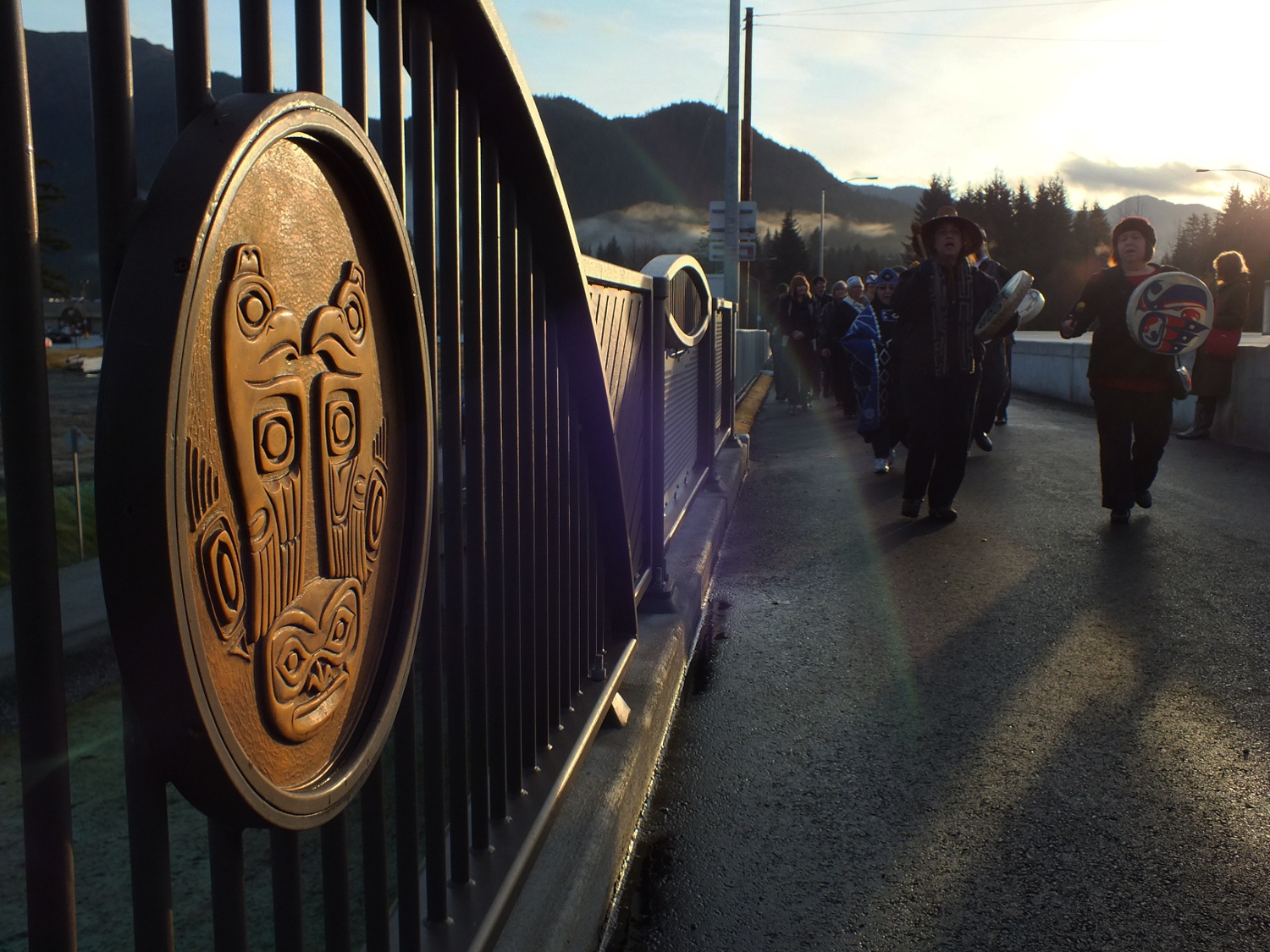
Procession of builders and local Native leaders make their way across the bridge. (Photo by Matt Miller/KTOO)
The first Brotherhood Bridge was dedicated to honor and commemorate the Alaska Native Brotherhood, created in 1912, that advocated for civil rights for Alaska Natives.
After it was built, Lt. Governor Byron Mallott said he made a particular effort to visit it when he traveled to Juneau because of what it meant to Alaska Natives and to all people of Alaska.
“It occurred at a time that was very different from today,” Mallott said. “A time when Alaska’s peoples were still coming together.”
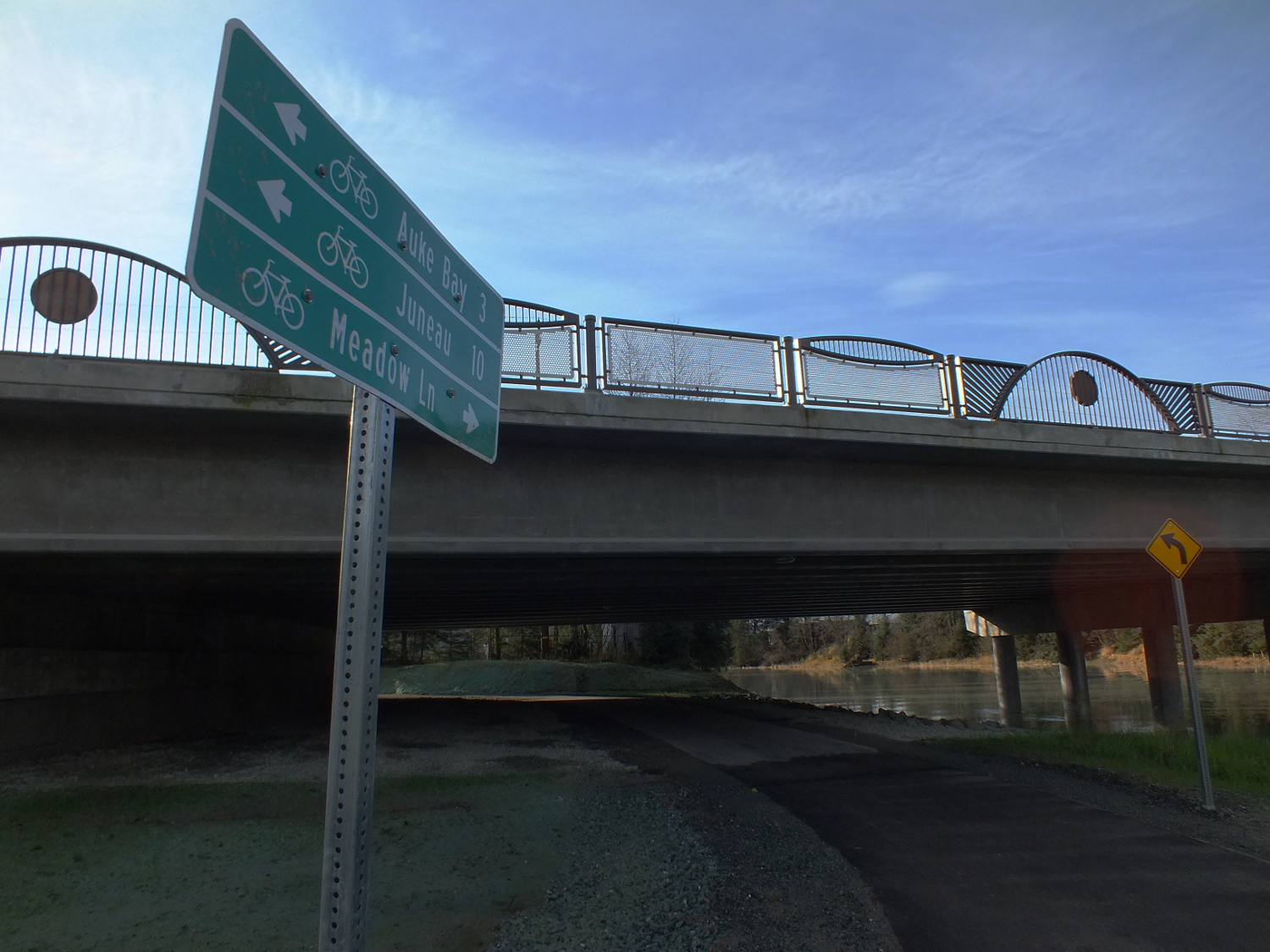
New Brotherhood Bridge features underpasses for pedestrians and cyclists on both banks of the Mendenhall River. (Photo by Matt Miller/KTOO)
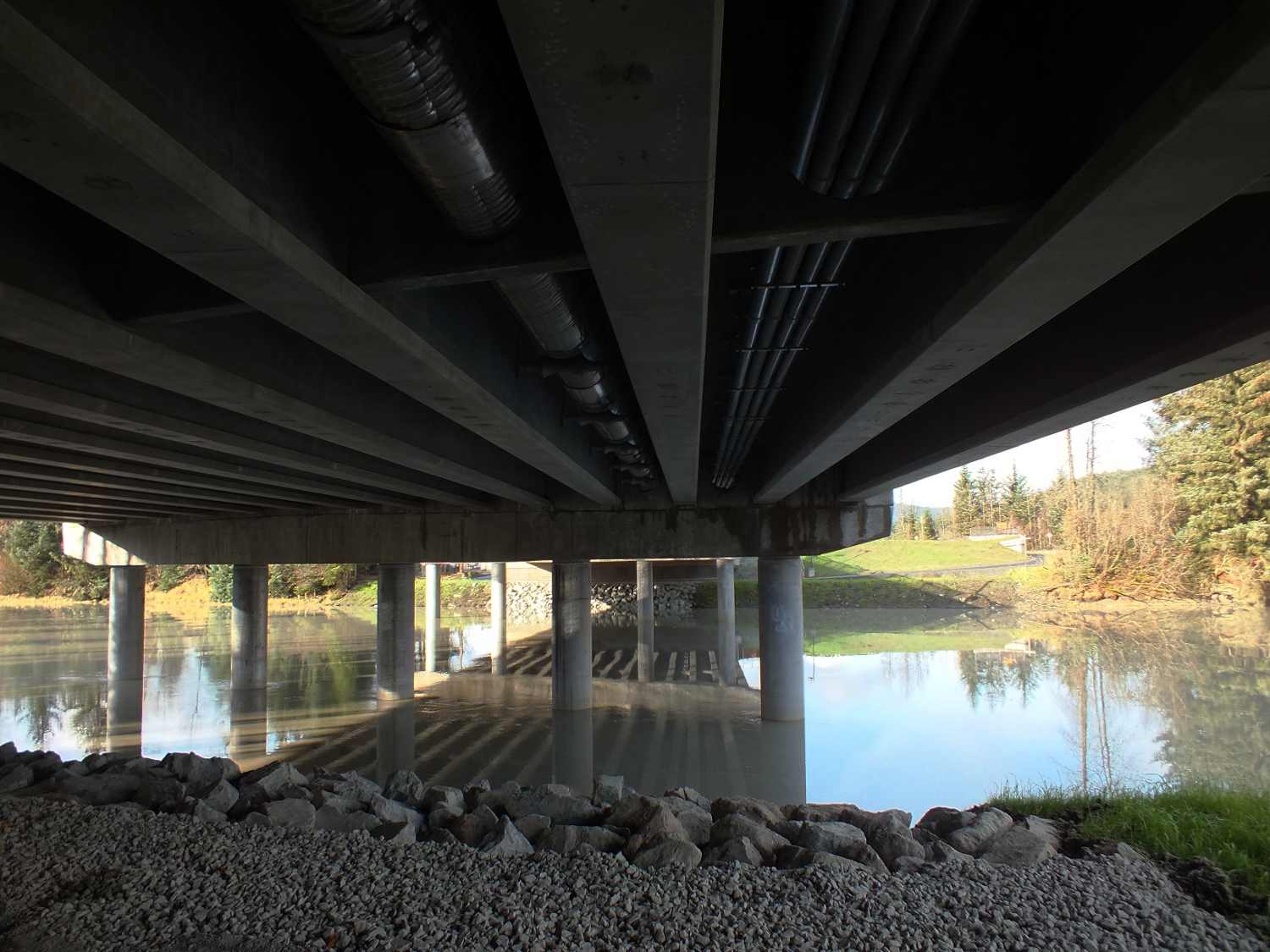
New Brotherhood Bridge is more than double the width of the old bridge. (Photo by Matt Miller/KTOO)
Roy Peratrovich Jr., son of Alaskan civil rights pioneer Elizabeth Peratrovich, elicited a laugh from the audience when he mentioned that the former bridge was designed with drafting tables and slide rules.
“Maybe you don’t know what that is,” Peratrovich joked. “But it lasted 50 years. We want you to last 75.”
As the first registered Native civil engineer in Alaska, Peratrovich said the profession continues in his family. He said his grandson is designing rocketships for Space-X.
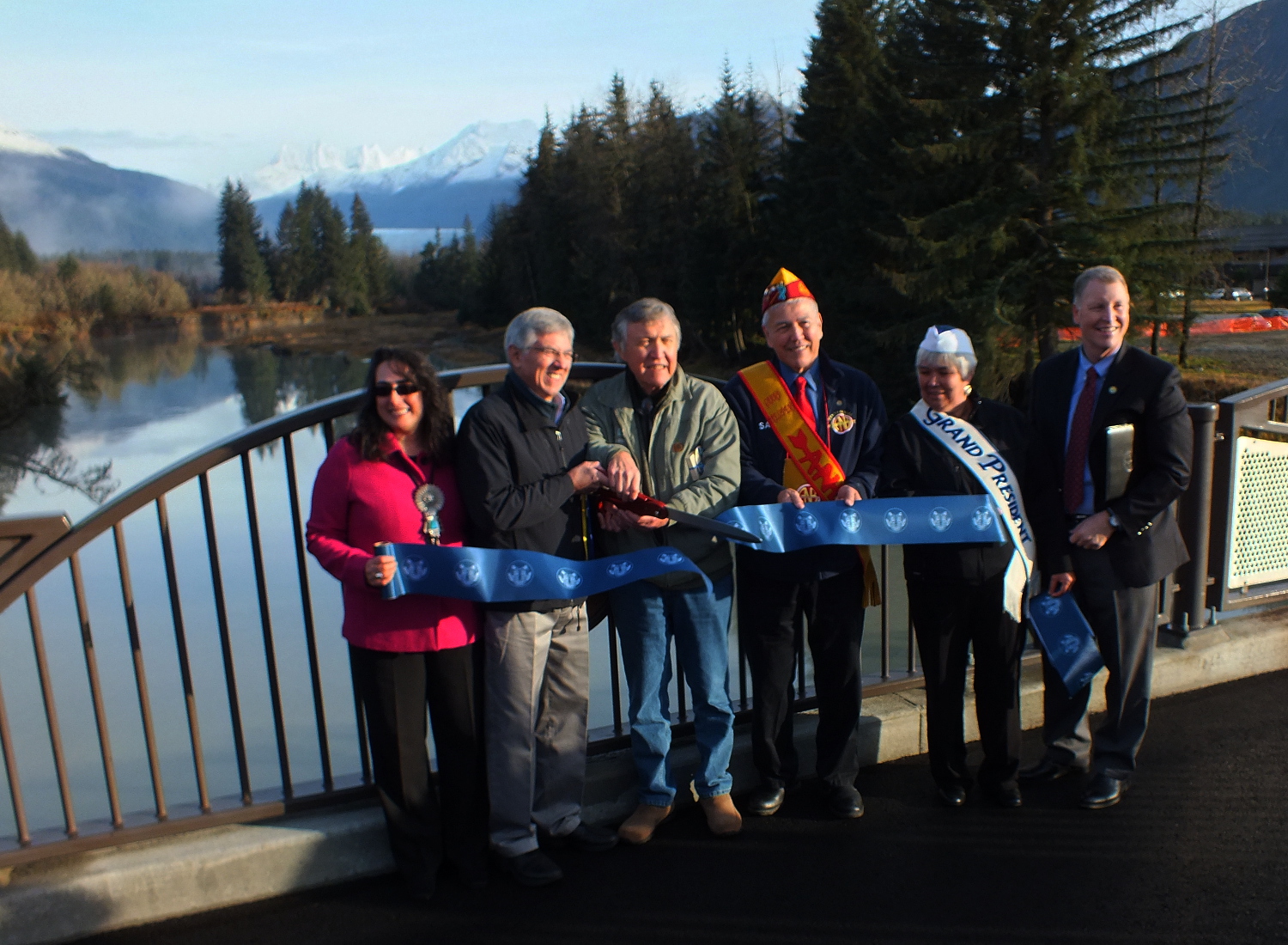
Ribbon is cut for the new Brotherhood Bridge. Shown from left is Federal Highway Administration’s Sandra Garcia-Aline, Lt. Gov. Byron Mallott, original Brotherhood Bridge designer Roy Peratrovich Jr., Alaska Native Brotherhood Grand President Sasha Soboleff, Alaska Native Sisterhood Grand President Johanna Dybdahl, and Alaska Department of Transportation and Public Facilities Commissioner Marc Luiken. (Photo by Matt Miller/KTOO)
“We owe you a great debt of thank you, Roy, for your insight , for bringing this particular bridge to serve Juneau,” said Alaska Native Brotherhood Grand President Sasha Soboleff.
“But it brings to mind one of the other things that we all work for, and that is the improvement in the quality of our life.”
Large concrete versions of the bronze medallions have been erected on the sides of the bridge abutments. (Photo by Matt Miller/KTOO)
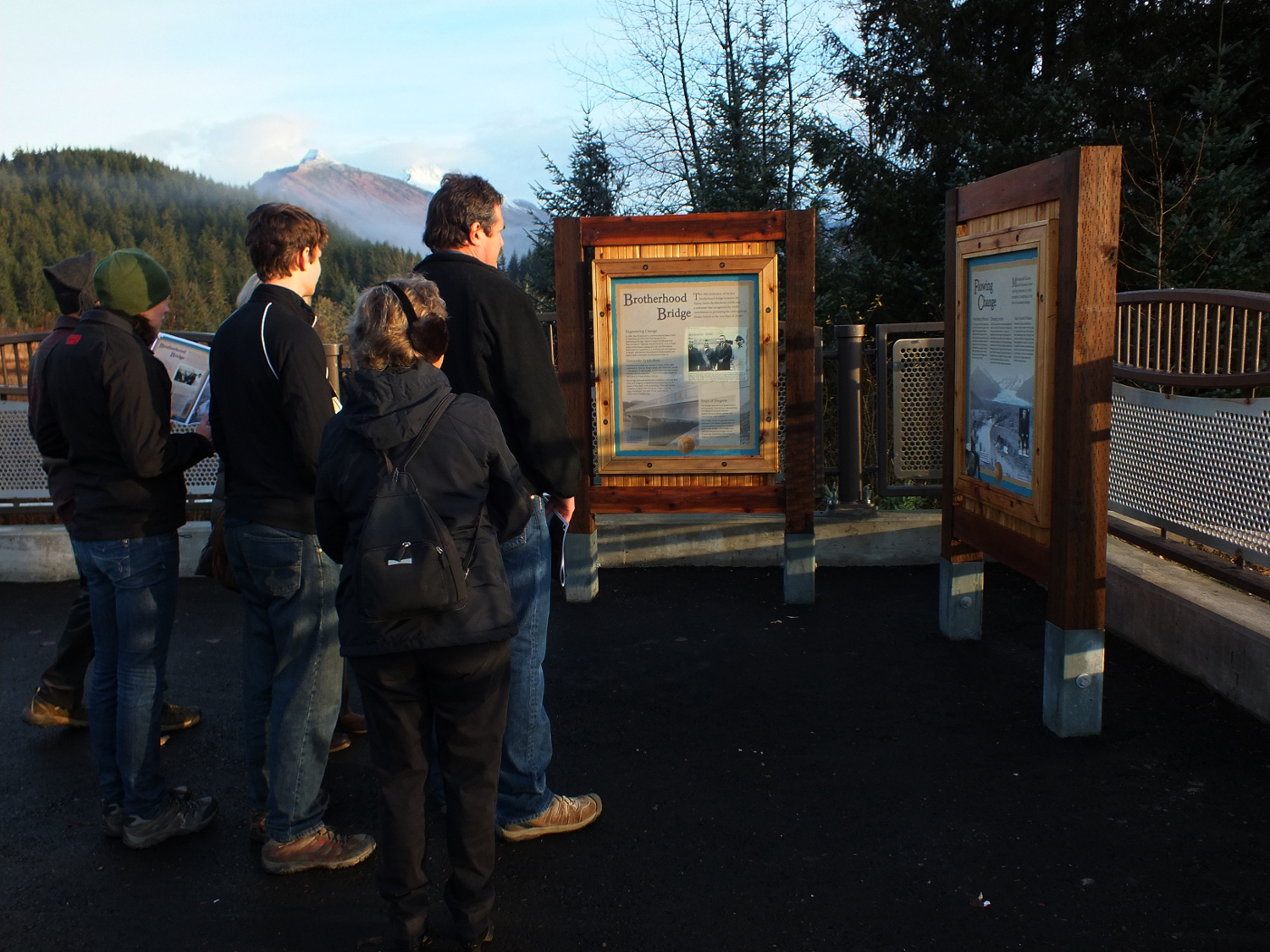
New intepretive panels explaining the history of the Brotherhood Bridge have been erected in the trailhead parking lot adjacent to the bridge. (Photo by Matt Miller/KTOO)
The new four-lane Brotherhood Bridge features the restored bronze medallions that were recovered from the old two-lane bridge, and large concrete replicas that have been installed on the abutments.
The procession makes their way across the new Brotherhood Bridge. (Photo by Matt Miller/KTOO)
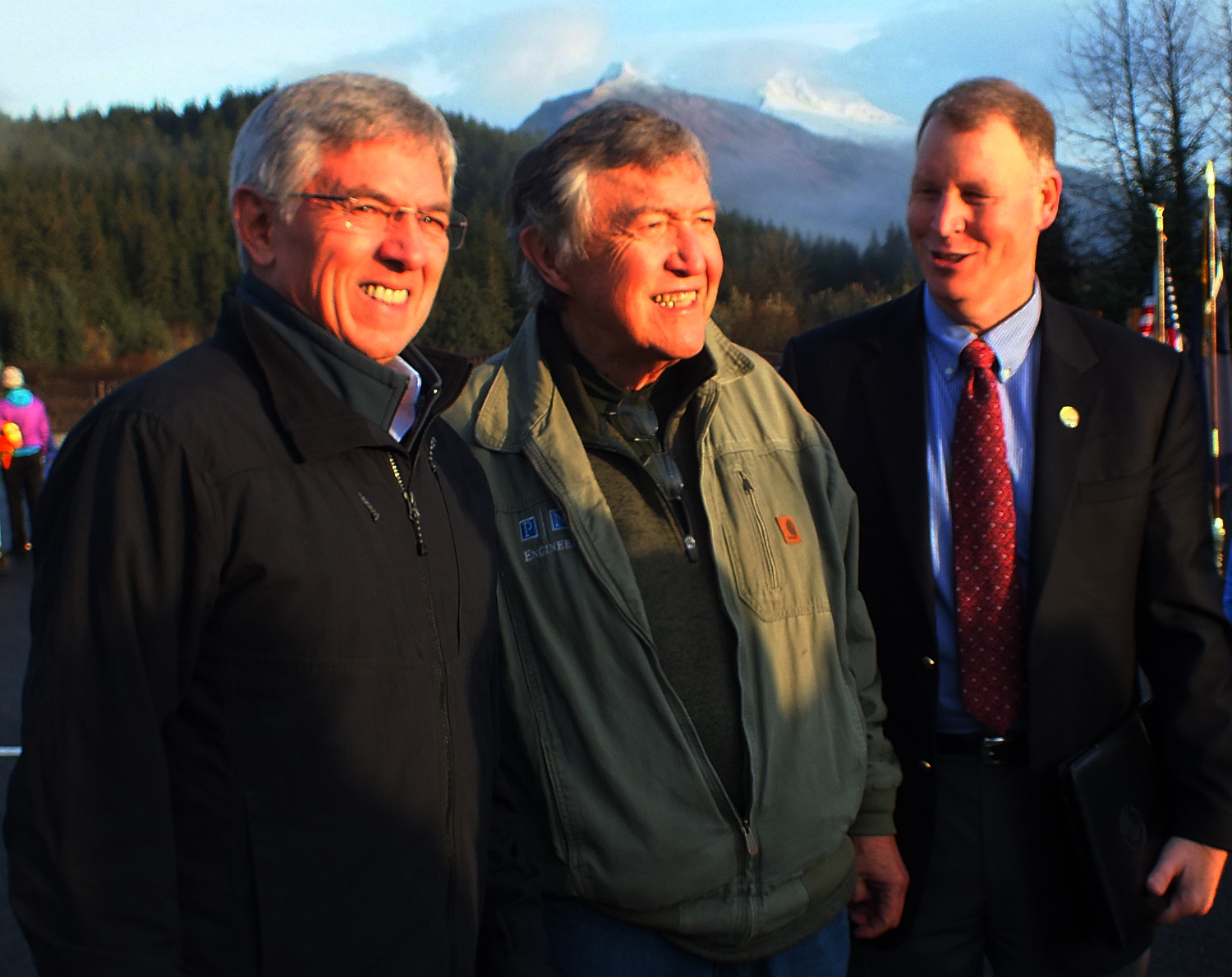
Lt. Gov. Byron Mallott (from left to right), Roy Peratrovich Jr., and Alaska Department of Transportation and Public Facilities Commissioner Marc Luiken pause for pictures before Saturday’s ribbon cutting for the new Brotherhood Bridge. (Photo by Matt Miller/KTOO)
Orion Marine Contractors was the general contractor for the project with construction getting underway in April 2014. They constructed the upstream span of two lanes while traffic continued on the old bridge. Traffic was diverted to the new span as the old bridge was being dismantled and replaced with another span that was two lanes wide. The bridge includes a 6-foot wide sidewalk on the upstream side, and underpasses at both ends for pedestrians and cyclists.
Editor’s note: The spelling of “Peratrovich” has been corrected.
Close
Update notification options
Subscribe to notifications
Subscribe
Get notifications about news related to the topics you care about. You can unsubscribe anytime.