Juneau

Victory for Sealaska Heritage underscores weakness in the law

Federal investigators have found that the country’s oldest theological college broke the law regarding its Native art. Andover Newton Theological School planned to sell off 80 pieces in its collection, including a sacred Tlingit halibut hook. Now some tribal leaders are wondering if repatriation laws should be tougher.

Rosita Worl has been fighting against the school’s Native art liquidation since June. She’s the president of Sealaska Heritage Institute and also served on the Native American Graves Protection and Repatriation Act (NAGPRA) review committee.

Worl said the feds’ decision was bittersweet. It reaffirms the private college is subject to the law because it receives federal student loans.

“We were happy that the federal government did find that they were obligated to comply with NAGPRA, but I was also saddened that we had to spend all of that time and effort to force them to comply with NAGPRA,” Worl said.

Back in July, the school’s president Martin Copenhaver claimed that the items in the collection weren’t sacred. Turns out, that’s wrong. David Katzeek, a Tlingit tribal member, identified the halibut hook as a sacred object that was used in religious ceremonies.

Copenhaver couldn’t be reached for comment, but the college has 45 days to contest the decision.
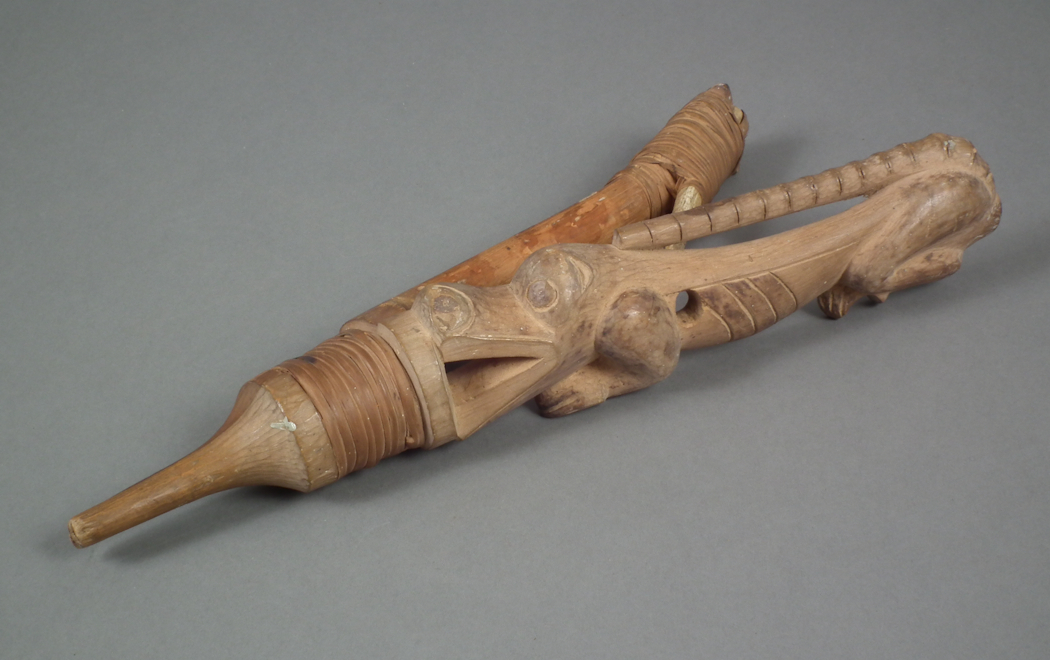
This Tlingit halibut hook with a wolf spirit was slated for auction. (Photo courtesy of Karen Kramer/Peabody Essex Museum)
This Tlingit halibut hook, Gooch Kuyéik Náxw, was slated for auction. (Photo courtesy of Karen Kramer/Peabody Essex Museum)

“To the best of my knowledge, we haven’t received any request for informal discussion and there has been no request for hearing at this time,” said David Tarler.

Tarler works at the NAGPRA office in Washington D.C. He said the college has reached out for “technical assistance,” but it should have filed a summary of its Native art years ago, which allows the tribes to see what’s in the collection.

Andover Newton might not be the only institution skipping this step. Worl says the process can lead to oversights.

“There’s no real teeth to the law,” she said. “If I didn’t file my income tax, you could be certain I would be hearing from the federal government and there would be immediate action to comply with the law. In the case of NAGPRA, we don’t have similar kinds of requirements.”

Because of this, the Alaska Federation of Natives recently passed a resolution. A group will work on proposing amendments to NAGPRA. They’ve already reached out to the congressional delegation.

Worl says the changes are necessary. Repatriation can be a long and costly endeavor for the tribes.

“In one case, I would say that we expended over a hundred thousand dollars in just direct expenses. With lawyers, other anthropologists compiling evidence,” she said.

And she says the NAGPRA laws are more than 20 years old.

“When museums and scientists were less sympathetic to Native American beliefs.”

Worl thinks there’s been a cultural shift. Recently, the Northern Light United Church sent a letter to Andover Newton Theological asking the school to return the sacred items. And with the advancements, she says the law should adapt, too.

“I do believe that we have a younger group of scientists and museum professionals with a greater understanding of Native American beliefs. I’ve seen this happen all around the country,” she said.

Worl hopes this case will encourage other schools and museums to step forward with their Native collections.

She says there are more legal hoops, but the Tlingit halibut hook is one step closer to coming home.

Writer Nick Jans captivates audience with tales of Romeo the wolf

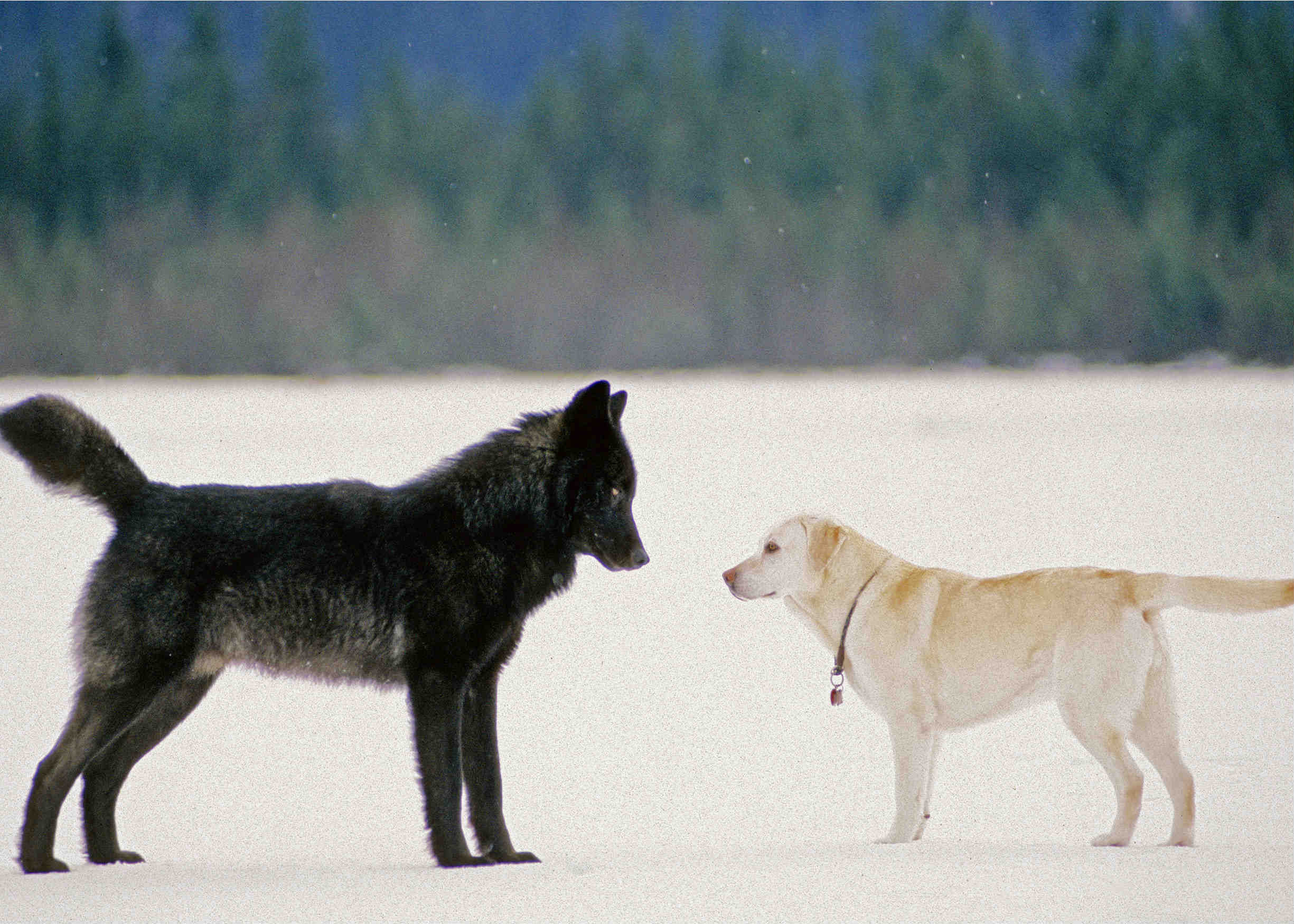
Romeo the wolf. (Photo courtesy Nick Jans)

Writer Nick Jans calls the years between 2003 and 2009 “a magical and transformative time” in Juneau’s history. It was during those years that a wild black wolf, who came to be known as Romeo, lived in the community, played with dogs and interacted with residents.

Jans spoke at the University of Alaska Southeast last week about his 2014 book “A Wolf Called Romeo.”

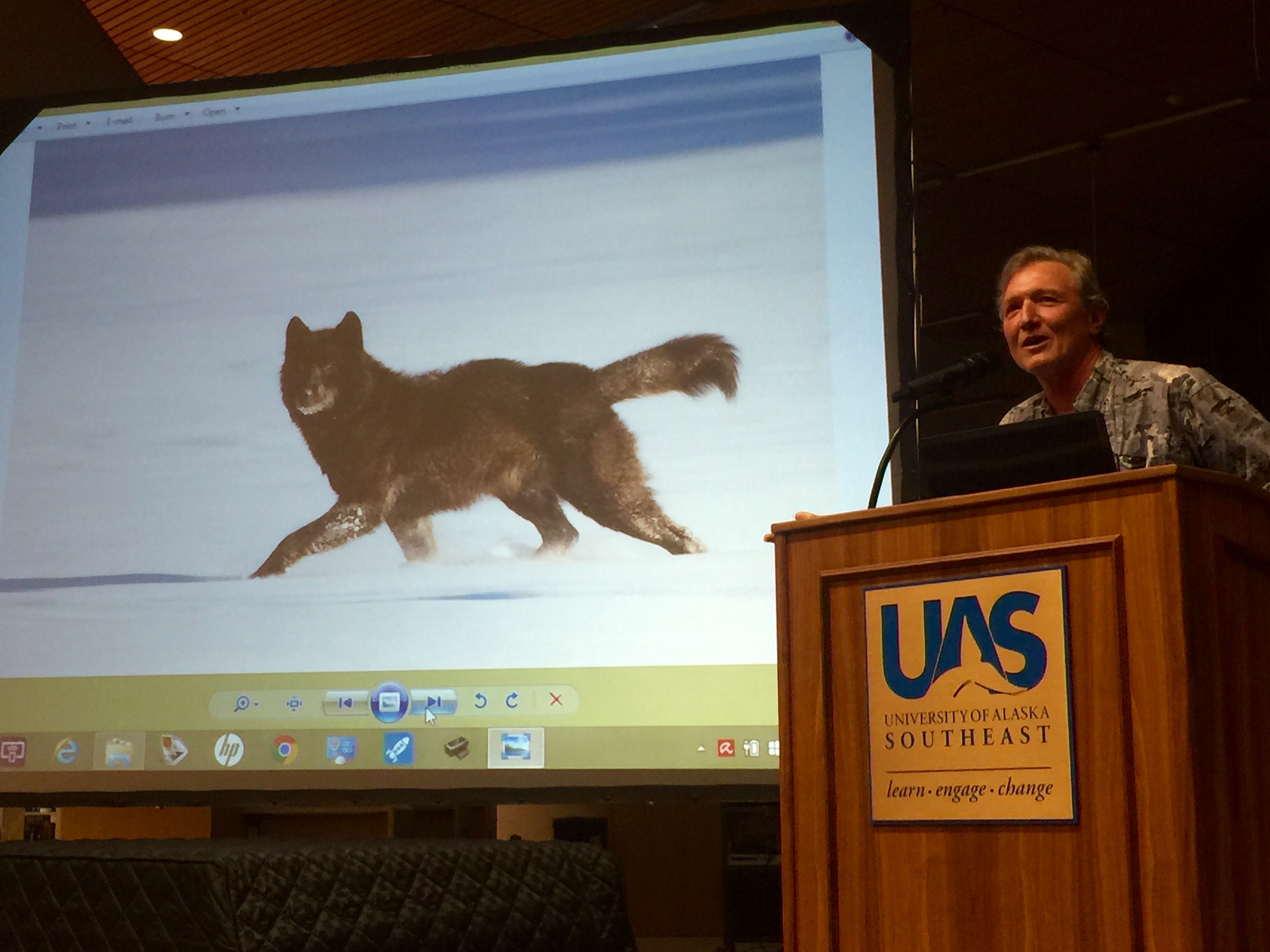
Nick Jans speaks about Romeo the wolf at the Egan Library during the University of Alaska Southeast's Evening at Egan lecture series. (Photo courtesy Katie Bausler/UAS)
Nick Jans speaks about Romeo the wolf during the University of Alaska Southeast’s Evening at Egan lecture series. (Photo courtesy Katie Bausler/UAS)

Nick Jans was living in a house near Mendenhall Glacier when he noticed tracks right outside his door “and out into the lake and at the end of those tracks was a wolf.”

Jans said it wasn’t just any wolf, “He’s like the combined version of the young Arnold Schwarzenegger wrapped up in the young Paul Newman of wolves.”

The wolf continued visiting Jans’ house.

“The old expression of a wolf at the door took on a completely new meaning,” Jans said. “I mean, how are we not going to interact with this wolf? (Be)cause there he is, practically every damn morning. We could stay inside the house and sometimes the tracks would lead right up to the door, literally.”

Jans said it was this social behavior that led to his naming. The wolf was fond of Jans’ yellow lab Dakotah, of whom Jans’ wife was very protective.

“It’s her child and the most precious thing in this universe so, of course, she’s concerned about who her child hangs out with. And one morning the wolf is curled up in the yard waiting for Dakotah to come out and take a pee, which sooner or later, she’s got to do, and my wife with her arms folded says, ‘There’s that Romeo wolf again,'” Jans said.

Romeo often played with Dakotah, Nick Jans' yellow lab. (Photo courtesy Nick Jans)
Romeo often played with Dakotah, Nick Jans’ yellow lab. (Photo courtesy Nick Jans)

Dakotah was one of several dogs that Romeo interacted with socially. There was a Border Collie who’d run away with Romeo but always came back. Other dogs raced around the frozen lake with him.

“The wolf briefly took up the sport of pug bowling when, in the space of two weeks, he grabbed two different pugs owned by two different people on two different sides of the lake and ran with them for a short period in his mouth and dropped them,” Jans said. He suspected Romeo thought the dogs were puppies and was just trying to play with them.

Many people visited the glacier, where Romeo often spent time, in hopes of glimpsing him. Jans described him as the community wolf. He said Juneau was lucky to be able to know a wild animal so well.

“One of my fondest memories my whole time in Alaska was lying with my head on my pack, with my dog Gus’ head on my knee and the wolf lying 15 feet away, and we all took a nap out there on the ice. Everybody trusted each other enough to shut our eyes and just be,” Jans said.

He said several people in Juneau shared moments like that with Romeo. And many more heard his echoing howls.

“They’d travel for sometimes a couple miles at night and you could hear him on the far side of the lake. You could hear him sometimes way up the West Glacier Trail and they just filled the whole universe,” Jans said.

(Photo courtesy Nick Jans)

After six years in the community and interacting with hundreds of dogs, Romeo was killed in 2009. A plaque remembering him is affixed to a rock near the glacier. A Juneau Community Foundation fund is raising money to build an exhibit in his honor at the Mendenhall Glacier Visitor Center.

“And it’ll be part of Juneau’s legacy and something that visitors and residents will be able to point to and to look at and to know that we didn’t somehow dream this up, that it was real,” Jans said.

Despite how he may have died, Jans doesn’t think the story of Romeo the wolf is a tragedy. He thinks it’s a triumph. It’s the magical story of a friendship between a wolf and a community.

Juneau Symphony begins season with “New Beginnings”


The Juneau Symphony season premieres this weekend with a performance called “New Beginnings.” The concerts will be Troy Quinn’s first shows as the new conductor. He said that their first piece, Dvorak’s “New World Symphony,” is especially fitting.

“It was his first arrival here to America … and so it’s kind of appropriate for me to be here, my first new arrival, and that’s our big work,” Quinn said.

They’ll also play Shastakovich’s “Festive Overture,” and Massanet’s “Meditation” from his opera “Thaïs” with special guest violinist Luanne Homzey. Quinn said he is enjoying his work in Juneau — a position with a unique job description.

“‘Conductor’ really comes from the word ‘to teach,’ so the Latin word,” Quinn said. “So there is the teaching element involved with it. And it’s also to inspire the musicians to play at their most passionate and capable level. You know, the conductor doesn’t make a sound.”

Saturday’s concert is at 8 p.m. and Sunday’s at 3 p.m. at Juneau-Douglas High School. Both performances include one-hour pre-concert conversations with Quinn. Sunday’s concert will also be broadcast on KRNN and KRNN.org. Tickets begin at $17 and can be purchased at juneausymphony.org.

Accused murderer appears in court

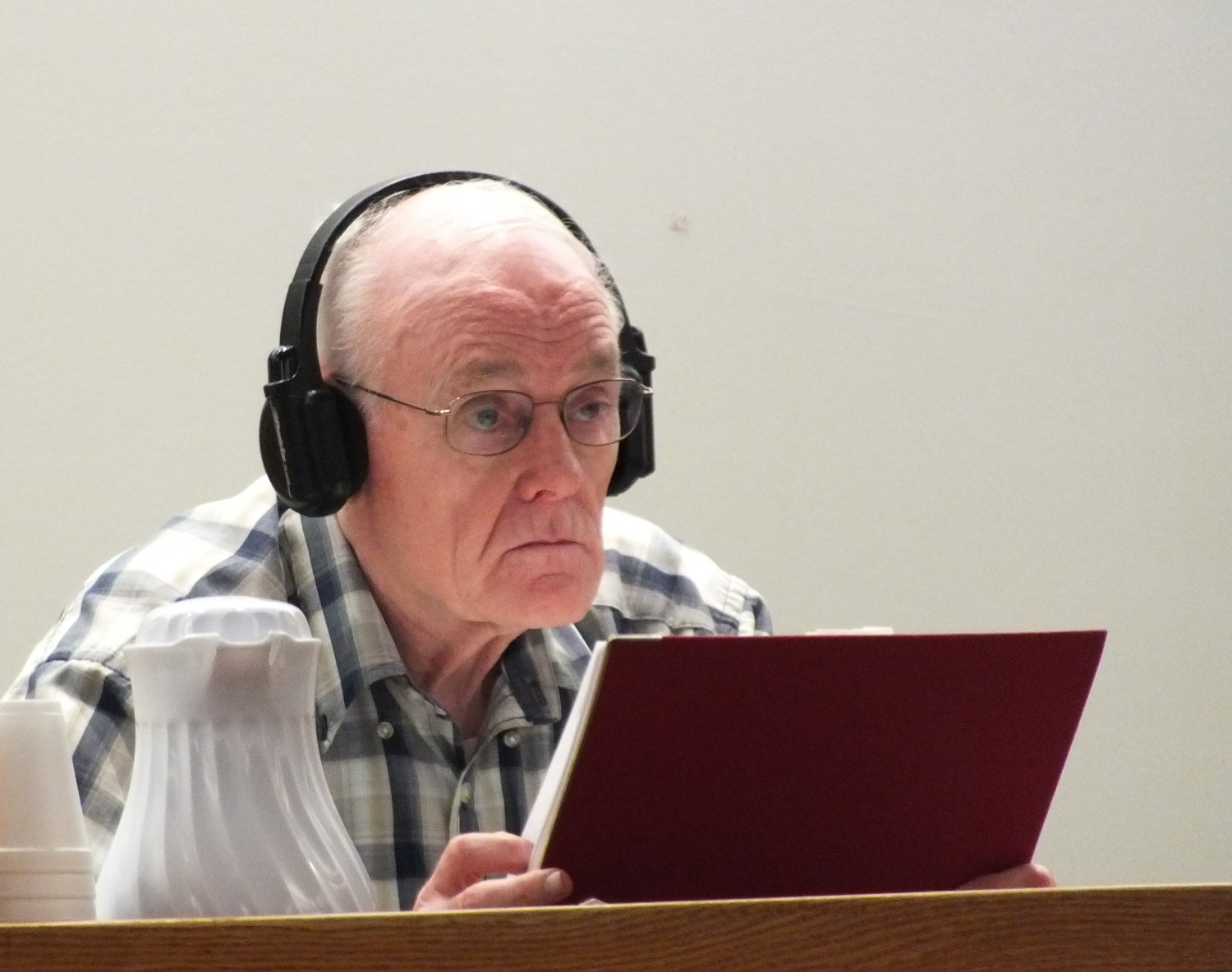
Christopher D. Strawn appears in Juneau District Court Thursday, Oct. 22 on a charge of first degree murder. (Photo by Matt Miller/KTOO)
Christopher D. Strawn appears in Juneau District Court on Thursday on a charge of first degree murder. (Photo by Matt Miller/KTOO)

Bail was set at $1 million cash for a Juneau man arrested for a Tuesday night murder in a Mendenhall Valley trailer park.

Christopher D. Strawn, 32, appeared Thursday afternoon in Juneau District Court on a charge of first degree murder. After entering the courtroom, he called out for a newspaper reporter wanting to tell his side of the story. He attempted to enter a plea of not guilty even through pleas are not normally accepted during first felony appearances.

It was Strawn’s first court appearance since he was arrested Wednesday morning at his trailer home on Stephen Richards Drive. He allegedly shot and killed Brandon C. Cook, 30, Tuesday evening in a trailer at the Kodzoff Acres Mobile Home Park.

Strawn told Deputy Magistrate Sharon Heidersdorf that he wanted to be released so that he could clean up his private property before dealing with his current case. A public defender will be assigned to his case.

Christopher D. Strawn is escorted into the courtroom on Thursday to face a charge of first degree murder. (Photo by Matt Miller/KTOO)

Assistant District Attorney Amy Paige said Strawn was a significant flight risk. She referred to 14 convictions since 2002 for crimes including theft, vehicle theft, driving while intoxicated and reckless endangerment. She also referred to at least three instances in which Strawn failed to show up for court appearances.

Paige described Tuesday night’s murder as an execution-style killing in which the unprovoked Strawn killed Cook with a shotgun blast to the head in front of two other witnesses at the Kodzoff trailer. Paige also said evidence sent to a crime lab would show that Strawn was under the influence of alcohol or controlled substances during the murder.

Partway through Thursday’s court hearing, Strawn told Heidersdorf that he had been in Juneau for 15 years and he has his own housing. He said that he did everything that he was asked to do, never harmed people with weapons, and never harmed anything unless provoked.

A distraught woman, who identified herself only as the victim’s mom, listened to the hearing by telephone. Most of her comments were inaudible or hard to understand in the courtroom, but she seemed to say that her son had “never been in trouble.”

If he can come up with the bail money, Strawn must remain in the custody of a third party and cannot possess firearms or use controlled substances. Strawn would also be prohibited from contacting the two murder witnesses.

Strawn’s next appearance in Juneau District Court is Oct. 30, unless a grand jury indicts him. An indictment would move Strawn’s case to Juneau Superior Court, which normally handles unclassified felonies like first degree murder.

Water politics forum begins Thursday

(Public Domain photo)
(Public domain photo)

There are three primary water concerns facing the state: persistent organic pollutants in the Arctic region, loss of freshwater due to increased regional temperatures and ocean acidification, according to Jim Ayers, president of conservation consulting firm Alaska Strategies.

Ayers will discuss these issues Saturday afternoon at the end of a three-day dialogue on water politics hosted by the Juneau World Affairs Council. The event is free and open to the public.

Ayers described one way water issues are directly affecting Southeast Alaska’s ecosystem.

“Sockeye salmon really have that deep red color because their primary diet is krill,” Ayers said.

He explained that ocean acidification is altering krill development, affecting everything that eats krill, from salmon to people.

Experts from across the country will speak about pressing water issues from droughts to wetlands. While water is aplenty in Southeast, its politics are a concern for the state.

The forum kicks off at the UAS Egan Lecture Hall at 7 p.m. Thursday and continues through Saturday afternoon in the lecture hall and Egan Library.

(Editor’s note: location has been corrected)

Alaska Supreme Court may hear Rayco Sales lawsuit

Ray Coxe testifies during a civil trial in Juneau earlier this year. Coxe is owner of Rayco Sales on Old Dairy Road and has sold firearms in Juneau. Jason Coday walked out with a rifle from the shop in 2006 and shot Simone Kim two days later. (Photo by Matt Miller/KTOO)
Ray Coxe testifies during a civil trial in Juneau earlier this year. Coxe is owner of Rayco Sales on Old Dairy Road in Juneau. Jason Coday walked out with a rifle from the shop in 2006 and shot Simone Kim two days later. (Photo by Matt Miller/KTOO)

Plaintiffs in a long-running civil suit against a former gun shop owner intend to appeal the case to the Alaska Supreme Court.

The family of Simone Kim sued Ray Coxe of Rayco Sales over the alleged sale or transfer of the firearm used to kill Kim in 2006, a Ruger .22 rifle.

In June, a jury found in favor of Coxe after a two-week trial in Juneau Superior Court. Jurors determined that convicted murderer Jason Coday was the only person liable for the shooting and he owes the Kim family $10 million for pain and suffering, lost income and punitive damages.

Coday is currently serving a 101-year prison sentence on charges related to Kim’s murder.

The lawsuit was filed in 2008 and the case already went before the Alaska Supreme Court on pre-trial issues.

Kim family attorney Mark Choate has been unavailable for comment.

In his recent notice of appeal, Choate claims the trial judge made several mistakes, including a ruling that Coxe was entitled to protections under the Protection of Lawful Commerce in Arms Act even though Coxe was no longer a licensed gun dealer at the time of trial. Choate also claims that the trial judge refused to instruct jurors that a missing surveillance videotape would have shown Coxe allegedly selling or transferring the rifle to Coday, and the judge allowed the introduction of Coxe’s personal information that was allegedly irrelevant and prejudicial. Choate also writes that he was prevented from drafting a questionnaire for prospective jurors that would have provided more information about their background and biases.

“I think they have a hard road to hoe on any of those points,” said Tony Sholty, attorney for Ray Coxe.

Sholty said some of the points raised by Choate don’t even appear to be part of the same case. He expects the list will be winnowed down to the most important issues before the case is heard by the Supreme Court.

“Because of the standard that the Supreme Court applies in deciding the issues presented in the appeal and the notice of the appeal, those standards basically are difficult for the plaintiffs or the appellants to meet,” Sholty said.

It will likely be several months before the trial record is transcribed, and for both sides in the case to submit their briefs before oral arguments at the Supreme Court are scheduled.

Coxe no longer sells firearms at Rayco Sales after losing his federal firearms license earlier this year.


Site notifications
Update notification options
Subscribe to notifications