Juneau

Radio host showcases two-hour block of Filipino culture

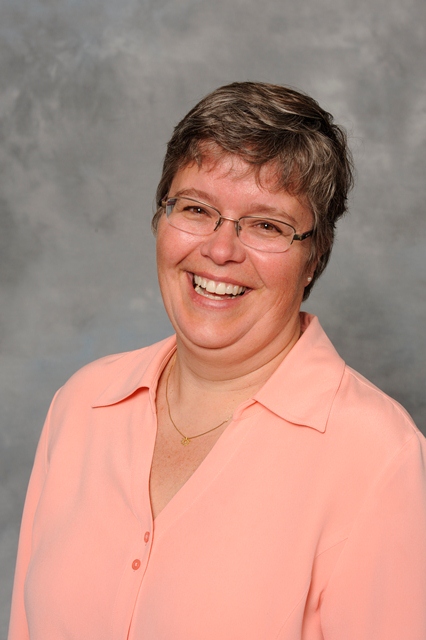
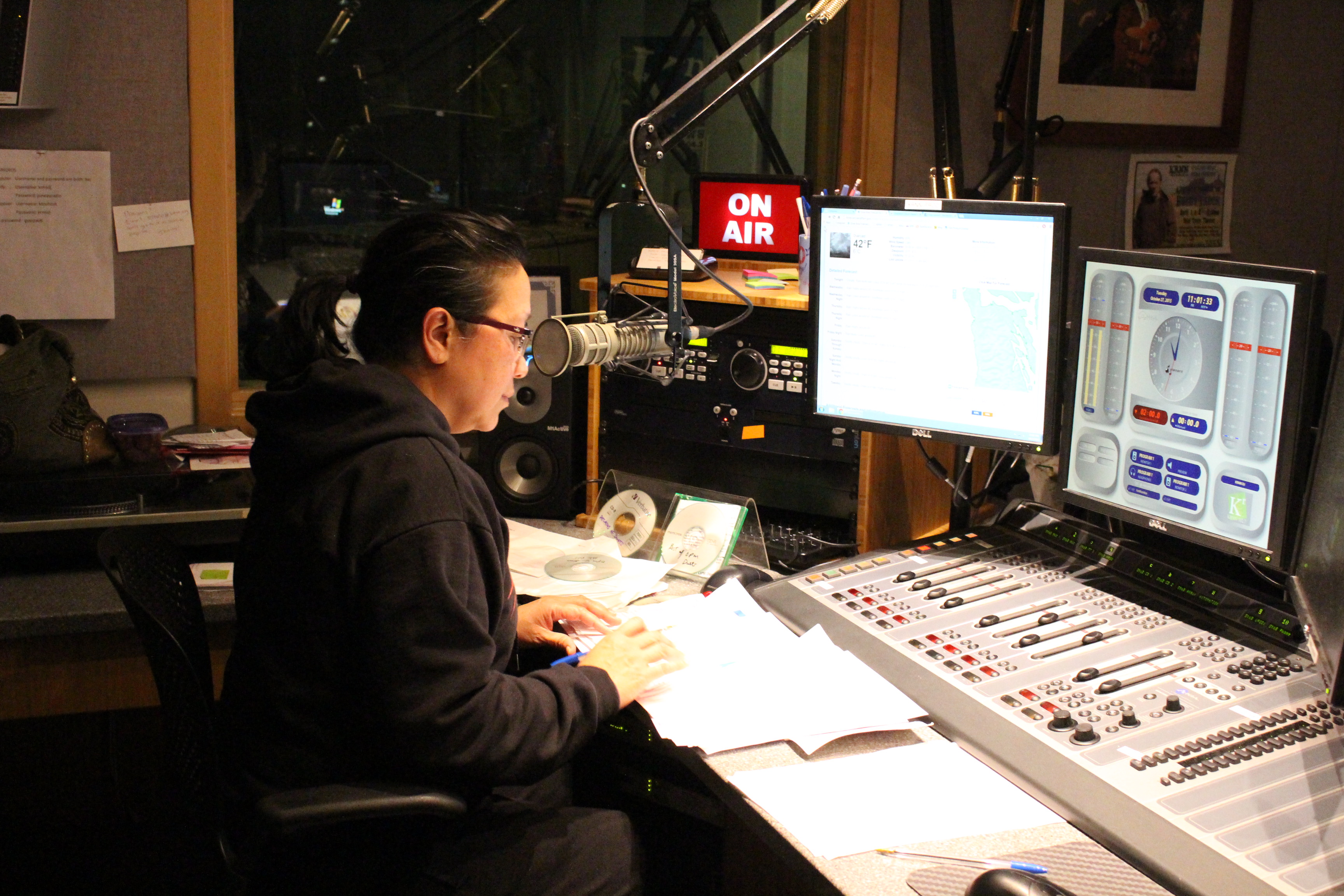
Genny Del Rosario balances work life and being a KRNN volunteer. She's also the president of the League of Women Voters. (Photo by Elizabeth Jenkins/KTOO)
Genny Del Rosario balances work, life and being a KRNN volunteer DJ. She’s also the president of the League of Women Voters. (Photo by Elizabeth Jenkins/KTOO)

October is Filipino American History Month. In Alaska, that’s more than 26,000 people. One Juneau DJ is finding ways to connect others with their culture on the airwaves.

In the two years that Genny Del Rosario has been hosting her show “Good Evening My Friends,” she’s only been absent once. And that was because her car wouldn’t start.

In the summer, she closes her Filipino food shack early to make it here in time. The winter months, she said, are the hardest. It’s dark, the roads are slick with ice and it’s cold.

“But I have to be here, you know. It doesn’t matter. It’s like I have my alarm for this show, 9 o’clock. Even if I’m lying down. I say 30 minutes before, I come over now,” she said. “Sometimes I’m rushing in the car, ‘Ah, I gotta go!'”

During the breaks, she reads in Tagalog. The root language of the the Philippines has multiple dialects. Del Rosario can speak five.

“My father’s dialect which is Ilocano. Then I can speak Cebuano from Cebu. And then I can speak Chavacano which is from my birth city Zamboanga,” Del Rosario said.

She reads public service announcements, Filipino recipes, newsletters, even birthdays. In the summer, she fills the gaps with stories from cruise visitors. Usually, other Filipinos who work on the ships.

She started the show because she felt like her community wasn’t being represented.

“It’s a shame that we’re the second largest minority and we don’t have a show to showcase our tradition.”

Some of the music Del Rosario plays is from her youth.

“Anthony Castelo is one singer when I was in college, we used to scream like the Beatles when he goes to a certain town where we are. … He’s so handsome,” she said. “It’s like Justin Bieber or Joe Jonas. Anthony Costello was like that before.”

https://www.youtube.com/watch?v=n8xkMqhxBe4

When she visits her family in the Philippines, she brings CDs back. In Juneau, she said it’s impossible to find the music. iTunes and Spotify don’t have a great selection.

And like the food, she said the songs from home can trigger memories. Good Evening My Friends is for people who immigrated to the states. But also for their kids who might not have grown up speaking Tagalog.

“I hope that they listen, the teenagers. Because it’s good to know your mother’s or father’s language. I missed it out with my children. I just wished before that I could have taught them to speak Tagalog,” she said. “They told me every time they go home to the Philippines, they say, ‘Mom, why didn’t you teach us to speak Tagalog? Even give us a dictionary?’ I thought they weren’t interested but they were.”

Del Rosario came to the U.S. on a Rotary International scholarship. And traveled around the country as an ambassador for the Philippines in the 80s.

She went back, determined to return to the United States.

“It was like my eyes was open. And I was already 29 so I was ready to do adventure, adventure in the United States. My mom said, ‘Aren’t you scared?’ ‘No, ma. I’m 29 years old. What’s going to go wrong?’”

She met her now-ex husband, settled in Vegas. She was able to stay in the country with a green card and thought she’d remain there forever. Then the marriage split up and she needed a fresh start.

“I came to Juneau with just two suitcases. It was difficult for me for the first six months,” she said. “I was like a homeless person living from one friend’s to another friend’s house. I should have gone back to Vegas but I wouldn’t want to. I said I’m here, I will start.”

Eventually, she opened a daycare. That led to the funds to open Manila Bay Cafe with her sibling.

“We bought that store and it’s been there for six years. I used the store’s income to send my children to college.”

Del Rosario is visiting the Philippines in December. And she said it’s not easy to find a sub for the show. So far, her attempts to recruit someone who speaks Tagalog have failed. But that doesn’t mean she’s giving up.

When she does return home, she’ll collect more music for Good Evening My Friends and mourn with family. Recently, a sister passed away.

“Even though when my sister died three weeks ago. I don’t feel like coming but I said the show must go on. And you know, my sister would be proud. My family would be proud.”

KRNN is KTOO’s sister station. You can listen to Good Evening My Friends on Tuesday nights at 9.
First Lady adopted into Tlingit clan

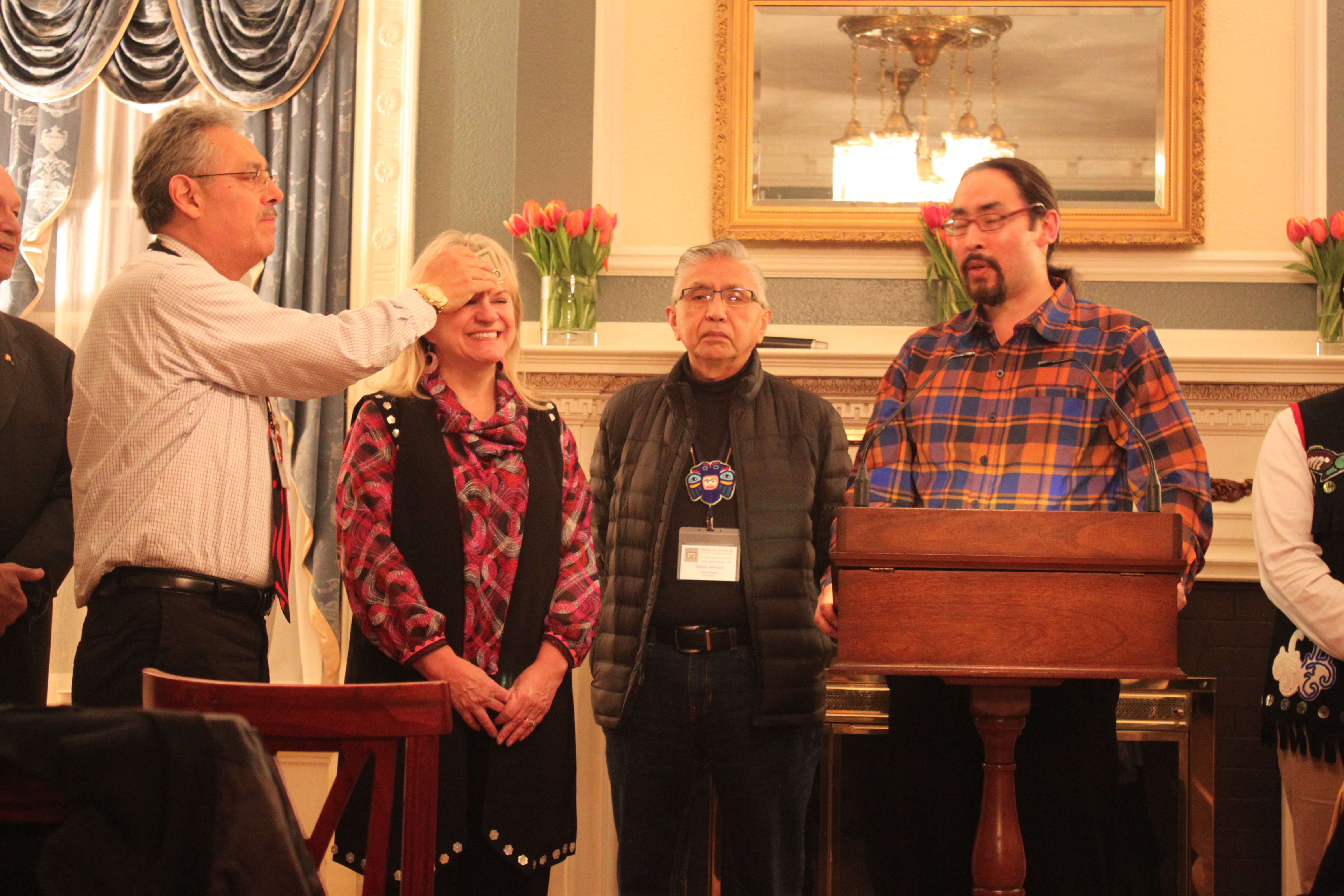
Gerry Hope holds money to First Lady Donna Walker's forehead during a Tlingit naming ceremony at the Governor's Mansion. Paul Marks and Ishmael Hope help announce her name, Koodeishghé, four times. (Photo by Lisa Phu/KTOO)
Gerry Hope holds money to First Lady Donna Walker’s forehead during a Tlingit naming ceremony at the Governor’s Mansion. Paul Marks and Ishmael Hope help announce her name, Koodeishghé, four times. (Photo by Lisa Phu/KTOO)

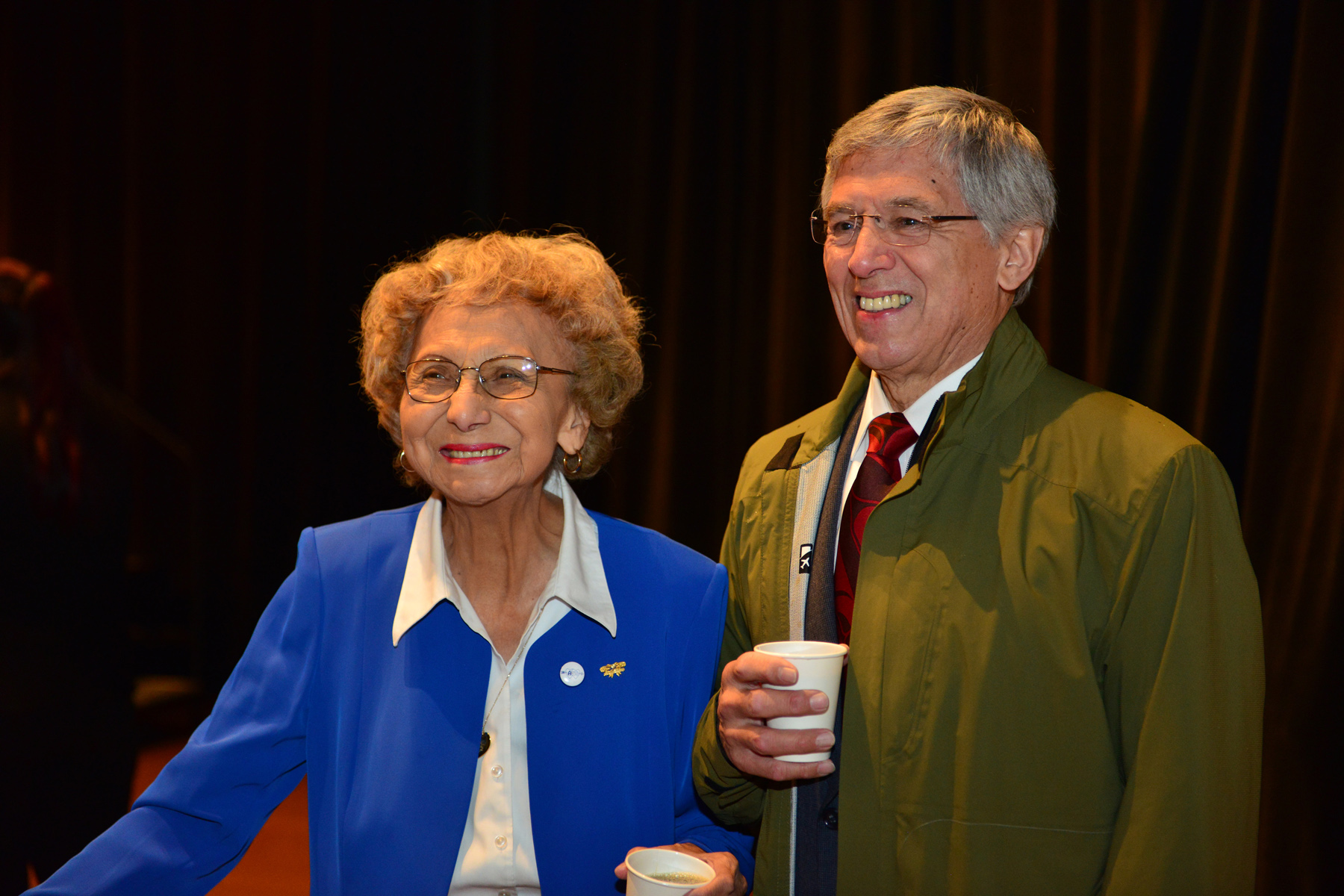
First Lady Donna Walker was adopted into the Tlingit Deisheetaan clan Thursday night. She was given a Tlingit name at the end of an indigenous literature reading she hosted at the Governor’s Mansion.

Writer Ishmael Hope announced the surprise honor. He said the name was approved by Deisheetaan clan elder Selina Everson.

“Selina wanted to give a very, very special name of Koodeishghé,” Hope said.

That name was once held by the late Lydia George of Angoon.

“And I knew her. She was just an extreme wealth of information and knowledge of Tlingit culture, Tlingit history,” Hope said. “It just shows the high value that Selina and the Deisheetaan have for First Lady Walker.”

Hope says the naming also brings the Walker family together. Gov. Bill Walker was given a Kaagwaantaan clan name of the Wolf/Eagle moiety in April. To make it complete, Hope said the First Lady needed a Raven name.

Symbolizing payment for the name, Clan Conference Executive Director Gerry Hope put money on the First Lady’s forehead as her Tlingit name was announced four times.

“A real blessing,” Walker said. “I was with the governor when they surprise adopted him into the clan, so it’s twice now we’ve been able to experience that. It’s the highest honor.”

The Deisheetaan will confirm Walker’s Tlingit name during a memorial ceremony at a later date.

Juneau teachers approve tentative contract with school district

(Creative Commons photo by Todd Petrie)

The Juneau teachers union voted Thursday night to approve a one-year tentative contract with the school district.

The negotiation process ended earlier this month and members of the Juneau Education Association had a week to look at the tentative contract. It includes a 2 percent pay increase, a more competitive starting pay for specialist positions and compensating some teachers for extra meeting hours.

A majority of members passed the tentative contract, though JEA President Dirk Miller wouldn’t get into percentages. He said close to 180 of about 355 members voted, and that’s a good turnout.

Miller said the negotiating team did a good job of working with the district, although there were things the teachers didn’t get.

“There are lots of issues out there that will come up again. Unfortunately, they’ll come up in the next year’s negotiation because it’s only a one-year contract. So the things that the two sides were able to agree on were pretty good for students in the district, teachers and families,” Miller said.

Miller said the collaborative interest-based bargaining was a better arrangement than traditional negotiating. He said the process wasn’t contentious.

“I think our relationship with this administration is a lot more solid. I think the hope is that the path that they laid with this contract will lend itself into the next contract, so we won’t have to start from scratch and maybe they can pick up where they left off and come to a speedier resolution,” Miller said.

The negotiating process lasted nearly a year. Miller said some of the delay was due to the Alaska Legislature taking so long to pass a budget.

The contract remains tentative until the school board votes it through. It’s expected to be on the November agenda. The last contract expired June 30, but its terms remain in effect.

Miller said contract negotiations between the teachers’ union and the school district are expected to begin again in January.

Tlingit leaders take the stage at clan conference opening

Lt. Gov. Byron Mallott was one of several Tlingit leaders to give welcoming remarks at “Sharing Our Knowledge: A Conference of Tlingit Tribes and Clans” on Thursday morning at Centennial Hall. (Photo courtesy Office of the Lieutenant Governor)

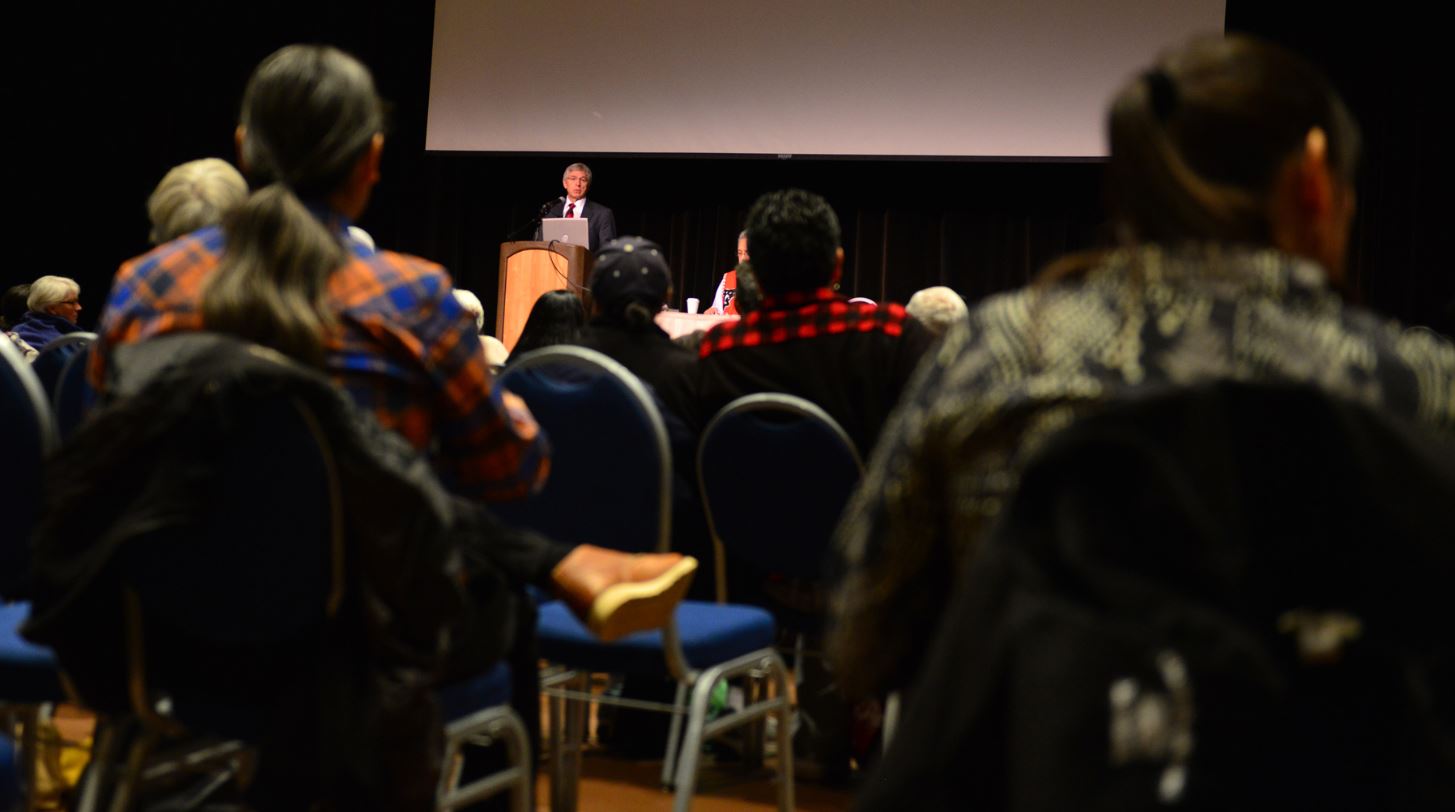
During welcoming remarks of “Sharing Our Knowledge: A Conference of Tlingit Tribes & Clans” in Juneau on Thursday morning, Tlingit leaders spoke about the need to engage youth and what role Native people should play in Western institutions.

Lt. Gov. Byron Mallott’s comments focused on nurturing and inspiring the next generation of Alaska Natives. He said today’s youth witness violence and dysfunction.

“We will ourselves work hard to create wellness and health in our own communities. We must take care of our children and we must make that a moral and cultural imperative,” Mallott said.

Richard Peterson, president of the Central Council of the Tlingit and Haida Indian Tribes of Alaska, echoed Mallott’s sentiments. He said kids flourish and take pride in knowing their culture. It’s up to the adults, he said, to engage them.

“Somebody asked me recently, ‘What do Native people care about?’ And I said, ‘There’s two things that I can think of that we care more about than anything else. That’s our children and our land.’ That’s what I was always told. But sometimes when I look, and being very candid and honest, I don’t know that we hold our children up as much as we should,” Peterson said.

The audience he was speaking to was mostly adults but had several college students and a few children.

Selina Everson and Byron Mallott at the opening of "Sharing Our Knowledge: A Conference of Tlingit Tribes & Clans." Everson gave the invocation. (Photo courtesy Office of the Lieutenant Governor)
Selina Everson and Byron Mallott at the opening of “Sharing Our Knowledge: A Conference of Tlingit Tribes & Clans.” Everson gave the invocation. (Photo courtesy Office of the Lieutenant Governor)

University of Alaska Southeast Vice Chancellor Joe Nelson highlighted the conference’s mission of bringing together Alaska Native people with Western academics, “I always wrestle with these worlds colliding and the tension that’s there, so I like to acknowledge it just right up front and welcome all the non-Natives that are fully engaged as champions and still with us moving forward on common goals.”

Nelson said the Native population has a brutal recent history stemming from the early beginnings of non-Natives arriving in Alaska, and continues to deal with issues as a result of it. To overcome them, Nelson encourages Alaska Natives to succeed in the Western academic world.

“Follow that path all the way through, secure that Ph.D. and start taking the Western academy over by taking over the curriculum. It’s university faculty that own the curriculum and we do not have enough Native folks. It’s just a huge gap there. That’s a pathway to taking back their curriculum in higher education,” Nelson said.

Sealaska Heritage Institute President Rosita Worl said early leaders of the Alaska Native Brotherhood had encouraged learning Western ways, speaking English and becoming educated.

“They wanted us to be able to control the systems and the institutions that had effect on our lives, that would dictate what we could do as Native people,” Worl said.

She said Alaska Natives are living in a changing time and are figuring out how to integrate their cultural values and languages into larger society.

“I remember when Kenny Grant, who was the chair of our traditional council, said, ‘Rosita, how much change can we accept before we are not Tlingits?’ That is the question that faces us almost on a daily basis,” Worl said.

She said the clan conference allows attendees to reflect on Native culture and continue planning for the future.

The conference continues into the weekend.

Juneau Assembly extends recruitment for new city manager

City and Borough Manager Kim Kiefer.
Outgoing City Manager Kim Kiefer (Photo courtesy City and Borough of Juneau)

City manager Kim Kiefer was set to retire at the end of the year after 32 years working for the City and Borough of Juneau. She’s now postponed that to the end of April to help with the budget development process.

The position opening was advertised in newspapers around the state, with organizations including the Alaska Municipal League, and relevant job boards. There were 33 applicants.

“They had some folks in the pool that they thought were possibilities, but they didn’t feel like they had enough of a selection so they’ve extended the recruitment period,” said Mila Cosgrove, the city’s human resources director.

Cosgrove said the assembly will repost the job in mid-December.

The assembly plans to review the applicant pool again in January and hopes to make a selection by the end of February.

Rocky Horror Picture — snake!

A Rocky Horror Picture Show concluded with 6 feet of slithering scales in an Alaskan town where reptiles only survive in heated cages.

Collette Costa, owner of the Gold Town Theater in Juneau, tweeted the incident.

Costa heard a scream, which preceded the snake’s discovery.

“Well, that’s impossible, there are no snakes in Alaska except the ones up in the Capitol,” Costa said.

She tells the tale:

“But he insisted there’s a snake so I came over to look and there was a thing on the ground, and it was between two pieces of furniture so I could only see a bit of it. And it was kind of an incredulous thing to see.  You can’t imagine there’s a snake there of that size.  I mean, it wasn’t a boa constrictor, but it was bigger than a garter snake.  And I said, ‘That can’t be real,’ and so I was going to pick it up and then it slithered.  It moved.  And then I said, ‘That is a snake.’”

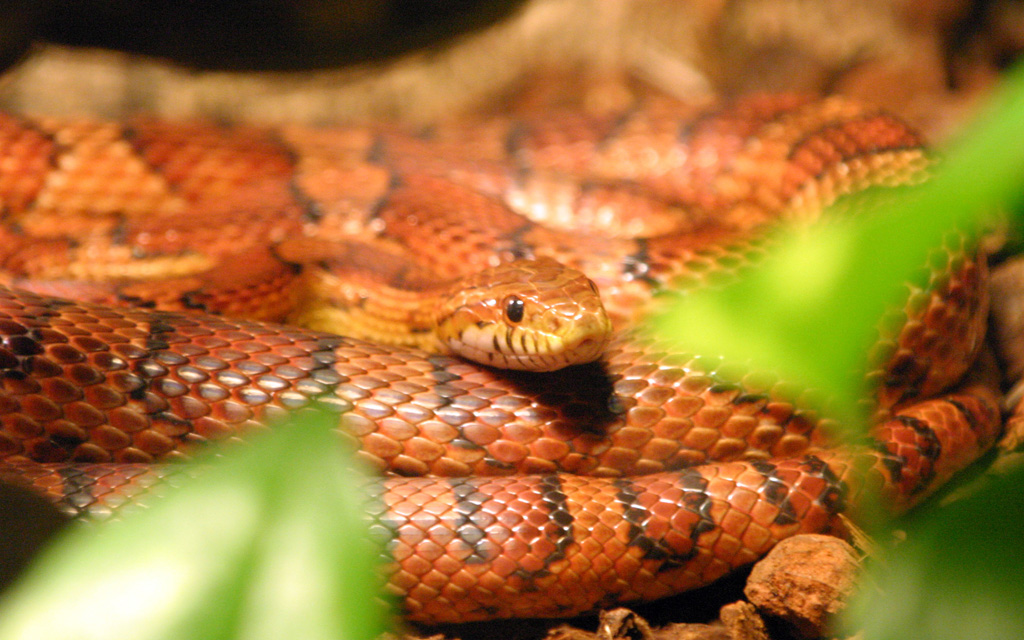
Costa described the snake as red and yellow-banded, longer than herself.  She believes it is a corn snake.

Red corn snake. (Public Domain photo by Mike Wesemann)

Red corn snakes (Pantherophis guttatus) are native to the eastern United States from New Jersey to Florida and Mexico.  They have been introduced to some of the Caribbean islands so their range has expanded with human help.  Red corn snake native populations are considered stable.  The snakes’ habitat is variable, ranging from pine forests to grasslands.

According to Dr. Johanna Fagen, assistant professor of biology at the University of Alaska Southeast, snakes are uncommon in the wild here, but do live in many parts of British Columbia.

Fagen shared a few likely reasons that snakes wouldn’t find this area favorable.  Firstly, Juneau’s recently deglaciated land has not yet been colonized by a wide array of species, including reptiles.  Snakes are common in dry climates, rather than wet ones with many freeze-thaw episodes throughout the winter.

Due to the climate and geological history in Southeast, snakes normally only survive in cages.  This can mean guest appearances after horror films.

Site notifications
Update notification options
Subscribe to notifications