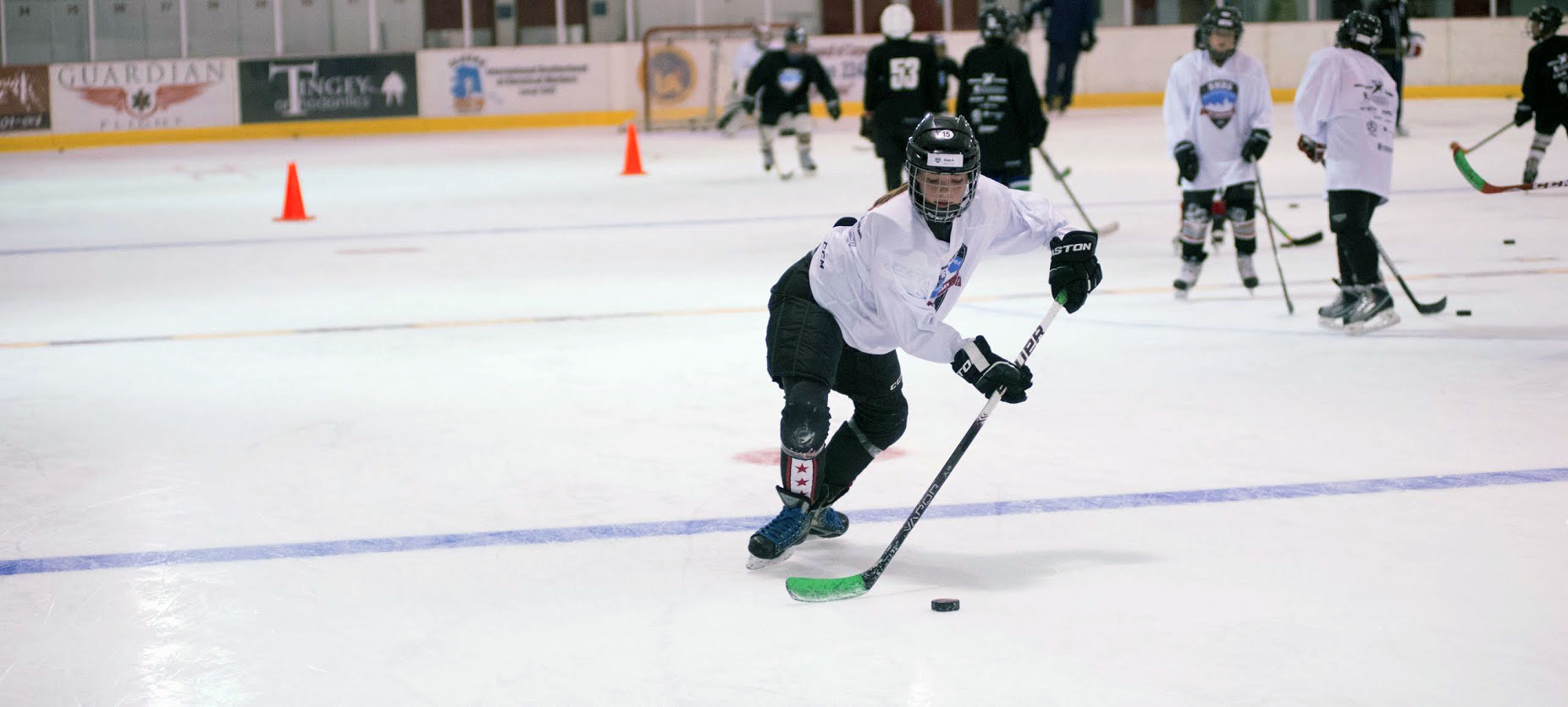
Treadwell Arena kicked off its 2015-2016 season by playing host to the Rocky Mountain Hockey School, which conducted a camp last week for nearly 70 players.
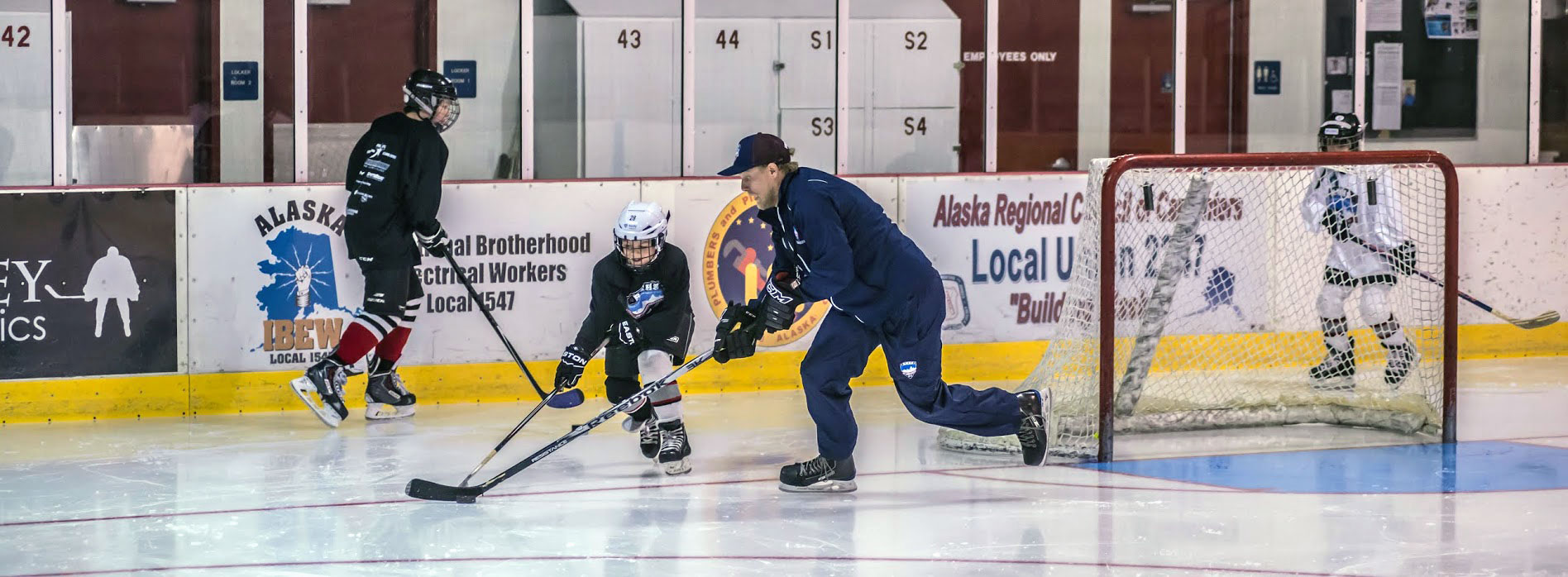
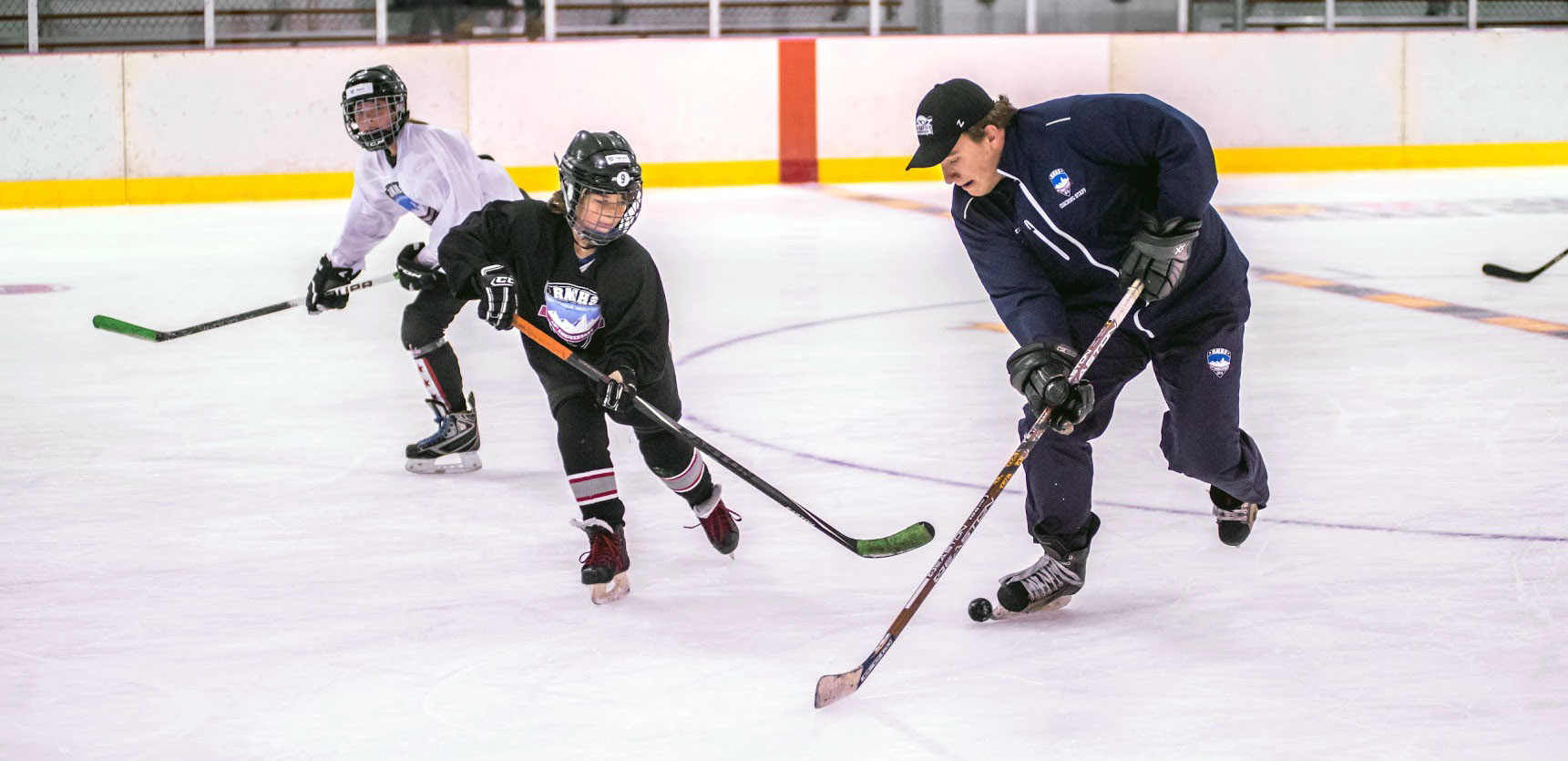
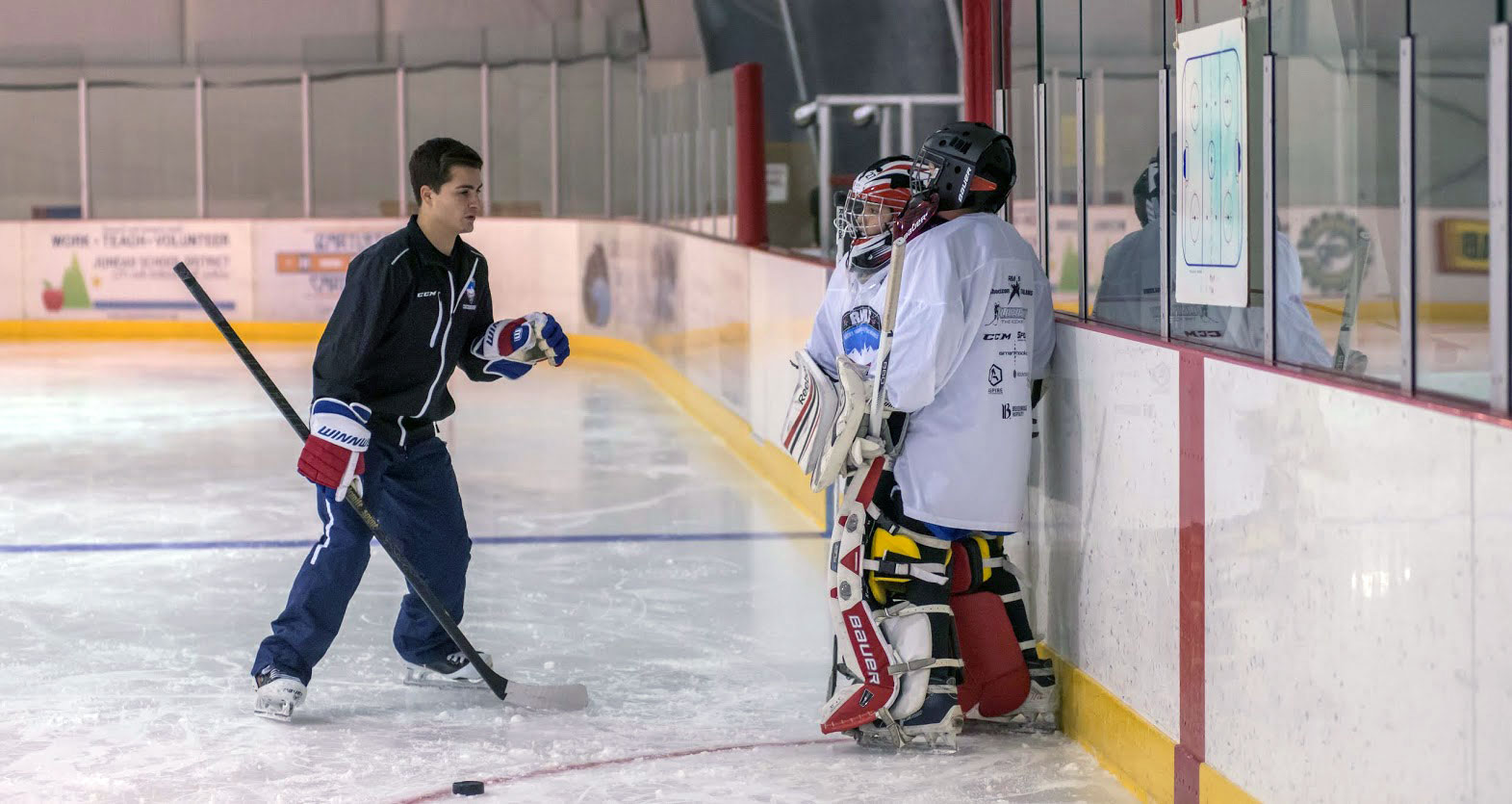
Rocky Mountain Hockey School coach Billy Barto plays keep away from Juneau youth player Busby West. (Photo by Steve Quinn)
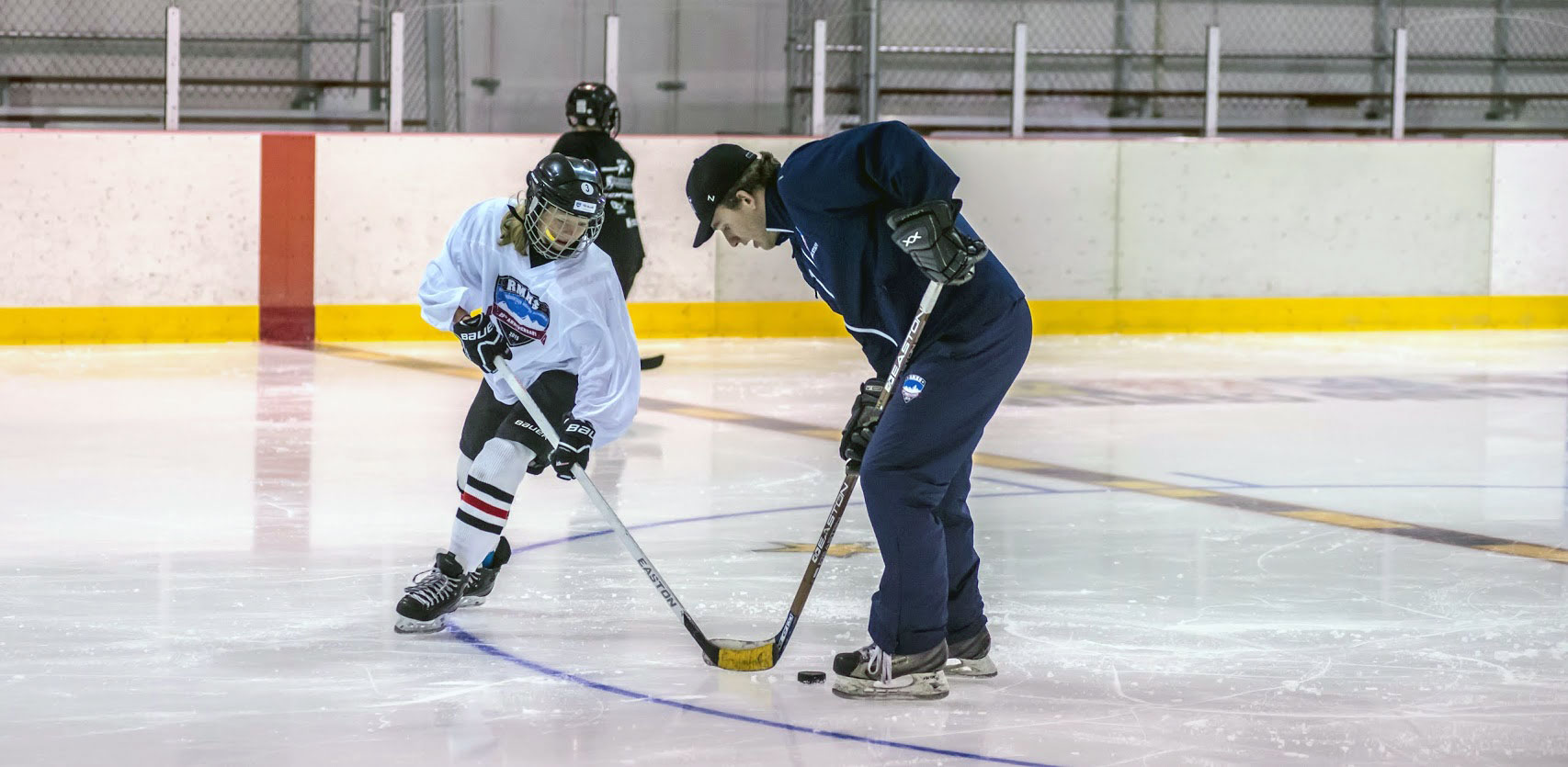
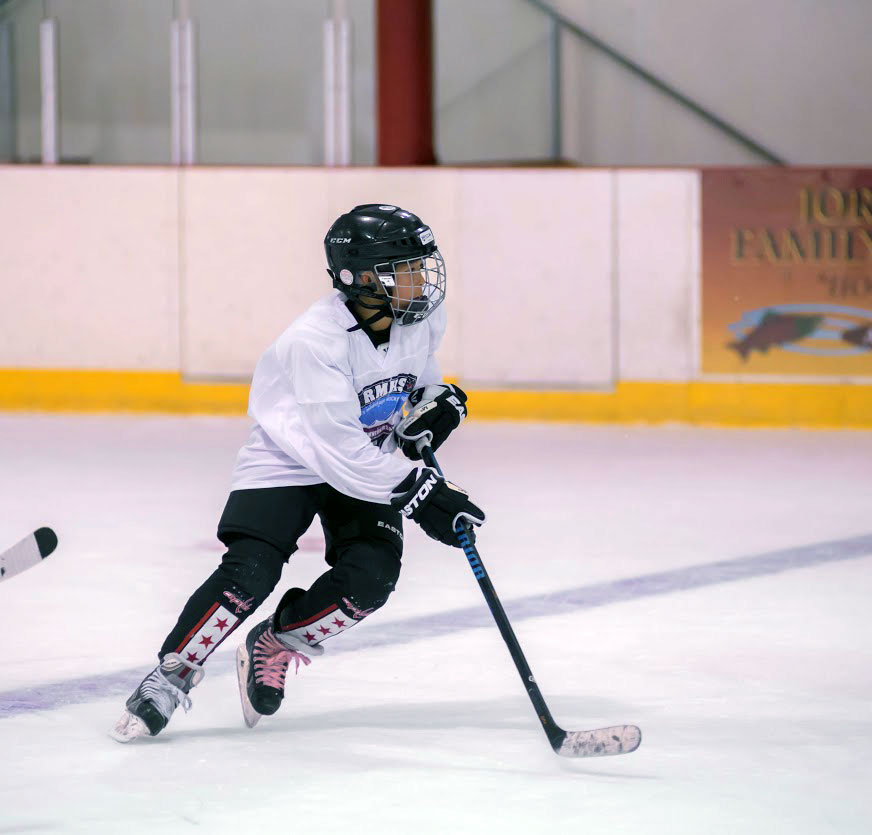
Juneau’s Taylor Bentley pokes the puck past Rocky Mountain Hockey School coach Vladan Chase during a game of keep away to open one of the camp’s sessions at Treadwell Ice Arena. (Photo by Steve Quinn)
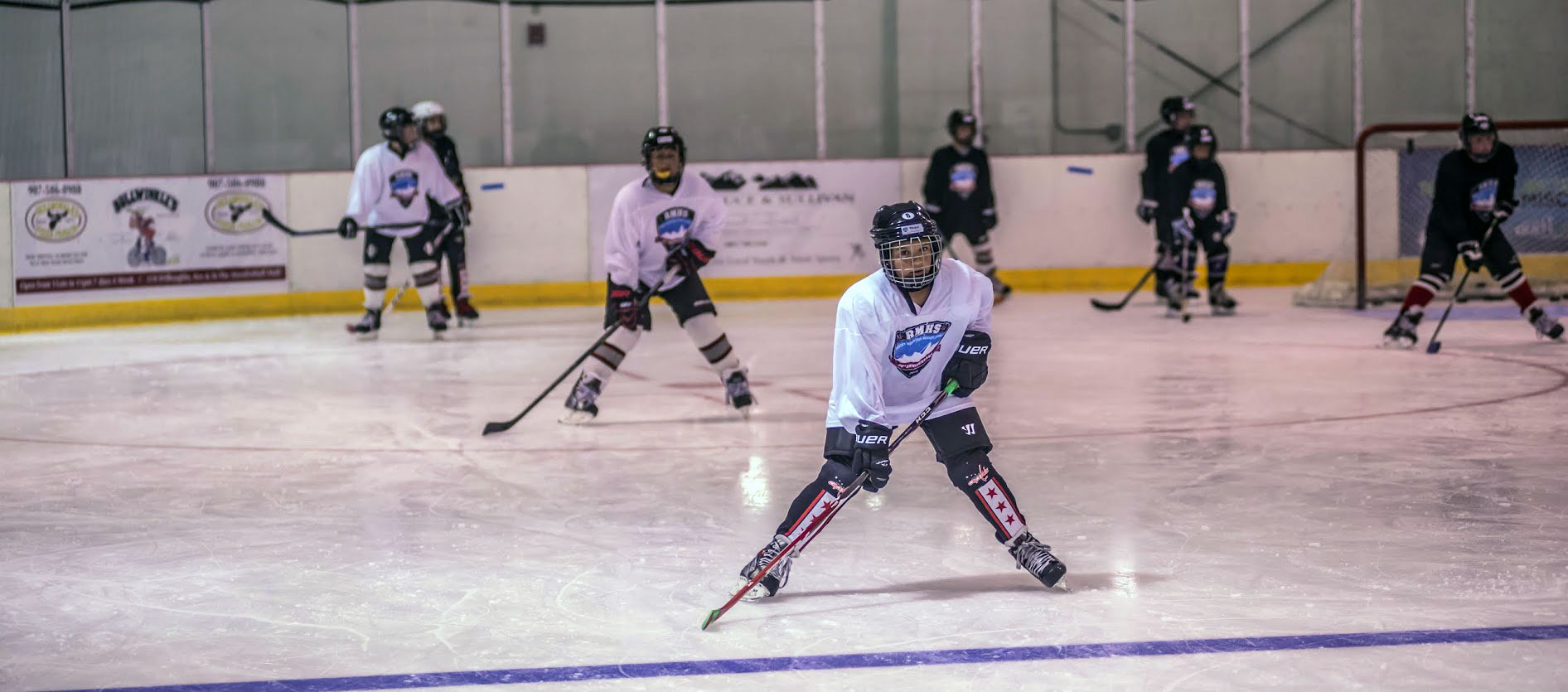
Tevin Dick leads his line in a drill designed to help young players develop specific skating skills with the blade’s inside edge. (Photo by Steve Quinn)
Macabee Brna focuses on a skating drill while Rocky Mountain Hockey School coach Billy Barto encourages him. (Photo by Steve Quinn)
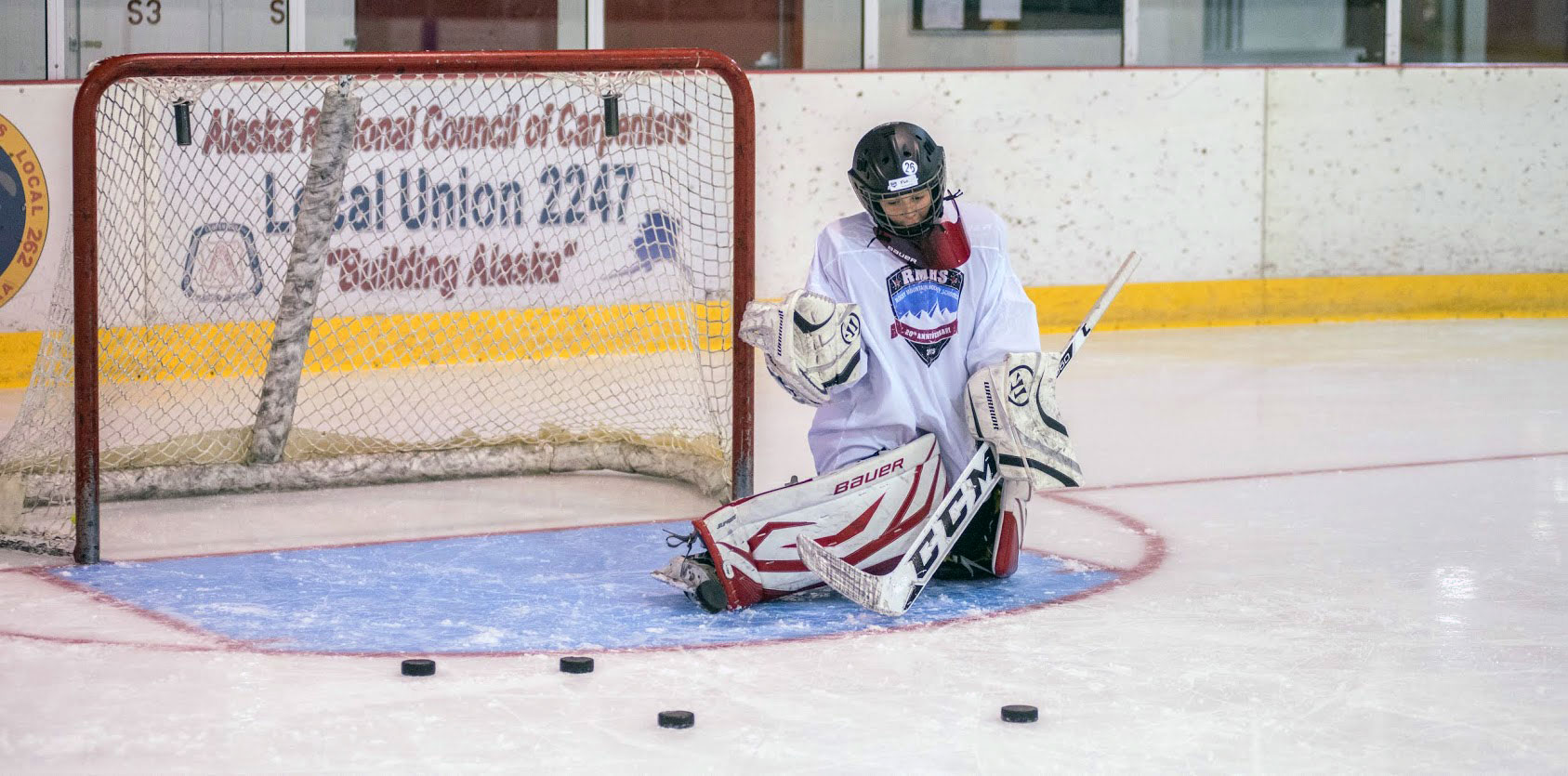
Juneau youth player Florian Wade turns back a shot taken by goalie coach Colter Pritchard, a former goalie for the Juneau-Douglas High School squad. (Photo by Steve Quinn)
Kyla Bentz focuses on a drill that calls for balancing on a single skate blade, moving quickly from skate to skate. (Photo by Steve Quinn)
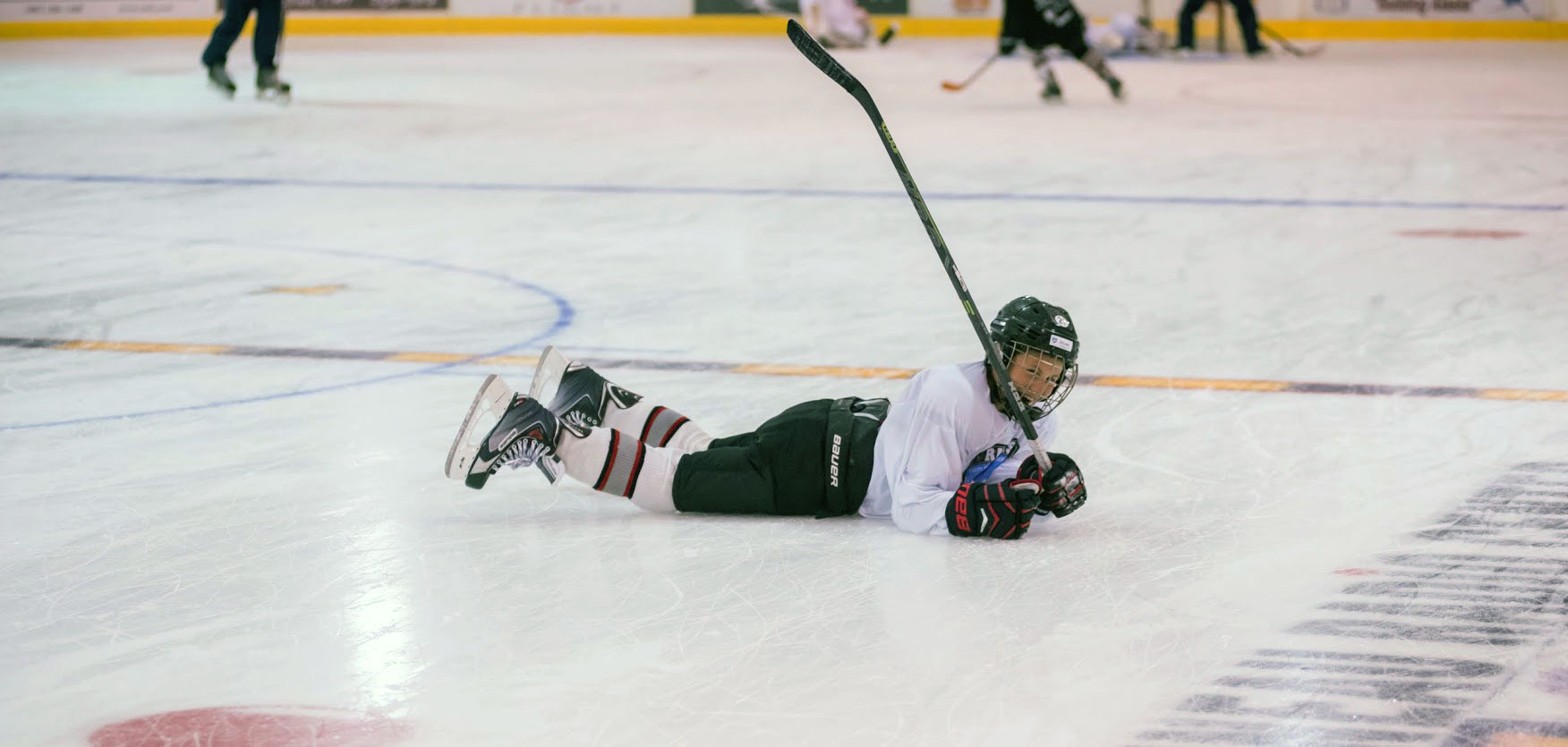
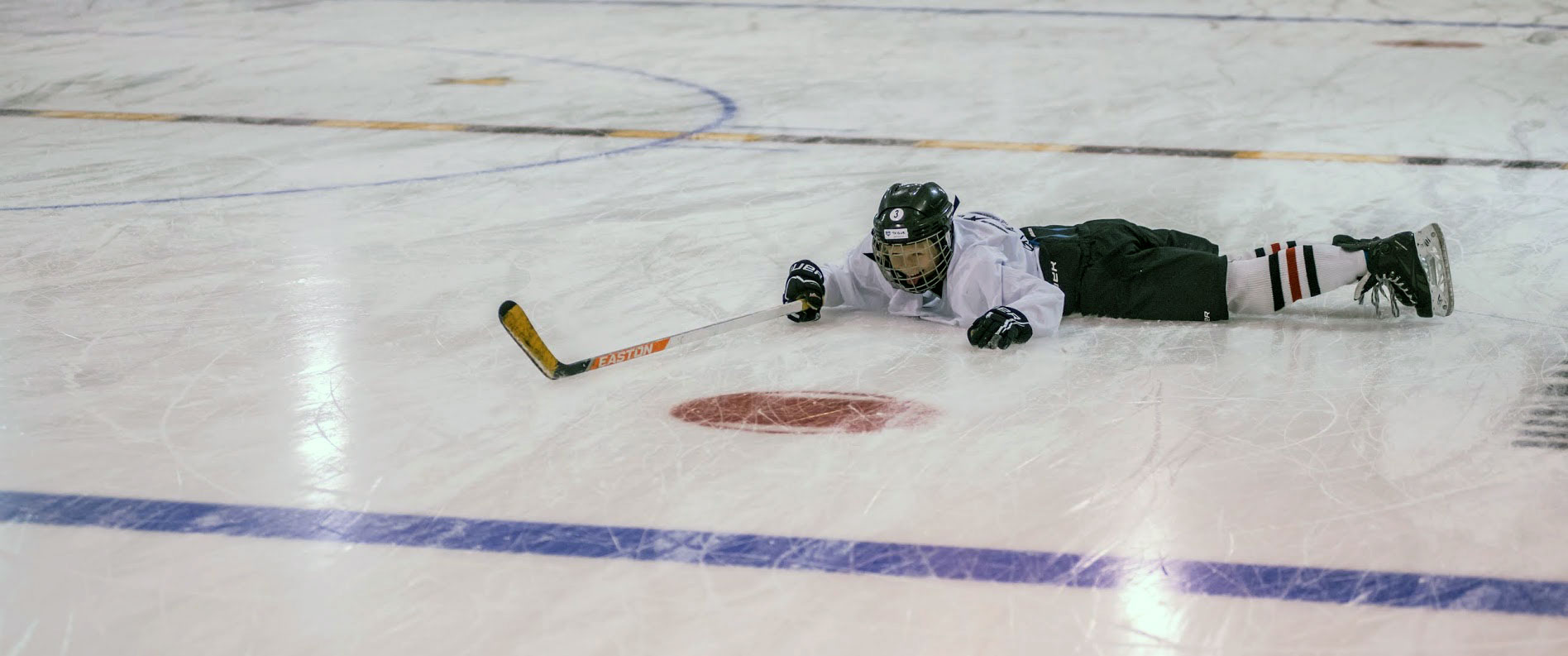
Dylan Murdoch kicks up his stick during a drill that calls for players to dive on their stomachs then pop back up on their blades. (Photo by Steve Quinn)
Jaeger Dostal battles with Rocky Mountain Hockey School coach Vladan Chase during a keep away drill at Treadwell Ice Arena. (Photo by Steve Quinn)
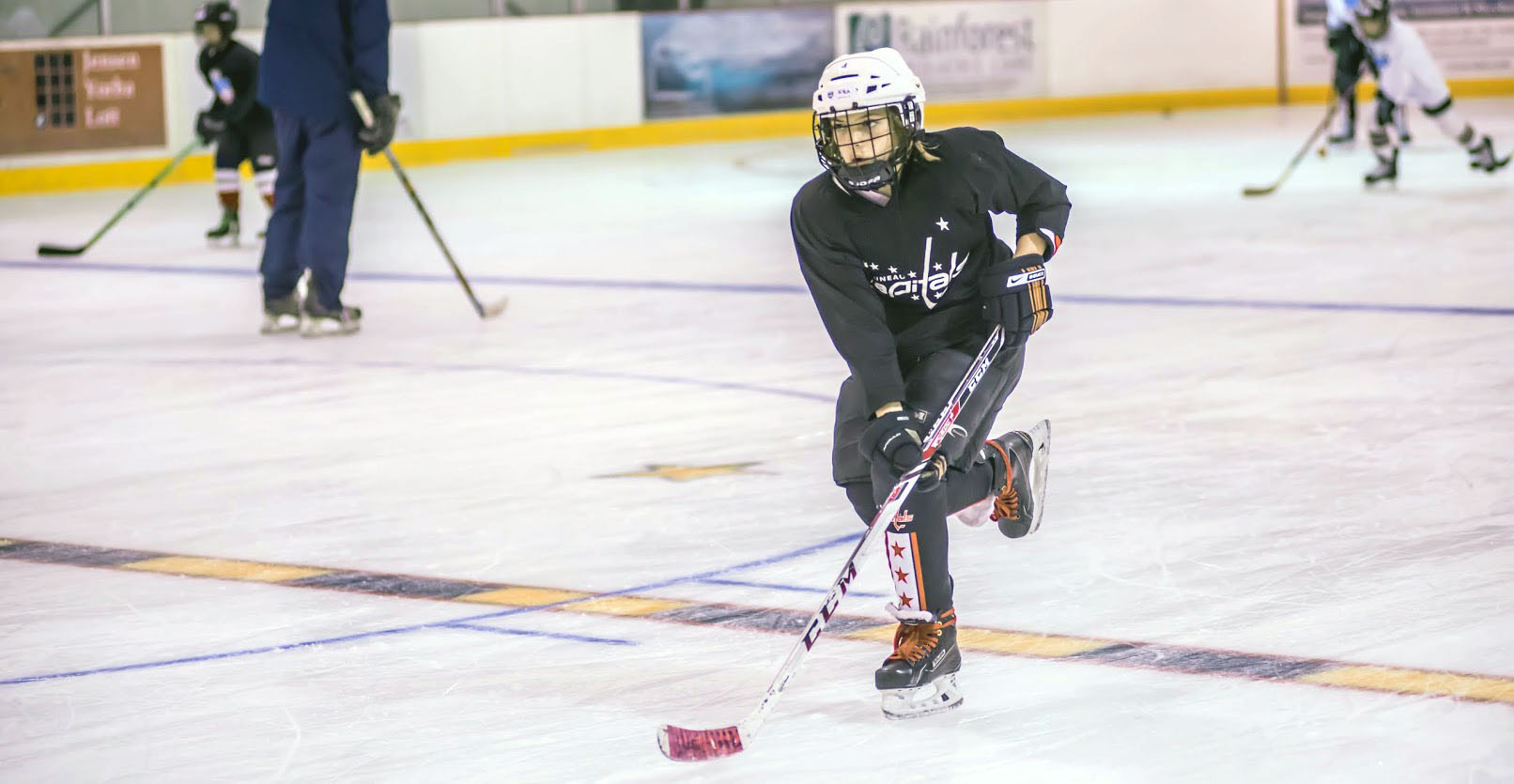
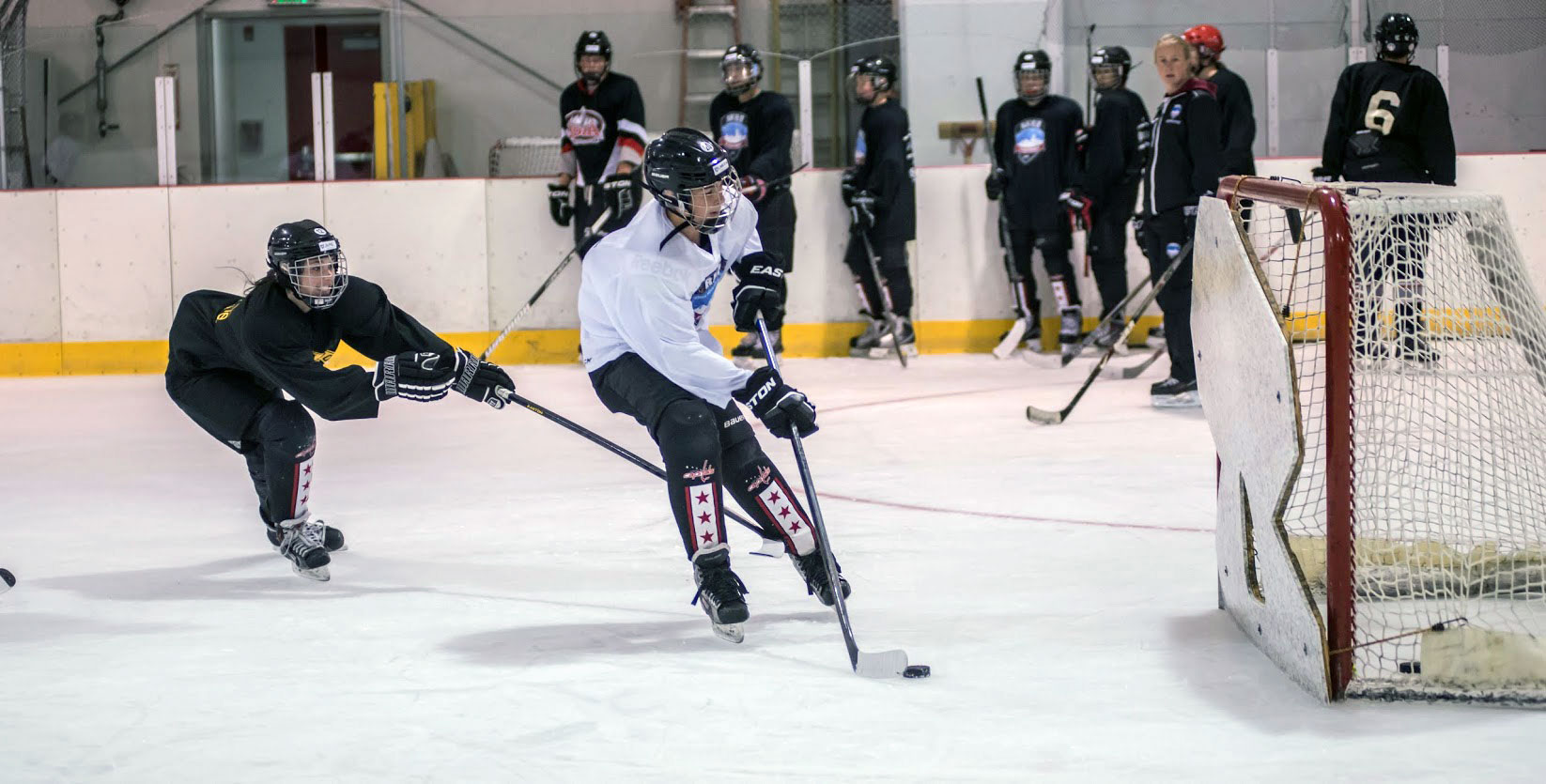
Juneau’s Kara Hort pivots on her blades, transitioning from backward to forward, before advancing the puck toward the net during a drill at Treadwell Ice Arena. (Photo by Steve Quinn)
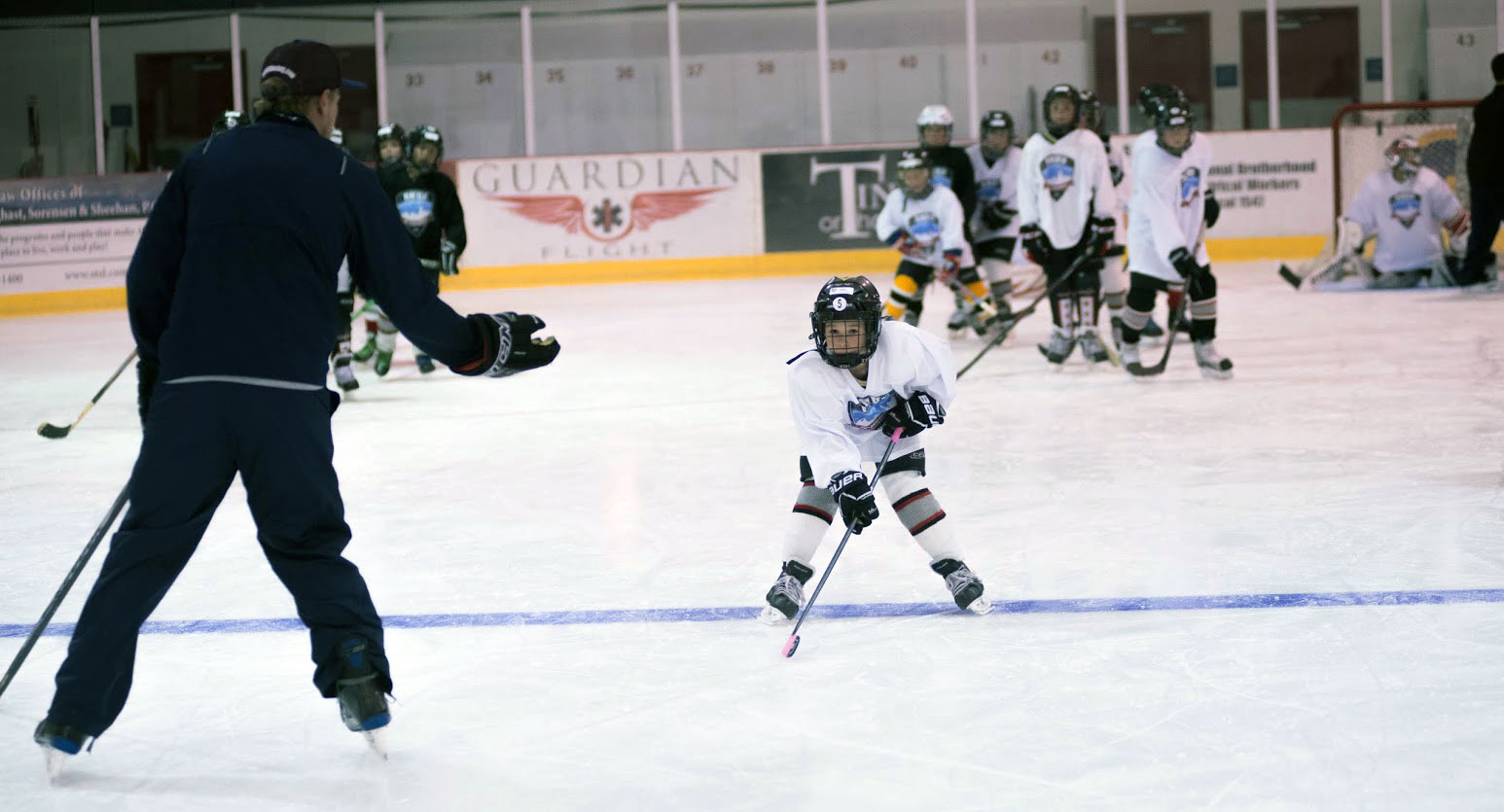
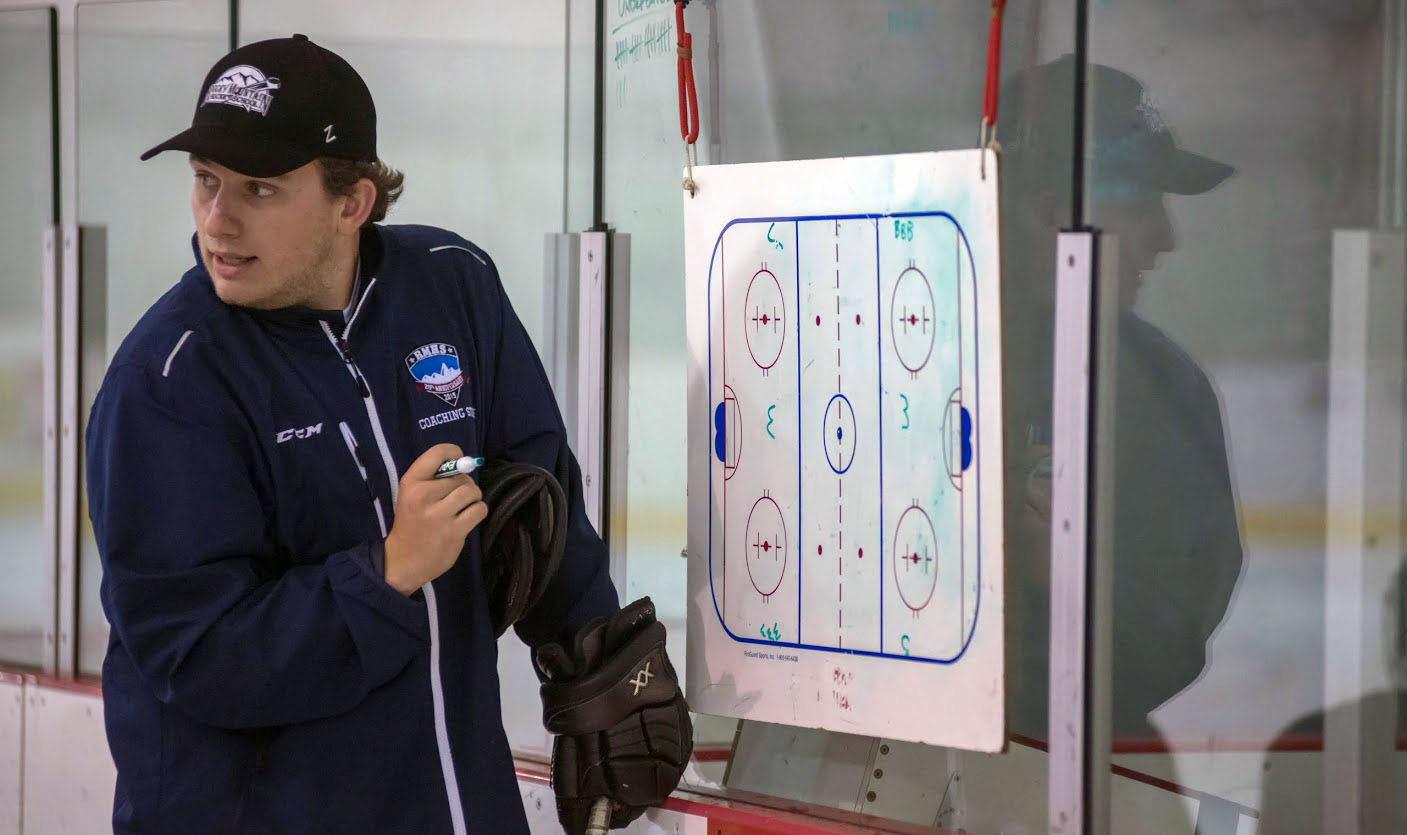
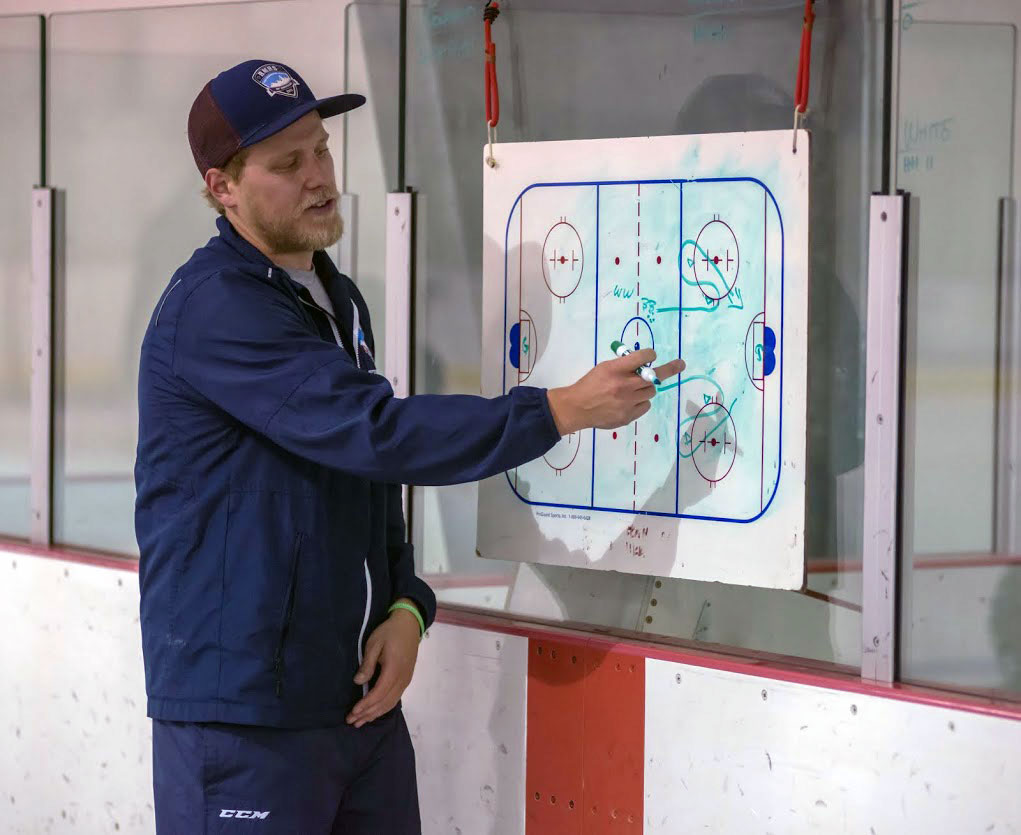
Vladan Chase draws up the next drill for youth attending the Rocky Mountain Hockey School at Juneau’s Treadwell Ice Arena. (Photo by Steve Quinn)
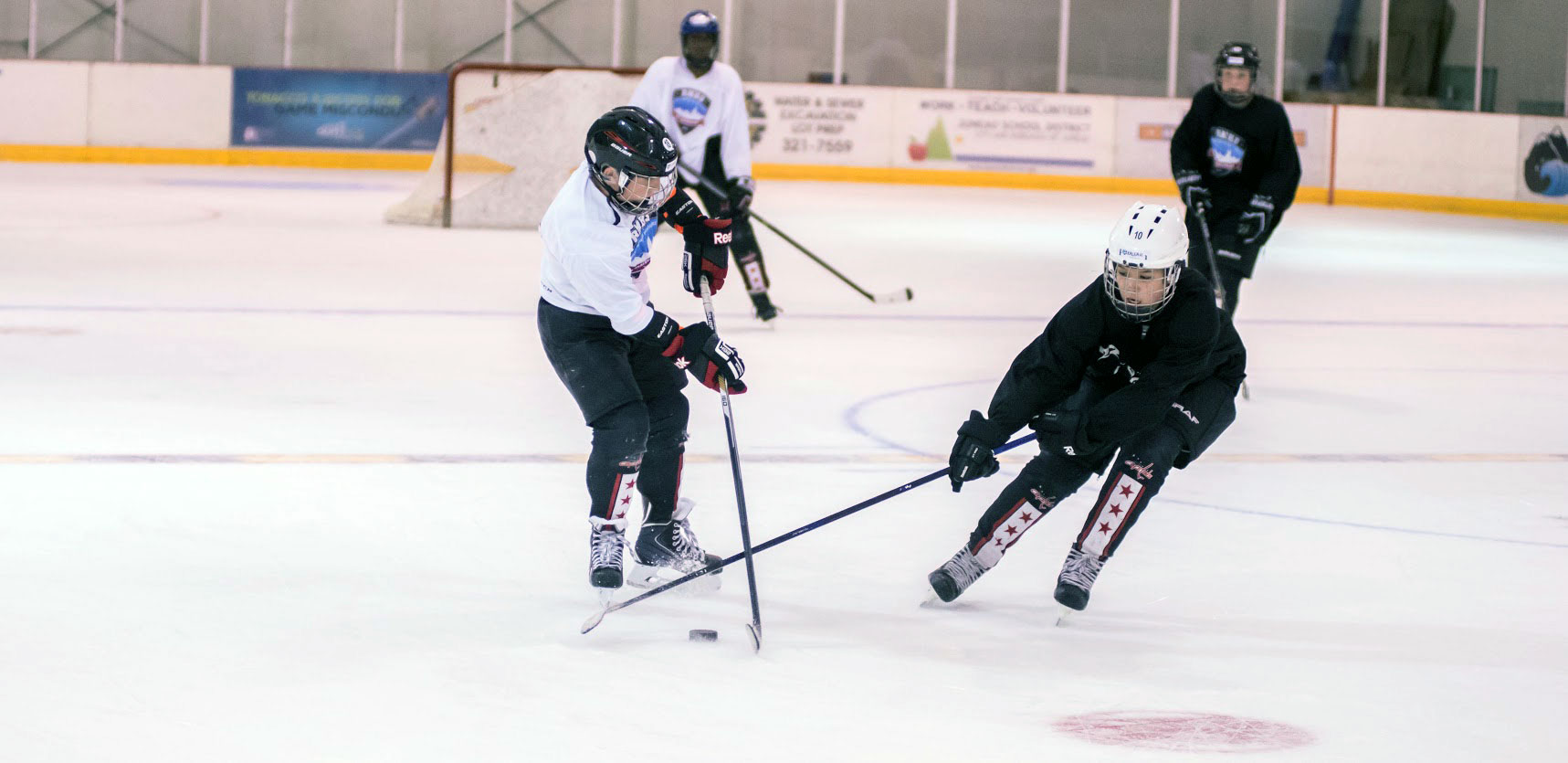
Jaime Hort tries to prevent Cam Smith from reaching the net and getting off a shot during a drill at the Rocky Mountain Hockey School. (Photo by Steve Quinn)
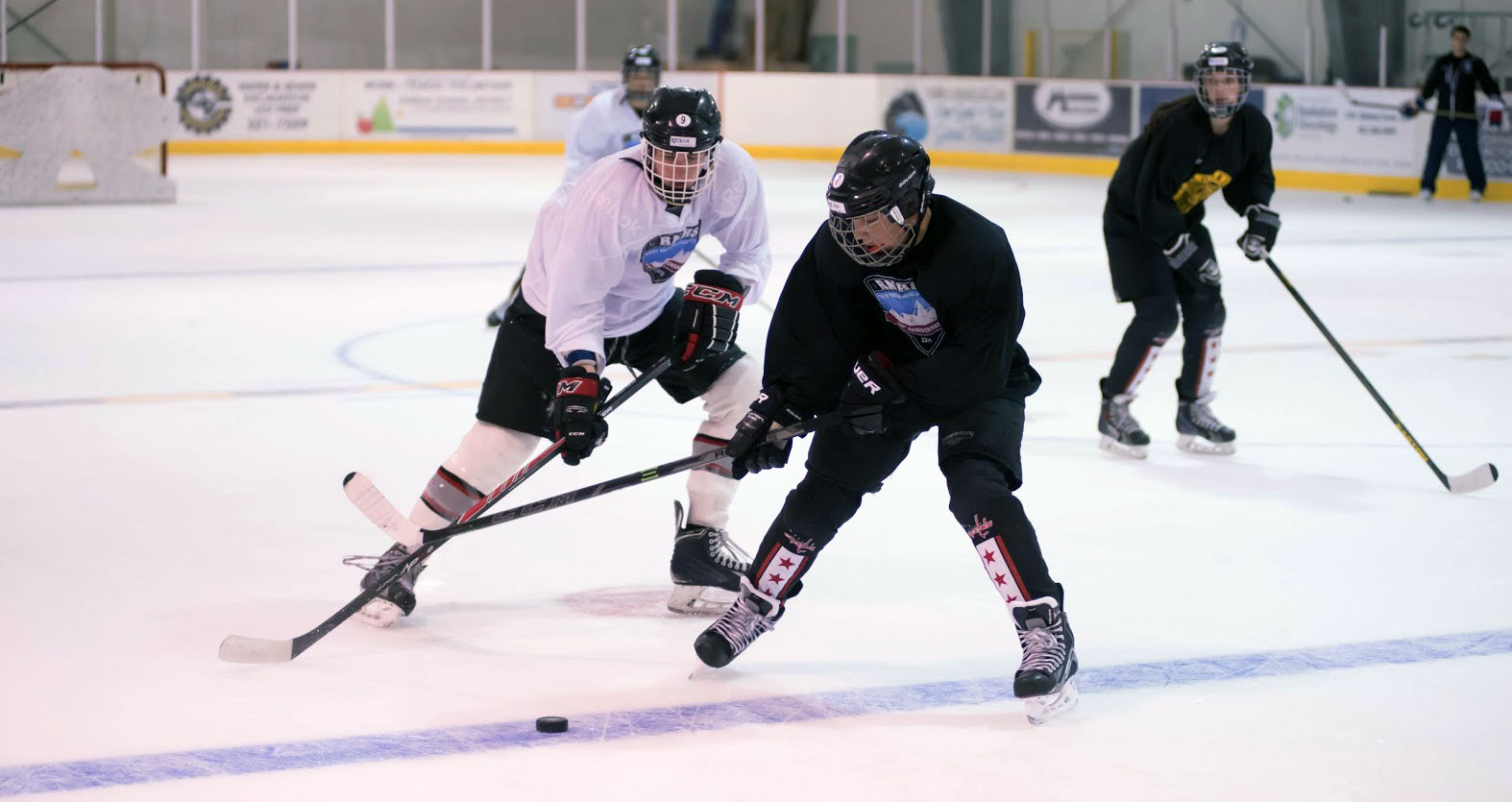
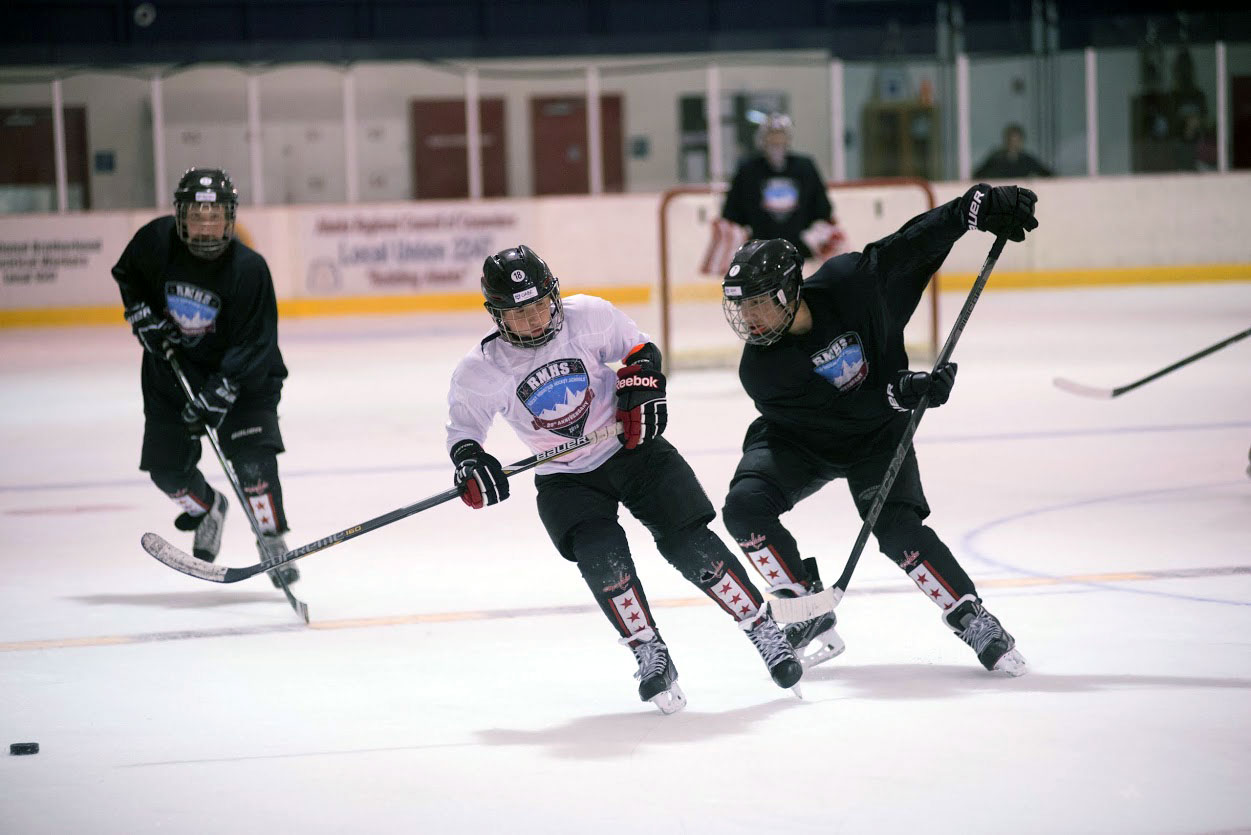
Quin Gist (left) battles with Josh Frisby for puck possession at Treadwell Ice Arena. (Photo by Steve Quinn)
Taylor Bentley sports a smile while diving on the ice before popping back up during a drill at Treadwell Ice Arena. (Photo by Steve Quinn)
Gabe Miller (left) attempts to keep Josh Frisby at bay during a drill at Treadwell Ice Arena. (Photo by Steve Quinn)
Sam Bovitz maneuvers the puck around a pylon before skating up ice toward the goal for a shot. (Photo by Steve Quinn)
Kaleah Haddock strips Gabe Miller of the puck during a drill at Treadwell Ice Arena. (Photo by Steve Quinn)
Rocky Mountain Hockey School coach Billy Barto draws up the next drill for players attending the camp during the opening week at Treadwell Ice Arena. (Photo by Steve Quinn)
Goalie coach Colter Pritchard (left) works with Ilya Wallace (center) and Florian Wade on positioning at the Rocky Mountain Hockey School camp held during the opening week at Treadwell Ice Arena. (Photo by Steve Quinn)
Tezah Haddock looks to receive a pass during a passing and shooting drill at the Rocky Mountain Hockey School camp held during the opening week at Treadwell Ice Arena. (Photo by Steve Quinn)
The Juneau Douglas Ice Association, with underwriting help from the City and Borough of Juneau’s Youth Activities Board, helped bring RMHS for its annual visit to Juneau.
Alaskans voted in 1998 to define marriage in the state constitution as only between a man and a woman. Now that the U.S. Supreme Court has invalidated that definition, Alaska and the entire country has marriage equality.
To some it may seem like things are changing fast, but Alaska’s fight for gay rights began half a lifetime ago.
In the course of Alaska’s legislative history, there have been six bills to outlaw sexual orientation and gender identity discrimination. In Anchorage, there have been at least three ordinances.
They’ve all failed.
The fight may have begun in 1975, when the Alaska State Human Rights Commission took a formal stance that sexual preference should be included in the state’s non-discrimination policy.
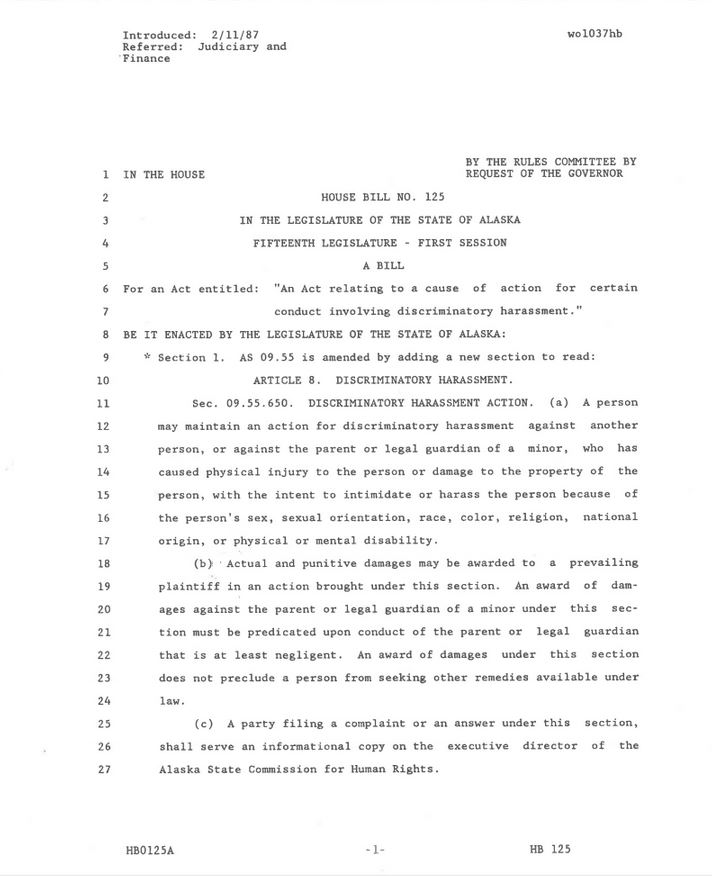
Copy of bill 125, from 15th legislative session.
House Bill 125 was introduced in 1987, during the AIDS epidemic. The commission director, the attorney general and the governor all supported the bill.
“[It was] just something that seemed to me, it was time to make some noise about it,” says former Democratic Gov. Steve Cowper.
He introduced the bill less than two months after taking office. He had served in the Vietnam War and made a friend who was gay.
“They served just as well or better than other people,” Cowper said.
Cowper can’t remember why exactly he introduced the bill, but cites that personal experience as a possible reason. Old files also suggest commission Director Janet Bradley asked for his support.
“But as a general principle, people shouldn’t be discriminated against any more than you should be able to discriminate for racial reasons,” Cowper said.
Cowper’s friend died from AIDS years later. HB 125 never made it out of committee.
Janet Bradley left the Human Rights Commission in 1988. During the last decade of her career, she had taken an aggressive approach to more inclusive legislation.
After she left, Paula Haley became the commission’s director. She’s still the director now and she hasn’t touched the issue.
In 1989 through an LGBT advocacy group, researchers Melissa Green and Jay Brause published a statewide survey documenting the experiences of Alaska’s lesbian and gay community, including issues of discrimination and health.
Janet Bradley ended the report’s forward with a call to action: “This report then becomes our challenge; for if we believe that our vision of Alaska is marred when discrimination exists, we must commit ourselves to eliminating sexual orientation discrimination.”
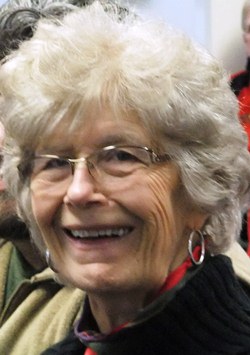
Melissa Green, LGBT activist and researcher. (Photo courtesy of Melissa Green)
In 2012, Green published her final report on a survey on LGBT discrimination in Anchorage through Identity, Inc. It was a few weeks before Anchorage voted on Proposition 5, a sexual identity anti-discrimination measure that failed. She says the report received a lot of criticism.
“It has important things to say. I hope that people might still read it, but I’m done. I’m done. I’m off on my own life,” Green said.
She’s burnt out and says she’s kind of bitter.
“It ate up a lot of my life and a lot of my time, and it had, I wouldn’t say exactly zero impact, but pretty close to that,” Green said. “Nobody really cared— outside of the [lesbian, gay, bisexual and transgender] community, nobody really cared.”
In 1986, the Anchorage Daily News interviewed a gay man working at Identity, Inc., an advocacy organization. He was collecting violent and homophobic voice mail the office received for a research report on gay and lesbian discrimination.
That man’s name was Jay Brause.
“Through the AIDS crisis we started finding out how important our relationships were,” Brause said.
“We started finding out we had no rights. We were denied in so many ways.” Brause said.
He said he knew of couples who’d been together for decades and if one of them would become ill or die, often their relationship meant nothing when it came to hospital visitation, burials, military honors and home ownership.
“How do you explain that to people? It’s a potent, virulent form of discrimination,” Brause said.
During the same year the ADN published the story, he interned with the National Gay and Lesbian Task Force in D.C.
(left to right) Jay Brause, Gene Dugan, Fred Hillman and Les Baird. In 1982, the board members were moving out of the Alaska Gay & Lesbian Resource Center, which closed down. It was later revamped and named Identity, Inc. (Photo courtesy of Melissa Green)
Brause and his now-husband Gene Dugan applied for their marriage license in 1994. The controversial act eventually led to the 1998 constitutional amendment defining marriage.
He paid for being a prominent gay figure in the 80s and 90s in more ways.
“I felt the prejudice and the discrimination very personally and directly. In a way, you don’t know if you’re hiding or you haven’t disclosed (your sexuality),” Brause said.
Like his friend Melissa Green, he’s disillusioned about his fight and American liberties. His reaction when Alaska got marriage equality?
“I did not have the person-in-the-street’s reaction. No, not even a smile,” Brause said.
In 2006, he and his husband moved to England, where he has dual-citizenship. In September, he’ll travel back to Anchorage to clean up to the last few bits of his life in America before leaving for good.
“Thank you to every single one of us who took on that work as activists, who took chances to make a difference, and believe me, there’s more to be done.”
State Legislative Reference Librarian Jennifer Fletcher researched legislative files. This article could not be produced without her assistance.
Editor’s note: This story and audio have been updated. The number of Anchorage anti-discrimination ordinances that have failed has been qualified; there have been at least three. Also, Identity, Inc. published all three reports. Jay Brause and Identity, Inc. volunteers authored One in Ten, Brause and Melissa Green authored Identity Reports, and Green authored the LGBT Anchorage Discrimination survey report. Volunteers and community members assisted with all three of the studies.
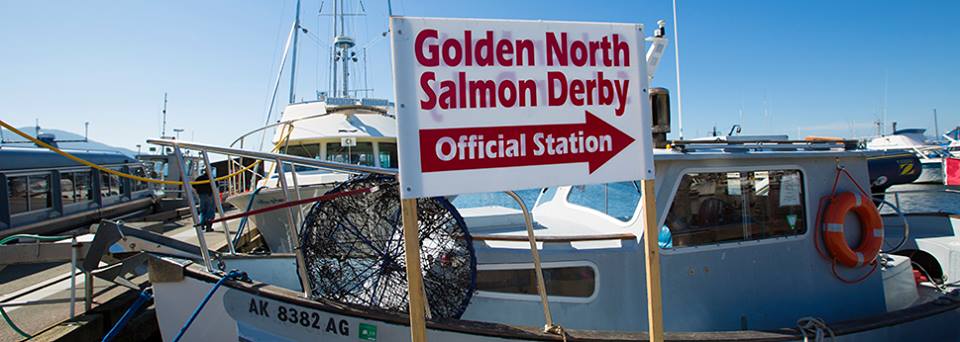
The Golden North Salmon Derby weigh station at Auke Bay. (Photo courtesy Territorial Sportsmen)
Juneau resident Jody Hass is the unofficial winner of this year’s Golden North Salmon Derby. She caught a 27.4-pound king salmon on Friday at 11:53 a.m. and weighed it at Douglas Harbor. Hass also reeled in the number one fish in 2013.
In other unofficial results, Brandon Godkin came in second with a 27-pound king caught on Saturday around 10:30 a.m. and turned in at the Auke Bay weigh station. Mike Bethers caught the third place fish, a 22.3-pound Chinook, Sunday morning around 7:30 and weighed it at Auke Bay.
The Territorial Sportsmen organized the 69th annual event, and its board will confirm the results Tuesday at noon. The derby started Friday morning and ended Sunday evening. Michael Olsen caught the 69th biggest fish — a 14.9-pound Coho — Saturday night at 6:15.
Awards night is on Thursday at 7 p.m. at Centennial Hall. First place winner takes home $10,000. Prizes are given to the 69 biggest fish and there will also be drawings for those who turned in scholarship fish.
The top fish are posted at the Golden North Salmon Derby website.
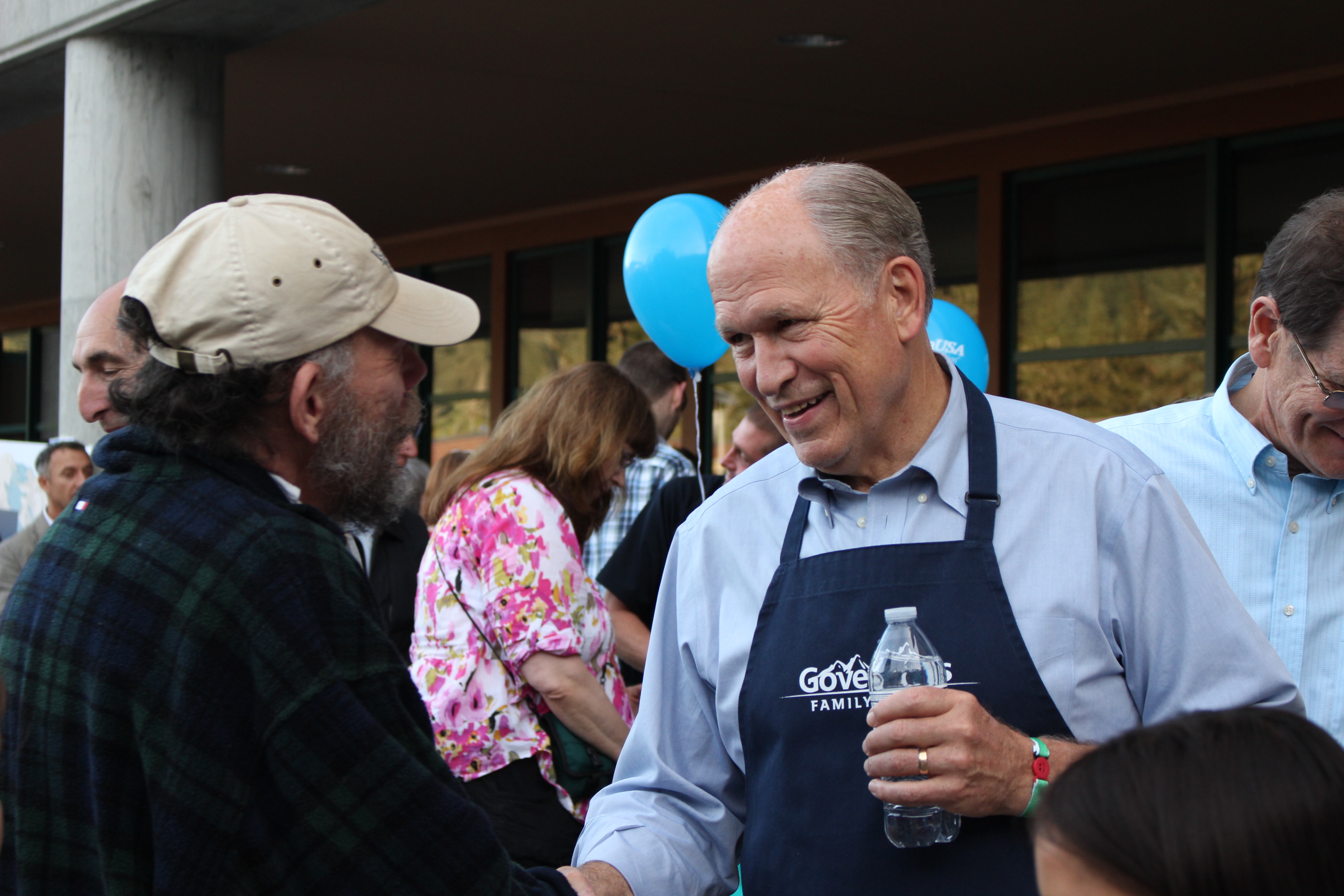
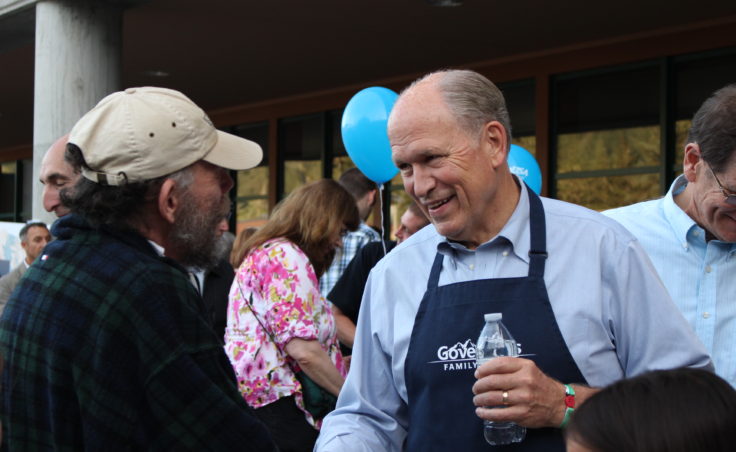
Gov. Bill Walker greets people at his the Governor's Picnic at UAS in Juneau, Aug. 14, 2015. (Photo by Elizabeth Jenkins/KTOO)
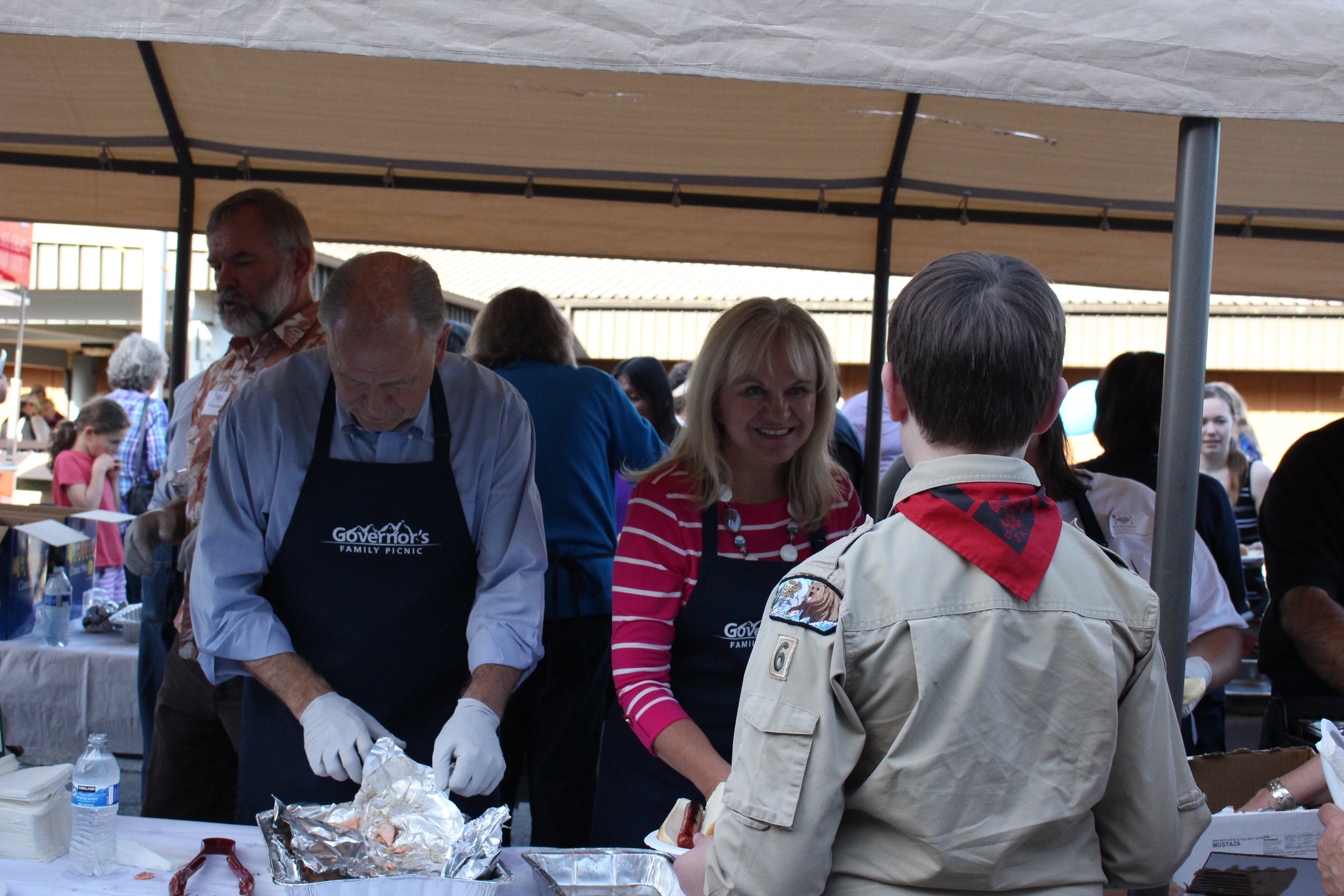
The governor and first lady Donna Walker serve the public salmon and hotdogs. (Photo by Elizabeth Jenkins/KTOO)
(Photo by Elizabeth Jenkins/KTOO)
(Photo by Elizabeth Jenkins/KTOO)
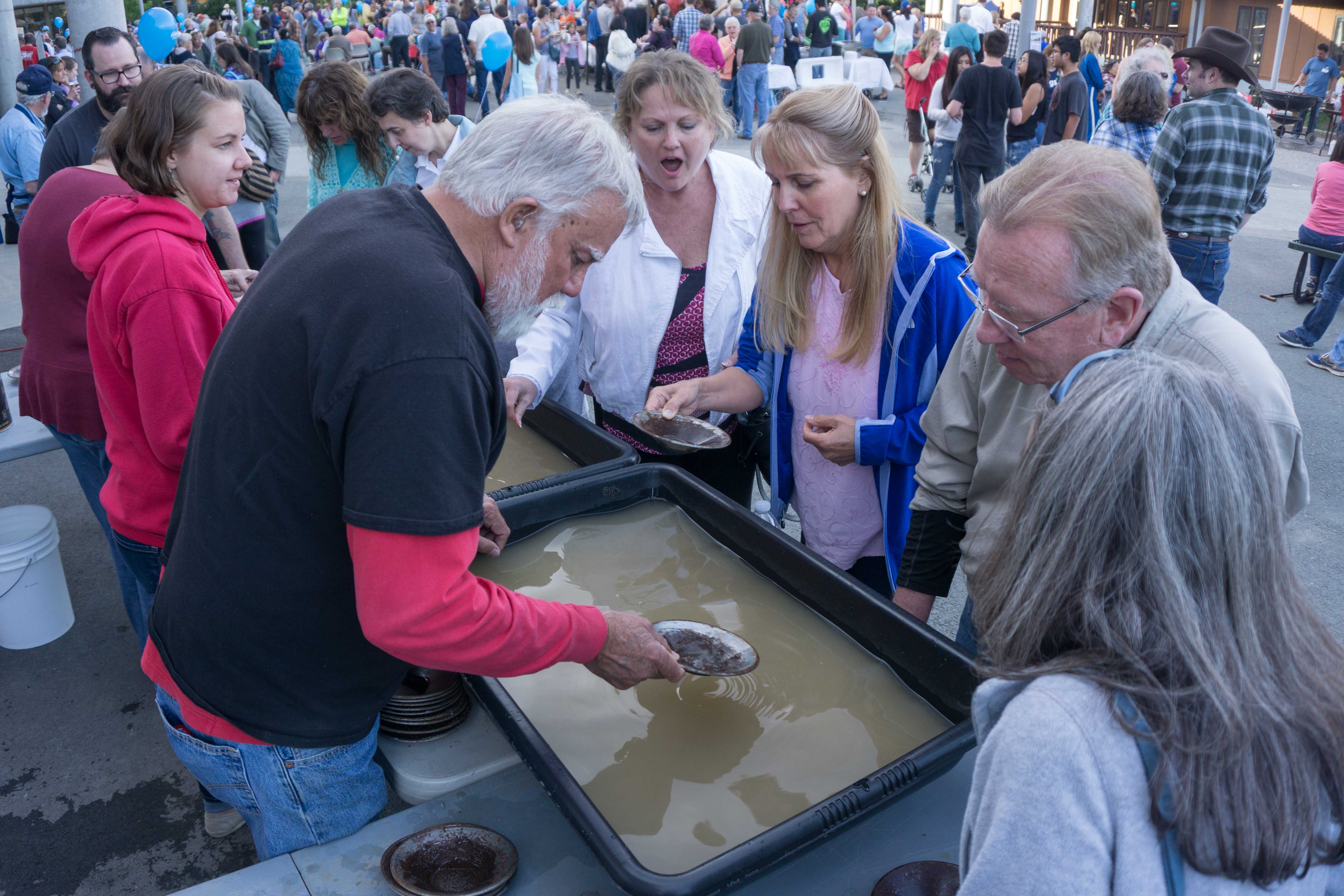
Panning for gold at the 2015 Governor's Picnic. (Photo by Jeremy Hsieh/KTOO)
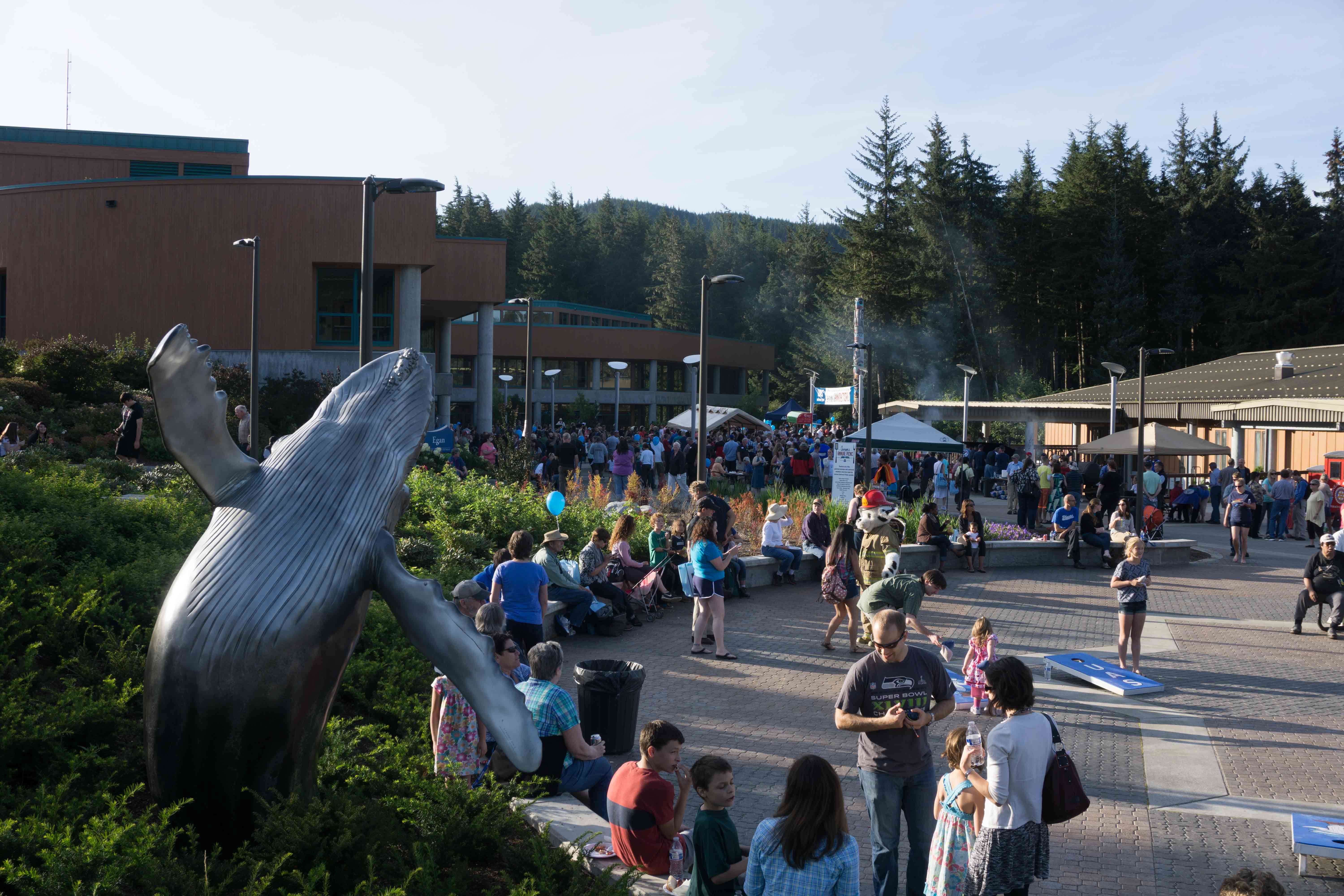
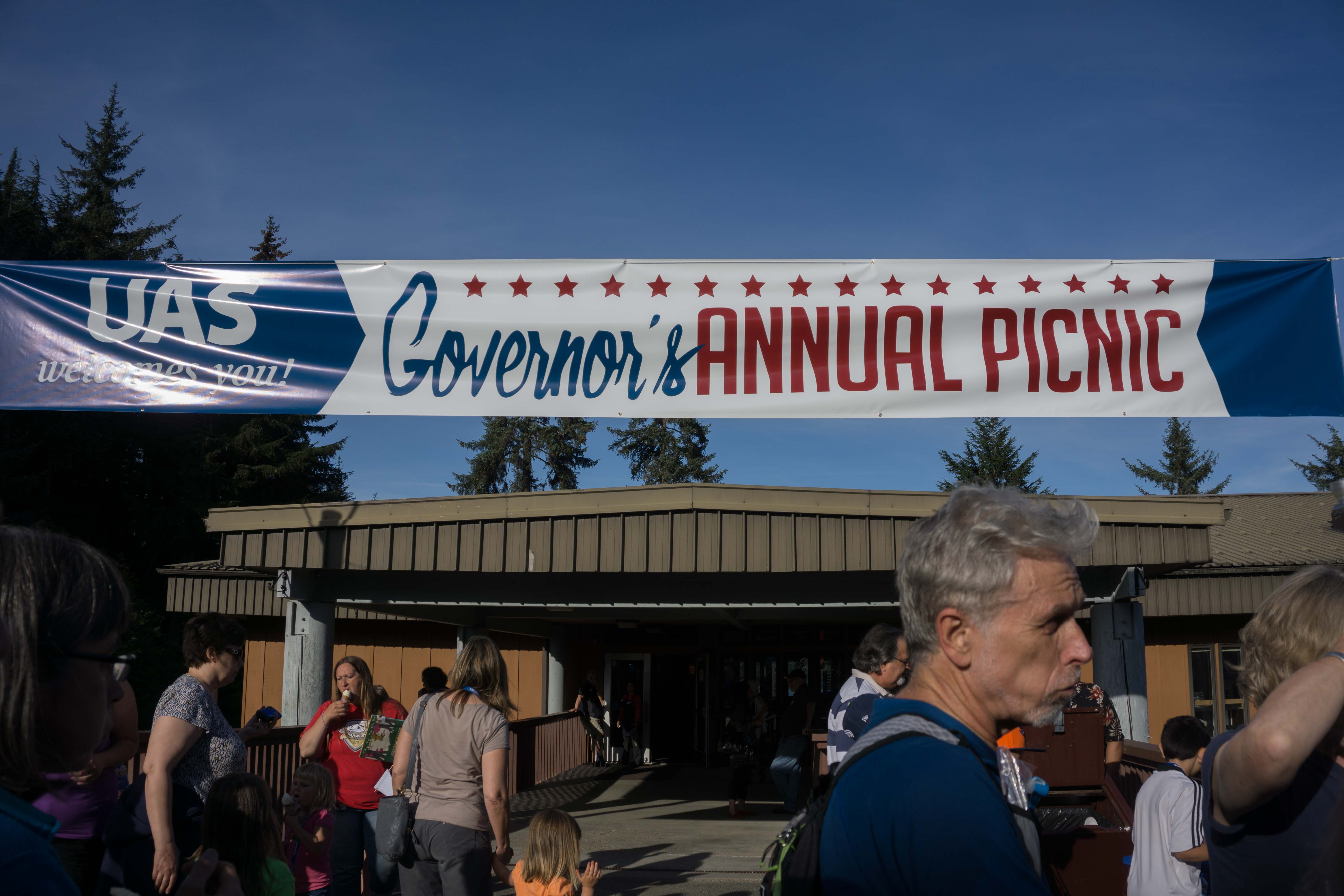
The 2015 Governor's Picnic was held at the University of Alaska Southeast. (Photo by Jeremy Hsieh/KTOO)
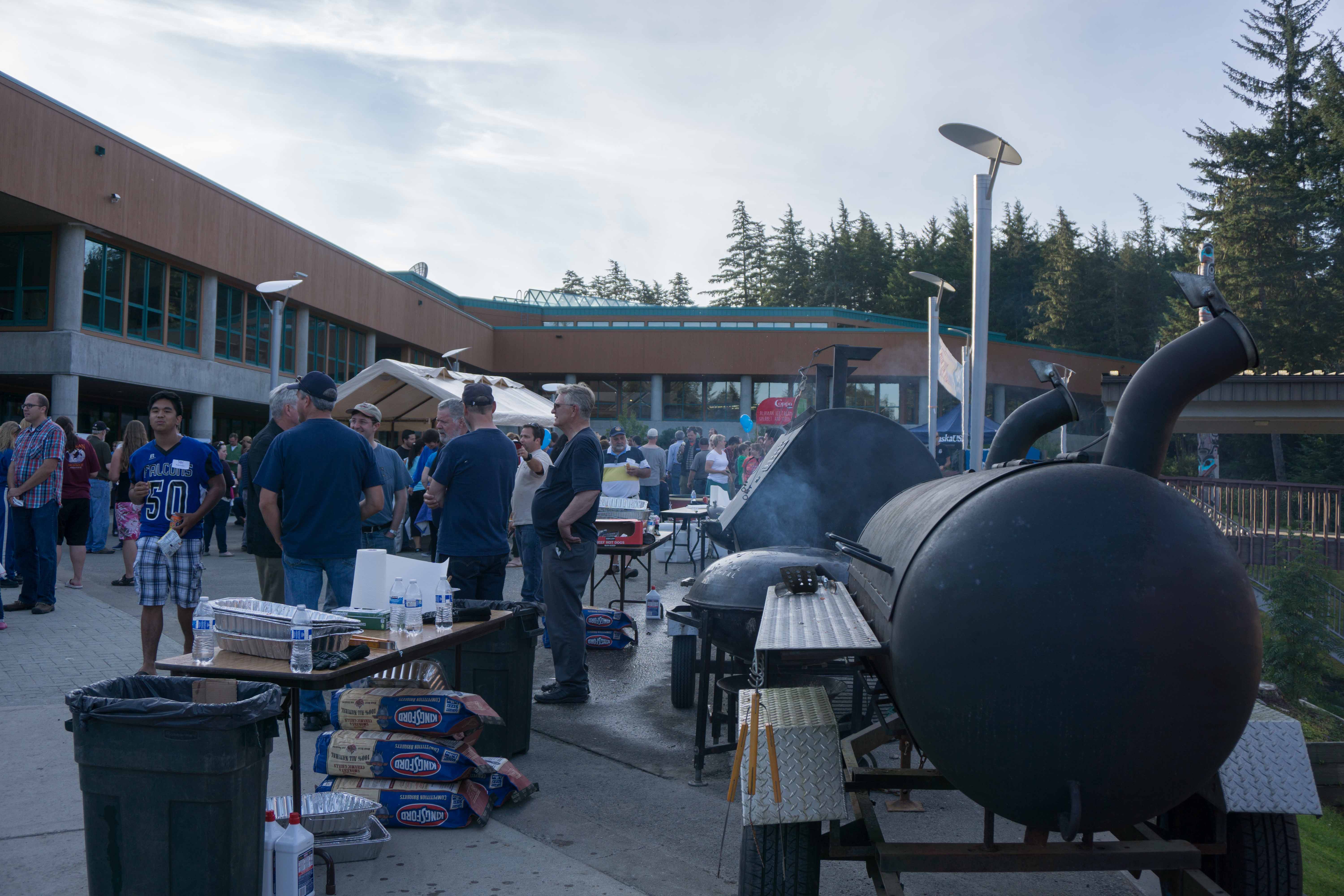
The grill station at the 2015 Governor's Picnic. (Photo by Jeremy Hsieh/KTOO)
(Photo by Jeremy Hsieh/KTOO)
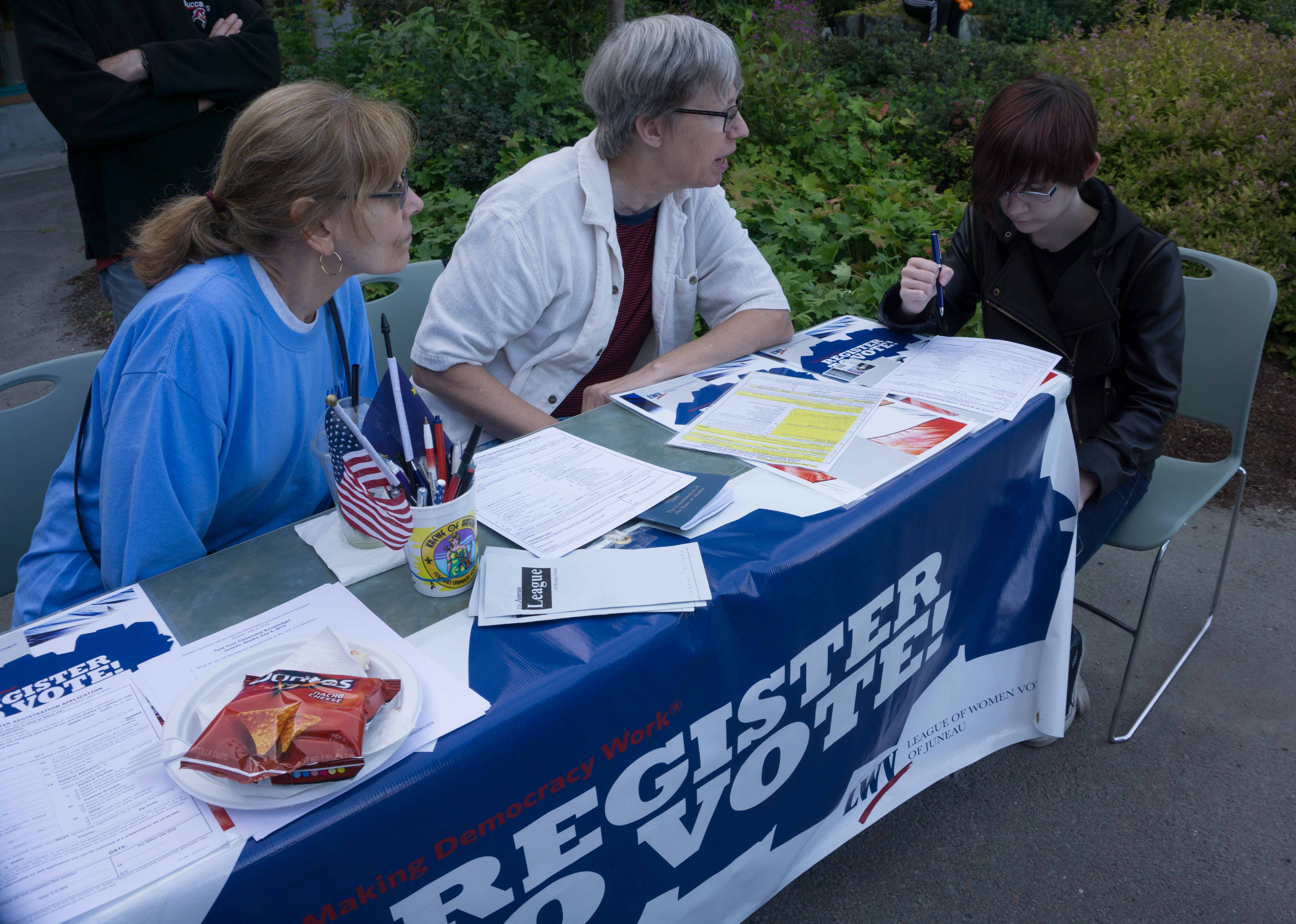
Volunteers help someone register to vote at the Governor's Picnic at the University of Alaska Southeast, Aug. 14, 2015. (Photo by Jeremy Hsieh/KTOO)
(Photo by Elizabeth Jenkins/KTOO)
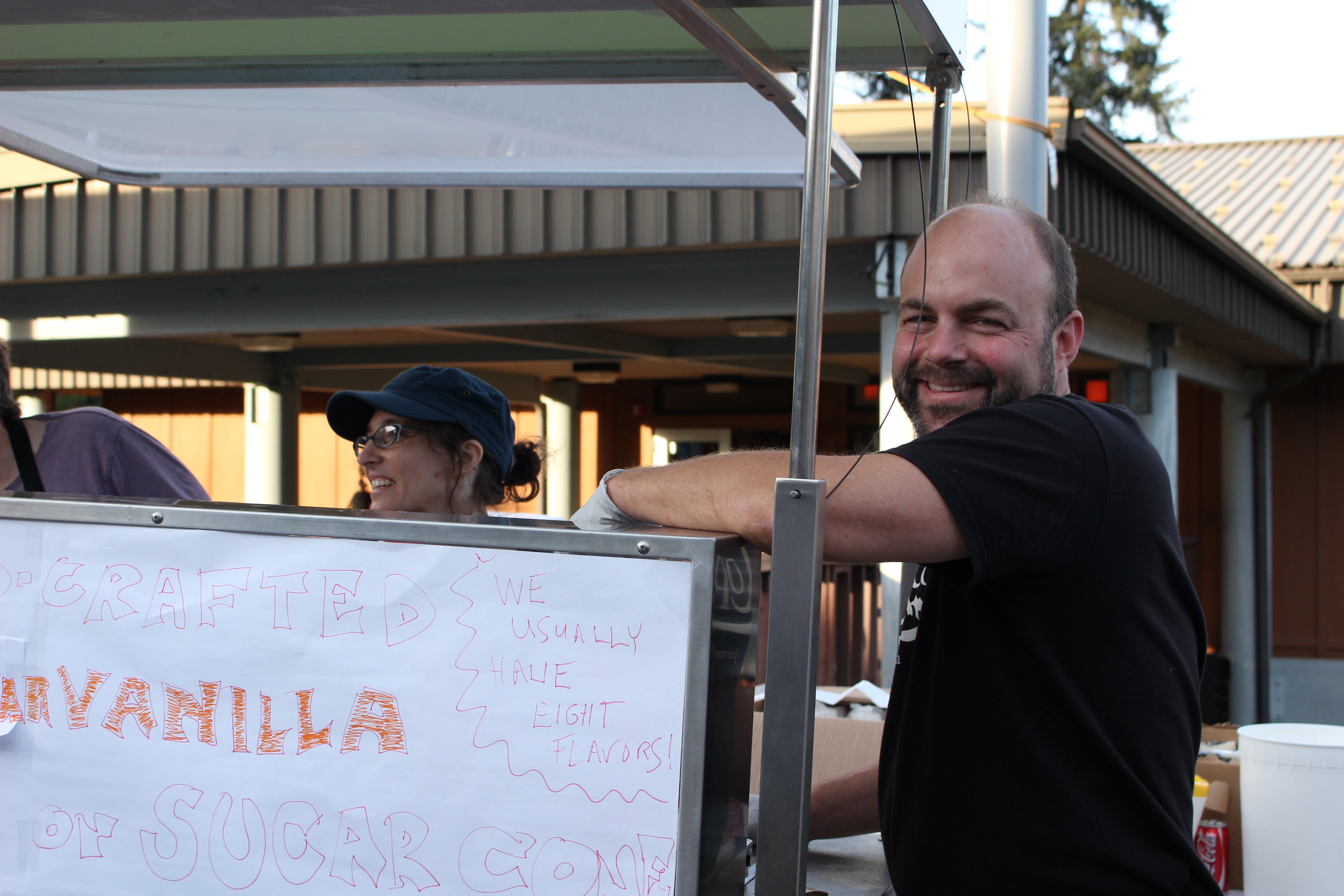
Coppa provided vanilla ice cream for the event. (Photo by Elizabeth Jenkins/KTOO)
Gov. Bill Walker hosted his first Governor’s Picnic in Juneau on Friday at the University of Alaska Southeast. While serving up hot dogs and salmon, I asked picnic-goers what they’d do as governor for the day.
The community lined up on a warm, sunny afternoon to mingle with state officials but also for the free food: hot dogs, salmon, and locally made ice cream. Gov. Walker was dressed for the occasion.
“Well, I’m wearing my cook outfit. My apron. My governor’s picnic apron and it’s the third time I’ve worn this outfit,” he says.
He says it can be tough doing double duty: serving the public fillets of fish and being a politician.
“My problem is this: I like to shake hands and say hello to people and I have to wear a plastic glove and then I have to take it back off, put it back on, take it back on,” Walker says.
Brenda Calkins and her daughter are waiting in line. They’re inching closer to the governor but not sure what they’ll say as he serves them a piece of salmon.
“Yeah, I don’t know if I have anything. … I might have to think up a question in, like two seconds,” Calkins says.
In years past, the governor’s picnic has been held at Sandy Beach. This year, it’s on the UAS campus to highlight education and kids activities.
A fire truck is parked nearby for children to hop aboard. And like the food, there’s a line for that, too. Volunteer firefighter Steven Anderson is making sure everything runs smoothly.
“I’ve been doing this about five years. As much as I can I come out to the community events,” Anderson says.
What would he do if he was governor for the day?
“I don’t know much about politics and I don’t think I could change much for a day. I’d be kickin’ back in the mansion,” he says.
After thinking a few seconds, he says he’d work on increasing the budget for firefighting.
The Thunder Mountain High School football team also helped out at the event.
“Just kind of picking up trash, handing out fliers and at one point we were helping people find a place to park,” says left tackle Josh Quinto.
He has his own ideas about what he’d do if he were governor–more community events.
“I think at most, maybe throw a big party. I’d have different music everyday. Maybe some rock, country occasionally. So random stuff like Fall Out Boy or Nickelback, I guess,” Quinto says. “Definitely not the same food. Maybe something other than salmon, I don’t know like halibut. Fish and chips, those are always good.”
Picnic-goers lounge on a half-moon concrete bench, scraping food off paper plates and watching people play corn hole.
Andualem Fanta is watching the fun. He travels for work with Delta Airlines.
“I am originally from Ethiopia so I migrated to U.S. I lived in different state. But this my first time the governor invited everybody and having a good time,” Fanta says.
What would he do as governor?
“If I’m a governor, today? Serve the people like this. It could be a great opportunity to show you care about the people,” Fanta says.
From everyone, there was a variety of responses from dog racing, building a pipeline and making it permanently sunny in Juneau.
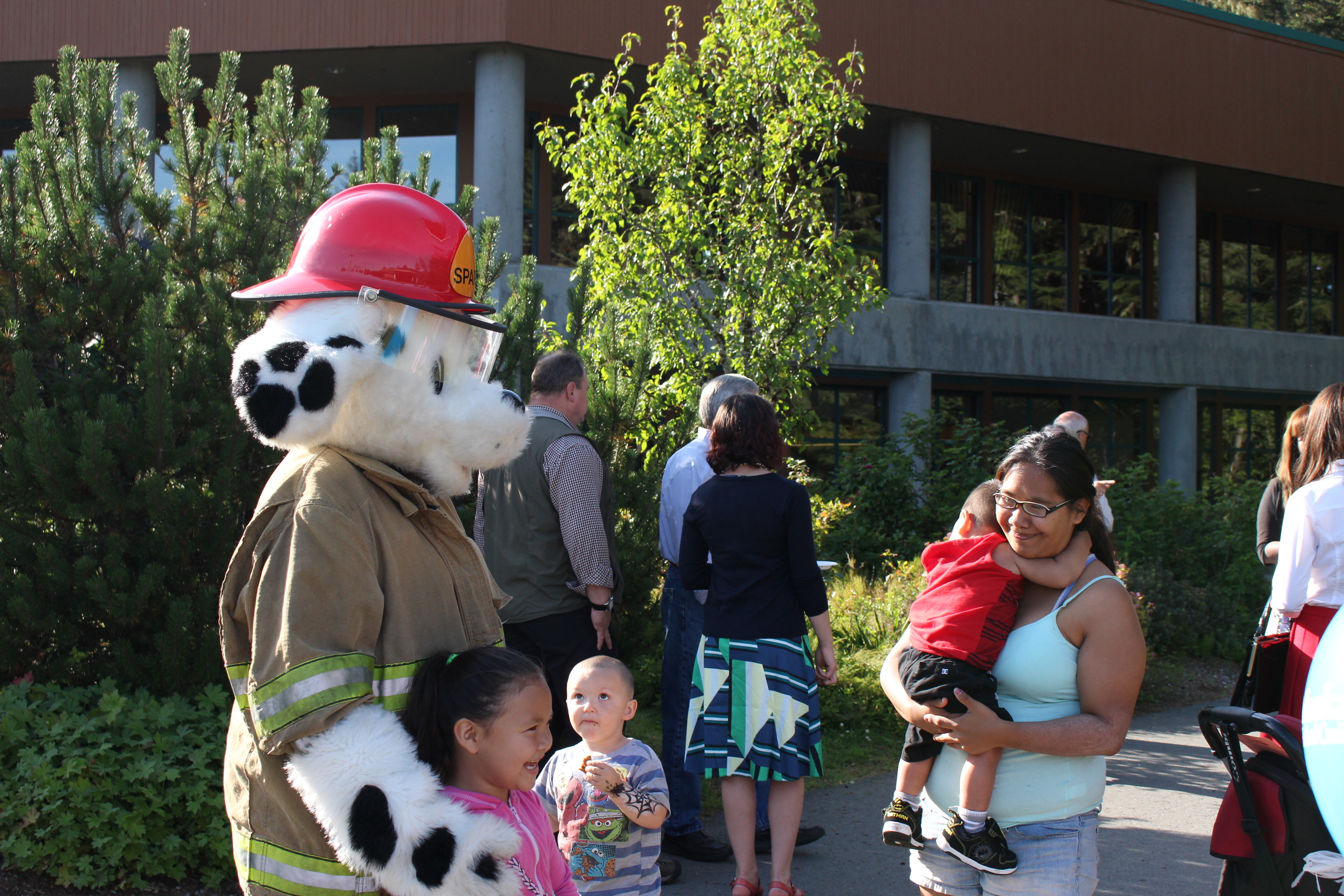
Brenda Calkins and her daughter make it through the end of the food line. Unfortunately, Gov. Walker ducked out for a photo-op with a costumed bear but first lady Donna Walker is still there.
“I didn’t know it was the first lady,” Calkins says with a laugh.
Which is what the Governor’s Picnic is all about. Getting to know your officials.
Monday is the filing deadline for municipal election candidates to run in Juneau and no one has confirmed they’re running for two seats on the Juneau School Board.
The seven-member board governs a district with an $85 million budget, about 4,700 students and nearly 700 employees at more a dozen schools.
As of Friday, school board incumbent Phyllis Carlson says she’s still undecided about running again. Incumbent Destiny Sargeant could not be reached for comment, though she’s previously said she’s undecided.
Andi Story is an uncontested incumbent in a third seat.
Juneau Assembly
Dixie Hood ran a five-day campaign as a write-in candidate against Jerry Nankervis in 2012.
On the Juneau Assembly, the District 2 seat held by Jerry Nankervis is now a three-way race. Nankervis is being challenged by Dixie Hood, a marital and family therapist and active volunteer, and Jason Puckett, a GCI store manager, marshmallow entrepreneur and Marine Corps veteran.
Mayor Merrill Sanford and District 1 Assemblyman Loren Jones remain uncontested.
Candidates must collect at least 25 qualified voters’ signatures. They also must file a letter of intent, a financial disclosure and campaign finance paperwork with the Alaska Public Offices Commission.
Write-in candidates have until Oct. 1 to file their paperwork.
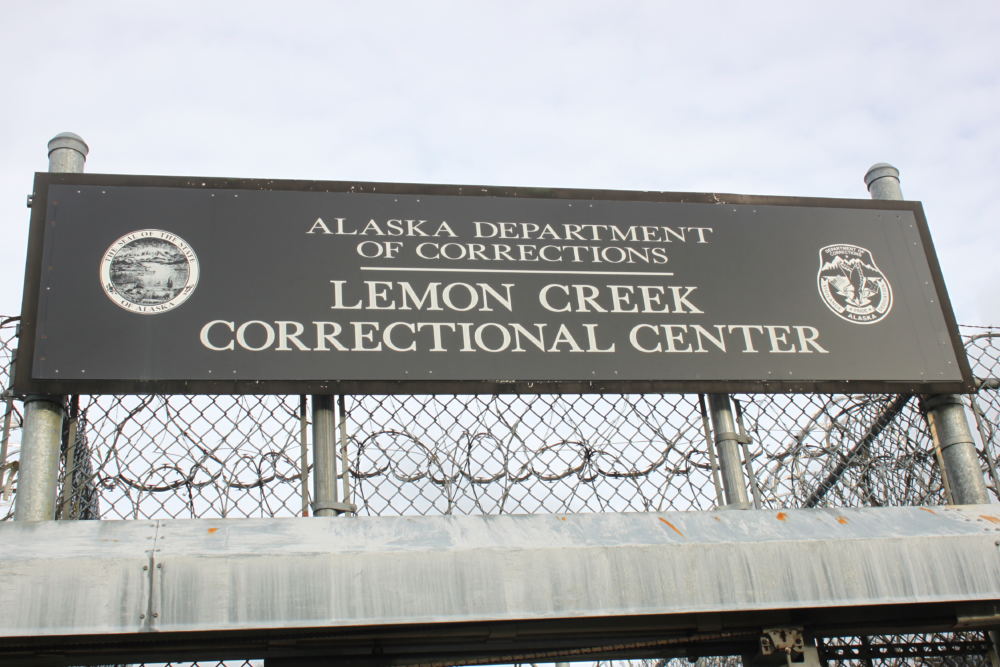
Joseph Murphy died of an apparent heart attack in a Lemon Creek Correctional Center holding cell, according to the Alaska State Troopers online dispatch. It says he was found deceased at 6:30 a.m Aug. 14.
Original story:
A Juneau man died at Lemon Creek Correctional Center Friday morning, about 12 hours after he was brought in. Joseph Murphy, 49, was booked at the prison around 7 p.m. Thursday and was being held on noncriminal charges.
Department of Corrections spokeswoman Sherrie Daigle says Murphy was being kept in a holding cell and was due to be released after 12 hours.
“I don’t know the specifics in this case and I can’t give any specifics in this case, but in general, people are brought in on a 12-hour hold if they are intoxicated and they can’t be on the street, but are combative and can’t go to a detox center. There also could be some type of behavioral health issues that people are brought in on noncriminal holds,” Daigle says.
In the past, Murphy had been found guilty of at least two misdemeanors for driving while intoxicated, according to online court records.
Daigle says Alaska State Troopers are investigating the death and the state medical examiner’s office is conducting an autopsy. She says it could take three to six weeks until a cause of death is known.
Corrections will do its own investigation, which Daigle says takes up to four weeks. She says those results are confidential due to attorney client privilege between the attorney general and Corrections, and they contain medical, security and personnel information.
Close
Update notification options
Subscribe to notifications
Subscribe
Get notifications about news related to the topics you care about. You can unsubscribe anytime.

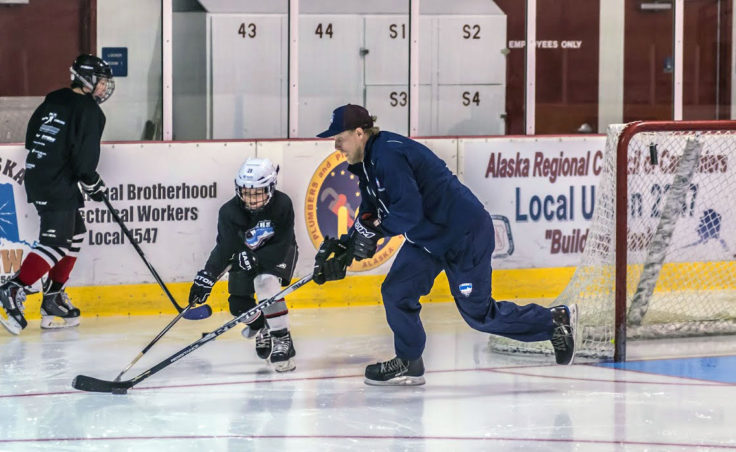 Rocky Mountain Hockey School coach Billy Barto plays keep away from Juneau youth player Busby West. (Photo by Steve Quinn)
 Juneau’s Taylor Bentley pokes the puck past Rocky Mountain Hockey School coach Vladan Chase during a game of keep away to open one of the camp’s sessions at Treadwell Ice Arena. (Photo by Steve Quinn)