Juneau

Should Juneau set a hard limit on how many pot shops can operate?

Carole Triem explains a slide about the supply and demand for marijuana retail stores. Triem, who's educated in economics and public policy, wrote a white paper on the topic. (Photo by Jeremy Hsieh/KTOO)
Carole Triem explains a slide about the supply and demand for marijuana retail stores. Triem, who’s educated in economics and public policy, wrote a white paper on the topic. (Photo by Jeremy Hsieh/KTOO)


Should there be a hard limit on how many retail pot shops can operate in Juneau?

A panel developing Juneau policies governing marijuana businesses wrestled with that question on Thursday.

The city planning department and most of the Juneau Marijuana Committee members said no, don’t set a limit. Let the state’s soon-to-be-written regulations, local zoning restrictions and the free market sort out the number.
(Photo by Jeremy Hsieh/KTOO)
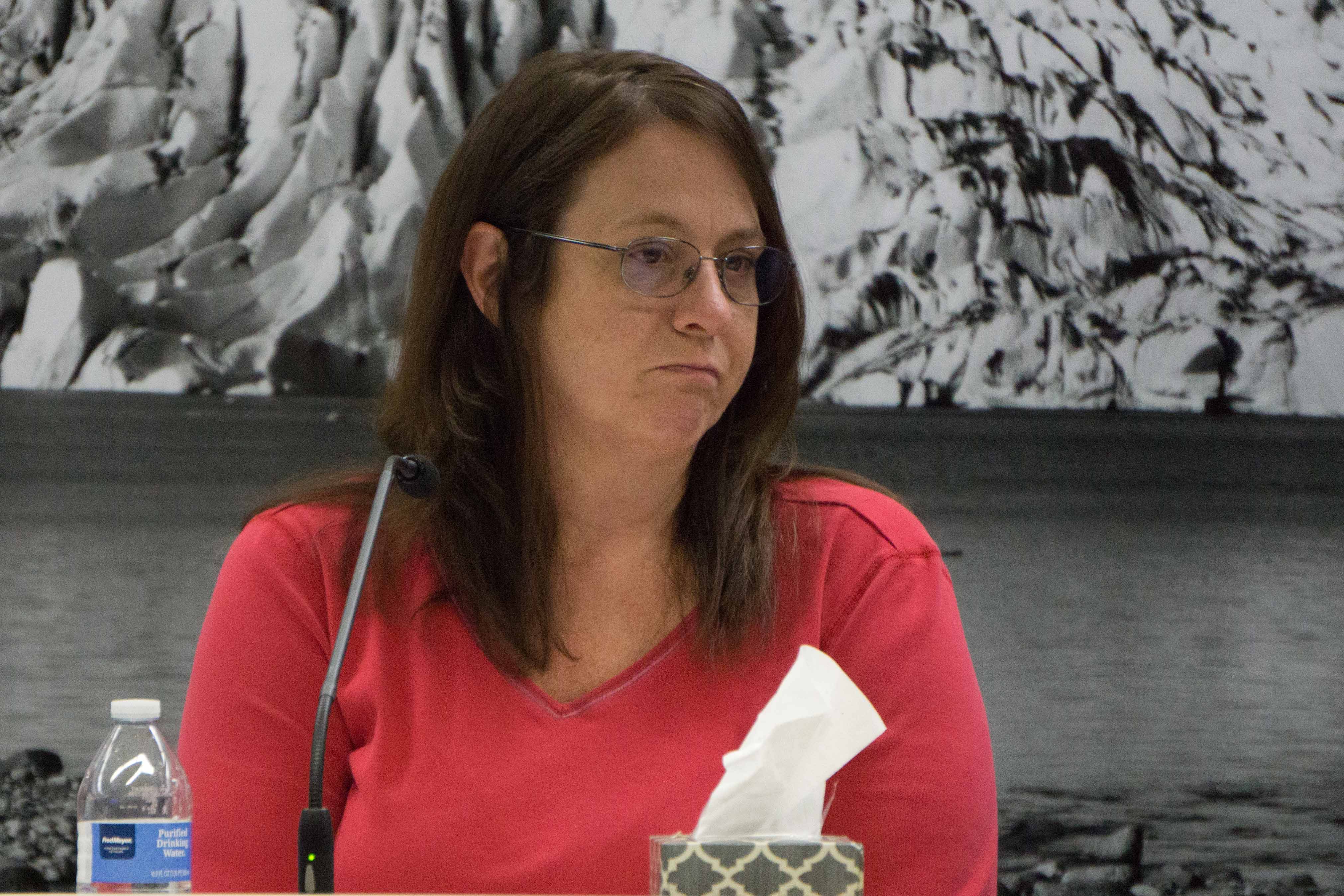
Debbie White

“I think government spends enough time telling business how to be business,” said committee member and Juneau Assemblywoman Debbie White. “And with the licensing fees, the initial investment, the zoning, we’ve built enough road blocks.”

One of the latest road blocks the Alaska Marijuana Control Board is proposing is a 500 foot buffer around schools, recreation and youth centers.

White’s sentiment was echoed by Assemblywoman Maria Gladziszewski, and planning commissioners Mike Satre and Dennis Watson.
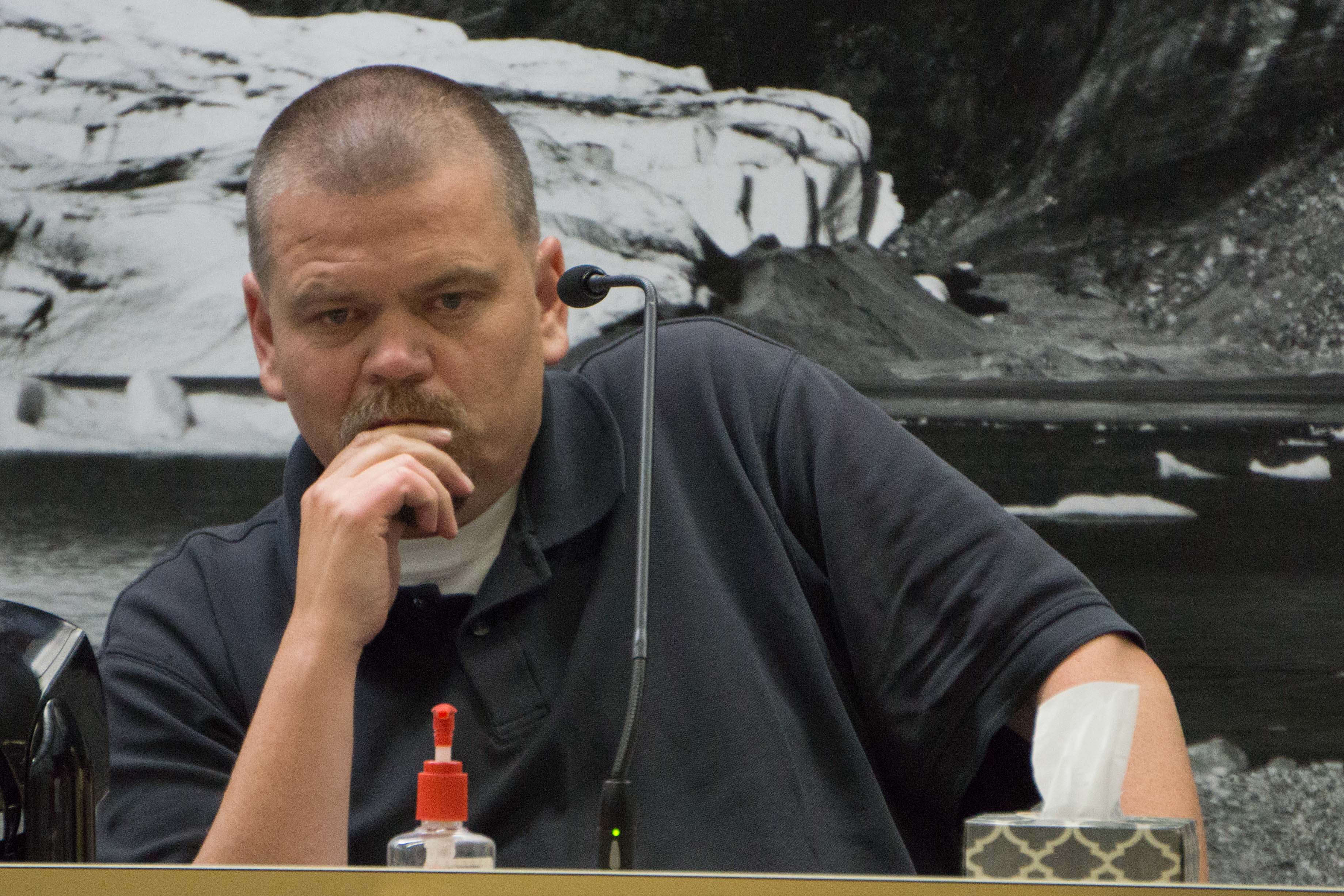
(Photo by Jeremy Hsieh/KTOO)
Mike Satre

“I think trying to put a further cap on that, not letting the free market work may kill this altogether,” Satre said.

“You’re kind of creating an inadvertent monopoly,” Watson said. “I’m just not comfortable with capping private enterprise. I think it’s a mistake.”

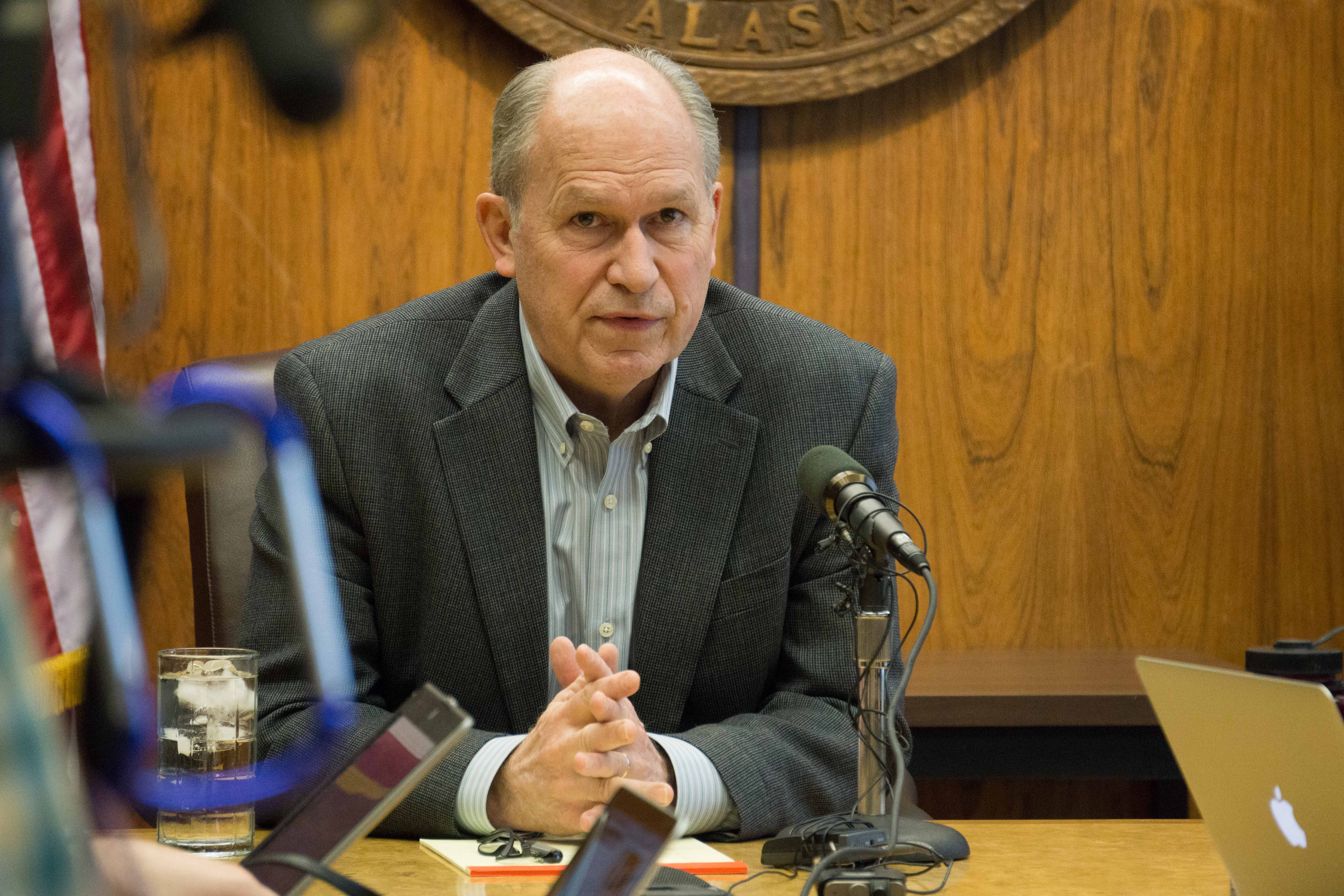
Assemblyman Jesse Kiehl chairs the committee. He was an outspoken supporter of the campaign to legalize marijuana in Alaska, but was in the minority on the retail shop limit question.

“The one thing you can never do is put the genie back in the bottle,” Kiehl said. “If we were to undershoot on a number of licenses and find that demand was not met, that the black market was alive and well, it would be entirely within our power to increase the number of licenses available.

(Photo by Jeremy Hsieh/KTOO)
Jesse Kiehl (Photo by Jeremy Hsieh/KTOO)

“But … once you got somebody with a business running, and they have a premises, and employees and stock on the shelves, extinguishing their license to operate is not just a tough thing to do, it’s kind of a rotten thing to do, to somebody who’s invested blood, sweat and tears — not to mention cash — into it. So I am very reluctant for us to take an unlimited approach to this new industry.”

Kiehl said it’s reasonable to follow the rhetoric of the legalization campaign: regulate pot like alcohol, which means limiting the number of marijuana stores according to population.

Carole Triem, a local who’s educated in economics and public policy, wrote a report for the committee at Kiehl’s request attempting to rationalize a number. Triem crunched data from the census, drug use surveys and commercial marijuana regulators in Colorado and Washington state.

She came up with an estimate for the minimum number retail stores needed to serve Juneau’s marijuana users. By her math, Juneau needs a minimum of six to satisfy legal demand. If there’s fewer than that, the economics push pot sales back to the black market, where tax revenue is lost and pot becomes more accessible to minors.


The marijuana committee didn’t settle whether to limit the number of stores. Several members said they wanted more information or to wait and see more complete regulations from the state marijuana board.

“It will put the City and Borough of Juneau and I think members of the public interested in starting marijuana businesses in a rough spot if we delay all our decisions until we know what the state’s going to do,” Kiehl said. “That said, doesn’t do us a lot of good to make decisions and have them taken away from us, so anyone who would like to cut that Gordian Knot, please bring your knife.”

The state marijuana board has been meeting and writing draft regulations arduously to hit a Nov. 24 deadline. The Assembly’s moratorium on accepting land use applications for commercial marijuana activity expires Oct. 19, which the committee recommended extending.

Correction: An earlier version of this story misspelled Maria Gladziszewski’s last name.
Public comment sought on proposed Capital Transit changes

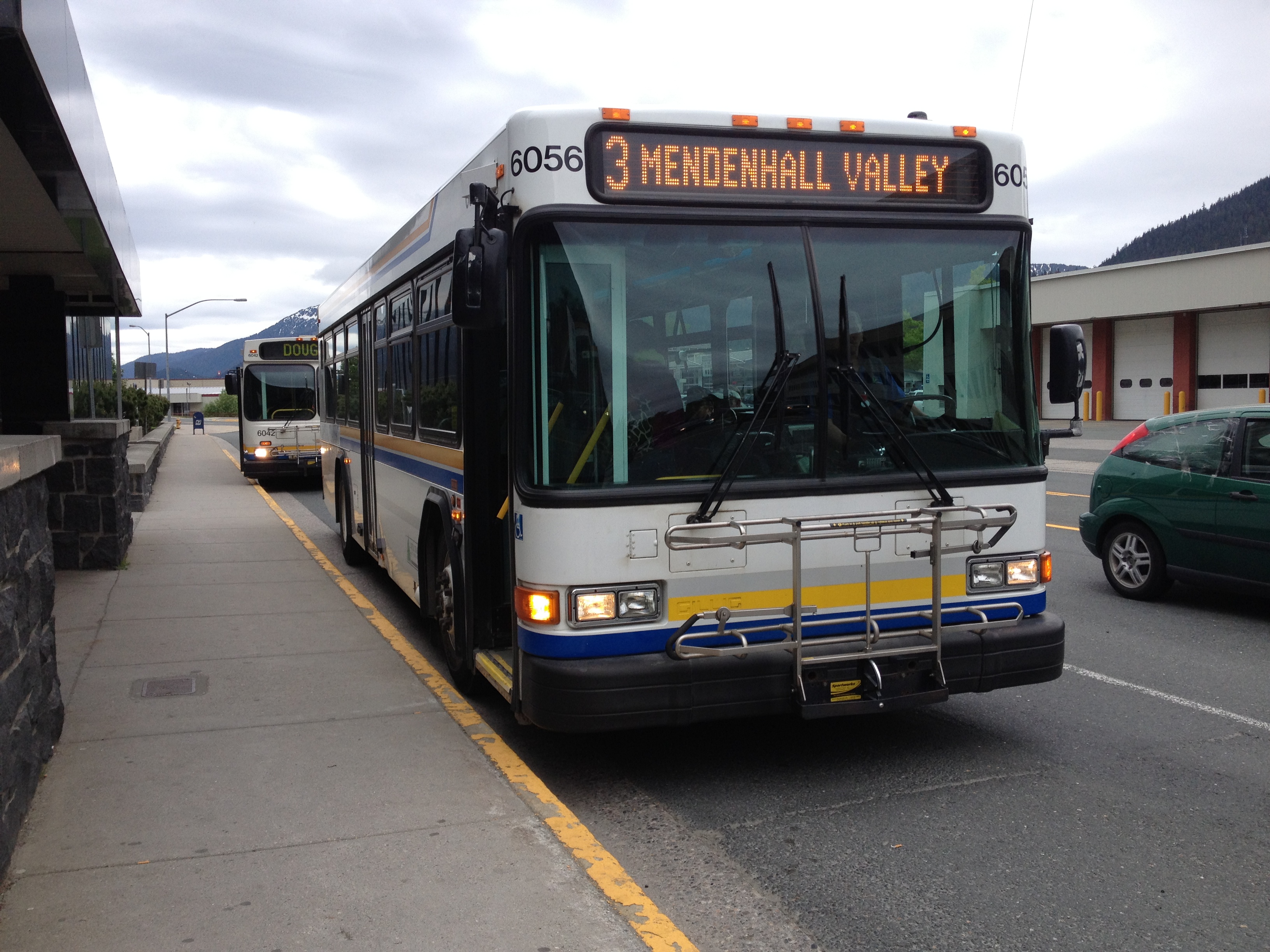
A Capital Transit bus stops at the Federal Building. (Photo by Lisa Phu/KTOO)
Public meetings on proposed changes to Capital Transit routes and schedules:

  • University of Alaska Southeast, Egan Wing, Room 224: Aug. 18, 5-7 p.m.
  • Thunder Mountain High School library: Aug. 19, 7-9 p.m.
  • Dzantik’i Heeni Middle School: Aug. 20, 7-9 p.m.
  • Douglas Library: Aug. 24, 7-8 p.m

The public can weigh in on proposed changes to the city bus routes in a series of meetings starting Tuesday.

New service is proposed
for Riverside Drive, Dimond Park, Mendenhall Mall and Stephen Richards Memorial Drive.

Service will continue to downtown and be reduced to the University of Alaska Southeast. Some service to Davis Avenue in Lemon Creek will go away. Service in Douglas will be shifted from St. Ann’s Avenue to the Treadwell Arena.

When the city proposed route changes last year, about a dozen Capital Transit drivers showed up at a Juneau Assembly committee meeting. They said their voices weren’t heard. They were worried about sacrificing popular stops for new ones. Project manager Paul Beck says the drivers were included on the current changes.

After the public meetings, the proposal will go to the Juneau Planning Commission and the assembly. New routes could start in October.

Update: Juneau city manager retiring at year’s end

Update | 7:43 p.m. Aug. 14

City Manager Kim Kiefer says she’s retiring for personal reasons. She added that it has nothing to do with her evaluation.

Kim Kiefer
Kim Kiefer (Photo courtesy City and Borough of Juneau)

Original post | 10:22 p.m. Aug 13

Juneau City Manager Kim Kiefer is retiring at the end of the year.

Kiefer emailed city employees with the news Thursday. She offered glowing praise for city employees, but didn’t say why she’s retiring. Kiefer could not be reached for comment by deadline.

Just Monday, the Juneau Assembly adopted a performance evaluation of her. Assemblyman Jerry Nankervis made the only objection, but didn’t speak to it because it was a personnel matter. She received a 3 percent raise.

Kiefer was born in Minnesota and moved to Juneau in 1971 as a child. She’s worked for the city in various capacities for 32 years, including running the Zach Gordon Youth Center, managing Juneau Parks and Recreation, and serving as deputy to the last city manager. Kiefer’s been in the city government’s top spot since 2012.

The assembly has yet to address the replacement process. The city manager oversees roughly 700 city employees and a budget of $85 million.

Juneau’s multimillion dollar whale park almost ready for bids

The bidding process for construction of an estimated $11 million seawalk, island and park near the Douglas bridge could begin in the next few weeks–creating a home for a major Juneau landmark.

New York City has the Statue of Liberty. Seattle has the Space Needle.

“A lifesize breaching humpback whale will become iconic to Juneau,” says former mayor Bruce Botelho. He’s the vice president of The Whale Project, a nonprofit dedicated to the completion of the nearly $1.5 million bronze sculpture, designed by Skip Wallen.

Most of the money has been raised through private donors and grants, but the organization is still asking for funds. In 2012, the statue was gifted to the city of Juneau with the understanding it would find a place for it; now it seems it has.

“Oh, it’s exciting. I’ll feel a lot better once it’s actually in place but we’re moving quickly towards that,” Botelho says.

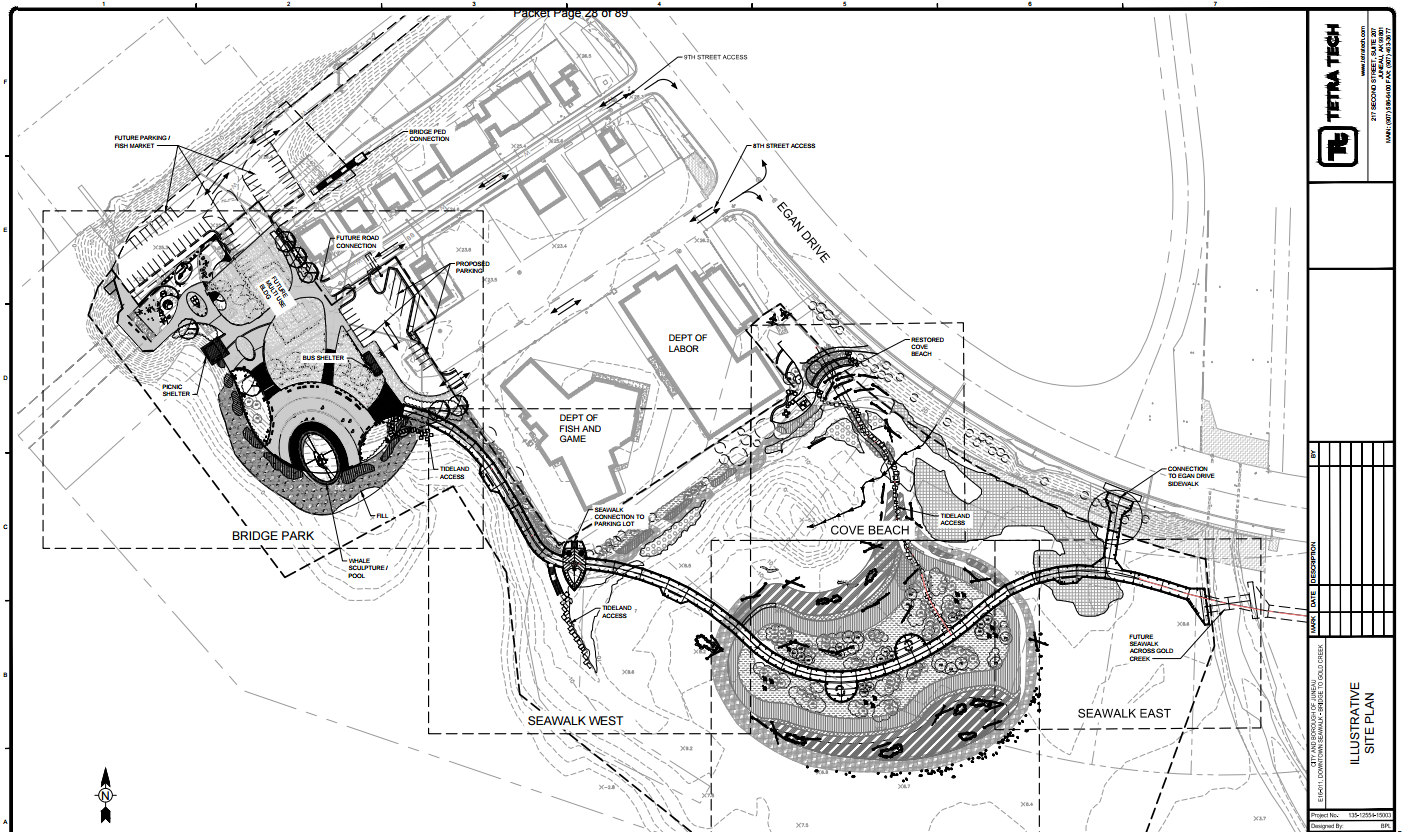
Site plans for the Bridge Park from the Juneau Planning Commission agenda.

The statue will be part of a new waterfront park and seawalk that will eventually connect all the way to the cruise ship docks about a mile away. It will cross over to an artificial island, lush with native plants.

Skye Stekoll, an engineer with the city of Juneau, says the island will mitigate some of the ecological damage done to Gold Creek and its delta. The Army Corps of Engineers has already signed off.

The bronze, life-size whale statue at a workshop. (Photo courtesy City and Borough of Juneau)

“So a habitat island is trying to replace some of the riparian habitat that may have been there in a natural state,” Stekoll says.

In June, the Assembly gave its final approval to move ahead. Cruise ship passenger fees and sales tax will fund the construction. A mixed-use plaza is in the plans and Juneau Docks and Harbors is considered opening a fish market on the other side of the bridge.

After more than a decade of discussion, disagreements about where the park should be built and concerns over funding, the only thing left to do is open the bidding process, which Stekoll says could happen in the next few weeks.

“Yeah, for the most part we are now ready to go.”

Bids then go before the assembly for final approval. Construction could start as early as October and be completed next fall.

Editor’s note: A reference to the Juneau-Douglas Bridge has been corrected. It’s the Douglas Bridge.

LGBT discrimination claims still not valid in Alaska

The Rainbow Flag is a symbol of LGBT pride. (Creative Commons photo by torbakhopper)

The U.S. Equal Employment and Opportunity Commission ruled in late July that sexual orientation discrimination in the workplace is illegal because it is a form of sex discrimination, which is already prohibited.

Some of the most common types of discrimination LGBT people face are in the workplace and in housing. Despite this, Alaska’s statewide and Anchorage anti-discrimination commissions don’t offer protections for gay, lesbian, bisexual or transgender people. The commissions are not legally required to do so, and some activists see that as an injustice.

“Just imagine if you couldn’t call the fire department because you were LGBT. If you are LGBT you should be able to call any state agency and get the same service,” says attorney Caitlin Shortell. She represented the same-sex couples that sued the state for the right to marry. “This is an injustice that needs to be corrected.”

In December, Attorney General Eric Holder announced that the Department of Justice would treat gender identity as protected under Title VII of the Civil Rights Act of 1964.

In early February, the U.S. EEOC Director of Field Programs sent a memo saying that complaints of discrimination based on gender identity should also be accepted under the Civil Rights Act. Federal and state employees already have these workplace protections.

And late last month, the federal commission ruled in a 4-2 vote that sexual orientation discrimination in the workplace was illegal, too.

But the Alaska State Commission for Human Rights and the Anchorage Equal Rights Commission refer LGBT discrimination complainants to a toll free number for the federal EEOC.

When I called the toll-free number, I was directed through nearly three minutes of call options. To speak with a federal EEOC employee, on one particular day the wait was approximately 60 minutes.

Both the state and Anchorage commissions have work-sharing agreements with the EEOC and receive a portion of their budget from the federal agency. However, the funding does not require commissions to enforce civil rights laws as the EEOC interprets them.

“There’s a basis and a duty to already be taking these complaints and the commission should be doing that, without even amending our state and municipal human rights law,” Shortell said.

In initial interview requests for this story, the commission’s directors — Paula Haley for the state and Pamela Basler for Anchorage — both refused to be recorded and would not answer questions directly. Neither director responded to subsequent interview requests.

Gov. Bill Walker on April 18. 2015. (Photo by Jeremy Hsieh/KTOO)
Gov. Bill Walker on April 18, 2015. (Photo by Jeremy Hsieh/KTOO)

Gov. Bill Walker says he “[doesn’t] like any form of discrimination, at all.”

But disliking discrimination doesn’t mean he’s willing to change up the state commission members and director, who serve at his pleasure.

“At this point we don’t intend to address this issue. That shouldn’t be a surprise,” Walker said.

Walker says his administration will not introduce legislation on this issue or any other social issue. He says he’s not reviewed the priorities of the state’s human rights commissioners or the commission’s executive director.

“I don’t want to be judgmental about what the Human Rights Commission is or isn’t doing, but I will say that we are working on that issue ourselves,” Walker said. “It’s come up in the past, the issue of them having some venue to report, record circumstances where they feel they have been discriminated against.”

In an earlier written statement the governor said he’d leave it to the commission to decide whether to accept LGBT discrimination complaints, or complaints from any other class.

In other words, the state commission is actively choosing to not provide coverage.

Only two of the seven board members on the state Human Rights Commission could be contacted. Although neither would agree to be recorded, one stated that discussion surrounding LGBT discrimination protections has only come up a few times in the past few years.

The federal EEOC canceled an interview and declined to reschedule. In a written statement, an agency spokeswoman says neither the state or Anchorage commissions are required to accept claims that they don’t have jurisdiction over. And jurisdiction is based on their own assessment of the law, independent of the EEOC’s positions.

In an interview with KYUK’s Elllie Coggins in May, state commission director Paula Haley didn’t include LGBT people in her organization’s duties.

“So we have a very broad area of coverage and we protect people from discrimination based on race, sex, disability, age, marital status, so there’s a lot of coverage. Pretty much everyone in Alaska is protected by our laws,” Haley said.

Later in the interview, Haley said most of the complaints the agency receives deal with employment discrimination—a type of discrimination transgender people are most at risk for, according to a 2012 Anchorage survey on LGBT issues.

In a previous story for KTOO, Paula Haley said she’s only seen a handful of cases over the years.

“Very few people contact us because they’re concerned about discrimination based on lesbian, gay, transgender, queer issues, because they know we don’t cover those. So they don’t reach out to us because we don’t have the ability to help them.”

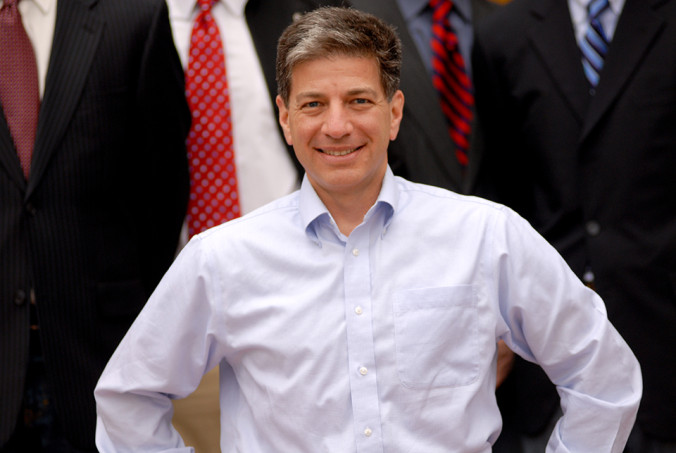
Anchorage mayor Ethan Berkowitz. (Photo from ethanforanchorage.com)

In the Human Rights Campaign’s 100-point 2014 Municipal Equality Index, Anchorage scored the highest at 35, Juneau at 33 and Fairbanks the lowest at 24.

Anchorage Mayor Ethan Berkowitz says he, “everyone who lives in Anchorage has equal protection under the law.”

But later in the interview, Berkowitz said he was unsure of how the Anchorage commission currently handles these complaints and didn’t mention any specific plans to address the issue.

Juneau man arrested in connection with out-the-road burglaries

A 25-year-old Juneau man has been arrested and charged with multiple felonies for stealing firearms and other goods tied to out-the-road burglaries.

Tuesday night, a burglary victim reported seeing some of her stuff at a mobile home near mile 26 of Glacier Highway, a couple of miles away from her residence. Police checked out the motor home, detained resident Albert Martin Mazon and began working the scene.

“They’re looking at stuff and these things, property crimes, can take a long time to work, even at the scene,” said Juneau police Lt. Kris Sell.

Police arrested Mazon at about 3 a.m.

A firefighter who reported tools and equipment stolen from his truck around mile 15 in mid-July also identified some of his stolen goods.

“There are burglaries at other places, and at least one car rifling, and now we’re also looking at a potential vehicle theft,” Sell said. “So those are different events, though they’re concentrated out the road.”

Online court records show Mazon was arraigned Wednesday on a misdemeanor larceny charge and five felony charges:

  • three for stolen firearms or explosives, likely for three stolen handguns police have been seeking,
  • a burglary,
  • and a theft for something valued between $750 and $25,000.

Court records also show Mazon was cited for driving with an invalid license on Tuesday.

Site notifications
Update notification options
Subscribe to notifications