Western

A Western Alaska village is installing wind turbines that will power half the community

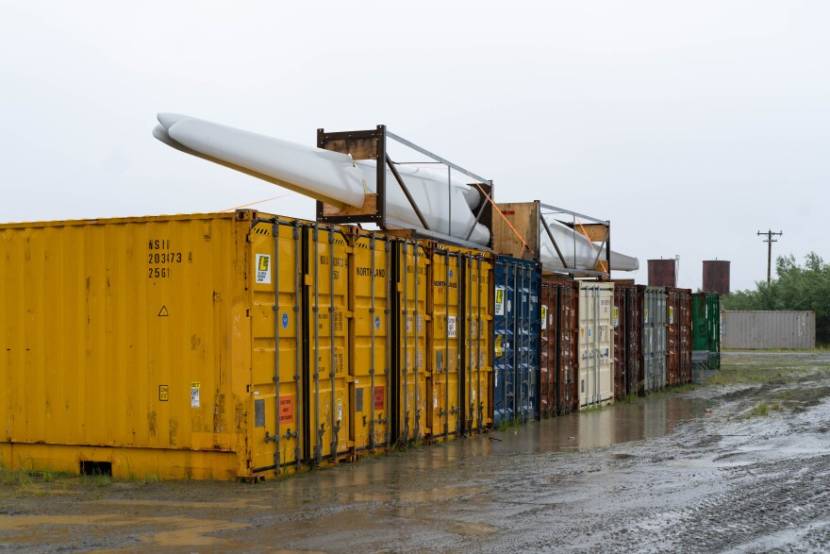
Blades for wind turbines sit on shipping containers that hold other supplies for the project. (Katie Basile/KYUK)

Many communities in rural Alaska rely on diesel generators to keep the lights on. Kwethluk, a Yukon-Kuskokwim Delta village with about 800 residents, will be burning much less diesel next year by installing four wind turbines.

Kwethluk’s wind turbines will power half of the community’s electricity needs. By turning to wind energy, Kwethluk will burn 50% less diesel and reduce residents’ electric bills by up to half.

“We’re getting everything ready for the next generation,” said George Guy, general manager of Kwethluk Inc., which manages the community’s electrical utility. “And by the time we’re gone, they’ll have a well established infrastructure to keep the lights on in the 21st century.”

Kwethluk had planned to install the wind turbines a year ago. But beginning in October 2020, Guy said that workers for the project were unable to enter the community due to COVID-19 restrictions.

“Everything was shut down and had a very big impact on our village,” Guy said.

Even though there are still active cases of COVID-19 in the community, the project is back underway.

Kwethluk Inc. is partnering with Nuvista Light and Energy Cooperative to build and operate its wind turbines. Nuvista is a non-profit organization that helps Western Alaska communities move to renewable energy sources. Nuvista Executive Director Natalie Hanson grew up in Bethel, and she was in Kwethluk in September to oversee the start of construction.

“You see big wind turbine blades and they’re just kind of on top of some shipping conexes, parts and pieces of the foundation are there,” Hanson described what the project looks like at this point.

Once upright, Kwethluk’s four wind turbines will stand over 150 feet tall, where there’s plenty of wind to turn the giant blades. Hanson expects them to start providing power to the community early next year, and they are expected to last 20-25 years. Hanson estimates that the wind turbines will replace 50,000 gallons of diesel fuel burned by Kwethluk’s generators each year.

“That’s roughly half of Kwethluk’s load. They’re not going to be 100% renewable, but it will cover half of their load,” Hanson said.

The impact on the environment will be equivalent to taking 122 cars off the road according to the Environmental Protection Agency’s estimates on average car emissions.

Residents will be saving a lot of money too. Households in Kwethluk pay on average around $250 per month for electricity. Kwethluk utility manager George Guy said that many families struggle to pay that bill. He said that by burning less diesel, Kwethluk’s wind turbines could save residents between 30% and 50% on their electricity bill.

Despite these benefits to wind turbines, it’s difficult for communities to build them. Nuvista’s Hanson said that the reason why Western Alaska, an area known to be windy, doesn’t have more wind turbines is because of challenges in obtaining funding.

“It makes it nearly impossible,” Hanson said.

The Kwethluk wind turbine project cost $6.5 million. Hanson said that it took Nuvista years to cobble together grants from three separate agencies: the State of Alaska, the U.S. Department of Energy, and the U.S. Department of Agriculture. Some grants required hundreds of thousands of dollars in matching funds.

The project has overcome those challenges, and Kwethluk’s wind turbines are scheduled to begin turning early next year. Later, Hanson said that Nuvista plans to add solar panels in Kwethluk, which she says make sense, even with Western Alaska’s cloudy weather.

“Solar is absolutely viable. The price of solar has come down so substantially too in the last five years or so,” Hanson said.

Hanson said that solar panels are much cheaper to add than wind turbines, and they’re another way to make communities more sustainable and resilient. If any community wants assistance with a renewable energy project, she said that they can reach out to Nuvista.
Canadian company explores potential gold mine near Donlin

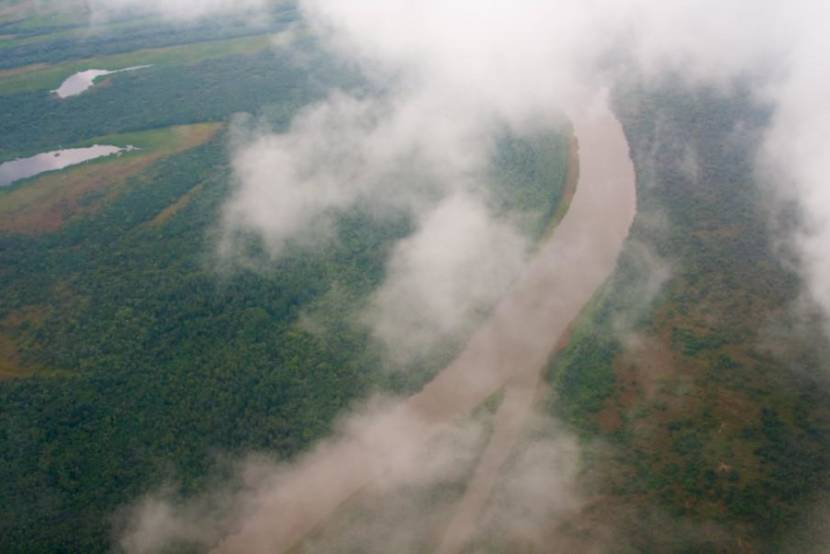
Site of the proposed Donlin Gold mine. (KYUK)

A Canadian mining company is exploring a potential gold mine in Western Alaska, just north of the Donlin Gold project. The company says that a mine actually being developed there is far from guaranteed.

The mine project is called “Flat Gold.” It consists of 92,000 acres of land located between Holy Cross and McGrath, just 25 miles north of the Donlin Gold project.

Tectonic Metals is the company that will be exploring Flat for gold. CEO and President Tony Reda said that there are key differences between Flat and Donlin.

“We’re years, decades behind where Donlin is. We don’t even know if Flat is going to be a mine,” Reda said.

But if Flat does become a mine, Reda said that it could benefit from being so close to Donlin.

“We’re not hanging our hat on Donlin moving forward, but obviously, given the scale and the magnitude of that project, I would envision not just Flat, but the entire area benefiting from improved infrastructure, roads, power being brought in.” Reda said.

Flat could also benefit from a gas pipeline, which in August, Donlin got approval from the state to build. The pipeline would stretch from Cook Inlet to Crooked Creek at the Kuskokwim River headwaters. Several tribes in the Y-K Delta are challenging the state’s approval in court.

Doyon, Ltd., a regional Alaska Native Corporation, owns the land where the Flat Gold project is located. Doyon’s CEO and President, Aaron Schutt, said that despite Donlin and Flat being so close together, they would have different potential environmental impacts. While Donlin is in the Kuskokwim River watershed, Flat is not. Instead, Schutt said that water in Flat flows into the Iditarod, Innoko, and Yukon Rivers.

Any potential partnership between Flat and Donlin would be years or decades into the future. For now, Flat is in an exploration phase as Tectonic determines if enough gold exists to build a mine there.

Reda said that this process can take a very long time.

“On average, the lifecycle of a project going from, say, discovery into production is 20 years,” Reda said.

Tectonic was founded in 2017, and is based in Vancouver, Canada. In its short history, Tectonic has explored seven sites for gold. None have become mines yet.

“In our industry, the norm is that most of these projects do not make it,” Reda said.

But there is evidence that suggests Flat contains gold. According to Tectonic, the precious metal was first discovered there in 1908. After which, Tectonic says an estimated 1.4 million ounces of gold were extracted through placer mining. Placer mining separates gold from sand or gravel rather than drilling into rock.

In the next few weeks, Reda said that Tectonic will send geologists to sample and analyze the rock surface in various areas of Flat. If those samples prove promising, he said that the company could move on to drilling in the coming years. Then, the project could employ dozens and up to over a hundred people. Reda said that many would be local workers.

“We intentionally incorporated local hiring preferences, Doyon organizations, local villages,” Reda said.

The land-owner for the project, Doyon, does not stand to benefit much financially from this deal unless enough gold is discovered at Flat for a mine to be built. At that point Doyon gets royalties on any gold that is extracted. Doyon’s Schutt said that Flat may never get to that point.

“In rural Alaska, you have to discover quite a sizable resource, whether that’s gold or any other mineral, in order for it to even potentially become a mine,” Schutt said.

Schutt said that by the end of this deal, Doyon would at least learn more about its lands.

St. Paul Island has recorded just 2 COVID cases since the pandemic started

St. Paul is a remote island about 250 miles north of the Aleutian Islands, and almost 1,000 miles from Anchorage. (Hope McKenney/KUCB)

Ninety-one percent of eligible St. Paul residents are fully vaccinated against COVID-19, according to city officials.

That — along with strict protective measures — has helped keep the coronavirus largely out of the small Pribilof Island community. St. Paul has recorded just two COVID-19 cases since the start of the pandemic, said City Manager Phil Zavadil. The first was in April and the second in August.

“We know these protective measures work and our case numbers are a result of that,” he said.

Zavadil said St. Paul’s remoteness and limited health care options, plus hospitals reaching capacity in other parts of the state, have driven the island’s strict COVID-19 precautions. St. Paul has just one clinic with two mid-level providers and a health aide, but no doctor. It has a ventilator, but doesn’t have a health care employee trained to use it. And, it’s a thousand-mile medevac flight to Anchorage.

“I think a number of situations — forces outside of our control — kind of drive the decisions to keep our protective measures in place,” Zavadil said. “We’re being proactive and not reactive to the situation.”

St. Paul’s vaccination rate is higher than many communities in Alaska. Statewide, just 58% of Alaskans age 12 and older are fully vaccinated.

Zavadil said the majority of the island’s 371 residents also support local COVID-19 measures. They include having to show proof of a negative COVID-19 test before traveling to the small community, a mandatory quarantine upon arrival — even for vaccinated people — and required masking in indoor public spaces.

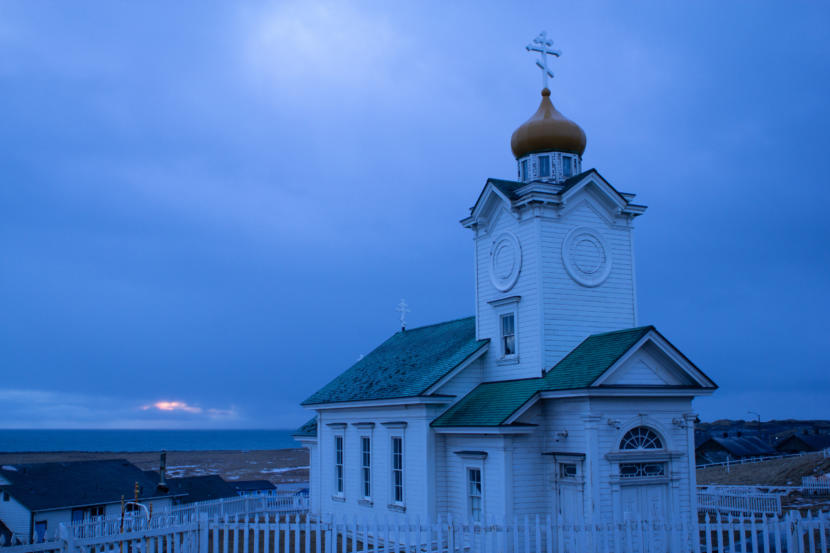
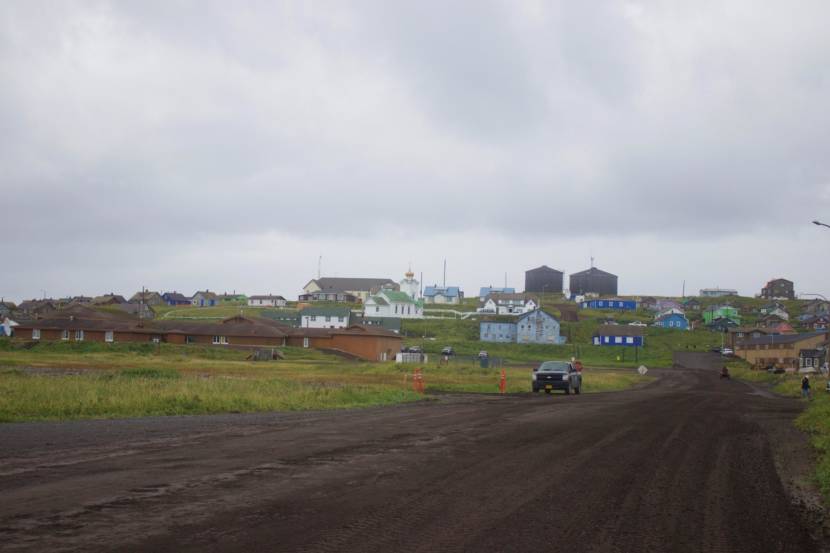
The Russian Orthodox church on St. Paul island, a legacy of the Russian colonization of the Pribilofs.
The Russian Orthodox church on St. Paul Island, a legacy of the Russian colonization of the Pribilofs. (Nat Herz/Alaska’s Energy Desk)

The last time the community relaxed those rules, a fully-vaccinated traveler tested positive. Zavadil said that person had 44 close contacts. It prompted the city to pass a two-week “hunker down” order in August and to delay the start of the school year.

“We made it through without any additional cases,” he said. “I think we got lucky. It could have been worse.”

Zavadil said implementing such strict precautionary measures has taken a toll on city workers. It’s added an extra burden to have staff review travel forms and workforce protection orders. But, he said, it’s been worth it to protect the community.

It has also helped keep the island’s 50 students learning in-person, which is critical because the internet is so slow. The school shut its doors last March with the onset of the pandemic, but students returned to their classrooms in the fall of 2020.

“The remote learning didn’t work for us, just because our internet service at home is poor, at best,” Zavadil said. “So (teachers) actually put together packets and hand-delivered those to each household when there wasn’t in-person learning.”

His wish, he said, is that other communities would take the pandemic more seriously. He also called out Anchorage Mayor Dave Bronson to recognize that Anchorage is a state hub and that many people from communities like St. Paul depend on traveling there for medical reasons or to get goods and supplies.

“The Assembly and the mayor need to take it more seriously and put protective measures in place because what they do affects us,” he said. “I think keeping our protective measures in place here is a result of the lack of mitigation and protective measures in the hub communities like Anchorage.”

St. Paul’s current emergency ordinance, which includes the mask mandate and other precautions, is set to expire in a month.

The quality of care is falling in the Yukon-Kuskokwim Delta as cases surge statewide

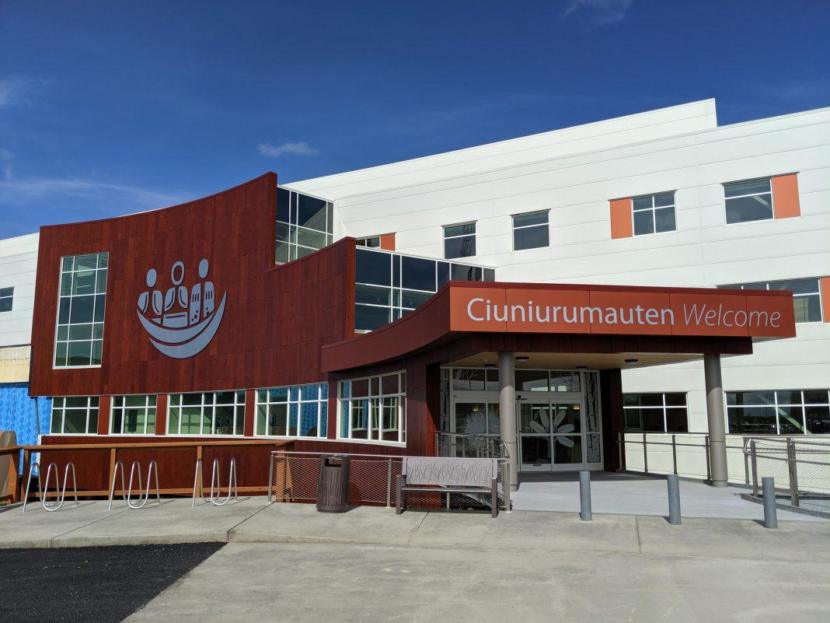
The Yukon-Kuskokwim Health Corp. in Bethel. (Greg Kim/KYUK)

Alaska is reporting the highest COVID-19 case rate per capita of any state, according to the New York Times tracker. The statewide surge in cases is straining resources and staff, causing patients to receive a lower quality of care than before the surge. Here’s what that looks like at the Yukon-Kuskokwim Health Corporation hospital.

Dr. Ellen Hodges is Chief of Medical Staff at YKHC. She’s been urging people to avoid riding ATV’s or bikes — or taking any physical risks. The concern is that if someone gets injured, medical care might not be available to them.

Recently, Hodges got a call that a young person had a rollover ATV accident and was coming into the YKHC emergency department.

“My heart just sunk, because I knew that if she was seriously injured and required intensive level care, it might be really hard to get her that care right now,” Hodges said during Alaska Public Media’s statewide radio show Talk of Alaska on Sept. 21.

The patient did need intensive care and was medevaced to another hospital that could provide it, but those beds are becoming harder to find and the waits for them are getting longer.

So far, Hodges said, YKHC has been able to medevac out every patient that has needed advanced care. YKHC, like many rural Alaska hospitals, does not have an intensive care unit. Hodges explained the process they go through when a critically sick or injured patient enters the hospital.

“They start calling every single hospital in the state that has an intensive care unit bed until someone can accept the patient,” Hodges said.

A process that once took minutes now takes hours.

“In the meantime, the patients are in our emergency department, which is taking excellent care of them, but not in a specially equipped intensive care unit for the care that these patients need,” Hodges said.

Meanwhile, a nursing shortage at the hospital is forcing nurses to care for more patients than usual, which means that patients are receiving less care from them. This nursing shortage exists across the state and is growing worse as more providers quit or take leave.

“It causes such a stress on our staff that they can’t provide the absolute best care, because that’s what everyone wants to do. But it’s just not available right now and it’s discouraging,” Hodges said.

Most of the intensive care patients in the Yukon-Kuskokwim Delta do not have COVID-19. Hodges said that more often they have other critical conditions like a stroke, accident or heart attack.

But the state’s critical care beds are increasingly filled with COVID-19 patients, most of whom are unvaccinated. At the state’s largest hospital, Providence Alaska Medical Center, half the intensive care and intermediate care beds are filled with COVID-19 patients.

“People are very, very ill, and requiring intense care, which requires a lot of staffing and a lot of attention, and that is where we’re operating in crisis,” Dr. Kristen Solana Walkinshaw, Chief of Medical Staff at Providence, said during Talk of Alaska.

Crisis care means that resources are so limited that health care providers are deciding who gets care, if at all. The patients who receive care first are those who providers consider most likely to recover.

“We should not be here. That is not something that we should accept,” said Jared Kosin, CEO and president of the Alaska State Hospital and Nursing Home Association, who also spoke on Talk of Alaska.

He said that the whole situation is avoidable if eligible people get vaccinated against COVID-19 and wear a mask.

Pandemic slows relocation of rapidly eroding village

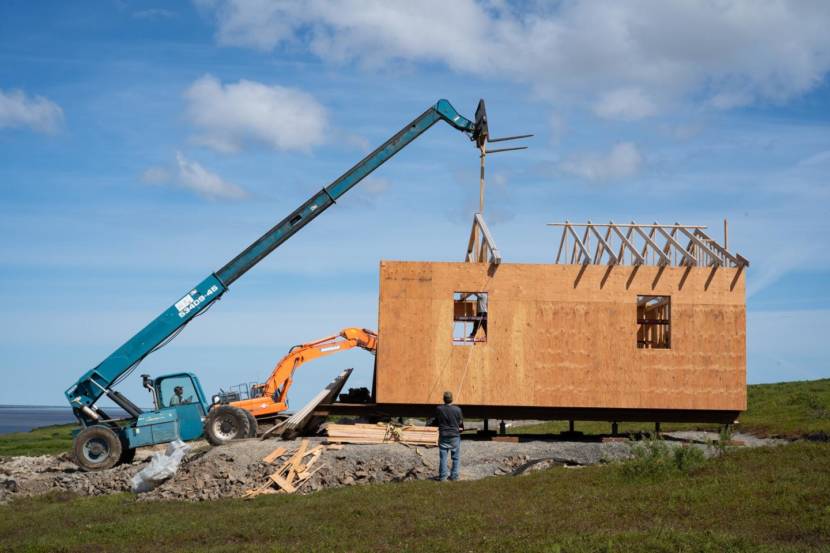
Many of the men and women working construction in Mertarvik this summer are from Newtok or nearby villages. Keeping the crew local is one way the Newtok Village Council is saving money on home construction. A roof truss is placed on a home in Mertarvik on July 14, 2020. (Katie Basile/KYUK)

With Newtok continuing to erode at alarming rates, the urgency to move grows by the day. But construction in Mertarvik, the new village that will replace the eroding one, has been slow the past two summers. COVID-19 is a big reason why.

Nine homes in Mertarvik remain unfinished and unoccupied since they were started last summer. Nobody has moved from Newtok to Mertarvik since 2019, when about a third of the community’s approximately 350 residents migrated over.

Newtok Acting Tribal Administrator Phillip Carl explained that part of the reason for last year’s slow progress was the pandemic.

“We couldn’t get any cabinets because of this COVID thing,” Carl said.

Many manufacturers for cabinets, stoves, and other household items had either shut down or drastically cut production due to the pandemic. Patrick LeMay, who is leading the building effort in Mertarvik, said that those material shortages have continued into this year.

“We got 48 lights that are trapped somewhere in Tennessee floods, to finish the lighting. There’s a shortage of fire extinguishers in the nation,” LeMay said. “The supply chain has been a disaster.”

But the materials shortage is just one way that COVID-19 has slowed construction in Mertarvik. LeMay said that the other reason is the virus itself.

“Three of my guys went home for the weekend, and they all got together on a Friday night just to relax. And they all called me on Monday and said ‘we all have COVID,’” LeMay said.

Many of the workers building homes in Mertarvik are Newtok residents. LeMay said that three local workers from Newtok were infected with the virus in August. Then, nearly all the remaining laborers chose to stop working due to concern over a COVID-19 outbreak in the community.

“They were just seeing so much COVID going around they all just decided to go home, stop work until they can get tested,” LeMay said.

The outbreak was the biggest Newtok had experienced since the pandemic began. Thirty-two Newtok residents tested positive for COVID-19 in August; Newtok had only seen a few cases before that. The community’s vaccination rates are lower than the regional average. About 42% of Newtok’s entire population is vaccinated, compared to about 50% for the entire Y-K Delta.

Carl, the acting tribal administrator, said that he doesn’t know why people in Newtok aren’t getting vaccinated. He said that he encourages people on VHF to get the shot, but he himself hasn’t received one.

“Cause I might get sick or something,” Carl said.

Side effects from the COVID-19 vaccine can include tiredness, headache, chills, and fever. However, the Centers for Disease Control and Prevention says that these should go away within a few days and that serious side effects are extremely unlikely. People are more likely to get seriously sick if they’re unvaccinated and exposed to COVID-19. A recent CDC study showed that unvaccinated people are over 29 times more likely to be hospitalized with COVID-19 than vaccinated people.

The decline in construction in Mertarvik since 2019 isn’t just because of COVID-19, though. The project’s funding has also declined. In 2019, Newtok was flush with cash, infused by $15 million in federal funding. And while Newtok has continued to receive smaller grants since then, large grants of more than $1 million are rare. The entire cost of relocation has been estimated at over $100 million.

While construction of the new village has slowed, the need to move there hasn’t. Carl said that Newtok lost over 100 feet of its coast since April.

“When spring came, we started eroding after it warmed up,” Carl said. “After the storm, we lost more.”

Carl said that the community demolished several teacher housing units that were near the water’s edge. On the other side of the river in Mertarvik, the community is finishing up a new duplex for teachers. It’s also finishing the nine homes that were started last year, and AVCP Regional Housing Authority is adding two more.

While not as fast as it would like, Newtok is making progress towards a new future in its new home.

State ICU call center could ease rural health care gap, Yukon-Kuskokwim health officials say

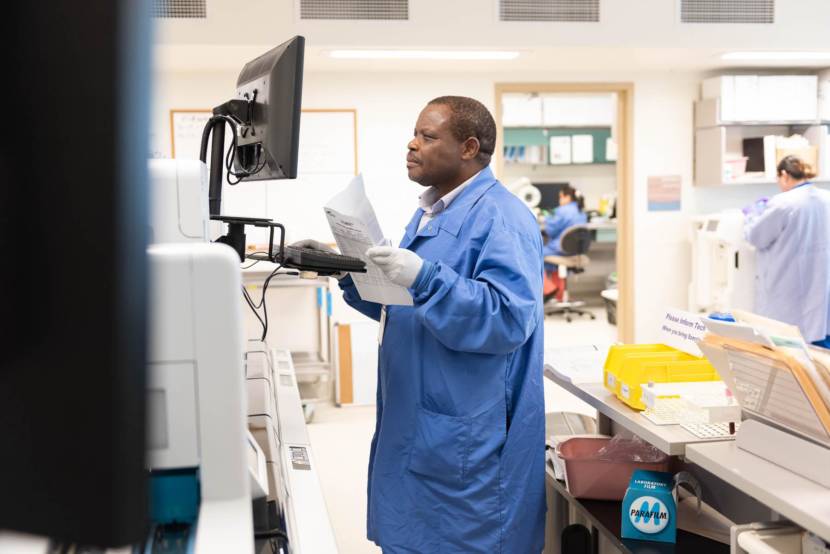
When a critical care patient arrives in the Bethel hospital, an attending physician can spend hours reaching out to other hospitals in the state to secure an ICU bed. (Katie Basile/KYUK)

The Yukon-Kuskokwim Health Corporation is urging the Alaska Department of Health and Social Services to change how hospitals connect patients to intensive care beds across Alaska.

YKHC wants the Alaska Department of Health and Social Services to implement a call center that would help them transfer critical care patients to ICU beds across the state. The organization said that this would help ease the burden on rural hospitals during the pandemic.

YKHC does not have its own intensive care unit, so it depends on transferring critically ill or injured patients to hospitals around the state. But the recent surge in COVID-19 cases means that most ICU departments are at or near capacity. There aren’t enough beds for new patients.

When a critical care patient arrives in the Bethel hospital, an attending physician reaches out to other hospitals in the state to secure an ICU bed. YKHC Chief of Staff Dr. Ellen Hodges said that this process can take hours and is getting longer as beds become more scarce.

On Sept. 2, Hodges spoke to state leaders about a YKHC physician trying to find an ICU bed for a critically ill patient the weekend prior. The patient did not have COVID-19.

“My physician had to reach out to each and every hospital in Alaska to ask if they had an ICU bed for this person. All the while, the physician had to provide ongoing medical care at the bedside of this desperately ill person who was deteriorating as precious time was being spent securing an ICU bed,” Hodges said.

They couldn’t find a bed for the patient, but the patient recovered. Hodges said that a centralized call center would avoid that situation. It would mean that ER doctors would only have to make one call, and the person in the call center would organize the transfer details. The call center would help solve another problem as well: the issue of getting rural patients the same level of care as urban patients.

Hodges said that YKHC is calling for a round-robin-like system where hospitals with ICU departments would have to take turns accepting patients. She said that would make care more equitable for rural patients who don’t have the same access to advanced care as urban patients.

 “It’s not fair, if you live in Anchorage, that you should be able to get an ICU bed without a problem. I think some type of a coordination at a statewide level is needed to make it safe and fair for everyone. I think rural Alaska gets overlooked,” Hodges said.

Hodges said that she and YKHC officials have been in contact with the Alaska Department of Health and Social Services, and she hopes that they will agree to implement the transfer system. The Alaska Department of Health and Social Services did not respond to a request for comment on this story.

Hodges said that the best way the public can avoid overburdening the health care system is to get vaccinated and wear a mask.

YKHC has been calling on the state to implement a variety of measures, including urging the governor to mandate masks and vaccines for state employees, and to use stronger language that better encourages vaccines for all Alaska residents age 12 and older.

Site notifications
Update notification options
Subscribe to notifications