Western

In Yukon-Kuskokwim Delta, rapid testing helped slow fall COVID surge

(Katie Basile/KYUK)

If you’ve been scrolling the Centers for Disease Control and Prevention website recently, you may have seen a paper from the Yukon-Kuskokwim Health Corporation. The paper describes how, after YKHC began using widespread rapid COVID-19 testing last fall, cases in the region dropped significantly.

COVID-19 hit the Yukon-Kuskokwim Delta hard in the fall of 2020. For weeks, the region led the nation in case rates. As the regional health care provider, the Yukon-Kuskokwim Health Corporation was traveling from community to community, testing as many people as possible for the virus.

“In a couple villages, by the time we realized there was a serious problem in the village, there were so many positive tests already,” YKHC Chief of Staff Dr. Ellen Hodges said.

That’s because it was taking an average of seven days to get the test results.

“By the time we were getting those results back, it was apparent there was a really big problem,” Hodges said.

In at least one community, an outbreak grew to infect a third of the population. The testing could not identify positive cases fast enough to contain the spread.

The tests being used at the time were polymerase chain reaction (PCR) tests. They are nasal tests that detect whether the virus’s DNA is present, and they require a laboratory. The tests are super accurate and considered the gold standard for COVID-19 tests.

YKHC had the equipment to run PCR tests in Bethel, but a national shortage of reagent, the substance needed to run the tests, prevented the health corporation from being able to use the equipment. So YKHC had to fly each test out of the region to get results. The nearest fully equipped labs were in Anchorage, but they were overwhelmed with tests from around the state. So YKHC sent many tests out of state to a private lab. All this flying of samples and so many tests meant that, on average, results took a week to get back.

“In some cases, the positive test result would come back after the patient was already out of their infectious period, which isn’t a very useful test at all,” Hodges said.

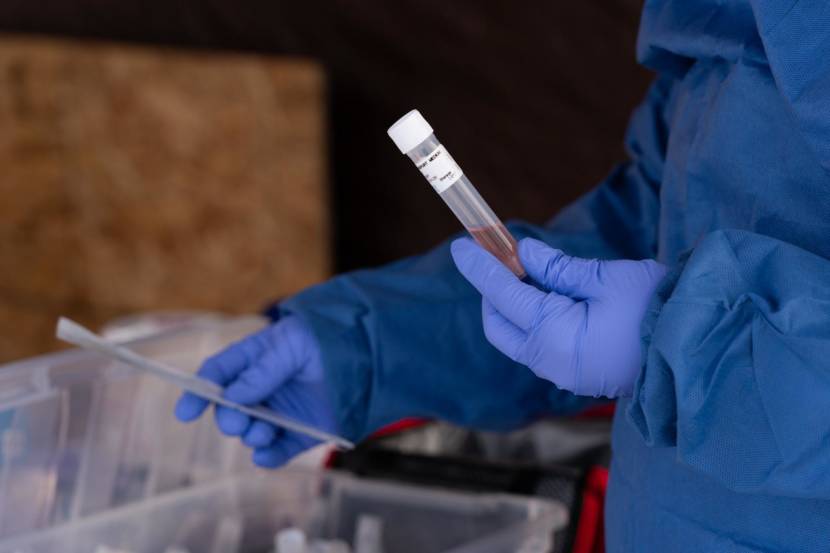
Because they needed to find a way to get results back faster to identify where outbreaks were occurring, who was infectious and how to contain the spread of the virus, YKHC began using a different test — but in a unique way. This test is called an Abbot BinaxNOW rapid test. It’s also a nasal test, but instead of testing for DNA, it tests for antigens, which are proteins from the virus. These rapid tests produce results in 15 minutes, all in one place, with no flying necessary. And they’re much cheaper than the PCR tests.

The rapid tests are extremely reliable if the result is positive. If you get a positive antigen test, you can trust that you have COVID-19. But the rapid tests are not as reliable for negative test results.

“So there’s a chance that if you test negative, you could still have COVID,” Hodges said.

But there’s a way to find out almost for sure: keep testing, a couple of days apart each time.

“If you get about three of these tests negative, that’s pretty reliable that you don’t have COVID,” Hodges said.

Called “serial testing,” this method took about the same amount of time as the PCR testing that had to be flown out — but only to be sure of a negative result. A positive result could be responded to right away. The widespread rapid testing changed the course of the pandemic in the Yukon-Kuskokwim Delta.

“We were able to get people who tested positive into isolation faster, and test their close contacts faster, and if they test positive, get them into quarantine sooner and so on, so that you could get ahead of the outbreak faster,” Hodges said.

The results were significant. Over the next month, daily cases fell by two-thirds, from 342 cases per 100,000 people during the week of Nov. 9, to 119 cases per 100,000 people during the week of Dec. 13. The overall average turnaround time for all test results also fell by nearly a third, from 6.8 days to 4.4 days.

Local leaders could learn of an outbreak and respond in real time with mitigation measures like mandated masking, screening people entering the village, cancelling large events and limiting customers in stores. Most villages in the region enforced these types of restrictions.

The results of the rapid testing were so significant that YKHC wanted to share them. The organization approached the CDC, and now Hodges is the lead author on a paper sharing the findings, along with other YKHC and Alaska colleagues.

“Our biggest hope is that other people in areas similar to ours might take this information and understand that this test can be used in their region, and it might help them reduce transmission,” Hodges said.

She emphasizes the word “might,” because it was an observational study. There were no controls used to compare one outcome against another. The results show correlation, not causation. Also, the study’s timeline occurred before the COVID-19 vaccine arrived in the region and further reduced transmission.

The paper identifies three other limitations of the study: false negatives associated with the rapid tests, that not everyone completed the series of rapid tests,  variation in individuals’ responsiveness to isolation instructions, and the gap between obtaining a test result and communicating them.

YKHC continues to use both the rapid tests and the PCR tests to identify cases as COVID-19 once again surges in the region.

Subsistence users, scientists seek answers for chum salmon declines

“It’s hard to comprehend that this is happening in my lifetime. It makes me sad just thinking about it,” said Bill Alstrom of St. Mary’s. (Olivia Ebertz/KYUK)

In Western Alaska, chum salmon stocks have sharply declined over the last two years. That’s a problem, because people in the region depend heavily on the fish for food and for work. Scientists are in the early stages of trying to understand the crash.

Bill Alstrom lives in St. Mary’s on the lower Yukon River. It used to be that if he wanted fresh salmon for dinner, he’d throw a net in the river to catch a couple. But with fishing closures this season, he can’t do that anymore.

“It’s hard to comprehend that this is happening in my lifetime. It makes me sad just thinking about it,” Alstrom said.

The State of Alaska has closed fishing for chum to protect the runs. For Yukon River families, chum is particularly important. Chinook salmon have been low for decades, but chum were the fish families could depend on until last year, when the summer chum run dropped below half of its usual numbers. This year the run dropped even further, to record lows.

Biologist Katie Howard with the Alaska Department of Fish and Game said that the chum declines are not just occurring in the Yukon River.

“When we talk to colleagues in the lower 48 and Canada, Japan, Russia, they are all reporting really poor chum runs. So it’s not just a Yukon phenomenon. It’s not just an Alaska phenomenon, but pretty much everywhere,” said Howard.

So why are the chum numbers so low? The short answer is that no one really knows for sure. But there are a lot of theories.

Every week during the summer, subsistence users, biologists and fishery managers gather on a weekly teleconference hosted by the Yukon River Drainage Fisheries Association. They share information and ask each other questions, and the subsistence users bring up one theory for the decline again and again: bycatch.

Bycatch is when ocean fishing vessels targeting one species also incidentally kill other fish. Some see it as a necessary evil, while others are opposed to it completely. The National Oceanic and Atmospheric Association tracks bycatch. Non-chinook chum salmon bycatch is already bigger than normal this year, and bycatch has been trending upwards since 2012.

NOAA distinguishes between non-chinook and chinook bycatch because chinook bycatch is heavily regulated. If trawlers catch more chinook than allowed, they have to cut short their fishing season. It incentivizes trawlers to avoid chinook feeding grounds. Trawlers must also report their non-chinook salmon bycatch, but there are no limitations on these amounts. NOAA estimates that 99.6% of its non-chinook salmon bycatch is chum.

So if chum bycatch is greater than normal this year and trending upwards, would bycatch be a major factor in Western Alaska’s chum decline? Not necessarily, said a NOAA spokesperson, because the fish that are dying on the trawlers are largely not bound for Western Alaska. About 16% are from coastal Western Alaska, and less than 1% are from the upper and middle Yukon.

The rest of the bycatch is mostly hatchery fish: fish that have been hatched in a controlled environment. They’re largely from Japan.

Hatchery fish are also cited by some as a possible cause of chum decline. Jack Schultheis is the manager of the only wild salmon processor on the Yukon: Kwik’pak Fisheries Emmonak.

“I think it’s disrupted something in the foodchain,” Schultheis said.

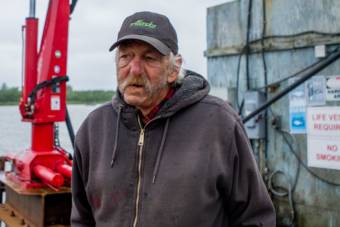
Kwik’pak manager Jack Schultheis says this year’s chum run is the worst he’s ever seen. (Olivia Ebertz/KYUK)

Kwik’pak is Native-owned, by a community development quota (CDQ) group called Yukon Delta Fisheries Development Association, which also owns trawlers. NOAA data shows that CDQ trawlers are responsible for less than 10% of chum by-catch, and Yukon Delta Fisheries Development Association-owned trawlers are responsible for less than 1% of chum bycatch on American vessels.

State biologist Howard doesn’t think hatchery fish are the issue. That’s because hatchery fish populations haven’t changed much in the past 30 years. But Peter Westley, an associate professor of fisheries at the University of Alaska Fairbanks, thinks hatchery fish could be at least part of the problem.

“These declines in salmon that we’re seeing in our local rivers is possibly linked to actually, ironically, too many fish in the ocean,” Westley said.

Westley said that’s because since the 1970s, the North Pacific Ocean and the Bering Sea have been full of food for both wild and hatchery chum, and both populations have grown over the decades. But now he suspects that increasing competition for food has led to the massive decline.

“The reality is, you don’t know that you were at a tipping point until it’s in the rearview mirror,” Westley said.

Westley said that climate change could be the culprit behind the lack of food in the ocean. He said that crashes in salmon stock will be more likely as the ocean continues to warm. Westley said that this competition affects hatchery and wild fish alike, leading to dwindling numbers for all salmon.

On the Yukon River, subsistence fisherman Alstrom also thinks warming temperatures could be a factor in the crash. In his 70 years in St. Mary’s, he’s seen the changes in the environment firsthand.

“And all these trees out there looks like a jungle. There used to be scrubs out there when I was growing up,” Alstrom said.

Alstrom said that the animals in the region are changing too. He never saw moose as a kid, but over his lifetime they started to move in.

Researchers are trying to understand the chum crash. For decades, biologists have mainly been focusing on chinook salmon, which have a longer history of decline and are more valued by commercial and subsistence fishermen.

NOAA and the Alaska Department of Fish and Game are leading two surveys on the Bering Sea this year to study salmon marine life. State biologist Howard is out on one of those surveys right now. She’d like to see more funding to study chum overwintering habitat in the North Pacific but said that it’s expensive and dangerous to conduct that research because of turbulent winter seas.

Westley said that the number one question that needs to be answered now is where the chum are dying in their lifecycle. That will help scientists determine what’s killing the fish.

Alstrom said that it will be hard for his community if the salmon don’t return.

“It’s just not right when you live in your region that’s supposed to be teeming with salmon, and to go without it. It’s just devastating,” Alstrom said.

Despite the decline, biologists say that chum are not endangered, and the subsistence fishing closures are helping the salmon get to their spawning grounds.

How low chum runs changed the lives of these Western Alaska fisheries workers

Commercial fisherman Paul Andrews makes $9 a day measuring the water level in Emmonak. (Olivia Ebertz/KYUK)

For decades, Kwik’Pak Fisheries in the Western Alaska village of Emmonak has provided reliable summer employment in one of the state’s most unemployed regions. The company is the only fish processor on the Yukon River.

But with salmon runs low and commercial fishing closed, it’s offering few jobs this summer. Commercial fishermen and women are feeling the economic stress, and those who are still working at the plant have had to transition to new roles.

Every day at half past noon, Paul Andrews walks to the river bank in Emmonak, stopping at a small metal marker nestled on a dune. He takes out a surveyor’s measuring tape, hooks it on to the marker and walks it to the water line. Then he phones the National Weather Service.

“Make that 79 feet at 12:30,” Andrews said.

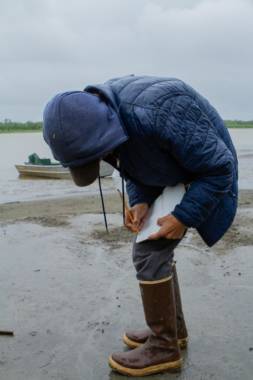
Paul Andrews marks the rain gauge and the level in his notebook. (Olivia Ebertz/KYUK)

Andrews is measuring the water level of a slough off the Yukon River, not far from the mouth. He marks the rain gauge and the level in his yellow notebook. He usually takes his youngest child with him for the task.

In Andrews’ notebook, the water levels date back to early July. That’s when he started this job. He gets paid $9 per day. It’s a massive pay cut from his previous work.

In prior summers, Andrews worked as a commercial fisherman for Kwik’pak. It was his only employment during the year, and he said that he usually made $10,000.

“My wife works. But you know, that’s not enough. But we get by,” said Andrews.

He took the water reporting job this summer because he knew there wouldn’t be any commercial fishing openings. The chum salmon numbers on the Yukon tanked last year, and sunk to record lows this year. All commercial and most subsistence fishing for salmon on the river is closed.

Usually Kwik’Pak pays out $7 million to $10 million to local workers. This year it’ll be paying out $700,000 to $800,000 to plant workers, and nothing to commercial salmon fishermen and women.

Kwik’pak is able to hire plant workers at all because it is experimenting with new endeavors. The company built three greenhouses to grow vegetables, and it’s trying its hand at very limited commercial cod processing. This summer the company is buying a few fish from commercial cod fishermen to see how it goes, though they’re not selling it quite yet.

Most of the people working at Kwik’pak this summer are its long-term, most loyal employees. And they’re all having to get used to new roles. Like Lisa Andrews. Usually she does fish accounting, but now she supervises teen workers in the greenhouse.

“I wasn’t certain, but now I like it. These kids actually grown on me,” said Lisa Andrews, who is not related to Paul Andrews.

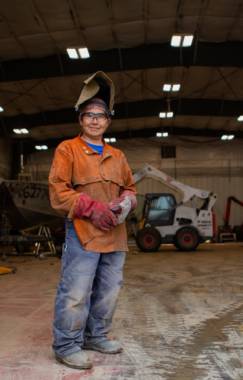
For now, Richard Akaran’s job as a welder hasn’t changed, though he knows it could. (Olivia Ebertz/KYUK)

When she started hearing about the low chum runs, she said she thought she might not have a job at all this summer.

“I called many times, because I was worried that I wasn’t going to work,” she said.

She said that she’s lucky she got a job. She had worked at a gardening store in Anchorage, so she felt prepared for the new role.

There’s also some folks who haven’t quite felt the impacts of the low chum numbers on their job descriptions yet. Like welder Richard Akaran from Kotlik. He’s wearing overalls and a thick leather welding jacket. He builds boats for the Yukon Marine Manufacturing company, which sits on the Kwik’pak campus.

“We build boats for the fisherman. The fishermen that fish for Kwik’pak,” Akaran said.

For now, he said, his job hasn’t changed. But he knows it could. It’s been two years of low chum runs now. Already other welders have been impacted. Half of them have not been hired back. Akaran said that he hopes next year’s runs are better.

Meanwhile, Kwik’Pak and its workers are trying to keep up with chum runs that are declining faster than the industry can adjust.

Yukon subsistence users go to new lengths for food after massive salmon decline

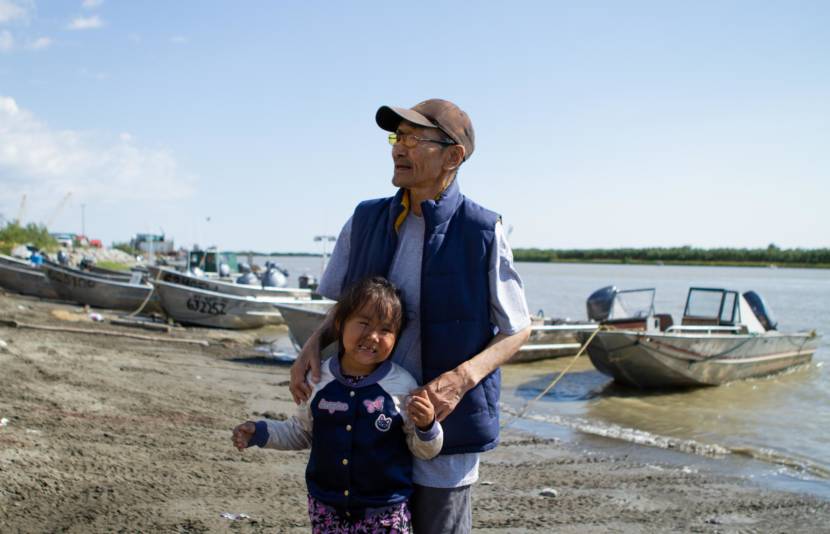
“I had to go 100 miles north up just to get my subsistence needs,” Herman Hootch said. (Olivia Ebertz/KYUK)

This has been the worst salmon fishing season on record for the Yukon River. King salmon, a regional favorite, have returned in low numbers for years, but now a typically stable species, chum salmon, has also collapsed. Subsistence fishing on the lower Yukon River for both species is closed, and residents who usually depend heavily on the fish are pivoting toward other ways to get meat.

“I started fishing on the Yukon when I was six years old. There was one point, me and my grandpa were coming down here for supplies and we had a summer chum jump into the boat. But those days are gone,” Jason Lamont said.

Lamont is from Emmonak and lives off of subsistence food, which in past summers has meant salmon. His family doesn’t buy meat from the store; the salmon caught during the summer will help carry his family through the winter.

“We used to target 300 fish to put away. We’d get that in about two to three hours. Nowadays in our freezer we have only one fish so far, and we’re lucky to have it,” Lamont said.

Elder Herman Hootch also relies on subsistence food. Like Lamont, Hootch is from Emmonak near the Yukon River mouth.

“We learned from our parents that food from the store is not healthy,” Hootch said.

Neither Hootch nor Lamont have been able to subsistence fish for chums or kings on the Yukon this year. Subsistence fishing for the species has been closed all season.

A lone skiff motors up the river past a fish camp. (Olivia Ebertz/KYUK)

In order for the Alaska Department of Fish and Game to open subsistence fishing, over 500,000 summer chum salmon first need to be counted in the river. Five hundred thousand fish is the lower end of the escapement goal.

Normally that number is met without a problem. On average, the run size is 1.7 million summer chum, as counted by a sonar in Pilot Station. But last year the run suddenly dropped to just 700,000 fish. The number dropped to a fraction of the average run size this year: just 153,497 fish.

Hootch and Lamont are missing a big part of their diet. And to make up for the lost protein, they’ve gone to some pretty extreme lengths.

“I had to go 100 miles north up just to get my subsistence needs,” Hootch said.

He traveled to the Norton Sound area to harvest chum this summer, but the numbers weren’t great there either. According to state fisheries biologist Kathrine Howard, chum numbers have been dismal all over the Bering Sea area since last year. Howard theorizes that climate change is responsible for the decline.

But because subsistence fishing was at least open in Norton Sound, Hootch made the journey.

“But that first trip I didn’t have any luck,” Hootch said.

The second time Hootch did have some luck and caught about 100 chums. He estimates that each round trip cost $500. That means with all the expenses added up, each chum cost him about $10. It was expensive, but cheaper than groceries in Emmonak. And he wasn’t the only one trying his luck there.

“What surprised me this year was the whole delta of the Yukon was up in Norton Sound. We saw hundreds of nets up there. And I said, ‘holy cow, that’s the first time that this ever happened,’” Hootch said.

Jason Lamont has been traveling 50 miles out into the Bering Sea on a small skiff to try his hand at ocean fishing. (Olivia Ebertz/KYUK)

Lamont has also ventured into new waters. He’s been taking his river-going skiff out into the testy waves of the Bering Sea.

“There’s a small group of us who are crazy enough to go out there and start harvesting food,” Lamont said.

But they’re not targeting salmon, they’re going for cod and other ocean species and learning in real-time what ocean fishing entails. Lamont said that he takes his boat sometimes as far as 50 miles off the coast. Most boats that go out that far are several times larger than his small skiff.

“And we go out there to the same size ocean, but the storms are the same too,” Lamont said.

But Lamont is determined to not give up on his Yup’ik culture’s subsistence traditions.

“You either gotta adapt, or lose it,” he said.

Three hours upriver by skiff, in the community of St. Mary’s, folks don’t have the same option to travel all the way out to Norton Sound. Instead, they’re supplementing their diet with extra groceries, more whitefish, and they’ll try to bag extra game meat.

Empty skiffs line the shore in St. Mary’s. (Olivia Ebertz/KYUK)

At the St. Mary’s boat harbor, Bay and Walky Johnson are on their way out to pick berries. Theirs is one of the only skiffs leaving the harbor that day. The rest of the boats bob along the shore, empty of fishing gear. I ask the couple how they will fill their pantry this winter.

“We’ll go after other species of fish,” Walky said.

“Definitely more moose,” Bay said. “We hope to get fall chum, but I doubt it. Fall chum are good for canning. Also when making more dry fish. But we didn’t see any last summer, so I doubt we will see any this summer either,” she added.

The state has no plans to open subsistence fishing for fall chum. That’s because an international treaty governs salmon fishing on the river, and not enough fish will pass through to meet treaty numbers.

Bay and Walky Johnson plan to target more moose to supplement their diet for the winter. (Olivia Ebertz/KYUK)

Correction: An earlier version of this story said that the Pacific Salmon Treaty between the U.S. and Canada dictates summer chum subsistence fishing, and that 300,000 summer chum salmon must be counted to open fishing. That is incorrect. It dictates fall chum subsistence fishing. To open summer fishing, 500,000 summer chum salmon must be counted. To open fall fishing, 300,000 fall chum must be counted.

When Yukon River chum stocks collapsed, donated fish came in from Bristol Bay

Daren Jennings loads up his skiff to deliver Bristol Bay salmon to Lower Yukon River communities. (Olivia Ebertz/KYUK)

For eight years, Tanya Ives has been traveling up from Washington each summer to work at the Yukon River’s only fish processing plant: Kwik’Pak Fisheries. The plant sits outside of Emmonak, at the river’s mouth. Normally at this time of year, Ives would be packing up chum salmon harvested by commercial fishermen along the Yukon River to sell around the world. But this summer, she’s doing the opposite.

Ives is packing up salmon, caught hundreds of miles away, to send to Yukon River villages. She wears a red sweatshirt and gloves to keep warm while working with the frozen fish.

The Yukon River has seen its worst summer chum salmon run on record, and its third-worst chinook run. The commercial fishery is closed, and Kwik’Pak can’t sell salmon. Subsistence fishing for chum and chinook is also closed, and many people along the river have not had a taste of the fish this season.

Normally at this time of year, Ives would be packing up chum salmon to sell around the world. (Olivia Ebertz/KYUK)

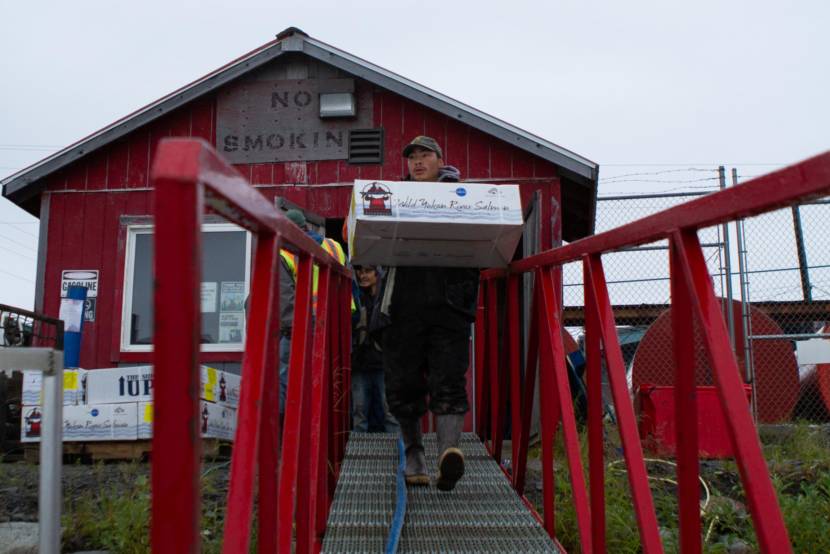
Meanwhile, on the southern end of the peninsula, Bristol Bay has been enjoying its best salmon run on record. To share the bounty, processors there donated 22,000 pounds of chinook and chum salmon to Yukon River villages. The Bristol Bay processors sent some of that salmon to Kwik’Pak to distribute to lower river communities.

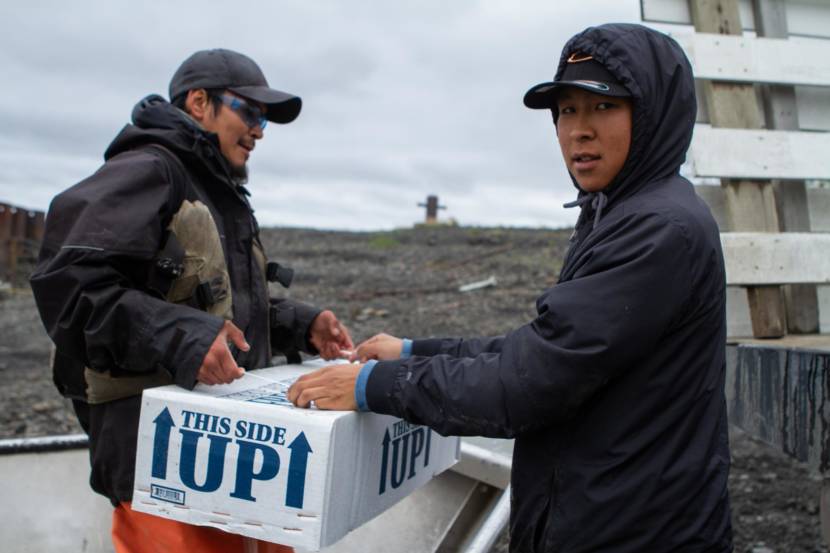
Inside the Kwik’Pak plant, workers divide about 12,000 pounds of salmon into boxes. Ives gives instructions for how to label them.

“You’re going to write the number of fish and the pounds on this label, and then you’re going to put this donation label on the right top corner,” Ives says.

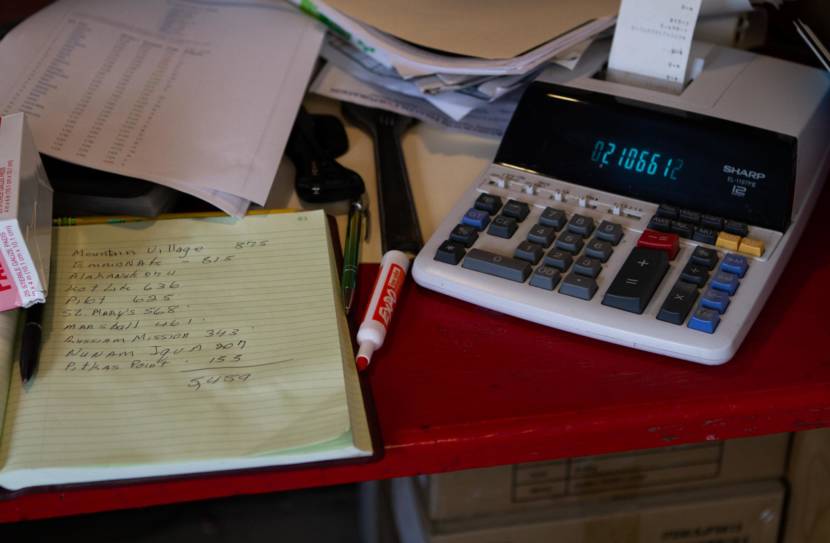
The fish are whole and frozen, so villagers can use them how they wish. Kwik’Pak is splitting the fish between 10 Lower Yukon River villages: Emmonak, Alakanuk, Nunam Iqua, Kotlik, Pilot Station, St. Mary’s, Marshall, Russian Mission and Pitkas Point.

Kwik’Pak is splitting the fish between 10 Lower Yukon River villages: Emmonak, Alakanuk, Nunam Iqua, Kotlik, Pilot Station, St. Mary’s, Marshall, Russian Mission, and Pitkas Point. (Olivia Ebertz/KYUK)

Dividing the salmon by village population, regional tribal nonprofits determined how many fish would go to each village. Tanana Chiefs Conference directed distributions upriver, and the Association of Village Council Presidents directed distributions along the lower river.

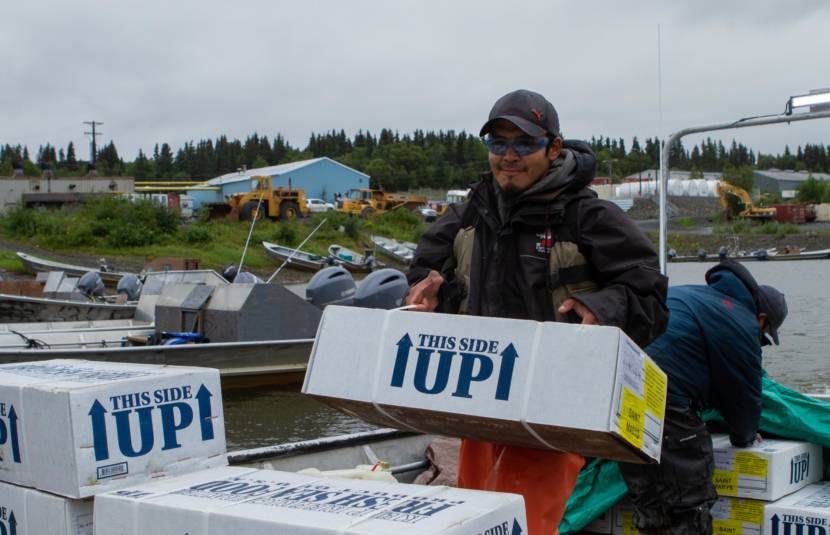
Kwik’Pak boated the salmon from community to community. Weighed down by thousands of pounds of frozen fish, a tender boat slowly motored up the cold, rainy Yukon. At the helm stood captain Daren Jennings, bundled up in a Rick and Morty sweatshirt with thick layers of raingear on top. As the skiff wound further upriver, willows more densely crowded the banks. Then spruce forests appeared.

According to local Elders, the area used to be pure tundra. The flora is changing, and sandbars claim more territory each year. They’re getting harder to avoid, even for someone who knows the river as well as Jennings.

Delivering salmon to the villages is new to him. In previous years he’d be doing the opposite: picking up commercial fishermen’s fresh catches and taking them back to Kwik’Pak to be processed. With the commercial fishery closed, he’s one of the few dozen employees that Kwik’pak has been able to hire back this year.

“Usually we’d be running way more and had way more people here, but since there’s no fishing you can only have so many workers that are doing so many things,” Jennings said.

A Kwik’pak worker unloads salmon in St. Mary’s. (Olivia Ebertz/KYUK)

The boat makes a gentle left turn onto the Andreafsky River. The river, fed by the Kusilvak Mountains, runs cold and black, a stark contrast to the muddy lower Yukon. The tender docks in St. Mary’s. Workers from the Algaaciq and Andreafsky tribes meet the tender at the bank.

“I’m droppin’ off big boxes of fish,” Jennings says, while calling the tribes to announce his arrival.

The tribal workers meet him at the shore. They load the fish into their pickups and drive them to households, until late evening. Bay Johnson from St. Mary’s is grateful to have at least a bit of fish.

The tribal workers from the Algaaciq and Andreafsky tribes load the fish into their pickups, and then drive them to households until late evening. (Olivia Ebertz/KYUK)

“We got two, and we were so happy for them,” she said. “Right now I have them thawing out so I can can them. They can last longer throughout the winter for us.”

But she said that the fish isn’t enough food for her family for the months ahead. With little opportunity for subsistence salmon fishing, her grocery bill has gone up. Her husband, Walky, said that they’ll have to try for other species of fish to get them through the winter.

A spokesperson for Gov. Dunleavy’s office also said that the Alaska Department of Fish and Game has purchased an additional 25,000 pounds of fish. Half of that arrived in Emmonak on Aug. 10 for distribution to Yukon-Kuskokwim Delta communities.

Bitten on hand, Alaskan remembers bear’s bad breath 25 years later

William Young survived a bear attack near White Mountain in 1996. (Casey Grove/Alaska Public Media)

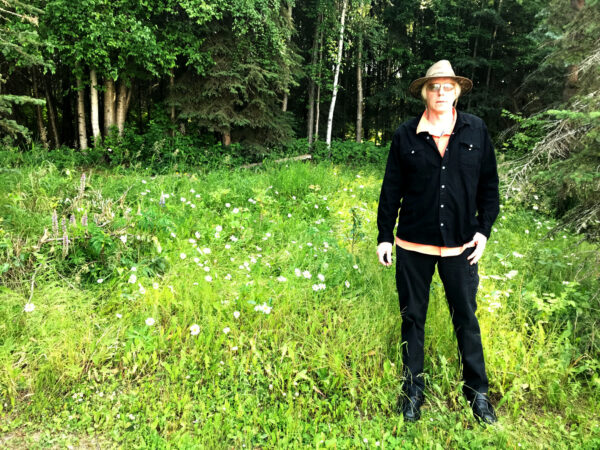
It was the summer of 1996 when William Young — an Alaskan fond of wilderness and solitude — survived an attack by a brown bear.

Young was far from help, building a cabin about 50 miles outside of White Mountain, a tiny remote community in Western Alaska. He was taking a break from his project, hiking one day in July with his dog Yukon.

Then they ran into a sow with cubs. Here’s what happened next, in William Young’s words.

LISTEN:

The following transcript was lightly edited for clarity.

William Young: Well, I was up building a cabin. I was about five logs high on it. I built it with a Swede saw and axe. I was just out hiking the country. I was going to another camp — an old camp that we built in the ’80s. Ain’t nothing there anymore.

I left a few things up there. I was gonna camp out. It has really good grayling hole. And I was going to cross the river. A storm just passed and it was bright and sunny, and I was going down to the creek. And the brown bear was just to the north of me. And it was a real close encounter. She had three cubs. They were probably two year olds.

I threw the gun up. She ran toward me, like a bluff. My dog was with me and, you know, he was kind of harassing the cubs, I guess, or maybe trying to protect me. He was very loyal. So she ran toward me, like 40 to 50 feet. That’s like three seconds — 35 miles an hour a second that they can run. And she clamped ahold of my right hand and basically took the gun away from me. I just fell down on it.

She had me down and I kind of looked at her out of the corner of my eye. She came back after biting me, and she stood up and swiped at my leg — could feel the claw on my pants leg.

Then she ran toward the cubs. Yukon, my dog, was still over there.

And then she came back. Stood up and all that. I was still on top of the gun. And her head was like right up against my head. It was huge. You could smell her breath. It stunk real bad. On the river, there were a lot of spawned-out salmon, chum salmon and pink salmon. She had plenty to eat. They were fat and roly-poly.

But she didn’t want her cubs messed with. That’s mainly what it was. Giving me a scare. But you know that one bite could have been life-threatening.

Site notifications
Update notification options
Subscribe to notifications