Alaska Native Arts & Culture

Mallott kicks off gubernatorial campaign

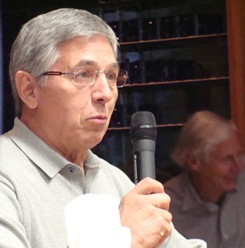
Byron Mallott
Byron Mallott. (Photo by Casey Kelly/KTOO)

Byron Mallott filed as a candidate for governor today, making him the first Democratic candidate to officially jump into the race.

Mallott has held leadership roles with the Alaska Permanent Fund Corporation and Sealaska Corporation. He has also served as mayor of both Juneau and Yakutat, and is the first gubernatorial candidate in over a decade to have strong Southeast ties.

“Southeast is home. There’s just no question about it,” Mallott says. “Yakutat is where my campaign will begin, and it is where it will end — at home. Having said that, Alaska is many, many different regions and many different communities, both urban and rural.”

If elected, Mallott would also be the state’s first Native governor.

“I’m proud to be a First Alaskan, one of the aboriginal peoples of this great place,” he says. “But I’m running more than anything else because I’m an Alaskan first.”

Mallott says he’s still working on his platform, and he would not give out specifics yet. He says he is concerned about Alaska’s fiscal situation and that the referendum to repeal a tax cut on oil companies has made an impression on him. But he won’t say whether or not he supports the referendum movement. He also says he wants to focus on education, climate change, and Alaska’s position as an Arctic nation, but that he plans to do voter outreach before developing his policies.

“I intend during this campaign to travel, to meet with Alaskans hopefully everywhere that they live — in their homes and in their communities — and talk about their priorities and how strongly they feel about their aspirations as they look to Alaska’s future,” Mallott says.

He’s the third major candidate to jump into an increasingly crowded field. Incumbent Sean Parnell is the Republican candidate, and former Valdez mayor Bill Walker is running as an independent.

State Senator Hollis French has been exploring a run as a Democrat, but has not formally committed to a campaign. A candidate from the Constitution Party, J.R. Myers, has filed as well, as has Gerald Heikes, who ran for governor as a Republican in 2010, but received less than one percent of the vote in the primary.

Sealaska CEO announces retirement

Chris McNeil Jr., President and CEO of Sealaska Corporation, has announced his retirement. Photo courtesy Sealaska.

Sealaska president Chris McNeil Jr. says he is leaving the regional Alaska Native corporation in a financially strong position.

The 65-year-old McNeil announced his retirement Friday after 12 years as chief executive officer.

He is a former Sealaska board member. He was selected as CEO in 2001 after serving as corporate secretary, and executive vice president and general counsel.

McNeil has seen major changes since then, including the enrollment of tribal descendants.  When ANCSA was first enacted it allowed for enrollment only in 1971.  The board and shareholders voted to open enrollment to descendants in 2007.

“We’ve moved from about 16-thousand tribal member shareholders to about 22-thousand,” McNeil says. ” That was a very important change that has occurred through time and was certainly a commitment that everyone made to the future of tribal members.” 

He’s also seen radical changes in the Southeast Alaska timber industry.

Gone are the days of large timber sales and swaths of clear cuts as well as the international pulp mills.  Sealaska Timber Corporation, headquartered in Ketchikan, is now the largest timber producer in Southeast. McNeil says Sealaska is changing its forest management.

“Sealaska fully intends to develop a model of sustainability not only in the broader sense of the word but also in the sense of sustainable harvests.  That is a very important change,” he says.

Tribal employment in the company has steadily grown, McNeil says, and it continues to be a goal throughout the divisions.  That requires training.

“As a corporation, we need to continue to encourage people to acquire those kinds of skill sets and experiences that are necessary to participate in the kinds of enterprises that Sealaska and other Native corporations have in this day and age,” he says.

In a message to shareholders, McNeil says the corporation has a solid business plan and is financially strong.

Audited 2012 records put shareholders’ equity at $256-million, compared to $103-million in 2001.  At $88-million, the corporation’s permanent fund is more than twice what it was then.  The Investment and Growth Fund did not exist in 2001; McNeil says it is now nearly $60-million.

Recruiting a new CEO has already begun. The Sealaska Board of Directors has selected an independent search firm to help in the process.

“I can assure tribal member shareholders that this will be a very open recruitment process for a tribal member shareholder who will be the next CEO of Sealaska Corporation,” McNeil says.

McNeil expects the new CEO to be hired by March.  The actual transition will occur at next year’s annual meeting on June 28th.

While McNeil lives in Washington state and works in corporate offices in Bellevue, the next president and CEO will be based at corporate headquarters in Juneau.


NOTE:  This story was updated after a KTOO interview with Chris McNeil.


Alaska Native Tribal Governments keep doors open for now

Alaska Native tribal governments are keeping their doors open, but worry about how long the federal government shutdown will go on.

“So now the shutdown, we won’t even get our payment till lord knows when,” Richard Peterson, tribal administrator for the organized village of Kasaan in Southeast Alaska, said.

He says the Bureau of Indian Affairs had to recalculate payments to tribes to comply with across-the-board budget cuts, or sequestration, then was shut down. That’s put the BIA 10 months behind in payments to support his tribe’s operations.

He’s worried about how much longer it can continue normal operations.

“Right now I don’t know. I’m not even comfortable trying to answer that until we really sit down and take a hard look at where we’re at,” Peterson said, when asked if the shutdown might lead to tribal employee layoffs. “Depending on how long this goes on, and deciding whether we want to look at financing options or what have you. I just know it puts us in a serious bind.”

The BIA provides funding to tribes for a wide range of programs – including disaster relief, roads, and tribal courts.

Gloria O’Neill is president and CEO of Cook Inlet Tribal Council in Southcentral Alaska. She says CITC’s general assistance program is underfunded and normally runs out of money half way into the fiscal year, but she says the infusion that normally comes with the start of the new fiscal year on October first is missing.

“Because of our preparation, we are continuing with service as usual throughout the organization, however, we have a couple of limited service interruptions, one being general assistance,” she said. “That program is funded by the BIA and we’ve not received our funding for general assistance this year.”

O’Neill says CITC is routing people eligible for General Assistance to other aid programs. She says education funding is also affected by the shutdown.

“We have funding on hand and so we really try to be careful to ensure we can meet those obligations and get those scholarships out the door, because our kids are in school and they need to see, they need to see that money,” she said.

O’Neill says funding to tribes should not be treated as discretionary.

“We should be more of a program like defense or some of the others that really take into account that this is an actual need,” she said. “It’s not something that if we have the money, we’ll fund it, but this is literally a need in our communities and it is based upon treaty obligations.”

Tribes also rely on funding from other federal agencies in the U.S. Department of Interior, and in the departments of Health and Human Services, Housing and Urban Development, Education, Justice, and Agriculture.

Tlingit & Haida housing authority, CCS to expand senior services in rural Southeast

Marge Adams Yakutat Senior Center
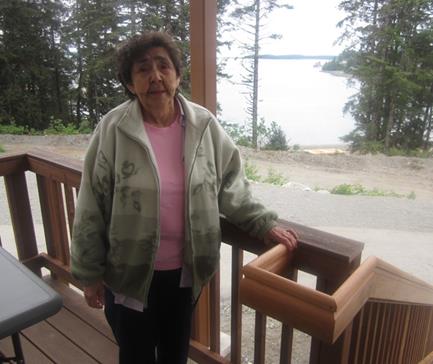
Elder Marge Adams stands on the porch at the new Yakutat Senior Center. Photo courtesy Tlingit and Haida Regional Housing Authority.

Tlingit and Haida Regional Housing Authority and Catholic Community Service on Monday announced the expansion of a program that helps senior citizens live independently in Southeast Alaska.

For the past five years, the housing authority has received federal funds for an elder service coordinator on Prince of Wales Island. This year, two new communities will be included in the program, which helps seniors access things like health care, financial information, events and activities.

“Programs like gardening, language classes, storytelling, or cultural events,” says Ricardo Worl, the housing authority’s chief executive officer.

He says additional grant money will be used to hire coordinators in Yakutat and Saxman, where Tlingit and Haida recently opened new senior centers.

“A lot of our tenants in these senior housing facilities have spent their entire lives in that community, and they want to remain there. Their family lives there, their grandchildren live there,” Worl says.

The housing authority contracts with Catholic Community Service to run the program. Marianne Mills is director of Southeast Senior Services for CCS, which operates similar programs in Juneau and the entire region.

“The main thing is to keep them active, healthy, and connected with other people,” Mills says. “Not just staying in their place by themselves.”

Mills says the elder service coordinators in Yakutat and Saxman will tailor programs and activities to the needs of their community. She says the program on Prince of Wales has benefited from partnerships with other agencies.

“For example, with the SEARHC clinic, they did a sit and be fit class, got some exercise equipment in the senior apartments there, and arranged for doctor and physical therapy visits on a regular basis,” she says. “Just made a variety of different health promotion activities available.”

Saxman Senior Center
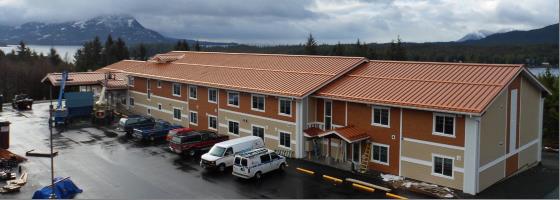
Tlingit and Haida Regional Housing Authority’s Saxman Senior Center. Photo courtesy THRHA.

Tlingit and Haida this year received a total of $246,000 for elder service coordinators from the U.S. Department of Housing and Urban Development. The money is part of HUD’s Resident Opportunities and Self Sufficiency grant program. Despite the federal shutdown and sequestration budget cuts, Worl says he’s fairly confident the money will continue to be available.

“If they don’t have programs that allow our elders to age in place, in the rural communities, it’s going to be even more expensive to bring them to our urban centers, where it’s a lot more competitive,” says Worl. “The wait lists to get into these senior housing and health care programs are tremendous.”

He says the housing authority will just need to remain diligent in communicating to Alaska’s Congressional delegation the importance of such programs.

Packing up 32,000 pieces of Alaska history

Tommy Joseph's exhibit of Tlingit armor is currently on display at the Alaska State Museum. Photo by Matt Miller/KTOO News
Tommy Joseph’s exhibit of Tlingit armor is currently on display at the Alaska State Museum. Photo by Matt Miller/KTOO News

Curators of the nearly four-decades old Alaska State Museum in Juneau will start dismantling some of the permanent exhibits in preparation for the building’s demolition.

Meanwhile, some of the popular exhibits like the Eagle Tree and Science on a Sphere are expected to return in a new facility that is being constructed on the same site.

Construction is already underway on the artifact vault or storage area for the new State Libraries, Archives, and Museum (SLAM) that is adjacent to the current Alaska State Museum. Once the artifacts are transferred next spring, then work will start on demolishing the current museum and constructing the rest of SLAM.


Bob Banghart of the state’s Division of Libraries, Archives, and Museums said the Alaska State Museum’s exhibits and artifacts have to be catalogued and packed in a slow and methodical way. He’s in the Minerals and Mining room on the second floor which will be the first to be dismantled. Photo by Matt Miller/KTOO News

Bob Banghart, deputy director of the state Division of Libraries, Archives, and Museums, said that they’ll start on October 7th with the first run through of cataloging items and packing the current museum’s permanent exhibits for an eventual move to the new structure.

It’s a tremendously large project to do. It’s over 32,000 objects that have to be accounted for in the relocation and we don’t want any mistakes. So, it has to be done really articulately.”

The Minerals and Mining exhibit on the second floor will be done first so museums officials can gauge the time and effort necessary for the cataloging and safe packing of artifacts. Banghart said they’ll then work on the rest of the floor’s adjacent permanent exhibits through the end of the year.

It’s not like you grab a box and just start dumping stuff in it. Everything has a very, very prescribed methodology in order for us to do our job. It’s not fast.”

Alaska State Museum staff will get some help in the form of a $78,000 grant from the federal Institute of Museum and Library Services. That will pay for 27 professionals from museums around the state to simultaneously receive training and help with the packing and transfer of artifacts.

The second floor will eventually be sealed off to the public on New Year’s Day and the first floor will be closed on February 28th. Then, all of the materials will be transferred to the new vault. That will include welding together Conex containers which will link the basement of the museum to the bottom of the new vault while providing a controlled environment for the safe transfer of artifacts.

View of the Eagle Tree inside the Alaska State Museum. Photo by Matt Miller/KTOO News
It’ll be another two years before the new museum opens its doors to the public.

Banghart said at least two panels from the side of the current museum with Northwest Coast Native formline design will — hopefully — be removed intact and reconstructed as a sculpture or monument on new museum grounds. The green sculpture Nimbus will be restored and returned to the museum grounds as well.

Science on a Sphere and the Eagle Tree, centerpiece of the current museum, will also be resurrected in the new museum building.

We were told — pretty much — that we could plan on leaving town if we did not put the Eagle Tree in the new building.”

Banghart said they’ve hired a local knowledge expert who will help with an accurate construction of a brand new tree with salvaged sticks and eagles. The current tree will be too small for the new space.

Some of the temporary exhibits currently on display at the Alaska State Museum include the recovered Apollo 11 moon rocks, Tommy Joseph’s exhibit of Tlingit armor, and Kay Field Parker’s Ravenstail weaving exhibit.

Tidal flooding won’t delay Soboleff Center construction

Pumps and hoses are spread throughout the construction site to deal with excess water.
Pumps and hoses are spread throughout the construction site to deal with excess water. (Photo by Heather Bryant/KTOO)

Tidal flooding is not expected to delay construction of Sealaska Heritage Institute’s Walter Soboleff Center.

Late last week, the future site of the building at Front and Seward Streets in downtown Juneau filled with water from an extreme high tide, stopping work there.

Lee Kadinger is SHI’s Chief Financial Officer and project manager for the center, to be located across the street from Sealaska Plaza. He says the Institute and contractor Dawson Construction anticipated some flooding, since that section of downtown is largely built on fill.

“We’re not, obviously, the first building to be built downtown in this area,” Kadinger says. “When they built Sealaska building they had the same type of issues, so it was fully expected to have tidal influence. We just weren’t certain at what tide it would begin to influence the site.”

Kadinger says the magic number seems to be any tide over 18 feet. Now that they know that, he says they can plan accordingly.

Kadinger also says the building will be constructed with a significant amount of waterproofing and drainage to withstand the periodic extreme high tides.

The $20 million Soboleff Center is expected to be complete in late 2014. The 29,000 square foot facility will house Sealaska Heritage Institute’s education, arts and language programs, as well as offices, archives and collections.

Site notifications
Update notification options
Subscribe to notifications