Filipinos in Alaska

Mourning the death of Black Moon Koven, Juneau’s witchiest brunch spot

Aims Villanueva-Alf at her restaurant, Black Moon Koven, in Juneau. (Yvonne Krumrey/KTOO)

Three years ago, Aims Villanueva-Alf was out for a run in downtown Juneau when she saw a small restaurant space for rent on Seward Street. 

Its walls were painted what Villanueva-Alf called “bumblebee yellow,” but she could already envision what would eventually become Black Moon Koven: a dark but cozy nook adorned with taxidermy and skulls, with coffins and three-eyed cats painted on black walls.

“When somebody is walking past the window, they don’t know what’s going to happen. They don’t know if you’re going to get a curse, they don’t know if you’re going to get some hexing,” she said. “I wanted them to be curious enough to risk it — and then maybe get a banh mi.”

Black Moon Koven opened in April 2021, offering sweet and savory waffles for breakfast and sandwiches and noodles for lunch. On the northern end of the block between Second and Third Streets, it was just outside of the tourist-centric core of downtown. Locals stopped by year-round.

Last week, it closed. Starting next month, Villanueva-Alf will train to become a death and grief doula.

“When I think about grief in general, it’s not even those who have passed,” she said. It can also include “grieving a friendship or closing a restaurant.”

Before Black Moon, Villanueva-Alf spent five years running GonZo, a restaurant in Auke Bay. It was a “loud and all-over and adventurous” place that took up all of her time, Villanueva-Alf said.

The outside of Black Moon Koven. (Lyndsey Brollini/KTOO)

She closed GonZo in 2020 after she was assaulted there

“I’d never had a trauma like that happen,” she said. “I had lots of friends who’ve had restaurants and had people that have violated them, but not in this way, and so it felt very lonely.”

Villanueva-Alf went into what she called a “cocooning phase.” She signed a lease for the new space downtown. She invited friends to paint ghosts and coffins on the walls. She collected taxidermy. She said she was inspired by the Latin phrase “memento mori,” which means “remember you must die.”

“How many times have we had to shed certain skins, and how many times have we had to build on these skins that we can’t shed because we’re too scared?” she said

The first thing she cooked in her new kitchen was bone broth, honing her recipe to make the flavors even deeper. Black Moon Koven offered bone broth seasoned with ginger, garlic, scallions and cilantro meant to be sipped. It was also the base of their noodle bowls.

Much of the menu was vegan or vegetarian. Villanueva-Alf had been disappointed by much of the vegetarian and vegan food she’d tried in the Pacific Northwest. A tour of restaurant kitchens in Ojai, California, showed her it could be done differently.

Store managers Sam Martinez (left) and Clark Bolaños (right) with Aims Villanueva-Alf (center) outside Black Moon Koven. (Photo courtesy of Aims Villanueva-Alf)

“You can eat nutritious food without having to be like, ‘Where’s the flavor?’” she said.

Customers could also sign up for food subscriptions to fit their dietary preferences and pick up their orders at Black Moon. Villanueva-Alf said she’s continuing the food subscription program after the closure.

Like any restaurant in downtown Juneau, inflation drove up the price of everything from eggs to takeout containers. Villanueva-Alf juggled orders from local suppliers like Juneau Greens and shipments arriving on Alaska Airlines. Parking downtown was a challenge for customers and staff alike.

But unlike GonZo, Black Moon Koven wasn’t all-consuming for Villanueva-Alf. She started studying yoga, sound healing and spiritual psychology around the time she opened Black Moon. A question from one of her instructors led her to her next move: becoming a death doula.

“It was, ‘If you could be something for yourself when you were a child, what would you be? What would you need? And can you bring that out right now?’” she said. “And I was thinking about how badly I would have wanted somebody to explain grief to me.”

At age 9, Villanueva-Alf experienced the unexpected death of a loved one. The shock of the loss was followed by confusion about how to process it. 

Now, she wants to help people at the end of their lives – and their loved ones – experience death and grief in a healthy way. Like birth doulas, death doulas do that by providing emotional and spiritual, rather than medical, support. 

“I want to give people life recipes on how to suffer well,” she said.

For now, she’s grieving the closure of Black Moon Koven. She’d spent the last few days gifting decorations to friends and her staff of seven. Pretty soon, it would be time to paint the black walls white.

Unlike GonZo, Black Moon is closing on Villanueva-Alf’s own terms, out of excitement for the future rather than ties to the past.

Mga Kuwento, Ep. 3: The story behind Juneau’s Filipino Community Hall

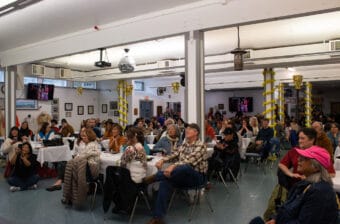
Filipino Community, Inc. members and guests gather at the Community Hall to celebrate Filipino American History Month on Oct. 7, 2023. (Photo by Tasha Elizarde/KTOO)

In the heart of downtown among the shops, you’ll find Juneau’s Filipino Community Hall.

If you’re just walking by, you could easily miss it – it’s not flashy. There aren’t many windows letting you peer inside, only a humble plaque announcing what it is. But for more than 50 years, it’s been a literal and figurative home to Juneau’s Filipino community.

A lot of Juneau’s Filipinos grew up in this building. But things have changed over the years. The building is getting older, along with many of the people who made this building their home. And now, many of their children and grandchildren have different priorities. 

Over the years, the Filipino Community Hall was a place for new arrivals from the Philippines to find a sense of community. They brought their kids there for celebrations and to connect with their heritage. 

Filipino Community, Inc. President Edric Carrillo and his father, Ed, pose inside the Community Hall. (Photo by Adelyn Baxter/KTOO)

“We all used to dress up and all were excited for our parties back then,” says Alex “Junior” Carrillo in the episode. “Now it’s hard to get kids to be involved or to want to even come and join parties anymore because it’s just a different – it’s just different. I don’t know how to explain it, but you know, they just didn’t grow up here anymore.”

The building still hosts weekly bingo nights and holiday gatherings, and lately Filipino Community, Inc. has made an effort to hold language and dance classes again. But membership is still down, and getting people to return to the hall will be critical to its survival.

Through elders who remember the hall’s beginnings as a humble pool hall to the new generation of leadership, Adelyn Baxter explores the origins of Juneau’s FilCom Hall and what it means to the community today.

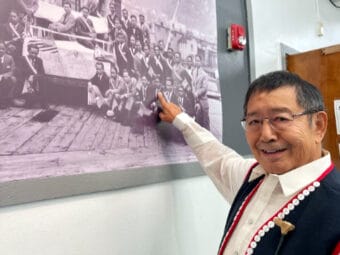
Ed Carrillo holds a certificate recognizing his uncle Fred Carrillo’s assistance in buying the building that would become the Filipino Community Hall. (Photo by Adelyn Baxter/KTOO)

Mga Kuwento, Ep. 2: Filipino workers seek the American dream in Juneau

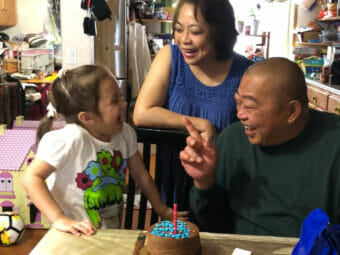
Janaea Dahl helps her lolo, or grandfather, Rodini Roldan blow out the candles on his cake while her grandmother Vicky Roldan watches on Father’s Day in 2020. (Screenshot courtesy of Kaye Roldan)

Filipinos, by nature, are very adaptable people,” Phillipine Honorary Consul for Alaska Rebecca Carrillo says in episode two of Mga Kuwento. “Our … collective goal, mostly, is to work and provide for our families. Those were the driving forces that propel us to pursue this proverbial American dream.”

That force still drives many Filipino workers in Juneau, including families like the Roldans. 

Rodini Roldan says the desire to support his family drove him to work hard. His wife worked night shifts as a nurse when their kids were little.

He worked hard, too, for 20 years in the Alaska Marine Highway system. His family motivated him as he worked his way up.

Phillipine Honorary Consul for Alaska Rebecca Carrillo in her office in Juneau. (Photo by Adelyn Baxter/KTOO)

“Started on the bottom, entry level, like cleaning the toilet, dishwashing pots and pans, and then tried to move up to the deck department,” he says.

Rodini eventually became captain of the MV Matanuska, a ferry in the Alaska Marine Highway System.

His cousin Rex Roldan had a similar progressions, retiring as a chief steward in 2014. Throughout his time in the ferry system, he was surrounded by people who also felt like family.  

But as we learn in the second episode of Mga Kuwento, that wasn’t the case when Filipino workers first came to work in canneries, mines and aboard vessels of all kinds.

As reporter Katie Anastas explains, a variety of forces have made labor one of the top reasons why Filipinos come to Alaska. And, the desire to provide for themselves and their loved ones has driven Filipino migrants to make a lasting impact on so many of Juneau’s industries today. 

Rodini Rodan before his retirement from the Alaska Marine Highway System. (Courtesy state of Alaska)

Mga Kuwento, Ep. 1: How Filipino migration shaped Juneau – and my family

Fely Elizarde (second from left), grandmother of Mga Kuwento host Tasha Elizarde, dances at a Christmas party hosted by Filipino Community, Inc. in Juneau with other elders, date unknown. (Photo courtesy of Tasha Elizarde)

Tasha Elizarde grew up listening to her mom greet friends in Tagalog, practicing Tinikling at community gatherings and walking the streets downtown, where she’d find food stands serving lumpia and adobo. 

Although it might sound like it, she didn’t grow up in the Philippines. Her hometown is almost 6,000 miles away, in a place called Juneau, Alaska.

So, how did she and so many other Filipinos end up building a home in this small corner of the U.S.?

A century before Elizarde was born, Juneau started growing into a thriving metropolis for migrants coming from all over the Philippine islands. Today, she’s just one of thousands of Filipinos living here.

On the first episode of Mga Kuwento, we explore two central questions of the series: how did Filipinos get to Juneau, and just as importantly, why do they stay?

Mga Kuwento Host and Executive Producer Tasha Elizarde guides us through the journey her family and so many other have taken to find financial security and a place to call home.

Lope Elizarde, father of Mga Kuwento host Tasha Elizarde, dances with his mother Fely Elizarde inside her home in Juneau, date unknown. Elizardes still own this house, where many of them lived when the family first migrated to Juneau, Alaska. (Photo courtesy of Tasha Elizarde)

On its last day in business, Juneau staple J&J Deli draws a nostalgic lunch rush

Alma Doogan served up her final sandwich orders on Monday, July 31, after 13 years behind the deli counter (Photo by Andrés Javier Camacho/KTOO)

For George Montero Jr., Monday’s lunch break at Juneau’s J&J Deli marked the end of an era.

“Forty-three years of being a customer,” he said. “I knew this day was coming, so I’m here.” 

The deli, a Juneau staple, closed for good on Monday. Montero said the place has remained much the same since his time as a high school student at Juneau-Douglas High School: Yadaa.at Kalé down the road. 

“I’d grab my Bubblicious bubble gum from right over here. Walk around, grab my Coca Cola, grab my corn chips, order my sandwich,” Montero said. “And then I’d head out the door with the rest of the teenagers.” 

During Monday’s nostalgia-fueled lunch rush, the shelves were picked over. There was no Bubbalicious or Coca Cola left, but owners Neil and Alma Doogan served up sandwiches all day long.

Dozens of customers lined up to order their favorite sandwiches on J&J Deli and Asian Mart’s final day (Photo by Andrés Javier Camacho/KTOO)

“We went up until we started running out of food,” Neil Doogan said. “We ran out of lettuce, tomatoes and bread.”

The Doogans ran the store for 13 years, with Alma Doogan manning the counter solo on most days. They decided to shut down so they could focus on Alma’s health.

“But it’s not a relief,” she said. “For me, it’s a sad and a happy thing.”

The Doogans started looking for a new owner back in 2019, but the pandemic deterred potential buyers. Up until last year, they were committed to finding someone who would maintain the deli counter. 

It’s not clear yet what the new owners — who will take over in September — have planned for the place. But they will put an end to the classic sandwiches. That will be the first significant menu change since the shop’s original owners, Susan and Jack Woods, introduced their line up of sandwiches back in 1978. 

The Woods sold the shop to the Doogans about 13 years ago. 

“Susan wouldn’t just sell to anybody. You had to come in and work with her,” Neil said. “But her and Alma hit it off pretty good. And you know, we ended up with the store.”

Shortly after, they started stocking Asian groceries too. 

For Alma, Monday was a reminder of her longstanding commitment to the community. 

“I’m so thankful,” she said. “Some of the old folks here, too, they stopped by to give me some cards and flowers.” 

But Neil thinks the high school kids that visited each day are perhaps the biggest loss for Alma. He said her relationships with those students kept her going, despite her health challenges. 

“She becomes like their mother at times. So she has a real attachment to the kids,” he said. “Alma recognizes them even when they’re out of high school, when they come back from college.”

She tends to remember their sandwich orders too.

Travis See waited more than 40 minutes to get a turkey sandwich on Monday (Photo by Andrés Javier Camacho/KTOO)

For Montero, it was the number 8 — roast beef with the works. He says he’ll find a new place for lunch, but it won’t be the same.   

“There’s nothing like that sandwich,” he said. 

Alma’s favorite — a turkey sandwich — is the most popular order. It’s so good that construction worker Travis See waited more than 40 minutes to get his last one. 

“It’s going to be sad,” he said. “I’ll just try not to eat it too fast, and I’ll savor every bite.”

After Monday’s closure, Alma said she plans to sell the remaining grocery stock to her regular customers on a case-by-case basis. 

July 26, 2023: Theatre in the Rough’s “She Kills Monsters” plus Chef’s Halo Halo Talk and events at the Juneau Public Libraries

Theatre in the Rough’s production of “She Kills Monsters” (Photo courtesy of Theatre in the Rough)

July 26, 2023 — Full Episode

On today’s program:

  • Chef’s Halo Halo Talk new episode with KTOO’s Tasha Elizarde with guests Eva Pajarillo from In Bocca Al Lupo and Clark Corral Bolaños from Black Moon Koven

  • Theatre in the Rough – “She Kills Monsters” opens this week
    • Theatre in the Rough’s 32nd season opens this Friday with “She Kills Monsters” by Qui Nguyen. “She Kills Monsters” tells the story of Agnes Evans as she comes to terms with the death of her teenage sister, Tilly. When she finds Tilly’s Dungeons & Dragons notebook, she embarks on an adventure in the imaginary world that was Tilly’s refuge. “She Kills Monsters” is a surprisingly sweet tale of friendship, loss, and acceptance.

  • Juneau Library monthly events check-in
    • Monthly check-in with Margaret Luedke about events happening at the library

Bostin Christopher hosts the conversation. Juneau Afternoon airs at 3:00 p.m. on KTOO and KAUK with a rebroadcast at 7:00 p.m. Listen online or subscribe to the podcast at ktoo.org/juneauafternoon.

Guests:

  • Katie Jensen, Theatre in the Rough
  • Aaron Elmore, Theatre in the Rough
  • Grady Wright, Theatre in the Rough
  • Eva Pajarillo, Assistant Baker at In Bocca Al Lupo
  • Clark Corral Bolaños, Black Moon Koven
  • Margaret Luedke, Juneau Public Library

Subscribe to the podcast:

Juneau Afternoon is a production of the KTOO Arts and Culture Team.
Bostin Christopher produced today’s show with help from Erin Tripp.

Site notifications
Update notification options
Subscribe to notifications