Community

Advocacy group says beer is “100% better” than heroin

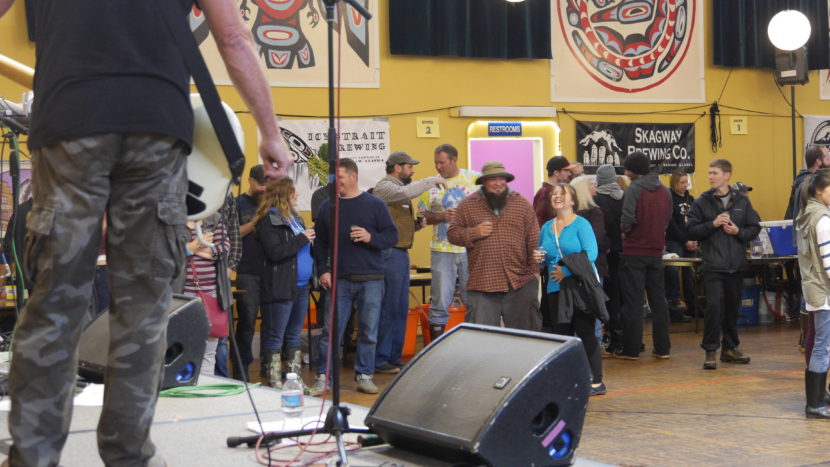
Crowd at the 5th Annual Capital Brewfest Saturday.
The crowd at the 5th Annual Capital Brewfest on Saturday. (Photo by Quinton Chandler/KTOO)

The party was on at the Juneau Rotary’s Capital Brewfest.

There was a stage, live music and a large room packed with people drinking from short glasses of beer. The organization Juneau – Stop Heroin, Start Talking passed out koozies that said “BEER AND BACON ARE 100% BETTER FOR YOU THAN HEROIN.”
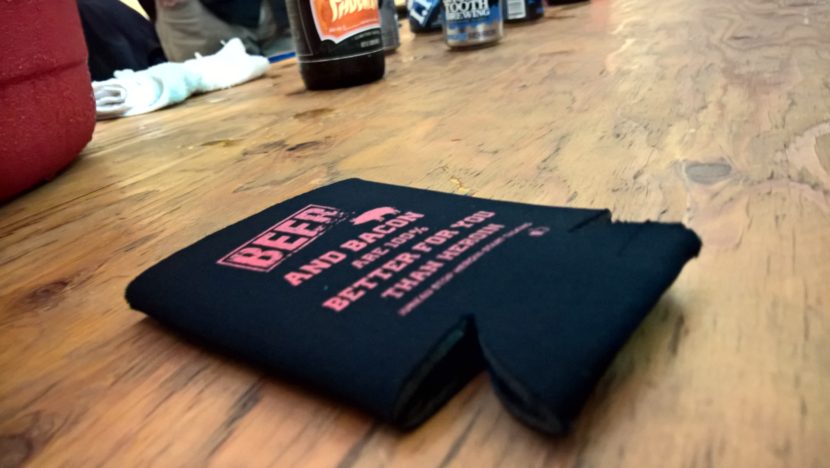
Beer and Bacon 100% Better than Heroin koozie
Koozies distributed at the Capital Brewfest on Saturday read “BEER AND BACON ARE 100% BETTER FOR YOU THAN HEROIN.” Some of the proceeds from the fifth annual Capital Brewfest went to Juneau – Stop Heroin, Start Talking. (Photo by Jeremy Hsieh/KTOO)

The group fights against heroin abuse and will take a quarter of the money raised from the brew fest.

Its participation raised the question: Is it appropriate for an anti-heroin group to take donations from a beer festival – especially considering Alaska’s high rates of alcoholism?

Adam Buechler wasn’t too concerned.
Keg at the Capital Brewfest Saturday.
Keg at the Capital Brewfest Saturday. (Photo by Quinton Chandler/KTOO)

“It’s weird, but a lot of programs will substitute one addiction with another and I think the majority of people will agree that beer is a better addiction than heroin,” Buechler said.

Hailey Ward was on vacation from her job at a homeless shelter in Calgary, Canada. She’s a nurse and said addictions are her specialty. The koozies caught her off guard.

Heroin is not something I joke about,” Ward said. “It’s something I see as a very serious thing in my work environment, so mixing my vacation life, going to a beer festival and seeing them almost joking about heroin, yeah, it caught me for a moment for sure.”

Still, she said it’s a beer festival and she wasn’t offended.

“I’m also here so I can’t be like, ‘Oh I’m very offended about this,’” Ward said.
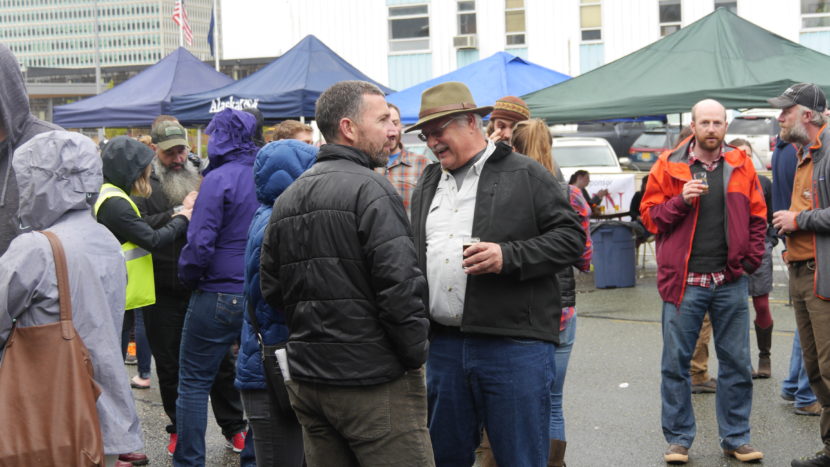
Outside the Capital Brewfest Saturday.
Outside the Capital Brewfest on Saturday. (Photo by Quinton Chandler/KTOO)

Izzie Felstead thought the koozies had a good message.

“I thought it was really cool because I don’t use koozies very much but if I’m going to have a koozie at least it says something better than like, ‘drink beer,’” Felstead said.

She also liked the rubber wristbands making the rounds.

“I have a wristband that says ‘Stop Heroin, Start Talking,’” Felstead said. “I think that’s a better message because kids will wear them rather than having something they have to put on a beer.”

Each year the Juneau Rotary partners with another organization to help throw the brew fest. The partner gets 25 percent of the money the festival raises. Rotary officials said historically, the event has raised about $25,000.

But should Michele Morgan’s organization, Juneau – Stop Heroin, Start Talking, take that money?

The CDC has reported Alaska has one the highest rates of binge drinking in the country. The state reported in 2010 Alaska had the highest rate of fetal alcohol syndrome.

Morgan agreed that alcohol can be dangerous, but said the brew fest is a legal event and it gives her a chance to spread her message.

“I did the bacon fest and we did the same thing, ‘Bacon is 100 percent better for you than heroin.’ Anything is better for you than heroin. I mean, it can kill you with one mistake,” Morgan said.

She said she will go to any event to spread awareness and try to save the next generation from the dangers of heroin.

“I don’t eat bacon. I don’t eat farmed meats, but I did bacon stickers for the bacon fest. I did the beer ones for the beer fest. I don’t drink beer,” Morgan said.
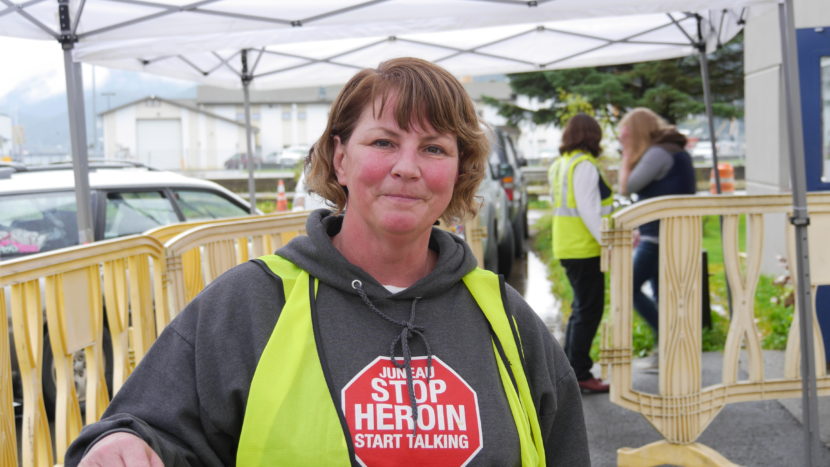
Michele Morgan founder of Juneau - Stop Heroin, Start Talking.
Michele Morgan founded Juneau – Stop Heroin, Start Talking. (Photo by Quinton Chandler/KTOO)

Morgan got one complaint about the brew fest. She said a woman whose son is an addict emailed her and said she was upset by the organization taking part.

“We talked and I explained to her, ‘These are decisions. Not everyone is an alcoholic,’” Morgan said. “‘These people here, alcohol is legal in the United States. I’m not the one who makes it legal.’”

She told her, the opportunity to bring awareness to a new group of people and get some much-needed money for their cause was huge. And she’s thankful for it.

“We talked and emailed and she actually understood and apologized, and said ‘I understand. This event is happening. If this is an adult event and these people are maintaining and doing well, why do we have to take that away from shining a light on how horrible heroin is?’” Morgan said.

Morgan said the money she gets from the Rotary will help fund her awareness campaign. It will also help in a new venture. She and a woman whose son died from heroin abuse are planning to take the message into Juneau’s schools.

She wants to talk about the state’s report that Southeast Alaska saw a near 500 percent increase in Hepatitis C cases in five years. The report links the increase to injection drug use.

Editor’s note: KTOO is a sponsor of Capital Brewfest. 
Stolen art piece was intended to raise awareness of homelessness in Juneau

(Photo by Scott Burton/KTOO)

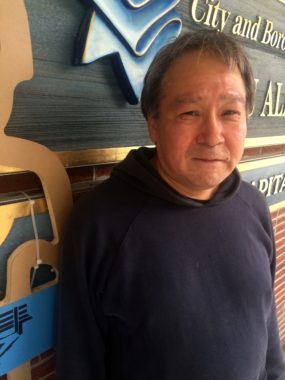
It’s a nice afternoon in Juneau as Michael Spoon stands in front of Juneau’s City Hall looking at the abstract figure.

Michael Spoon says he's thankful for the resources available at the Glory Hole. (Photo by Scott Burton/KTOO)
Michael Spoon says he’s thankful for the resources available at the Glory Hole. (Photo by Scott Burton/KTOO)

“You can tell it’s a humanoid form. What is this? A bench?” Spoon asks.

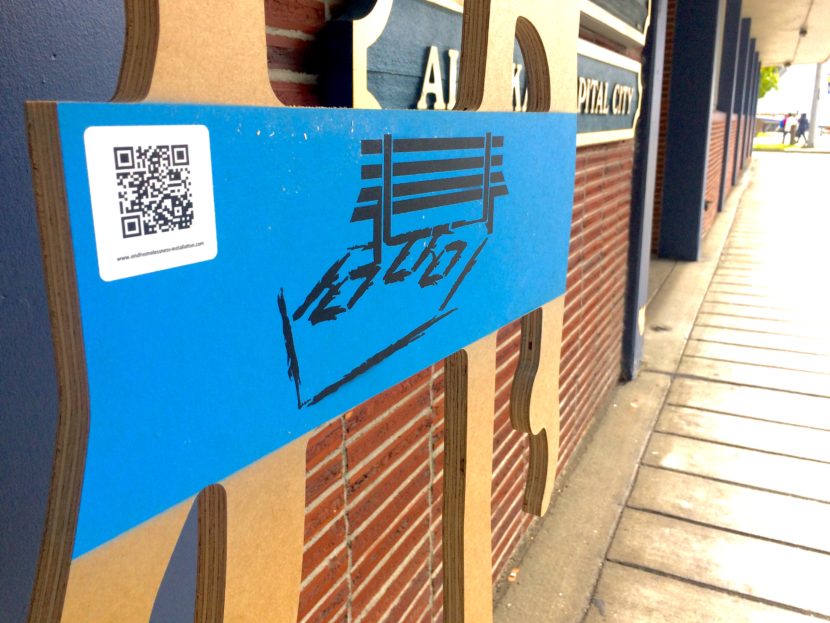
The figure is a little taller than Spoon, who’s been homeless in Juneau since December. It’s a plywood cut-out of a person that is part of a national effort to bring awareness to homelessness. The social art project began in Charleston, South Carolina, where the city collaborated with a design firm to create 430 plywood figures — the estimated number of homeless people in the city at the time.

The figures were placed in a park in front of their City Hall. Now, the project has gone national and every state capital has been asked to put a figure in front of their city hall in solidarity.

The figure is hollow to symbolize the invisibility of homeless people, and there’s an image of a bench with a house as a shadow near the figure’s belt line. Spoon didn’t sleep on a bench last night, but close.

“I was sleeping up behind a restaurant this morning. It was blowing like 35, 45 mph and rainin’ — layin’ on cardboard — I had cardboard covering me. I still froze,” Spoon says.

Spoon says he’s been homeless in Juneau 6 or 7 times before, and in several other cities.

“Sitka, back in my hometown, Seward, Alaska, Anchorage, Alaska, Seattle, Portland, Oregon, on the outskirts of Portland, Oregon, Grimshaw, Milwaukee, Gladstone …”

The figure is next to the large City Hall sign board tourists like to take pictures with. A couple walks by, cameras in hand. Spoon asks the man for a smoke. The man, with a cigarette in his mouth, shakes his head no.

“That’s another issue around here, too, is the drugs,” says Spoon. “I’m an alcoholic but I try and take a break from it once in a while and keep on trying to find work.”

He also says that violence is an issue, but that it’s the same everywhere. Overall, Spoon says that Juneau seems better than some other places.

“You get to wash your clothes and take a shower at the Glory Hole, and they get fed three times a day,” says Spoon. “These other cities I was in, you only got to eat once a day, and you could never use the shower ‘cause someone was always in there — beat you to it or something.”

I ask him what advice he has for Juneau.

“Just keep trying I guess. Find enough resources of what’s around you and try to use ‘em. They’re starting to do the housing thing and stuff. I missed (out by) 5 minutes. Some guy beat me by 5 minutes — he was the last guy to sign up for the housing,” answered Spoon.

The housing Spoon is referring to is Juneau’s housing first facility now under construction in Lemon Creek. The 32-unit building, which should be done in May 2017, is meant for people like Spoon. The idea is that with a stable living environment, people can then address their addictions, get medical attention, find work.

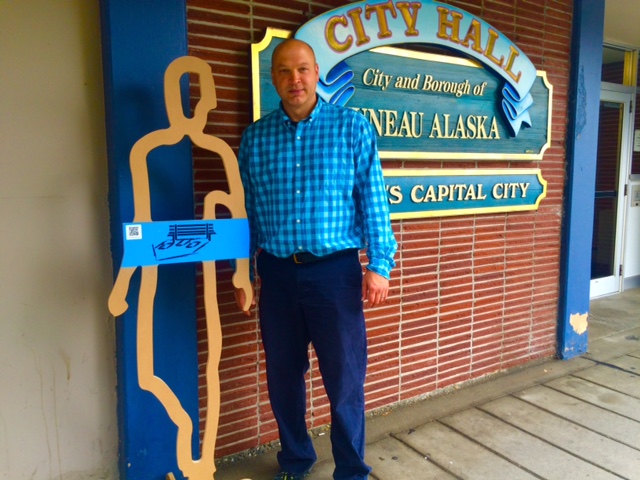
City and Borough of Juneau Chief Housing Officer Scott Ciambor stands with the figurine that was sent from Charleston, South Carolina. (Photo by Scott Burton/KTOO)
City and Borough of Juneau Chief Housing Officer Scott Ciambor stands with the figure that was sent from Charleston, South Carolina. (Photo by Scott Burton/KTOO)

“We’ve had a great community effort in the last five years,” says Scott Ciambor, Juneau’s chief housing officer. He’s among a group of organizers and planners that have made the housing first project a reality.

“This is kind of showing that, unlike the figurine which is supposed to represent invisibility and not seeing homeless people as part of communities, we’ve gotten past that hurdle and are making active choices for solutions,” he says.

If Juneau were to fully emulate Charleston’s project, we’d put out 216 figures — maybe in Marine Park. That’s the number of homeless people counted in Juneau in January. Ciambor is proud of the 32-unit housing first project, but he says we still have more work to do.

“Realistically, that is a small sample targeted to those who are most vulnerable,” Ciambor says. “So there’s still opportunities slightly up the spectrum, more low-income, affordable housing, more supported housing that is not as intensive as that project. And some more private market rentals that social service providers can connect with to put some of their clients in.”

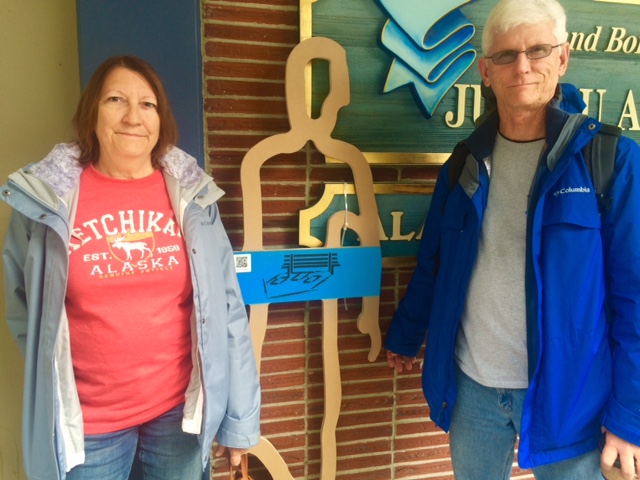
A couple walks by and I ask them what they think of the figure. Beyond the shape of a person, they’re not sure what it is and they don’t know how to use the QR code that links to the project website. I explain it to them. It turns out I am preaching to the choir. Eddie Snell is off a cruise ship from Florida and is active in his community’s efforts to fight homelessness.

Sherry and Eddie Snell are visiting Juneau from Florida. Eddie is active in his community's efforts to address homelessness. (Photo by Scott Burton/KTOO)
Sherry and Eddie Snell are visiting Juneau from Florida. Eddie is active in his community’s efforts to address homelessness. (Photo by Scott Burton/KTOO)

“We should not have large numbers of people roaming the streets without receiving some type of help in this country with all the resources we have,” Snell says.

Spoon agrees, but unlike Snell he doesn’t have a stateroom.

“I don’t know where I am going to sleep tonight,” Spoon says.

Ciambor took a picture of the figure and sent it to the project organizers in Charleston. So far, Juneau, Little Rock and Santa Fe have participated. To see the figure, the pictures in this story will have to do — it was stolen the night after I did these interviews. Ciambor has mixed emotions about the theft. He’s glad it has a new home, but he’d like it back.

JPD asks for school board’s help in kindness initiative

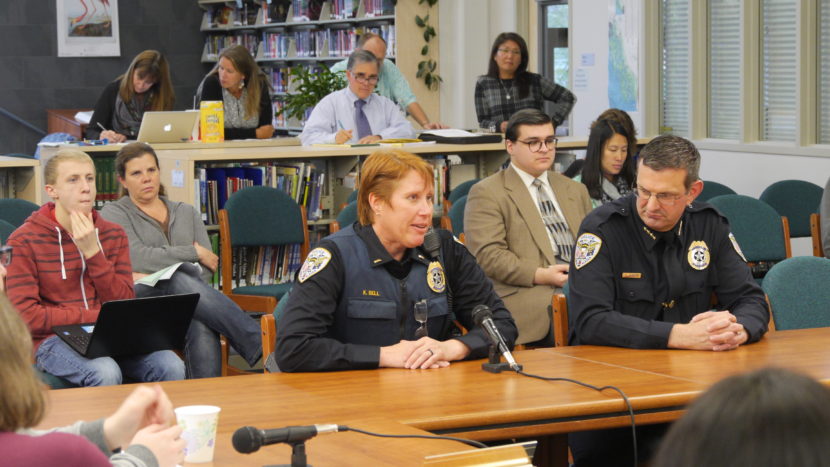
JPD Lt. Kris Sell (left) and Chief Bryce Johnson (right) speak at Tuesday's Juneau School Board meeting. (Photo by Quinton Chandler/KTOO)
JPD Lt. Kris Sell, left, and Chief Bryce Johnson, right speak at Tuesday’s Juneau School Board meeting. (Photo by Quinton Chandler/KTOO)

The Juneau Police Department wants to boost residents’ quality of life with kindness.

JPD Police Chief Bryce Johnson and Lt. Kris Sell presented their idea to the Juneau School Board Tuesday night.

The department wants the community to spend a year trying to make Juneau a more peaceful place by encouraging people to perform random acts of kindness for others.

“What we want to do is encourage people to do at least one kind act per day for another person. And to once a week make that kind act directed at someone who’s not in their normal circle of associates,” said Sell. “Maybe someone of a different culture, different background, different religion, different socioeconomic status.”

Sell said the department asked the nonprofit Random Acts to track what impact kindness will have on the Juneau community through 2017.

She said Random Acts will send a researcher to Juneau in January to gather data on the town. Then the organization will return a year later to see if Juneau’s quality of life has changed.

“And that’s numbers about our crime rates, about our disturbances, about discipline issues in the school, and we’ve talked to the hospital even about tracking our level of disease in Juneau,” Sell said. “We know from studies that being kind actually improves your immune system.”

A column in the Washington Post recently cited a study that found patients who gave their doctors a perfect score for empathy tended to recover from colds faster than patients who gave their doctors lower scores.

But the columnist, who is also a doctor, said evidence of a direct link between empathy and better health outcomes was limited. He also said kindness can’t hurt.

Sell said Random Acts had never heard of an entire town leading a kindness initiative and they said Juneau would be the first.

Sell said she and Chief Johnson came to the Juneau School Board meeting, hoping to recruit young people to take part in the initiative.

She hopes Juneau’s youth will continue making deliberate acts of kindness after the year is up.

She said kindness is “the drug that can replace all other drugs.”

17-year-old killed in accidental shooting

JPD SUV on Sunday, Sept. 11, 2016.
JPD vehicle. Photo by Quinton Chandler/KTOO

A 17-year-old boy was killed in an accidental shooting outside a home in the Mountain Wood Circle neighborhood Saturday morning.

The boy was one of four males preparing for a duck hunt according to a Juneau Police Department press release.

He was reportedly standing outside of a truck when he tried to pull his shotgun out of the back seat by its barrel. The shotgun went off and the boy was hit in his torso.

The rest of the hunting party was standing outside of the truck during the shooting. Police said they tried to give the victim first aid before 1st responders arrived.

An ambulance took the victim to Bartlett Regional Hospital where he was pronounced dead.

The victim was a student at Thunder Mountain High School. Police said Juneau School District will provide grief counseling to people who knew the victim and those hurt by his death.

JPD spokeswoman Erann Kalwara said accidental shootings are rare in Juneau. She wasn’t certain how many occur but said there are no more than two per year.

AEL&P announces how much electric rates could go up

Keeping the lights on in Juneau could be more expensive this fall. Alaska Electric Light & Power – the privately owned electric utility that powers the city – wants to increase its rates. The company announced Friday that, overall, customers can expect to pay 8 percent more on their electric bill by the end of 2017.

According to a press release, rates will increase gradually.

In November, rates could go up by nearly 4 percent, pending approval from the Regulatory Commission of Alaska or RCA. It’s an increase to pay for a backup diesel generation plant in the Mendenhall Valley and improvements to the electric utility’s systems. AEL&P has invested over $50 million for additions and upgrades. The diesel plant makes up about $22 million of that. 

In December of 2017, rates will go up another 4.24 percent. Again, pending RCA approval.

It would be the first rate increase since 2010. That increase followed the utility’s Lake Dorothy hydro project coming online.

Editor’s Note: This story has been updated to explain AEL&P’s investment for upgrades and improvements. 

A hydro license brings district heating one step closer in Juneau

After years of waiting, Juneau Hydropower Inc. was recently awarded a federal license for Sweetheart Lake Dam. It gives the company the go-ahead to start serious planning for a new multimillion dollar hydro facility. It could power a gold mine and supply heat to the downtown core of the capital city with an innovative system.

Duff Mitchell calls getting the Federal Energy Regulatory Commission or FERC license a milestone. He’s the managing director of Juneau Hydropower. After waiting six years, he learned his company was receiving the license in early September.

“I hate to use it but it’d be like a liquor store. You bought all the liquor, you bought the store but you can’t sell it until you get permission. This is the permission,” Mitchell said.

In the U.S., water — like Sweetheart Lake — is considered a public resource. That’s why Juneau Hydropower had to apply for the regulatory license. That public resource could be used to generate electricity from a privately owned dam.

There are still a few more hoops to jump through, but Mitchell thinks they could start some preliminary work at the site as early as this winter.

Once the dam is built, the company plans to power the Kensington Mine, which runs entirely off of diesel. Meanwhile, Mitchell says they’ll also began construction next summer on a seawater heat pump in Juneau.

“And so we’re going to be trying to lay pipe in Juneau this summer, too,” Mitchell said.

The technology works similar to your fridge at home. Except, in this case, it’s warmth that’s transferred away from the water.

It’ll be powered by Sweetheart Lake dam and bring heat to buildings through pipes in the downtown core — displacing heating fuel.

But not everyone has been supportive of the dam project. Back in 2014, the privately-owned utility that services Juneau — AEL&P — sent a critical letter to FERC explaining there wasn’t a need for new hydro.

Tim McLeod — AEL&P’s president says that was before the dam proposal included the district heating idea.

“We did not forecast a load that would justify the project when we submitted that letter,” McLeod said.

Now that district heating is part of the equation, McLeod says he’s isn’t sure. He doesn’t know how much juice it would take to pencil out.

“I don’t have any knowledge of that. That haven’t talked to AEL&P about the heating district,” McLeod said.

But Juneau Hydropower might have to. McLeod says he expects the company will want to use AEL&P’s existing transmission lines. And Duff Mitchell agrees. He says he’ll work with the utility to make it happen.

For district heating to make sense, Mitchell says large Juneau buildings will have to come online, like the capitol complex, state office building and Juneau-Douglas High School. And eventually, people’s homes.

“It’s going to require a subscription. In other words, a lot of the neighborhoods are going to want to do it. It can’t be just one house,” Mitchell said.

He believes there’s interest from the large downtown buildings.

“Yes, the bottom line is that this reduces greenhouse gases. A lot of people are interested because this is the wave of the future.”

He says the Danish government thinks so, too. Denmark has a long history with district heating. And Mitchell says the country’s representatives have their eye on Juneau.

“So they’re working with us however and whenever they can, and they see Juneau as a flagship where they can also sell more Danish pipe and stuff in the future,” Mitchell said.

Mitchell thinks Denmark could help pay for some of the project cost with Danish bonds. And he believes that’s a real possibility, along with financing from the Department of Energy and private investors. A bill that passed the Alaska legislature this year also frees up low-interest loans from a state backed corporation.

Site notifications
Update notification options
Subscribe to notifications