Alaska Native Corporations

How will Sealaska solve its money problems?

The Sealaska building in Juneau.
Sealaska Plaza is the regional Native corporation’s Juneau headquarters. (Heather Bryant/KTOO)

Sealaska holds its annual shareholders’ meeting Saturday near Seattle. A new CEO will take over, as will a new board chairman or woman. And, at least one new board member will be seated.

All will face the challenges of a new economic reality. The Juneau-based regional Native corporation has been losing money and plans for recovery are somewhat uncertain.

Sealaska recently told its about 22,000 shareholders about its financial problems.

The corporation’s annual report showed operational losses of about $57 million last year. Revenues from investments and other sources brought that down around $35 million, but it’s still a lot of money.

Outgoing CEO Chris McNeil Jr. says Sealaska is doing fine. It has a three-point plan to bounce back.

“One, of course, is achieving our land entitlement before Congress. The second is making one or more highly profitable acquisitions in 2015. And then also, it would have to significantly increase its federal contracting with higher margins.”

The first is controversial federal legislation turning 70,000 to 80,000 acres of Tongass National Forest timberland over to the corporation.

It’s stalled in Congress. But if it’s passed, it will allow Sealaska to reinvigorate its shrunken logging subsidiary, once the corporation’s economic powerhouse.

Rick Harris is executive vice president of the corporation.

“We will be effectively running out of timber by the end of this year or sometime early in 2015,” Harris says.

Some of the targeted timberlands have high-value, old-growth forest. Others have, or will have, second- or young- growth trees big enough to fell and sell.

Harris says Sealaska is developing markets for those smaller trees, which already make up a fifth of timber sales.

“We’re working with the customer, we’re working with them to identify the supply we have, both for mature timber and second growth. And then helping build a plan, with our customers, so we will be able to supply their needs and that they have the mills that are capable of handling the type of wood that we can deliver,” Harris says.

Carlton Smith is one of four business-oriented shareholders running for the board as a slate.

“The board has struggled with replacing timber income. And we’ve had 20 years to plan for this,” Smith says.

He says Sealaska would do better getting involved in Alaska’s oil and gas industry and helping shareholders find employment there.

One way, he says, is to join other Native corporations campaigning against repealing the state’s oil and gas tax structure.

“We need to make a commitment to the future of Sealaska’s involvement in Alaska commerce. And that takes place in Anchorage,” Smith says.

Smith wants the corporation to open an office in the state’s largest city.

Karen Taug, another member of the shareholders slate, says it’s time to close or at least move Sealaska’s office in Bellevue, Wash. That’s the home of several subsidiaries, as well as the CEO’s main office.

“They could very well pay rent somewhere else at a much cheaper rate, rather than in a high-rent area of Bellevue. Q: Does it seem to you that that was created so Chris McNeil could live and work down south? A: Yes,” Taug says.

Corporate officials won’t give many details of the second part of their recovery plan, to buy one or several new, profitable business. That’s because it’s still being developed.

But McNeil says they’re considering areas that could employ shareholders in Southeast Alaska or the Pacific Northwest.

“We’ve taken another look and will continue to look in the fisheries sectors,” McNeil says.

Other areas include organic foods and expanded mariculture.

Sealaska’s already backing small, tribally-owned oyster farms. VP Harris says it creates businesses that take a realistic approach to village employment.

“Jobs that are the kind of thing people that want to do. And it’s consistent with the way they live their lives, instead of us coming and saying you have to change the way you live in order to have a job. We’re saying, let’s create jobs that meet your needs,” Harris says.

Shellfish farming is part of Sealaska’s Haa Aani division, which focuses on job development within Southeast.

But Smith and some other critics say that’s not where to look if you’re trying to boost corporate profits.

“I don’t know how a company that’s not making money by itself can be generating economic development elsewhere. And even though it theoretically does touch the lives of our shareholders, it certainly would not be the No. 1 priority at the moment,” Smith says.

Corporate officials say Sealaska needs to try to get more leverage out of government contracting.

But contracting is part of the corporation’s problems. About $26 million was lost when that subsidiary badly underestimated two federal construction projects in Hawaii.

The independent slate’s Ross Soboleff also wants to lower costs by reducing pay and bonuses for board members and top managers.

“My personal opinion about the board compensation now is it’s high. And when the top levels of your company tighten their belts and cut their own expenses, it sets a very important precedent and the tone of the company,” Soboleff says.

Soboleff, Taug and Smith are three of 13 candidates running for Sealaska’s board. Their slate also has a fourth member, Margaret Nelson.

Three board incumbents are seeking re-election: Sidney Edenshaw, Ed Thomas and Rosita Worl.

Other candidates running independently are Myrna Gardner, Mick Beasley, Michelle McConkey, Will Micklin, Edward Sarabia Jr. and Ralph Wolfe.

CEO McNeil will officially retire at the annual meeting. Treasurer and chief investment officer Anthony Mallott will take his place.

Critics question Sealaska ballot

The Sealaska building in Juneau.
Sealaska Plaza is the regional Native corporation’s Juneau headquarters. (Heather Bryant/KTOO)

Four Sealaska board of directors candidates say the regional Native corporation’s balloting process violates a recent court ruling.

Sealaska says it’s not a problem.

The Alaska Supreme Court decision came in a case involving CIRI, the regional Native corporation for the Cook Inlet area.

The group 4 Shareholders for Sealaska says Native corporations must now disclose how discretionary votes will be counted in board elections.

Discretionary votes are turned over to the board, which casts them for its slate. Shareholders authorize such voting by checking a box on their ballots, also called proxies.

Randy Wanamaker is spokesman for the 4 Shareholders group.

“Sealaska’s proxy does not contain that language. They have some language in their proxy booklet, but not on the proxy itself. And the state Supreme Court said you must put it on the proxy,” Wanamaker says.

Sealaska officials say election attorneys have reviewed the issue.

Corporate Secretary Nicole Hallingstad says the ballots are legal, as-is.

“The outside group misinterprets the CIRI case and is designed to confuse shareholders. Sealaska’s proxy statement, proxy card and bylaws all state clearly that discretionary votes will be allocated to elect the board slate candidates,” Hallingstad says.

Thirteen people are seeking four seats on the regional Native corporation’s board. There are three incumbents, the four-shareholders slate and six independents.

This year’s proxy also includes a resolution to limit discretionary voting.

Balloting is underway and winners will be announced at the June 28th annual meeting near Seattle.

Sealaska is the regional Native corporation for Tlingits, Haidas and Tsimshians with roots in Southeast Alaska. More than half its almost 22,000 shareholders live outside the region.

The 4 Shareholders candidates are Karen Taug, Ross Soboleff, Carlton Smith and Margaret Nelson.

The independent candidates are Myrna Gardner, Mick Beasley, Michelle McConkey, Will Micklin, Edward Sarabia Jr. and Ralph Wolfe.

The board incumbents are Sidney Edenshaw, Ed Thomas and Rosita Worl. Incumbent Bryon Mallott is not seeking re-election so he can focus on running for governor.

Sealaska4’s press release:

Based on a recent Alaska Supreme Court decision, the four independent candidates for the Sealaska board – Karen Taug, Ross Soboleff, Carlton Smith, and Margaret Nelson — are questioning the rules governing Sealaska’s annual meeting voting process.

“It appears Sealaska failed to make changes to this year’s corporate ballot as required by a recent Alaska Supreme Court decision,” said the group’s spokesman, Randy Wanamaker. “On the advice of counsel, the Sealaska4 sent letters on May 22 to Sealaska’s corporate secretary and the independent inspector of elections. The correspondence pointed out Sealaska’s failure to properly disclose how discretionary votes will be distributed.”

Two weeks later, the Sealaska4 candidates have not received a response nor has Sealaska issued a corrected ballot. With only three weeks to go before the regional corporation’s annual meeting on June 28, the Sealaska4 candidates are pressing Sealaska for a response.

The Alaska Supreme Court’s decision in Rude v. CIRI now requires Alaska Native corporations to disclose on proxy ballots how discretionary votes will be allocated. Wanamaker says that Sealaska’s proxy ballot does not include the necessary explanation.

“It appears that Sealaska’s ballot advisors failed to adequately consider the new voting rules,” said Wanamaker. “The result may be that Sealaska will have to assign discretionary votes equally to its board slate candidates.”

According to Wanamaker, discretionary voting is a controversial practice long used by Sealaska to distribute votes in unequal amounts to elect as many of the board slate candidates as possible. “This practice often results in the election of incumbent directors who may have weak shareholder support,”
Wanamaker said.

A shareholder petition forced the question of discretionary voting practice onto the 2014 Sealaska ballot. If shareholders support the initiative, discretionary voting will not be allowed in subsequent elections. Wanamaker said that considering the new court decision, and Sealaska’s apparent failure to incorporate and disclose the required discretionary voting instructions on the ballot, the corporate bylaws are open for challenge.

Sealaska’s press release:

“The press release by the outside group misinterprets the CIRI case and is designed to confuse shareholders. Sealaska’s proxy statement, proxy card, and bylaws all state clearly that discretionary votes will be allocated to elect the board slate candidates. It is the duty of the Independent Inspectors of Election and Voting to determine the effect of each proxy. The Inspectors of Election has independent legal counsel, and verbally advised Sealaska that the proxies are valid as written. We expect written confirmation of this conclusion. Any Sealaska shareholder voting on Sealaska’s blue proxy can be assured their votes will be counted.

The press release issued by the outside group further confuses shareholders by wrongly representing the shareholder resolution. It is a resolution to reduce the use of discretionary voting on the Sealaska proxy unless an independent slate is present and also using discretionary voting. To claim that support of the initiative would disallow discretionary voting in all subsequent elections is simply not true.”

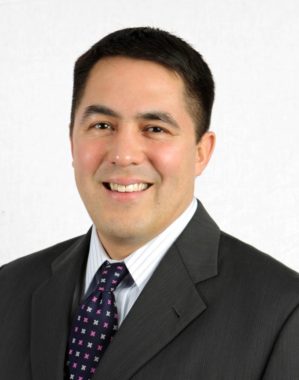
Anthony Mallott is Sealaska’s new CEO

Anthony Mallott was named the new Sealaska CEO on Tuesday. He takes over June 28th from Chris McNeil Jr. (Sealaska Photo)
Anthony Mallott was named the new Sealaska president and CEO on Tuesday. He takes over June 28th from Chris McNeil Jr. (Sealaska Photo)

A second generation of Mallotts is taking over the helm at Sealaska.

The regional Native corporation’s board of directors named Anthony Mallott as president and CEO during a shareholders’ meeting Tuesday night in Anchorage.

He’s the son of former CEO and long-time board member Byron Mallott, who’s running for governor as a Democrat.

The younger Mallott says he has a good relationship with his father. But they limit their conversations.

“We do not discuss business. We’ve kept that outside our relationship. Of course, he’s offered fatherly advice my whole entire life,” he says

Anthony Mallott has been Sealaska’s treasurer and chief investment officer for the past eight years.

The 39-year-old says that, and his previous experience, got him the job.

“I’ve spent 18 years in the investment management field. I have a very experienced background in that regard. And I really think the board saw that as one of the very important attributes that we need in a CEO as we move into this phase of acquiring new investments and operating entities,” he says.

Sealaska is in the midst of changing some of its financial policies, with a goal of providing more jobs and higher dividends to shareholders.

To do that, it must recover from last year’s substantial shortfall.

Sealaska reported about $57 million of operating losses during 2013. Revenues from investments and other sources brought that down to around $35 million.

Mallott says the corporation is still financially strong.

“We have assets, that at a minimum, will provide a strong level of income in this coming year. So the turnaround’s already happening,” he says.

He’ll take over the reins from current CEO Chris McNeil Jr. on June 28th, the day of Sealaska’s annual meeting.

Mallott is the first CEO who is not an original Sealaska shareholder. He is among several thousand younger Southeast tribal members born after the Alaska Native Claims Settlement Act created corporations.

Sealaska has a total of about 22,000 Tlingit, Haida and Tsimshian shareholders.

Mallott is a Juneau resident with roots in Yakutat and Interior Alaska. He has a bachelor’s degree in industrial engineering from Stanford University.

He is Tlingit, Eagle, Tsaagweidí (Killerwhale) Clan, as well as Koyukon Athabascan, Caribou Clan.

His Tlingit name is Gunnuk.

Read Sealaska’s press release about Mallott’s hire.


Discretionary voting before Sealaska shareholders


Sealaska close cropped proxy resolution

A measure before Sealaska shareholders could alter the way board elections are held. And that could bring leadership changes.

The measure comes as 13 shareholders compete for four board seats in the Southeast Alaska regional Native corporation’s annual election.

The measure is a resolution proposing limits to what’s called discretionary voting.

That’s an option on Sealaska’s proxy ballot, which lists candidates for the board of directors.

When shareholders check a box, they give the board the power to cast their ballots for whomever they see fit. And the board votes for its slate of incumbents seeking re-election.

“It’s an unfair document because of the discretionary voting and that is what has kept all our directors in all of these years,” says Mick Beasley.

He’s a Juneau carver who’s campaigned against discretionary voting. He’s also one of this year’s six independent board candidates.

Beasley authored the resolution that would largely eliminate that ballot option. Then, shareholders would pick and chose from the full list of candidates, including incumbents and their challengers.

“If this resolution passes and we amend our bylaws, it will make it equal voting rights for all shareholders,” he says.

Sealaska’s board opposes Beasley’s measure.

“They would wipe out what Sealaska believes would otherwise be a valid vote,” says Nicole Hallingstad.

She is Sealaska’s communications vice president and corporate secretary.

“Those shareholders understand exactly what discretionary voting means and are offering their shares in support of the corporation. To remove that discretionary voting option would remove a choice that at least a quarter of our shareholders select on a regular basis,” she says.

The resolution does not completely eliminate discretionary voting.

Beasley says it would be allowed when an independent group challenges the board and issues its own ballot.

“If there are two slates, two proxies, then discretionary voting is fair game. When there is only one proxy, and that’s Sealaska’s, they cannot use discretionary voting,” he says.

Shareholders are rarely faced with two slates – and proxies. But this year, they are.

A group calling itself 4 Shareholders for Sealaska has sent out its own ballot and posted it online.

Margaret Nelson, Carlton Smith, Ross Soboleff and Karen Taug say their combined business experience could help make Sealaska profitable after several years of operational losses.

The corporate ballot lists board incumbents Sidney Edenshaw, Edward Thomas and Rosita Worl.

Spokeswoman Hallingstad says the three bring knowledge and history to Sealaska management.

“The stability of any corporation’s board is something that’s reviewed regularly by business partners (and) financial institutions. So, board stability is something that is of value outside of our shareholders,” she says.

Longtime board member Byron Mallott is not seeking re-election because he’s running for governor. That leaves an open board seat, with no incumbent, a rarity for Sealaska.

Six independent candidates, running outside of a slate, are also listed on the corporate ballot.

They’re Myrna Gardner, Michelle McConkey, Will Micklin, Edward Sarabia Jr. and Ralph Wolfe, in addition to Beasley.

“Everybody was trying to keep it to one or two independents this year. But we’re back to six or seven independents. It’s just the nature of our shareholders,” Beasley says.

The four top vote-getters will win  three-year terms on the 13-member board.

Results will be announced at Sealaska’s annual meeting June 28th in Seattle.

Read the full proxy ballot with information about the board slate and independent candidates. 

Read the 4 Shareholders for Sealaska website, with information about their candidate slate. 

Update: Sealaska reports $35 million loss

Sealaska Plaza, the corporation's Juneau headquarters. Officials announced the December distribution, the largest in three years.
Sealaska Plaza is the corporation’s Juneau headquarters. Officials just released the regional Native corporation’s 2013 report.

Southeast Alaska’s regional Native corporation had a $35 million net loss in 2013.

Three-quarters of that came from its construction subsidiary, which badly underestimated two federal projects in Hawaii. The corporation’s recently-released annual report says that company’s managers are gone and bidding on similar projects has stopped.

Other losses came from land entitlement costs, including lobbying for federal legislation transferring Tongass timberlands to the corporation.

CEO Chris McNeil says despite the losses, Sealaska remains healthy.

“Sealaska is a stable institution that continues to protect its Native land, support education and shareholder opportunities, while growing our investments and operations,” he says.

McNeil says the corporation is following a list of priorities developed about a year and a half ago.

“One was to narrow the scope of our operations from companies that don’t fit our strategic plan anymore. And we sold the Nypro Kanaak operations, (a plastics manufacturing partnership) notwithstanding the fact that they were all profitable at the time we sold them,” he says.

Overall, Sealaska’s annual financial report lists $165 million in revenues, more than $40 million less than the previous year.

The corporation is headquartered in Juneau and has about 21,500 Tlingit, Haida and Tsimshian shareholders. More than half live outside Southeast.

Shareholder and longtime critic Brad Fluetsch  says Sealaska’s losses are a sign of poor management. And the financial adviser says shareholders should have been informed earlier.

“This is just a condemnation of management and their accounting practices and their transparency. To me, it’s evidence of manipulation of shareholders,” he says.

The annual report shows a total loss of more than $50 million. Investments, profitable ventures and resource earnings from other Native corporations shrunk that to $35 million.

CEO McNeil says the board and managers are looking for new areas of growth.

“We need to be able to acquire another company in order to provide both income and the opportunity for sustainable development and potential for employment or empowering and capacity-building for our tribal-member shareholders,” he says.

Fluetsch doesn’t like that idea. He’s pushed for smaller, regional business development, such as growing and selling berries or flowers.

“When you read the annual report, their whole thing is about going out and buying another company, which scares the living daylights out of me. Shareholders cannot afford any more major write-offs. We actually have to start making money,” he says.

Sealaska’s annual report comes out at a time of corporate transition.

McNeil is retiring and a new CEO should be in place this summer.

Longtime Board President Albert Kookesh is stepping down, though he’ll continue as a director. And board member Byron Mallott is leaving to concentrate on his run for governor.

In addition, 10 shareholders are challenging three incumbent board members in the corporation’s annual election.

Randy Wanamaker, spokesman for a slate of four business-oriented candidates, says shareholders deserve a full explanation of the losses.

“The specter of huge losses motivated the independent candidates to enter the campaign to replace long-serving board members. As it turns out, the losses are much greater than we feared,” he says.

The financial charts below were provided by Sealaska.

Courtesy Sealaska Corp.

Sealaska_financials_larger_mashead_r501-page-002


Sealaska’s Byron Mallott: ‘It’s a good time for leadership to change to some degree’

Byron Mallott, right, mingles with visitors at the open house of his campaign headquarters in Juneau. Mallott will leave Sealaska's board of directors next month to concentrate of his race for governor. (Lisa Phu/KTOO)
Byron Mallott, right, mingles with visitors at the open house of his campaign headquarters in Juneau. Mallott will leave Sealaska’s board of directors next month to concentrate of his race for governor. (Lisa Phu/KTOO)

Democrat Bryon Mallott will leave Sealaska’s board of directors next month to spend more time campaigning for governor. The move shakes up an already contentious board election.

http://ktoo.s3.us-west-2.amazonaws.com/2016/07/06Mallott.mp3

Mallott joined the Juneau-headquartered regional Native corporation’s governing body soon after it came into existence.

He chaired Sealaska’s board for about a decade, before becoming its CEO.

He later returned to the board, where he remains. That will end at Sealaska’s June annual meeting, when his term runs out.

Mallott says he’s been thinking about leaving for some time.

“I’m a candidate for governor and my time availability has become an issue to me. So I just decided it’s time,” he says.

Mallott is all but assured to be the Democratic challenger facing Republican Governor Sean Parnell in the November general election.

Sealaska’s long-time CEO, Chris McNeil, is also retiring soon. And former state Sen. Albert Kookesh is leaving the board chairmanship, though not his seat.

Mallott says he’ll complete his commitments to the corporation, then give someone else a turn.

“It’s a good time for leadership to change to some degree. There are many, many highly-qualified shareholders both on the board and amongst our shareholders. And creating that kind of opportunity for them to serve on the board to me is a very good thing,” he says.

The other three incumbents whose terms also run out this year are seeking re-election. They’re Sidney Edenshaw, Ed Thomas and Rosita Worl, who will run together as the management slate.

Four business-oriented shareholders have already announced they’ll run as their own slate.

Margaret Nelson, Carlton Smith, Ross Soboleff and Karen Taug are offering management experience outside the corporation.

Spokesman Randy Wanamaker says Mallott’s decision leaves an open seat with no heir-apparent. And that makes the board election more friendly to challengers.

“Every now or then an incumbent leaves for one reason or another,” he says. “And there’s another person who has been groomed or shares the same philosophy as the current Sealaska team steps forward. And they appoint that person in to fill the vacancy or put them on the slate as a new candidate to replace the departing director.”

Slates allow shareholders to vote a single ballot listing a group of candidates. Shareholders can also vote for a mix of members from both slates – or anyone else who runs.

Albert Kookesh, board chairman through the annual meeting, expects a lively race.

“The people who are running on that slate have good intentions. They want to run a clean race and I commend them for that. But we also have people who are independents who are running. And you have to commend them and recognize their want to be involved too,” he says.

Longtime Sealaska critics Mick Beasley and Myrna Gardner are among others running independently.

Sealaska will distribute ballots to its almost 22,000 shareholders on May 15th. They must be cast by June 26th.

Results will be announced at Sealaska’s annual meeting, June 28th in Seattle.

Site notifications
Update notification options
Subscribe to notifications