Alaska Native Corporations

Sealaska holds “First Tree Ceremony” to launch 2013 timber harvest

Sealaska Corp. kicked off its 2013 timber harvest program with a First Tree Ceremony.

The Juneau-based regional Native corporation says in a press release that the event is like a Blessing of the Fleet at the beginning of fishing season.
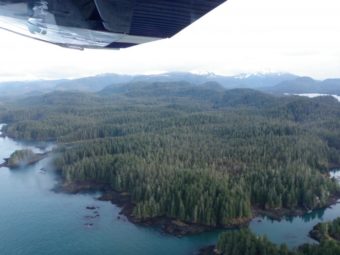
The company says the ceremony was held April 13 on Prince of Wales Island near Big Salt, just north of Klawock.

Former CFO named to Sealaska board

Sealaska corporation has a new board member.

Richard Rinehart Jr. was appointed at the regional Native corporation’s board meeting last week in Juneau.

Rinehart was Sealaska’s chief financial officer and corporate controller from 2003 to 2009. He is from Wrangell and is managing partner at Raven Potlatch Real Estate in Bellevue, Washington.

He’s run for the board several times, starting in 1995.

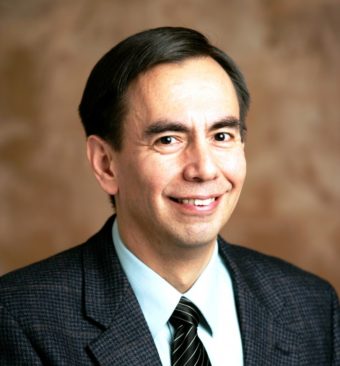
New Sealaska board member Richard Rinehart. Photo courtesy Sealaska.

“It’s just something I’ve wanted to do for a long time and I feel very honored and quite humbled by it all,” he says. “I understand there were many qualified candidates and I know Sealaska has a number of qualified shareholders. So I was just glad they chose me.”

Rinehart says he hopes to apply his familiarity with the corporation and his business expertise while on the board. That includes Sealaska’s efforts to develop new ventures within Southeast.

He fills the seat left open when Clarence Jackson Sr. of Kake died earlier this year. Jackson was on the board since the corporation’s beginning.

“He’ll be greatly missed. And I’m honored to fill that position for this remaining few months of his term. But I think I’m there as a Sealaska person, not as somebody to replace Clarence,” he says.

Rinehart is one of 13 Sealaska board members. He’ll run in this spring’s shareholder elections.

His business, Raven Potlatch Real Estate, works with tribal and other investors. It’s worked on housing projects in petroleum-producing regions.

“I’ve seen a huge opportunity with all the explosive growth in western North Dakota, from the oil exploration that’s happening out there. Coupling that with the extreme lack of housing, it’s kind of the fastest growing area of the country as far as housing development and growth,” he says.

Rinehart is Tlingit and Haida, Kiks.ádi, Raven/Frog and is originally from Wrangell. He also spent about 20 years in Oregon.

Sealaska has about 21,000 shareholders, and many of those not living in Alaska are in Washington State.

Spring Sealaska dividends total $12 million

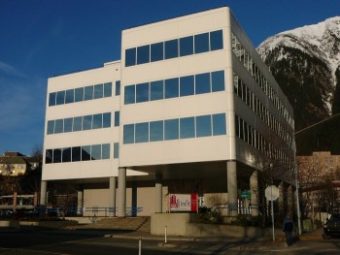
Sealaska Plaza in Juneau, headquarters of the Southeast regional Native corporation.

Sealaska’s approximately 21,000 shareholders will get their spring dividends around April 12thSealaska’s Board of Directors approved the more than $12 million distribution at a meeting today at its Juneau headquarters.

Here are details of how the distribution is divided up. Totals assume ownership of 100 shares, the most common number.

  • Urban and At-Large Shareholders: $698
  • Elder Urban and At-Large Shareholders: $852
  • Non-Elder Village and Leftout Shareholders: $154
  • Elder Village and Leftout Shareholders: $308
  • Descendant Shareholders: $154

Here‘s how the shareholder categories are defined:  

  • Urban: Also a shareholder in an urban Native corporation, such as Juneau’s Goldbelt or Sitka’s Shee Atiká.
  • At-Large: Not a shareholder in any urban or village Native corporation.
  • Village: Also a shareholder in a village Native corporation, such as Huna Totem, Kake Tribal, Klukwan and Cape Fox corporations.
  • Leftout: Those who were eligible in 1971, when the Alaska Native Claims Settlement Act became law, but enrolled later.
  • Elder: Original Sealaska shareholder who has reached the age of 65.
  • Descendent: Direct descendents of original shareholders who are at least one-quarter Alaska Native.

Here’s where the money comes from, per 100 shares: 

  • $544 from ANCSA Section 7(i) (regional corporation resources earnings) revenue sharing. A $5.44 per share payment will be made.
  • $100 from corporate earnings. 35 percent of the corporate consolidated net earnings averaged over five years, minus earnings associated with the Permanent Fund. The distribution includes an operations dividend of $1.00 per share.
  • $54 from dividends from the Marjorie V. Young Permanent Fund, which are based on a percent of market value (POMV) of the fund balance. Based on the POMV calculation, the 2013 April dividend will be $0.54 per share.

Some members of the Juneau-based regional Native corporation have more or fewer than 100 shares due to inheritance or gifting.

Much of the dividend – close to $550 – comes from a pool of regional Native corporation resource earnings. Most of that money comes from Northwest Alaska’s NANA, an owner of the Red Dog Mine.

Sealaska’s urban shareholders receive that part of their dividend directly. The corporation pays village members’ share to their local corporations, which decide whether to pass it on.

Last spring’s distribution was about 20 percent more for urban shareholders and about the same amount less for village members.

Sealaska’s shareholders are mostly of Tlingit, Haida or Tsimshian descent. Close to half live in Southeast.

SEACC backs Sealaska bill, 9 towns oppose it


Point Baker, left, and Port Protection, right, are on the northwest coast of Prince of Wales Island. Residents oppose Sen. Lisa Murkowski’s Sealaska lands-selection bill. Photo by Joe Viechnicki/KFSK


A major Southeast Alaska environmental organization has endorsed the latest Sealaska land-selection legislation. But a group of communities on or near Prince of Wales Island continues to strongly oppose the measure.

The Southeast Alaska Conservation Council opposed the Sealaska bill from the start.

It negotiated with the regional Native corporation, but actively lobbied against the measure in Southeast and Washington, D.C., as well as online.

Now, it’s endorsed revised legislation proposed by Alaska Senator Lisa Murkowski.

A map showing selections on Kosciusko Island. Courtesy U.S. Forest Service via www.murkowski.senate.gov.

“This wasn’t an easy decision,” says Buck Lindekugel, a SEACC attorney who’s been active in timber issues.

(Read SEACC’s explanation of its decision.)

“We tried to be realistic about our chances of stopping the bill or the opportunities available to continue to try to influence decision-makers as the bill moves forward,” he says.

Murkowski’s bill would transfer about 70,000 acres of the Tongass National Forest to Sealaska ownership.

The Alaska Native Claims Settlement Act required the corporation to choose property from within boxes surrounding communities with large numbers of shareholders.

Murkowski’s bill allows selections from other parts of the Tongass.

“We’ve also got to remember that Sealaska has received 290,000 acres already around the villages. And those lands have been heavily hammered,” he says.

SEACC wants further changes to the bill, such as dropping added acreage at Calder, on northwest Prince of Wales Island.

But Lindekugel says the new measure removes some very sensitive watersheds.

“It drops nearly 30,000 acres of incredibly productive lands on north Prince of Wales from selection. And it dropped another 4,000 acres of high-value karst lands on Kosciusko Island,” he says.

While SEACC changed its stand, others did not.

Nine Tongass communities near the proposed selections are actively opposing Murkowski’s new bill. (Read a letter critiquing the bill.)

“Greetings from your neighbors on north Prince of Wales Island. We, the residents of Point Baker and Port Protection, are asking you to join our voices in opposition to the latest Sealaska lands bill,” says one of the  residents of the towns’ residents on a radio commentary. (Hear or read  the full commentary.)

That’s the beginning of a radio commentary voiced by 20-plus residents.

Point Baker’s Andrea Hernandez says the people in the recording speak as a group and didn’t want to put names to specific statements. She did provide a list of those who spoke.

The commentary points to Sealaska’s agreement to a Native claims settlement act amendment limiting selections to areas around Native villages. And they say they’ve built their lives and communities around the guarantee that they’ll be able to hunt, fish and log on nearby Tongass lands.

“Now the corporation wants to exchange the land from their designated areas to areas around our towns. How fair is this?”

They particularly oppose a provision transferring additional land from part of the northwest coast.

“Calder Creek is a highly productive salmon stream. And some of the highest volume of old-growth left on the north end of Prince of Wales Island is on Calder Bay. Sealaska will most assuredly clear-cut every last bit of it, leaving the entire watershed bare, with inadequate protection to the streams,” another voice on the commentary says.

Thorne Bay, Hollis, Naukati, Whale Pass, Kupreanof, Edna Bay and Cape Pole are the other communities in the group of nine.

Sealaska says the legislation has undergone many changes since it was first proposed in 2007. (Hear or read an earlier report on the bill.)

“We can prove that we’ve listened to people and that we’ve been able to go in and make changes that try to remove the rough edges off this bill,” says Vice President Rick Harris.

He says the latest version reflects most critics’ concerns: “Nobody’s going to be happy with every aspect of it. But if you go compare what we could select inside the boxes versus this selection we think we end up with a much better result.” (Link to Sealaska’s statement on the new bill.)

“We see it as a bill that would just make a lot of rich people within Sealaska richer,” says Dominic Salvato, a shareholder living in Anchorage. He runs Sealaska Shareholders Underground, a Facebook page with 800 “likes” that’s critical of the corporation.

He says past practice shows the corporation is not environmentally responsible.

“It’s a man-made tsunami that went through Kake and went through Hoonah, and it’s just promising to be more of the same. It’s got to stop somewhere. The Tongass has given enough,” he says.

Salvato says shareholders will not get much of a benefit from land selections or timber operations.

“They’re looking at the land like, ‘How can we convert it to cash?’ They don’t look at it for its beauty and scenery. They’re looking at it for how they can convert it to long-term … bonuses for executives,” he says.

Other Native activists support the bill.

Richard Peterson is president of the tribal government of Kasaan, a Haida village on Prince of Wales Island.

“Sealaska has so far been good stewards and they’ve been coming and meeting with our community and working with us and engaging us in that process. So it’s a deal that needs to be closed,” Peterson says.

Murkowski’s land selection bill has not yet been heard by the Senate Energy and Natural Resources Committee, where she’s the ranking Republican member.

Spokesman Robert Dillon says this is about as good as it’s going to get.

“We believe that we’ve addressed the majority of their legitimate concerns and we would hope that would take a hard look at that. Because the land selections have got to be finalized one way or another. And as SEACC pointed out, this bill is better than letting them select out of their original boxes,” he says.

The Alaska Forest Association, an industry group, supports the bill, though it says the measure has undergone too many changes.

The U.S. Forest Service has not taken a formal position. The agency was critical of earlier bills.

A similar measure with fewer compromises was introduced in the House by Representative Don Young. While his measure passed the House last year, most involved say the Senate bill is the most likely to get attention.

Sealaska, UAS official headed for trial on DUI charge

A trial date of May 21st has been set for a Sealaska board member and University of Alaska Southeast administration official arrested for driving under the influence.

Joseph Galen Nelson, 42, was pulled over near 12th Street and Glacier Highway at about 2 o’clock in the morning of February 9th. The officer said that he witnessed Nelson’s black Toyota FJ Cruiser swerving, accelerating quickly, and speeding. Nelson allegedly had watery eyes and said he had three drinks. The officer said that Nelson failed field sobriety tests and registered a .091 blood alcohol content. That’s over the legal limit of .08 for intoxication.

According to police records, Nelson’s vehicle was impounded.

According to court records, Nelson did not appear for arraignment three days later. Instead, his attorney entered a not guilty plea for misdemeanor driving under the influence.

A pretrial hearing is schedule for May 13th.

Nelson has been a member of the board of directors of Sealaska native corporation since 2003. He’s currently employed as Vice Chancellor of Enrollment Management and Student Affairs at UAS.

Sealaska chairman, former Senator Kookesh hospitalized after heart attack

Albert Kookesh. Photo by Ed Schoenfeld/Coastalaska.

Former state Senator Albert Kookesh was medevaced to Anchorage Monday morning after suffering a heart attack.

His daughter Elaine says the 64-year old Kookesh was in Juneau preparing for a trip out of state, when he called his wife saying he was having chest pains and was going to the hospital. His wife also was in Juneau and was able to fly with him.

He was stabilized and flown to Providence Hospital and Medical Center.

“They’re currently now at Providence. They’re going to go in with a catheter and see where the blockage is,” she said Monday morning.

The eldest daughter of Mr. Kookesh’s five children, Elaine Kookesh says she will travel to Anchorage this evening to be with her dad.

“My sister and I are heading up tonight and then our other sister will head up as soon as she can,” she said. “Just keep us all in your thoughts and prayers. He’s a tough guy and never sits even when he’s sick.”

A Democrat from Angoon, Kookesh served 16 years in total, eight as a representative and eight more as a senator. He was defeated by Sitka Republican Bert Stedman after parts of their Southeast districts were combined during redistricting.

Kookesh is the current chairman of Sealaska’s board of directors and co-chair of the Alaska Federation of Natives board.

Site notifications
Update notification options
Subscribe to notifications