Alaska Native Corporations

New Sealaska land bills introduced in Congress

Alaska’s congressional delegation today introduced new Sealaska land-selection bills.

Senator Lisa Murkowski authored her chamber’s version, which is co-sponsored by Senator Mark Begich. Congressman Don Young released the House version.

Both would turn about 70,000 acres of the Tongass National Forest over to Sealaska, the regional Native corporation for Southeast Alaska.

Murkowski’s version includes numerous changes meant to reduce opposition from environmental groups, tourism businesses and small communities.

She says it would still complete a promise made 40 years ago by the Alaska Native Claims Settlement Act.

Senator Lisa Murkowski.

“In terms of what we set out to do, which is to provide completion to Sealaska in terms of allowing them to select their lands that were committed, this will help finalize that selection and really work to balance the interests of all of those in the region,” she says.

Both bills transfer about 68,000 acres to Sealaska for timber harvest and development. They remove about 26,000 controversial acres on or near northern Prince of Wales Island and replace them with other parcels.

Sealaska Vice President and General Counsel Jaeleen Araujo says the new acreage is near some previously-logged areas.

“There was some infrastructure already in place on north Prince of Wales, so we had to find other alternatives that would have proximity to infrastructure that would be helpful in timber development,” Araujo says.

She says Sealaska supports the new measures.

The Southeast Alaska Conservation Council, an umbrella environmental group, has been one of the groups critical of the legislation.

SEACC Attorney Buck Lindekugel says he hasn’t seen Young’s bill and is still looking through Murkowski’s measure. But he sees some significant improvements.

“Senator Murkowski has shown some solid leadership and tried to address some thorny issues that were raised by Southeast Alaskans. There is a lot of bittersweet stuff here, particularly with some of the timber lands. Nobody’s going to be happy with all of them. But both Sealaska and Senator Murkowski helped avoid some real controversial places,” Lindekugel says.

Congressman Don Young.

He says his group will run the measures by its membership before taking a formal position.

The Alaska Forest Association backs the measures.

Executive Director Owen Graham says Murkowski’s version makes too many concessions. But he says they’re needed to keep the logging industry alive.

“We’re holding our nose on the conservation areas. We don’t think there’s anything special about them. They’re certainly not needed because there are other protections for the land. But we’re willing to accept those conservation areas in order to get this bill done quickly,” Graham says.

Both bills also cut the number of small parcels set aside for tourism, energy or other economic development. They also reduce the acreage to be selected as sacred or cultural sites.

Murkowski’s version increases the required stream-buffer zone from 66 to 100 feet to protect three salmon spawning areas. It also balances Sealaska’s timber selections with 150,000 acres of conservation areas.

Don Young spokesman Michael Anderson says that’s where his version differs.

“The House bill doesn’t contain any conservation set-asides. Though the two bills convey the same overall acreage to Sealaska, the House bill includes a few more small parcels. The House bill does not include any buffer requirements beyond what is required in the Alaska Forest Practices Act,” Anderson says.

Similar legislation was introduced in previous Congresses.

Young’s version passed out of the House as part of a larger lands package last year. Murkowski’s bill did not make it to the Senate floor.

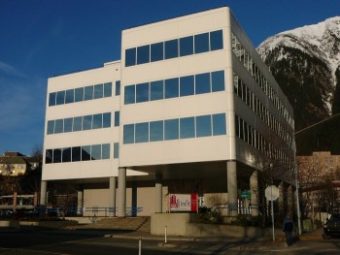
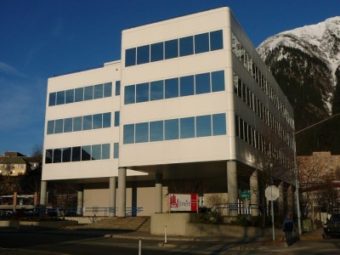
Sealaska Plaza in Juneau, headquarters of the Southeast regional Native corporation.

She says it will have a better chance this year. That’s because Senator Ron Wyden, an Oregon Democrat, took over chairmanship of the chamber’s Energy and Natural Resources Committee.

“He has pointed out to me numerous times that he’s very pleased with the fact that we have engaged in this level of sit-down and dialog with everyone from the administration to the energy committee staff, to those within all aspects of industry, whether they’re fishermen, environmental groups, tourism. I think he’s impressed by the process that he’s seen,” Murkowski says.

She says Wyden has agreed to move several land bills out of the Natural Resources Committee. Sealaska would not be part of the first package, which will only include measure that already cleared the committee. But it could be in a later version.

Tlingit elder, Sealaska board member Clarence Jackson dies

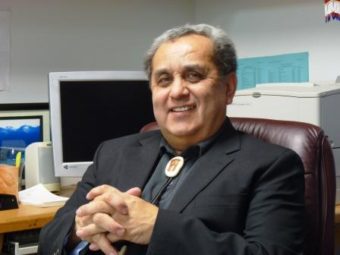
Clarence Jackson
Clarence Jackson. Photo courtesy Sealaska Corporation.

Tlingit elder and original Sealaska Native Corporation board member Clarence Jackson passed away Thursday at the age of 78.

He’s being remembered for his contributions to the Native land claims movement, and for being an ambassador for Tlingit culture in both the business world and his personal life.

Sealaska Heritage Institute President Rosita Worl says Jackson relished comforting people in times of need. He served as master of ceremonies at the memorial service for the late Reverend Dr. Walter Soboleff in 2011.

“He became like our ambassador from Sealaska, where he would attend all of the funerals, all the memorials,” Worl said. “He was there to comfort clans and the family of those who had lost someone.”

Jackson was born in Kake in 1934. He lived there most of his life, attending Sheldon Jackson High School in Sitka, before moving back to the village, where he was a fisherman and operated a small store.

Worl says he was a great fisherman, who loved boats.

“We always say, it is as if the spirits of the animals know him and they give themselves to those kind of people who have those good spirits,” she said. “So, yes, he was a great fisherman.”

In the 1960s, Jackson was involved in the Alaska Native claims movement as a delegate to the Central Council of Tlingit and Haida Indians. He served as Central Council president from 1972 through 1976.

Also in 1972, Jackson signed the articles of incorporation for Sealaska, the regional Native Corporation for Southeast, created under the Alaska Native Claims Settlement Act. He was the only board member to serve continuously from the time Sealaska was founded.

Current board chair Albert Kookesh first met Jackson when he joined the board in 1975. He says they quickly became friends.

“We’re both from villages right next to each other. He’s from Kake and I’m from Angoon,” said Kookesh. “He knew my father and he knew Walter Soboleff, my uncle. So I got immediately scooped up into his little circle.”

Kookesh says Jackson was a champion of village life and traditional culture on the board, something he attributed to being raised by his Tlingit speaking grandparents.

Kookesh says his ability to speak both Tlingit and English fluently made Jackson a valuable asset to the company.

“His Tlingit background, and his Tlingit stories, and his Tlingit upbringing gave him a really good sense of oration,” Kookesh said. “Very, very articulate. Not somebody who went to college, not somebody who went to law school, not somebody who went to graduate school. But somebody who went to the upper learnings of the Tlingit culture.”

When the corporation established the nonprofit Sealaska Heritage Institute in 1980, Jackson became one of its trustees and served as chair of the Council of Traditional Scholars.

Worl says the council was instrumental in identifying the core cultural values that guide the institute to this day.

“Clarence would remind us always, this is what makes us Native people, it’s our cultural values,” Worl said.

Jackson talked about the importance of preserving those values at Celebration 2012, the biennial cultural and educational event sponsored by the Heritage Institute.

“We’re strengthening our culture,” Jackson said. “We might hear a new song here and there this Celebration. But it’s a shoring up time to not be doing anything just for show. But to show the young people, this is the way it is.”

Jackson spent much of the past two months in Seattle receiving cancer treatment. He recently returned to Alaska, and died surrounded by friends and family on Thursday.

A service will be held at the Elizabeth Peratrovich Hall (former ANB Hall) in Juneau on Saturday at 5 p.m.

A video of Clarence Jackson from Celebration 2012:

Clarence Jackson’s last address at Celebration. from Kathy Dye on Vimeo.

Original post:

Tlingit elder and original Sealaska Corporation board member Clarence Jackson died Thursday after a battle with cancer. He was 78.
Jackson was born in 1934 in Kake, where he lived most of his life. He attended Sheldon Jackson High School in Sitka, and was involved in the Alaska Native claims movement in the 1960s with the Tlingit and Haida Central Council.

He served as Central Council president from 1972 through 1976. Also in 1972, he signed the articles of incorporation for Sealaska, the regional Native Corporation for Southeast, created under the Alaska Native Claims Settlement Act.

Jackson had been the only board member to serve continuously since Sealaska was founded. He also served as a trustee for the Sealaska Heritage Institute from the time it was created in 1980.

SHI President Rosita Worl says Jackson was an ambassador of Tlingit culture in the board room and his personal life.

“He lived in the village and he said that it is our responsibility to make sure that our people can continue to live in their homeland,” Worl said. “So, even with all of our businesses and investments, even if they were doing well outside of Alaska, he was always reminding us that we had a responsibility to our people in the villages.”

After the Heritage Institute was created, Jackson not only served as a trustee, but also as chairman of the Council of Traditional Scholars.

Worl says the council was instrument in identifying the core cultural values that guide the institute to this day.

“I remember some of the almost philosophical discussions they would have about how much change is acceptable, how much change can we allow in our society before we become not Tlingit,” Worl said. “And Clarence would remind us always that this is what makes us as Native people. It’s our cultural values.”

Jackson was a lifelong commercial and subsistence fisherman, who also ran a store in Kake and served as a director of Kake Tribal Corporation.

Worl says Jackson enjoyed telling stories and making people laugh. He was often the person who helped organize memorial services for elders who died, including his longtime friend the Reverend Dr. Walter Soboleff, who passed away in 2011.

Worl says Jackson spent much of the past two months in Seattle getting cancer treatment. But he was able to make it back to Alaska, where he died surrounded by friends and family on Thursday.

Services are pending.

Sealaska dividend due out in December

Sealaska shareholders will soon get their largest end-of-year dividend in three years.

Sealaska Plaza, the corporation's Juneau headquarters. Officials announced the December distribution, the largest in three years.
Sealaska Plaza is the corporation’s Juneau headquarters. Officials have announced the December distribution, the largest in three years.

But it’s mostly due to the success of another regional Native corporation.

The Southeast regional Native corporation will issue dividends to about 21,000 shareholders on or around December 6th.

Payments range from $96 to $868, depending on the class of shareholders.

Almost 90 percent of the larger dividends are funded by a pool of all regional Native corporations’ resource earnings. It’s known as 7(i) money.

Sealaska spokesman Todd Antioquia says it’s mainly from the Red Dog mine, owned by the Kotzebue area’s corporation.

“NANA continues to be the bulk of the distribution. Historically, Sealaska was the major contributor to 7(i) revenue sharing throughout the state through our own [timber] resource development,” he says.

Shareholders who are also members of urban Native corporations, such as Juneau’s Goldbelt, will receive $772. That’s assuming they have 100 shares of stock, the most common number. (Scroll down for all classes’ numbers.)

Members of village corporations, such as Angoon’s Kootznoowoo, will only get $96 directly. That’s the part of the dividend funded by corporate earnings. But Sealaska will pay the rest to their local corporation, which can pass part or all of the money on to shareholders.

Qualified descents of original shareholders will get only $96. And enrolled elders will be paid an extra $100 or so.

A little more than 5 percent of the larger dividends are paid out of corporate earnings, including investments. A slightly larger percentage comes from Sealaska’s permanent fund.

Its payments are based on a five-year earnings average. Antioquia says that’s been held down by low returns from the Wall Street crash.

“We have continued to feel the effects of 2008 through the last few years. Now that 2008 is rolling off of these averages into the future, as long as the markets remain stable or if they continue to improve, then we’re optimistic that we’ll see improvement there,” he says.

This December’s distribution is about 10 percent more than 2011’s, and about 35 percent more than 2010’s. But the previous two years were 37 and 26 percent more, respectively. (Scroll down for a five-year perspective.)

December’s payout totals about $13 million. Last April’s came to $14 million. That means shareholders are getting a total of around $27 million this year.

A little less than half live in Southeast. That means dividends are contributing about $13 million to the region’s economy this year.

Brian Holst of the Juneau Economic Development Council says it’s significant, especially to villagers.

“We know the Alaska Permanent Fund in some rural communities can be a very significant part of income. And in that sense, a Sealaska dividend can be similar to the permanent fund dividend in that it helps maintain a lifestyle in these small communities, which is very important for the sustainability to these places,” Holst says.

Holst ran the numbers and came up with several ways to explain the dividends’ economic impacts.

He says the total equates to the annual income of nearly 300 average Southeast Alaskans. Or a quarter of the region’s mining wages. Or around half of the value of seafood landed in Juneau.

Holst says it’s also about 7 percent of what tourists contribute.

“We know our cruise-ship passengers spend about $200 per person when they visit Juneau. And so, if we were going to think of that infusion of the Sealaska dividend as though it were cruise-ship passengers spent the same way, that would be the equivalent of about 68,000 cruise ship passengers additional in our communities,” he says.

Sealaska pays dividends twice a year.

Its businesses include timber, gravel, investment, plastics, government-contracting and environmental-cleanup operations.

December 2012 Distribution & Stock type:  Per Share   Per 100 Shares

Non-Elder Urban and At-Large Shareholders        $7.72                  $772

Elder Urban and At-Large Shareholders                 $8.68                  $868

Non-Elder Village and Leftout Shareholders          $0.96                    $96

Elder Village and Elder Leftout Shareholders         $1.92                  $192

Descendant Shareholders                                       $0.96                   $96

December dividend only per 100 shares for urban shareholders

2012:    $772

2011:    $714

2010:    $577

2009: $1,227

2008: $1,046

Yearly total per 100 shares for urban shareholders

2012: $1,617

2011: $1,430

2010:   $989

2009: $2,208

2008: $1,605

The Sealaska dividends distribution chart, courtesy Sealaska.

Sealaska Heritage gets education & Soboleff Center grants

Image courtesy the Sealaska Heritage Institute.

Sealaska Heritage Institute has received a total of $4.5 million for educational programs and the Walter Soboleff Center to be built in downtown Juneau.

The federally funded Alaska Native Education Program has awarded three grants; the first for about $2 million over two years, dedicated to construction of the Soboleff facility.

The second grant is $1.2 million over three years for cultural orientation programs for teachers in the Juneau School District and University of Alaska Southeast.

The heritage institute has already signed an agreement with the school district and UAS for educational programs. SHI president Rosita Worl says the program for teachers’ began informally this fall.

“It (the grant) will also allow us to develop culturally relevant resources,” Worl says. “We know that teachers are extraordinarily busy and we know they have definite requirements they have to teach to, so providing supplemental materials that speak to our culture, I think, will also help them.”

A third grant over three years is for $1.37 million for math summer camps for Southeast Alaska middle school students. Worl calls the proposed classes math “boot camp.”

“We have partnered with the University of Alaska in the teacher-training program and we see where our students are coming into the university not prepared in math — in general. I mean we do have students who are doing well in math, but in general,” she says. “So we decided that we were going to go after programs where we could help our students in math.”

Such programs will be part of the Walter Soboleff Center when it is completed. It will have classrooms and event spaces as well as ethnographic collections and a research facility. Worl says about half the funds have been raised for the center, estimated at $20 million.

Alaska Native organizations, school districts and universities are eligible to compete for funds from the Alaska Native Education Program. It was created by the late U.S. Senator Ted Stevens for Alaska Native education programs, because Alaska does not have benefit of educational funding through Bureau of Indian Affairs schools, unlike other states.

Term-limits lose, Sealaska board members re-elected

Sealaska Corporation shareholders have voted down a term-limits measure.

It called for limiting board of directors members to four, three-year terms, for a total of 12 years. It only attracted a little more than a quarter of the voting shares required to win.

Sealaska Corporate Secretary Nicole Hallingstad says shareholders also returned five incumbents.

“The Sealaska board slate was re-elected. Directors Albert Kookesh, Barbara Cadiente-Nelson, Bill Thomas, Joe Nelson and Tate London,” she says.

Three independent board candidates lost: William Micklin, Raymond Austin and Edward Sarabia Jr.

Sealaska is the regional Native corporation for Southeast Alaska. It has more than 21,000 shareholders, with fewer than half living in the region.

Nicole Hallingstad, Sealaska corporate secretary and vice president.

Election results were announced at Saturday’s annual meeting, which was held in Juneau.

“Approximately 350 of our shareholders joined us at Thunder Mountain High School for our annual meeting. And 417 of our shareholder households viewed the webcast of our annual meeting,” she says.

Last year’s meeting, in Haines, attracted about a third as many people, but twice this year’s webcast count.

Those attending Saturday’s meeting heard from Hawaiian Native leader Nainoa Thompson, of the Polynesian Voyaging Society.

Hallingstad says he spoke about Alaska Natives as cultural leaders. He also talked about a major expedition he’s planning to several Polynesian Islands.

“It designed for those paddlers to navigate the way the old Hawaiians did merely by geography and the stars along the paths that their ancestors used to paddle. And he indicated it would be wonderful if some Alaska Natives could join those Hawaiians on the voyage,” she says.

The board also voted to retain Sealaska’s management team.

2012 Annual Meeting Election Results
Numbers indicate shares voted. Most shareholders have 100 shares.

CANDIDATE VOTES
Albert Kookesh – 1,004,184
Barbara Cadiente-Nelson – 901,138
Bill Thomas – 845,123
Joe Nelson – 802,338
Tate London – 778,126
William Micklin – 337,159
Raymond Austin – 294,618
Edward Sarabia, Jr. – 213,754

Term Limits resolution
Shall Sealaska Corporation amend Bylaw Section 3.1 to establish term limits for directors of four complete three-year terms, with permanent ineligibility thereafter?
Threshold to pass: 983,621 shares (50 percent of shares that could be voted, plus one.)
Shares voted in favor of the resolution: 499,147 or 25.37 percent of all possible shares.
\

Sealaska shareholders meet Saturday in Juneau

The regional Native corporation for Southeast Alaska holds its annual shareholders’ meeting Saturday, June 23.

Sealaska Corporation has about 21,000 shareholders, many living outside the state.

Saturday’s meeting is at Juneau’s Thunder Mountain High School. It begins at 10 a.m. with a shareholder’s fair and comments from board of directors’ candidates and both sides of a term-limits resolution.

The meeting also includes a business report and election results. It ends at about 5 p.m. with a question-and-answer session for shareholders.

Critics say the hour planned for that session is too short, and is an attempt to muzzle opponents. Corporate officials say it was just an estimate and will run longer if needed.

Sealaska’s annual meeting will be webcast live through the corporation’s website. Only shareholders can attend the meeting in person or on the internet.

Click on this link for the full meeting schedule.

See a slideshow of the 2011 annual meeting in Haines.

Site notifications
Update notification options
Subscribe to notifications