Fisheries

Alaskan shellfish hatcheries look to Pacific NW for countering ocean acidification

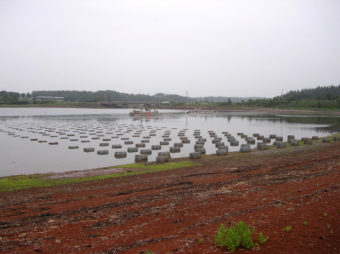
Inside the Whiskey Creek Shellfish Hatchery in Tillamook, Oregon. (Photo courtesy of Oregon State)

A recent NOAA study named 2040 as the date for the potential end of Alaskan shellfish hatcheries. That is, unless serious mitigation efforts are put in place to combat ocean acidification.

The Whiskey Creek Shellfish Hatchery is located in the small town of Tillamook, Oregon.

“This hatchery was started by Lee Hanson,” says Sue Cudd, who owns the hatchery now. “It was really the first shellfish hatchery that was commercial in operation. It started in 1978.”

She studied biology in school, worked for an oyster company for a while, and then came on with Hanson to learn about the hatchery world. From the 1970s until 2006, there were natural ups and downs, but overall, things ran relatively smoothly.

“Then all of a sudden, in about 2006, we started seeing some pretty major problems. Then from the end of 2007 to the end of 2008, we couldn’t produce larvae anymore,” says Cudd.

For a year and a half, they tried to produce. Even when they did manage to get some larvae, they wouldn’t survive and develop. It was a financial nightmare for the business.

“We lose money really fast because the production cost is the same without having any production. So, it was tough,” says Cudd. “We got help from some customers. The oyster growers association [helped] and one of our state senators got us some community development money, so we had time to be able to try to solve this problem. Without that, I don’t know what would have happened because we just lost money so fast.”

They weren’t sure what to do, but they figured they should start with looking at the water. They hired an oceanographer consultant and got in touch with OSU’s marine lab. They brought in specialized equipment and began evaluating the water’s pH and other levels several times a day.

Wiley Evans is a researcher at the NOAA Pacific Marine Environment Lab in Seattle. He was the project lead at Alutiiq Pride in Seward, and says what Sue Cudd is describing is now seen as a defining time in this field of research. They’ve become a model for studying and coping.

“The classic is at Whiskey Creek Hatchery on the Oregon coast,” says Evans. “The first hatchery to really start making these measurements with help from Burke Hales at Oregon State University.”

Burke Hales is the namesake of the Burkolator, an instrument now used at both sites to measure partial pressure of carbon dioxide or pCO2 in the ocean.

Cudd says the equipment brought in led them to find that the levels of carbon dioxide in the water were much higher than they’d expected. Lots of measurements seemed out of whack. But why had it taken them nearly two years of lost product to figure it out?

“We didn’t know why we couldn’t produce larvae because we really never knew why we could. We didn’t know what conditions they needed; we didn’t know what their parameters were because we never needed to. They just grew,” says Cudd. “So, then when we started having problems, we had to go back and try to figure out what was wrong with the water.”

And that’s her first piece of advice for hatcheries. If you haven’t already started taking measurements, start now. The Alutiiq Pride study is doing just that, says Evans.

“So we wanted to set a baseline because, really, the shellfish aquaculture industry in Alaska is very young. So, right now, there’s one shellfish hatchery and we’re making measurements in that hatchery,” says Evans. “We wanted to set a baseline that could be something that the industry uses for moving forward in the future.”

Cudd says based on daily and seasonally fluctuating CO2 and acidity levels, Whiskey Creek has developed a system to compensate. They buffer the water in their production tanks with injections of sodium carbonate. The carbonate helps organisms like clams and mussels develop their shells, which they can’t do in unusually acidic water. Alutiiq Pride is now considering that as an option for the future.

“It’s weird to think that 10 years ago, we were running this hatchery with no treatment and now we don’t ever run with no treatment,” says Cudd.

And that’s been the direct cost of acidification to her hatchery. The carbonate is relatively cheap, but the whole operation has changed. They’ve had to integrate lots of expensive equipment into their daily work. Staff have to constantly monitor it, maintain it, make adjustments here and there.

She asks if such a drastic change could happen over the course of a year and a half, what could happen next?

“It’s incredible. It opens your eyes. It makes you see things very differently,” says Cudd.

And researchers and hatcheries in Alaska are now looking to places like Whiskey Creek for clues on how to deal with the serious issue that is ocean acidification.

Canned salmon: New marketing, old product

Canned Alaska salmon. (Creative Commons photo courtesy of cookbookoman17)

In 2013, 38 percent of the salmon coming out of the bay was put into cans. But they aren’t flying off the shelves. Marketer Craig Caryl is working with the Alaska Seafood Marketing Institute to change that.

“I think that canned salmon needs to be positioned with blueberries, literally, as a superfood,” Caryl said.

He’s not the only one who wants to see resurgence in canned salmon.

“Brings tears to my eyes because it’s such a, it’s an old business but it’s such a staple business,” said Eric Weiss, who sells tin to canneries throughout Alaska, including some in Naknek. “And people need to eat more canned salmon.”

Weiss works for Crown Cork N Seal, which has worked on developing new, smaller cans that he thinks are more appealing to consumers.

“We’ve actually introduced a new smaller size to the industry,” Weiss said. “It’s about the size of, the height of a quarter pound can and then the diameter of a half-pound can.”

But Weiss says there are challenges in getting that new can sold – from inefficiencies for processors in filling smaller cans, to convincing stores to sell them.

Caryl is trying to increase demand. His target audience is millennial women, particularly pregnant women and new moms who might be interested in the health benefits of a can of fish, and also appreciate the sustainability of Alaska’s fisheries.

Caryl’s wife is an integral part of that effort.

“My wife has been developing these amazing salmon burgers, with like a caper lemon sauce that she mixes up. And the big test for us is will our six year old son eat it? My six-year-old is pretty picky and he really digs these salmon burgers.”

Caryl hopes that a website with 30 or so recipes tested by his wife will hit home with the mommy bloggers who can spur purchases and eventually help salmon capture a little of the tuna market.

“It’s changing people’s perception about them and driving the consumer into the shop and forcing the shop to say ‘hey, you know, we gotta move this off the bottom shelf and put this four feet high so people can see it.'”

Kuskokwim subsistence fishermen face low chum run, schedule restrictions

Chum salmon numbers are well below average. (Photo by Shane Iverson / KYUK)

The Kuskokwim River is experiencing a poor chum salmon run, according to state managers, and with it, a restrictive fishing schedule.

The Department of Fish and Game plans to eventually move to a 24/7, 6-inch mesh gillnet fishing schedule, but they’re still moving with caution and have not yet set a date. Gillnet restrictions on the lower river last year were relaxed June 30th.

On Wednesday at a meeting of the Kuskokwim River Salmon Management Working Group — an advisory body for fish management — fishermen supported a cautious approach.

“I talked to several fishermen over here; they were concerned about the very low numbers of chums showing up. Some said they hardly caught any. The majority catch is always chums and a few small chinook,” said John Andrew from Kwethluk. “We could recommend they be cautious for the next two weeks until the silvers pick up.”

Biweekly subsistence fishing periods are underway now. State officials are not considering a chum salmon commercial fishing period.

The working group wanted state officials to allow other opportunities to put away fish. They passed a motion recommending state managers lift the ban on 4-inch mesh set nets. Mike Williams of Akiak said he and other dog mushers rely on whitefish during the summer to feed their teams. The nets can still catch salmon species.

They also asked for longer fishing periods upriver, noting that there are far fewer fish and fishermen in the river. They passed a motion asking that the next fishing above the Holitna be at least 24 hours. The state then announced after the meeting that 50 fathom gillnet fishing above the Holitna opens Wednesday night until further notice.

Members noted that more people downriver are done fishing compared to the middle and upper river, where many are just starting. Red salmon will be the mainstay of the middle and upper river and many are also planning on taking advantage of the silver salmon run as the summer progresses.

BC mine to reopen after 2014 disaster

This aerial image shows Aug. 5's Mount Polley Mine tailings dam break and some of the damage downstream. The mine just won permission to reopen on a limited basis. (Cariboo Regional District Emergency Operations Centre photo)
This aerial image shows the Aug. 5, 2014, Mount Polley Mine tailings dam break and some of the damage downstream. The mine just won permission to reopen on a limited basis. (Photo courtesy Cariboo Regional District Emergency Operations Centre)

A British Columbia mine that’s become a symbol of mineral extraction’s environmental threats will reopen next month.

Hazeltine Creek, once a narrow waterway, is filled with mud, silt and logs following August 2014’s tailings dam breach at the nearby Mount Polley Mine. (Photo courtesy Chris Blake/MineWatch Canada).

Provincial officials have granted the Mount Polley Mine conditional approval to resume limited operations. Critics in Southeast Alaska say it sets a dangerous precedent.

The central British Columbia project’s tailings dam broke about 10 months ago, dumping up to 6.5 billion gallons of water and silt into nearby lakes and rivers.

B.C. Mines Minister Bill Bennett says the new permit requires Mount Polley to put waste rock and water into a nearby pit.

“The existing tailings storage facility, the one that breached last August, cannot be used — will not be used — under the terms of this permit. It also means that there will be no water discharged off the mine site under the terms of this permit,” he says.

The mine will operate at half its earlier capacity to meet those standards. Even at reduced speed, Bennett says the old mining pit will fill up in about four or five months. Further permits will be needed to continue mining.

Mount Polley will have to gain additional government approval before releasing wastewater into the environment. Bennett says that would require additional, expensive water treatment equipment.

“They will get that permit only if the water they propose to discharge meets Canadian drinking water guidelines and also meets the standards for aquatic organisms,” he says.

He says state and federal environmental agencies will monitor the discharges.

British Columbia Minister of Mines Bill Bennett says the Mount Polley Mine will reopen next month. (Photo courtesy of the B.C. government)

“It’s also done more regularly by the company and it’s done by independent engineers and scientists that put their professional stamp on those samples,” he says.

B.C. will require a third permit before the mine can again store tailings behind a dam. Bennett says if allowed, it would hold far less water than it did when it broke.

The mine is owned by Vancouver-based Imperial Metals. Spokesman Steve Robertson did not immediately return a call for comment. The corporation has ignored similar calls during the past year.

Mount Polley is in the watershed of the Frasier River, which enters the ocean far from Alaska.

But critics in Southeast say the government’s approach to the decision threatens the region’s salmon, which spawn in other transboundary rivers.

Guy Archibald works for the Southeast Alaska Conservation Council.

“We can’t count on the B.C. environmental process to even follow their own recommendations to protect us from the mines that are proposed on the Stikine, Unuk and Taku rivers,” he says.

An independent report on the Mount Polley disaster predicted two similar British Columbia tailings dams would fail every decade.

Mining at Red Chris in February 2015. (Photo courtesy of imperialmetals.com)
The Red Chris Mine in the Stikine River watershed began operations earlier this year. (Photo courtesy of imperialmetals.com)

Archibald says that could include Imperial’s Red Chris Mine, which opened this year near a Stikine River tributary, and others.

“Given that they’re planning to put 11 mines on the Alaska transboundary border, it’s not if one of these dams is going to fail, it’s only a manner of when,” he says.

SEACC, Salmon Beyond Borders and other Alaska mine critics have been pushing for federal intervention. A number of Southeast government and tribal leaders want the U.S. State Department to pursue their concerns.

“We’re continuing to push for international action, the formation of an international watershed under the International Joint Commission that’s spoken about in the [U.S.-Canada] Boundaries Water Treaty,” he says.

British Columbia and Alaska officials met earlier this year on transboundary mining. B.C.’s Bennett says they will meet again and could reach a memorandum of understanding regarding water and safety issues.

Alaska officials have already submitted a list of concerns to B.C. But they haven’t actively opposed mine development.

Six-hour chum fishery to open in Amalga Harbor

(Photo courtesy of Dave Harris/ADF&G)

Thursday is the opening of the purse seine season at Amalga Harbor in Juneau. Commercial fishermen will be able to catch chum, released from the DIPAC hatchery.

The fleet is allowed to fish for profit because DIPAC has already made back the cost to hatch the salmon. Alaska Department of Fish and Game biologist Dave Harris says he’s expecting a good turnout for the opening.

“My understanding is there’s about 30 boats anchored on the set right now,” he says. “And so I assume they’ll be at least that many. We’ve had 100 boats participate in these fisheries in the past.”

The opening is only six hours and starts at 9 a.m. Typically, in fisheries like this, seiners have about 15 hours to get their catch.

But Harris says it’s a high-use area for Juneau residents; hence, the short time frame.

“This will allow the commercial fleet the opportunity to take these fish and hopefully the impacts on other people’s enjoyment and whatnot will be minimized,” he says.

Hidden Falls Hatchery on Baranof Island isn’t allowing commercial fishing because of low returns.

Captain Sig Mathisen came all the way to Juneau from Petersburg on the Marathon to fish for Icicle Seafoods.

“Well, it would be lovely to go home with a load of fish. That’s for sure,” Mathisen says. “But we’re tempering our expectations because of what we’re seeing in the waters here.”

It’s estimated that the commercial fleets could earn anywhere from 45 to 55 cents a pound for the chum.

Study: Ocean acidification threatens future of Alaskan shellfish hatcheries

Alutiiq Pride Shellfish Hatchery in Seward. (Photo courtesy of Wiley Evans/NOAA)

New research paints an unsettling picture of the future of shellfish in coastal Alaska. The effects of ocean acidification are worsening and could mean the end of hatcheries in the next 25 years if costly mitigation efforts aren’t put in place.

2040: that’s the date put forward by researchers in the ongoing study.

“It is dire,” says Wiley Evans, research associate at the NOAA Pacific Marine Environment Lab in Seattle and the University of Alaska Fairbanks Ocean Acidification Research Center.

He led the project, based at the Alutiiq Pride Hatchery on the Kenai Peninsula. Right now, the hatchery has only a 5-month window where ocean conditions are right for production.

“You know, I have young children and when I’m talking to the public about this, I typically will say that my kids are going to be graduating college when this optimal growth window potentially closes for the Alutiiq Pride Shellfish Hatchery,” says Evans.

“It was very, very alarming. Not knowing much about ocean chemistry, I know a lot more now than when we started, that’s for sure,” says Jeff Hetrick, owner of Alutiiq Pride, which is situated at the head of Resurrection Bay in Seward. “Right now we have blue and red king crab, roughly 6 million sea cucumbers, 2 million cockles, 7 million little neck clams, 100,000 butter clams, roughly 300,000 purple-hinge rock scallops, abalone as well, and we have oysters and geoducks, too.”

It’s currently the only full-time commercial shellfish hatchery in the state, with on-site personnel, which made it a logical choice for data collection.

“We had the opportunity last year to install a state-of-the-art system that could monitor the water chemistry of the seawater that they were pumping in to the hatchery on a continuous basis and it would report out to us in what we call real-time,” says Jeremy Mathis, a NOAA oceanographer who helped choose the site.

Ocean acidification is the name for certain changes in the ocean’s chemistry due to higher levels of carbon dioxide. When seawater absorbs CO2, there’s an increase in hydrogen ions, leading to more acidic water, and lower levels of carbonate ions.

Carbonate ions are crucial for organisms like clams and mussels to develop hard shells. And, without shells, they aren’t protected and can’t survive.

Mathis says Resurrection Bay is in a particularly vulnerable position because of certain environmental factors.

“It gets a lot of freshwater input from not only the streams and little freshwater runoffs that come through there but also quite a bit of meltwater from glaciers. And that unique water chemistry can actually exacerbate or worsen the ocean acidification effect,” says Mathis.

Cold water, which is quicker to absorb CO2, combined with the presence CO2-rich glacial melt put Alaska as a whole at particular risk. Evans says those factors are natural and it’s a delicate balance. But as for the levels we’re seeing here now-

“It’s not natural and it’s a large problem,” says Evans.

Humans and their carbon footprint have added serious amounts of CO2 to the atmosphere very quickly.

“And that little bit of additional carbon dioxide can just push the system past thresholds to where you can’t produce shellfish perhaps anymore without very serious mitigation strategies,” says Evans.

That’s what worries Hetrick when he thinks about the future and the 5-month production window at his hatchery that’s on track to close completely in 25 years.

“We don’t really know what the full costs are going to be. There’s going to be some. There’s going to be capital costs and there’s going to be some operational costs. It’s just going to be another thing we’re going to have to do to produce shellfish.”

Figuring out exactly what to do next is tricky but Mathis says Alaska has to put in the effort, immediately.

“Unfortunately, Alaska is the canary in the coal mine for ocean acidification. We’re seeing changes in water chemistry faster in Alaska than really any other place around the world. So, it’s our job now in the next few years to figure out what the magnitude and impact of those changes are going to be.”

And he says find a way to protect our fisheries before it’s too late.

Site notifications
Update notification options
Subscribe to notifications