Housing

Does Alaska have an affordable housing crisis?

Across Alaska, it’s a challenge to find affordable housing. Homebuilding and vacancy rates are down, while rent, mortgage rates and home prices are up.

The lack of affordable housing drives people into overcrowded homes, homelessness and out of stateSome officials have begun referring to it as a housing crisis.

Erik Peterson, 32, was born and raised in Anchorage. He lived abroad in Japan for four years and moved back home in April, into the house he grew up in – with his parents.

Erik Peterson lived abroad in Japan for four years, and moved back to his hometown of Anchorage in April 2023. (Courtesy of Erik Peterson)

“I don’t have to pay rent, which is amazing,” he said. “Because the rent is out of control.”

He said he has a good paying job and could buy a modest place in town for himself and his French bulldog. But he doesn’t think he’ll stay in Anchorage long-term. He said in Japan, he rented a great apartment – for $400 a month.

“And then I come back to Anchorage, Alaska, and they’re like, ‘We want $1,400 a month’ for like, some, you know, 1980s-never-remodeled special,” Peterson said. “And I’m like, I’m just – I’m not gonna pay that. I don’t think anybody should have to. And I just think that the average rental prices of any form of housing in Anchorage, as well as the purchasing price of anything, is completely out of control.”

According to state economists, the average home in Anchorage cost about $469,000 last year. That’s up 20% in just a few years.

The cost of rent has also been climbing in recent years across much of the state, and in Anchorage especially. According to state economists, the average rent for a two-bedroom apartment in Alaska rose 7% in the last year, the largest increase since 2011.

Alaska Housing Finance Corp. CEO Bryan Butcher said the cost of land, labor, materials and transportation have all gone up in most communities.
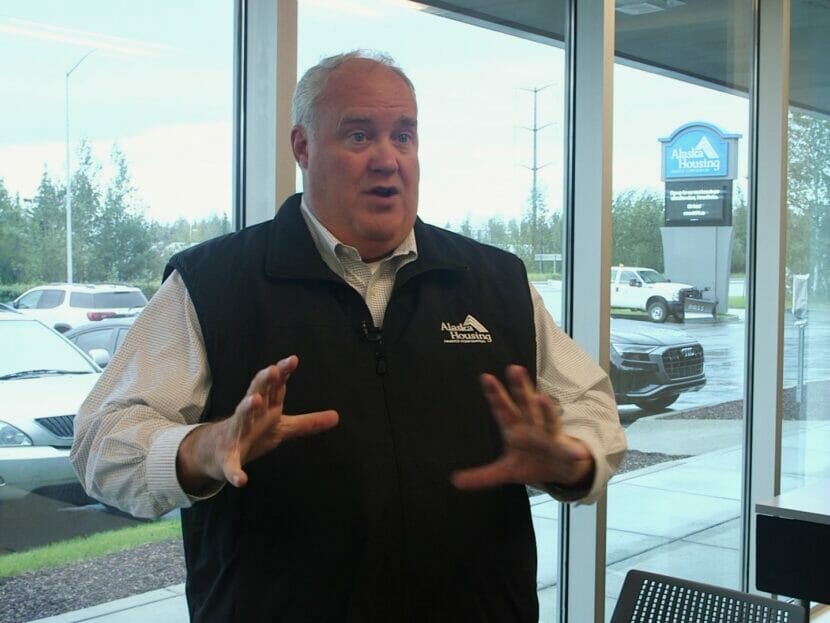
Bryan Butcher, CEO of the Alaska Housing Finance Corp., discusses changes in the housing market from his organization’s headquarters in Anchorage on Sept. 1, 2023. (Adam Nicely/Alaska Public Media)

“We’ve gotten to a situation where now even building market homes, developers can’t afford to build it and then sell it at what they built it for,” he said. “That’s making housing prices go up.”

Plus, the cost of borrowing to buy a home has climbed to the highest rates in decades. AHFC is a special agency that can tap into capital markets regular lenders can’t. That way, it can offer a lot of Alaska homebuyers mortgages at better-than-market rates.

“As an example, a year or two ago, 21% of the houses that folks were buying in Alaska were AHFC loans,” Butcher said. “This year, it’s 34%. So we’re seeing a lot more activity.”

In Soldotna, the nonprofit RurAL Cap is overseeing work to build nine homes. The construction workers cutting lumber and nail gunning two-by-fours together are also the owners.

Nine local families are working together to build nine homes through the nonprofit’s Mutual Self-Help Housing program. The program connects lower income families with low-interest and subsidized mortgages from the federal government.

Each family commits to work 36 hours a week on the houses. Volunteers can contribute, too. Their sweat equity covers the down payments.

Rhonda Johnson learned about the program in 2009. She was working at Wal-Mart at the time, and renting an apartment for herself and four kids.
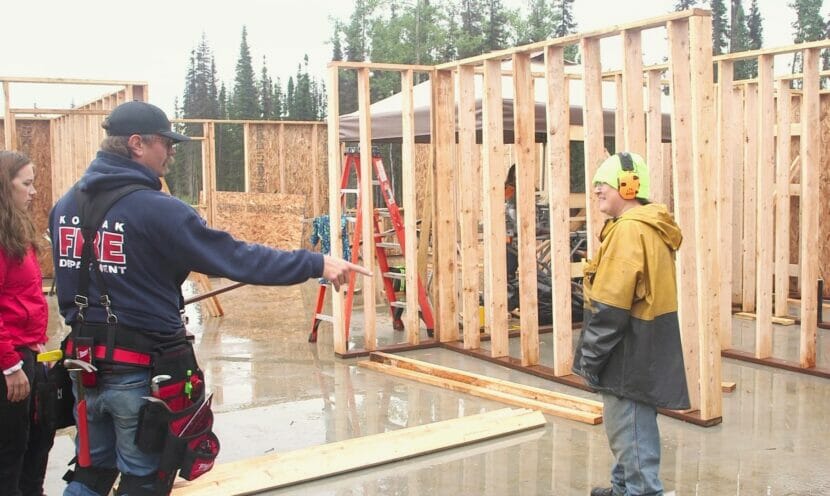
Rhonda Johnson works with owner-builders in RurAL Cap’s mutual self-help housing program at a site in Soldotna on Aug. 31, 2023. Before working for RurAL Cap, she logged thousands of volunteer hours working on her own and others homes through the program. (Adam Nicely/Alaska Public Media)

“There’s no way I could’ve bought a home,” she said. “Who has $30,000 to put down on the home? I don’t. It’s the sweat equity, building your home, building among friends.”

It took about seven years before Johnson qualified, made it up the waitlist and finished her home.

“And then I had friends and builds after mine,” she said. “And I just helped build, build, build and I just love to volunteer.”

Within a few years, she logged thousands of volunteer hours on 45 homes. She won a national volunteer award in 2021. Now, she works for RurAL Cap on the program.
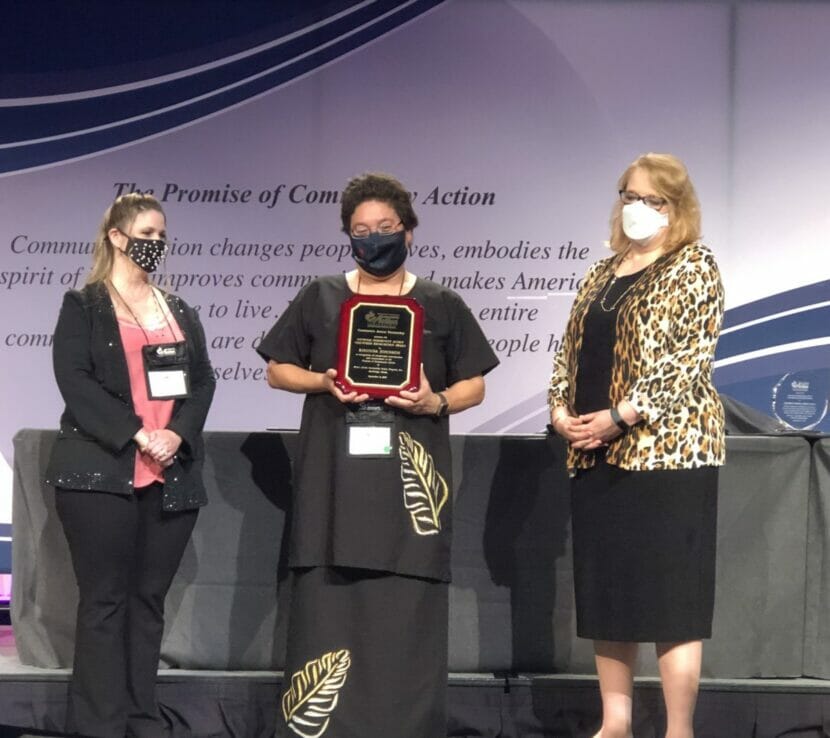
Rhonda Johnson of Soldotna poses with her National Community Action Volunteer Recognition Award from the National Community Action Partnership at a ceremony in Boston in 2021. Johnson volunteered thousands of hours to help build homes through RurAL Cap’s mutual self-help housing program. (Courtesy of RurAL Cap)

She said it’s fulfilling work.

“Just to move in and they can say it’s their own home,” she said. “‘I built it with my hands.’”

RurAL Cap’s program has helped thousands of people since it started in 1971.

But there is a new building technology on the horizon that could dramatically lower the cost of market-rate housing: 3D concrete printing.

Next year, Nome will be the testing ground for a robotic system to lay the foundation, walls and roof of a home. The city and its partners are getting a federal grant to build demonstration homes to test the feasibility and economics.
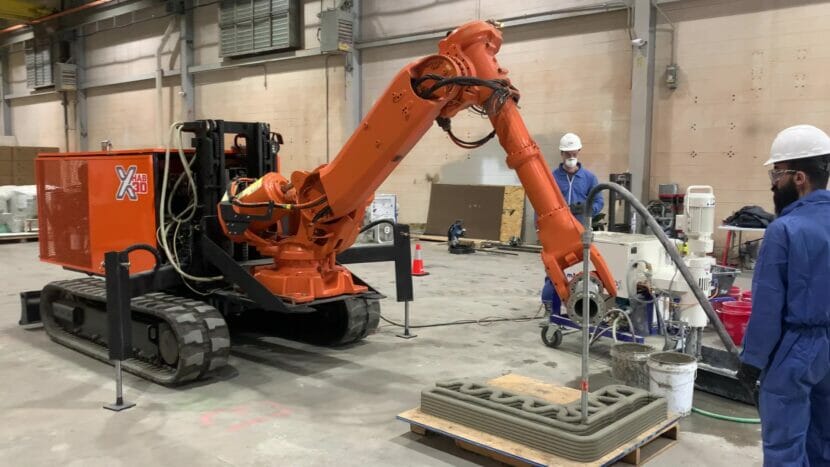
A robot extrudes concrete in a demonstration of how 3D concrete printing could be used to build homes. The city of Nome, Penn State University and the business X-Hab 3D are partnering on a demonstration project to use the technology to build a home in Nome in 2024. (Courtesy of AddCon Lab, Penn State)

Barring disruptive tech breakthroughs, Alaskans like Erik Peterson are advocating for relaxing the rules that govern what can and can’t be built as a more immediate path toward affordable housing.

“So many of Anchorage’s problems would be alleviated with cheaper housing,” Peterson told the Anchorage Assembly in July.
Alaska rents are up 7%, the biggest increase in more than a decade

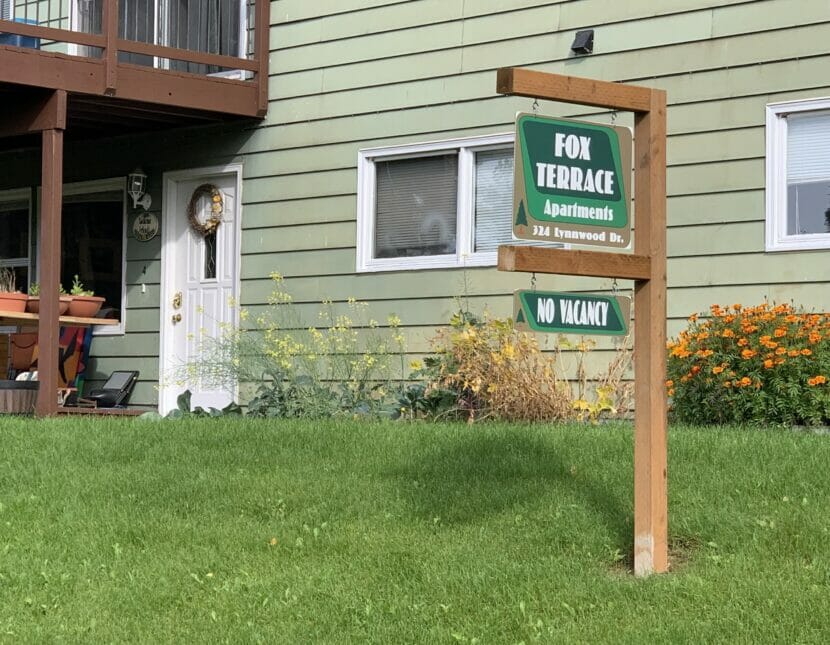
A “no vacancy” sign at an apartment complex in Anchorage in Sept. 2021. Statewide, vacancy rates are up slightly, but still historically low — contributing to high rents. (Alaska Public Media)

The average rent for a two-bedroom apartment in Alaska rose 7% in the last year, the largest increase since 2011. Recent years have seen about a 2% increase.

That’s according to new state data from a survey of landlords in 11 of Alaska’s biggest communities. State economist Rob Kreiger co-authored the report and said that, while it’s difficult to point to a single driver behind the rent hike, a number of landlord costs — like property taxes and utilities — have gone up with historic inflation during the previous two years.

Kreiger said vacancy rates went up slightly over the year, but are still historically low, meaning there are fewer available houses and apartments to choose from.

“And anytime you have such tight market conditions where it’s hard to find a rental, that kind of gives landlords more pricing power,” Kreiger said. “So you’d normally expect to see with a tight vacancy rate, rents tend to go up.”

Kreiger said very few new housing units are being built in the state and that’s part of the reason housing is so limited. He said it was difficult to build during the pandemic years when construction costs rose sharply. Even as those prices have leveled off, Alaska’s pervasive worker shortage is still holding things up.

Kregier said the labor shortage is also likely pushing up costs at larger apartment complexes, where hard-to-find maintenance and administrative staff now come with higher wages.

In its report, the state recognized the influence of a growing number of short-term rentals, but Kreiger said they have very little data to work with.

“What percentage of the overall housing, of rental stock is comprised of short-term rentals? We don’t know,” Kreiger said. “And if there are documented cases of where, short-term rentals, where you are having conversion from people changing from long-term to short-term, and how much is actually being pulled off of the rental market as a result of that? Those are questions we don’t have the answers to.”

He said he expects it will become an increasingly important topic that local governments will likely have to take the lead on.

The increases in median rent varied by region, with Ketchikan seeing a 16% increase from March 2022 to March 2023, and all other increases in the single digits. Bethel was surveyed for the first time this year, and had the highest median rent of $1,600 per month, without utilities. The other 10 communities had utility costs factored in.

Kreiger said he’s hoping to survey more rural areas like Nome and Dillingham, but suspects their averages would be similar to Bethel’s.

Kreiger said the high heating costs in Fairbanks explain why, with utilities factored in, it ranked third behind Anchorage.

Kreiger didn’t want to speculate on future rent prices, but he said housing prices have remained high since March, when the survey was conducted.

In second vote, church congregation again declines to host Juneau’s emergency shelter

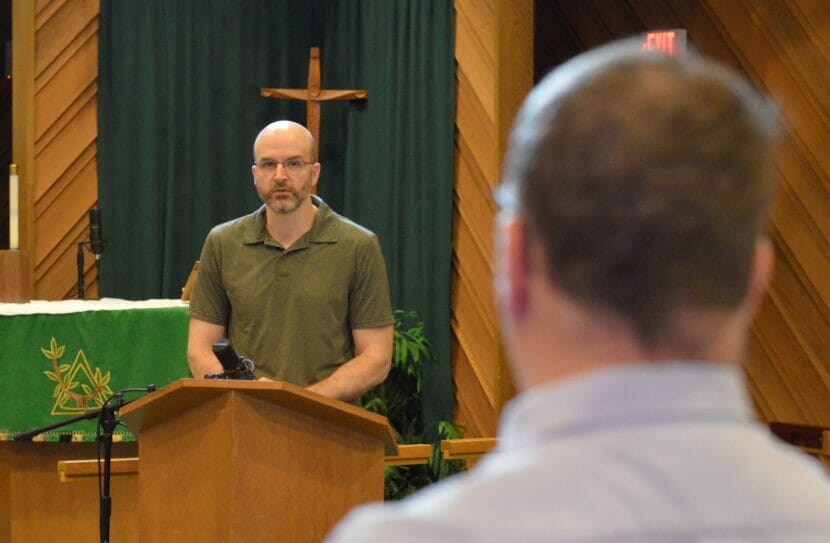
Deputy City Manager Robert Barr speaks at a Resurrection Lutheran Church congregation meeting on Sunday, Sept. 10, 2023. (Katie Anastas/KTOO)

The congregation of Resurrection Lutheran Church voted against running the city’s emergency cold weather shelter again this winter on Sunday. It’s the second time they’ve voted on the topic this year.

Pastor Karen Perkins said she was “stunned.”

“I really don’t know what the city is going to do,” she said Sunday after the vote.

The congregation first voted on whether to apply to run for the city’s warming shelter in late June. That vote was split 14-14, according to congregation president Karen Lawfer, which meant they didn’t submit a bid to the city. 

Neither did any other organizations in Juneau, so Lawfer called another congregation meeting to reconsider. Deputy City Manager Robert Barr spoke to members of the congregation as they sat in the church’s pews.

“I’ll be frank and blunt,” he told the congregation. “We don’t have a great alternative.”

Before this vote, Barr told the Juneau Assembly that the alternative might be a decommissioned city bus kept idling overnight. It would have 35 seats – space for far fewer people than the 70 who sometimes slept at the church last winter. 

Still, some members of the congregation asked whether other city-owned facilities could house the shelter. 

Barr said the city’s warehouse in Thane wouldn’t work because the city needs it for storage year-round. The part of the Downtown Transit Center not used by the Juneau Police Department isn’t big enough. The Juneau Arts and Culture Center, where St. Vincent de Paul ran the warming shelter during the pandemic, is now used again by the arts organization. 

But that wasn’t enough to convince the congregation. Lawfer said that out of 31 people who voted, seven more voted no than yes.

“I’m really very sad and disheartened,” Lawfer said after the vote.

Lawfer said the first vote was before the city’s deadline for bids. She thinks some people voted no then because they thought another provider would offer to run the warming shelter instead.

“Now that there’s nobody else to do it, I don’t know what they’re thinking,” she said. “I honestly don’t know what they’re thinking.”

Lawfer said that Resurrection Lutheran’s warming shelter setup was “not perfect, but it did work.” She’d been optimistic that the church and the city could come to an agreement on the number of staff needed to safely run it again. 

Now, she’s not sure what will happen next for the people who relied on the warming shelter.

“I’ll be walking down the street and they’ll stop – or the police will stop – and go, ‘What are these people going to do?’ People ask me, ‘What am I going to do?’ and I don’t have an answer for them now,” she said.

In an interview Monday morning, Barr said the bus is still the last-ditch option. He said he’s meeting with other local providers this week to discuss alternatives, but those providers still lack a large enough space for the shelter.

Perkins, the pastor, worries people will die without an adequate warming shelter space. Anchorage has already broken its record for the number of outdoor deaths in a year.

She said through tears that she’s proud of the way her church ran the warming shelter. 

“I think it was good for the community. I think it was good for these people that I’ve come to know and love, and who quite frankly are starting to come to church here because they know they’re not going to get judged,” she said. “They trust some of us. And it takes years for people on the street to trust you.”

The Glory Hall’s 55 emergency shelter beds are full. So are their permanent supportive housing units. The city’s seasonal Mill Campground is scheduled to close on Oct. 16.

“I have to trust that God is present, and God will do something,” Perkins said. “God will do something in and among us. Maybe it will be something great that I can’t imagine. Just because my imagination doesn’t capture it, doesn’t mean God can’t do something great.”

She said she believed God was working among her congregation, and she would have to trust in that.

After surprise eviction notice, residents of a Soldotna trailer park are wondering what’s next

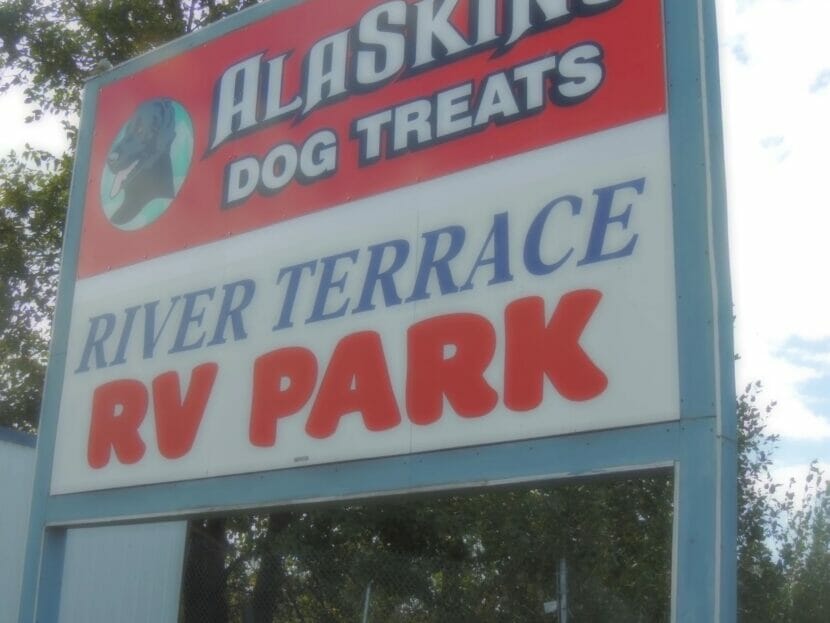
River Terrace in Soldotna currently includes seasonal RV residents and year-round trailer residents. (Riley Board/KDLL)

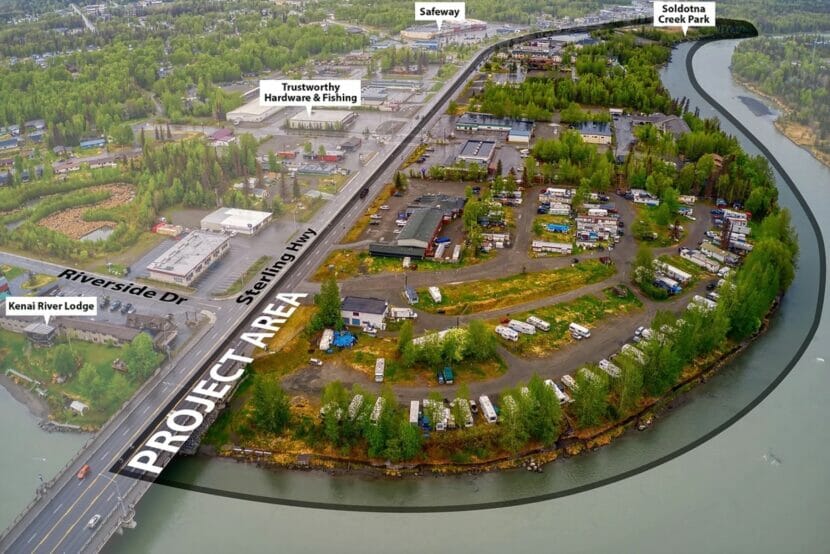
The River Terrace RV and Trailer Park is just upstream of the Kenai River Bridge in Soldotna. To the right, there are temporary and seasonal RVs parked along the banks of the river. To the left, about 40 trailer homes house a low-income community, many of them seniors.

On July 27, trailer park residents got notice to vacate by May 3, 2024. The notice says the closure is related to “planned changes in the future use of the land.”

Daniel Lynch has lived in the trailer park since 1995.

“There’s no need for these people to become homeless, and that’s what’s gonna happen to the majority of them,” Lynch said.

He said there are few options for mobile home placement, much less for 40 all at once. He suspects many of his neighbors will end up living in their cars.

“We’ve checked trailer parks out from Sterling toward the end of Nikiski and anything south,” Lynch said. “There’s really nothing available. Maybe one or two spots, potentially.”

The trailer park section of River Terrace in Sept. 2023. (Riley Board/KDLL)

The trailer park residents don’t just have to be gone by May — they have to move their entire mobile home, a process that may involve deconstructing any add-ons like decks, disconnecting from utilities, then finding a towing company to move the home to a different site. Most residents rent the land but own the physical home. Lynch estimates moving costs at about $5,000.

“Many people have put in thousands of dollars in improvements, from rubber roofs to decks to plumbing, new windows, etcetera etcetera. And then to find this out at the end of July, and, ‘Oh, by the way, you have two months before the snow flies, and you have to be out by May.’ People were beside themselves,” he said.

This week, Lynch and many of his neighbors gathered to talk through their options. They’re looking at tenant legal resources, learning from a similar situation happening in Chugiak, and hoping for more time.

Lynch suspects the eviction is related to the city of Soldotna’s riverfront redevelopment project, a plan to convert riverfront property into a walking path and market area. That project is working with money from the U.S. Economic Development Administration, and an Oregon-based consultant.

The latest plans do include a map encompassing the River Terrace property, and even suggest constructing mixed-use buildings and housing diversity, including affordable housing. Project manager Jason Graf with the consulting company presented the idea to the city council last week.

“There’s always a need for more housing in communities. Where you can partner or work with affordable housing developers, you as a public entity have access to grants and funding that can build affordable housing in the community,” he told the council. “There are developers out there who do that work, there are federal grants that you can acquire.”

But Soldotna City Manager Janette Bower said that work is far in the future and the city has made no moves to purchase River Terrace at the moment. She said the city has talked about purchasing it in the long term, but not until after an appraisal, which could reveal too big of a price tag for the municipality.

She said she was also surprised to find out trailer park residents were being evicted.

Plans for the riverfront redevelopment project, with the River Terrace RV and Trailer Park property in the foreground. (City of Soldotna)

Jim Butler, an attorney for the property’s owners Gary and Judith Hinkle, said nobody has expressed serious interest in buying the property.

Butler confirmed the owners are not in negotiations with the city, and said the reason residents are being evicted is to, “convert the balance of the property’s use to seasonal or temporary use by customers.”

Daniel Lynch, the River Terrace resident, hopes the city will help him and his displaced neighbors.

“There is no need in today’s society for us to become Anchorage, where we just have homeless people because of a situation like this,” he said.

City Manager Bower said the city doesn’t have the money to help the residents relocate, but she is worried about them and will refer them to services if she can. She wishes they had more time to prepare to move.

Alaska Legislature’s new apartment building is on budget, on schedule

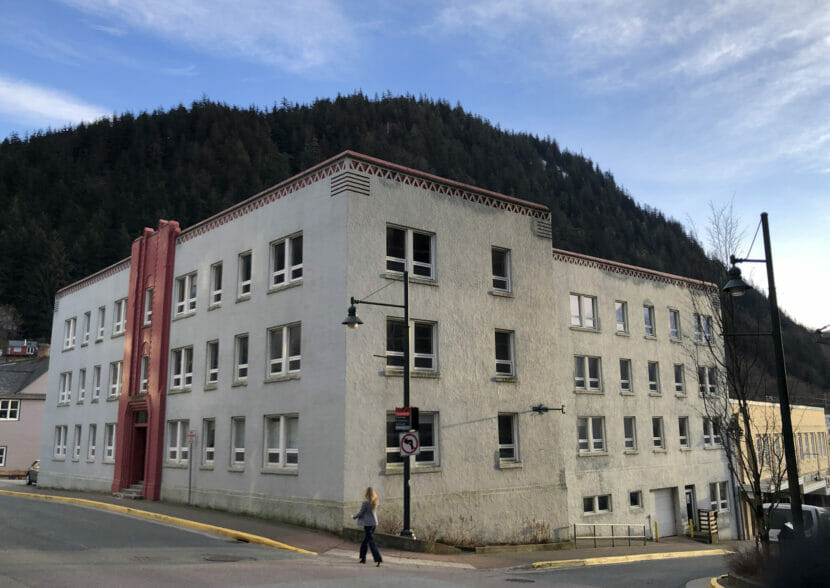
The Assembly Building is seen on Wednesday, Dec. 21, 2022, in downtown Juneau, Alaska. (Photo by James Brooks/Alaska Beacon)

A project intended to renovate a historic Juneau building into apartments for state legislators and staff is running on time and on budget, officials told a legislative committee on Monday.

“It’ll be move-in ready by January 10 at the latest, and then they’ll just have some punch-list items after that. It’s on schedule to be move-in ready five days before session begins,” said Jessica Geary, director of the nonpartisan Legislative Affairs Agency, which manages the Capitol complex in Juneau.

The Assembly Building, built in 1932 and located across the street from the Capitol complex, was donated to the Legislature by the Juneau Community Foundation last year.

The joint House-Senate Legislative Council has agreed to spend almost $9 million turning the building into 33 apartments.

What’s still not clear is who will get those apartments. Lawmakers have yet to set a policy determining that, and they haven’t determined whether the apartments will be available to the public when the Legislature is not in session.

Sen. Jesse Kiehl, D-Juneau, is chairing a subcommittee that will decide those answers, and he said he’s likely to recommend against making the building available to the public.

Though Juneau is experiencing a severe housing shortage, Kiehl said that “one of the greatest values of this building to the Legislature will be special session housing.”

During prior summer special sessions, lawmakers and staff had to compete with Juneau’s seasonal tourist economy for hotel rooms, and space was difficult to find.

The Assembly Building was purchased by the Juneau Community Foundation’s Juneau Capitol Fund, which is intended to support the Capitol as long as it remains in Juneau, and funders have an interest in seeing special sessions take place in Juneau.

Kiehl said that keeping the building unavailable to the public “would limit the degree of competition with the private sector” as well.

Other legislators have expressed different opinions. During Monday’s meeting, some lawmakers expressed concerns about the Legislature’s ability to earn a return on investment with the property.

“I’m just not so sure that this is an appropriate use of people’s money,” said Rep. Kevin McCabe, R-Big Lake, during Monday’s meeting.

McCabe was among five legislators, all Republican members of the House majority caucus from Southcentral Alaska, who attempted to vote down a contract for furnishing the building.

The vote passed 8-5, allowing LAA to purchase furniture. A separate vote, authorizing $74,750 for window shades and blinds, passed by a 12-1 margin. The lone no vote was Speaker of the House Cathy Tilton, R-Wasilla.

Rep. Bryce Edgmon, I-Dillingham, voted in favor of both items despite opposing the Assembly Building idea last year.

“It’s a tough issue in some respects. Those that were on the council before know that I was not a big fan of the building to begin with,” he said, “but I feel like we’ve got sort of both feet in the water now.”

This story originally appeared in the Alaska Beacon and is republished here with permission.

After high demand last winter, pastor says church needs more funding to run Juneau’s warming shelter

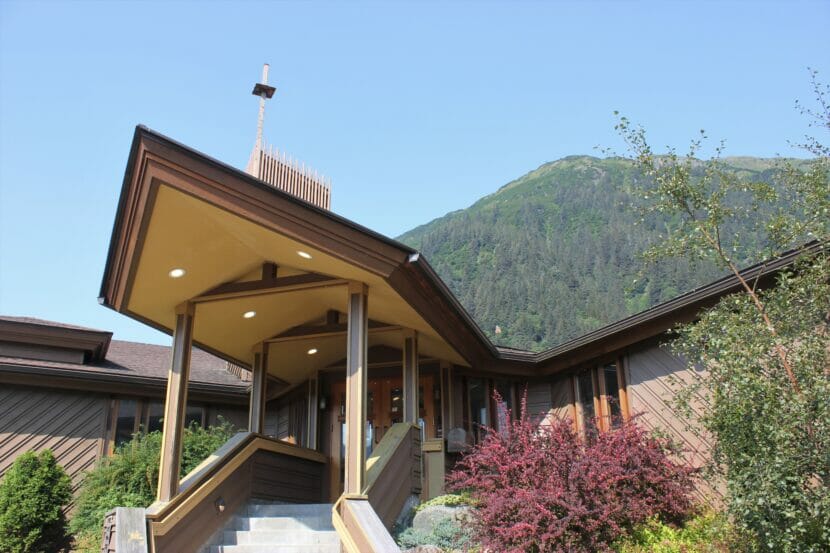
Resurrection Lutheran Church in Juneau, photographed on Aug. 22, 2023. (Katie Anastas/KTOO)

Last winter, Resurrection Lutheran Church was prepared to serve about 45 to 50 people at its warming shelter each night. They often served more. One night, 70 people slept at the church.

Pastor Karen Perkins said they need more financial support from the city to run the warming shelter this winter.

“Last year, because of this huge swell in population, we couldn’t keep up under the figures of the contract,” Perkins said. “There were some times where it became really difficult to manage.”

Perkins estimates that the church needs about $290,000 to adequately staff the warming shelter. She’s still waiting to hear whether the city will provide that much money. As city leaders continue to negotiate with the church, they’re considering an alternative: a Capital Transit bus.

Deputy Manager Robert Barr shared the idea at a Juneau Assembly meeting last week.

“There are a handful of communities that, if worse comes to worse, will use a public transit bus, keep it idling overnight, keep the heater on and allow people who have been unable to get into another shelter around town to stay warm,” Barr said.

A ‘realistic’ number

Last year’s $200,000 contract was enough for the church to pay for a part-time manager and a bookkeeper in the daytime and two full-time staff members at night. But when 10 or 20 more people sought services there than expected, they needed another staffer. 

“There’s this myth that we allow people to use drugs there and we allow people to drink there, which we don’t,” Perkins said. “But we also don’t search people when they come in, because it’s part of honoring their dignity. But if there are too many people, the staff don’t catch it. It came to the point where we struggled to manage the safety of the people who were there.”

Recently, the church’s congregation narrowly voted against applying to run the warming shelter this winter. Perkins said some members were concerned about the loitering, vandalism and other property damage that happened last year.

“That is much less likely to occur when the numbers are managed better,” she said.

Perkins said the church has found ways to do that. With the help of donations, they began serving warm meals, which helped people rest. With the planning commission’s approval, they extended operating hours slightly so people could stay indoors until buses started running. But that required staff to work overtime.

“Part of our model is very much dignity and cooperation,” Perkins said. “People are much more likely to be cooperative under certain conditions.”

Perkins would like to see those conditions reflected in the city’s contract.

She said last season, during the uptick in patrons in the early months of the year, the city gave the church an additional $40,000 to pay for a third staff member, bringing the total payment for last season to $240,000. 

Perkins would like this year’s contract to provide enough funding to pay for a third staff member a few days a week and make the manager position full time. She estimates those changes would bring the total to around $290,000.

“We want to have a number that’s realistic this year,” she said.

‘The last-ditch option’

Barr said he’s still talking to church leaders about how they might amend the warming shelter contract to make it more appealing to the congregation.

He said he couldn’t comment on the ongoing contract negotiations, but that he does expect the cost to go up this year. Funding for the warming shelter would come from the city’s operating fund and a state Department of Health grant.

“We have to balance the services that we’re looking for with being fiscally responsible with taxpayer dollars,” Barr said. “That’s sometimes hard when you potentially only have one provider.”

Each year, the city requests proposals from groups that are interested in running the warming shelter. No one applied this time.

The shelter has changed locations and providers several times since it began in a now-demolished building on Whittier Avenue downtown in 2017. St. Vincent de Paul started running it at their community center on Teal Street in the Mendenhall Valley in 2019, then moved it back downtown to the Juneau Arts and Culture Center when the pandemic began. In 2021, Resurrection Lutheran Church took over for St. Vincent de Paul when they pulled out of their contract.

“Finding space for any use right now is challenging,” Barr said. “Finding space for this particular kind of use is particularly challenging.”

The decommissioned city bus would have seats for only 35 people — and no beds. Barr said he thinks using a bus as a warming shelter would lead to people to seek out other options. 

“The bus option is the last-ditch option. It’s not the one we want to choose,” Barr said. “But I think if that’s what was available, that we would see more people choosing to make use of some of the other sheltering space that’s available that would be better than this one.”

Completely full

But Mariya Lovishchuk, the executive director of Juneau’s emergency shelter and soup kitchen, says other sheltering space is limited. At the Glory Hall’s shelter, all 43 rooms and 12 overflow bunks are already full.

“I don’t remember the last time we were not completely full,” she said.

Glory Hall staff try to move people from the emergency shelter into permanent supportive housing as soon as they can. But the 64 units in the Glory Hall’s Forget-Me-Not Manor are also full. They’re working on adding 28 more units to Forget-Me-Not Manor and building seven new units downtown, but they won’t be finished by winter.

Lovishchuk said there’s typically an increase in the number of people seeking shelter services once the Mill Campground closes in the fall. This year, it’s scheduled to close on Oct. 16.

“We’re working really hard right now with our community partners to make sure that everyone in our shelter who has any other location to go that is better – be it permanent supportive housing, be it transitional housing – gets there before the winter comes, so we have as much space as possible open,” she said.

In the meantime, Perkins hopes a revised contract will allow the church to staff the warming shelter safely. If the church reaches an agreement with the city, she plans to bring it back to the congregation for another vote.

“Even though it’s a city contract and a secular service, the reality is we do it because of our faith,” she said.

The congregation’s next meeting is scheduled for Sept. 10.

Site notifications
Update notification options
Subscribe to notifications