Housing

Juneau Assembly to consider registration program for short-term rentals

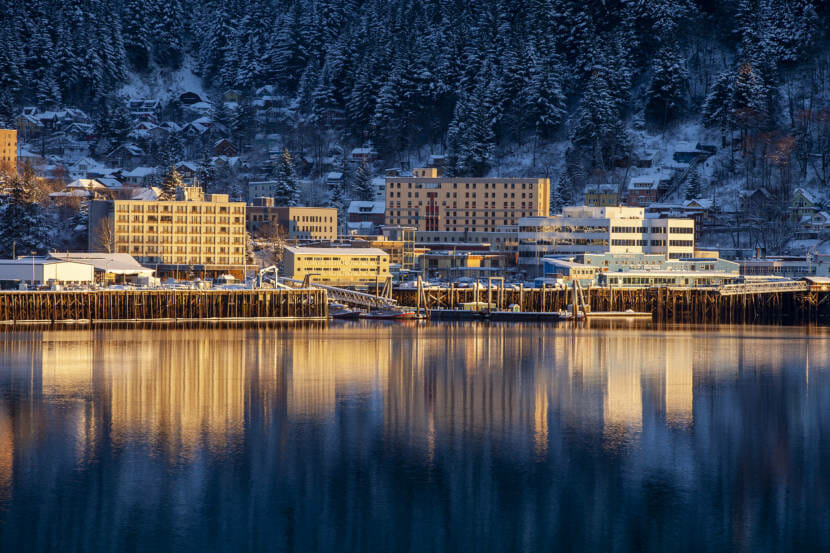
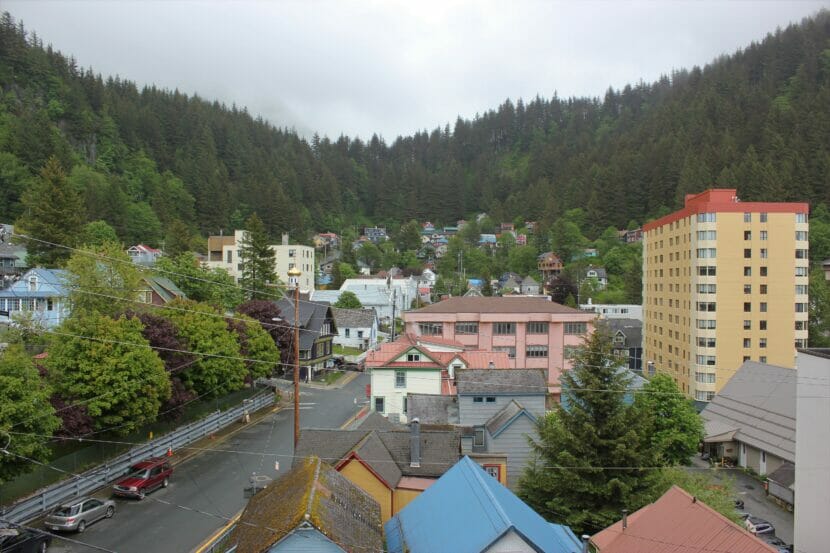
Homes in downtown Juneau, photographed on June 6, 2023. (Katie Anastas/KTOO)

Juneau residents who run short-term rentals may soon have to register their businesses with the city.

It would be a first step toward regulating short-term rentals, like those listed on AirBnB or VRBO.

Deputy City Manager Robert Barr said a registration program would help the city collect sales tax and track how many units an owner or property manager is operating.

“That enables us to have a more comprehensive understanding of short-term rental activity in Juneau,” Barr said in an interview.

A year ago, 170 short-term rental businesses had registered with the city’s sales tax office. But data analysis this spring found that Juneau had nearly 600 active and intermittently active short-term rentals. 

The city’s short-term rental registration system would assign a unique number to each unit and require owners to include that number in online listings. They’d face a $25 fee each time they list their short-term rentals online without proper registration.

Short-term rental operators are legally required to pay sales tax and hotel bed tax. Barr said assigning a unique number to each unit could help the city track down which operators are paying and which aren’t — and make them more aware that they have to pay sales tax at all.

“Part of the reason we’d move forward with this registration ordinance is to get a better understanding of what our compliance rate is,” he said.

Communities around the state are taking even stronger measures to curb the increase in short-term rentals, which can leave long-term renters with fewer, more expensive options.

Sitka requires short-term rental owners to live on the property for half of the year. Wasilla issues just 75 permits per year, and one property owner can have up to three permits. 

Vacation destinations around the country have enacted similar laws. Last week, AirBnB sued New York City over its new short-term rental registration requirements.

If approved, Juneau’s registration program won’t include those kinds of restrictions, at least for now. But Assembly members discussed the possibility at a committee meeting Monday night.

Assembly member Alicia Hughes-Skandijs said she’d be interested in exploring limits to the number of rentals one person could run, prioritizing those who rent space in their primary residences and collecting permit fees that could go to the city’s affordable housing fund.

Wade Bryson urged fellow Assembly members to be cautious.

“I agree that we’re going down the correct path. We need to register short term rentals, we need to make sure they’re not literally displacing our residents,” he said. “We still have to keep in mind that we’re now trying to figure out what to tell people they can do with property that they own. That’s always a very slippery slope.”

Last month, Anchorage Democratic Rep. Andrew Gray introduced a bill requiring short-term rental owners to register with the state. Owners would be limited to registering just one short-term rental. Assembly member Carole Triem said she would oppose the bill if it came up again in the next legislative session.

“We should get to make our own rules,” she said.

Barr said the registration program likely won’t yield useful data until it’s been running for a year or more. But he said it’s a good first step in understanding the growing short-term rental market in Juneau.

“Regulation becomes more painful for more people the longer you wait to do it,” he told the committee.

The Assembly will vote on whether to create a short-term rental registration program at its June 12 meeting. If approved, it would take effect in July. 

Glory Hall residents dig in to their community garden

Liz Landes, staff and residents work in the Glory Hall garden. May 15, 2023. (Photo by Yvonne Krumrey/KTOO).

At Juneau’s shelter, Liz Landes carted wheelbarrows of dirt to the 20 raised garden beds she helped build last summer. A few of the shelter’s residents were shoveling the soil into the beds, while others sat enjoying the sunshine. 

Landes calls herself a freelance farmer. She helps build community gardens throughout Southeast Alaska. Last year, she came to Juneau to help build a garden at the Glory Hallʼs Teal St. shelter.

“I shamelessly cried when I saw photos of the garden in full splendor last summer. It was amazing,” Landes said. “I couldn’t believe that in the first year, it could be as successful as it was.”

Landes said the garden thrived under the care of Glory Hall residents. And it wasn’t just the food she planted that she saw bloom. One of the residents, William Hunt, took the lead on the garden. He wrote about it in an essay for the Glory Hall’s online bulletin. 

“This garden literally saved my life,” he wrote. “It gave me something to believe in again. A purpose and a calling!” 

Landes said she wants everyone to take the power of growing food into their own hands. Huntʼs story stuck with her.

“It changed his physical health,” she said. “It changed his mental outlook in the two weeks I was here, and then I heard it continued on throughout the summer.”

Luke Vroman, the Glory Hall’s deputy director, said he watched Hunt get stronger and healthier while cutting way back on his drinking. And when one of Hunt’s doctors saw him later that summer, he didn’t recognize him. 

“I mean, I don’t know if anyone had ever really seen anything like that,” Vroman said.

Resident Beverly Pacheco said she’s been gardening for years, and she’s grateful she can do it at the Glory Hall.

“I love this,” she said. “It speaks to my heart and soul.”

As a vegetarian, Pacheco is excited about all the food she can help grow. 

“Potatoes, chives, nasturtiums. They’re tasty,” she said. “It tastes like radishes, actually kind of a little bit, but you know they’re pretty, too.”

For now, Pacheco is spreading topsoil and compost, anticipating the vegetables to come.

Juneau Assembly Finance Committee votes to lower mill rate

People walk in front of Juneau City Hall on Tuesday May 10, 2016 in Juneau, Alaska.(Photo by Rashah McChesney/KTOO)

The Juneau Assembly Finance Committee voted to set this year’s mill rate at 10.16 on Wednesday.

The mill rate determines how much property tax the city collects from residents. One mill is equal to $1 dollar per thousand dollars in property value. That means that for every $1,000 in taxable property value, there would be a tax of $10.16.

Because property values have gone up, the city would get more property tax, even with a lower mill rate.

Assembly member Michelle Hale proposed the 10.16 rate. She said that would get the average property tax increase close to the rate of inflation since 2020, which is 16%.

“Just as households are experiencing inflation, so is city government,” she said. “Unless we want to reduce our services dramatically, I believe we need to have a mill rate that both does something to reduce the total property tax but also make sure we can pay for city services.”

At the start of its budget process, city staff proposed a mill rate of 10.28 – a slightly lower rate than last year’s. That would have allowed the city to put $4 million into savings. Assembly member Christine Woll spoke in favor of that proposal.

“I commend city staff for putting together a budget that is balanced,” Woll said. “Obviously there’s assumptions in there. If we want to challenge those assumptions, we probably should have done that earlier. But I’m much more comfortable passing a balanced budget.” 

The 10.16 rate proposed by Hale would have left the city with a $1.1 million budget deficit. To remedy that, the Assembly voted to reduce the amount put into savings from $4 million to $3 million.

Assembly member Alicia Hughes-Skandijs said that could work this year, but not long term. 

“I certainly couldn’t live with doing that for more than a year,” she said. “I think it starts to emulate what they do up the hill, as far as not making real decisions and then paying for our underfunding the government through our savings, which I think is a bad long-term plan.”

Assembly member Greg Smith proposed lowering the mill rate even further, to 10.0. 

“I think we can provide relief to the property owner this year,” he said. “If the growth isn’t as large, if the market cools, we can adjust that in the future.”

Smith’s proposal was voted down. 

The 10.16 mill rate passed in a 6-1 vote, with Woll voting no. Members Carole Triem and ‘Wáahlaal Gíidaak were absent.

The full Assembly will vote on the budget on June 12.

Under new House bill, a person could own no more than 1 short-term rental unit in Alaska

The sun rises over downtown and the cruise ship docks on Dec. 22, 2021, in Juneau, Alaska. (Photo by Rashah McChesney/KTOO)

People could only own one short-term rental unit in Alaska and they would have to register it with the state under a House bill introduced earlier this month.

The bill, sponsored by Anchorage Democratic Rep. Andrew Gray, aims to boost available housing in Alaska by curtailing the growth in short-term rentals like AirBnBs.

“If we want to increase the supply of available housing as quickly as possible, I don’t think there’s a faster way than this,” said Gray.

The number of short-term rentals has skyrocketed in Alaska in recent years. In Anchorage, between 2019 and the summer of 2022, the number of units grew by more than 70%, to 2,100, according to AirDNA, an independent group that tracks short-term rental markets.

That means there are fewer rentals available for residents, said Gray.

“Although no one can really quantify how much the short-term rental market is driving the lack of available housing, based on what we’ve seen in other states — I just don’t think Alaska is an exception,” he said.

AirBnBs are also big in many other communities outside of Anchorage, including in Southeast and on the Kenai Peninsula.

Gray’s bill is one of the few bills in the Legislature this year that addresses housing.

Some of the impacts of the bill, if it became law, are still unclear.

There is relatively little research about the effect of registration requirements. One study that hasn’t yet been peer reviewed found that requiring owners to register can reduce the number of short-term rentals in some cities by nearly 30%.

Andrew Bibler, the study’s lead author and an economist at University of Nevada, Las Vegas, cautioned that the research is ongoing and it’s too early to draw firm conclusions about the effect of the policies in all cities. He said many people who use AirBnB are not wealthy and use the platform to supplement their income by renting out individual rooms. He said research continues into the question of whether requiring registration can increase the rates of foreclosures. So far the evidence is inconclusive.

He said that one trend that is clear is that having more restrictions — like ownership limits — has a larger effect on the number of AirBnBs than merely requiring registration.

“It seems that the policies that are enforcing strict rules have some bite, and they decrease the size of the market, but that’s particularly true where the rules are strict and where there’s a relatively dense market,” he said.

Several studies have shown that shrinking the size of AirBnB markets correlates with lowering home and long-term rental prices.

“I would expect a similar effect here,” said Brett Watson, an economist at the University of Alaska Anchorage Institute for Social and Economic Research.

There is pushback to the bill, specifically limiting the number of short-term rentals each owner could register to just one. AirBnB doesn’t share information about how many people rent out more than one unit.

Anchorage resident Joe Connoly is among those who say the limit is problematic. He already has an AirBnB near his home on the upper Hillside that he hopes his aging parents can move into in about 10 years. He’s planning to build another to rent out as an accessory dwelling unit, more commonly known as a mother-in-law apartment, to supplement his income. He said he and his wife are self-employed and have a modest income and he would rather invest in housing than the stock market.

“We wouldn’t be making money until we’re 70 if we did a long-term rental. If we did a short-term rental we could pay it off in 10-15 years,” he said.

The bill would grandfather in people who currently own more than one short-term rental unit. Connolly said even if the unit he hopes to build is excluded, the restrictions could have a chilling effect on people like him who are looking to invest in housing.

“It’s not great for the 25-year-old me,” he said.

Watson, the UAA economist, said the policy would indeed have negative effects for current homeowners.

“Whether you rent your property or list your property on one of these short-term rental platforms or not, it’s likely that your home price has appreciated because of it. And so for existing homeowners, there’s a tradeoff,” said Watson.

Gray said that’s the point.

He said it’s problematic if people who can afford to build new homes are just building them as short-term rentals.

Gray doesn’t expect the bill to pass in the waning days of the legislative session, but said he hopes the bill can advance next year.

As Alaska duties evolve and expand, military branches’ housing needs grow, leaders say

U.S. Army infantrymen with Bayonet Company, 1st Battalion, 5th Infantry Regiment, 1st Brigade Combat Team, 11th Infantry Division, survey the surrounding area while acting as opposition forces during Joint Pacific Multinational Readiness Center-Alaska 23-02 at Yukon Training Area, Alaska, April 3, 2023. JPMRC-AK 23-02 is a display of the 11th Airborne Division’s ability to survive and thrive in the Arctic, and its soldiers’ ability to fight and win our nation’s wars anywhere. (U.S. Air Force photo by Alejandro Peña)

The Alaska-based military branches that are patrolling the Arctic, buffering against an increasingly hostile Russia and standing ready to deploy to global trouble spots are coping with another adversary: a housing squeeze.

In testimony at the 2023 legislative session’s first hearing held by the Joint Armed Services Committee, Alaska military leaders on Tuesday described some of those housing challenges.

At Eielson Air Force Base near Fairbanks, expanded operations will mean more strain on housing, said U.S. Air Force Lt. Gen. David Nahom, commander of the North American Aerospace Defense Command’s Alaskan NORAD Region.

“We still do worry about this as we bring more assets into the Fairbanks area, mainly our air fuelers that are coming in. One of my biggest concerns is dormitories,” said Nahom, who also leads the Alaskan Command and the Eleventh Air Force.

Some airmen have moved into contingency dormitories, the military term for overflow housing, and billeting rooms, which are rooms rented in non-military locations. But that is a temporary solution, Nahom said. “Those are not good for long-term for airmen to live in,” he said.

It also leaves Eielson without housing for visiting units that come in for exercises like Red Flag Alaska, he said. Visiting units often have to try to find downtown housing, which can be very expensive, even prohibitively so.

“The trend I’m seeing is units canceling Red Flag Alaska participation,” he said. “The key is we’ve got to get the dormitories built so that I have airmen living in proper dormitories and then I free up the contingency housing for the visiting units.”

Nahom said the Air Force want to get some more on-base housing at Eielson for junior enlisted personnel, and hopes to partner with local entities and the state to accomplish that. “It’s very hard for junior enlisted to afford downtown housing and to afford to live, based on their salaries,” he said.

Coast Guard Station Valdez crewmembers lower a 25-foot Response Boat – Small into the Nome, Alaska, harbor Aug. 1, 2014. The Station Valdez crew deployed to Nome with personnel from Coast Guard Sector Anchorage as part of Arctic Shield 2014. (U.S. Coast Guard photo by Petty Officer 2nd Class Grant DeVuyst.)

Maj. Gen. Brian Eifler, commander of the U.S. Army’s 11th Airborne Division, agreed that housing is tight in the Fairbanks area, home to U.S. Army Garrison Alaska – Fort Wainwright.

Along with securing housing, the Army is trying to make soldiers feel at home in Alaska, a place of growing military importance, Eifler said.

“The Army has volunteers that come to Alaska, right? But not everybody raises their hand to say, ‘Send me to Alaska,’” he said, noting that many people stationed in Alaska come from vastly different parts of the country. “We have to bring our soldiers into this from wherever they’re at and make sure they’re prepared to not just live here and operate with their family but also do their job here, and also be able to do it under fire.” That is one reason why exercises in outdoor Alaska conditions are so important, he said.

For the U.S. Coast Guard, which is expanding its Alaska presence, some housing needs are already being addressed with new construction that is underway or planned, said Rear Adm. Nathan Moore, who leads Alaska operations.

“We’re seeing growth and building to an extent we have never seen in the Coast Guard before, new assets for us. New cutters, new boats, new aircraft means new shore facilities,” Moore, commander of the Coast Guard’s 17th District, told legislators.

In Kodiak, where a cargo pier is being rebuilt in preparation for the arrival of new fast-response cutters and patrol cutters, construction work has already started on housing to support those new ships, he said. In Sitka, where a new fast-response cutter is to arrive, the Coast Guard just finished a land transfer on the waterfront that will support more facilities. In Seward, where another new ship is headed, the Coast Guard is acquiring some housing tracts, he said. “We have money in hand to purchase that property and build housing for the increased size of the crews that this new ship’s going to bring to Seward,” he said.

One tight spot may be Nome, where there are plans to expand the city port into a deepwater, Arctic-service port which Moore called a “fantastic opportunity” for Coast Guard operations.

The state could continue to help the Coast Guard meet its need for more housing there and elsewhere, Moore said. “What we are very interested in, as we build up these new assets and put them places, we will probably continue to need help coordinating for things like development of housing and logistics footprints,” he said.

This story originally appeared in the Alaska Beacon and is republished here with permission.

Telephone Hill residents plan next move after Juneau acquires property from state

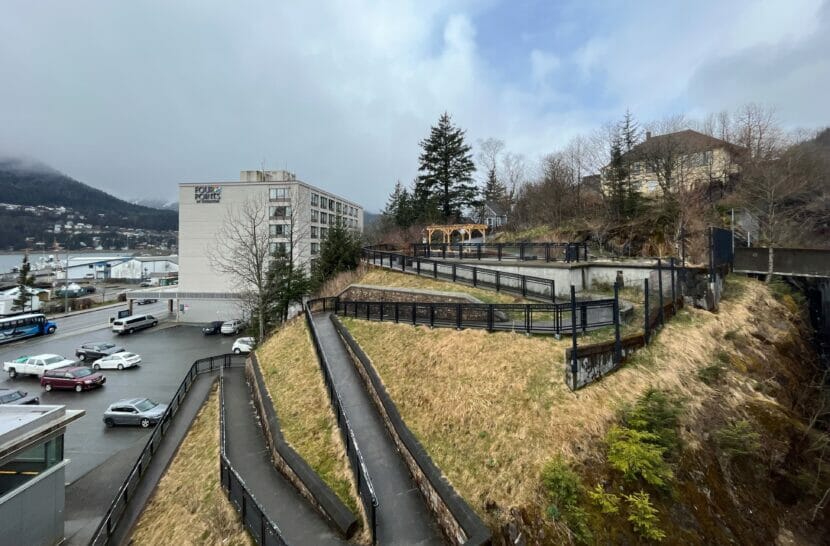
A ramp leads up to Telephone Hill Park from the Capital Transit center. (Photo by Katie Anastas/KTOO)

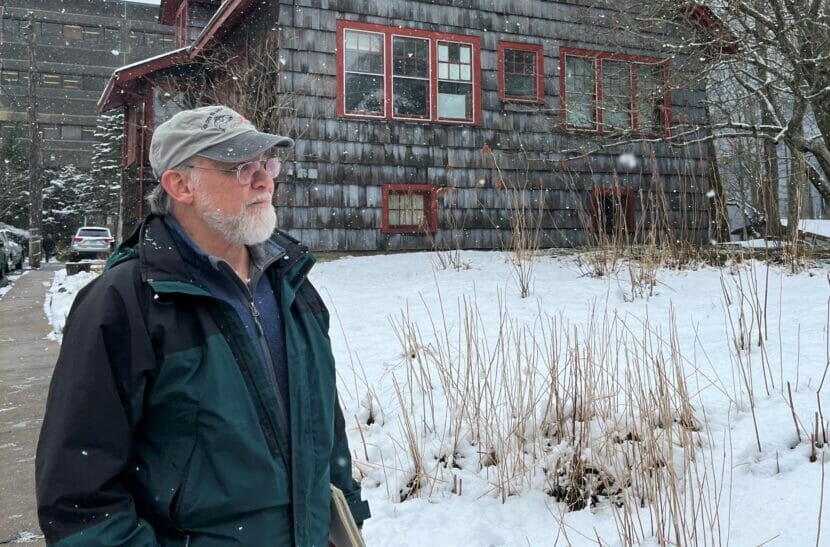
When Tony Tengs took the stage at the Alaska Folk Festival earlier this month, he sang an ode to his Juneau neighborhood, Telephone Hill.

“It’s where the oldest house you’ll find, it’s like you stepped back in time,” he sang. “It’s a breath of fresh air from the hectic scene.”

Tengs knows that oldest house well — he’s rented half of it for 28 years. It’s also the neighborhood’s namesake: Edward Webster and his family ran Alaska’s first commercial telephone service out of the house.

“I call it the West Wing,” Tengs said in an interview inside the home. “I’ve had some fabulous times here.”

Telephone Hill has the kind of neighbors who help you shovel your driveway when it snows and call you if there’s a bear wandering through. Like Tengs, many of them have lived here for decades. But with public meetings on the future of Telephone Hill set to begin this summer, some of them are thinking about their next move and asking the city to delay evictions as long as possible. 

The state owned Telephone Hill’s seven houses and one five-unit apartment building from 1984 until this March, when it transferred ownership to the City and Borough of Juneau. The city had applied to buy the land in July 2020.

In that application, City Manager Rorie Watt wrote that the homes were aging and “the land is not being used for highest and best use.”

Then, in January 2022, the city listed redevelopment of Telephone Hill as a legislative priority and sought $2 million for work on the site. According to the project description, that would include “demolition of existing structures.”

Now Tengs’s floor is covered in half-full boxes and musical instrument cases as he prepares to move into Fireweed Place, a nearby apartment community for older adults. But he thinks his neighbors shouldn’t have to move until the city is ready to break ground on whatever comes next.

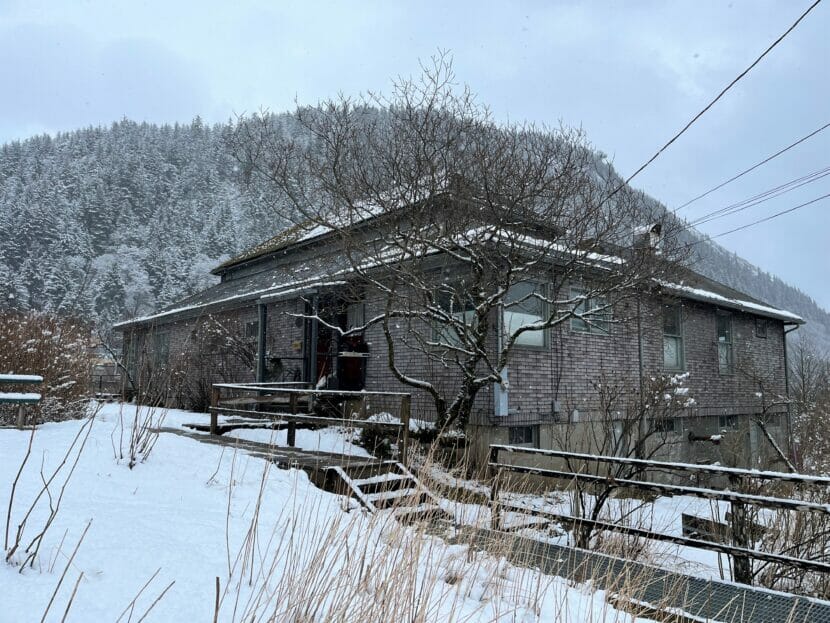
The Edward Webster House is the oldest house still in use in Juneau. The Webster family ran the first commercial telephone service in Alaska out of the house, leading to the neighborhood’s name of Telephone Hill. (Photo by Katie Anastas/KTOO)

“Good of the many”

The city’s first step as owner was to select a new property manager, JPR Management Services. Their contract lasts through the end of September. JPR will collect rent for the city, and if tenants leave their homes, they’ll let the city know.

“Vacated property will not be rented,” the city’s request for proposals read.

Watt said the land transfer and the selection of a property manager are the latest milestones in a long process.

“I think for the tenants, maybe it’s an increasing sense that change is really likely to happen,” he said.

Watt said it’s likely the city will build new housing on the property, calling it a “once in a lifetime opportunity” to add units in a desirable location downtown. The lack of housing and the rise of short-term rentals have made it harder for Juneau businesses to hire employees.

“I think this is a classic ‘good of the many versus good of the few’ type issue,” Watt said. “I’d like to see several hundred units of housing available for the community on that property. Right now, I think we have 17 people living up there.”

The city has also started negotiating with First Forty Feet for planning and design services for Telephone Hill. Watt expects them to spend three to five months on a redevelopment plan. Public meetings on the planning and design process could begin in early summer.

The city has tasked the planner with considering a “no build” option, too. But Watt said that seems unlikely.

“The Assembly’s goals, which it sets every year, are dominated by housing issues,” he said. “There’s nothing wrong about preserving a historic neighborhood. It just doesn’t meet what we’re trying to do.”

Skip Gray stands in front of his former home at Telephone Hill on Feb. 14, 2023. (Photo by Katie Anastas/KTOO)

A jewel of history

Some in Juneau, like Skip Gray, are still holding out hope that the city will preserve the existing houses. Gray moved to the neighborhood as a young adult in 1975. He remembers hosting visiting musicians and throwing New Year’s Eve parties.

“I loved living here,” he said, standing in front of his former home. “I had a great group of friends, great group of neighbors. There’s a lot of history in this house.”

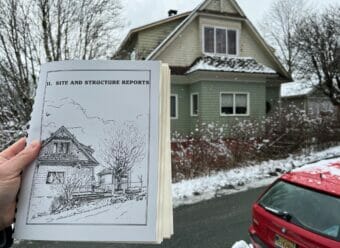
According to 1984 report, the Bosch-Carrigan House was built in 1913. Charles Garside, a mining engineer and early surveyor of the Juneau Townsite, owned the property at the turn of the century. (Photo by Katie Anastas/KTOO)

A 1984 study of the neighborhood documents some of that history: the house sits on a lot once owned by Richard Harris, an early prospector and partner of Joe Juneau. Down the street is the Augustus Brown House, named after a landlord who acquired the property in the 1880s and left money to build an indoor pool when he died.

Gray has since moved out of the neighborhood, but he still cares deeply about what happens to Telephone Hill and listens for updates at city meetings.

He says he understands the need for more housing downtown, but he doesn’t think Telephone Hill should be the place to build it. He hopes to organize tenants and community members to raise awareness of the planning process and share their opinions with city leaders.

“This is a great little jewel of history that I think we should hold onto,” Gray said. “If they come with bulldozers and tear these houses down, and I’m standing there watching, I don’t want to say I didn’t try.”

Some tenants, like Roald Simonson, plan to stay as long as they can. He’s lived on Telephone Hill for 20 years, in a bright studio lined wall-to-wall with bookshelves. His cat, Kao, wanders in and out through a window out to the back patio. 

Roald Simonson is a longtime resident of Juneau’s Telephone Hill. (Photo by Katie Anastas/KTOO)

Simonson has started keeping an eye out for other housing because, he said, “You have to.” But he has a request for city leaders.

“Just don’t move us off here until you have to,” he said. “Don’t jump the gun and say, ‘Well, we have to get the residents off here for whatever happens,’ and then have things sit for six months, or eight months, or a year, or three years.”

He says he hopes the city picks a redevelopment plan that makes future generations proud.

Site notifications
Update notification options
Subscribe to notifications