Marijuana

Controversial Anchorage budget bumps up taxes for public safety, veto likely

The Anchorage Assembly passed a budget raising property taxes by 5.61%, splitting the body between those calling for fiscal conservatism, and others stressing a need for spending on public safety. Clashes will likely lead to line-item vetoes from the mayor’s administration.

Holding his young daughter at Tuesday evening’s meeting, Kelsey Taylor describes his job straightforwardly: “I’m a garbage man.”

Taylor was one of many employees from Solid Waste Services, which handles trash for much of Anchorage. They were there over a proposal to sell off the trash collection service to a private company. The issue has made garbage a hot topic in city politics. A report from a financial consultant found the utility is currently in good working order, and that selling it could bring financial outcomes ranging from marginal short-term gains, to an overall decline in revenues.

“It just seems like a bad deal for everybody,” Taylor said of the report’s findings, “really not a good competitive deal for the taxpayers of Anchorage.”

SWS has a surplus of cash right now. The Administration’s budget planned on shifting $5 million from the utility into different funds.

“The utility is way over-funded, they should not be holding cash,” Mayor Dan Sullivan said after the Assembly meeting. He believes the utility is fundamentally owned by all the residents of Anchorage, and that any extra money should be passed along in the form of property tax relief. “I think that’s a better use than parking a bunch of cash where they don’t need.”

But Assembly members rejected that, unsettling the mathematical equilibrium in the Administration’s budget.

A solid block of Assembly members added in several amendments, including more animal control employees, a coordinator for issues on homelessness, and a planner to work on new marijuana regulations. All together, the budget changes amount to a bump over last year’s levels. The amended version passed 6 to 5 (Demboski, Evans, Hall, Johnston, and Starr voting against), with some fiscal conservatives objecting that a tax increase is unacceptable.

But others claimed the Administration’s budget left out money for much needed services.

“These amendments tonight dealt with public safety,” said Assembly Chair Dick Traini, who commends the Administration’s emphasis on fiscal produnce, but sees an obligation to provide funding for measures to keep the public safe. “I think you’re going to find a lot of people very happy when they can get the officers to come when they’ve got an issue with a wild dog.”

Assembly members also removed a controversial pilot program from the Administration to send a small number of Anchorage’s street alcoholics out of state for substance abuse treatment. The $200,000 set aside for the program will remain in the budget, but it will now be up to an Assembly committee on what kinds of treatment it will fund.

Though it was far from the worst budget battle Sullivan has been through, line item changes are not yet set in stone. “The budget’s not done yet,” he said. “I have seven days to veto.”

The Assembly delayed several items, including voting whether or not to approve a new collective bargaining agreement with the union representing police officers. That will come up at the next meeting, after the runoff election determining the city’s next mayor.

A moving target: WAANT pursues bootleg liquor

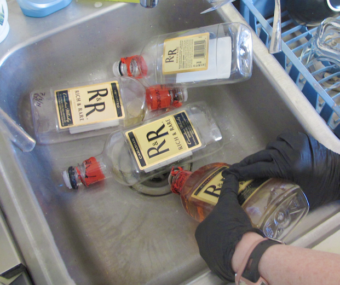
Empty alcohol bottles in a sink
Bethel’s WAANT team tracks alcohol moving from Bethel to dry communities. (Photo by Ben Matheson/KYUK)

Citizens in Bethel are weighing a decision on a proposal for the for the first liquor store in decades. In the shadow of the debate is a powerful and elaborate bootlegging economy across the Yukon-Kuskokwim Delta. In the first of a three-part series on efforts to curb the flow of alcohol KYUK’s Ben Matheson reports on law enforcement’s battle with black markets spread across the rivers and tundra of the vast region.

In the break room of the Bethel trooper post, an evidence custodian rips open carefully labeled bags of what was evidence: seized plastic bottles of R&R whiskey and Sailor Jerry’s rum. Down the kitchen sink goes booze that never made it to customers in local option communities. It’s a small success for the Bethel based Western Alaska Alcohol and Narcotics Team. But one day’s success will be followed by another challenging day.

Angela Womack is one of three WAANT investigators in Bethel who spend their waking hours chasing down leads, tracking the movement of alcohol, and building long term cases.
“Constant. It’s constant,” said Womack.

No one know for sure how much alcohol moves illegally from hubs like Bethel to the dozens of villages banning either the importation or possession of alcohol.

Investigator Todd Moehring says it can be a high stakes business.

“Last year there were reports of snow machines, as the ice was basically breaking, making their last runs across there river,” said Moehring. “Risks are definitely taken to run these things.”

There’s big money in bootleg alcohol. A bottle that costs around 10 bucks in Anchorage can fetch hundreds in dry villages. Transportation and logistics dictate the price. The closer to Bethel and the Kuskokwim ice road, the cheaper the bottle. In Toksook Bay, primarily reachable by air, they say a 750 milliliter bottle sells for 300 dollars, and had heard that one had been auctioned off for 700 dollars.

The three officers are tasked with enforcement for 56 villages in the YK region. The work takes them on the river, to the airport, and to postal facilities to investigate mail. When in Bethel, they dress in plainclothes to blend in.

Bethel’s unique alcohol laws allow unlimited importation but there are currently no local sales. People bring in alcohol in their luggage from Anchorage or make orders by mail from liquor stores, which come in by air carriers. The stores do big business with the Delta. The state’s Alcoholic Beverage Control Board receives notice when a customer buys more than 4 cases of liquor in a week, and they pass that information on to the troopers.

One day in March nearly 200 liters were ordered between four customers. One week in February, a single customer ordered 81 liters. The first quarter of 2015 saw the equivalent of nearly 1100 bottles in large orders.


Moehring says that information can become part of a case.

“Some folks are selling just so they can have their own alcohol. Some are selling strictly for financial gain, and these organization go all the way back into Anchorage and they’re shipping it out here to the villages because there is such financial gain,” said Moehring.


Investigator Jerry Evan calls it a never ending battle.

“When we investigate and successfully complete a case and arrest people, there’s other people who pop up and take their place. It’s like a revolving door for us,” said Evan.

Evan says there isn’t single profile of who sells.

“One lady told us she was going to sell booze because she needed to buy diapers for her kid. Everybody has their own reason as to why they want to sell. That’s why some people say we have subsistence bootleggers, they sell to makes ends meet. And then there are those who sell to make profit,” said Moehring.

The second half of the team’s mission is combating drugs in the region. Investigator Moehring says the recent rise of heroin has added a troubling new ingredient to the illegal alcohol economy.

“We know of people who weren’t bootlegging before that are now because they’re hooked on heroin. So we know alcohol and marijuana sales are used to fund heroin sales as well. You can’t separate them out, it’s a big spider web, and it’s all interconnected,” said Moehring.

Tips from the public are their bread and butter. Moehring says the office gets no shortage of anonymous tips, but it’s not always directly actionable information. Having someone speak on the record goes a lot farther for prosecution. In the end, Evan says every bottle counts.

“We want to think we’ve maybe saved a homicide or an assault from occurring in the village. It makes me happier if I seen 10 bottles or 12 bottles,” said Evan. “That mentality helps me a lot when I get up in the morning and think, hey what am I going to do today?”

Odds are, the phone will be ringing, bringing new bottles and new cases to chase.

Pot legal in Alaska, but no toking up on state ferries

Despite last fall’s legalization vote, you’re still not allowed to get stoned on state ferries.
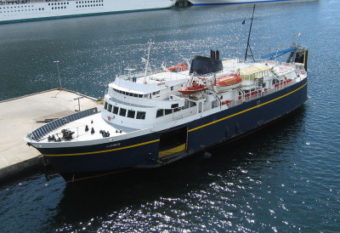
The Alaska Marine Highway System recently announced new procedures for passengers with pot.

ferry LeConte
Alaska Marine Highway ferry LeConte docked in Skagway, 2009. (Photo by JWebber/Wikimedia Commons

The bottom line is — you can’t consume marijuana anywhere on a ship, including a stateroom or the solarium.

But spokesman Jeremy Woodrow says crew members won’t actively search for pot. But they’ll monitor anyone suspected of carrying a large quantity, and in compliance with state law, passengers won’t get in trouble for having an ounce or less.

“If the passenger is discovered with more than an ounce of marijuana, the marine highway system can report that person to authorities at the next port of call,” he said. “That will be either the U.S. Coast Guard or local authorities.

He says the rules may be adjusted if new state laws and regulations call for changes.

Woodrow says anyone smoking openly will be told to stop. Crewmembers can detain people causing any kind of trouble, but that’s not common.

“People are usually fairly compliant with crew members,” says Woodrow. “Crew members aren’t out going out to create conflict. Really, all these rules are set for passenger safety.”

The measure passed by Alaska voters called for marijuana to be regulated like alcohol.

The ferry system has shut down on-board bars to save money. But Woodrow says beer and wine will still be allowed in specific parts of some ships.

“They will be allowed to purchase and consume alcohol in a section of the cafeteria. But that is the only place on board the ship they’ll be allowed to do that, other than if they have a stateroom,” he said.

House steps towards full legal marijuana market

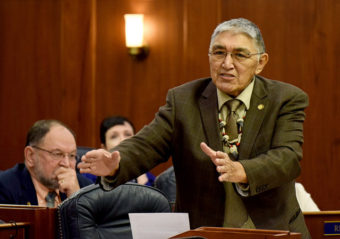
Rep. Benjamin Nageak, D-Barrow, speaks in the Alaska House of Representatives during debate on House Bill 123 to establish a marijuana control board in Alaska, April 14, 2015. (Photo by Skip Gray/360 North)

A fundamental bill for establishing regulations over marijuana in Alaska passed the House today. The bipartisan vote is a step towards the Alcoholic Beverages Control Board creating a permit structure for all components of a full legal market.

Barrow Democrat Benjamin Nageak told colleagues during a House floor session there are some basic reasons marijuana needs its own regulatory board.

“I mean jeez, every time I see high people I go over, because I want to laugh,” Nageak said, illiciting chuckles from around the chamber. “I think we need to have a separate board to have, ya know, happy versus versus unhappy people.”

House Bill 123 sets up a body within the ABC Board to start doing exactly what voters opted for on Ballot Measure 2: regulating marijuana like alcohol.
The state has until November 24th to set up a regulatory structure for all the pieces of a legal marijuana market that don’t exist yet, from permits to grow, all the way to packaging and sales.

Many think it’s too much work for the ABC Board to handle without adding more capacity.

“The staff of the Alcoholic Beverages Control Board is simply overwhelmed by the work they have right now,” said Anchorage Republican Liz Vazquez. “To throw in the mix matters dealing with marijuana and so forth–I don’t think it’s doable, I don’t think we’re appropriating enough resources to this issue.”

One of the biggest objections during the floor session was the fiscal note. Some house members say that at $1,574,400 the state can’t afford to pay for the four new staff positions it would create in the ABC Board.

While the Marijuana Board would be made up of five volunteers coming from different backgrounds, the staff working on their behalf are set to be full-time state employees. But ABC Board Director Cynthia Franklin insists the funds make all the difference.

“We need the money to not only get the people in place to take on this additional substance, but to get the technology in place to be able to answer reporters’ and legislators’ questions about what’s happening in marijuana,” Franklin said.

If approved by the Legislature, the new board would have dedicated experts handling many of the finer points of regulation that do not yet exist. They would also be responsible for creating public services similar to what is currently in place for alcohol, for example informing community members of who is applying for licenses, and confirming products were grown legally.

Lawmakers made a number of arguments against the bill. Some worried that it would allow felons to work in the new industry. Others raised concerns about the composition of the board, and what counts as a qualification when it comes to “industry experience.”

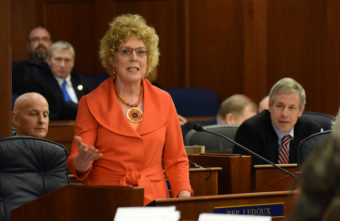
“You don’t have to be a cannibal to know something about cannibalism,”said Anchorage Republican Gabrielle LeDoux who sees narrow definitions of expertise as unnecessary. “You want people to know something about marijuana who are regulating it.”

HB 123 passed 25 to 15, and now goes before the Senate for consideration.

New rules for National Guard to wait until next year

Rep. Gabrielle LeDoux, R-Anchorage, wraps up debate on House Bill 123 to establish a marijuana control board in Alaska, April 14, 2015. (Photo by Skip Gray/360 North)

A bill that applies a uniform code of military justice to the Alaska National Guard will not pass the Legislature this year.

The legislation is a project of the House Judiciary committee. At a hearing on Tuesday, Chair Gabrielle LeDoux said that the bill will not make it to the floor before the Legislature gavels out. Her aide, Thomas Brown, explained that committee members will work with members of the administration on the issue during the interim.

“We will craft a better — I hesitate to say ‘perfect bill’ — but a better bill, so that this time next year we can send the governor something that all parties involved can be content with,” said Brown.

Various versions of a military code bill were introduced in the beginning of session, in response to a federal report documenting misconduct in the Alaska National Guard.

The bill under consideration would allow for courts martial and would give the Alaska National Guard the ability to hand down dishonorable discharges.

Lt. Forrest Dunbar, a judge advocate officer working on the bill on behalf of the Walker administration, explained to the committee that clearly defined criminal activity perpetrated by Guardsmen — like sexual assault or theft — would still be referred to civilian law enforcement. But he said there are instances where the code of military justice is more stringent than the civil code, and it would allow discipline within the Guard for some of the activities described in the federal report.

“There was some behavior by Guardsmen that involved sexual relations with recruits. And the civilian authorities, for a variety of reasons, decided not to prosecute. For example, perhaps there wasn’t enough evidence, or it didn’t tightly fit the definition of sexual assault,” said Dunbar. “But there are military offenses that are broad enough where we could potentially pursue some of those offenders for things like dereliction of duty, conduct unbecoming of an officer.”

Dunbar added that the bill is expected to bring more order to the Alaska National Guard. But he said he could not definitively answer the most common question about the code.

“‘Had this leg of the stool been present prior to the activities that led to the scandal, could we have avoided those activities in that scandal?’ And the answer is: We’re not sure — there’s no way to know,” said Dunbar. “I think it would have increased the likelihood that we would have been able to bring good order and discipline to those units more quickly.”

A special investigator appointed by Gov. Bill Walker is expected to release a public report on the National Guard scandal next month.

Cannabis celebration aims to bring together Juneau pot lovers

(Creative Commons photo by Coleen Whitfield)

Marijuana activists in the capital city are planning a Southeast Alaska Cannabis Celebration this Friday at the Juneau Arts and Culture Center.

The event will feature eight bands, food carts and local businesses showing off their products and services. But organizers are asking attendees to leave the green stuff at home.

Giono Barrett hopes to start a marijuana farm with his brother in Juneau, but says they won’t have any plants to display at the cannabis celebration. Barrett points to a similar festival canceled recently in Anchorage after city officials told organizers they would not allow possession or use of pot at a municipal facility.

Giono Barrett, James Barrett
Brothers Giono (left) and James Barrett listen to testimony about Senate Bill 30, which deals with marijuana legalization, in a Senate Finance Committee meeting, March 11, 2015. They had testified earlier. (Photo by Skip Gray/360 North)

“We really want to just bring the community together and get people out of the woodwork,” Barrett says. “So the idea here is to hit that marijuana demographic, and get them out of their house and get them together and enjoying music together.”

Public consumption of marijuana is illegal, even under the state’s new recreational marijuana law. In addition, the City and Borough of Juneau currently has a moratorium on land use permits for marijuana-related businesses. Barrett opposed the moratorium at first, but now thinks it’s been good for Juneau’s marijuana community.

“I think it was in retrospect a really smart decision, because it gave us the opportunity to get to know each other — the cannabis community and our city,” he says.

The cannabis celebration is being organized by Revelry Events, founded by former KXLL music director and volunteer Jessie Herman-Haywood. She says you won’t have to be a marijuana user to get something out of it.

SE Alaska Cannabis Celebration

The Southeast Alaska Cannabis Celebration will be held at the JACC, starting at 5 p.m. Friday. Tickets are $25 in advance or $35 at the door. Organizers hope to make it an annual event. Here’s the music lineup:

“Essentially this is just a really cool music festival,” Herman-Haywood says. “It’s a great opportunity for the cannabis community, whether you’re going to be starting a business, or maybe you want to be purchasing some, or maybe you just don’t know anything about cannabis and are really interested in the culture.”

Even though there’s not supposed to be any drugs or alcohol at the festival, Herman-Haywood says it will be a 21 and over gathering because of the material being discussed.

Local greenhouse Get Growing and clothing maker Aurora Projekt will be among the vendors at the event. Attorney Kevin Higgins also will have a booth. He’s a former public defender now in private practice, and a recreational marijuana user. He says he’s interested in watching the legalization process.

“Marijuana’s been a part of my life for over 20 years,” Higgins says. “It’s new and kind of uncharted territory. So it’s just interesting to see how it’s unfolding.”

Higgins says members of Juneau’s cannabis community have made themselves available to public officials at both the city and state level who are making decisions about how marijuana will be regulated.

“Trying to make sure that they’re not only making good decisions, but asking the right questions in arriving at those decisions,” he says. “And kind of still fighting uphill against a bunch of reefer madness.”

But in general Higgins says most politicians are doing a good job of thoughtfully approaching the issue.

Editor’s note: Jessie Herman-Heywood’s former role with KXLL has been clarified.

Site notifications
Update notification options
Subscribe to notifications