On-site marijuana consumption will be legal for licensed Juneau retailers that satisfy certain conditions, but smoking will only be allowed in designated outdoor areas. (Creative Commons photo illustration by Chuck Grimmett)
The Juneau Assembly approved an ordinance Monday that allows patrons to consume marijuana edibles inside licensed retailers and smoke in designated outdoor areas.
The vote was 6-2, with one Assembly member absent. Assembly member Mary Becker voted against it, saying she would prefer marijuana not be used at all.
Mayor Beth Weldon also voted against it, but only because she took issue with allowing smoking in public.
“I don’t care if you’re inside or outside eating the edibles,” Weldon said at the meeting. “What I do have a problem with is the smoke.”
At Monday night’s meeting, Weldon proposed an amendment to the ordinance to only allow vaping outside, but it failed.
Several community members testified both in favor of and against the ordinance.
Business owners like John Nemeth, who co-owns the Juneau-based marijuana company Top Hat Concentrates, encouraged the Assembly not to completely close the door on indoor smoking for future consideration.
“This is a great step in the right direction,” Nemeth said. “It’s something we never thought we’d see here in Juneau and it’s giving people a safe place to consume.”
Nemeth said his business, which currently manufactures marijuana products, has plans to open a retail shop in the future.
The ordinance will take effect in 30 days. Businesses must receive an endorsement from the state Marijuana Control Board before they can offer on-site consumption.
Hoping to become a citizen? Immigration authorities warn they take a dim view of cannabis. (Creative Commons photo illustration by Chuck Grimmett)
Pakalolo Oceanside, a cannabis shop in downtown Anchorage, looks like a pleasant place to work. It’s clean. It happens to be right across the street from Anchorage police headquarters. And manager Mark Hoffman seems a decent guy.
“Oh absolutely. Yeah, I don’t question my moral character because I work in the cannabis industry at all,” Hoffman said.
But if you’re an immigrant — maybe you’re a legal resident, with a green card — and you work here or even shop here, it could end your dream of becoming an American citizen.
That’s because applicants who want to naturalize have to prove to the U.S. Citizenship and Immigration Services, or USCIS, that they have “good moral character.”
A new USCIS guideline says buying or selling marijuana, even at a state-regulated cannabis shop, shows you lack “good moral character.” The April 19 “policy alert” caused a stir among Alaska immigration attorneys and exposes a gulf between federal policy and Alaska values on what constitutes good morals.
“I think it’s fairly ridiculous,” said Anchorage attorney William Brattain, whose law firm is called Alaska Immigration Law Center. “To me it’s an example of where federal law is not keeping pace with the concepts of what’s really going on in society. And the reason that it’s not is purely, 100% political.”
Brattain said the policy seems to add cement to a stumbling block on the path to citizenship, one that he said trips up a lot of his clients. He mentioned one client, a woman in her 30s, who Brattain said is hardworking and lives with children and a husband, who are American citizens.
She’s a “responsible person who has done it the right way, who has followed the law every step of the way,” Brattain said. “Now (she) finds herself in this political battle on this marijuana issue.”
The problem is, she admitted that she smoked two joints as a teenager in Mexico. Brattain said the authorities are using it to say she lacks good moral character.
Attorney Bill Brattain calls the naturalization service’s policy on cannabis “fairly ridiculous.” (Photo by Liz Ruskin/Alaska Public Media)
“Under what possible theory is that?” Brattain asked. “There are very few teenagers in the United States who have not experimented with marijuana. And to say every teenager, or a substantial number of them, lack good moral character may confirm the view of many conservatives but has no basis in reality.”
Brattain said it seems to him it’s the new immigration officers in Anchorage who tend to ask about marijuana use.
“The old guard people who’ve been around and gone through the marijuana experience in Alaska really don’t give a rip,” he said. “They really understand that it’s not useful, really, for the ultimate question, which is, ‘Is this person the kind of person you’d like to join us as a U.S. citizen?’”
A spokeswoman for USCIS declined an interview request but sent a statement saying the agency has to decide cases based on federal law, under which marijuana remains illegal.
Anchorage immigration attorney Nicolas Olano points out that federal regulations say judgments about “good moral character” should take into account the standards of the average citizen in the community where the person lives.
“We live in Anchorage, Alaska. It is legal here,” he said. “People enjoy marijuana. They enjoy the recreational drug. It’s not a problem. It’s not a moral issue.”
The regulations allow an exception for a single case of simple marijuana possession. If you’ve used pot more than once, denying it might seem like a good option, but federal rules say giving false testimony in an immigration proceeding is also proof you lack “good moral character.”
Olano advises that refugees, green card holders or anyone here on a work visa that taking a job in the cannabis industry could radically complicate their case for a change in visa status or naturalization.
“I think they should be able to work wherever they want. It’s legal,” Olano said. “But just as a blanket advice? No. Stay away. Absolutely.”
Ultimately, Olano predicts, a federal judge will resolve the conflict between federal policy and local standards on marijuana.
“Congressman Young continues listening to his constituent stakeholders and working on legislation that helps reduce potential conflicts between Federal and state-level cannabis policy,” Young’s spokesman emailed in response to a question about the new policy alert.
Jason and Shauna Adams in their licensed cannabis retail establishment, Wintergreens, in Haines. (Photo by Claire Stremple/KHNS)
Alaska is poised to become the first state to regulate cannabis cafes. The state’s Marijuana Control Board is now accepting applications for on-site consumption. That’s despite uncertainty stemming from recent board appointees by Governor Mike Dunleavy’s administration. Nevertheless, one pot shop in Haines is already prepping to open the first marijuana lounge in town.
Jason Adams is using tweezers to select fuzzy green marijuana buds from an oversized glass jar. It’s for a customer stopping into Wintergreens, his state-licensed marijuana store in Haines.
This place feels like the cross between a cell phone store and a college dorm room. It’s spartan and clean with bright green walls and glass cases displaying product and all manner of smoking apparatus.
Adams is an owner calls himself a budtender, like a bartender serving alcoholic cocktails — except his patrons can’t imbibe here.
Adams ran the idea of a cannabis lounge by one of his customers.
“I’d be in here everyday after work!” the man said with a laugh.
That could soon be possible. This month marks the first time businesses can begin the process of applying for on-site consumption licenses. The Alcohol and Marijuana Control Office hasn’t received any applications yet, as the first step is posting a notice for three weeks before filing papers.
This shop is one of the first buildings that cruise ship passengers see when they step off the dock in Haines.
“We have such a variety of customers that come in. Not just locally. But a variety of all over Alaska and all over the whole world,” Adams said.
Residents can take product home. Tourists – especially cruise ship visitors – don’t have that option.
“We should have a spot within a year,” said Adams. “And then when everyone asks ‘Where do we use this?’ when they come in to our shop, then we’ll be able to say, ‘Right over there.’”
But there’s still some uncertainty over whether it’ll happen. That’s because Gov. Mike Dunleavy’s appointment to the Marijuana Control Board says he’s skeptical about pot cafes.
The legislature has confirmed the appointment of Alaska Wildlife Trooper Lt. Christopher Jaime. He’s indicated he’d like the board to take another look at allowing cannabis cafes. The governor’s other appointee Vivian Stiver of Fairbanks had a history of campaigning against commercial cannabis; lawmakers didn’t confirm her and it’s unclear who the governor will appoint in her place.
Because the marijuana control board passed on-site consumption regulations by a narrow 3-2 vote, any new member could be a crucial swing vote that could overturn the previous board’s action. Even so, Adams says he’s optimistic. He feels like history is on his side.
“When I was young, it was the war on drugs and Nancy Reagan was leading “just say no” and everyone from my grandparents to my parents believed cannabis to be something that was bad and negative,” he smiles.
“Now, I work with my father in the cannabis industry… So the community I believe has decriminalized it in their minds.”
Businesses hoping to host on-site consumption will need to submit detailed plans, keep a separate area from the retail shop and secure approval from local authorities. The model is similar to a liquor license, but possibly more strict.
It’s still unclear how to reconcile on-site cannabis consumption with a statewide indoor smoking ban. There are edibles, but the most popular form is smoking or vaping.
The Haines Chamber of Commerce hasn’t taken a position over public consumption of marijuana, but Wintergreens is a chamber member. Chamber Director Tracey Harmon says the chamber recognizes pot shops are part of the business community.
“I would say the Chamber kind of prides [it]self on [its] diverse membership. I think we’d be in support of industries that bring in more to grow and develop our economy.”
The prospect of a cannabis lounge has some locals excited. Jeff Taylor of Haines says he uses cannabis products at home to manage arthritic pain. He said he would frequent a cannabis lounge.
“Mean not having to partake by myself all the time!” he said with a laugh.
Adams rings up several more customers. CBD oil, cones for rolling, and pre-rolled joints. To go. But if his application makes it through, his customers could have the option to settle into a comfortable chair and stay awhile.
Juneau is exploring whether to allow people to consume marijuana in licensed retail shops. (Creative Commons photo illustration by Chuck Grimmett)
The City and Borough of Juneau is exploring whether to allow people to use marijuana inside some businesses.
During a meeting Monday night, Assembly members had mixed opinions about allowing local marijuana retail stores to sell products for customers to use in the shop.
Juneau currently has seven cannabis shops. Alaskan Kush Company opened downtown last fall, just up the street from the cruise ship docks.
Alaskan Kush Company warns customers about state laws regarding marijuana consumption by printing them on their bags. (Photo courtesy Amy Herrick)
Manager Amy Herrick said they hope to one day be able to provide customers with a safe and legal place to consume cannabis with an indoor cafe. But for now, they make sure to be clear about what the law says.
“Unfortunately there is no place that they can legally consume, so we have to advise them that they cannot legally consume in public,” Herrick said.
Right now, smoking marijuana is only legal in private residences.
According to City Attorney Robert Palmer, that means visitors and tourists have few options if they want to sample local products.
“The city understands that there are many people that come off of cruise ships or that come to town that want to consider consuming marijuana, and I think the Assembly understood those concerns and is trying to find and strike an appropriate balance,” Palmer said.
A Kodiak dispensary is one step closer to opening its doors after getting City Council approval on Thursday. For now, High Rise LLC won’t be authorized to sell edible marijuana products.
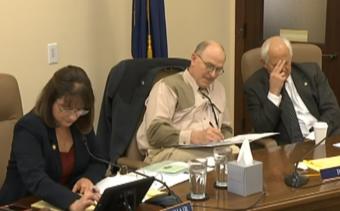
The Kodiak City Council moved to approve an application for a new marijuana dispensary in downtown Kodiak at Thursday night’s meeting. The retail store application was brought forward by High Rise LLC. Its owner, local resident Jack Schactler, assured the council that the company would be locally owned and operated during the public hearing section of the meeting.
“We will create multiple new jobs for the people of Kodiak, as well as tax income for the city,” Schactler said. “As marijuana advocates, we are excited to provide this new retail service to the people of Kodiak in the most professional way possible.”
Half an hour later, Councilman Randall Bishop proposed the council move forward with a letter of non-objection with conditions. In this case, that the dispensary be prohibited from selling edible marijuana products.
According to Forbes, other pot-friendly states like Colorado and Washington have seen edibles sales skyrocket in the last few years, especially as the smoking rate among adults declines. Bishop acknowledged that point in his closing statements, explaining the city council’s approach to the relatively new industry as cautious.
“We are definitely not opponents of edibles,” he said. “Just to clarify, I believe we decided to, maybe in a year, take a look at it and just take that conservative approach for the community to feel safe towards our youth and whatnot as this is a new industry prospering in our community. With everything that is new comes a lot of unknown variables that will get figured out.”
Schactler said Friday that he wasn’t surprised by the city’s choice to prohibit to edibles sales, adding that he hopes the regulation opens up in the future.
“It’s more of a conservative approach, which is fine,” he said. “We just need to show everyone that marijuana is just a normal business. This is strictly business, this is not anything different than the liquor store down the street.”
The motion to issue a letter of non-objection with conditions passed unanimously among the five City Council members present. Schactler says High Rise LLC will have another public hearing before the Borough Assembly on April 18, then a state board hearing, and finally a business inspection. He says he expects the company will open for business no earlier than June.
The Senate Labor and Commerce Committee fields calls from constituents regarding Marijuana Control Board nominee Vivian Stiver, Feb. 12, 2019. From left to right: Sens. Lora Reinbold, R-Eagle River, Click Bishop, R-Fairbanks, and Chris Birch, R-Fairbanks. (Gavel Alaska cropped video still)
Alaska’s marijuana industry flooded the phone lines during a legislative committee hearing Tuesday to oppose Gov. Michael Dunleavy’s appointment of Vivian Stiver to a state board that regulates marijuana.
Critical testimony — mostly from cannabis industry business owners and workers — was intense, with more than 50 callers and more than 20 emails warning the Senate Labor and Commerce Committee that appointing someone hostile to the industry would take the state backward.
“Gov. Dunleavy, when he was a senator, was one of our strongest opponents,” Fairbanks marijuana business owner Cole Hollister said. “I believe that in removing one of our biggest voices in Brandon Emmett from the board and appointing Vivian Stiver, he’s spoken loud and clear of his intentions toward the industry.”
Others warned that efforts to turn back the clock on marijuana would bolster the state’s black market.
Joshua Tobin described himself as a “20-year veteran” of the marijuana industry. But he said when cannabis was legalized in 2016, he got on board.
“When legalization came around, I wasn’t for it, but it happened,” Tobin said. “And I felt like I made a deal with the state: You give me a license, I pay taxes and we follow the rules. Appointing a prohibitionist to the board that dictates the rules wasn’t part of the deal.”
Stiver’s supporters included Anchorage Republican activist Judy Eledge. She told the Senate Labor and Commerce Committee that Stiver would be a skeptical counterweight on the five-person board that regulates commercial marijuana in the state.
“Alaskans may have voted to legalize marijuana, but many Alaskans did not,” Eledge said. “We have grave concerns about the laws and its effects on Alaskans. It is gravely important to us that the board controlling marijuana has at least a balance of people on the board from both sides.”
In her remarks to the committee, Stiver distanced herself from her past as a marijuana critic.
“I am not a prohibitionist.” she said. “I absolutely did have a position. I expected our (Fairbanks) city and borough to be ready for the industry, and they were not.”
“I also respect the fact that people who do this trust me because they had financial interests,” she added. “They had money laid out, and I do understand that.”
Public testimony will continue for Dunleavy’s second nominee: Alaska Wildlife Trooper Christopher Jaime. The Soldotna-based lieutenant’s nomination has been less controversial. Both nominations will require a confirmation by lawmakers.
Their appointments replace two of the three members that recently supported onsite consumption by a 3-2 vote.
The Marijuana Control Board is slated to convene a three-day meeting on Feb. 20-22 in Juneau.
Watch the latest legislative coverage from Gavel Alaska:
Close
Update notification options
Subscribe to notifications
Subscribe
Get notifications about news related to the topics you care about. You can unsubscribe anytime.