Economy

Indigenous nation to get $7,250-per-person payments as a mine advances upstream of Alaska

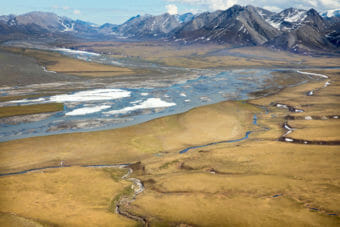
The Stikine River Flats area in the Tongass National Forest is viewed from a helicopter on July 19, 2021. The Stikine River flows from British Columbia to Southeast Alaska. It is one of the major transboundary rivers impacted by mines in British Columbia. Alaska tribes and communities are seeking some new protection to avoid downstream impacts. (Photo by Alicia Stearns/U.S. Forest Service)

This story is co-published by the Wrangell Sentinel and Northern Journal.

An Indigenous community is locked in a debate about the pros and cons of a major new mine on their traditional lands — and a big cash payment promised by the developer.

There is strong support, and fierce opposition. A lot of money to be made, and a wild river to protect. The community faces a pivotal choice.

Though this story sounds like it could be unfolding in rural Alaska, a version of it has actually been playing out just across the border with Canada, in northwest British Columbia. Still, it has implications for the Alaskans who live downstream from the proposed mine site.

In a referendum after weeks of heated debate, members of the Tahltan Nation earlier this month voted overwhelmingly to approve a deal with a Canadian mining company that hopes to revive a huge gold and silver mine, called Eskay Creek, which stopped producing in 2008. The project is located above the Unuk River, which flows into Alaska near Ketchikan.

The Tahltans’ backing is a major step forward for the project, and it comes as the Canada and B.C. governments intensify efforts to build more mines in the name of national security and economic growth. Several of the projects are near the border with Alaska, where state and federal elected officials are separately pushing mines that could help wean the U.S. off a foreign supply of minerals used in energy, electronics and weapons.

Just one day after the Tahltan vote, Canada’s federal government announced that it had approved a merger between two multinational mining firms with a condition that calls for advancing two other proposed mines in Tahltan territory. Both projects sit above tributaries of the Stikine River, a major, salmon-bearing waterway that straddles Canada and the U.S. and empties into the ocean near the small Southeast Alaska town of Wrangell.

Louie Wagner Jr., a Tsimshian and Tlingit resident of Metlakatla, a Native community at the southern tip of Alaska’s panhandle, said he’s concerned about the health of the Unuk River and its future with mines in its watershed.

Wagner and his family have fished and hunted moose along the Unuk for generations.

“That little river cannot handle it,” Wagner said in a recent phone interview. The Unuk is notable, he added, for its abundance of eulachon, a small, oily fish also known as hooligan that’s a staple for Indigenous communities in Southeast Alaska.

Though rarely discussed in Alaska circles, the Tahltan Nation’s approach to mining has major implications for the industry’s future in the transboundary region. A top U.S. Department of Interior official visited the region last year to learn more about models for how Indigenous nations can partner with mining companies.

There are more than a dozen early-stage mining projects in Tahltan territory, many above rivers that flow into Alaska. And the Eskay Creek vote could serve as a preview of future deals between the Tahltan government and the for-profit mining companies promoting development.

For months, members of the First Nation debated whether to approve a deal, known as an impact benefit agreement, that Tahltan elected leaders had negotiated with Vancouver-based Skeena Resources, the company pushing Eskay Creek.

The Eskay Creek mine is accessible off British Columbia’s Stewart-Cassiar Highway. (Photo by Max Graham/Northern Journal)

The specifics of the agreement have not been made public. But Tahltan officials have said it guarantees benefits worth more than $1 billion over the life of the mine, mostly in cash but also in contracts and wages.

The deal also calls for an upfront payment from Skeena, intended to be distributed to individual Tahltan members — to the tune of $7,250 each, according to Tahltan officials. And the agreement reportedly gives the First Nation government some environmental oversight over the mine.

The nation backed the deal with support from more than 77% of the roughly 1,750 Tahltans who voted, according to the Tahltan Central Government. Payments are expected to go out to members in 2026.

“Tahltan Central Government is not standing on the sidelines,” Tahltan president Kerry Carlick said in a statement after the vote.  “We are embedding ourselves directly into the governance of environmental protection.”

Tahltan leaders have long worked to navigate political tensions between an expanding mining industry and efforts to protect traditional lands and wildlife.

The Tahltan government has entered into a number of agreements with mining companies. But it also has opposed efforts to mine coal and drill for natural gas near the headwaters of major rivers in the region.

And some Tahltan members have been outspoken critics of the Eskay Creek project and the company promoting it.

In the leadup to the recent vote, arguments erupted on social media, and relationships among community members grew strained, some Eskay Creek opponents said in interviews.

“This is causing internal conflicts,” said Tamara Quock, a Tahltan member who lives in northern B.C. some 350 miles east of the mine site.

Quock said she thinks the promise of the direct payments “enticed” some people to vote in favor of the agreement. Debate over the project, she added, grew more intense after that condition was added to the deal.

Quock said she feels Skeena is “using the Tahltan people” to generate its own profits.

She and other critics have voiced concerns about a perceived lack of transparency and potential conflicts of interest within the First Nation’s government. They also say they are worried about possible environmental impacts from the project, which would involve digging two open pits and storing millions of tons of mining waste above the Unuk River.

Skeena didn’t respond to requests for comment.

Alaska Native leaders, fishermen and environmental advocates who live downstream, in Southeast Alaska, for years have expressed concerns about Eskay Creek and other proposed mines in the region, saying they don’t trust Canadian regulators to safeguard Alaskan interests.

“You can’t cut these watersheds in half and expect to adequately protect them,” said Guy Archibald, executive director of the tribally led Southeast Alaska Indigenous Transboundary Commission. “Right now they’re cutting the baby in half and ignoring the effects on the Alaska side of the border.”

The commission last month filed a legal challenge in B.C. court, asserting that regulators had failed to consult Alaska tribes on several proposed mines in the region, including Eskay Creek.

Meanwhile, after a major spill last year at a Canadian gold mine in the Yukon River watershed, Alaska’s congressional delegation called for more oversight of Canadian mines near transboundary rivers like the Unuk and Stikine. The statement from the delegation — which has strongly supported mine development in Alaska — called for “binding protections, financial assurances, and strong transboundary governance.”

“As British Columbia seeks to advance numerous mines just upstream from Alaska, we are still asking them to fully remediate legacy sites and firmly commit to binding protections for Alaska interests,” Joe Plesha, a spokesperson for U.S. Sen. Lisa Murkowski, said in a recent statement. “Senator Murkowski is actively considering new ways to make our B.C. neighbors take Alaskans’ concerns seriously.”

U.S. Sen. Lisa Murkowski’s office says she’s pushing the British Columbia provincial government on protections for Alaska interests as Canada advances mining projects in transboundary watersheds. (Photo by Nathaniel Herz/Northern Journal)

Ottawa and B.C.’s provincial government, meanwhile, are funding new infrastructure projects and prioritizing permitting for energy and resource development projects, including Eskay Creek and the expansion of a huge copper and gold mine in the Stikine watershed, called Red Chris.

Canadian officials say existing regulations are geared to minimize impacts in the shared watersheds. Major projects undergo thorough environmental assessments before they’re approved, a spokesperson with the B.C. agency that leads those reviews, the Environmental Assessment Office, said in an email.

“Making sure large-scale projects are properly assessed is critical to making sure development is sustainable — to ensure good jobs and economic growth while also protecting the environment and wildlife, and keeping communities healthy and safe,” said the spokesperson, Sarah Plank.

Tahltan officials declined an interview request and did not respond to questions about Alaskans’ concerns or the First Nation’s agreement with Skeena.

Supporters of Eskay Creek say it could be transformational for the Tahltan Nation. Among proponents of the deal is Chad Norman Day, a former Tahltan president who has worked in the mining industry and now runs a consulting firm that does mining-related business.

“The benefits which flow to the Tahltan Nation from here will empower the people and territory unlike anything we have ever seen,” Day said in a statement after the vote.

Many Tahltan people work in mining, and the First Nation already generates revenue from Red Chris and another large operating mine, Brucejack, which started producing gold in 2017.

In 2019, Tahltan citizens voted in favor of an agreement with a different mining company pushing another, much bigger proposed mine partially in the Unuk watershed, called KSM. The outcome of that vote was nearly identical to the recent Eskay one, with about the same percentage in favor.

The first nation also, in the past five years, has entered into two joint decisionmaking agreements with the B.C. government for regulatory reviews of mining projects, including Eskay Creek.

Before it can start producing, Eskay Creek needs an environmental approval from the provincial government. A decision is expected early next year.

State begins permitting process to build Izembek road

The end of the road leading out of King Cove. June 2024
The end of the road leading out of King Cove. June 2024 (Theo Greenly/KUCB)

A controversial stretch of road connecting two Eastern Aleutian communities is heading toward construction.

The Alaska Department of Transportation has applied for a U.S. Army Corps of Engineers permit to build the road and is taking public comments on the proposed work until Jan. 12.

The 19-mile road would pass through the Izembek National Wildlife Refuge, connecting King Cove residents to nearby Cold Bay. King Cove community leaders say the single-lane, unpaved road could provide life-saving access to Cold Bay’s all-weather airport, but conservation groups have fought the proposal for decades.

In October, federal officials announced a land exchange agreement with the King Cove Corp. to facilitate the road. That wasn’t the first time a swap agreement had been approved, but local leaders said it was the first time the land had actually switched ownership into the hands of the for-profit Native corporation.

The refuge will swap 490 acres of land for the road, in exchange for about 1,700 acres of the corporation’s land. According to the permit, King Cove Corp. also relinquished its selection rights under the Alaska Native Claims Settlement Act to 5,430 acres of land within the Izembek Refuge, which means it gave up its legal ability to select those parcels under ANCSA in return for the agreed land exchange.

Several environmental groups and dozens of Alaska tribes have called for the road to be stopped. They say the refuge shouldn’t be developed because it would threaten wildlife, some of which are precious subsistence resources for communities across the state.

Subsistence is also part of King Cove’s argument in favor of the road. The tribal government says the road would help them access their own subsistence lands, much of which is inaccessible except by boat.

According to the Corps, the road would cross numerous streams, some of which are home to spawning salmon. The project area also covers the habitat of endangered and threatened species, like the Steller’s eider and the short-tailed albatross.

The corps will consult with various organizations, including the U.S. Fish and Wildlife Service, the State Historic Preservation Office and federal tribes before issuing permits. They are also accepting public comments during the application process.

Comments can be submitted via email or sent to the Army Corps field office in Fairbanks. You can find more information on the Army Corp’s website.

After more than 50 years, a family-run shop in downtown Juneau is closing its doors

Mike Wylie has worked at his family’s Ben Franklin store since the 70s. He said the decision to close is bittersweet. Dec. 11, 2025. (Photo by Yvonne Krumrey/KTOO)

With its Ferris Wheel made of K’nex and model airplanes hanging from the ceiling, the Ben Franklin store was a landmark in downtown Juneau, drawing attention from passersby, young and old. But in mid-December, it was almost empty as people came and went to see what’s left. 

After more than 50 years, the family-run shop in downtown Juneau is closing its doors. The owner of Ben Franklin said the store has been a part of the town’s history — and his own — and closing is bittersweet. 

Mike Wiley’s parents bought the building that houses the store in the 1970s. It was already called Ben Franklin, which was a nationwide general store franchise. 

“We sold everything from tennis shoes to pencils to bras and lampshades, because there was no real store where you could get those kinds of things,” he said. 

Wylie was in middle school when his family took over and he worked at the store every day after school.

“I went to Maria Drake Junior High, which is over by Harborview. Walked over after school,” he said. “Always was told, ‘You have to come here, go to work, stay out of trouble.’”

That tradition continued with his own kids.

“Our kids have worked here. We’ve had grandkids working here,” Wylie said. “We have no great-grandkids working here yet, but as of now, we still have like two grandkids working here and helping out.”

Juneau has changed a lot over the last 50 years, and Ben Franklin changed with it. Wylie said he thinks only people in their sixties and older remember the original chain these days.

Starting around the 1970s, the store adapted as tourism grew in Juneau. 

“There was maybe two or three gift shops in town, and we started carrying Alaska souvenirs,” Wylie said. “And it was the old steamships — like Canadian cruise lines and that kind of thing – that came in here.”

Wylie said he always made a point to continue selling things useful to locals too — like housewares, frames and toiletries. 

The nationwide Ben Franklin franchise was sold a few times, and declared bankruptcy in the 1990s. It folded about 10 years ago, and Juneau’s store became independent. Wylie said the last few years were tough on business, with the COVID-19 pandemic and supply chain disruptions. 

The store made it through, as it had for decades before. But now, he said it’s time to close the shop, of his own volition.  

“Basically, it’s the end of an era here,” Wylie said. “Why we’re closing up –  it’s just, it’s time for me to retire. I put 52 years in here.”

Wylie said the responsibility of running the store has been on his shoulders for so much of his life. 

“When you own a business, you’re never away from it,” he said. “And I just want freedom to not have to worry about that.”

The Wylie family announced in September they were going to close the store. It stayed open for the holiday season. There isn’t much left now, some fabric and decorations and a swordfish on the wall. 

As it empties, people have come in to share their memories of the store. Wylie said it’s bittersweet to hear them.   

“Especially when everybody comes in and says, you know, ‘Hey, I hate to see you go’ and whatnot,” he said. “And, you know, ‘We brought our kids in here when they were little kids,’ and ‘My mom dad brought us in here’ when they were little kids to purchase stuff. So that, you know, that part kind of tugs at heartstrings.”

Wylie said he plans to have a “garage sale” style sell-off of whatever is left after the holidays. And he said he’s had a couple of people interested in buying the century-old building.

State to overhaul Southeast’s 20-year transportation plan

A small tent pitched on the deck of a ferry, with coastal mountains in the background.
The Alaska Marine Highway System’s mainliner, the Columbia, during its weekly sailing from Washington state to Skagway in early 2025. (Avery Ellfeldt/KHNS)

The state is in the early stages of crafting a new plan to guide decisions about Southeast Alaska transit for the next two decades.

The Alaska Department of Transportation and Public Facilities aims to draft a plan for Southeast by the end of summer 2026 and finalize it by this time next year. The document will cover all communities from Yakutat to Metlakatla.

Jill Melcher, DOT’s Southcoast planning chief, said the new version would mark the first complete overhaul in more than 20 years.

“The last adopted plan was in 2004 and an unofficial update was done in 2014 that captured changes over 10 years,” she said. “Our region has changed significantly since 2014, and it’s time for an update.”

Agency staff say that in the early stages, a handful of themes have already emerged. They range from ferry reliability to resiliency amid climate change.

Now the state is asking for public input, both via email and during town halls.

During two virtual open houses this week, residents raised a long list of specific projects and broader issues – many revolving around more reliable ferry service and the Cascade Point ferry terminal project.

Mike Jackson, in Kake, raised sporadic ferry service in his community. He said the state has said Kake rarely gets ferries, in part because the terminal can’t accommodate larger ships. He said there’s been talk about updating the terminal with new catwalks to change that.

“So that is one of the things we talked about doing here,” Jackson said. “But if there’s a way to better serve Kake somehow, we sure would appreciate it.”

Participants also talked about the need for float plane dock maintenance and more airport parking. One raised the need for restoring ferry service from Ketchikan to Prince Rupert, British Columbia – an idea the state is studying now.

Haines local Patty Brown asked about the state’s ongoing study of what it would cost to build a road on the west side of the Lynn Canal that would, at least in theory, better connect Haines and Skagway to Juneau. She wanted to know how that might be incorporated into the 20-year plan.

Southcoast Region Director Christopher Goins replied that the study would wrap up in January.

“Based on that, we’ll look at the data, work with this team and depending on what we see from leadership, include or not include that moving forward,” Goins said.

But it was a related project that kept coming up during the town hall: the Cascade Point ferry terminal. The state says building a new terminal north of Juneau would cut costs and ease travel between Haines, Skagway and the capital city.

The idea has drawn fire from residents in all three communities, who say the state should prioritize improving ferry service instead.

When Wendy Anderson of Skagway made that point in the town hall’s virtual chat, Goins responded that the agency does believe the terminal would reduce travel times. But he stressed that Cascade Point would not replace the Auke Bay terminal for most passengers.

“There will be mainline service that continues up once a week,” Goins said. “What is moving would be the trips to Haines and Skagway from Cascade Point.”

At least two other comments came in regarding Cascade Point. One dubbed the planned terminal a “shameful waste of taxpayer dollars” that would be “harmful” to the general public.

The other asked about the funding that has already been allocated to the project – and whether more will be set aside soon. Goins responded that the state currently has a design-build contract and is carrying out the required public comment and environmental processes.

“If we ultimately can’t make it through that process for various reasons, then the project would not go forward, and the second part of that contract would not be fulfilled. Plain and simple,” Goins said.

Agency staff and contractors thanked participants for their insight and encouraged the public to keep them coming. Comments can be submitted at SEATP@DOWL.com.

Alaska Air Cargo delays could mean later Christmas packages for many rural communities

An Alaska Air Cargo freighter arrives in Nome, Dec. 18, 2025. It was the daily-scheduled flight's first arrival in Nome in a week after maintenance issues plagued the Alaska Air Cargo fleet.

An Alaska Air Cargo freighter arrives in Nome on Dec. 18, 2025. (Ben Townsend/KNOM)

Christmas presents may be arriving later than expected for many rural communities in Alaska. That’s after Alaska Air Cargo, Alaska Airlines’ cargo-specific carrier, placed an embargo on freight shipments for several hubs across the state.

According to Alaska Airlines, the embargo began on Dec. 16 and will end on Dec. 21.

The embargo excludes Alaska Air Cargo’s GoldStreak shipping service, designed for smaller packages and parcels, as well as live animals.

Alaska Airlines spokesperson Tim Thompson cited “unexpected freighter maintenance and severe weather impacting operations” as causes for the embargo.

“This embargo enables us to prioritize moving existing freight already at Alaska Air Cargo facilities to these communities,” Thompson said in an email to KNOM. “Restrictions will be lifted once the current backlog has been cleared.”

With the Christmas holiday just a week away, carriers like Northern Air Cargo have rushed to fill the gap. Gideon Garcia, the Anchorage-based company’s vice president of cargo operations, said he’s noticed an uptick in package volume.

“It’s our peak season, and we’re all very busy in the air cargo industry,” Garcia said. “We are serving our customers with daily flights to our scheduled locations across the state and trying to ensure the best possible holiday season for all of our customers.”

Garcia said the holiday season is a tough time for all cargo carriers, but especially those flying in Alaska.

“We operate in places that many air carriers in other parts of the country just sort of shake their head at in disbelief. But to us, it’s our everyday activity,” Garcia said. “The challenges we face with windstorms, with cold weather, make it operationally challenging.”

Mike Jones is an economist at the University of Alaska Anchorage. He said a recent raft of poor weather across the state only compounded problems for Alaska Air Cargo.

“I think we’ve seen significantly worse weather at this time of year that is at one of the most poorly timed points in the season,” Jones said.

Jones said Alaska Air Cargo is likely prioritizing goods shipped through the U.S. Postal Service’s Alaska-specific bypass mail program during the embargo period. That includes palletized goods destined for grocery store shelves but not holiday gifts purchased online at vendors like Amazon.

According to the U.S. Bureau of Transportation Statistics, Alaska Airlines was responsible for 38% of freight shipped to Nome in December 2024.

Alaska Air Cargo’s daily scheduled flight between Anchorage and Nome has only flown four times in the month of December, according to flight data from FlightRadar24.

An Alaska Air Cargo 737-800 freighter landed in Nome Thursday at 11:53 a.m., its first arrival in a week. Friday’s scheduled flight has been cancelled.

Alaska Gov. Dunleavy says he’ll propose a property tax break for planned gas pipeline

Gov. Mike Dunleavy speaks to reporters during a news conference on Feb. 7, 2024. (Eric Stone/Alaska Public Media)

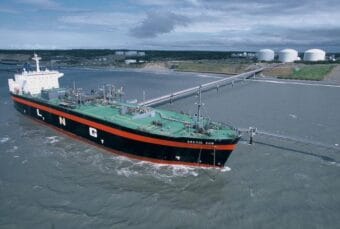
Gov. Mike Dunleavy is eyeing a property tax break for the long-planned Alaska LNG project. The Republican governor said he plans to propose a two-mill property tax for the 800-mile natural gas pipeline and associated infrastructure, a 90% lower rate than the state typically charges in property tax for oil and gas infrastructure.

Dunleavy described his plans in an interview with the Anchorage Daily News. The Republican governor’s spokesperson confirmed the governor’s plans but declined to make Dunleavy or another member of the administration available for an interview.

The state shares a portion of the property tax revenue it collects with local governments, and some local leaders are raising concerns about Dunleavy’s proposal.

“We can’t subsidize that project,” said Kenai Peninsula Borough Mayor Peter Micciche. “We at least have to cover our costs.”

Micciche said he expected the project would be a boon for the state and his region, bringing thousands of jobs to the Kenai Peninsula. But a low property tax rate for the project would essentially push some of the project’s cost onto local taxpayers, he said.

“We’re going to have impacts on our schools. We’re going to have impacts on emergency services, for sure,” he said. “We’re likely going to be the agencies they turn to for their emergency response plans, like all the other oil and gas facilities do.”

Plans for a North Slope gas pipeline and Southcentral export terminal have been in the works for decades but have taken new life in the second Trump administration. The state turned the project over to a private developer, Glenfarne, which has put out a steady stream of announcements about agreements with potential customers, investors and suppliers. But the project has plenty of skeptics, who argue the project last estimated to cost $44 billion would be too expensive to make financial sense.

A consulting firm contracted by the state Legislature to examine the project, GaffneyCline, told lawmakers last month they may need to make a variety of changes to help the pipeline become a reality, including to property taxes.

In a statement, Glenfarne spokeperson Tim Fitzpatrick said the developer had not seen the specifics of Dunleavy’s proposal and couldn’t offer an opinion.

Micciche said he’s open to tax breaks that would support a pipeline, but he said local governments need to be involved in determining what exactly those might be.

At least so far, he said, that hasn’t happened.

“There is a deal to be had here, but it has to be born from facts, real math, local impact data,” Micciche said. “It has to be transparently and fairly negotiated between all involved in good faith.”

In an email, Dunleavy’s spokesperson, Jeff Turner, said the bill hasn’t been drafted, so it was premature to say the proposal was developed without their input. He said the deal was better than nothing.

“Right now, the state collects no property tax at all because the LNG pipeline does not exist,” he wrote.

Fairbanks Rep. Maxine Dibert, a Democrat who co-chairs the state House Resources Committee, says she plans to discuss Dunleavy’s bill with local officials. But she says she plans to focus much of her attention on a separate bill that would require the project to include a smaller lateral pipeline to supply Fairbanks with gas to cut energy costs.

“For me, that is a line in the sand, that it needs to be guaranteed part of the project,” she said.

Republican Sen. Jesse Bjorkman, who represents the central Kenai Peninsula, says he’s on the fence about Dunleavy’s proposal. He said he’d like to learn more about the project’s finances to determine what’s necessary. But in any case, he said, it would make little sense to cut the project a break on property taxes after Glenfarne makes a final investment decision, or FID.

“If they’re gonna have an FID decision in January next month, then that cake is already baked, like the financials are already in place.

Glenfarne declined to say whether it would reach FID before the legislative session begins Jan. 20, but said it continues to work toward making the pipeline a reality. The company has previously said it expected a decision by the end of 2025.

“Glenfarne is rapidly progressing toward a final investment decision, as seen through our progress with numerous Asian commercial announcements and strategic partner agreements. We expect additional announcements in the next several weeks,” Fitzpatrick said. “Our overall project schedule, including completing the pipeline in 2028 and delivering first gas to Alaskans in 2029 is proceeding on schedule.”

Site notifications
Update notification options
Subscribe to notifications